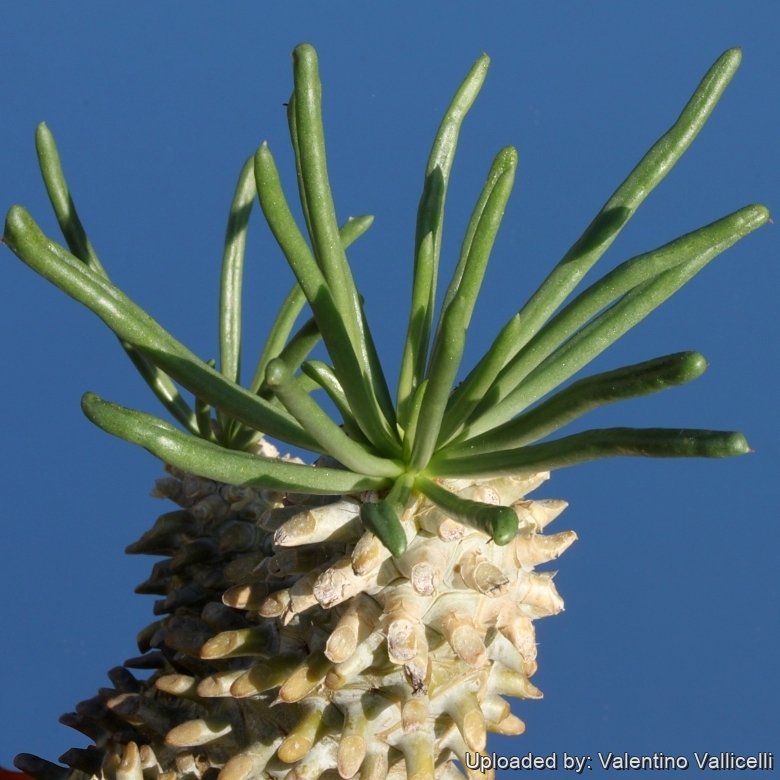
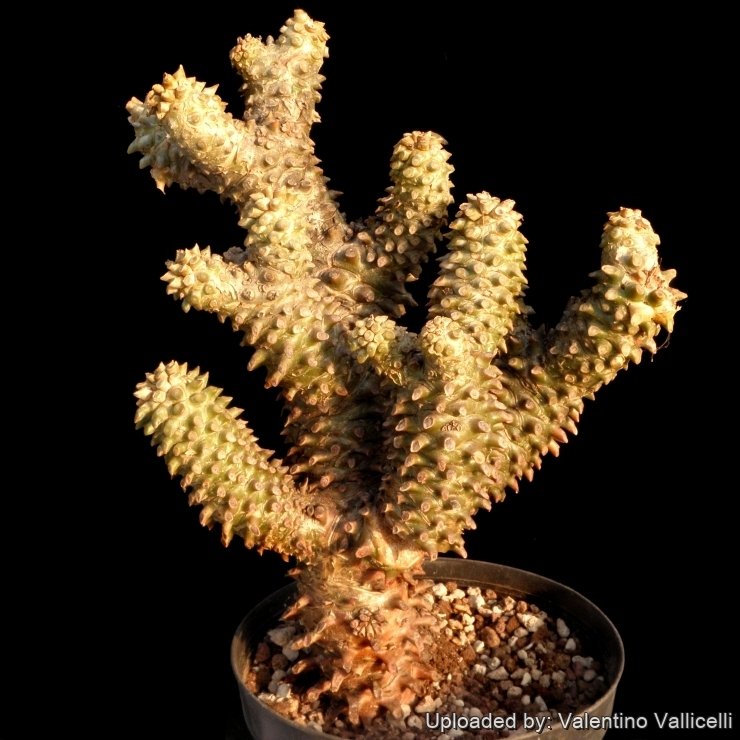
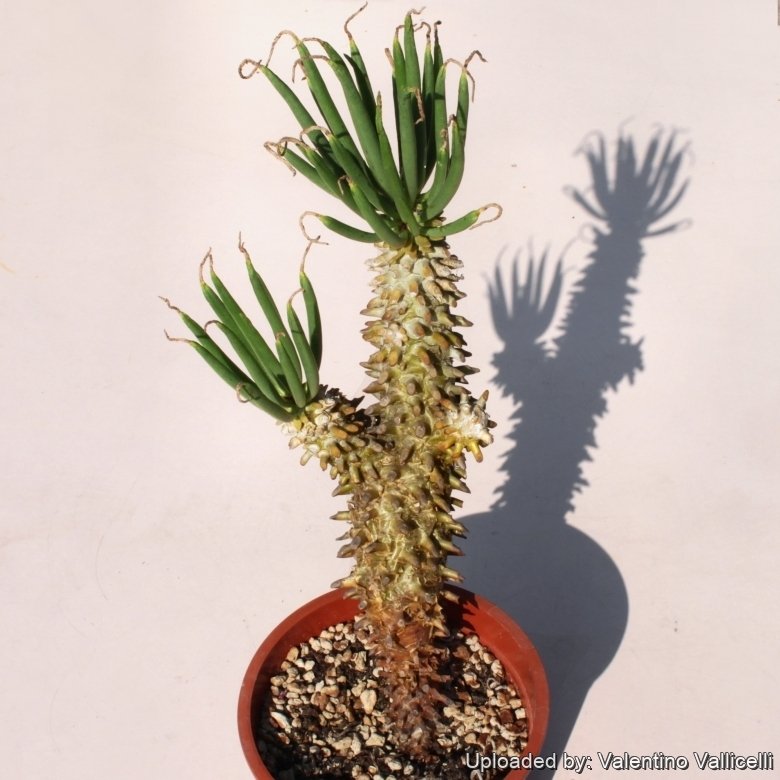
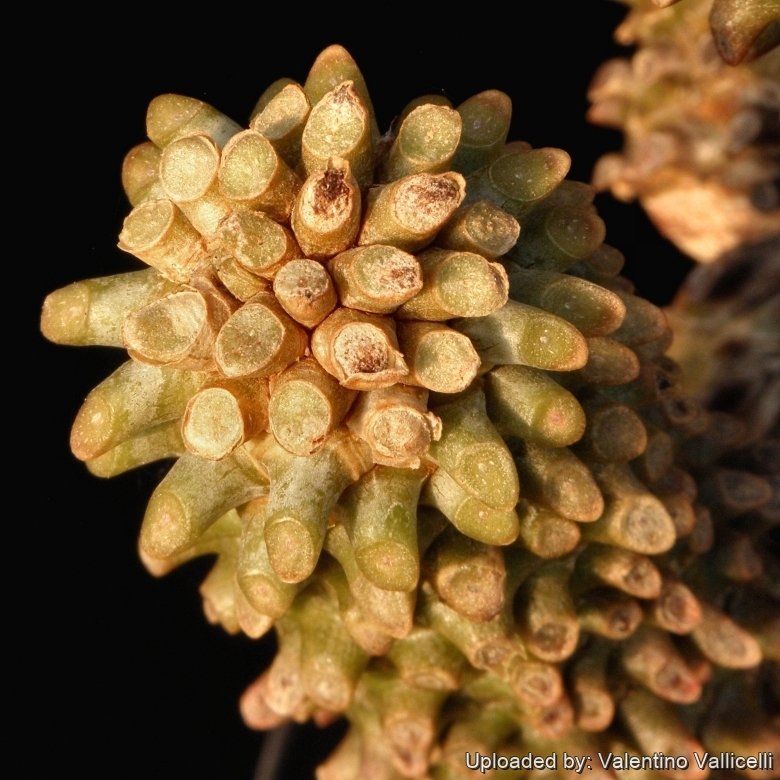
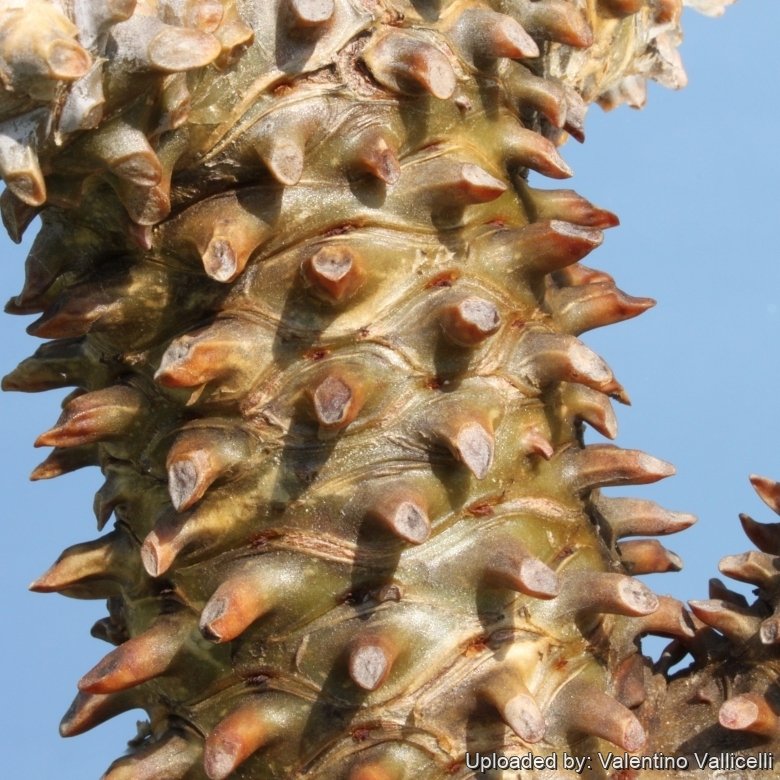
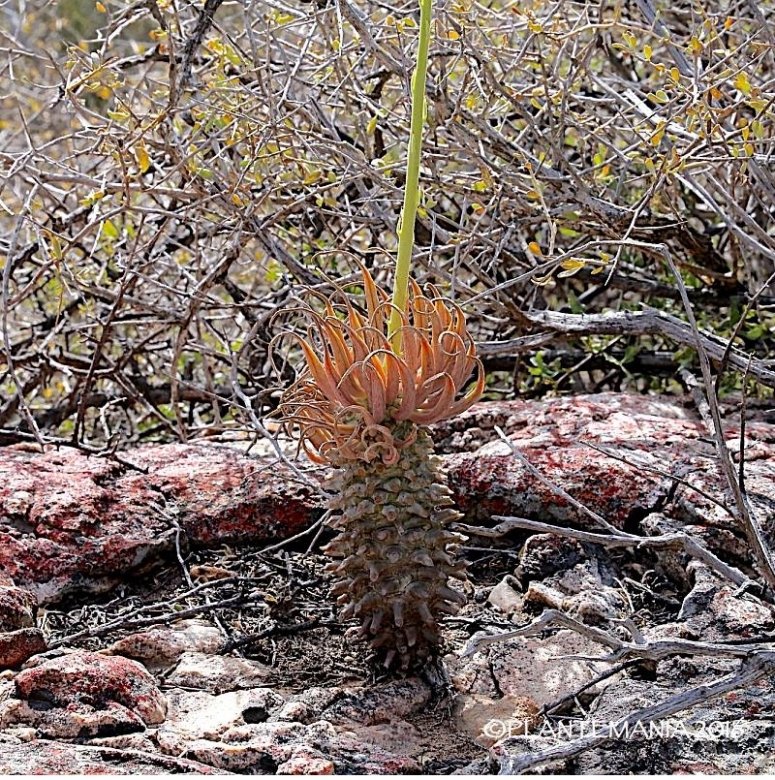
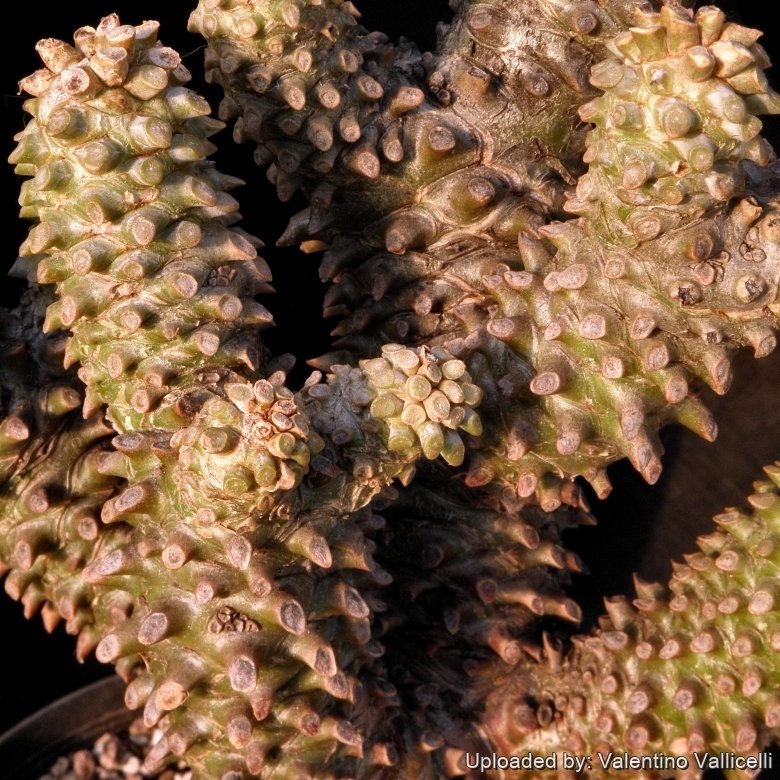
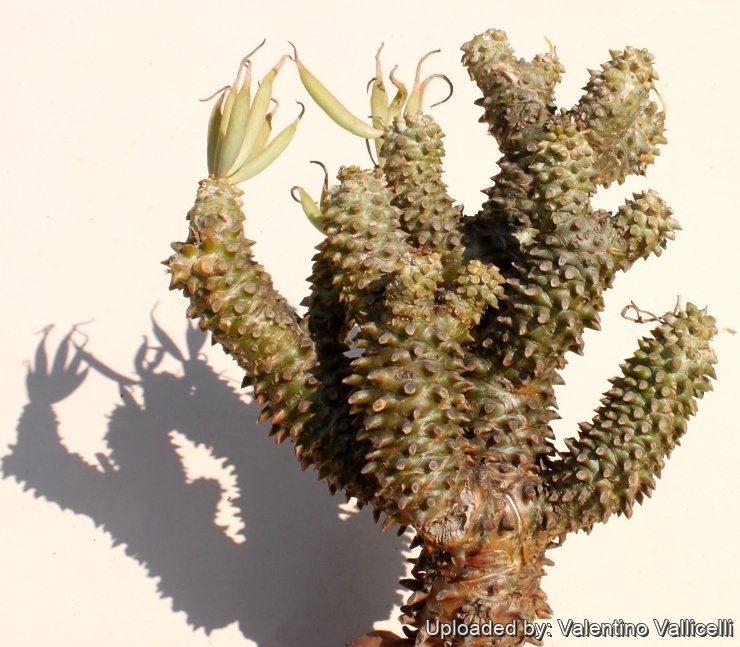
Traducción al español del texto de llifle.com (adaptación bajo la misma licencia CC-BY-SA).
Publicación: Bothalia 12(3): 382 (1978)
Origen y hábitat
Desde Namaqualand hasta el Pequeño Karoo.
Hábitat: Crece en crestas rocosas.
Nota
Las hojas de Tylecodon wallichii son muy venenosas si se ingieren.
Bibliografía
Major references and further lectures
- James Cullen, Sabina G. Knees, H. Suzanne Cubey “The European Garden Flora Flowering Plants: A Manual for the Identification of Plants Cultivated in Europe, Both Out-of-Doors and Under Glass” Cambridge University Press, 11/Aug/2011
- Botanical Research Institute, Department of Agricultural Technical Services, Republic of South Africa. “The Flowering Plants of Africa” Volumes 50-51, 1988
- Hermann Jacobsen “A Handbook of Succulent Plants: Ficus to Zygophyllum” volume 2 Blandford Press, 1960
- Jacobsen “Lexicon of succulent plants” 1974
- Werner Rauh “The Wonderful World of Succulents: Cultivation and Description of Selected Succulent Plants Other Than Cacti” Smithsonian Institution Press, 1984
- Gordon Rowley “Caudiciform and Pachycaul Succulents: Pachycauls, Bottle-,Barrel-And Elephant-Trees and Their Kin a Collector’s Miscellany” Strawberry Press. June 1st 1987
- Ernst Jacobus van Jaarsveld, Daryl Lee Koutnik “Cotyledon and Tylecodon” Umdaus Press, 2004
- Doreen Court “Succulent Flora of Southern Africa” CRC Press, 01/June/2000
- Karen van Rheede van Oudtshoorn, Margaretha W. van Rooyen “Dispersal Biology of Desert Plants” Springer Science & Business Media, 09 March 2013
Galería