Publication: Kaktus-ABC [Backeb. & Knuth] 225. 1936 [12 Feb 1936]
From llifle page Acanthocalycium peitscherianum
Description
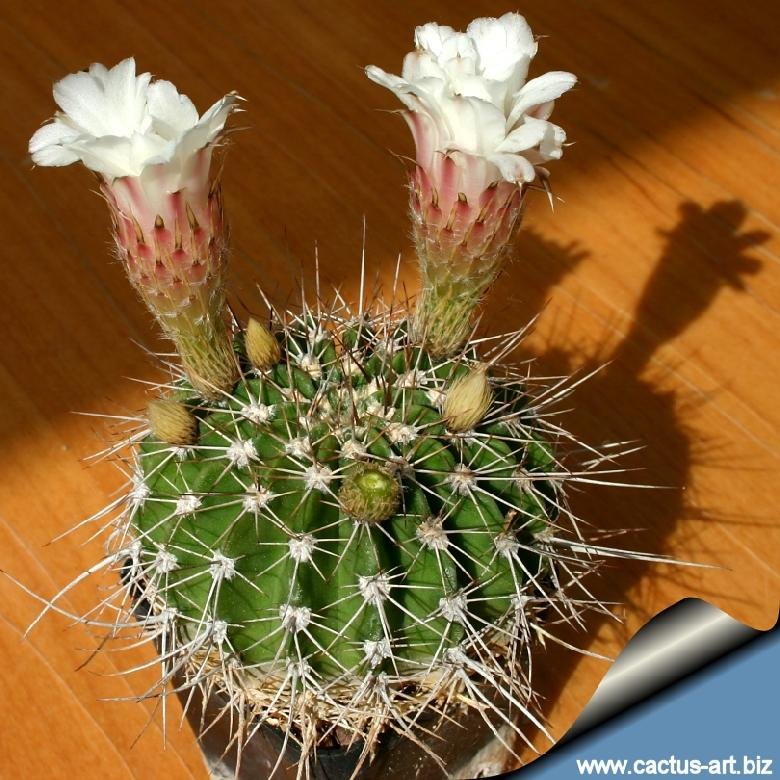
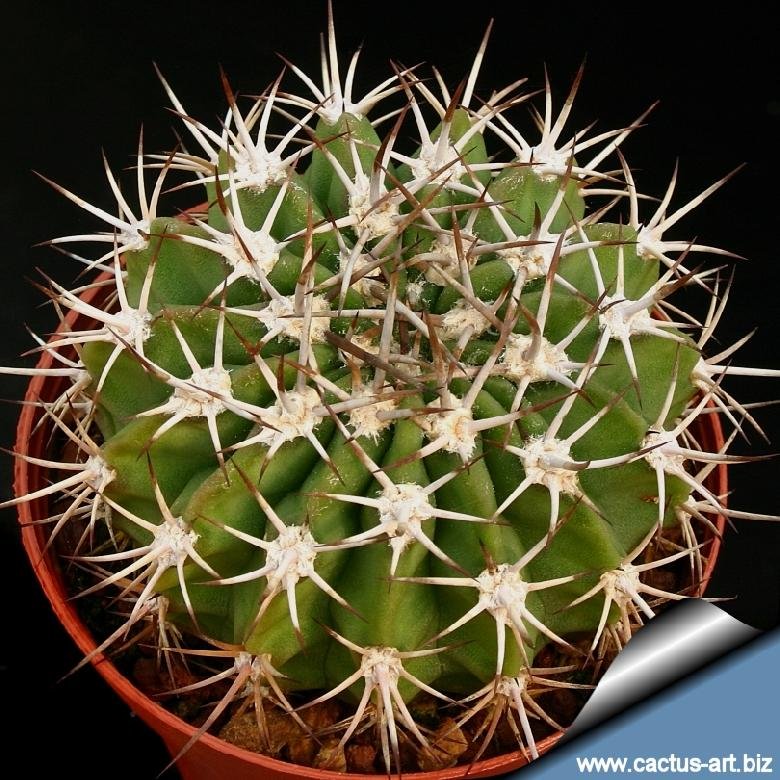
Echinopsis peitscheriana is a fairly slow growing solitary cactus and quite variable especially for the length of the spines (depending on population). This species is less often seen in cultivation than its relative Acanthocalycium spiniflorum f. violaceum (Acanthocalycium violaceum).
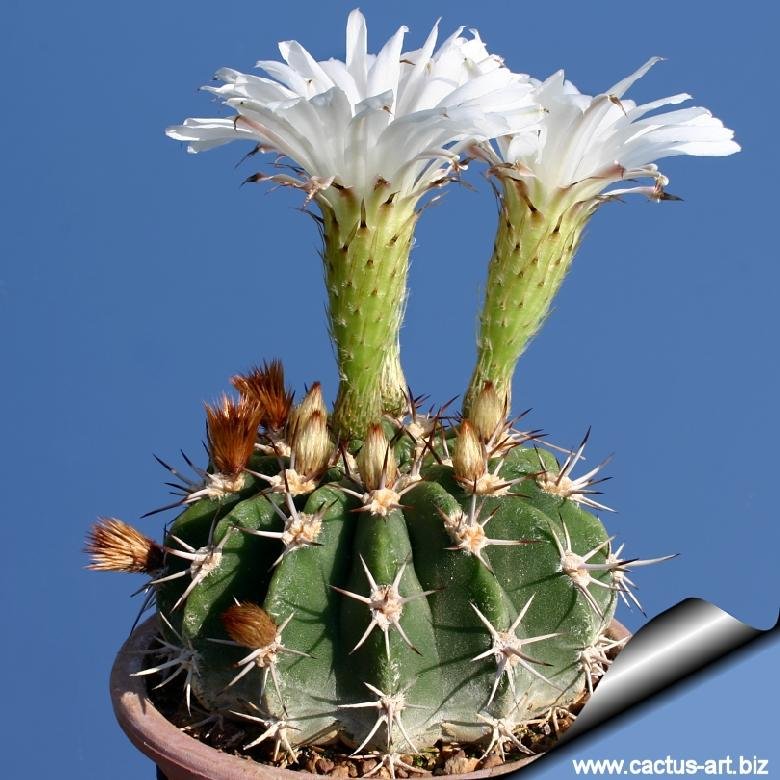
Stems: Spherical or spherical flattened green to dull greys-green.
Ribs: About 17-20 acute slightly notched up to one cm height.
Areoles: Elliptical, to yellowish-brown wool on the newer areoles, about 6 mm long.
Central spines: 1-4 from 1 to 6 cm long straight or slightly arched, awl shaped, brownish that turns grey as they ages, lowermost one often directed downward.
Radial spines: 6 to 10 unequal shorter than the radials.
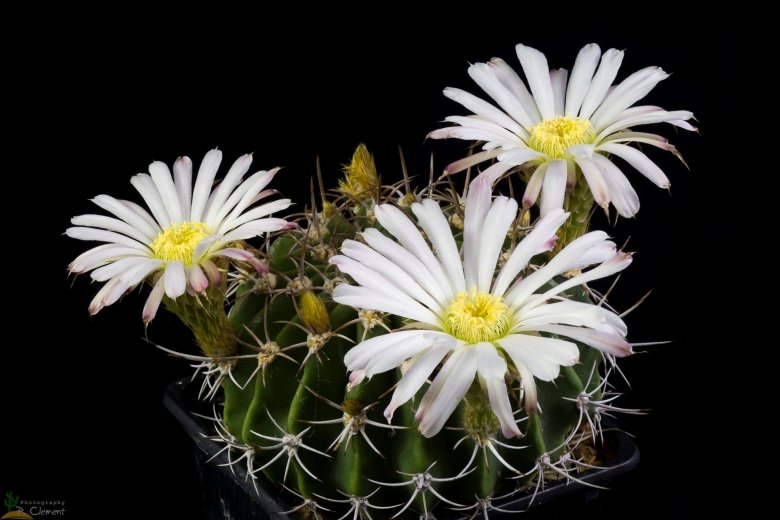
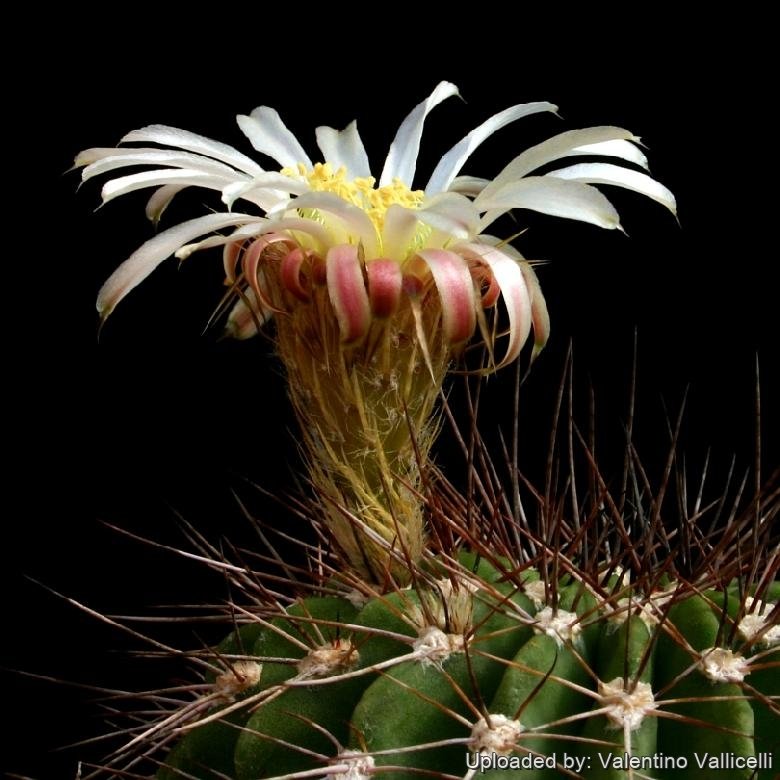
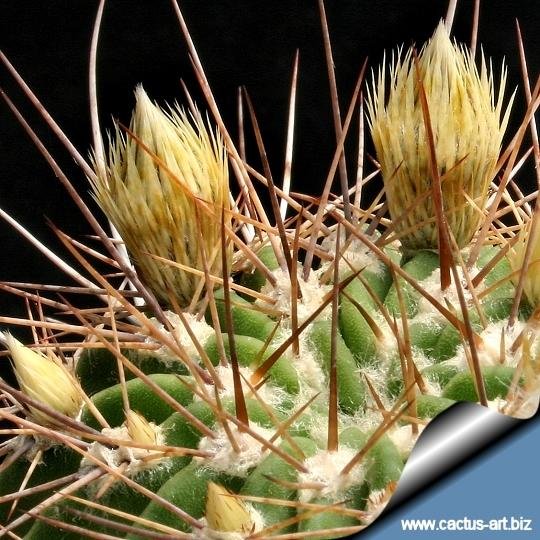
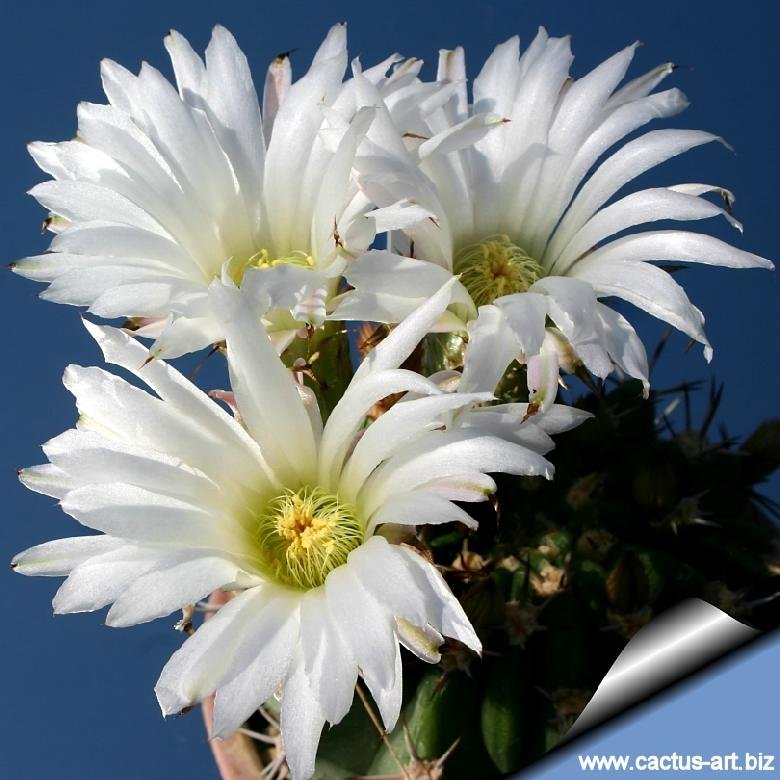
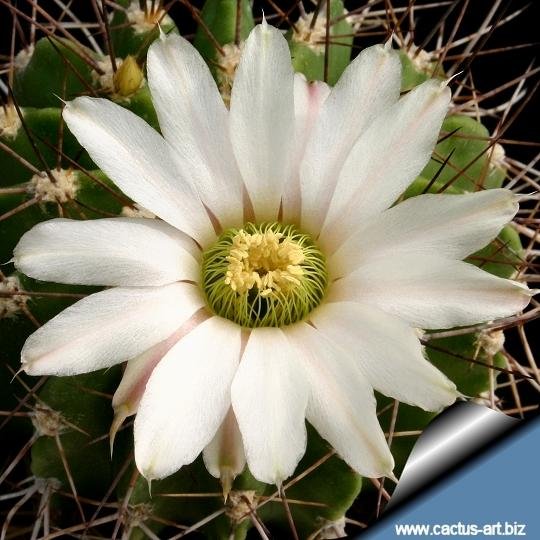
Flowers: 3 to 4 cm (or more) cm in diameter, funnelform to bell shaped, erect, usually white, but also clear pastel-pink or lilac-pink. Bud with long scales.
Origin and Habitat
Northern Argentina (Cordoba, San Luis).
Altitude: About 1000 metres above sea level.
Cultivation and Propagation
Acanthocalycium peitscherianum is an easy to grow succulent, more cold tolerant than most and less fussy regarding soil conditions.
Growth rate: It is a relatively rapidly growing and easily flowering species.
Soils: It likes very porous standard cactus mix soil.
Repotting: Use pot with good drainage.
Watering: Water regularly in summer, but do not overwater (Rot prone), keep dry in winter.
Fertilization: Feed with a high potassium fertilizer in summer.
Hardiness: Reputedly somewhat resistant to frost if kept on the dry side prior to, and during, cold weather (hardy to -12 C ° C, or less for short periods).
Exposition: Outside bright sunlight or afternoon shade, inside it needs bright light, and some direct sun, full sun is indispensable to keep plant compact with strong spines.
Uses: It is an excellent plant for container growing. It always looks good and stays small. It look fine in a cold greenhouse and frame or outdoor in a rockery.
Pests & diseases: It may be attractive to a variety of insects, but plants in good condition should be nearly pest-free, particularly if they are grown in a mineral potting-mix, with good exposure and ventilation. Nonetheless, there are several pests to watch for:
- Red spiders: Sensitive to red spider mite. Overhead watering is helpful in controlling mites.
- Mealy bugs: Occasionally mealy bugs they develop aerial into the new growth among the wool with disfiguring results, but the worst types develop underground on the roots and are invisible except by their effects.
- Scales: Scales are rarely a problem.
- Rot: Rot is only a minor problem with cacti if the plants are watered and “aired” correctly. If they are not, fungicides won’t help all that much.
Propagation: Direct sow after last frost. Seeds germinate in 7-14 days at 21-27° C in spring, remove gradually the glass cover as soon the plants will be well rooted (ca 1-2 weeks) and keep ventilated, no full sun for young plants!
Source: Acanthocalycium peitscherianum, LLIFLE - Encyclopedia of living forms, CC-BY-SA, retrieved 2026-10-25.
Gallery