Publication: Cact. Succ. J. (Los Angeles) 71(6): 323. 1999 [24 Nov 1999] Remarks: as ‘A. roseana’
Description
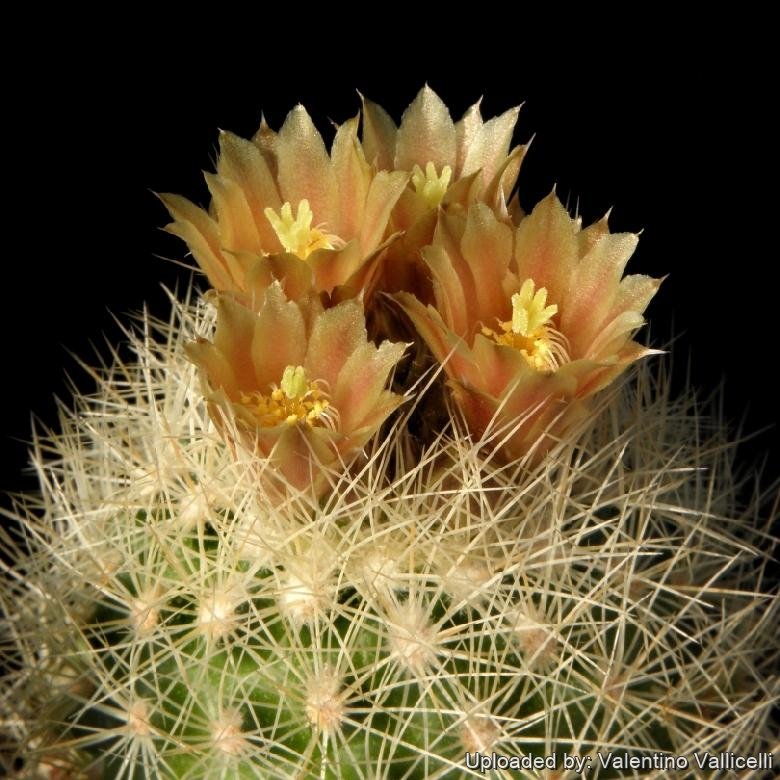
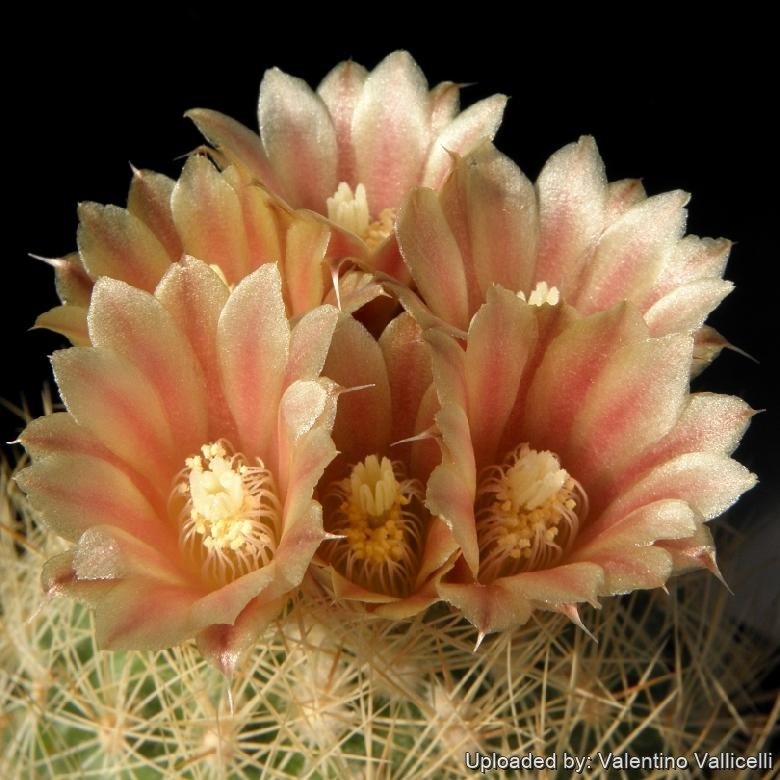
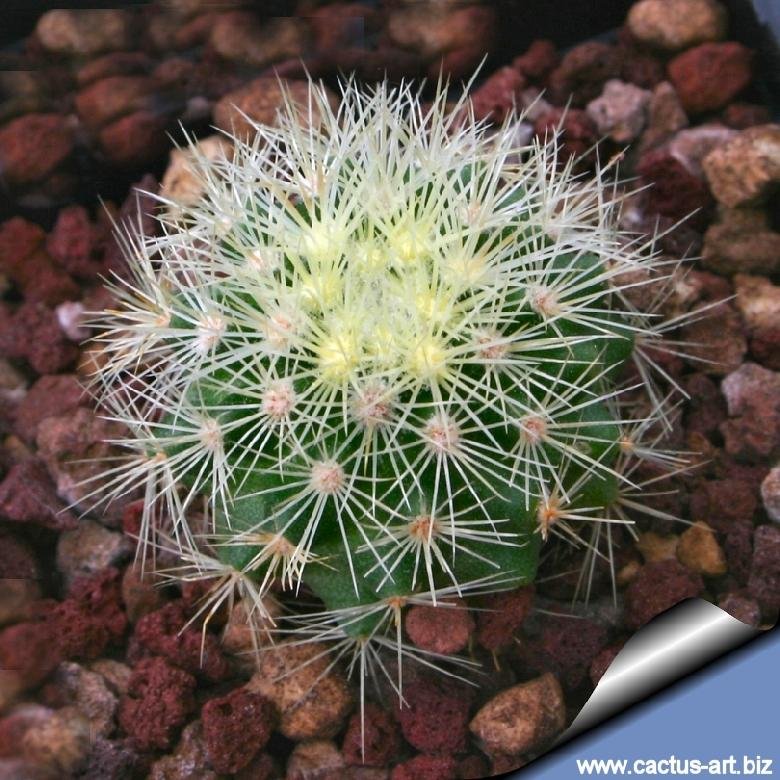
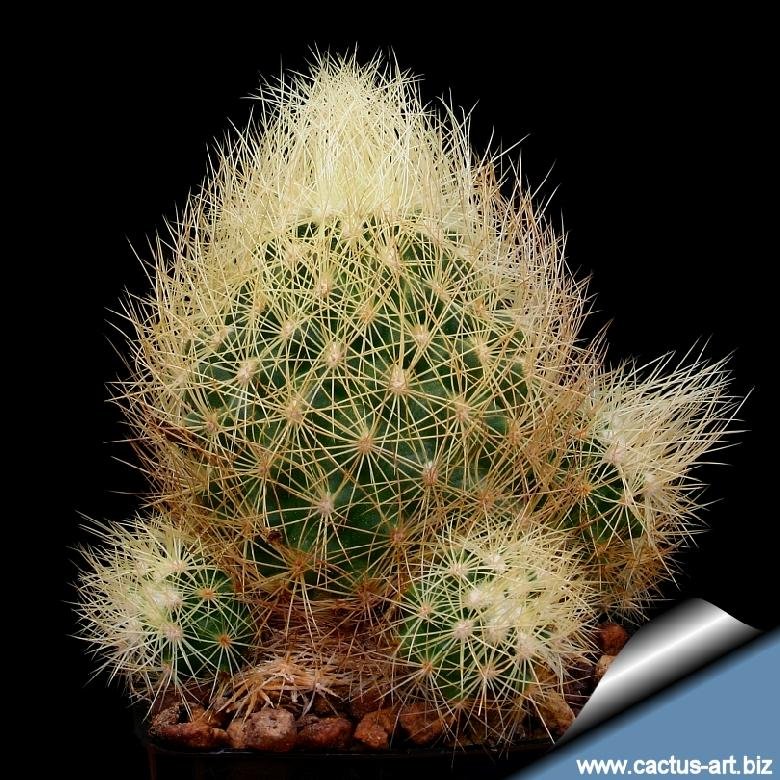
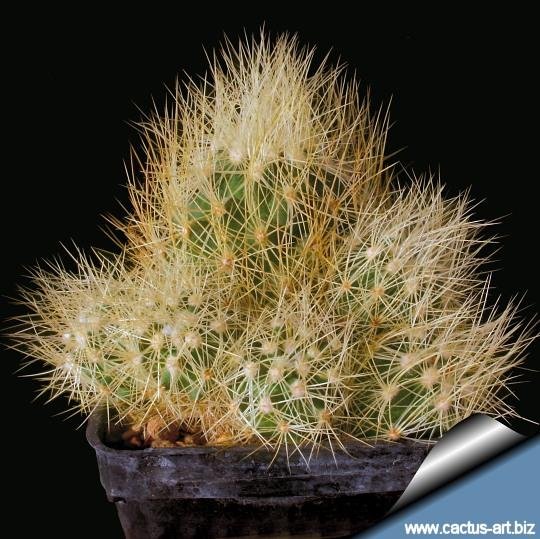
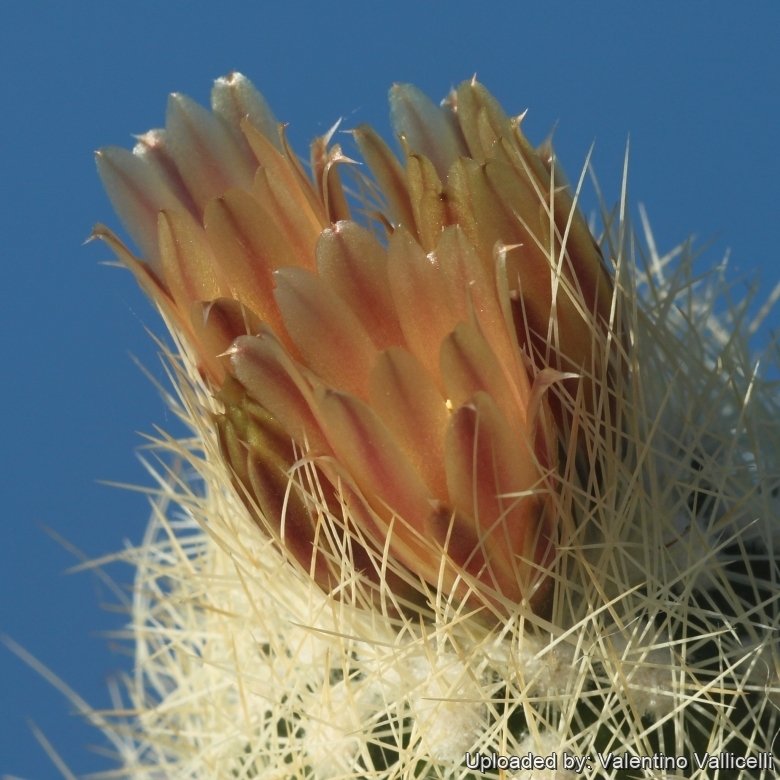
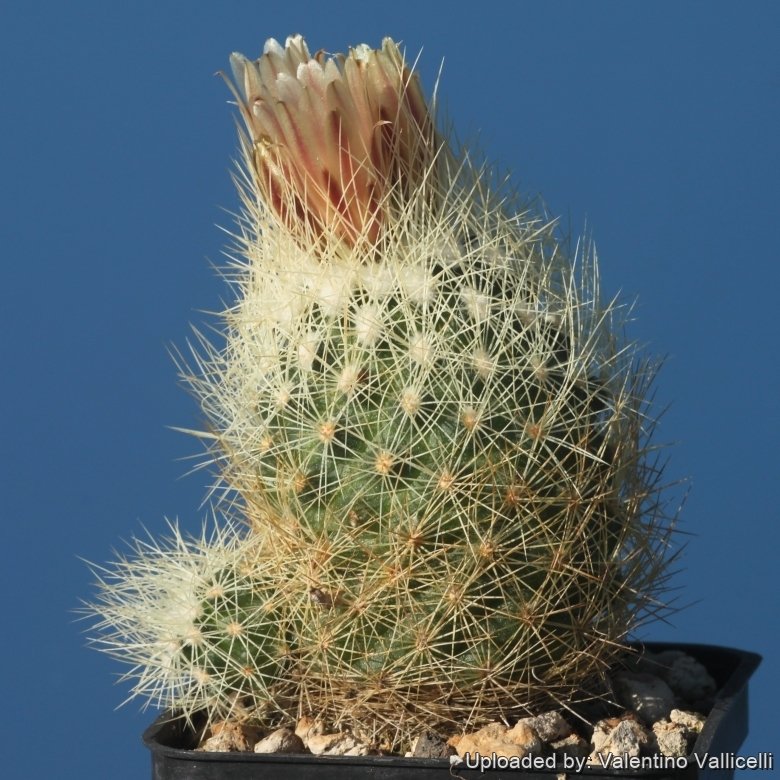
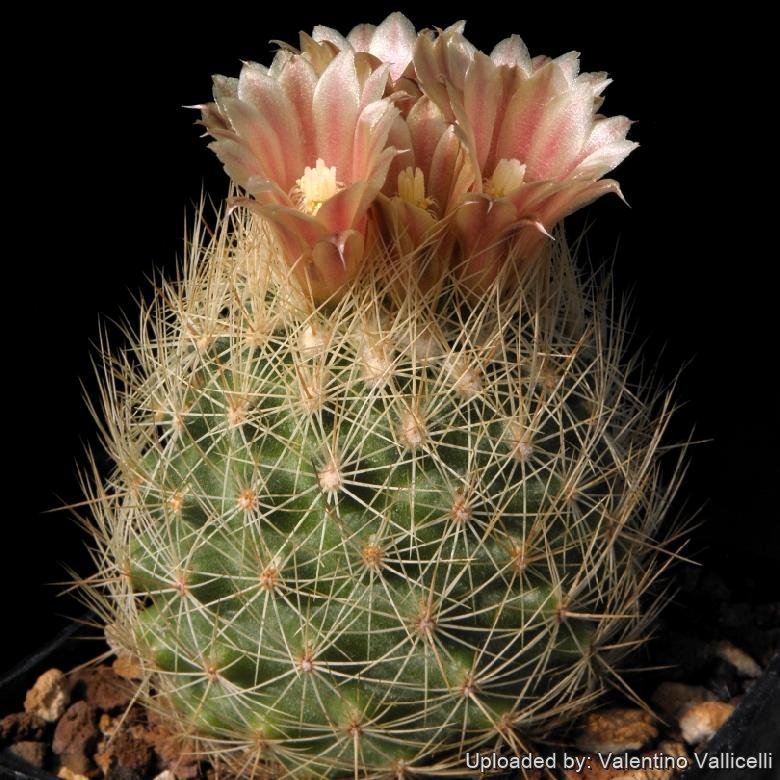
Acharagma roseanum, often misspelled: “roseana” is a small clumping plant with bronze-rose coloured flowers at the stem tips. Two subspecies are recognized, the nominate form and subsp. galeanense (Haugg) D.R.Hunt.
Note: Acharagma is a genus formed by only two small species of cacti: Acharagma roseana and Acharagma aguirreana from northern Mexico. This plants previously classificated as Escobaria are instead related to Pediocactus and Lophophora, DNA sequence clearly support the hypothesis that Acharagma is a distinct ‘good’ genus not closely related to Escobaria.
Habit: Small, soft bodied cacti. They are usually solitary but sometimes forming small clusters with age.
Stem: Up to 6 cm tall, up to 5 cm in diameter.
Ribs: The ribs have tubercles, with ungrooved areoles.
Spines: 4 to 6 central spines; 15 to 30 radials; whitish-yellow to rich gold coloured.
Roots: Thick tap root.
Flowers: The flowers are at the stem tips, and range from pink with bronze-rose coloured midveins to cream-yellowish, 2 cm in diameter.
Origin and Habitat
Mexico: mountains of south-eastern Coahuila and adjacent Nuevo León (extent of occurrence less than 6 km²).
Altitude: It grows at elevations between 1100 and 2100 metres above sea level.
Habitat and Ecology: It grows on rocky limestone hills in xerophytic shrubland together with Mammillaria carretii, Mammillaria candida v. estanzuelensis, Astrophytum capricorne, Echinocereus conglomeratus, Echinocereus stramineus, Opuntia microdasys and Yucca thompsoniana. This species is severely fragmented (the subsp. galeanense is very disjunct) and there is continuing decline in the quality of the habitat due to overgrazing by goats.
Cultivation and Propagation
Very slow growing. Because of the tap root they are very rot prone, so use highly gritty compost with much drainage and water regularly in summer, but do not overwater, it prefer a completely dry place during winter. An unheated greenhouse would be perfect. It can survive low temperatures (appr. -7°C). Full sun to light shade.
Propagation:: Easy to propagate from seed or (rarely) cuttings if available.
Bibliography
Major references and further lectures
-
Edward Anderson “The Cactus family” Timber Press, Incorporated, 2001
-
Nathaniel Lord Britton, Joseph Nelson Rose “Cactaceae: Descriptions and Illustrations of Plants of the Cactus Family” vol. 4 The Carnegie Institution of Washington, Washington 1923
-
James Cullen, Sabina G. Knees, H. Suzanne Cubey “The European Garden Flora Flowering Plants: A Manual for the Identification of Plants Cultivated in Europe, Both Out-of-Doors and Under Glass” Cambridge University Press, 11/Aug/2011
-
David R Hunt; Nigel P Taylor; Graham Charles; International Cactaceae Systematics Group. “The New Cactus Lexicon” dh books, 2006
-
Fitz Maurice, B, Sotomayor, M., Fitz Maurice, W.A., Hernández, H.M. & Smith, M. 2013. Acharagma roseanum. In: IUCN 2013. “IUCN Red List of Threatened Species.” Version 2013.2. <www.iucnredlist.org>. Downloaded on 20 February 2014.
Cultivars and forms (2)
Subspecies (1)
Other names (1)
Gallery