Publication: Nova Acta Phys.-Med. Acad. Caes. Leop.-Carol. Nat. Cur. 16(2): 676. 1833
Description
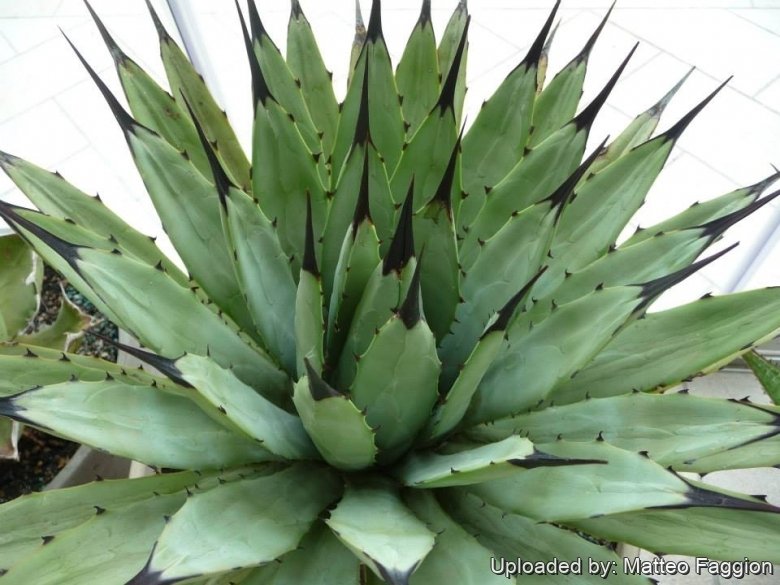
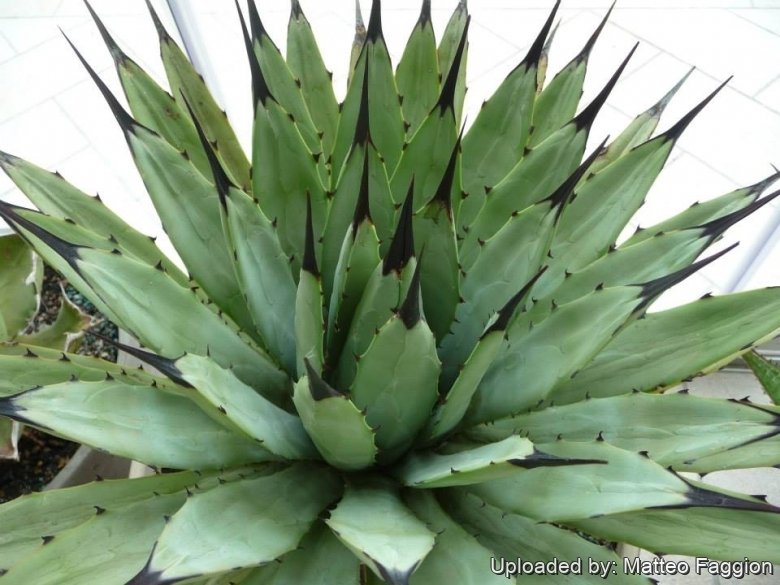
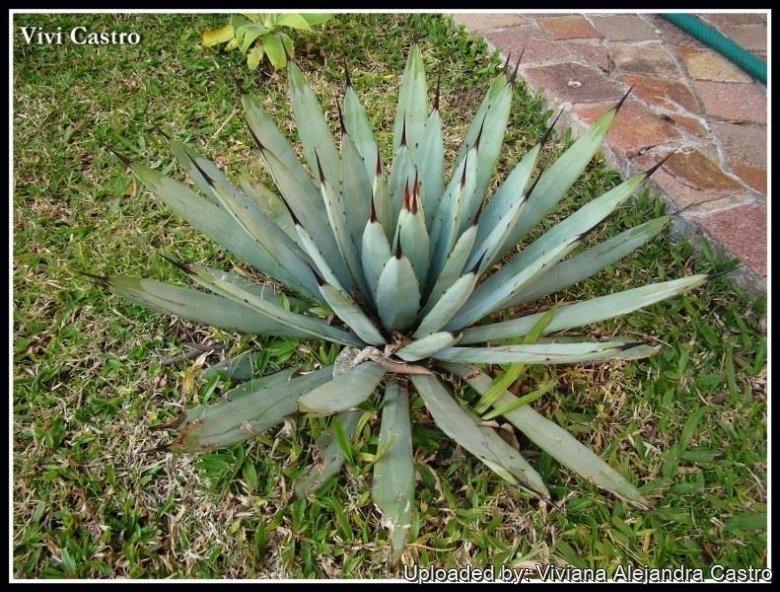
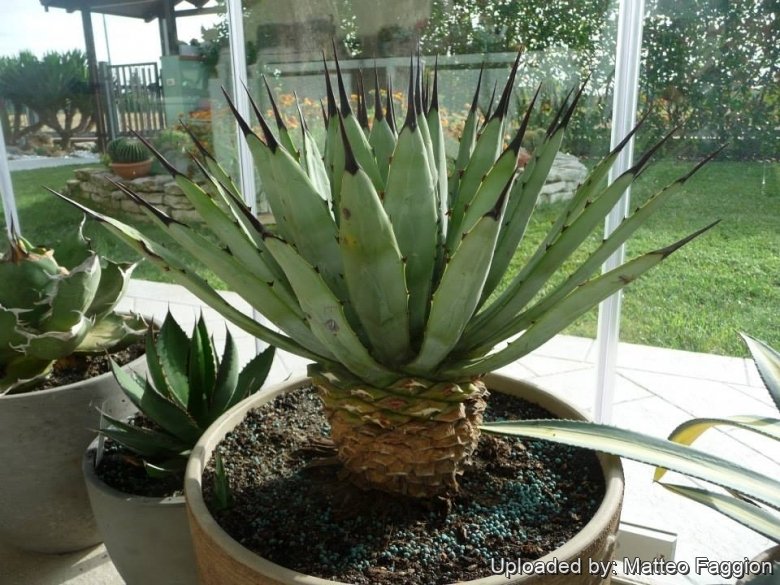
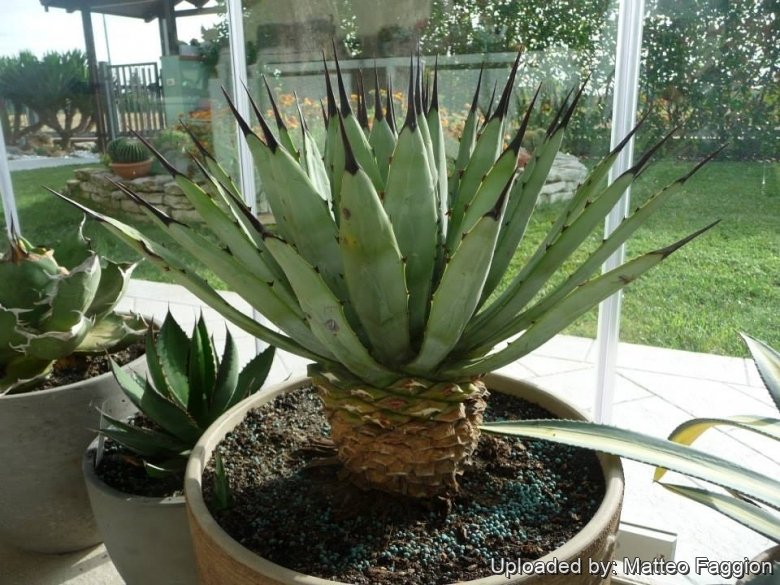
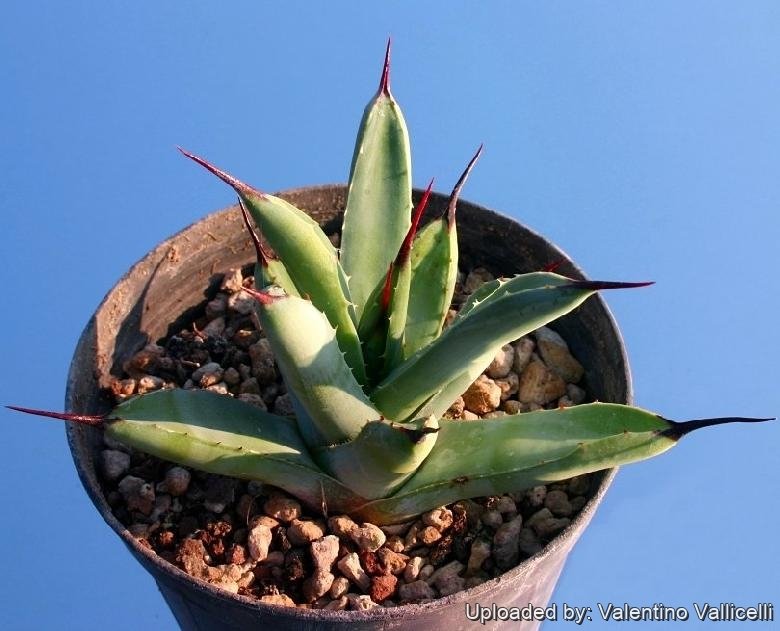
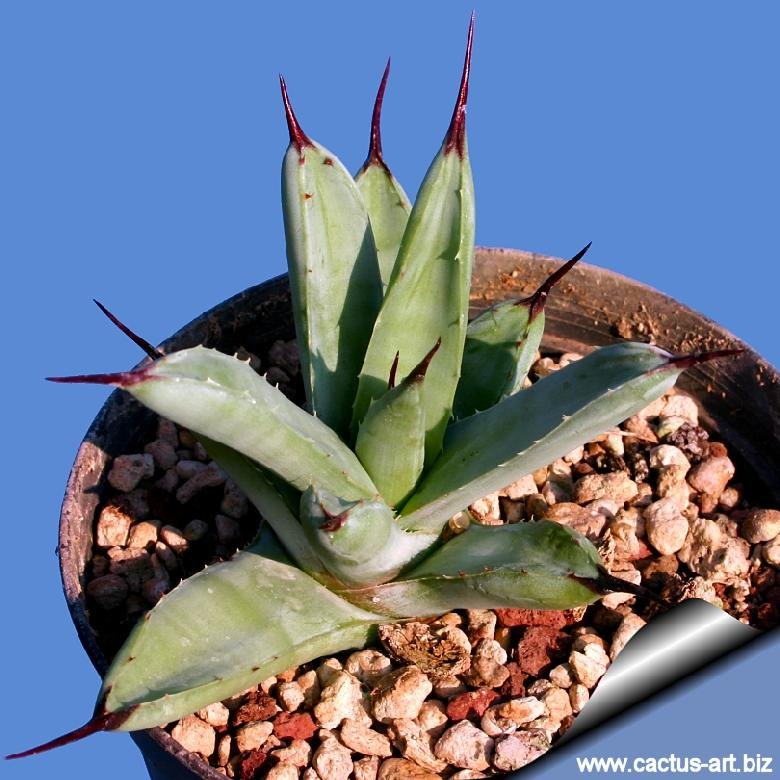
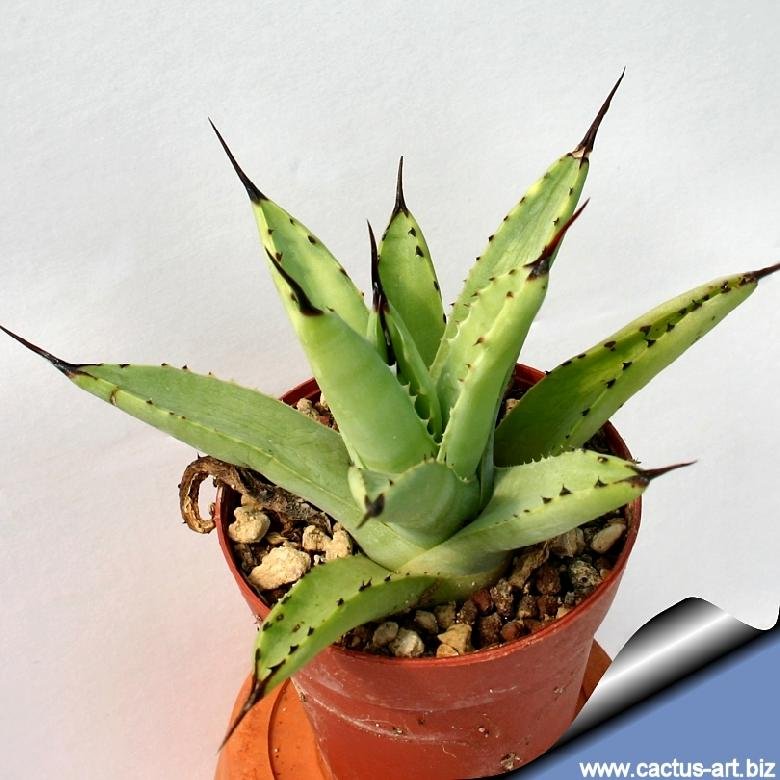
Agave macroacantha (Black-spined Agave) is a medium sized agave that forms dense clumps to 60 cm tall by 1.5 m wide composed of very regular leaf rosettes of a bluish grey colour that can be basal or can grow on a very short stem. Leaves are succulent, narrow sword-shaped blue-grey or greyish green and up to 35 cm long at a maximum, ending in sharp, contrasting, black spines at the tips. Flowers are small, purple-tinged green with a fuzzy interior, growing in bunches on sturdy stems of up to 3 m in height,though it has been reported that the age of the plant needs to be 15 years or better to flower. In the wild it is a very variable plant, with some populations having large, jet-black terminal spines, some having red-brown spines, some with small spines, some large. Several atypical variants were also reported, some doubtless due to artificial growing in greenhouses.
Stem: Short.
Rosetes: Small, 25 - 40 cm high, usually caespitose, with numerous evenly spaced leaves spreading widely from the centre.
Leaves: Linear, rigid, radiately spreading, patulous, acuminate, 25-35 long, 2.5-3 cm, bluish-grey-glaucous, margins straight or undulate; larger marginal teeth 3-4 mm, dark brown, irregularly spaced 1-3 cm apart, with slender cusps mostly curved from small low bases. Terminal spine subulate, straight to sinuous, rounded below, flat above, 3-3.5 cm long, dark brown to grey, not decurrent.
Inflorescence: About 2 m tall, paniculate, slender, part-inflorescences shortly spreading, 10-14 in the upper 1/4 of the inflorescence. Often after the flowering there appear “ small bulbs”( already formed tiny plants) which fall to the ground, giving life to a new colony of Agaves. When this plant begins to flower the center leaves take on an attractive reddish hue from where the dark red inflorescence begins to emerge
Flowers: 50-56 mm; Ovary angular-fusiform, 25-30 mm, neck constricted, deeply grooved; Tepals pruinose green with purple tinge, tube 14 mm, lobes more or less equal, 13-16 mm, quickly wilting at anthesis. Filaments 35-40 mm long, sharply bent from regular insertion 7-8 mm above base of tube, spotted; anthers spotted, 20-21 mm long, slightly excentric.
Blooming season: Spring to summer.
Fruits (capsules): Oblong 4.5 long, 2 cm in diameter, dark brown, stipitate, with constricted prominent beak.
Seeds: 6-7,mm long, 4-5 mm, triangular, dull black.
Origin and Habitat
Agave macroacantha is native to northern Oaxaca and also near the town of Tehuacan in the State of Puebla, Mexico
Habitat and ecology: It grows in barren rocky, very arid terrain. It is common on the dry sedimentary slopes about Tehuacan.
Cultivation and Propagation
Agave macroacantha (Black-spined Agave) is a stunning specimen plant for containers. In milder climates this plant grows well outdoor in full sun (Light shade or eastern exposure in hot areas), plant in deep well drained soil where the climate is suitable ( coastal zones and islands). The plants in pot tend to be slow grower, but worth the effort.
Growth rate: Agave macroacantha is relatively slow growing, taking several years to reach flowering size.
Soil: Plant in well-drained soil. It is better to use wide pots which allow space for the roots of the Agave macroacantha to grow.
Repotting: Every two years the pots should be changed, shortening the roots and eliminating the buds which suck the goodness from the plant, limiting its growth.
Exposure: Full sun or light shade or eastern exposure in hot low desert areas.
Waterings: Water thoroughly when soil is dry to the touch. In winter watering this plant can be done once every 1-2 months, there is no need to mist the leaves. The blue-and blue-gray-leaved forms are from very arid areas, and once established in ground the plants should be kept dry to prevent any potential rot. The blue-green-leaved form is from slightly more moist areas, and will tolerate extra water.
Hardiness: Agave macroacantha can tolerate nighttime air temperatures of -6°C when droughted but not if watered and it is best to avoid severe freezing temperatures.
Heat Tolerance: Excellent.
Propagation: Agave macroacantha can sexually reproduce by seeds and propagate vegetatively by aerial bulbils and ground-level basal shoots and rhizomes. It suckers, but not an aggressive spreader in the garden. Remove the basal suckers in spring or summer and let the cuttings dry for a few days before inserting in compost. The only problem is the logistics of getting to the suckers - very sharp spines and suckers usually right up against, or underneath the mother plant.
Uses: These striking plants are wonderful when used for accent or simply to provide some all year round foliage colour and often used in a pot as a patio plant, they make an eye-catching statement and along with other evergreen plants in pots, can be moved around to change the scenery or position to give more shelter.
Bibliography
Major references and further lectures:
-
J. Thiede: “Agave macroacantha.” In: Urs Eggli “Illustrated Handbook of Succulent Plants: Monocotyledons: Monocotyledons” Springer Science & Business Media, 17/Jul/2001
-
Park S. Nobel “Environmental Biology of Agaves and Cacti” Cambridge University Press, 16/Oct/2003
-
Wikipedia contributors. “Agave macroacantha.” Wikipedia, The Free Encyclopedia. Wikipedia, The Free Encyclopedia, 30 Jan. 2014. Web. 4 Nov. 2014.
-
Gentry, Howard Scott. “Agaves of Continental North America.” University of Arizona Press, Tucson, 1992.
-
San Marcos Growers contributors “Agave macroacantha - Black-spined Agave ” San Marcos Growers <http://www.smgrowers.com\>. Web. 27 Sep. 2014.
-
Mary and Gary Irish “Agaves, Yuccas, and Related Plants: A Gardener’s Guide” Timber Press, 2000
-
August J. Breitung “Agave macroacantha”. In: “The Agaves.” The Cactus & Succulent Journal Yearbook, 1968
-
T. Heller “Agaven.” Münster 2006 .
-
W. Trelease “Agave macroacantha and allied Euagaves.” In: Annual Rep. Missouri Bot. Gard. 18: 231–256 1907
From llifle page Agave besseriana longifolia viridis
Description
Agave macroacantha viridis is distinguished from the standard greyish-blue Agave macroacantha for its greener foliage, however the two plants are quite similar and it is hard to tell apart one from the others, if not for the foliage colouration.
Habit: This is a very distinctive small to medium-sized stemless or short-stemmed Agave, it forms, neat, compact, rosette composed of many narrow leaves. It forms dense clumps apparently generated by the multiplication of ground-level offshoots to nearly 60 cm tall by 150 cm wide comprised of 25 to 35 inch wide rosettes.
Leaves: Bluish-green, straight, dagger-like, evenly spaced that radiate straight out from the centre of the plant, up to 55 cm long (but usually not more than 15-30 cm) with a thick, stiff, prominent, straight or undulate, rounded below, 3 cm long terminal spine (white/brown) dark brownish-red to almost black) . The margins of the leaves are very straight (or some time undulate) and have short, contrasting dark brown, serrated teeth 0,5-2,5 cm apart.
Flowers: The inflorescence is made up of a 2 metre slender stem with 10 to 14 lateral branches which hold groups of purple-tinged green flowers with a fuzzy interior flowers. Often after the flowering there appear small bulbils (already formed tiny plants) which fall to the ground, giving life to a new colony of Agaves. When this plant begins to flower the centre leaves take on an attractive reddish hue from where the dark red inflorescence begins to emerge
Blooming season: Spring to summer. The species does not flower as freely as some, the plant needs to be 15 years or better to flower.
Origin and Habitat
Mexico ( Oaxaca and near Tehuacan in Puebla)
Habitat: Grows in barren rocky and very arid terrain where it grew with Cephalocereus hoppenstedtii, Neobuxbaumia tetetzo and a Mammillaria sp. at 1500-2000 m.
Source: Agave besseriana longifolia viridis, LLIFLE - Encyclopedia of living forms, CC-BY-SA, retrieved 2026-10-25.
From llifle page Agave flavescens var. macracantha
Description
No description available yet:
Please help us compiling a detailed article on this species and share all you know about it.
Cultivation and Propagation
It is a stunning specimen plant for containers or a well drained spot in the garden. It tend to be slow grower, but worth the effort. Grow it in porous soil with adequate drainage. Itdo well in full sun or a lightly shaded area. Water thoroughly when soil is dry to the touch. In winter watering this plant can be done once every 1-2 months, there is no need to mist the leaves. It is theoretically hardy to -3° C, particularly when dry but it is best to avoid severe freezing temperatures. Heat Tolerance: good
Propagation: Relatively easy to propagate by seeds or by suckers (if available) Remove the basal suckers in spring or summer and let the cuttings dry for a few days before inserting in compost.. only problem is the logistics of getting to the suckers - very sharp spines and suckers usually right up against, or underneath the mother plant.
Uses: These striking plants are wonderful when used for accent or simply to provide some all year round foliage colour and often used in a pot as a patio plant, they make an eye-catching statement and along with other evergreen plants in pots, can be moved around to change the scenery or position to give more shelter.Uses: These striking plants are wonderful when used for accent or simply to provide some all year round foliage colour and often used in a pot as a patio plant, they make an eye-catching statement and along with other evergreen plants in pots, can be moved around to change the scenery or position to give more shelter.
Source: Agave flavescens var. macracantha, LLIFLE - Encyclopedia of living forms, CC-BY-SA, retrieved 2026-10-25.
Cultivars and forms (1)
Other names (1)
Gallery