Description
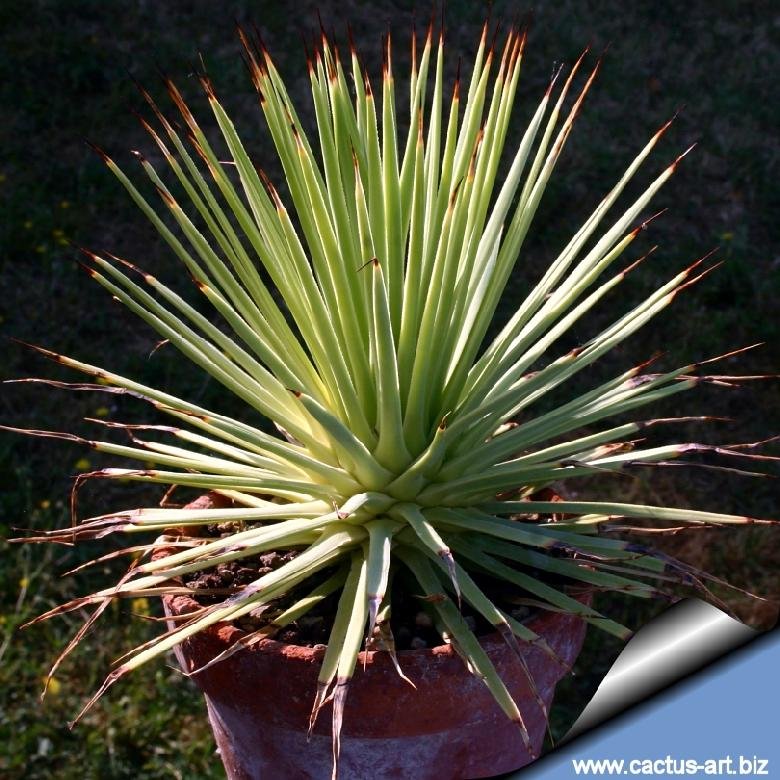
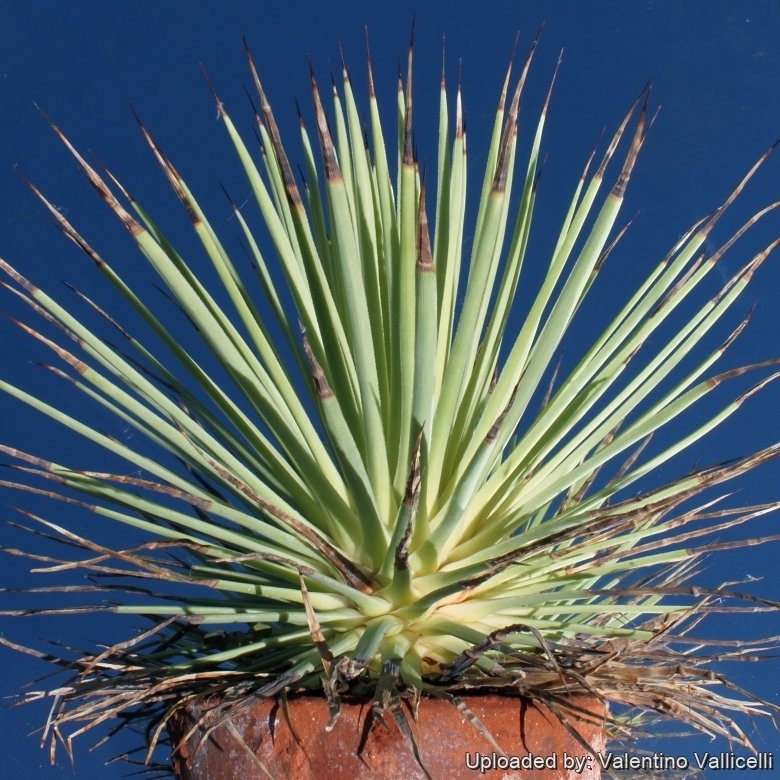
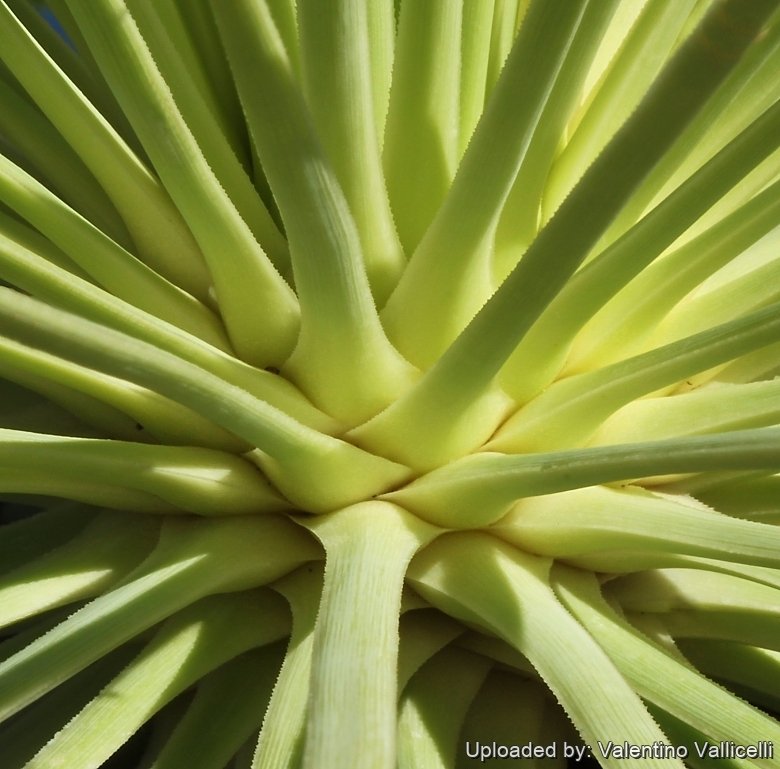
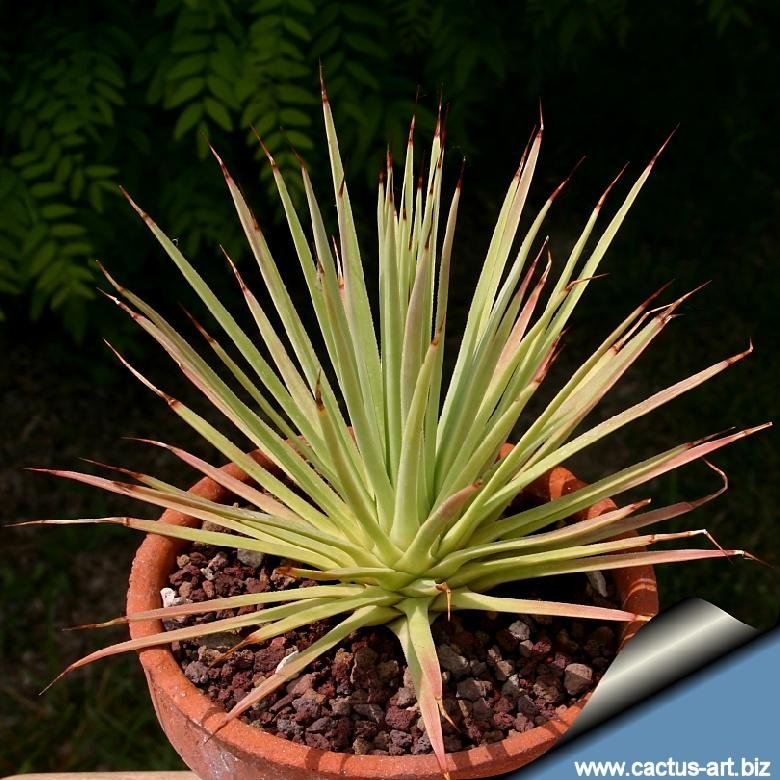
Agave striata is a dense, suckering rosette succulent with unique spiny pencil-like foliage, with nice spherical growth that branch profusely from the base. Older clumps can be to 2-3 m broad. Due to the wide area of distribution, this species shows many different forms, particularly for general habit and leaf form, and to a lesser extent in flower structure. It very similar to Agave stricta, and can be easily confused with a Yucca.
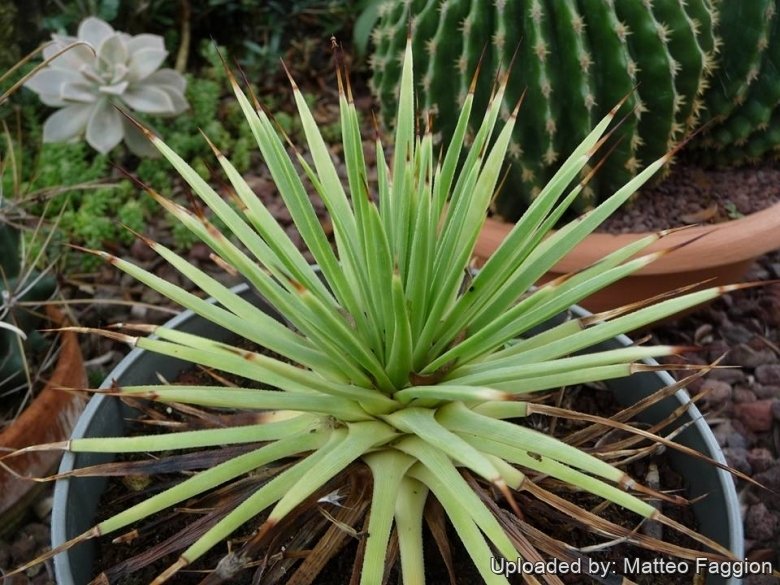
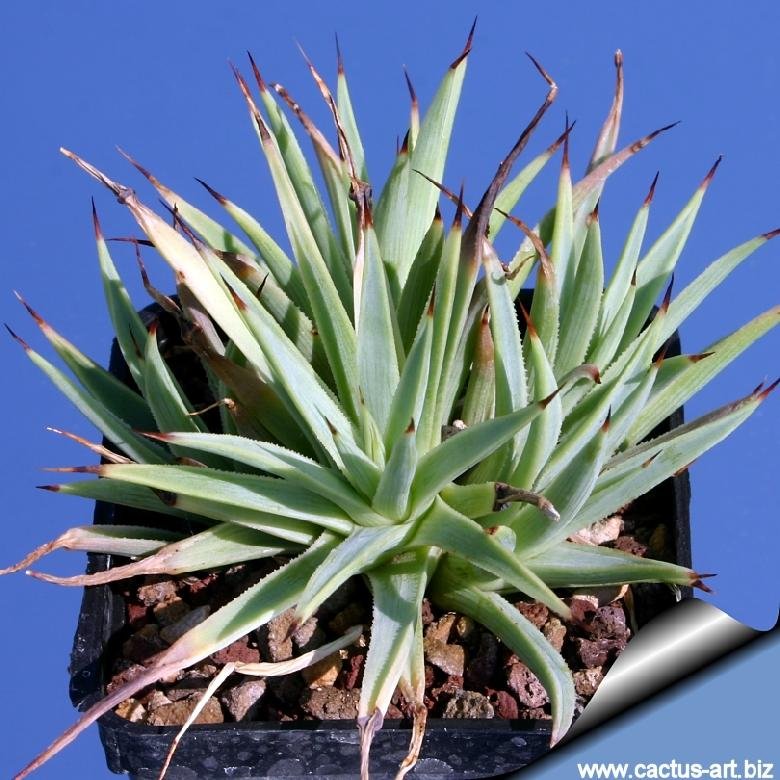
On the contrary the A. striata “minima” – here described - is a dwarf plant that only reach a maximum size of 15-25 cm.
Stem: Very short.
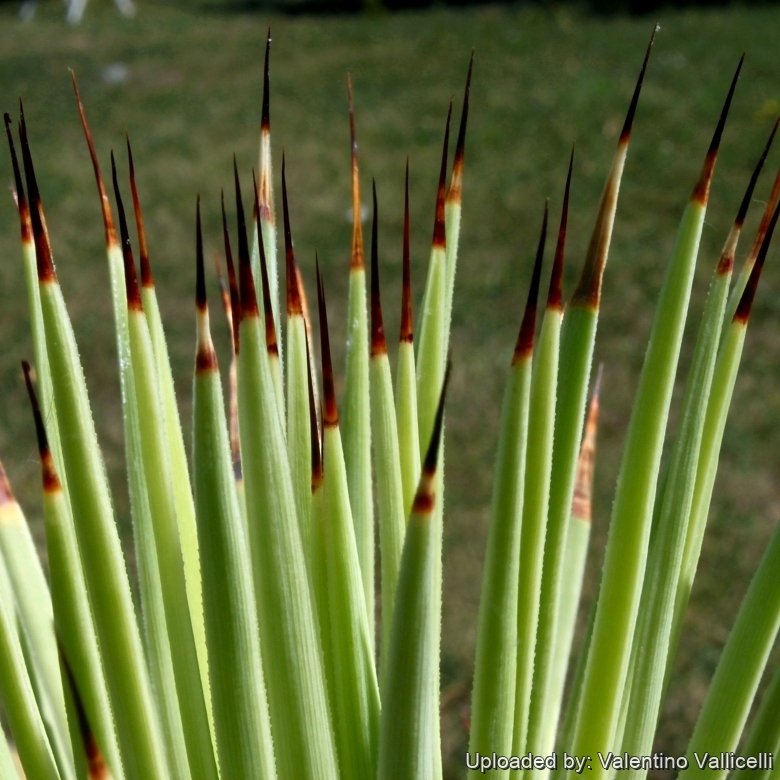
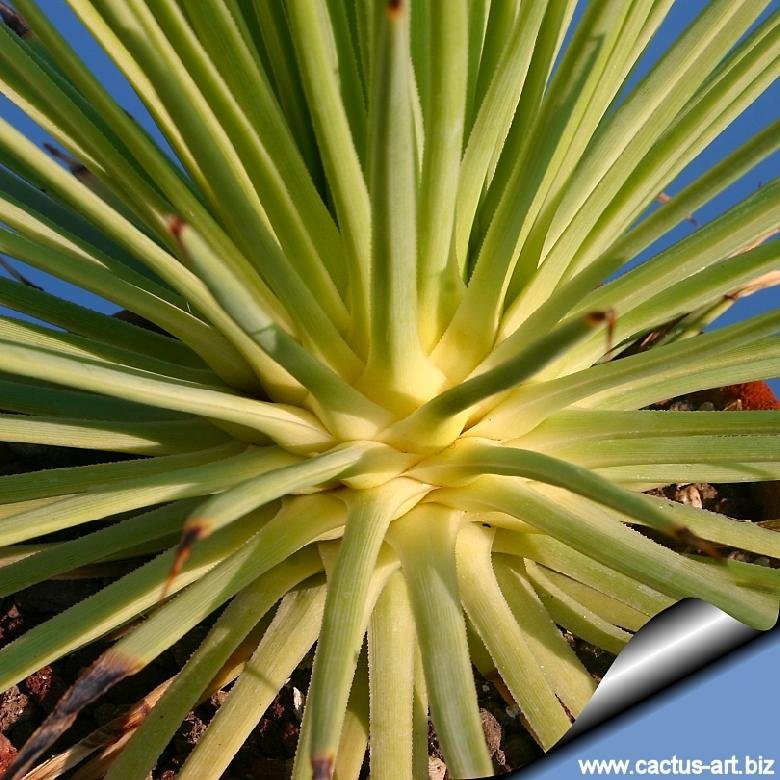
Leaves: Very numerous, linear, straight to arching, rather turgid, convex above, smooth or scabrous along the keels and below, with no marginal spines, 25-100 cm long, pale-green, silvery-grey or rusty, that turn a dark purplish-brownish apically below the terminal spine.
Spine: One apical, subulate, very pungent, about 1-5 cm long, dark reddish-brown or grey.
Inflorescence: Erect 1,5-2,5 km tall, rather laxly flowered. Flowers greenish-yellow to purplish in fall.
Origin and Habitat
Mexico (coahuilia, Nuevo Leon, Tamaulipas, Durango, Zacatecas, San Luis Potosi, Queretaro, puebla)
The ‘minima’ form is probably a nursery produced cultivar.
Habitat: It is limited to drier valleys and plains, with rainfall /year less than 500 mm.
Ecology: It is one of the few non-monocarpic agaves. The initial rosettes, after the flower stalks finish blooming in mid-summer, branch and continue to grow, eventually creating a stack of porcupine-like balls.
Cultivation and Propagation
A. striata nana is a versatile and very hardy plant that can be grown in half-shade to full-sun. It can take moderate to severe freezes, and is extremely drought tolerant. It tends to be more slow-growing than the standard species plant, hence the price. In winter watering this plant can be done once every 1-2 months, there is no need to mist the leaves. Agave striata is theoretically hardy to -3° C. Particularly when dry but it is best to avoid severe freezing temperatures. Heat Tolerance: Excellent.
Propagation:: Relatively easy to propagate by by suckers (if available) Remove the basal suckers in spring or summer and let the cuttings dry for a few days before inserting in compost.
Gallery