Description
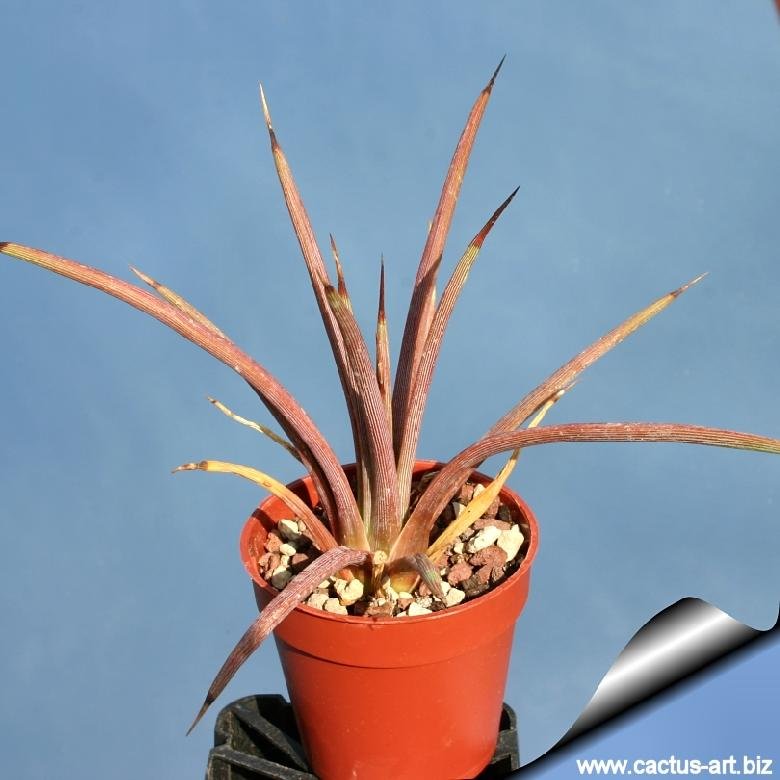
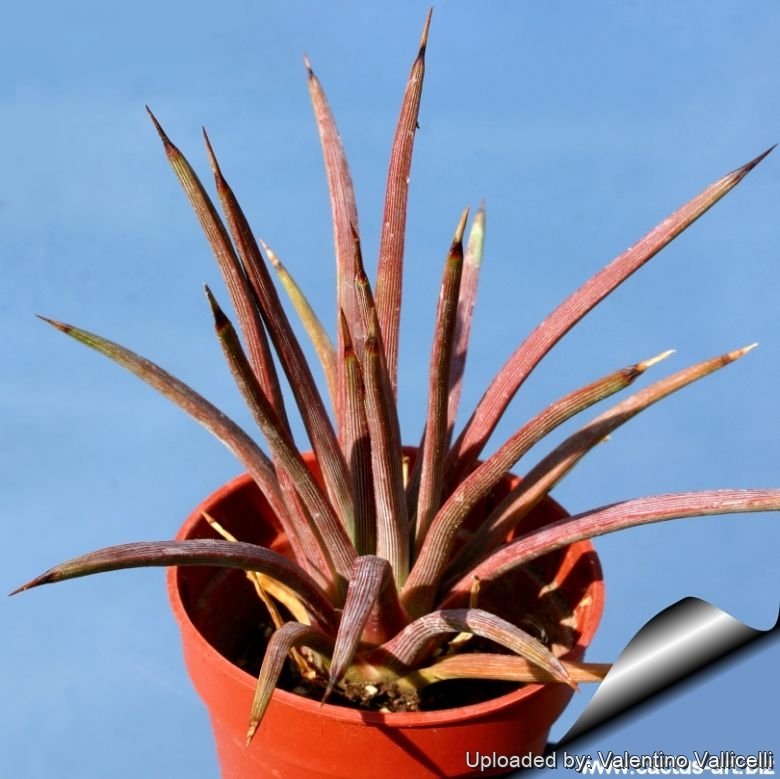
It is a small species, forming large balls of skewer-like leaves and looking like a very nasty porcupine. This species has the tightest spherical shape of any agave and will form offshoots to create a colony of rosettes. Each rosette grows in a slightly different direction and reminds one of a freeze-frame photo of grasses blowing in the wind or of forests of anemones moving with the currents.
Stem: Thick branched.
Rosettes: Individual rosettes, with hundreds of thin leaves up to 30 cm in height and width.
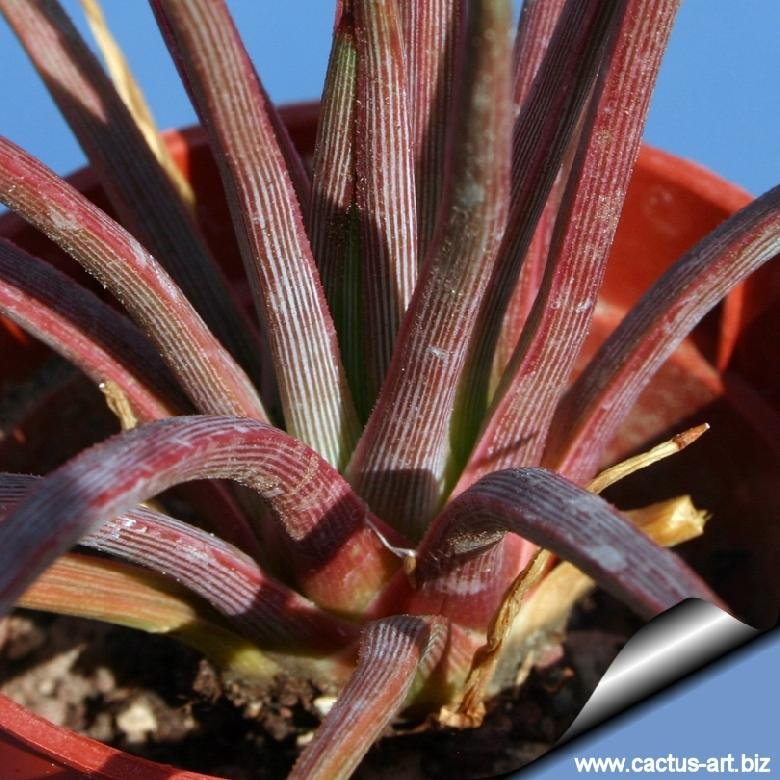
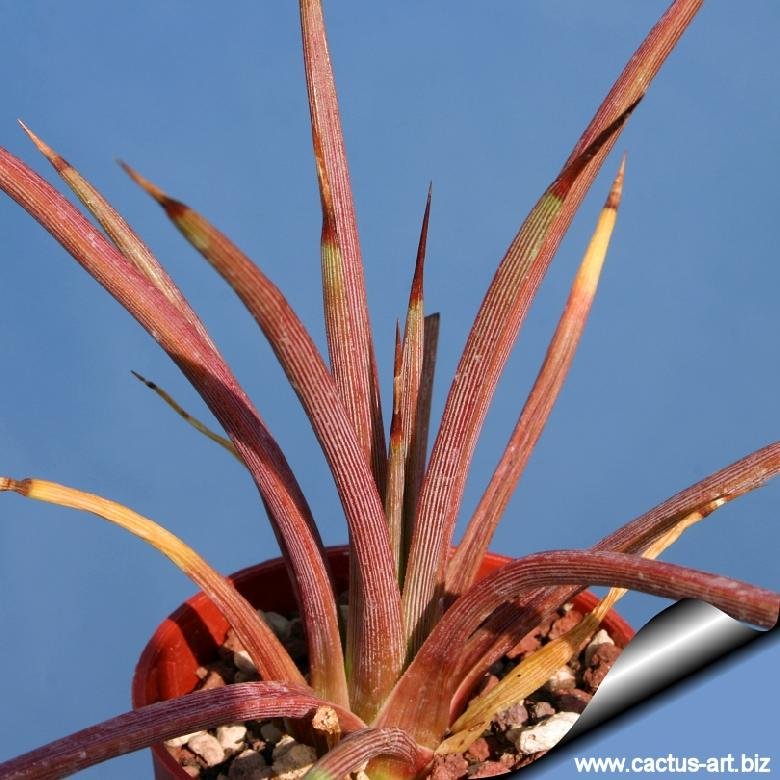
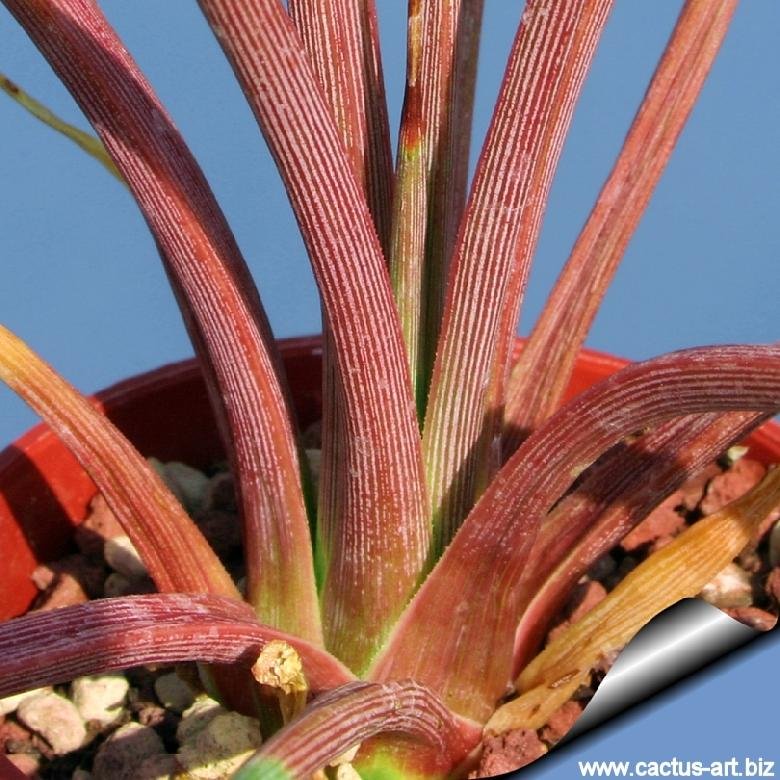
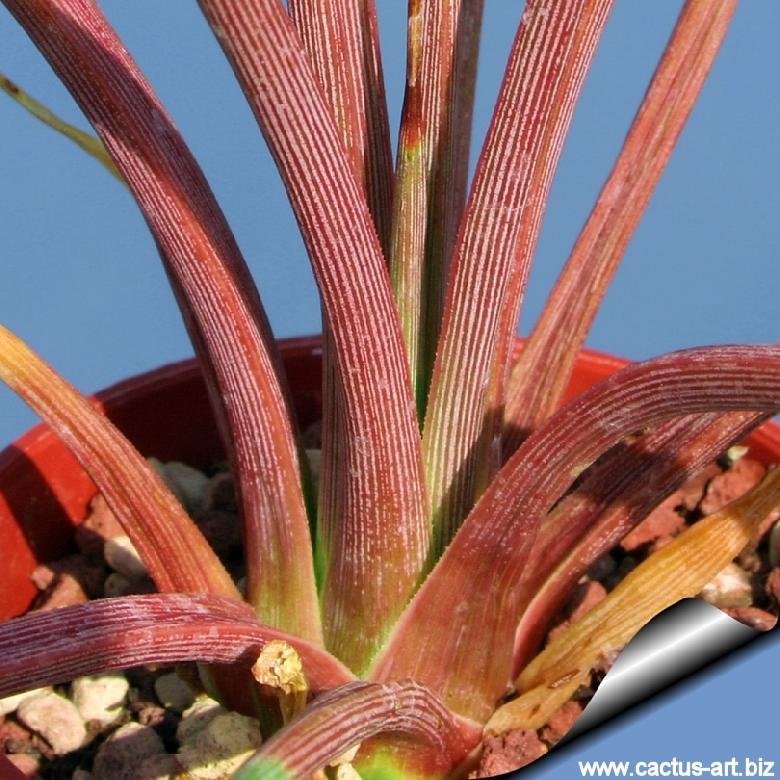
Leaves: Narrow, evergreen, yellow-green, green or glaucous blue, square to roundish in cross-section, toothless on the margin, about 35 cm long; thick at base, then narrowing to end in a very sharp spine. The forma rubra (red form) has thin red longitudinal lines on the leaves that give it a red colour that enhances under stress condition (especially drought, strong sun and cold)
Flowers: The flowers vary from green to reddish brown or purple, on a dense 150-200 cm spike-like raceme. It is one of the few non-monocarpic Agaves (just like A striata)
Blooming season: July to september. May flowers when mature at 8-10 years.
Remarks: It is very similar to Agave striata, but tends to have more and somewhat curved leaves, shorter flower tubes and a generally more symmetrical shape. In addition the leaves have a rounder section. A mature plant of Agave sticta looks like a meatball or a balled-up hedgehog. Once you have seen this plant, you won’t confuse it with the similar looking and sounding Agave striata.
Origin and Habitat
Agave stricta is native to the Tehuacan Valley of southern Puebla and northern Oaxaca, in Mexico. The “rubra” is a selected form found in cultivation.
Habitat: It is generally found on dry hills and on flats in the open desert.
Ecology: It is one of the few non-monocarpic agaves. The initial rosettes, after the flower stalks finish blooming in mid-summer, branch and continue to grow, eventually creating a stack of porcupine-like balls.
Cultivation and Propagation
A. stricta is a versatile and very hardy plant that can be grown in half-shade to full-sun. It can take moderate to severe freezes, and is extremely drought tolerant. In winter watering this plant can be done once every 1-2 months, there is no need to mist the leaves. Agave stricta is theoretically hardy to -4° C, particularly when dry - but it is best to avoid severe freezing temperatures. Heat Tolerance: Excellent
Propagation: Relatively easy to propagate by suckers (if available) Remove the basal suckers in spring or summer, and let the cuttings dry for a few days before inserting in compost.
Bibliography
Major references and further lectures
- James Cullen, Sabina G. Knees, H. Suzanne Cubey “The European Garden Flora Flowering Plants: A Manual for the Identification of Plants Cultivated in Europe, Both Out-of-Doors and Under Glass” Cambridge University Press, 11/Aug/2011
2)Urs Eggli “Illustrated Handbook of Succulent Plants: Monocotyledons” Springer, 2001
- Hermann Jacobsen ”A Handbook of Succulent Plants: Abromeitiella to Euphorbia” Blandford Press, 1960
3)CONABIO. “Catálogo taxonómico de especies de México. 1.” In Capital Nat. México. CONABIO, Mexico City. 2009