Publication: Kew Bull. 52: 146 1997
Description
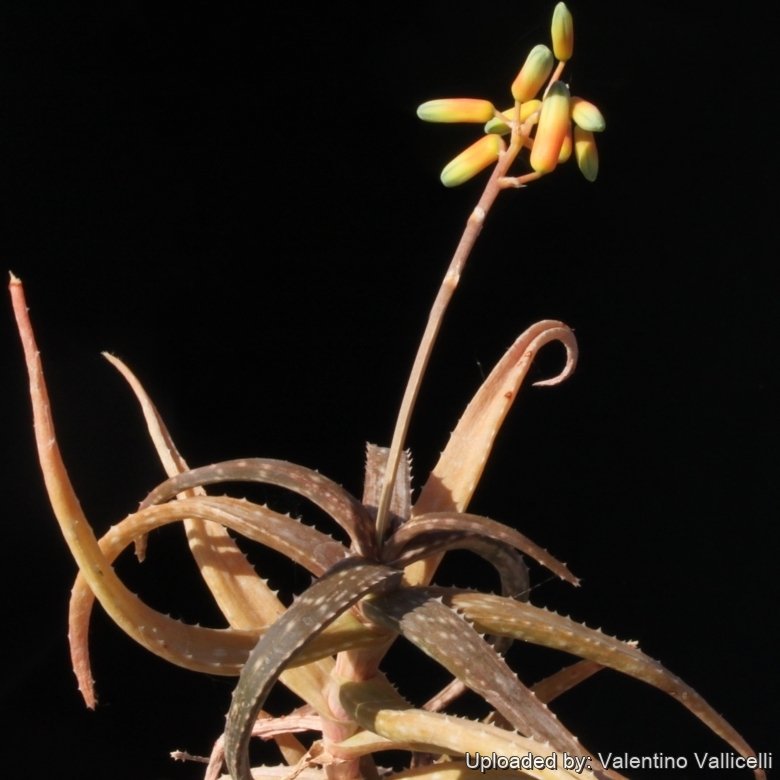
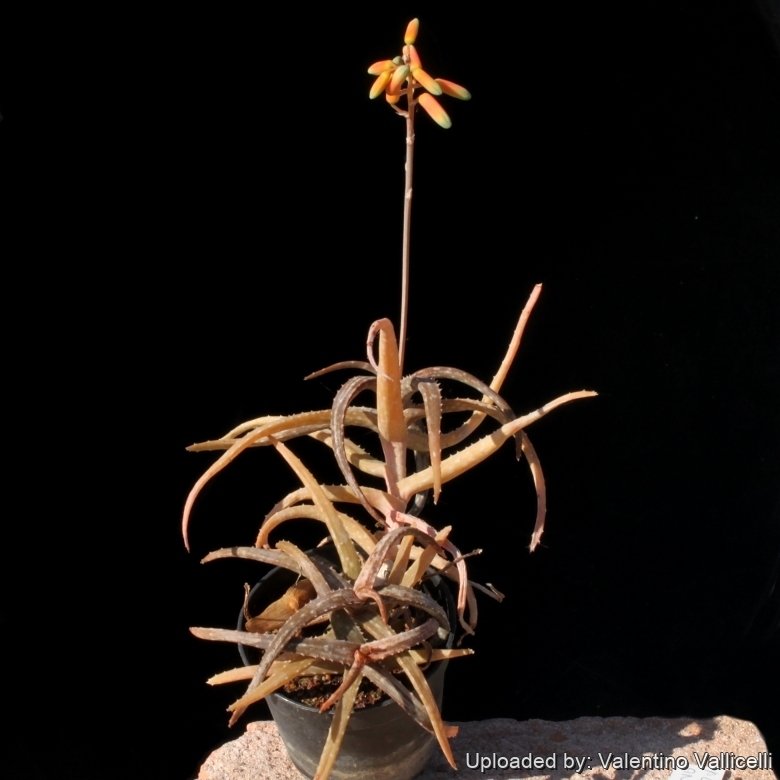
It is a pendent shrub, usually unbranched.
Stem: Pendulous up to 6 m long.
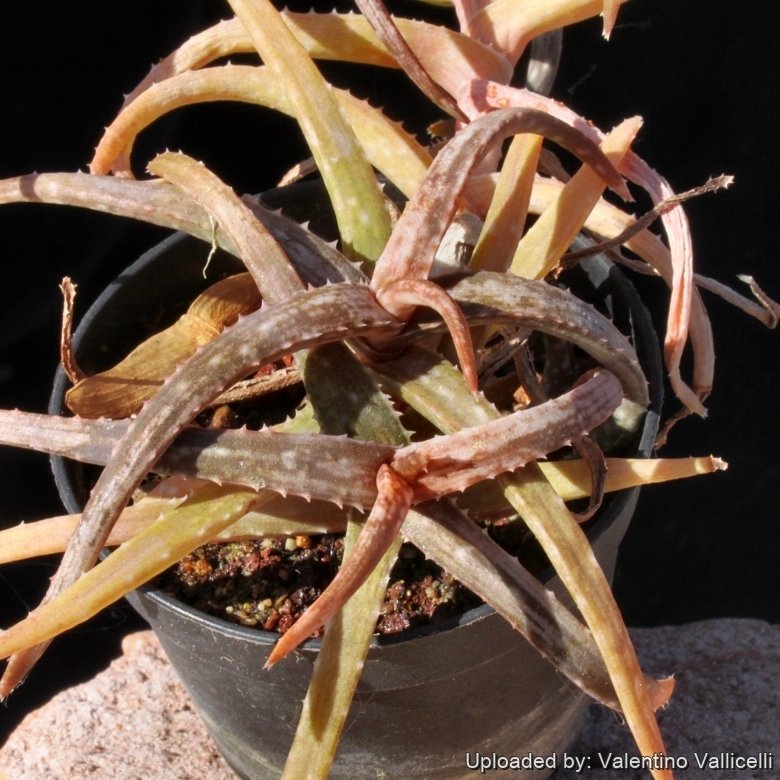
Leaves: 8-18 cm long.
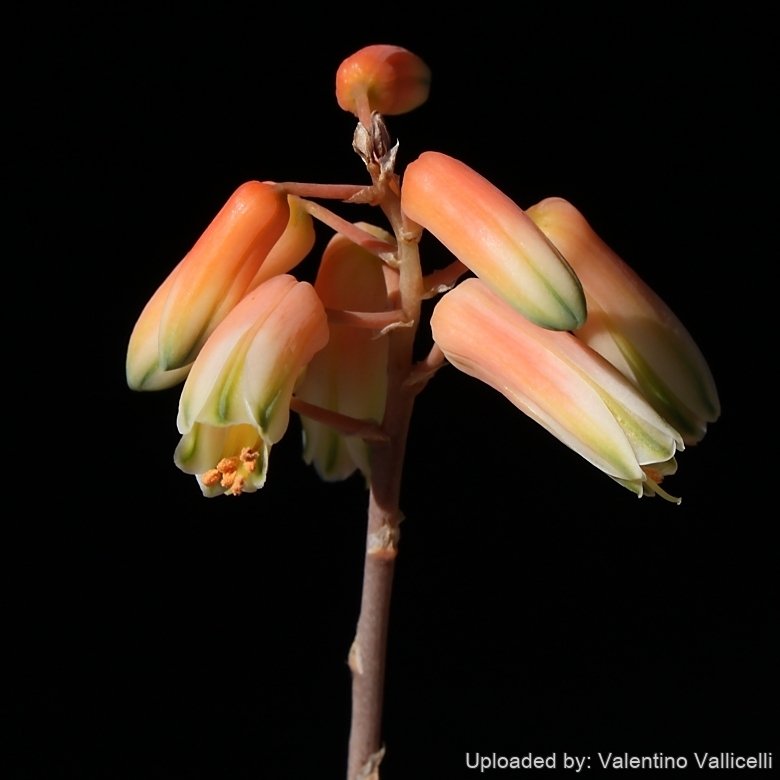
Inflerescence: Up to 30 cm tall. In habitat, with pendulous stems, the inflorescence has often a distinct U-shape, usually not shown in cultivation.
Remarks: This species is related to Aloe steudneri.
Origin and Habitat
Ethiopia (Shewa Region)
Type locality: Ankober, Ethiopia.
Habitat: It grows hanging down cliffs in steep slopes at 3000 to 3500 m elevation.
Cultivation and Propagation
Aloe ankoberensis needs full sun in general or light shade summer. Its main growing periods are spring and Autumn. This species is dormant in winter.
Moisture requirements: Keep relatively dry, careful watering is required, as it is prone to rot if overwatered, especially in the winter months.
Hardiness: Tender, frost protection is required keep it at or around 5-10°C in winter, this plant requires winter heat, and in temperate regions is cultivated under glass.
Propagation: Via offsets or seeds.
Bibliography
Major references and further lectutres
- Wikipedia contributors. “Aloe bakeri.” Wikipedia, The Free Encyclopedia. Wikipedia, The Free Encyclopedia, 17 Jul. 2013. Web. 3 Feb. 2015.
2)Walters, S.M. “The European Garden Flora, Vol. 1. Pteridophyta; Gymnospermae; Angiospermae — Alismataceae to Iridaceae.” 1986
-
Susan Carter, John J. Lavranos, Leonard E. Newton, Colin C. Walker “Aloes. The definitive guide.” Kew Publishing, Royal Botanic Gardens, Kew 2011,
-
Leonard Eric Newton: Aloe bakeri. In: Urs Eggli (Hrsg.): “Sukkulenten-Lexikon. Einkeimblättrige Pflanzen (Monocotyledonen).” Eugen Ulmer, Stuttgart 2001
-
Urs Eggli, Leonard E. Newton “Etymological Dictionary of Succulent Plant Names” Springer, Berlin/Heidelberg 2010