Publication: Cact. Succ. J. (Los Angeles) 39: 167. 1967
Description
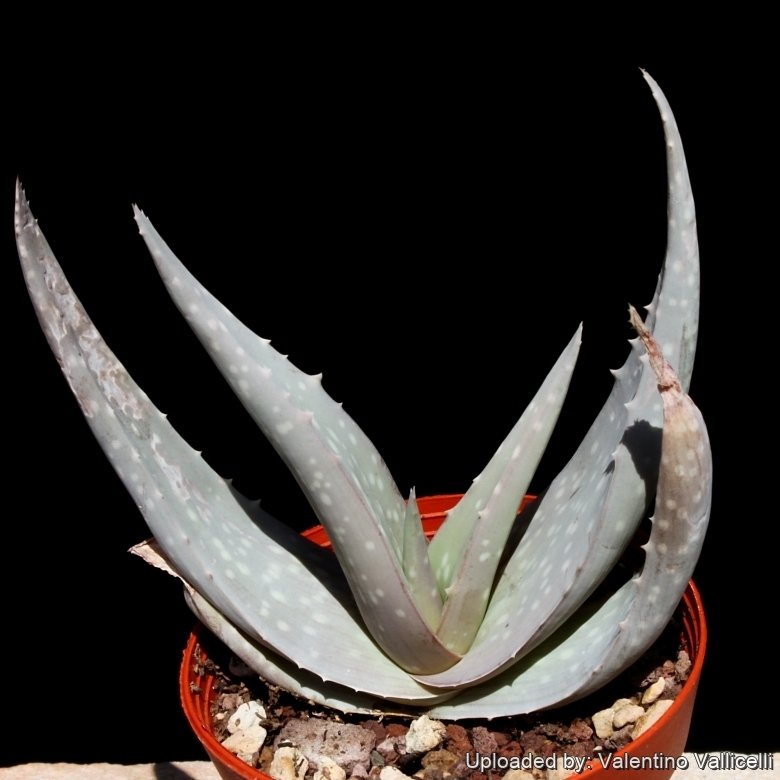
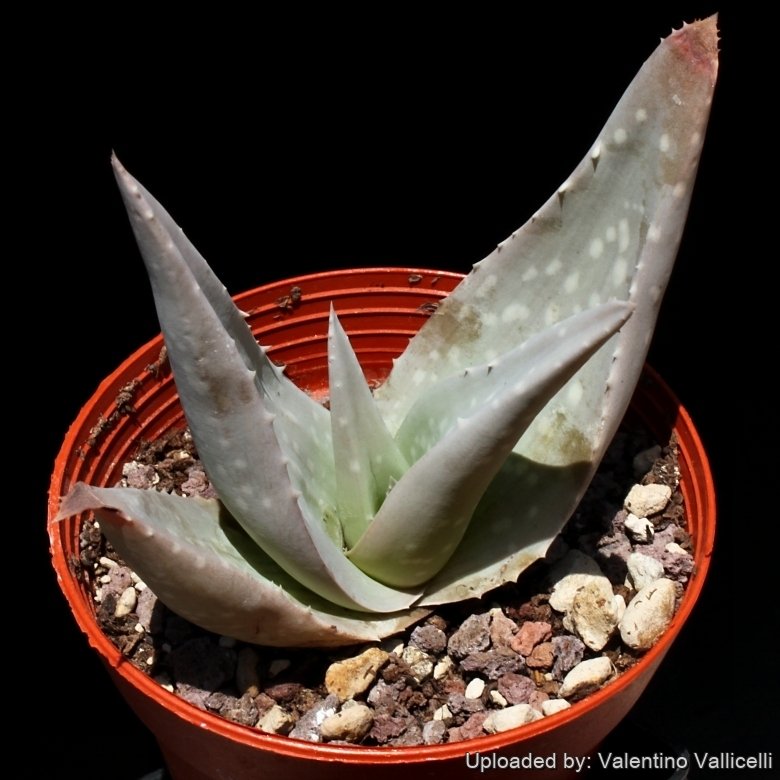
It is a succulent perennial plant with solitary, stemless, rosettes up to 1.5 m tall and striking tall spikes of red to yellow flowers.
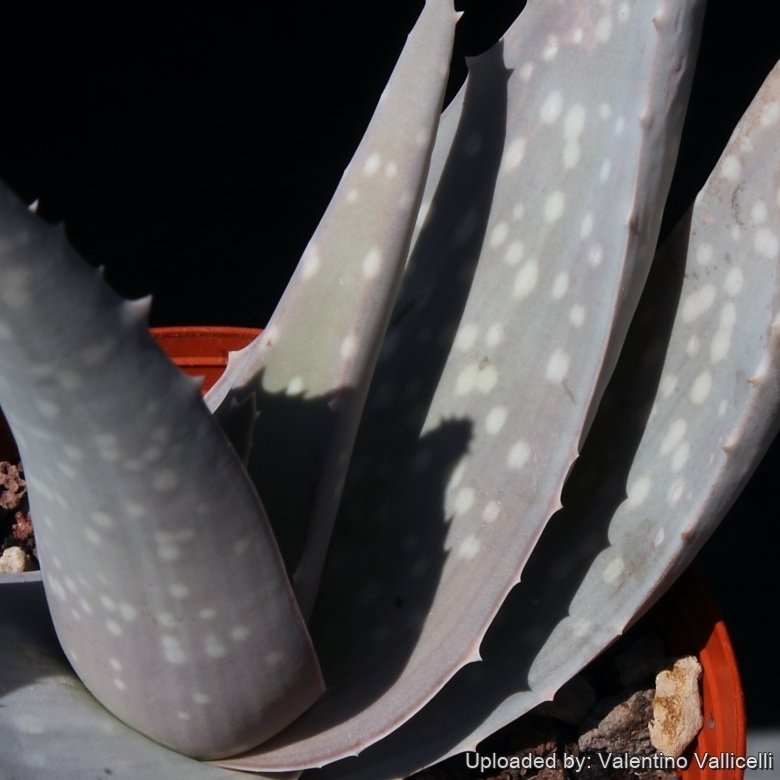
Leaves: 10-20 basal, rosulate, arranged spirally, deltoid-acuminate, ascending or erect, 41-51 cm long, flat above, convex beneath, with smooth margins. Leaves are very pale blue-grey, green-grey to nearly white. Marginal teeth are absent except for some teeth in very young plants.
Inflorescence: Cylindrical-acuminate, lax raceme up to about 90-100 cm with 1 or 2 branches with deltoid-acute bracts, to 12 mm.
Flowers: Coral-red to yellow, base attenuate, 28-30 mm long an 9 mm in diameter. Ovary not narrowed above, tepals free for 20-22 mm. Pedicel 12-15 mm long.
Blooming flowers: April and continue through June depending on the clone.
Origin and Habitat
Dhofar, southern Oman (It is very common in Wadi Adonib, the region where it was first discovered)
Habitat: Dry water courses and gravel banks in poor alkaline soils. These areas receive only partial benefit from the mists brought to the mountains during the monsoon season from May until September.
Cultivation and Propagation
The plants withstand full sun, hot temperatures and even fairly hard freezes. Not a good shade species.
Uses:
Traditional medicine: Juice from the leaves has been used to cure a range of ailments including headaches, aching limbs, diabetes, and constipation.
Traditional uses: Dried juice of Aloe dhufarensis is used in Dhofar as a yellow-orange pigment for the decoration of pottery and as a cosmetic dye used to colour neck, arms and legs in orange-yellow. Leather containers filled with dried aloe juice are sold in the markets of Dhofar.