Publication: J. Linn. Soc., Bot. 22: 529. 1887
Description
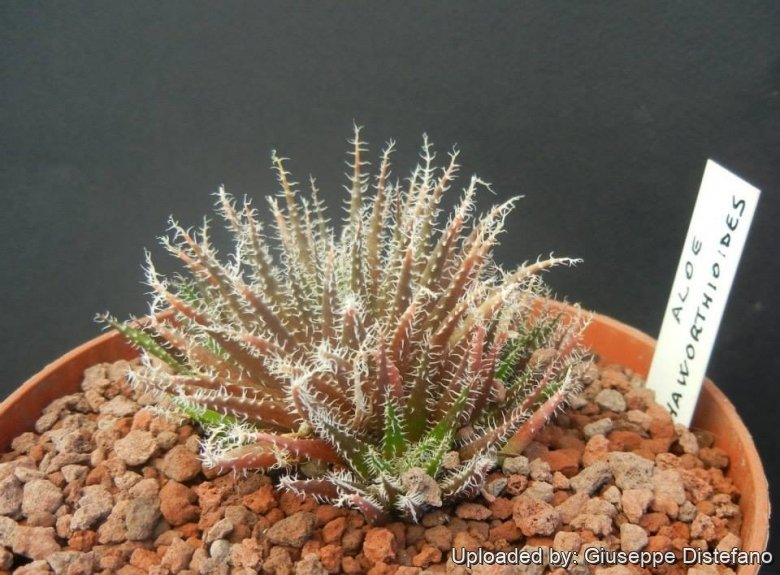
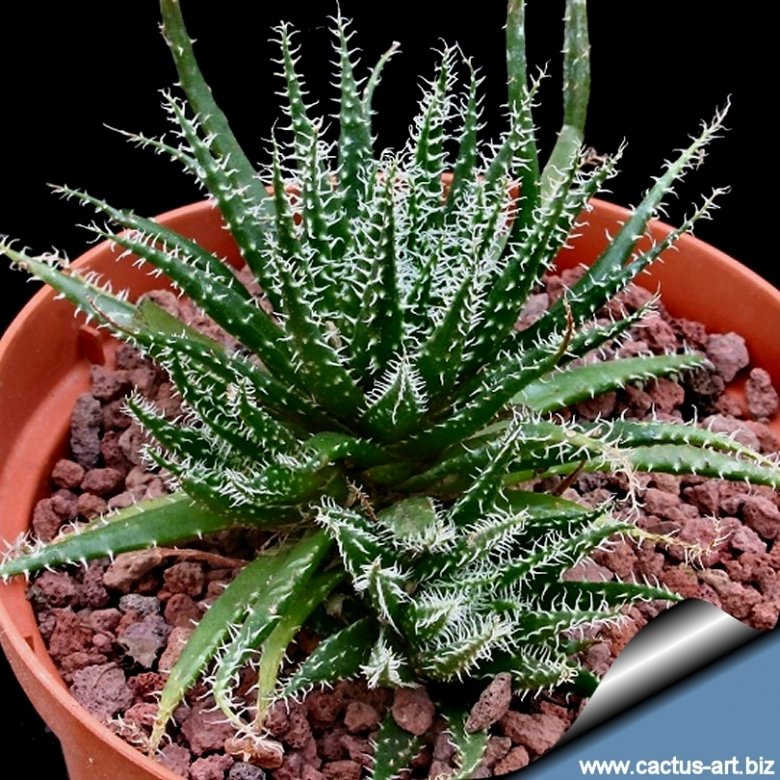
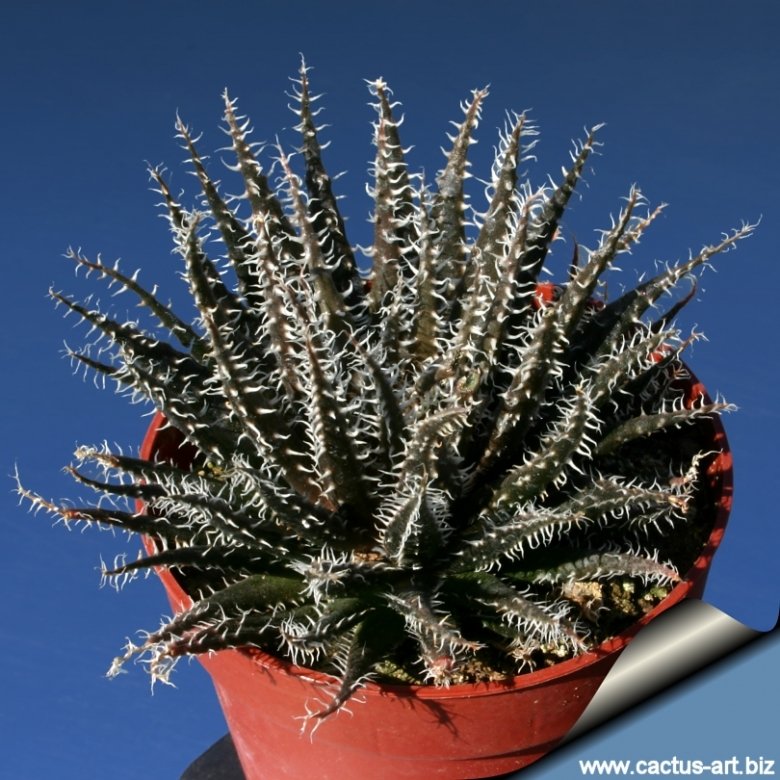
A. hawortioides is a slow clumping leaf Succulent, that forms small compact rosettes (approx 3-5 cm in diameter)
Stem: Stemless
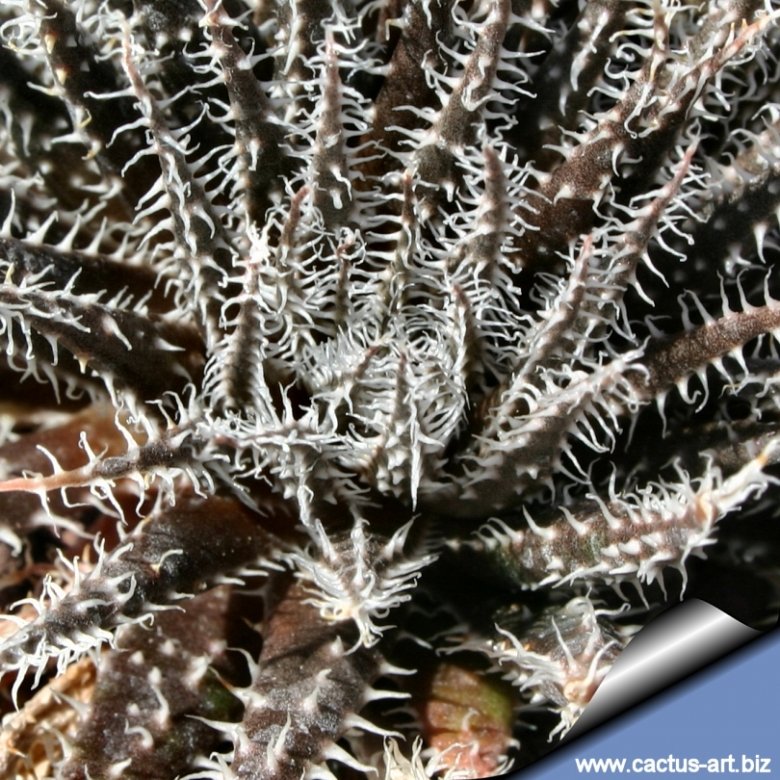
Leaves: Up to 4 cm long, thin, lanceolate, not rigid, dark green with terminal spine and white small pustules and soft feathery bright white marginal hairy spines.
Flowers: The flowers are fragrant pale pink or orange tubular with extended filaments and inconspicuous on tall stems. Inflorescence 30 cm tall:
Blooming season: Late summer and autumn.
Origin and Habitat
Endemic to mountain of central Madagascar.
Habitat: It grows in quartz in cracks in the rocks or in cushion of Fimbristylis (a small colonist plant growing after lichens and mosses that produce a black neutral or acidic humus carpet, this becomes completely desiccated in the dry season)
Cultivation and Propagation
It is a low maintenance succulent which is forgiving to sporadic attention. As a potted specimen, it grows no more than 10 cm in height and happily remains in a small container for years. It grows much better outdoors in spring and summer, it is also perfect for the bright windowsill. Avoid any frost, it will drop roots if chilled.
Reproduction: Usually by cuttings, it is also possible the propagation from seed which germinates easily if sown in well drained soil and covered lightly with fine sand. Seedlings grow fast, reaching flowering size in three to four years. Seeds must be sown as fresh as possible. Fresh seeds germinate quickly at 18°C.
Uses:
Gardening: It is a low maintenance gem from Madagascar that is perfect for the bright windowsill. This rugged and easily grown succulent is forgiving to sporadic attention. As a potted specimen, it grows no more than 10 cm in height and happily remains in a small container for years.