Publication: Trans. Roy. Soc. South Africa i. 408 (1910).
Description
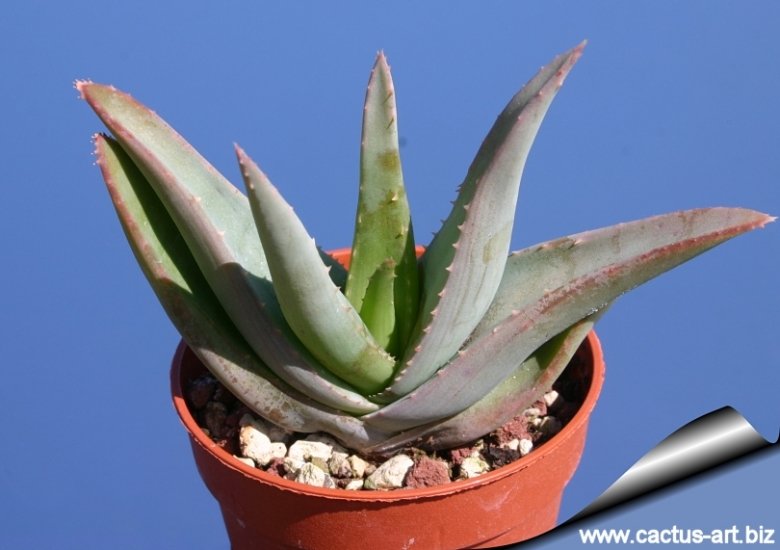
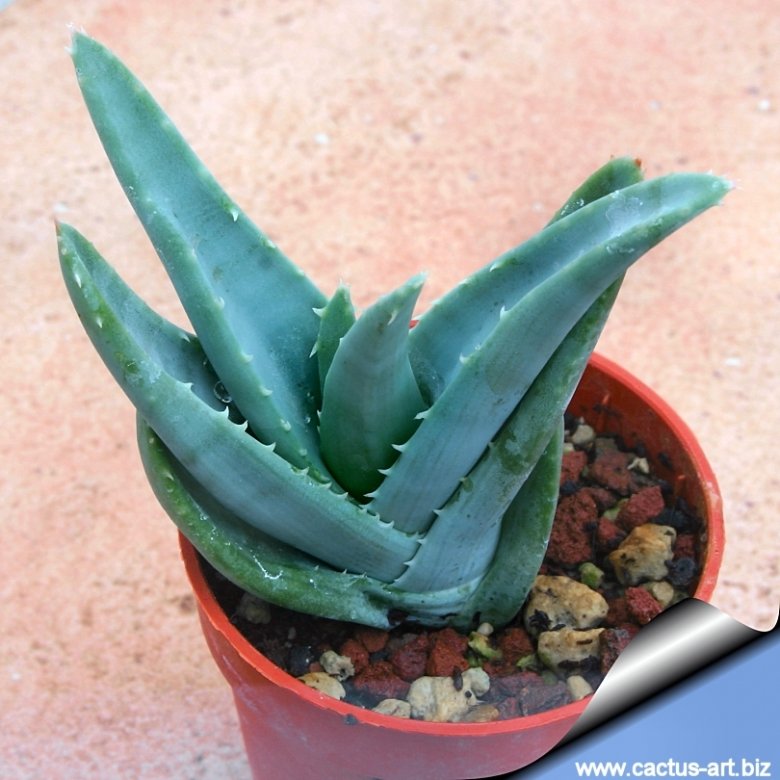
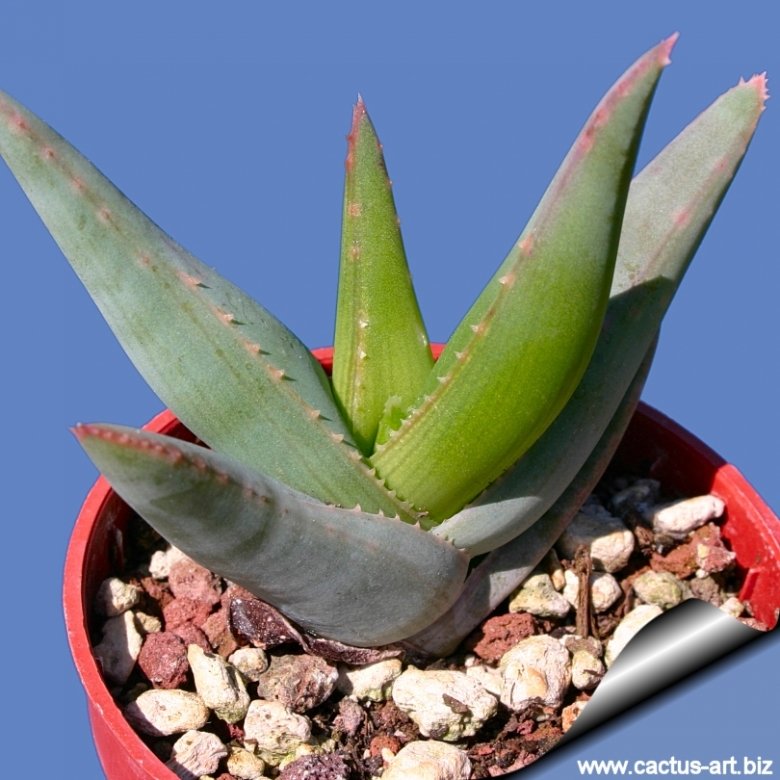
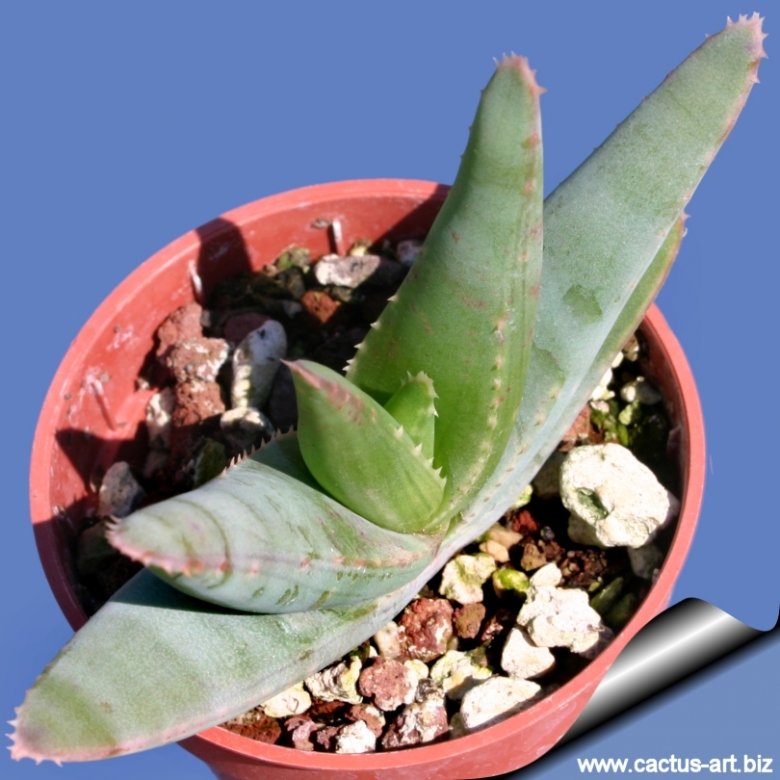
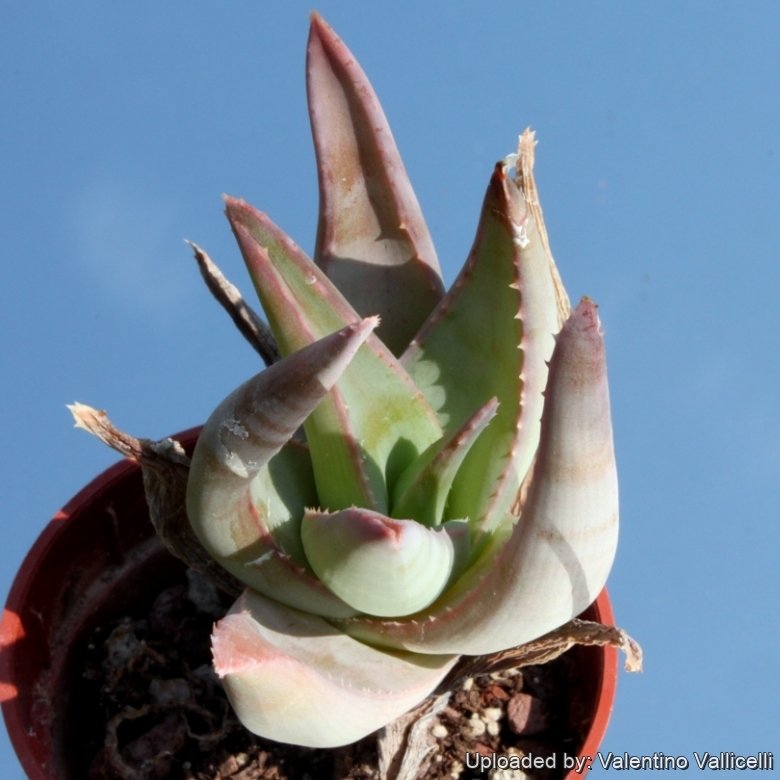
Nice smaller turquoise-blue rosette-forming plant that only get about 20-35 cm tall with large flowers. Generally solitary it can sometime makes offshoots forming a small group. (The var. dumoulinii is clumping) It has an open upright habit but in time of drought it tends to curl in on itself.
Stem: Stemless
Leaves: In a spiralled rosette in old plants, but in very young plants they are ranked in vertical rows. Short, thick, fusiform, neither tuberculate nor prickly that tapers off to nearly a circular shape at the tips, blue-green with often with darker or whiter bands (in winter and under stress condition it can show nice pink hues).
Flowers: Relatively short but thick & large in relation to this small aloe plant, on racemes only 20 -30 cm tall simple bright orange/ red flowers, rarely if ever branched.
Blooming season: Winter.
Origin and Habitat
South Africa (northwestern corner of the Cape Province), Namibia
Habitat: This aloe grows in the winter rainfall area where it take some light frost. Summers are hot and arid and the rainfall in winter is very low, they are usually found under bushes plant in shade.
Cultivation and Propagation
Aloe krapohliana can withstand frost (can take a few degrees of frost in winter), but prefer hot summers. The real killer of this pretty aloe is water. Give them a dry time to rest - Never water them on a hot day. Native to the winter rainfall areas of South Africa, so don’t water on a hot day! It’s the easiest way to kill this aloe. Easy to grow, requiring very little care. It can be grown in small containers. Always use a good quality, loamy sandy soil with plenty of drainage chips at the bottom of containers. It tolerates weekly watering in the summer; once a month, or not at all in the colder months of December and January. Can withstand long periods of drought, but they will thrive and flower more profusely if watered in the correct season. Incorrect watering, poor drainage or too much shade can lead to attack by pests and diseases. It grows much better outdoors in spring and summer.
In mild climates it can be cultivated outdoors for use in landscaping, preferably planting it in hot and dry rock gardens. They will grow best in regions with a climate close to that of their native deserts not too cold, and not too wet.
Propagation: Almost exclusively by seeds planted in autumn, in trays of coarse river sand.
Uses:
Gardening: Well suited to a rock garden, on a sloping bank or even in containers. Plant in bold clumps. It is a very rewarding plant, especially in winter when the flowers add a fiery glow to an otherwise drab garden.
Gallery