Publication: Fl. Ind. (N. L. Burman) 83 (1768). (Medicinal aloe)
Description
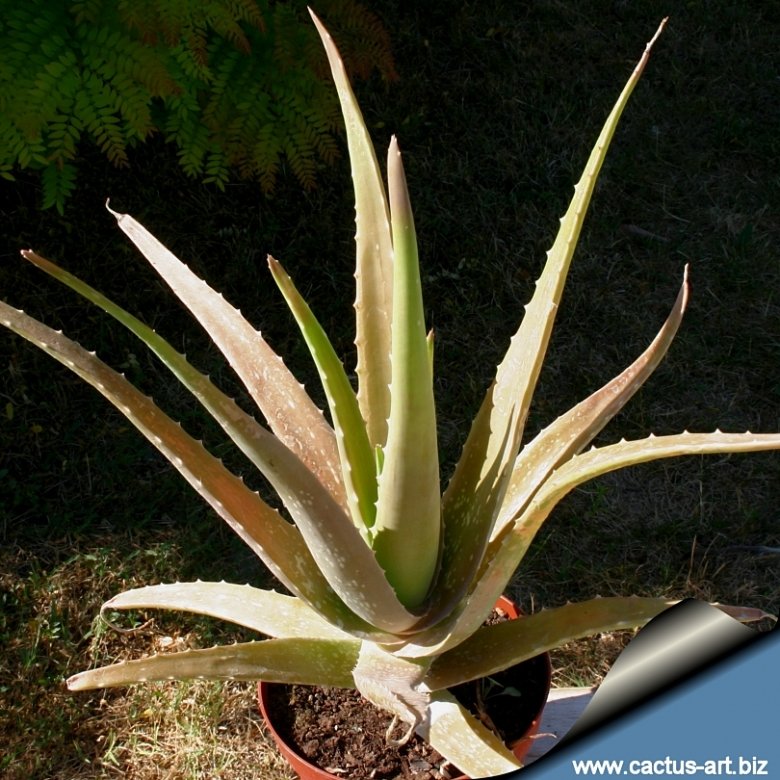
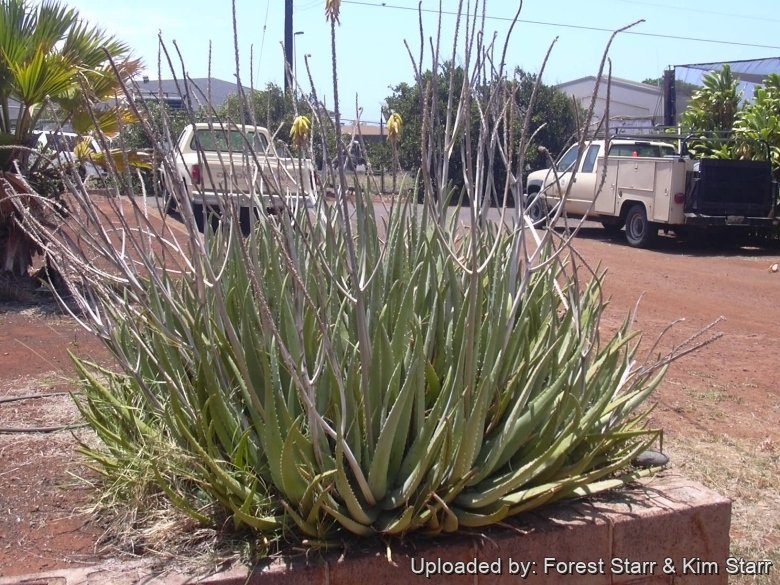
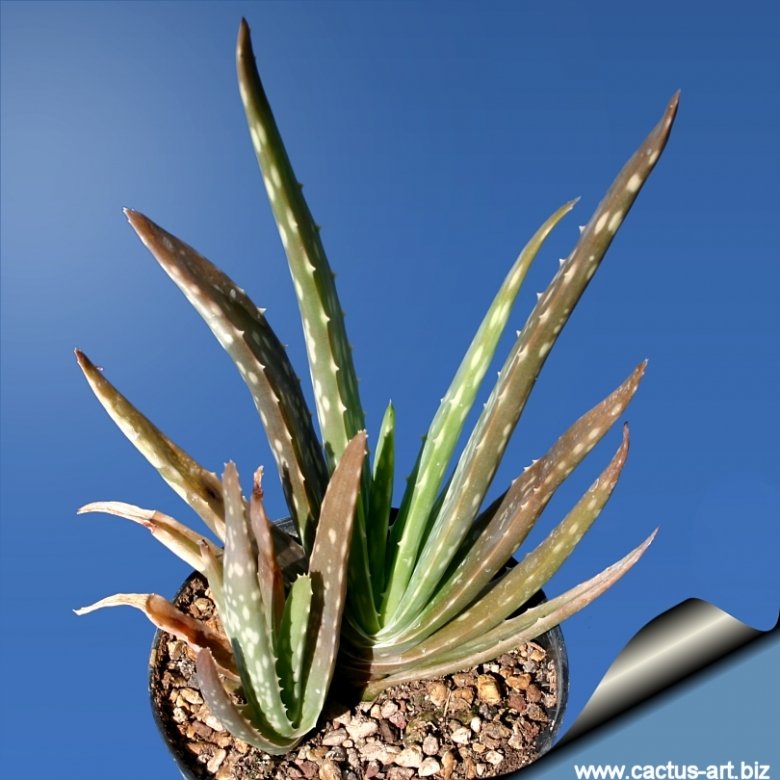
Aloe vera (a.k.a. Aloe barbadensis) is a short-stemmed, woody-based, clumping, sukering stoloniferous succulent with short stems leading to compact stiff rosettes growing to 60–100 cm tall. It is a particularly fast-growing, tough and adaptable species and one plant can eventually cover a large area. Aloe vera is widely cultivated as a medicinal plant and plus than 150 different clones and variety are available. The species is frequently cited as being used in herbal medicine since the beginning of the first century AD. Extracts from A. vera are widely used in the cosmetics and alternative medicine industries, being marketed as variously having rejuvenating, healing, or soothing properties. There is, however, little scientific evidence of the effectiveness or safety of Aloe barbadensis extracts for either cosmetic or medicinal purposes, and what positive evidence is available is frequently contradicted by other studies.
Stems: to 50 cm; scarious leaf sheaths persistent.
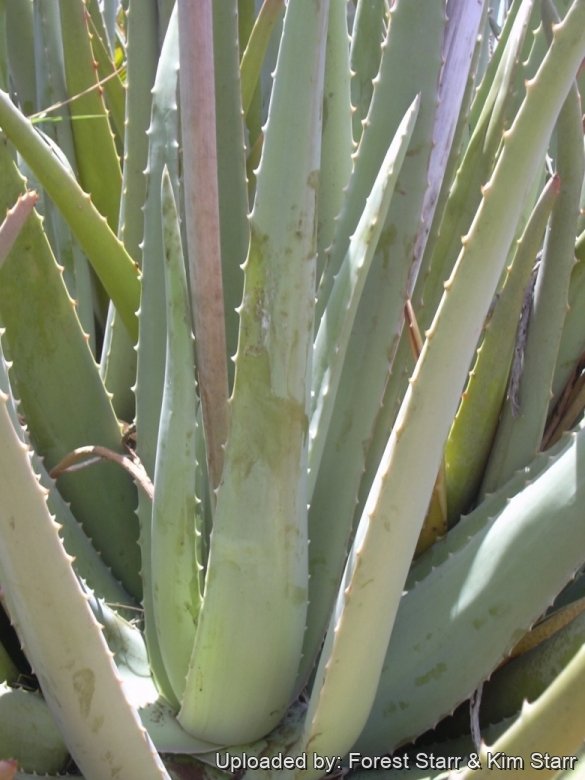
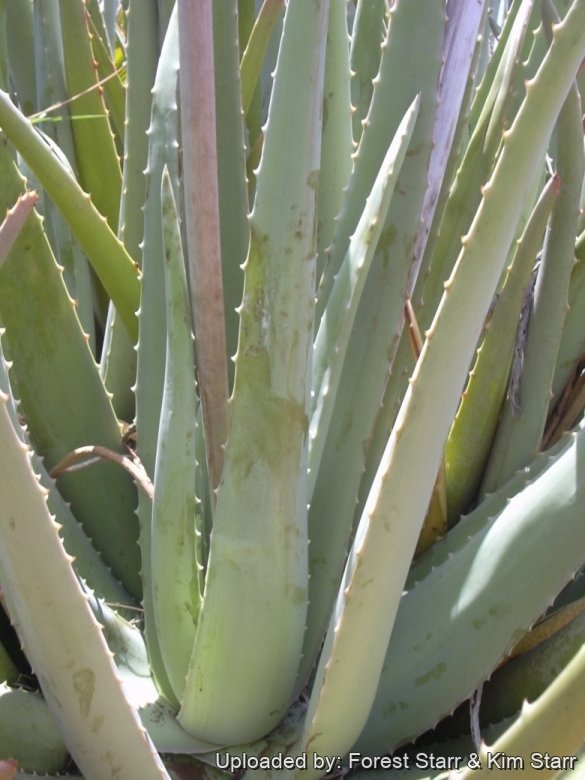
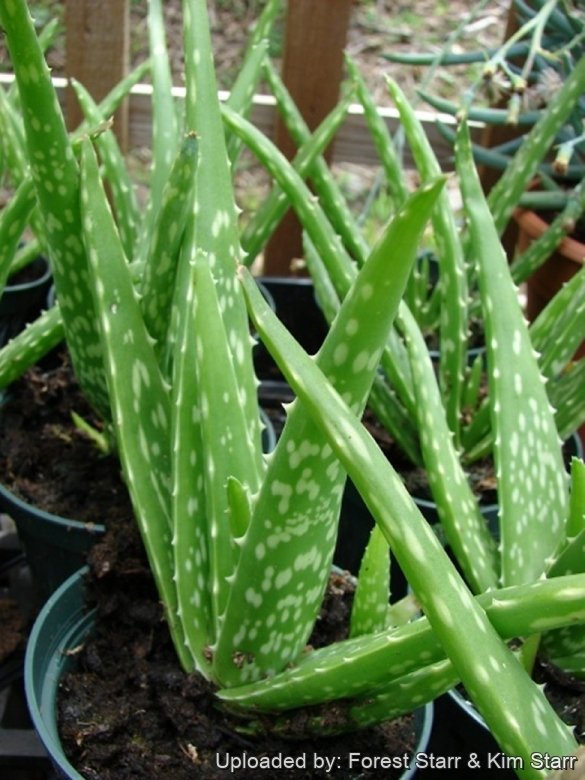
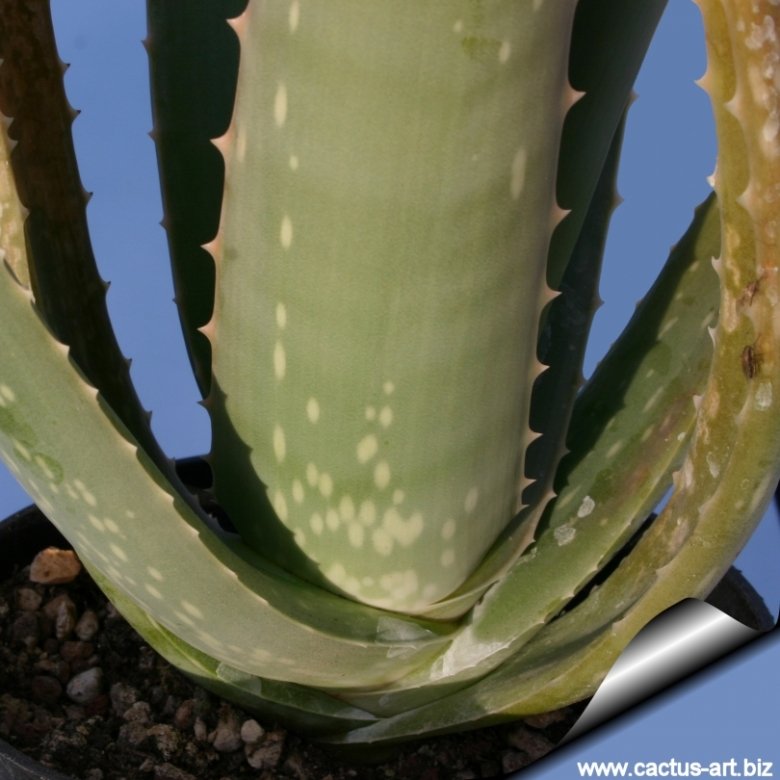
Leaves: Alternate, rosulate to distichous, 10-50 cm long, 1-7 cm broad, fleshy, glabrous, dagger-shapedt o ensate, channelled bluish or grey-green, with some varieties mottled with purple or white spots in irregular bands, or blotches on the upper and lower leaf surfaces, however the spots tends to fade with age. Leaves also tends to redden near apex or margins. The juvenile specimens have narrower leaves with lighter spots, while mature specimens have wider solid grey-green leaves. Margins green, spiny-toothed, teeth 1.1.5 cm apart. Some of the Aloe vera sold retain the juvenile characteristics. They have spiked edges (serrated) with small white teeth or may be smooth.
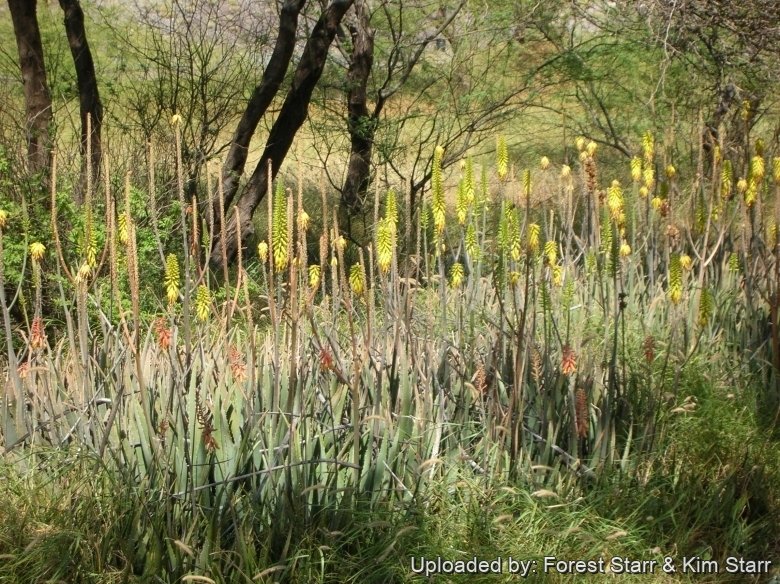
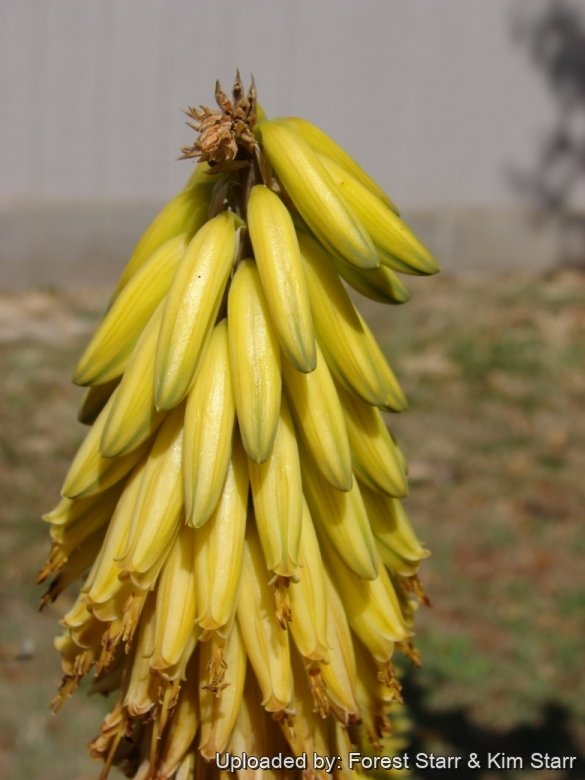
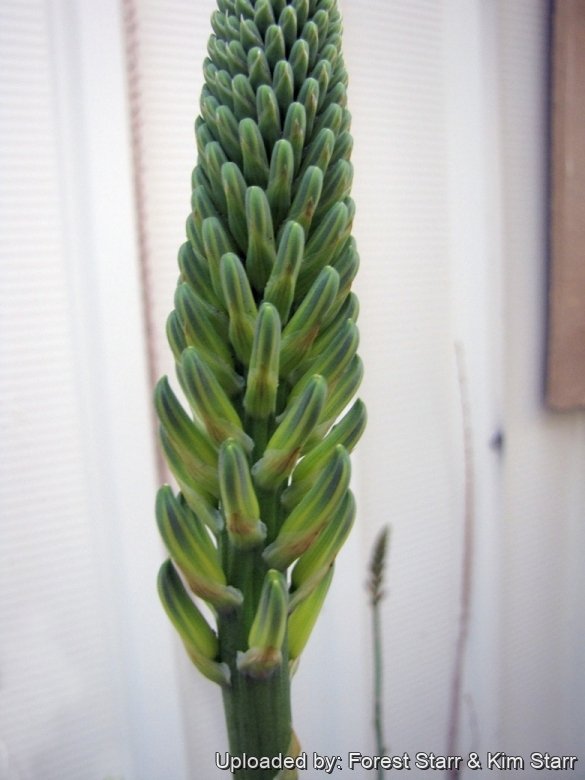
Inflorescence: Terminal, usually single, racemose, 1–1.5 m tall, usually covered with scale-like bracts. Racemes cylindrical, dense, up to 50 cm long, bracts glabrous or puberulent, with 3 prominent purple veins that are confluent at tips.
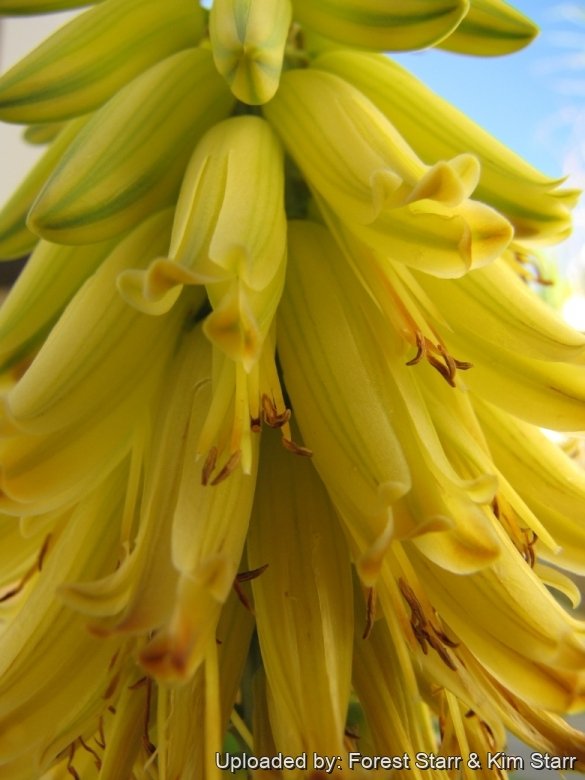
Flowers: Showy, pendulous in tones of yellow, but many of the clones available have orange flowers. Corolla, tubular 2–3 cm long, tepals prominently 3-veined, connate basally for half their length, lobes broadly linear to oblong-lanceolate, apex rounded. Stamens 6, included to slightly exserted, slightly unequal; filaments 2–2.5 cm; anthers 2.5–4 mm. Style usually exserted; stigmas not expanded. Pedicel 2.2–3.3 cm.
Blooming season: It flowers in any period of the year depending on growing conditions and locations, but more often in spring to early summer .
Fruits: Capsules somewhat elongate, but usually the flowers produce not seed.
Chromosome number: 2n = 14.
Origin and Habitat
Aloe vera probably originated in northern Africa (Algeria, Morocco, and Tunisia, along with the Cape Verde Islands, Canary Islands, Maderia) but diffused and cultivated throughout the world.
The species is widely naturalised elsewhere, occurring in temperate and tropical regions of Australia, India, Vietnam, Taiwan, Barbados, Belize, Nigeria, Paraguay and the USA. It has been suggested that, like many Aloes, the species is originally from Southern Africa and that populations that occur elsewhere are the result of human cultivation.
Altitude range: 0 and 1300 metres above sea level.
Habitat and ecology: Hammocks, sandy areas, roadsides and similar places in full sun. Like other Aloe species, Aloe vera forms arbuscular mycorrhiza, a symbiosis that allows the plant better access to mineral nutrients in soil.
Cultivation and Propagation
Very commonly encountered, it is a resistant plant that tolerates poor soil and drought, but requires excellent drainage and usually does not give many problems in cultivation. It is a particularly fast-growing, tough and adaptable species. Needs bright sunny conditions but enjoy some shade in summer. Abundant irrigation at time of growth. The plants favour mild to hot summers. They can resist some cold and occasional snow in the rainy season although the frosts produce wounds and burns that disfigure their aspect. Needs protection only against severe frost. (The leaf tips get damaged below -3°C).
Grow it in light, fertile, well-drained, moderate soils, with a slightly acidic pH (5-6).
Plant in rock gardens and flower pots. Also suitable for coastal planting.
It is a profusely suckering species, and one plant can eventually cover a large area. The plant in itself is very tough and can survive often for several seasons without water, at which point the leaves turn a reddish colour, a sign generally associated with stress.
Maintenance: Removal of old flower stalks; Divide the crowded clumps periodically. During the winter months A. vera may become dormant, during which little moisture is required, and the plants should be grown cool to initiate flower development (about 5-10°C ) In areas that receive frost or snow the species is best kept indoors or in heated glasshouses.
Propagation: By division of offshoots that develop around the outside of the main rosette in spring. The best results are achieved by simply making stem cuttings. Allow cuttings to dry for a few days and insert into river sand and keep moist. The roots appear after about two weeks.
Uses: Aloe vera is renowned for its medicinal and cosmetic uses, however scientific evidence for the the effectiveness of Aloe vera is limited and contradictory. Its leaf containing 12 vitamins and several other active ingredients. It is widely used in alternative medicine. The moist gel inside the Medicinal Aloe leaves is used for the treatment of burns, cuts, sunburn, eczema and other skin complaints. It is also widely used in cosmetics. As a food, A. vera is very bitter and unpalatable and mildly toxic if ingested.
Notes
The species has a number of synonyms: Aloe barbadensis Mill., Aloe indica Royle, Aloe striata var. vera and Aloe sinkatana Lam. The species epithet vera means “true” or “genuine”. Some literature identifies the white-spotted form of Aloe vera as Aloe vera var. chinensis; however, the species varies widely with regard to leaf spots and it has been suggested that the spotted form of Aloe forbesii may be conspecific with Aloe massawana. The species was first described by Carl Linnaeus in 1753 as Aloe perfoliata var. vera, and was described again in 1768 by Nicolaas Laurens Burman as Aloe barbadensis in Flora Indica on 6 April and by Philip Miller as Aloe barbadensis some ten days after Burman in the Gardener’s Dictionary. Techniques based on DNA comparison suggest Aloe vera is relatively closely related to Aloe perryi, a species endemic to Yemen. Similar techniques, using chloroplast DNA sequence comparison and ISSR profiling have also suggested it is closely related to Aloe forbesii, Aloe inermis, Aloe scobinifolia, Aloe sinkatana, and Aloe striata. With the exception of the South African species A. striata, these Aloe species are native to Socotra (Yemen), Somalia, and Sudan. The lack of obvious natural populations of the species has led some authors to suggest Aloe barbadensis may be of hybrid origin.
Bibliography
Major references and further lectures
-
Forest & Kim Starr “Aloe vera (Aloe, aloe vera, common aloe)”. Plants of Hawaii. <http://www.starrenvironmental.com\>. Web. 27 Sep. 2014.
-
Urs Eggli “Illustrated Handbook of Succulent Plants: Monocotyledons: Monocotyledons” Springer Science & Business Media, 17/Jul/2001
-
Eggli, Leonard E. Newton: Etymological Dictionary of Succulent Plant Names. Springer, Berlin/Heidelberg 2010
-
Diane Gage “Aloe Vera: Nature’s Soothing Healer” Inner Traditions / Bear & Co, 01/mar/1996
-
Flora of North America, Vol 26
-
Burkill, H.M. “The useful plants of west tropical Africa” Vol 3 1985.
-
Wikipedia contributors. “Aloe vera.” Wikipedia, The Free Encyclopedia. Wikipedia, The Free Encyclopedia, 29 Oct. 2014. Web. 29 Oct. 2014.
-
Christopher Brickell “RHS Encyclopedia of Plants and Flowers” Dorling Kindersley Ltd, 01/set/2010
-
James Cullen, Sabina G. Knees, H. Suzanne Cubey “The European Garden Flora Flowering Plants:A Manual for the Identification of Plants Cultivated in Europe, Both Out-of-Doors and Under Glass” Cambridge University Press, 11/Aug/2011
-
Susan Carter, John J. Lavranos, Leonard E. Newton, Colin C. Walker: “Aloes. The definitive guide.” Kew Publishing, Royal Botanic Gardens, Kew 2011
-
Umberto Quattrocchi “CRC World Dictionary of Medicinal and Poisonous Plants: Common Names, Scientific Names, Eponyms, Synonyms, and Etymology” (5 Volume Set) CRC Press, 03/mag/2012
-
San Marcos Growers contributors “Aloe vera - Medicinal Aloe ” San Marcos Growers <http://www.smgrowers.com\>. Web. 27 Sep. 2014.
-
Ernst E (2000). “Adverse effects of herbal drugs in dermatology”. Br J Dermatol 143 (5): 923–929.
-
Marshall JM (1990). “Aloe vera gel: what is the evidence?”. Pharm J 244: 360–362.
-
Boudreau MD, Beland FA (2006). “An Evaluation of the Biological and Toxicological Properties of Aloe Barbadensis (Miller), Aloe Vera”. Journal of Environmental Science and Health Part C 24: 103–154.
-
Vogler BK, Ernst E (Oct 1999). “Aloe vera: a systematic review of its clinical effectiveness”. Br J Gen Pract 49 (447): 823–8.
-
Gong M, Wang F, Chen Y (January 2002). “[Study on application of arbuscular-mycorrhizas in growing seedings of Aloe vera]”. Zhong yao cai = Zhongyaocai = Journal of Chinese medicinal materials (in Chinese) 25 (1): 1–3.
-
Random House Australia “Botanica’s Pocket Gardening Encyclopedia for Australian Gardeners” Random House Publishers, Australia
-
Barcroft and Myskja (2003) “Aloe Vera: Nature’s Silent Healer.” BAAM, USA.
-
Akinyele BO, Odiyi AC (2007). “Comparative study of the vegetative morphology and the existing taxonomic status of Aloe vera L.”. Journal of Plant Sciences 2 (5): 558–563.
-
Darokar MP, Rai R, Gupta AK, Shasany AK, Rajkumar S, Sunderasan V, Khanuja SPS (2003). “Molecular assessment of germplasm diversity in Aloe spp. using RAPD and AFLP analysis”. J Med. Arom. Plant Sci. 25 (2): 354–361.
-
Treutlein J., Smith G. F. S., van Wyk B. E., Wink W. (2003). “Phylogenetic relationships in Asphodelaceae (Alooideae) inferred from chloroplast DNA sequences (rbcl, matK) and from genomic finger-printing (ISSR)”. Taxon 52: 193
-
Jones WD, Sacamano C. (2000) “Landscape Plants for Dry Regions: More Than 600 Species from Around the World.” California Bill’s Automotive Publishers. USA.
-
Gilbert Westacott Reynolds in “The Aloes of tropical Africa and Madagascar” 1966
From llifle page Aloe flava
Description
Clumping suckering succulent with short stems leading to compact stiff rosettes growing to 60–100 cm tall, composed of leaves which are usually, each about 20 cm long. Aloe vera is widely cultivated and plus than 150 different clones and variety are available. Nomenclature is controversial too; The species does not have any naturally occurring populations though closely related Aloes occur in northern Africa, but it is mentioned even in very ancient Chinese texts on medicine. As this spotted plant is not the grey surfaced form found in the Canaries, this is considered to have undergone many re-selections over the centuries and is occasionally designated as the form ‘Chinensis.
‘Leaves: Large fleshy, dagger-shaped, channelled bluish or grey-green, with some varieties mottled with purple or white spots on the upper and lower leaf surfaces, however the spots tends to fade with age. The juvenile specimens have narrower leaves with lighter spots, while mature specimens have wider solid green leaves. Some of the Aloe vera sold retain the juvenile characteristics. They have spiked edges (serrated) with small white teeth or may be smooth.
Flowers: Showy, tubular 2–3 cm long, borne on ann up to 90 cm tall spike, each flower pendulous in tones of yellow, but many of the clones available have orange flowers.
Blooming season: Summer.
Origin and Habitat
Probably originated in northern Africa (Algeria, Morocco, and Tunisia, along with the Cape Verde Islands, Canary Islands, Maderia) but diffused and cultivated throughout the world.
The species is widely naturalised elsewhere, occurring in temperate and tropical regions of Australia, India, Vietnam, Taiwan, Barbados, Belize, Nigeria, Paraguay and the USA. It has been suggested that, like many Aloes, the species is originally from Southern Africa and that populations that occur elsewhere are the result of human cultivation.
Cultivation and Propagation
Very commonly encountered, it is a resistant plant that tolerates poor soil and drought, but requires excellent drainage and usually does not give many problems in cultivation. It is a particularly fast-growing, tough and adaptable species. Needs bright sunny conditions but enjoy some shade in summer. Abundant irrigation at time of growth. The plants favour mild to hot summers. They can resist some cold and occasional snow in the rainy season although the frosts produce wounds and burns that disfigure their aspect. Needs protection only against severe frost. (The leaf tips get damaged below -3°C).
Grow it in light, fertile, well-drained, moderate soils, with a slightly acidic pH (5-6). .
Plant in rock gardens and flower pots. Also suitable for coastal planting.
It is a profusely suckering species, and one plant can eventually cover a large area. The plant in itself is very tough and can survive often for several seasons without water, at which point the leaves turn a reddish colour, a sign generally associated with stress.
Maintenance: Removal of old flower stalks; Divide the crowded clumps periodically. During the winter months A. vera may become dormant, during which little moisture is required, and the plants should be grown cool to initiate flower development (about 5-10°C ) In areas that receive frost or snow the species is best kept indoors or in heated glasshouses.
Propagation: By division of offshoots that develop around the outside of the main rosette in spring. The best results are achieved by simply making stem cuttings. Allow cuttings to dry for a few days and insert into river sand and keep moist. The roots appear after about two weeks.
Uses: Aloe vera is renowned for its medicinal and cosmetic uses, however scientific evidence for the the effectiveness of Aloe vera is limited and contradictory. Its leaf containing 12 vitamins and several other active ingredients. It is widely used in alternative medicine. The moist gel inside the Medicinal Aloe leaves is used for the treatment of burns, cuts, sunburn, eczema and other skin complaints. It is also widely used in cosmetics. As a food, A. vera is very bitter and unpalatable and mildly toxic if ingested.
Source: Aloe flava, LLIFLE - Encyclopedia of living forms, CC-BY-SA, retrieved 2026-10-25.
From llifle page Aloe maculata
Cultivation and Propagation
It is an easy plant that usually does not give many problems in cultivation. Needs light shade to filtered sun, but will redden with more light exposure. Regular water in summer, keep dryer in winter, needs good drainage It grows much better outdoors in spring and summer, it is also perfect for the bright windowsill. Grow it in light, fertile, well-drained, moderate soils, with a slightly acidic pH (5-6). Avoid any frost.
Maintenance: Removal of old flower stalks; It is a suckering species, and one plant can eventually cover a large area. Divide the crowded clumps periodically. During the winter months, the plants should be grown cool to initiate flower development (about 5-10°C )
Propagation: Suckers, division of older plants.
Source: Aloe maculata, LLIFLE - Encyclopedia of living forms, CC-BY-SA, retrieved 2026-10-25.
From llifle page Aloe barbadensis var. chinensis
Description
Clumping suckering succulent with short stems leading to compact stiff rosettes growing to 60–100 cm tall, composed of leaves which are usually, each about 20 cm long. Aloe vera is widely cultivated and plus than 150 different clones and variety are available. Nomenclature is controversial too; The species does not have any naturally occurring populations though closely related Aloes occur in northern Africa, but it is mentioned even in very ancient Chinese texts on medicine. As this spotted plant is not the grey surfaced form found in the Canaries, this is considered to have undergone many re-selections over the centuries and is occasionally designated as the form ‘Chinensis’.
Leaves: Large fleshy, dagger-shaped, channelled bluish or grey-green, with some varieties mottled with purple or white spots on the upper and lower leaf surfaces, however the spots tends to fade with age. The juvenile specimens have narrower leaves with lighter spots, while mature specimens have wider solid green leaves. Some of the Aloe vera sold retain the juvenile characteristics. They have spiked edges (serrated) with small white teeth or may be smooth.
Flowers: Showy, tubular 2–3 cm long, borne on ann up to 90 cm tall spike, each flower pendulous in tones of yellow, but many of the clones available have orange flowers.
Blooming season: Summer.
Cultivation and Propagation
Very commonly encountered, it is a resistant plant that tolerates poor soil and drought, but requires excellent drainage and usually does not give many problems in cultivation. It is a particularly fast-growing, tough and adaptable species. Needs bright sunny conditions but enjoy some shade in summer. Abundant irrigation at time of growth. The plants favour mild to hot summers. They can resist some cold and occasional snow in the rainy season although the frosts produce wounds and burns that disfigure their aspect. Needs protection only against severe frost. (The leaf tips get damaged below -3°C).
Grow it in light, fertile, well-drained, moderate soils, with a slightly acidic pH (5-6). .
Plant in rock gardens and flower pots. Also suitable for coastal planting.
It is a profusely suckering species, and one plant can eventually cover a large area. The plant in itself is very tough and can survive often for several seasons without water, at which point the leaves turn a reddish colour, a sign generally associated with stress.
Maintenance: Removal of old flower stalks; Divide the crowded clumps periodically. During the winter months A. vera may become dormant, during which little moisture is required, and the plants should be grown cool to initiate flower development (about 5-10°C ) In areas that receive frost or snow the species is best kept indoors or in heated glasshouses.
Propagation: By division of offshoots that develop around the outside of the main rosette in spring. The best results are achieved by simply making stem cuttings. Allow cuttings to dry for a few days and insert into river sand and keep moist. The roots appear after about two weeks.
***Uses:**Aloe vera is renowned for its medicinal and cosmetic uses, however scientific evidence for the the effectiveness of Aloe vera is limited and contradictory. Its leaf containing 12 vitamins and several other active ingredients. It is widely used in alternative medicine. The moist gel inside the Medicinal Aloe leaves is used for the treatment of burns, cuts, sunburn, eczema and other skin complaints. It is also widely used in cosmetics. As a foodAloe vera is very bitter and unpalatable and mildly toxic if ingested.
Source: Aloe barbadensis var. chinensis, LLIFLE - Encyclopedia of living forms, CC-BY-SA, retrieved 2026-10-25.
Cultivars and forms (2)
Varieties (2)
Gallery