Publication: Z. Sukkulentenk. 3: 180 (-181; fig. 1). 1928 [23 Jan 1928]
Description
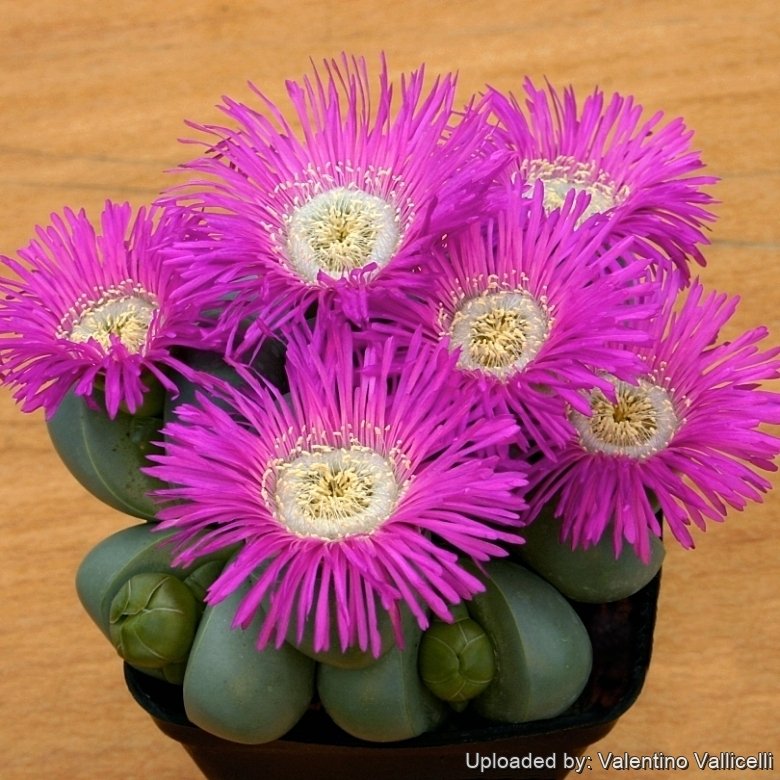
This plants remain solitary or slowly clump and form clusters of little “eggs” at the ends of short prostrate stems, They consist of a pair of fleshy leaves, either in clusters or singly, up to 3 cm hight. It is extremely variable and also plants from the same seed capsule may show different flower colours, reflected by the great numbers of synonyms.
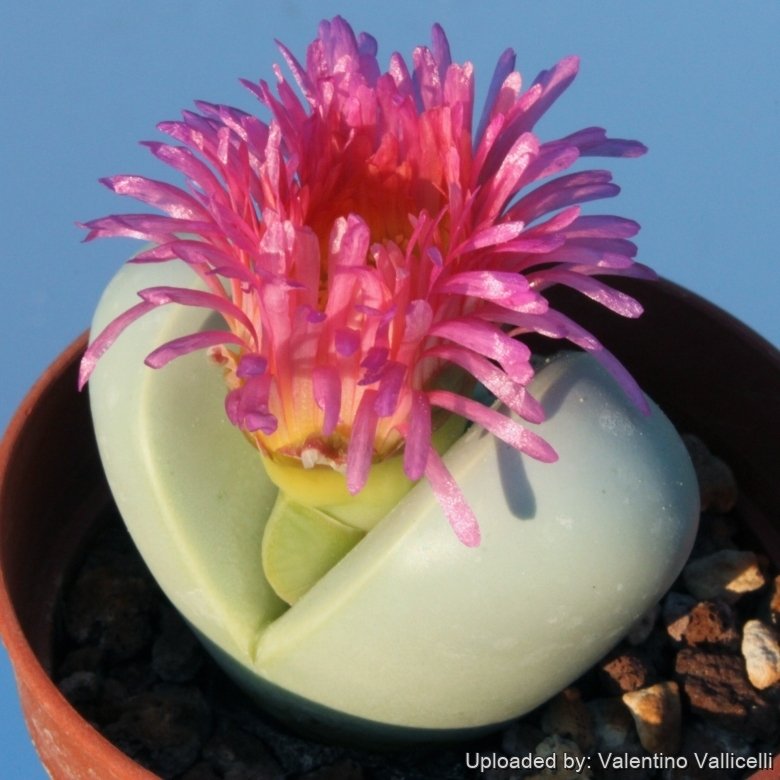
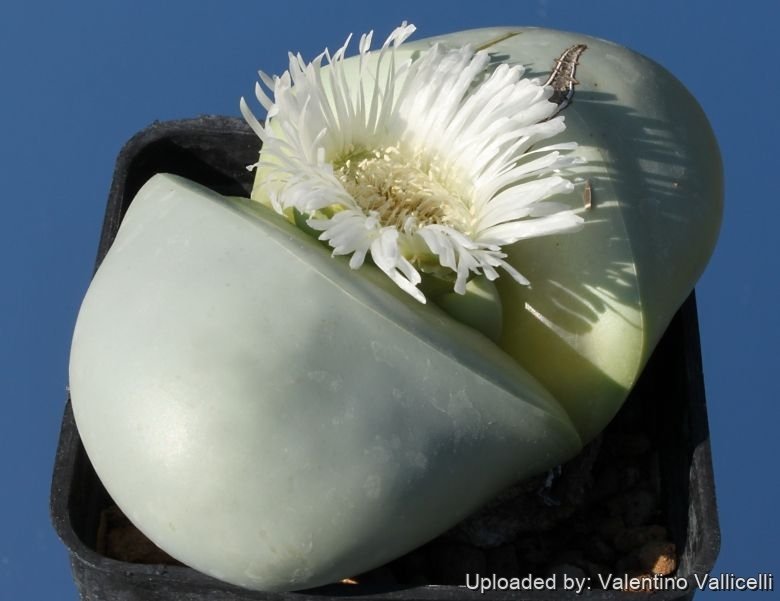
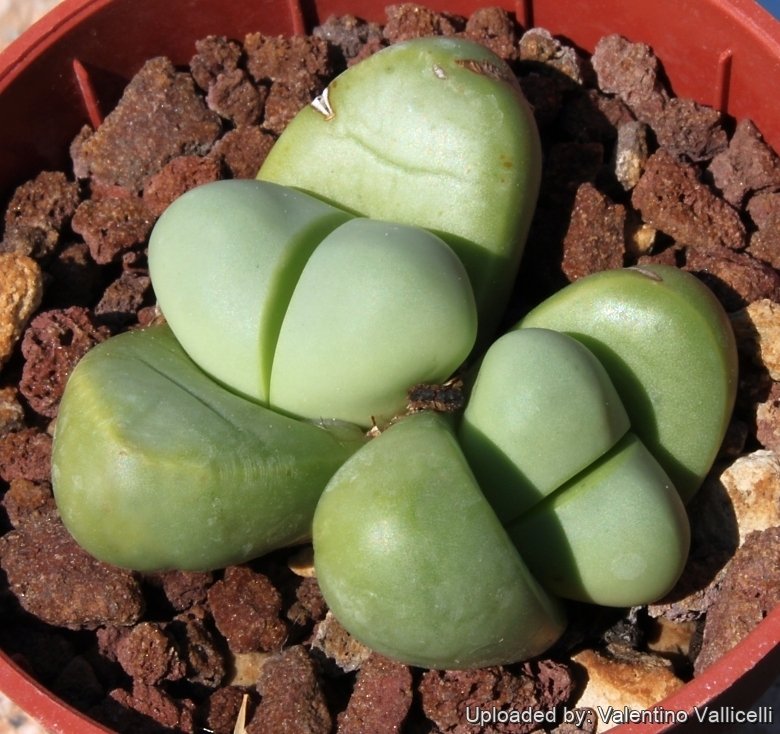
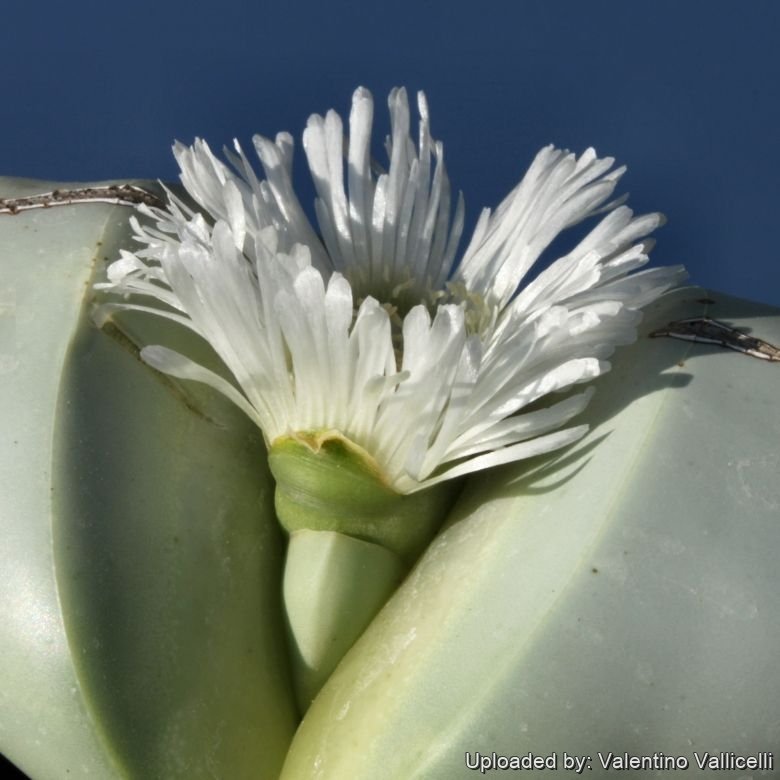
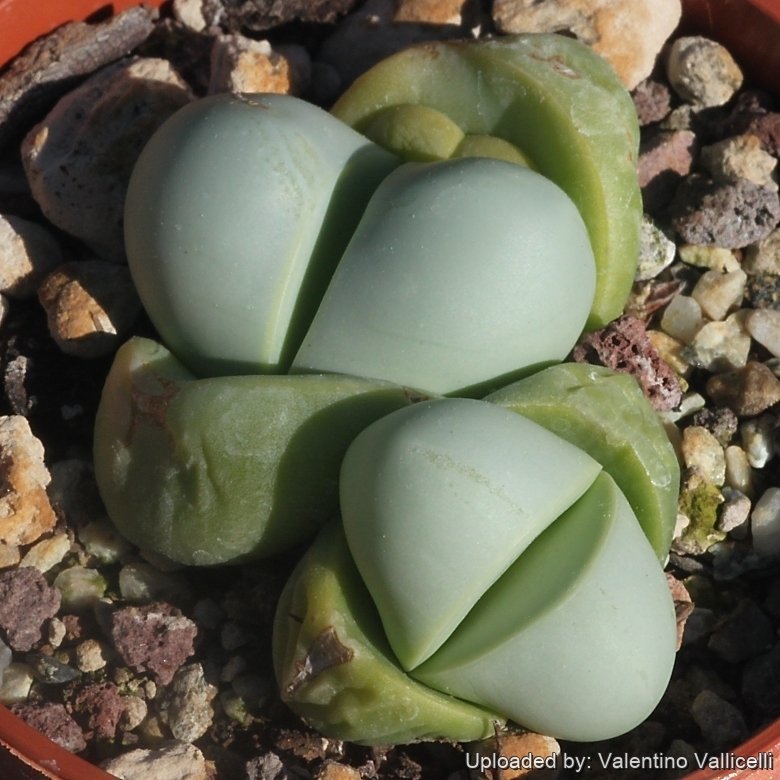
Body (Paired leaves): Silvery-blue to blue-green eggs-shaped cut almost in two along their width, with a v-shaped fissure extending along the cut. Each half of the cut open egg is actually a greatly thickened leaf, and each year a new set of leaves appears in the fissure, arranged perpendicularly to the preceding pair of leaves.
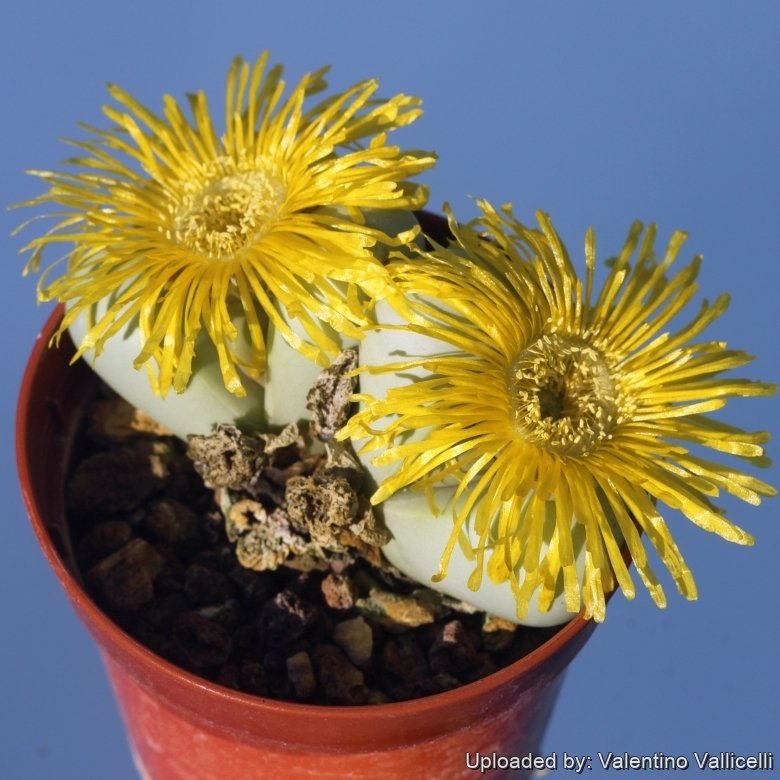
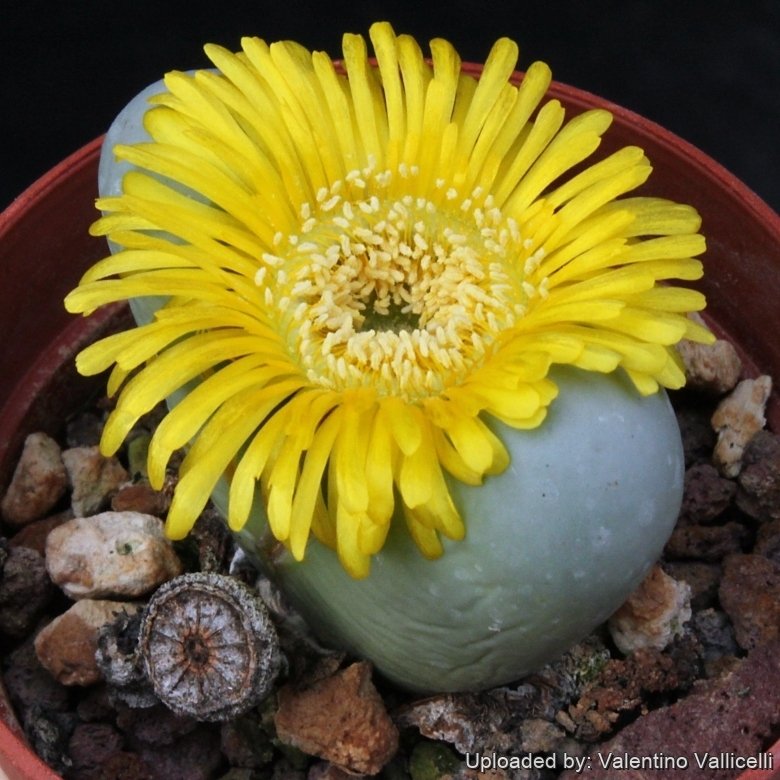
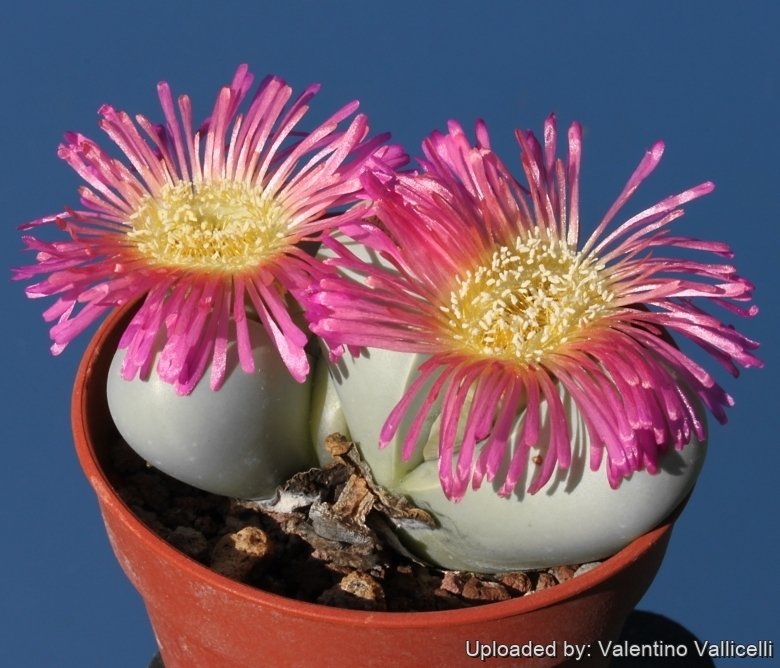
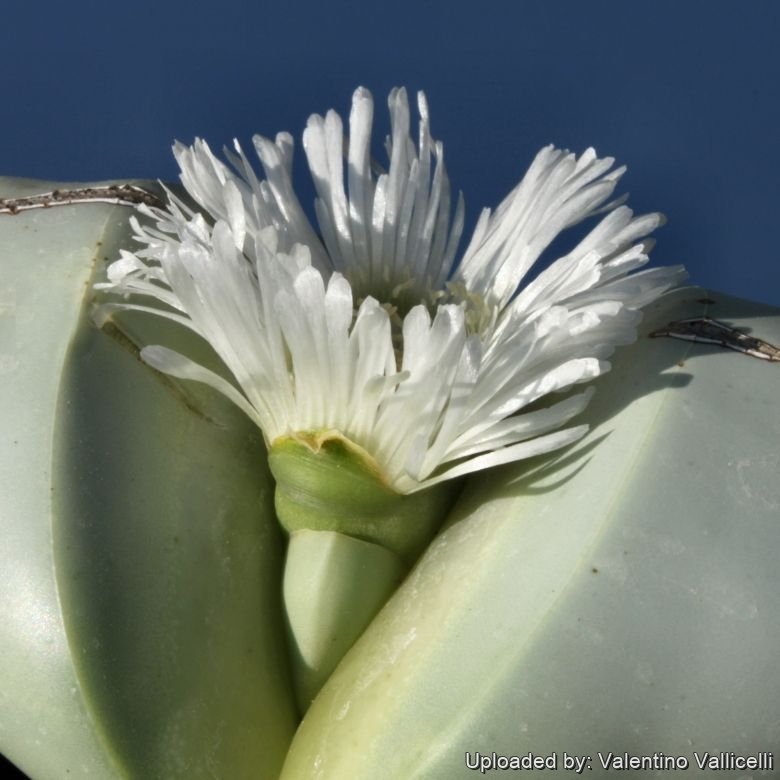
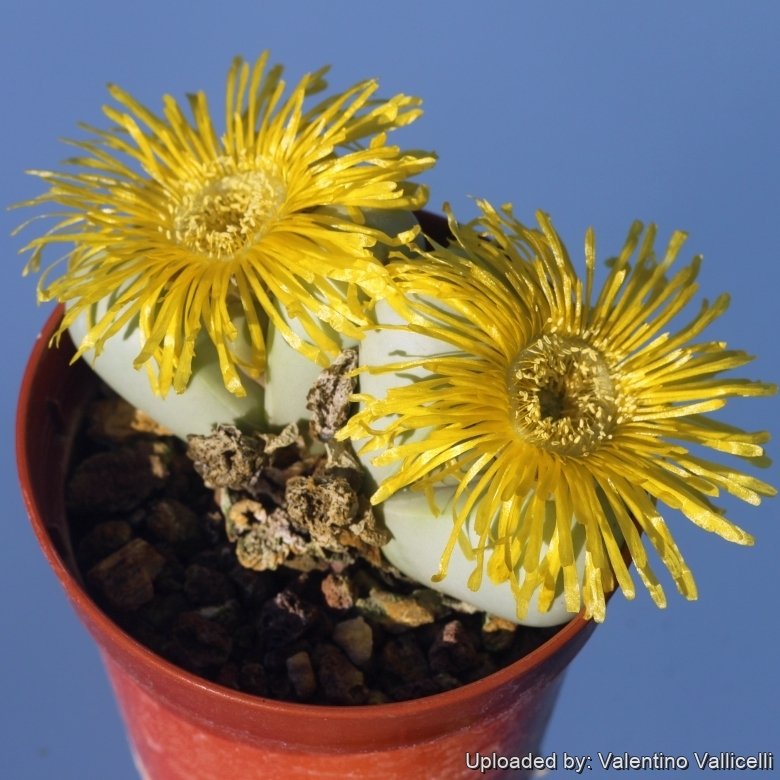
Flowers: The flower are large daisy like from the junction. The colour is quite variable in this species, even in the same population. purple, pink, violet, or rarely white, but Argyroderma delaetii also exists in several shades of yellow - you never know.
Blooming season: Flowers appear late in autumn.
Remarks: These succulent plants are popular among cacti and succulent plant growers, although rather rare in collections in spite of being very interesting plant for their unique shapes and colourful flowers. What appeals to most people is the fact that the plants will often resembles chubby, quartz egg-shaped pebbles with a silvery sheen of the land they are native too. The plants evolved to look like stones in order to evade detection and consumption by animals.
Origin and Habitat
South Africa (Knersvlakte, Little Namaqualand)
Habitat: Grows in one of the most strange ecozones on Earth, the quartz fields of coastal Namaqualand in northwest South Africa . This region consists of flat plains or gently rolling hills - that seem to just go on for miles in every direction - completely covered with small (2 cm to fist size) chunks of white quartz atop rocky, saline soil. Hidden among the the pure white quartzite or clustering on top of them argyrodermas make their yearly set of leaves, flower and set seed. And their reproductive abilities are impressive. In a good year, with enough winter rain to supplement the frequent fog that keeps the whole ecosystem surviving, some quartz patches are so dense with Argyroderma that the ground is blue with them rather than white and it’s impossible to walk (even on tip-toe) without stepping on them. Some plant in habitat have scars or burst in their skins, just like they do at home.
Cultivation and Propagation
Argyroderma is easy to grow. Argyroderma are more forgiving than Lithops of excess water (though it should be rarely given in summer) and thrive in light winter rains in temperate climates and were heading for summer dormancy.
Soil requirements: It needs a very draining mineral, rather acidic, substrate. A mixture comprising 20 % pumice grit, 20% lava grit, 20% quartz grit, 20% coarse river sand and 20 % garden soil seems well suited.
Water needs: Requires little water otherwise its epidermis breaks (resulting in unsightly scars). Water minimally in summer, only when the plant starts shrivelling. But be careful with watering (rot sensitive).
Fertilization: Fertilize moderately during the growing season with diluted high potassium fertilizer.
Hardiness: It is fairly cold resistant and hardy to -5°C (or less if dry) depending on the clone.
Exposure: Need full sun, (with insufficient illumination bodies get thinner as a result of the lack of sun) but keep cool and shaded in summer,
Propagation: Seeds or division of larger clumps. Argyroderma is very easy to start from seed. Seeds germinate in 7-14 days at 21°C. Although they will start from cuttings, it is quite difficult to get them to root. If they start to rot there is usually part of the plant that can be removed and possibly rooted.
Bibliography
Major references and further lectures
-
James Cullen, Sabina G. Knees, H. Suzanne Cubey “The European Garden Flora Flowering Plants: A Manual for the Identification of Plants Cultivated in Europe, Both Out-of-Doors” Cambridge University Press, 11/Aug./2011
-
Hermann Jacobsen, Vera Higgins (1946) “Description, Cultivation and Uses of Succulent Plants, Other Than Cacti” Abbey Garden Press.
-
Jacobsen, (1960) “Handbook of succulent plants”
-
Barkhuizen. (1981) “Succulents of southern Africa.”
-
Court. (1981)“Succulent flora of southern Africa”
-
Japan Succulent Society. (1981)“Colour encyclopedia of succulents.”
-
American Horticultural Society “The American Horticultural Society encyclopedia of garden plants” Macmillan, 30/Nov/1989
From llifle page Argyroderma aureum
Description
This plant remain solitary or slowly clump and form clusters of little “eggs” at the ends of short prostrate stems, They consist of a pair of fleshy leaves, either in clusters or singly, up to 3 cm hight.
Body (Paired leaves): Silvery-blue to blue-green eggs-shaped cut almost in two along their width, with a v-shaped fissure extending along the cut. Each half of the cut open egg is actually a greatly thickened leaf, and each year a new set of leaves appears in the fissure, arranged perpendicularly to the preceding pair of leaves.
Flowers: The flower are large daisy like from the junction. The flowers colour is yellow.
Blooming season: Flowers appear late in autum
Remarks: These succulent plants are popular among cacti and succulent plant growers, although rather rare in collections in spite of being very interesting plant for their unique shapes and colourful flowers. What appeals to most people is the fact that the plants will often resembles chubby, quartz egg-shaped pebbles with a silvery sheen of the land they are native too. The plants evolved to look like stones in order to evade detection and consumption by animals.
Source: Argyroderma aureum, LLIFLE - Encyclopedia of living forms, CC-BY-SA, retrieved 2026-10-25.
From llifle page Argyroderma australe
Description
This plant remain solitary or slowly clump and form clusters of little “eggs” at the ends of short prostrate stems, They consist of a pair of fleshy leaves, either in clusters or singly, up to 3 cm hight.
Body (Paired leaves): Silvery-blue to blue-green eggs-shaped cut almost in two along their width, with a v-shaped fissure extending along the cut. Each half of the cut open egg is actually a greatly thickened leaf, and each year a new set of leaves appears in the fissure, arranged perpendicularly to the preceding pair of leaves.
Flowers: The flower are large daisy like from the junction. The colour is quite variable in this species, even in the same population. purple, pink, violet, or rarely white, but Argyroderma delaetii also exists in several shades of yellow - you never know.
Blooming season: Flowers appear late in autum
Remarks: These succulent plants are popular among cacti and succulent plant growers, although rather rare in collections in spite of being very interesting plant for their unique shapes and colourful flowers. What appeals to most people is the fact that the plants will often resembles chubby, quartz egg-shaped pebbles with a silvery sheen of the land they are native too. The plants evolved to look like stones in order to evade detection and consumption by animals.
Cultivation and Propagation
Argyroderma is easy to grow. These plants grow on winter rain and were heading for summer dormancy. Requires little water otherwise its epidermis breaks (resulting in unsightly scars). Water minimally in summer, only when the plant starts shriveling. Requires good drainage. Keep cool and shaded in summer, need full sun or light shade.
Source: Argyroderma australe, LLIFLE - Encyclopedia of living forms, CC-BY-SA, retrieved 2026-10-25.
From llifle page Argyroderma roseum f. roseum
Description
This plant remain solitary or slowly clump and form clusters of little “eggs” at the ends of short prostrate stems, They consist of a pair of fleshy leaves, either in clusters or singly, up to 3 cm hight.
Body (Paired leaves): Silvery-blue to blue-green eggs-shaped cut almost in two along their width, with a v-shaped fissure extending along the cut. Each half of the cut open egg is actually a greatly thickened leaf, and each year a new set of leaves appears in the fissure, arranged perpendicularly to the preceding pair of leaves.
Flowers: The flower are large daisy like from the junction. The flowers colour of A. delaeti is quite variable, even in the same population purple, pink, violet, or rarely white r yellow. The “roseum” form has large pink to purple blooms.
Blooming season: Flowers appear late in autum.
Remarks: These succulent plants are popular among cacti and succulent plant growers, although rather rare in collections in spite of being very interesting plant for their unique shapes and colourful flowers. What appeals to most people is the fact that the plants will often resembles chubby, quartz egg-shaped pebbles with a silvery sheen of the land they are native too. The plants evolved to look like stones in order to evade detection and consumption by animals.
Origin and Habitat
Grows in one of the most strange ecozones on Earth, the quartz fields of coastal Namaqualand in northwest South Africa . This region consists of flat plains or gently rolling hills - that seem to just go on for miles in every direction - completely covered with small (2 cm to fist size) chunks of white quartz atop rocky, saline soil. Hidden among the the pure white quartzite or clustering on top of them argyrodermas make their yearly set of leaves, flower and set seed. And their reproductive abilities are impressive. In a good year, with enough winter rain to supplement the frequent fog that keeps the whole ecosystem surviving, some quartz patches are so dense with Argyroderma that the ground is blue with them rather than white and it’s impossible to walk (even on tip-toe) without stepping on them. Some plant in habitat have scars or burst in their skins, just like they do at home.
Source: Argyroderma roseum f. roseum, LLIFLE - Encyclopedia of living forms, CC-BY-SA, retrieved 2026-10-25.
Cultivars and forms (3)
Gallery