Publication: Brit. Cact. Succ. J. J. 21(2): 100 (99-101; figs. 1-5; map 1). 2003 [Jun 2003]
Description
The peculiarity of the ”sanluisensis” variety is the presence of spines in the areoles, this characteristic is sometime found also in the plant from Tula (even if very rare), while most of the plant from San Luis Potosi are spiny. The plants from the different known populations are anyhow very similar, the only noticeable difference is the presence of spines, while flowers, tubercles and size are identical.
Stem: Greenish-brown sub-globose, flattened on top, 2-6 cm high, rising barely above ground level, 4-8 cm in diameter.The rest of the plant (swollen rootstock) stay underground.
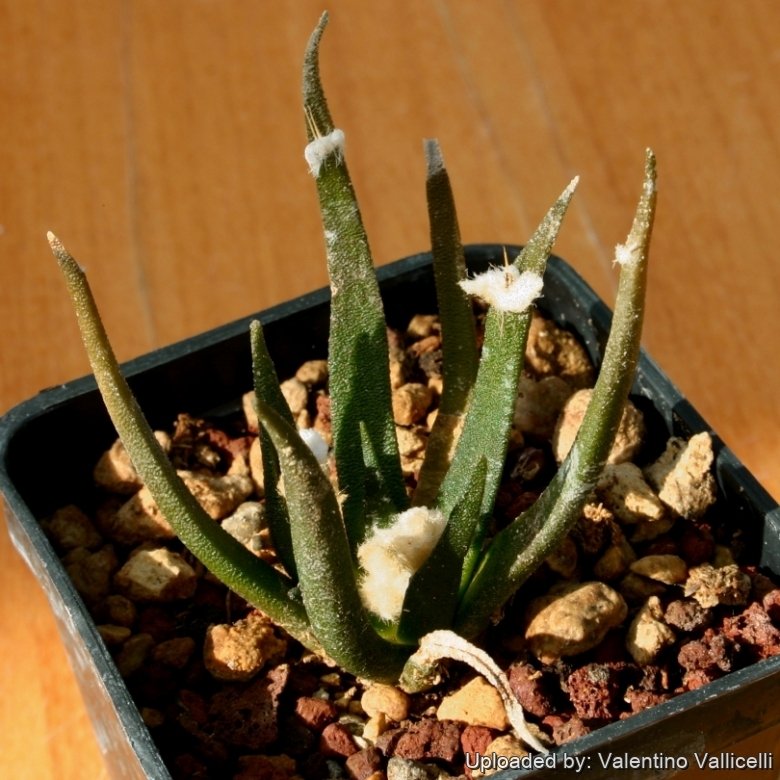
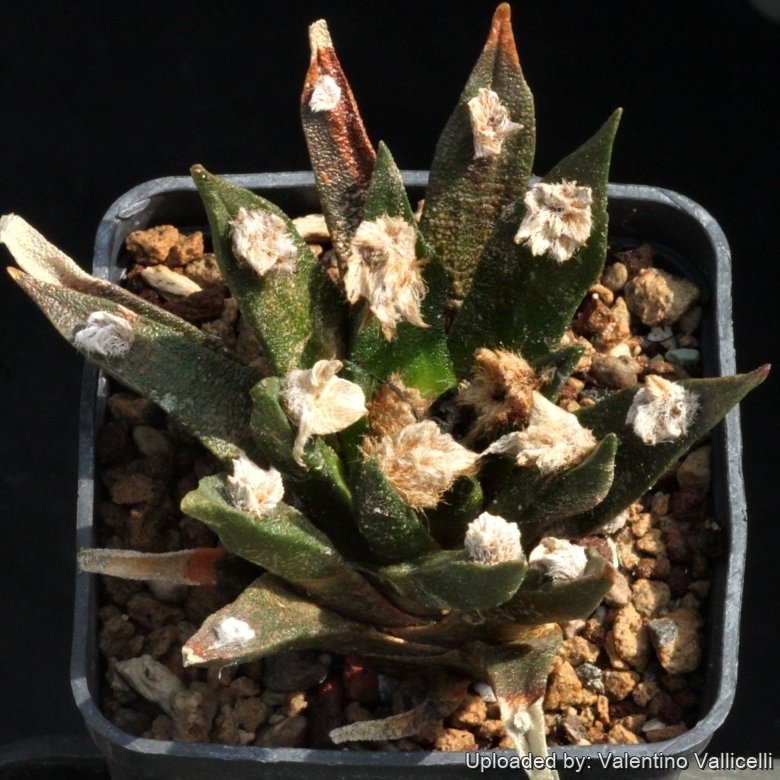
Tubercles: Divergent, often flaccid and not erect, not crowded or basally compressed, acute at the apices, flattened adaxially, not fissured, not incurved, 3-7cm long, 5-10 mm broad, more than 4 times as long as wide;
Areoles: 5-12mm from the tips of the tubercles, rounded, 2-5 mm in diameter;
Spines: None or up to 3, 2-6 mm long, creamy-white.
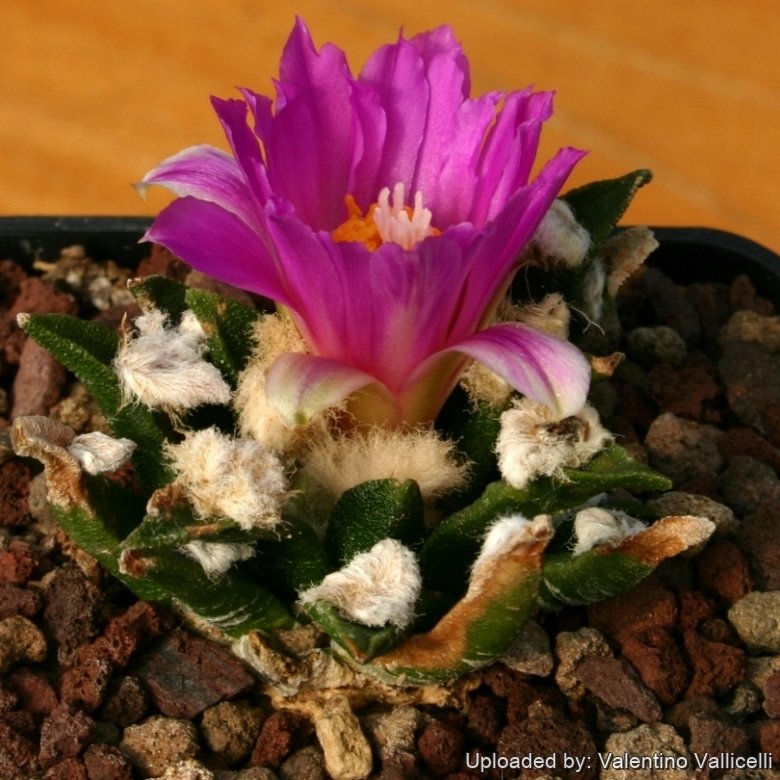
Flowers: 3.5-4.2cm in diameter, 2-5 cm long; outer perianth segments magenta with greenish-white margins, inner perianth parts deep magenta, pistil 2-3mm above the stamens; style white 1-2 cm long; stigmaswith 5-8 lobes 1-2,5 mm long;
Fruits: Pinkish-red to reddish purple, globose to elongate, 10-20 mm long, 5-12 mm in diameter.
Origin and Habitat
Distribution: Mun. Guadalcazar, S.L.P., San Luis Potosi (Mexico, Northern America)
The type locality of Ariocarpus agavoides is sited around the town of Tula, Tamaulipas. Two new colonies have been found recently in San Luis Potosi, disjunct from the original site (Ariocarpus agavoides var. sanluisensis).
Cultivation and Propagation
Grows in alluvial plain that becomes muddy in summer, so likes quite a lot of water then… but very prone to rot other times of the year, give moderate water in spring and autumn, no water in winter. Cultivate it in a well drained, non-organic, free-draining soil compost. The use of a weak low-nitrogen fertilizer during the growing season can encourage growth. The main threat to its development is root rot.
The Ariocarpus should be kept dry whenever there is a threat of cold. The appearance of Ariocarpus can benefit greatly by watering the plants from the bottom. This practice will help to keep the “wool” on the top of the plant from becoming matted or discoloured. Need half shadel to Full sunf. Frost Tolerance: Hardy to -10° C.
Propagation: It is easy to raise from seed, but will generally take about 5-8 years to reach flowering size, occasionally grafted.