Publication: Nat. Pflanzenfam. Nachtr. [Engler & Prantl] 3, Abt. 6a: 195. 1894
Description
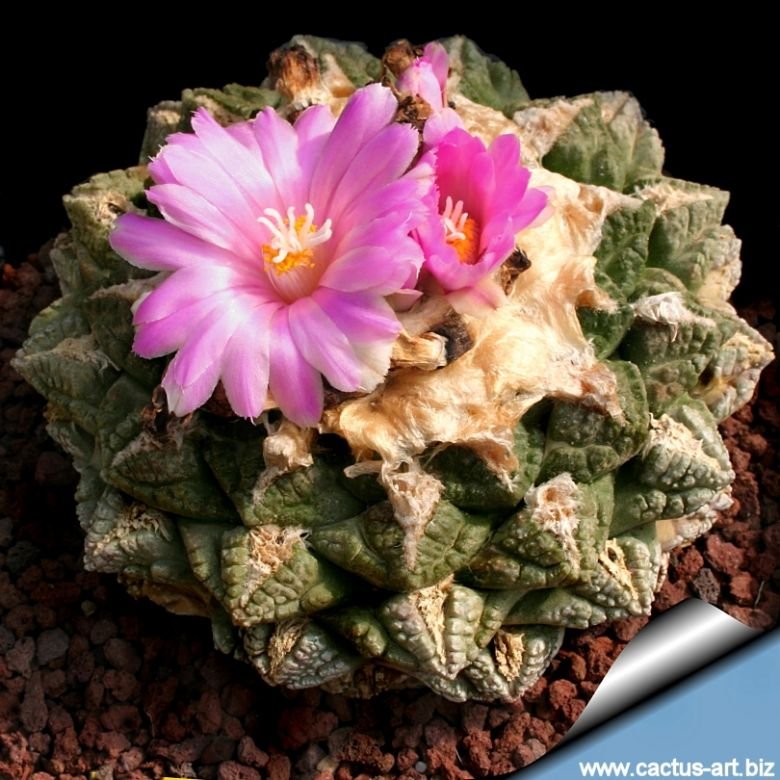
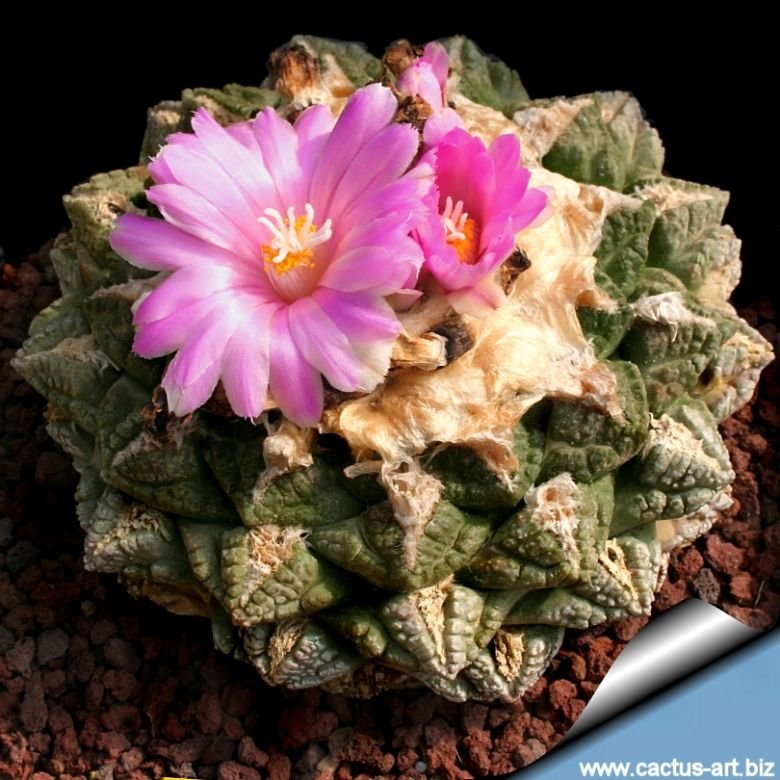
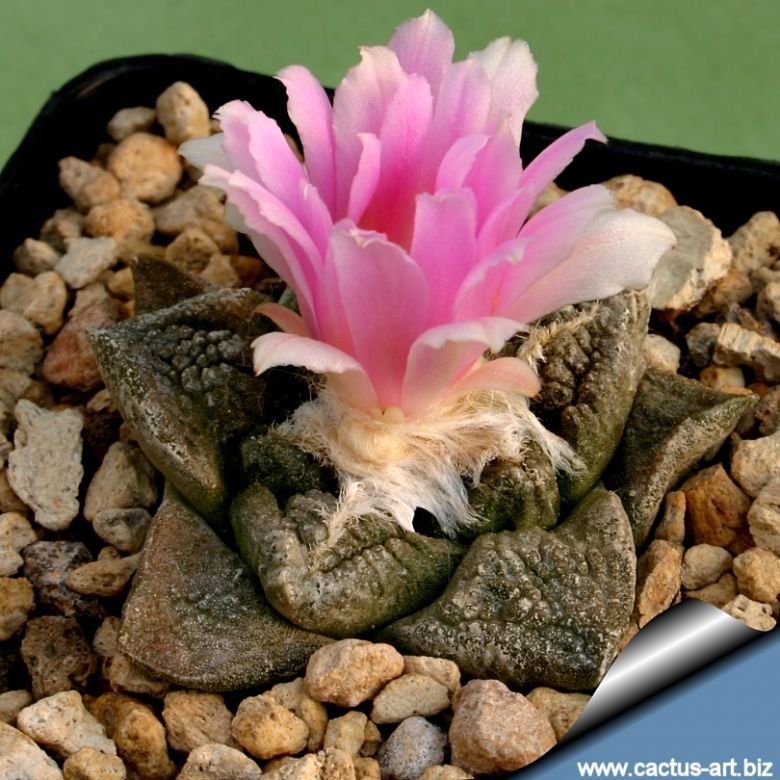
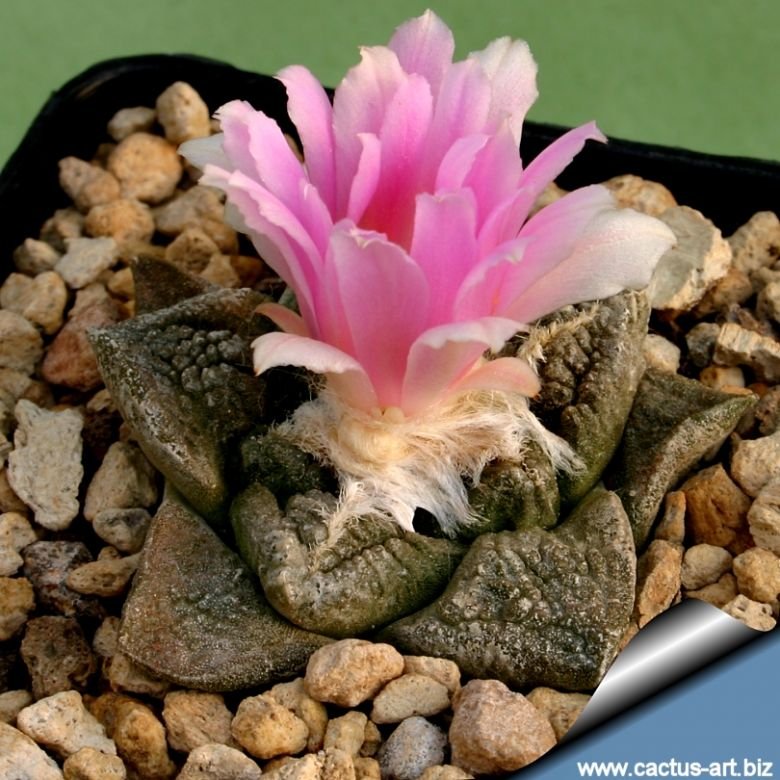
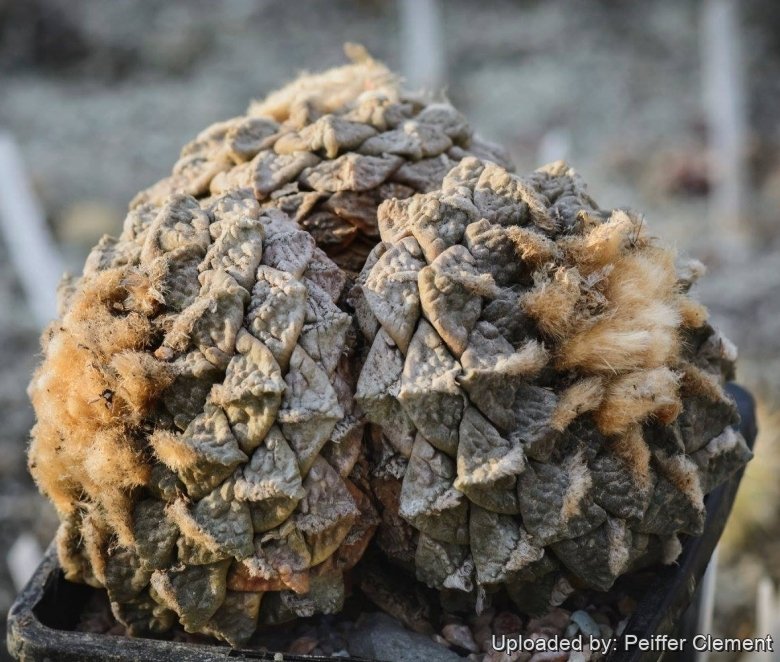
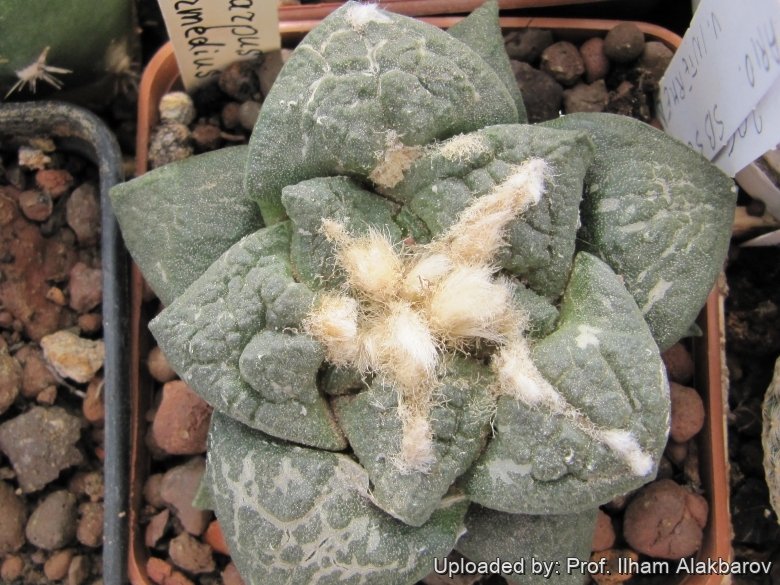
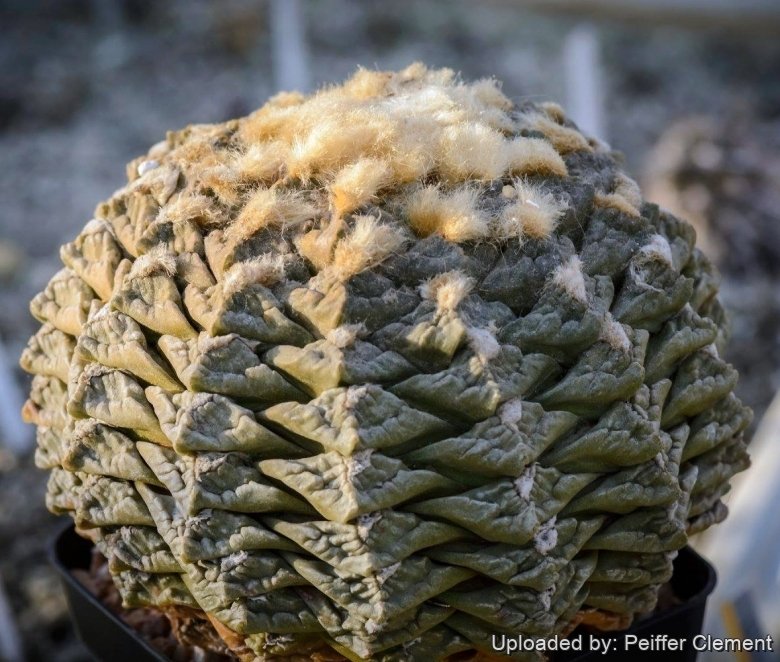
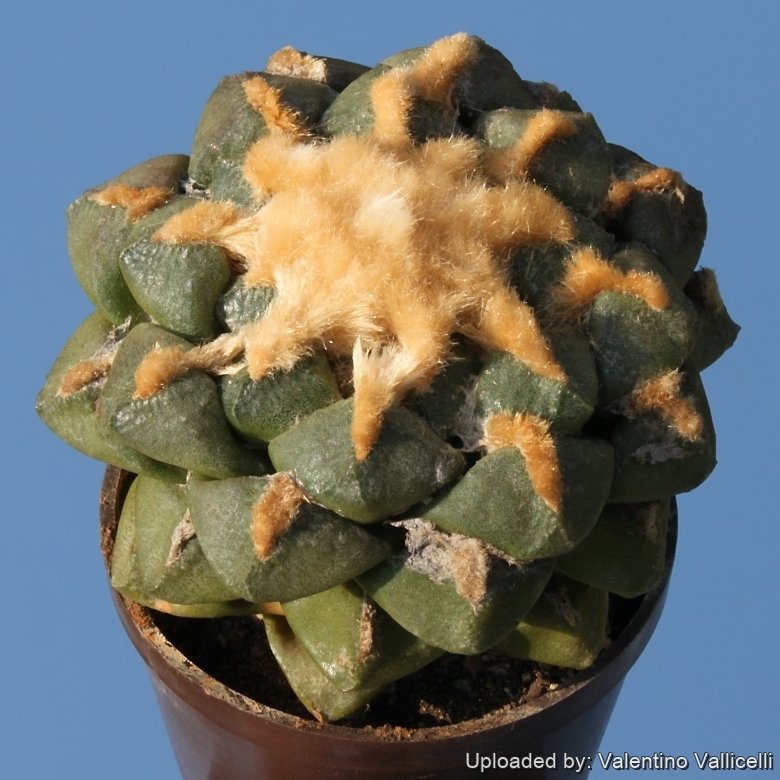
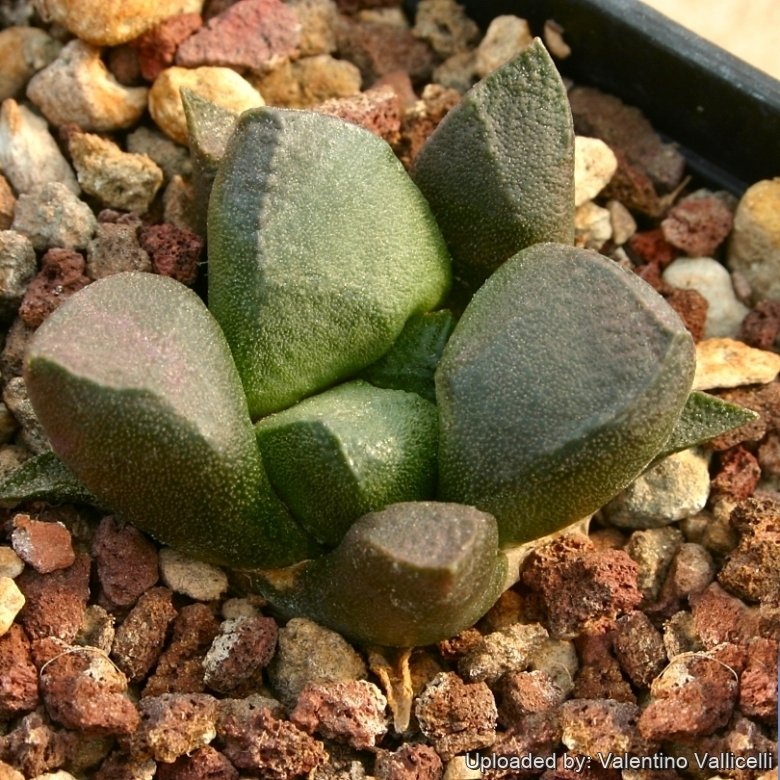
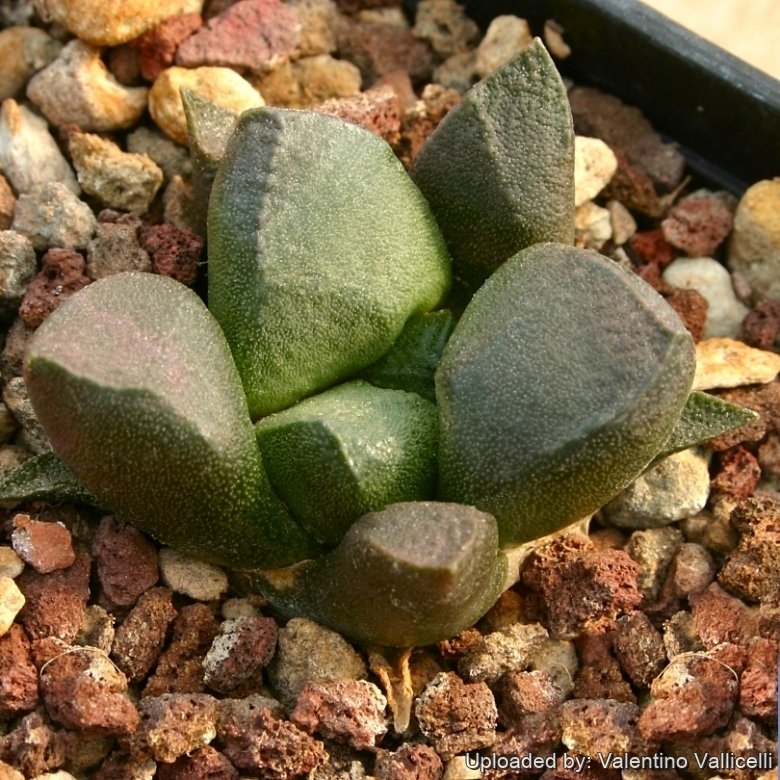
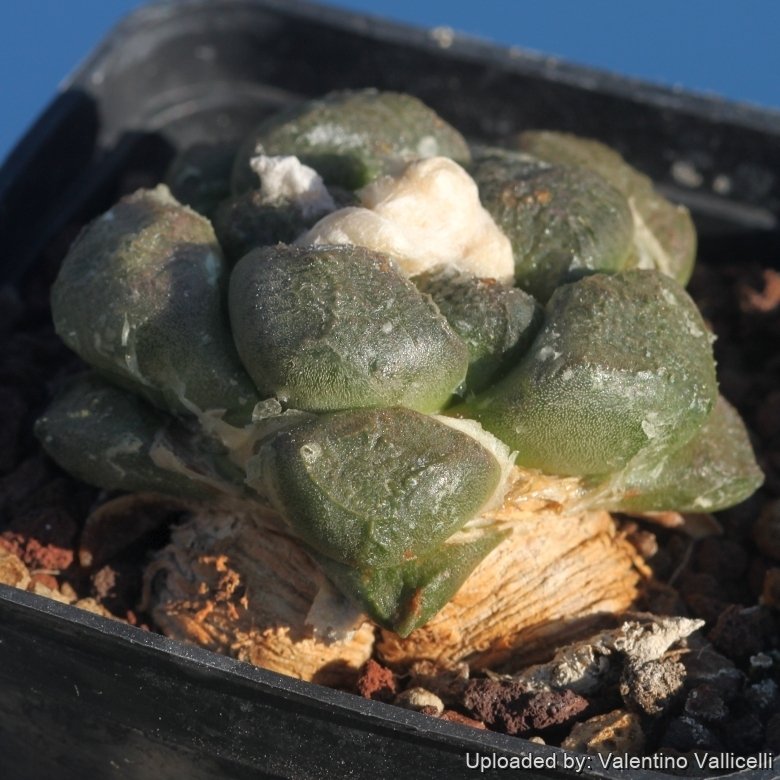
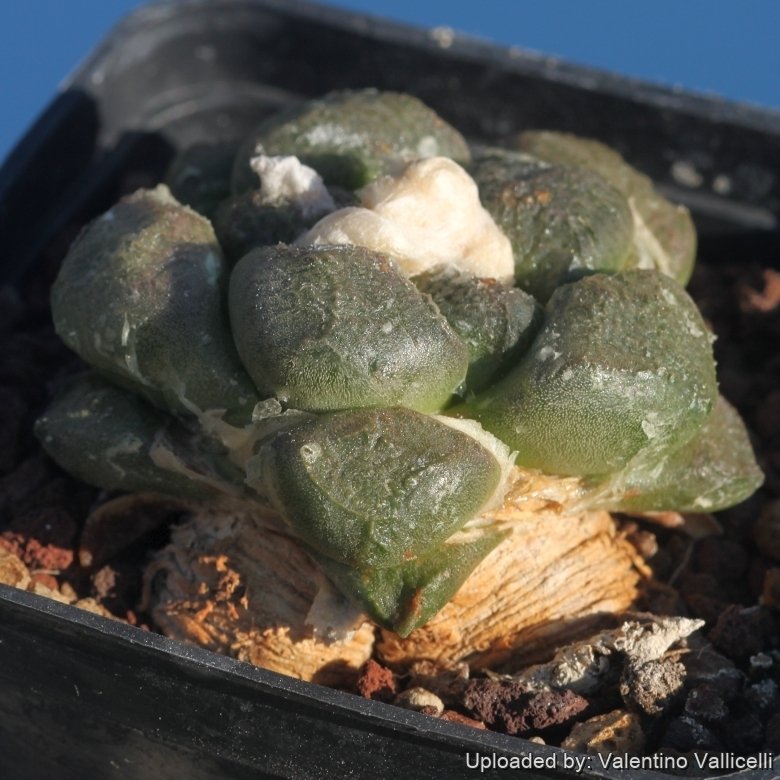
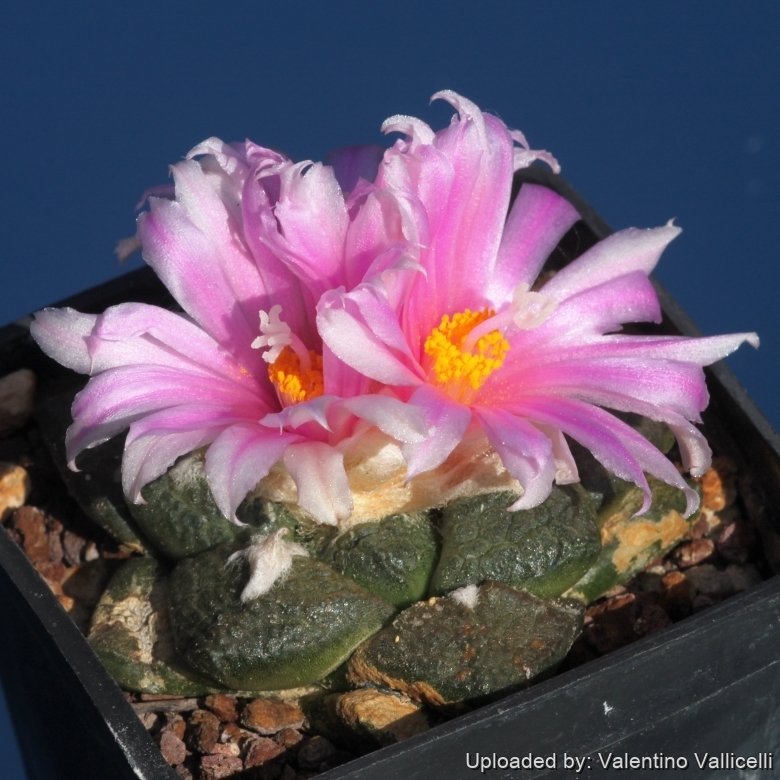
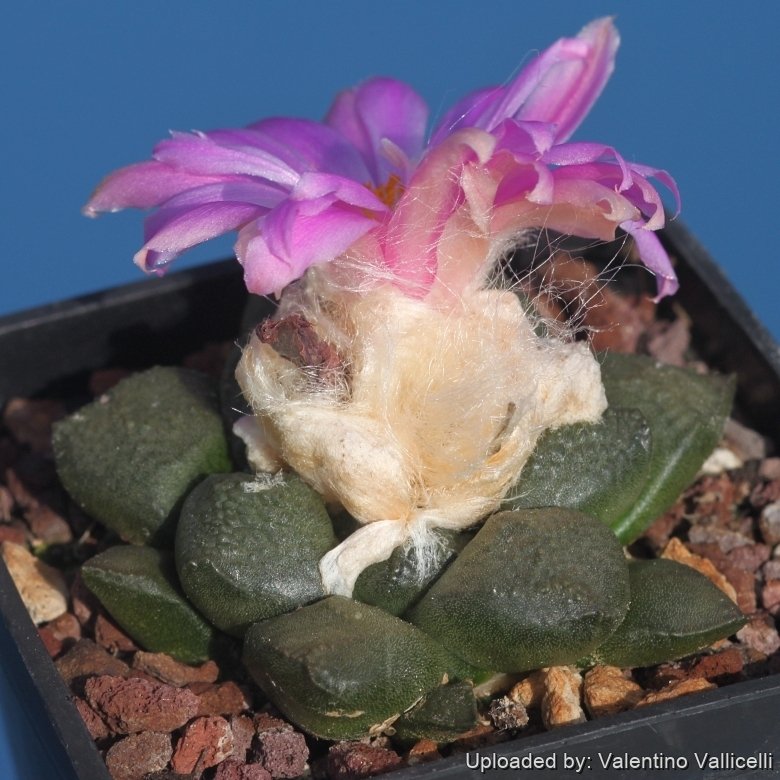
Ariocarpus fissuratus is a geophyte plant that produces a star-shaped rosette of fleshy, deltoid to hemispheric tubercles, which have no spines and lie almost flat on the soil surface. They are usually solitary, rarely giving rise to side shoots from old areoles, they grow extremely slowly, to 20 cm in diameter. This species is considered a separate entity from Ariocarpus bravoanus (including Ariocarpus bravoanus subsp. hintonii) following Hunt et al. (2006).
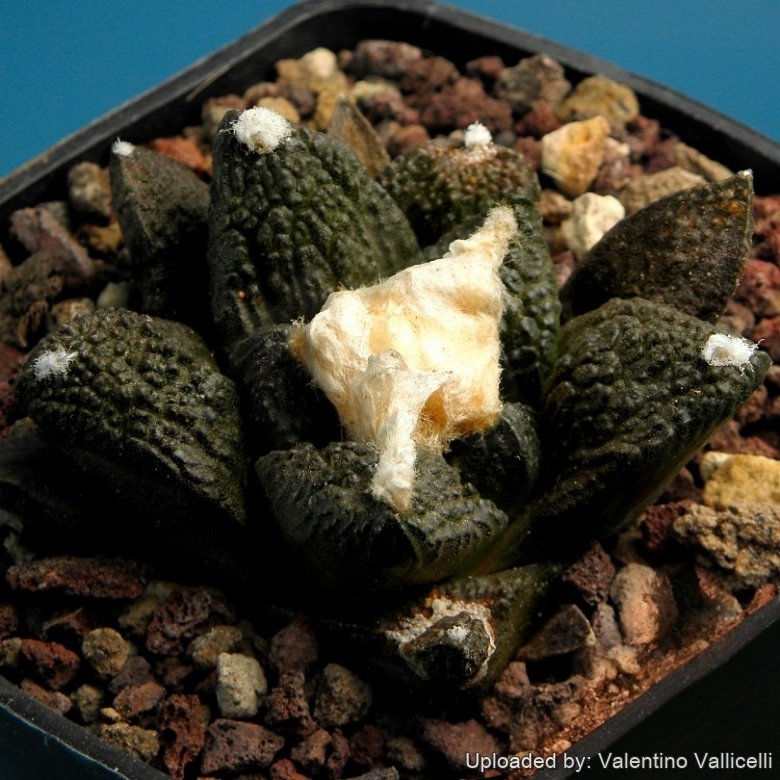
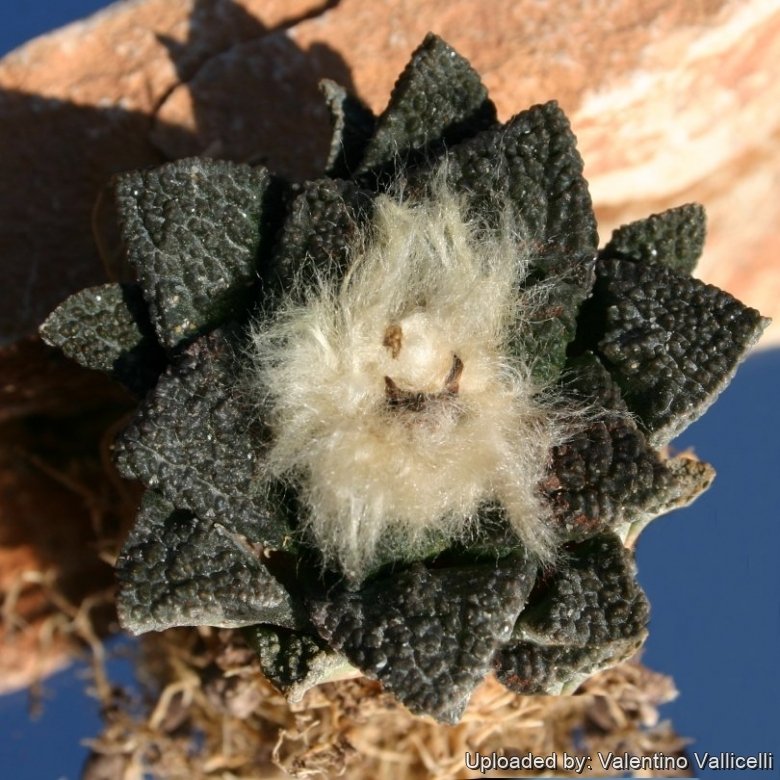
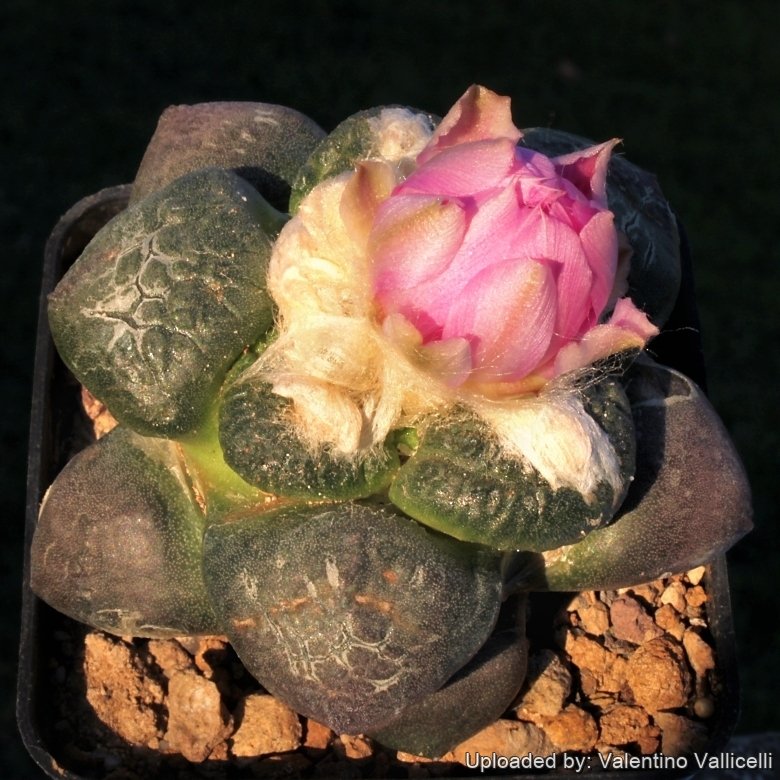
Tubercles: The tubercles, about as long as wide, are closely packed and form a coarse mosaic. Exposed faces of tubercles, deeply fissured on either side of the central areolar groove, are coarsely rugose, and are often sharply angled apically; and with a lateral longitudinal furrow on each side of the tubercle, along the edge.
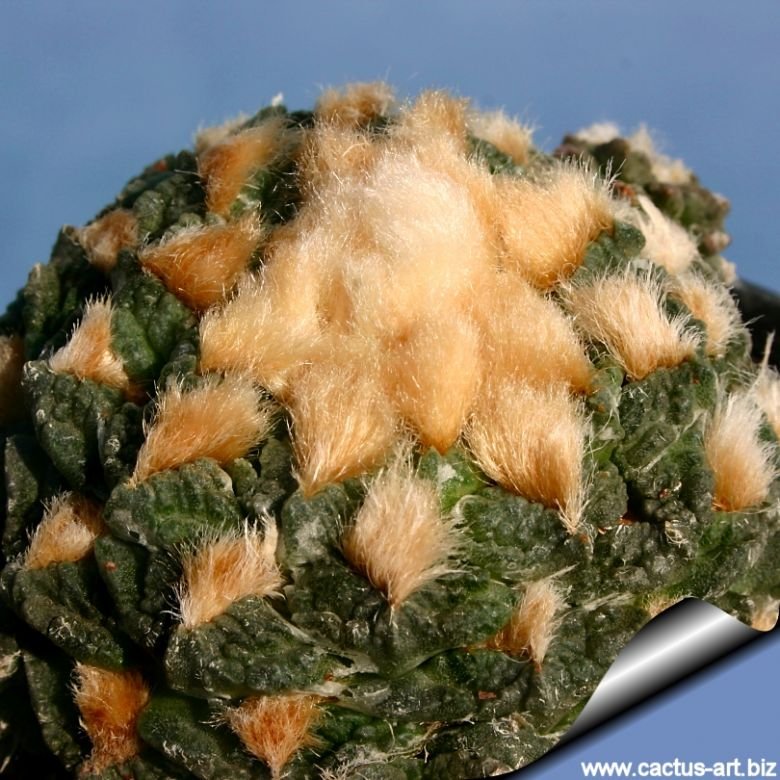
Areoles: The areoles are up to 3 mm wide, sometimes confined to middle of tubercle faces instead of extending to tips.
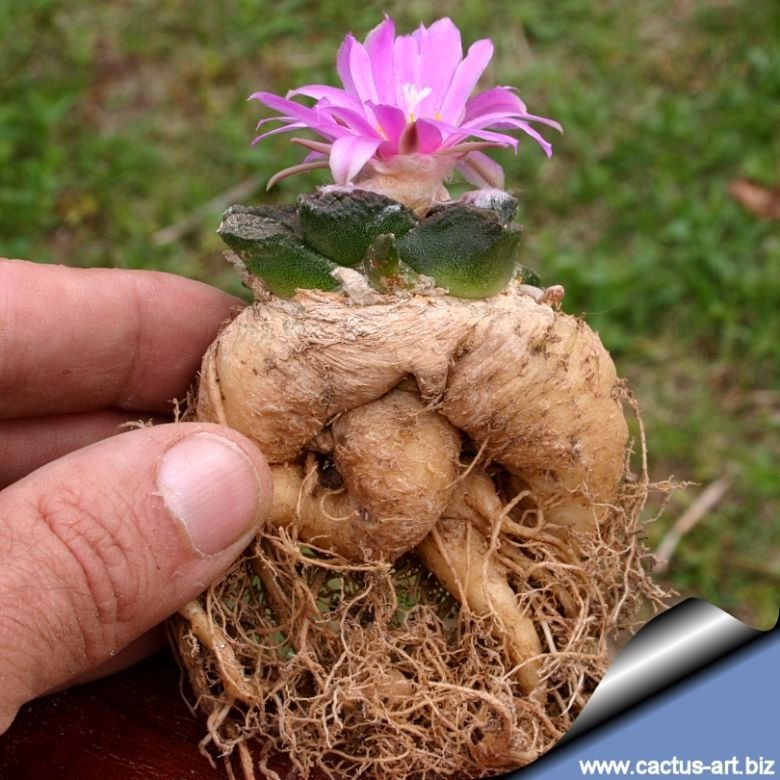
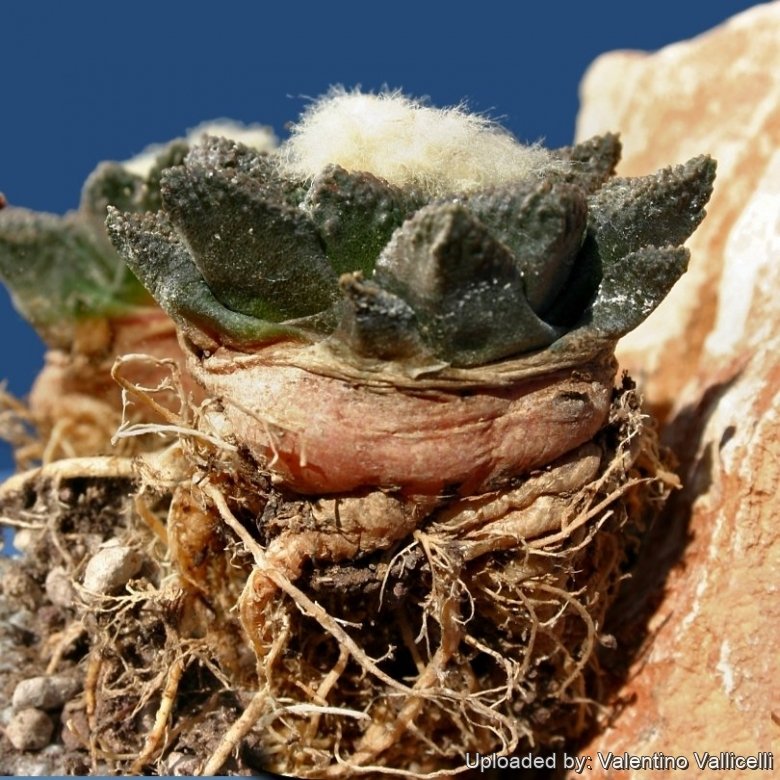
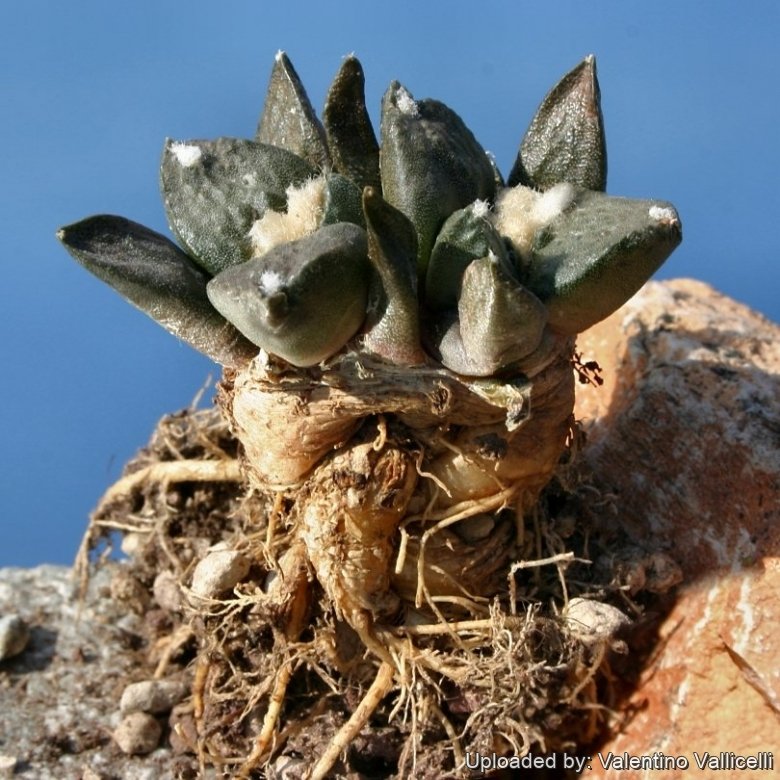
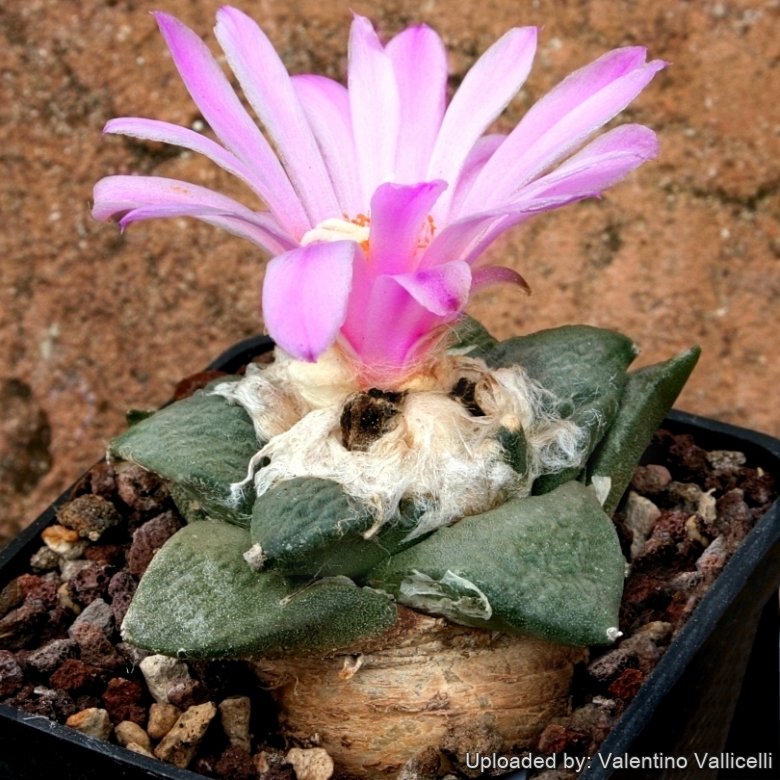
Roots: Each plant has a large turnip-like taproot, which lies below the soil surface and serves for water storage.
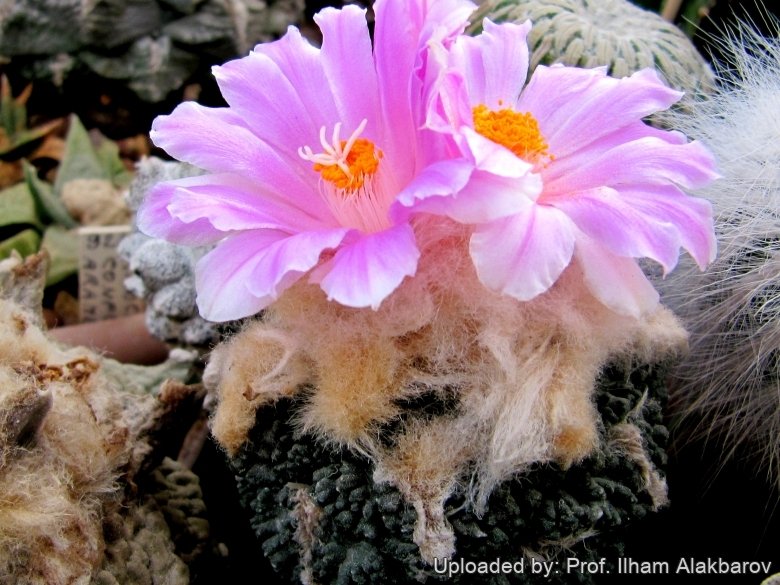
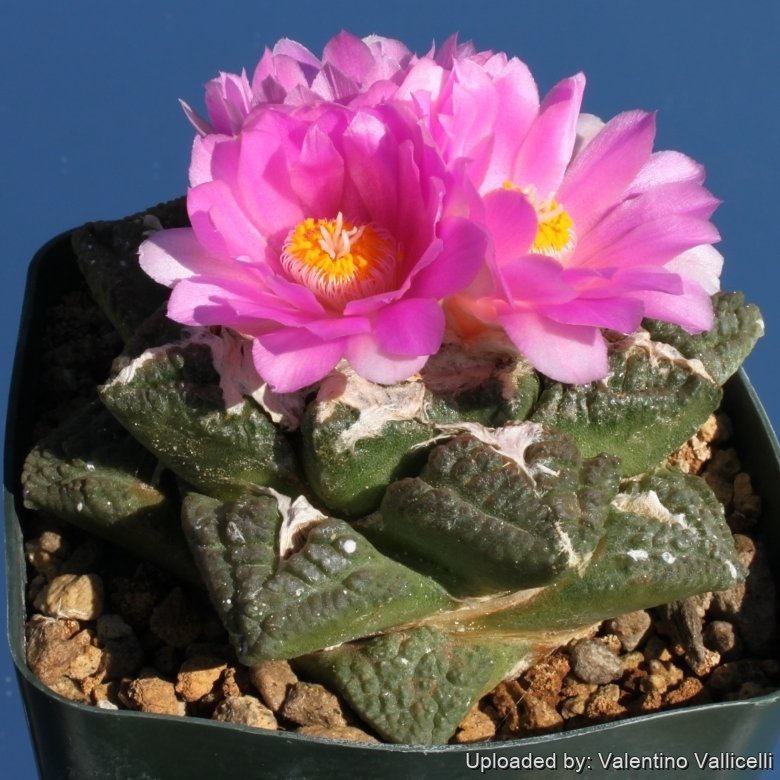
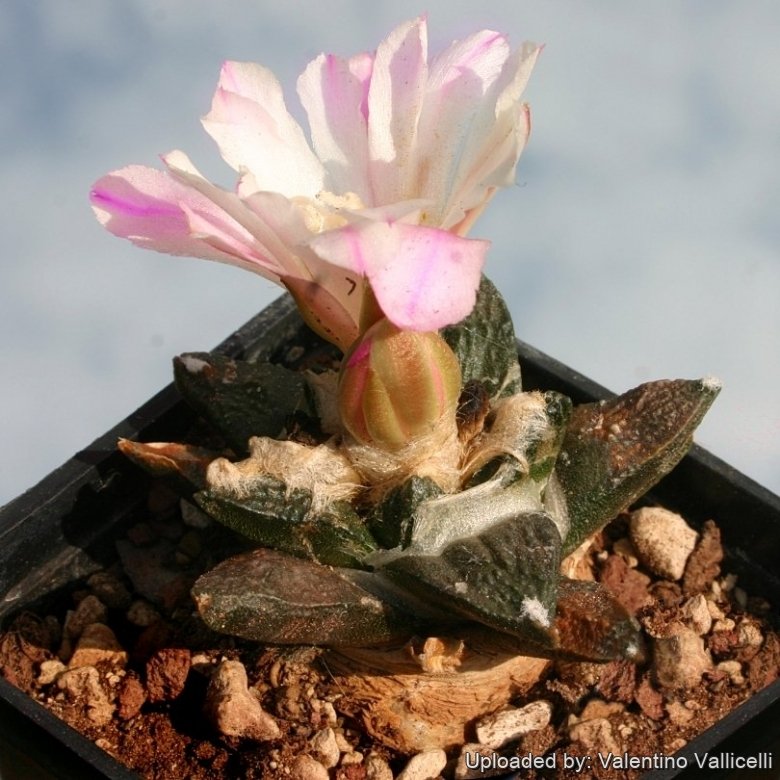
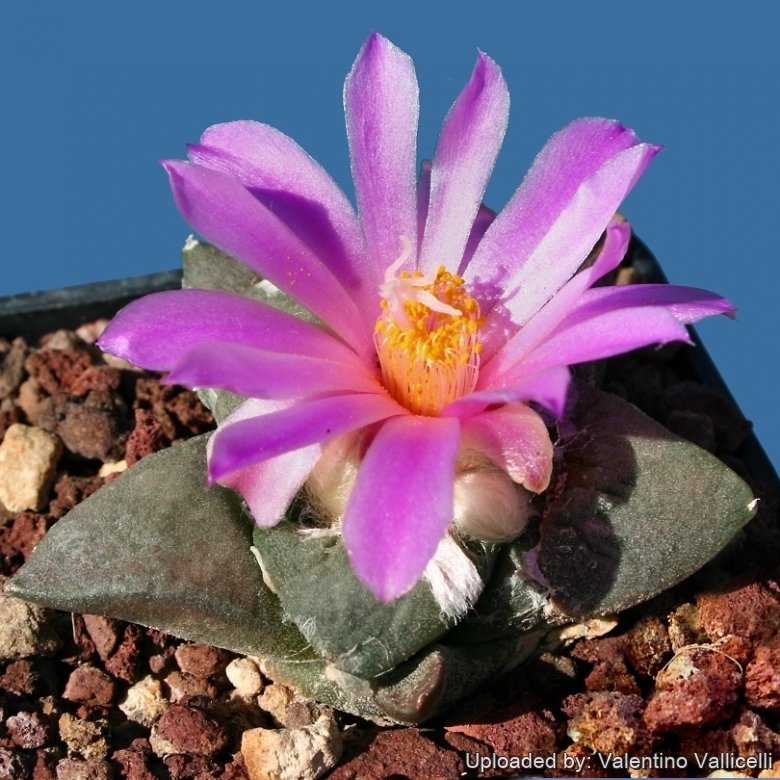
Flowers: These plants have a woolly crown, from which emerge bright pink-violet flowers up to 2,5-5 cm, 2 times wider than long when fully expanded. Flowers last for 3 to 4 days.
Blooming season: October, November.
Fruits: white or green, with lots of seed.
Origin and Habitat
Ariocarpus fissuratus is distributed in the Mexican states of Chihuahua, Coahuila, Durango, and Zacatecas, and in the United States in Texas (Hernández et al. 2004). It occurs from Presidio County, Texas southeast along the Rio Grande and near the lower Pecos River. In Mexico, it occurs near the Rio Grande in the adjacent states of Chihuahua and Coahuila.
Altitude range: This cactus grows at altitudes between 500 and 1,170 (1500?) metres above sea level.
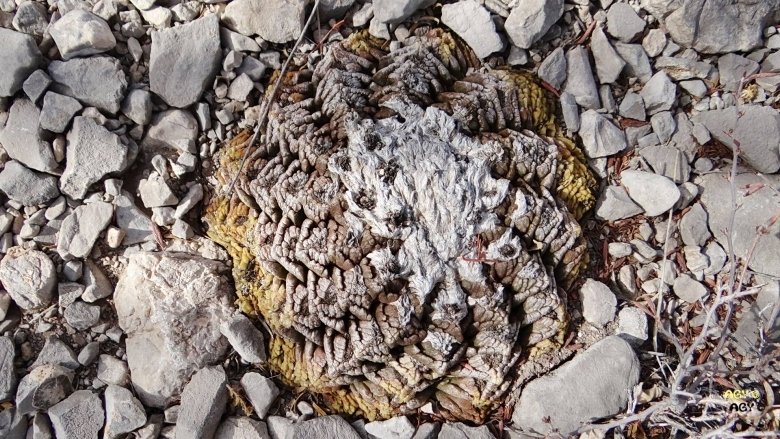
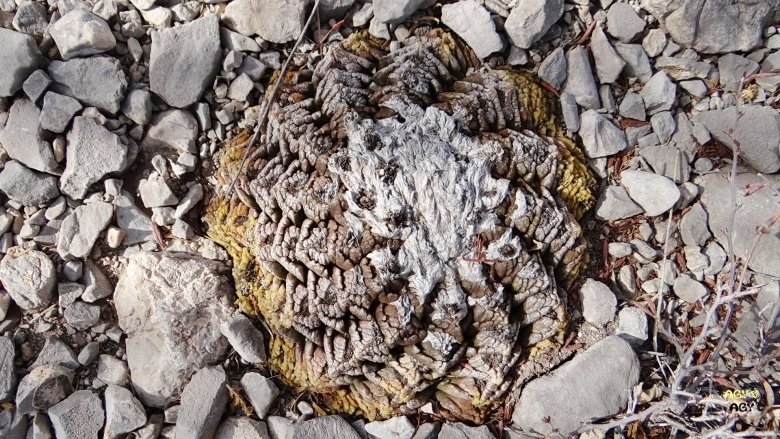
Habitat and Ecology: These plants are characteristic of dry limestone plains (and areas of gentle slopes), ridges and low, rocky hills of limestone chips among the Chihuahuan desert scrub (xerophyllous scrub), rarely occurring in gypseous soils. The stems are normally flush and well camouflaged with the soil surface resembling limestone chips in shape, colour, and texture, rendering the plants extremely cryptic. They are greyish-green in colour, sometimes taking on a yellowish tint with age. These cacti are difficult to spot in their natural habitat. When they are found, it is usually due to their pinkish flowers. In times of severe drought, the whole above-ground portion of these plants can shrink and be covered by rock fragments, but the taproot remains alive. Many exist as only small, isolated populations, and they were in danger of extinction because they were sought by plant collectors, up to date there is some illegal collection of the species from the wild but at a diminishing rate. For this reason they are protected plants in the regions where they occur. This species is still locally abundant in its appropriate habitat.
Cultivation and Propagation
Ariocarpus fissuratus is not too difficult in a greenhouse, although it grows extremely slowly (it starts blooming at the age of 8-12 years).
Soil: Use a loose mineral cactus mix with extra perlite or pumice and clay pots help the plants to dry out between watering.
Repotting: The plants need deep pots to accommodate the napiform unit formed by the stem base and the rootstock (or they will often simply crack your pots). Generally, they should be repotted frequently at least every other year in order to provide fresh soil. However, old plants become senile and have a tendency to succumb to disease and a weak root system. At this stage, as is well known, they die suddenly. So, after they reach 20 cm in diameter grow them slowly, and adopt a new repotting period, using intervals of every 3 years. Additionally grow them under drier conditions or with stronger sunlight. However, repotting doesn’t necessarily mean they’ll need larger containers.
Sun Exposure: Partial sun or light shade. They need a good amount of light, a place near the roof of the greenhouse helps drying the pot after watering.
Watering: They require moderately watering through the growing season. This can be done weekly during the summertime, if the weather is sunny enough, with a little fertilizer added. Kept this way, plants will show a healthy, although slow growth. Keep dry as soon as the temperature starts dropping in October and keep it perfectly dry in winter at temperatures from 5 to 15 degrees centigrade.
Hardiness: Winter care presents no problems at 5°C with plenty of light., but frost hardy to -10°C.
Pest and diseases: They are generally fairly easy to grow, especially if kept pest-free. They are susceptible to stem and root mealy bugs, and damage from these may well initiate fungal attack.
Propagation: By seeds, remembering that seedlings dislike strong light and dry conditions, but the grafted plants are typically rather tall- growing, compared with plants on their own roots, that are usually flatter to the ground.
Bibliography
Major references and further lectures
-
Edward Anderson “The Cactus family” Timber Press, Incorporated, 2001
-
James Cullen, Sabina G. Knees, H. Suzanne Cubey “The European Garden Flora Flowering Plants: A Manual for the Identification of Plants Cultivated in Europe, Both Out-of-Doors and Under Glass” Cambridge University Press, 11/Aug/2011
-
David R Hunt; Nigel P Taylor; Graham Charles; International Cactaceae Systematics Group. “The New Cactus Lexicon” dh books, 2006.
-
Fitz Maurice, B, Sotomayor, M., Terry, M., Heil, K., Fitz Maurice, W.A., Hernández, H.M. & Corral-Díaz, R. 2013. Ariocarpus fissuratus. The IUCN Red List of Threatened Species. Version 2015.1. <www.iucnredlist.org>. Downloaded on 21 June 2015.
From llifle page Ariocarpus intermedius
Description
Ariocarpus fissuratus is a variable geophyte species, the most interesting variant being the Ariocarpus lloydii. However the range of these two forms merge, giving rise to some populations with transitional characteristics known as Ariocarpus intermedius. It is usually solitary, rarely giving rise to side shoots from old areoles, it grows extremely slowly, to 20 cm in diameter.
Stem: Star-shaped composed by a rosette of fleshy, deltoid to hemispheric tubercles, which have no spines. The tubercles, about as long as wide, are coarsely rugose, and often sharply angled apically and closely packed to form a coarse mosaic.
Areoles: The areoles are up to 3 mm wide, sometimes confined to middle of tubercle faces instead of extending to tips.
Roots: Each plant has a large turnip-like taproot, which lies below the soil surface and serves for water storage.
Flowers: These plants have a woolly crown, from which emerge bright pink-violet flowers up to 2.5-5 cm, 2 times wider than long when fully expanded. Flowers last for 3 to 4 days.
Blooming season: October, November.
Origin and Habitat
It is found between Cuatrocienegas and Estacion Marte in central Coahuila.
Habitat:These plants are characteristic of dry limestone ridges and low, rocky hills of limestone chips at an altitude of 500-1500 m among the Chihuahuan desert scrub.
Ecology: The stems are normally flush and well camouflaged with the soil surface resembling limestone chips in shape, colour, and texture, rendering the plants extremely cryptic. They are greyish-green in colour, sometimes taking on a yellowish tint with age. These cacti are difficult to spot in their natural habitat. When they are found, it is usually due to their pinkish flowers
In times of severe drought, the whole above-ground portion of these plants can shrink and be covered by rock fragments, but the taproot remains alive. Many exist as only small, isolated populations, and are in danger of extinction because they sought by plant collectors. For this reason they are protected plants in the regions where they occur.
Cultivation and Propagation
It is not too difficult in a greenhouse, although it grows extremely slowly. The plants need deep pots to accommodate the napiform unit formed by the stem base and the rootstock (or they will often simply crack your pots), , and a loose mineral soil with a well-drained substrate. They need a good amount of light, a place near the roof of the greenhouse helps drying the pot after watering. This can be done weekly during the summertime, if the weather is sunny enough, with a little fertilizer added. Kept this way, plants will show a healthy, although slow growth. They are frost hardy to -10°C
Propagation: By seeds, remembering that seedlings dislike strong light and dry conditions, and need to be repotted frequently. Eventually, as they become mature, they reach a maximum size of 25 to 27 cm. However, old plants become senile and have a tendency to succumb to disease and a weak root system. At this stage, as is well known, they die suddenly. So, after they reach 20 cm in diameter grow them slowly, and adopt a new repotting period, using intervals of every 2 - 3 years. Additionally grow them under drier conditions or with stronger sunlight. Plants are often grafted to accelerate growth, as they would generally take at least a decade to reach maturity on their own. But the grafted plants are typically rather tall- growing, compared with plants on their own roots, that are usually flatter to the ground. A. fissuratuss starts blooming at the age of 8-12 years.
Source: Ariocarpus intermedius, LLIFLE - Encyclopedia of living forms, CC-BY-SA, retrieved 2026-10-25.
From llifle page Ariocarpus lloydii
Description
Ariocarpus fissuratus var. lloydii is traditionally distinguished from var. fissuratus by its higher, somewhat rounded and more convex stem appearing above the ground.
Stem: Scarcely appearing above the ground, flat to somewhat rounded and sometime even columnar shaped in cultivation. In habitat the stems in adult specimens ranges from 10 to 15 cm in diameter.
Tubercles: The tubercles of var. lloydii are very different from those of the standard Ariocarpus fissuratus and easily recognizable. They are imbricated, ovate, broad at base and usually more rounded at the apex, about 2 to 3 cm wide. They lack edges and lateral longitudinal furrow (or are only weakly fissured). They are only finely rugose with quite coarse, often confluent papillae in the whole surface which form transversal ledges and irregularly warty.
Areoles: Filled with a dense mass of hairs, up to 3 mm wide, sometimes confined to middle of tubercle faces instead of extending to tips.
Flowers: These plants have a woolly crown, from which emerge 3 to 4 cm broad, white to purple (usually pink) 2 times wider than long when fully expanded. Inner perianth-segments oblong-oblanceolate; style and stigma-lobes white.
Blooming time: October, November. Flowers last for 3 to 4 days.
Fruit: Ovoidal, pale green.
Seeds: Black, tuberculate-roughened.
Root: Each plant has a large turnip-like taproot, which lies below the soil surface and serves for water storage.
Ariocarpus fissuratus, Ariocarpus lloydii and Ariocarpus intermedius
The Ariocarpus fissuratus is quite variable in shape of stems and tubercles for its wide area of distribution, ranging from USA (Big Bend region of Texas and along the Rio Grande) to Mexico ( Northern and central to southern Coahuila).
The typical A. fissuratus found on the northern part of it its range is very different from the southern form found in central Mexico that is characterized by rounder not fissured tubercles; this southern form was early described as A. lloydii. However in habitat this species species displays a continuum of characteristics over its range that make difficult to classify A. lloydii as a separate species. The more of less intermediate form found in northern Mexico ( Cuatro Cienegas in south-central Coahuila and Estacion Marte in southern Coahuila) was early named Ariocarpus intermedius.
Origin and Habitat
It grows in central Mexico and ranges from southern Coahuila and adjacent Zacatecas to eastern Durango (Nazas, Peñon Blanco).
Habitat: These plants are characteristic of dry limestone ridges and low, rocky hills of limestone chips at an altitude of 500-1500 m among the Chihuahuan desert scrub.
Ecology: The stems are normally flush and well camouflaged with the soil surface resembling limestone chips in shape, colour, and texture, rendering the plants extremely cryptic. They are greyish-green in colour, sometimes taking on a yellowish tint with age. These cacti are difficult to spot in their natural habitat. When they are found, it is usually due to their pinkish flowers.
In times of severe drought, the whole above-ground portion of these plants can shrink and be covered by rock fragments, but the taproot remains alive. Many exist as only small, isolated populations, and are in danger of extinction because they sought by plant collectors. For this reason they are protected plants in the regions where they occur.
Cultivation and Propagation
It is not too difficult in a greenhouse, although it grows extremely slowly. The plants need deep pots to accommodate the napiform unit formed by the stem base and the rootstock (or they will often simply crack your pots), and a loose mineral soil with a well-drained substrate. They need a good amount of light, a place near the roof of the greenhouse helps drying the pot after watering. This can be done weekly during the summertime, if the weather is sunny enough, with a little fertilizer added. Kept this way, plants will show a healthy, although slow growth. They are frost hardy to -10°C.
Propagation: By seeds, remembering that seedlings dislike strong light and dry conditions, and need to be repotted frequently. Eventually, as they become mature, they reach a maximum size of 25 to 27 cm. However, old plants become senile and have a tendency to succumb to disease and a weak root system. At this stage, as is well known, they die suddenly. So, after they reach 20 cm in diameter grow them slowly, and adopt a new repotting period, using intervals of every 2 - 3 years. Additionally grow them under drier conditions or with stronger sunlight. Plants are often grafted to accelerate growth, as they would generally take at least a decade to reach maturity on their own. But the grafted plants are typically rather tall- growing, compared with plants on their own roots, that are usually flatter to the ground. Ariocarpus fissuratus var. lloydii starts blooming at the age of 8-12 years.
Source: Ariocarpus lloydii, LLIFLE - Encyclopedia of living forms, CC-BY-SA, retrieved 2026-10-25.
From llifle page Ariocarpus lloydii var. mayor
Description
Ariocarpus fissuratus var. lloydii is traditionally distinguished from var. fissuratus by its higher, somewhat rounded and more convex stem appearing above the ground
Stem: Scarcely appearing above the ground, flat to somewhat rounded and sometime even columnar shaped in cultivation. In habitat the stems in adult specimens ranges from 10 to 15 cm in diameter.
Tubercles: The tubercles of var. lloydii are very different from those of the standard A. fissuratus and easily recognizable. They are imbricated, ovate, broad at base and usually more rounded at the apex, about 2 to 3 cm wide. They lack edges and lateral longitudinal furrow (or are only weakly fissured). They are only finely rugose with quite coarse, often confluent papillae in the whole surface which form transversal ledges and irregularly warty.
Areoles: Filled with a dense mass of hairs, up to 3 mm wide, sometimes confined to middle of tubercle faces instead of extending to tips.
Flowers: These plants have a woolly crown, from which emerge 3 to 4 cm broad, white to purple (usually pink) 2 times wider than long when fully expanded. Inner perianth-segments oblong-oblanceolate; style and stigma-lobes white.
Blooming time: October, November. Flowers last for 3 to 4 days.
Fruit: Ovoidal, pale green.
Seeds: Black, tuberculate-roughened.
Root: Each plant has a large turnip-like taproot, which lies below the soil surface and serves for water storage.
Ariocarpus fissuratus, Ariocarpus lloydii and Ariocarpus intermedius
The A. fissuratus is quite variable in shape of stems and tubercles for its wide area of distribution, ranging from USA (Big Bend region of Texas and along the Rio Grande) to Mexico ( Northern and central to southern Coahuila).
The typical A. fissuratus found on the northern part of it its range is very different from the southern form found in central Mexico that is characterized by rounder not fissured tubercles; this southern form was early described as A. lloydii. However in habitat this species species displays a continuum of characteristics over its range that make difficult to classify A. lloydii as a separate species. The more of less intermediate form found in northern Mexico ( Cuatro Cienegas in south-central Coahuila and Estacion Marte in southern Coahuila) was early named Ariocarpus intermedius.
Cultivation and Propagation
It is not too difficult in a greenhouse, although it grows extremely slowly. The plants need deep pots to accommodate the napiform unit formed by the stem base and the rootstock (or they will often simply crack your pots), , and a loose mineral soil with a well-drained substrate. They need a good amount of light, a place near the roof of the greenhouse helps drying the pot after watering. This can be done weekly during the summertime, if the weather is sunny enough, with a little fertilizer added. Kept this way, plants will show a healthy, although slow growth. They are frost hardy to -10°C.
Propagation: By seeds, remembering that seedlings dislike strong light and dry conditions, and need to be repotted frequently. Eventually, as they become mature, they reach a maximum size of 25 to 27 cm. However, old plants become senile and have a tendency to succumb to disease and a weak root system. At this stage, as is well known, they die suddenly. So, after they reach 20 cm in diameter grow them slowly, and adopt a new repotting period, using intervals of every 2 - 3 years. Additionally grow them under drier conditions or with stronger sunlight. Plants are often grafted to accelerate growth, as they would generally take at least a decade to reach maturity on their own. But the grafted plants are typically rather tall- growing, compared with plants on their own roots, that are usually flatter to the ground. A. fissuratus var. lloydii starts blooming at the age of 8-12 years.
Source: Ariocarpus lloydii var. mayor, LLIFLE - Encyclopedia of living forms, CC-BY-SA, retrieved 2026-10-25.
From llifle page Ariocarpus lloydii f. aurea
Description
Ariocarpus fissuratus var. lloydii is traditionally distinguished from var. fissuratus by its higher, somewhat rounded and more convex stem appearing above the ground.
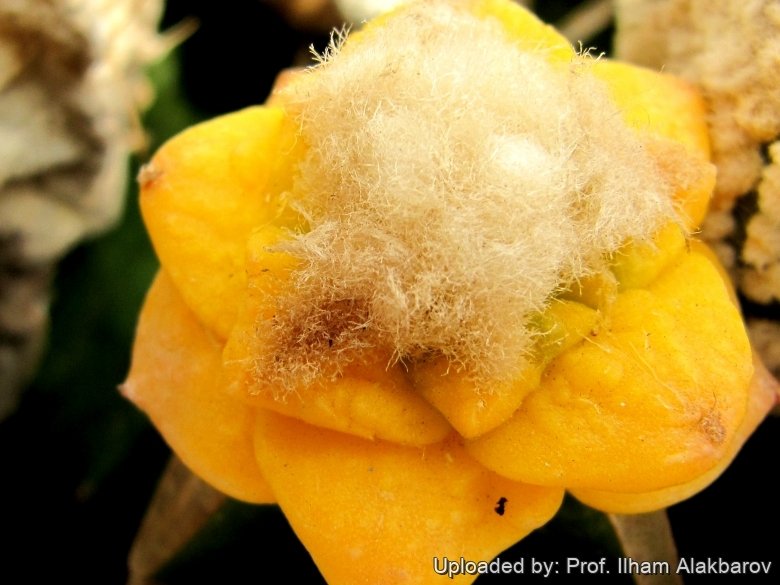
Forma aurea (yellow form): The yellow schizochromic form (Ariocarpus hybrid retusus f. aurea) has bright golden yellow stems due to the absence (or reduced production) of chlorophyll pigments: every other pigment is present at normal levels, the dominant green colouration is lost, but will still more than likely have normal other pigments that give the yellow overall appearance of the stem. This form with yellow stems is very attractive and highly prized. This schizochromic form is almost always seen grafted on stronger columnar species, and cannot can be grown on its own roots.
Stem: Flat to somewhat rounded and sometime even columnar shaped in cultivation, pale to golden yellow or orangish, from 10 to 15 cm in diameter, .
Tubercles: The tubercles of var. lloydii are very different from those of the standard Ariocarpus fissuratus and easily recognizable. They are imbricated, ovate, broad at base and usually more rounded at the apex, about 2 to 3 cm wide. They lack edges and lateral longitudinal furrow (or are only weakly fissured). They are only finely rugose with quite coarse, often confluent papillae in the whole surface which form transversal ledges and irregularly warty.
Areoles: Filled with a dense mass of hairs, up to 3 mm wide, sometimes confined to middle of tubercle faces instead of extending to tips.
Flowers: These plants have a woolly crown, from which emerge 3 to 4 cm broad, white to purple (usually pink) 2 times wider than long when fully expanded
Blooming time: October, November. Flowers last for 3 to 4 days.
Origin and Habitat
Japan, Garden origin (Nursery produced cultivar)
Cultivation and Propagation
Variegated and albinous cacti are regarded as choice and difficult in cultivation, but despite that many of them are relatively easy to grow. But be aware that they cannot tolerate prolonged exposure to direct sun light (especially during the hottest summer days), so grow them in half-shade or under filtered sun. They are sometime seen as grafted plants, but many grow well on their own roots, too.
On the contrary, the albinos can survive only if grafted on a strong green base.
Use mineral well-permeable substratum with little organic matter (peat, humus). Water sparingly from March till October and keep perfectly dry in winter at temperatures from 5 to 15 degrees centigrade. (In general these plants are more tender and cannot endure freezing temperatures ) In the rest period no high atmospheric humidity!!
Propagation: Usually by seed. Plants are often grafted onto column-shaped cacti.
Notes
Notes: Albinism, Schizochromism & Variegation
Variegation: A variegated plant has sectors, patches or stripes with two or more different colours, even distinct shades of green. Plants with variegated stems or leaves are often attractive and highly prized. In most species the stems or leaves are normally green, and variegated epidermis is an uncommon mutation, termed a chimera. A chimeral variegation is due to losing the ability to produce chlorophyll in some of the plant’s tissue, so that this tissue is no longer green. Tissues lacking chlorophyll are usually white or pale yellow coloured (due to carotenoid pigments) or red (due to betalain or anthocyanin pigments) contrasting with the normal green tissue. There are several forms of variegation, depending on the tissues that have been affected. The variegation in some forms is unstable. The extent and nature of the variegation can vary, and sometimes the plant will return to the green form. In others it is stable and does not change under normal conditions. Because the variegation is due to the presence of two kinds of plant tissue, propagating the plant must be by a vegetative method of propagation that preserves both types of tissue in relation to each other.
Albinism: Every once in a while a plant exhibits albinism (completely lacking chlorophyll pigment). This means that its tissue is unable to carry out photosynthesis. The result is a completely cream-white yellow or reddish plant. This plant will be weaker than a green plant, and albinism is generally a fatal trait (it can’t produce its own food and it’s not getting it from anything else). Without chlorophyll, the albino plant has no way to manufacture the food needed for survival and growth to maturity. This implies that these plants cannot survive on their own roots and necessitate being grafted on a normal green plant that provides food. Some of these albino plants are indeed very popular, and sought after by collectors.
Schizochromism: The yellow or red appearance of some plants is more precisely caused by another aberration called “schizochromism”. Here, though, the specific green pigment (chlorophyll) is missing: every other pigment is present at normal levels. The dominant green colouration is lost, but the plant will still more than likely have normal other pigments that give the yellow overall appearance of stems and the red colouration of spines.
Source: Ariocarpus lloydii f. aurea, LLIFLE - Encyclopedia of living forms, CC-BY-SA, retrieved 2026-10-25.
From llifle page Ariocarpus lloydii f. cristata
Description
Ariocarpus fissuratus var. lloydii is traditionally distinguished from var. fissuratus by its higher, somewhat rounded and more convex stem appearing above the ground.
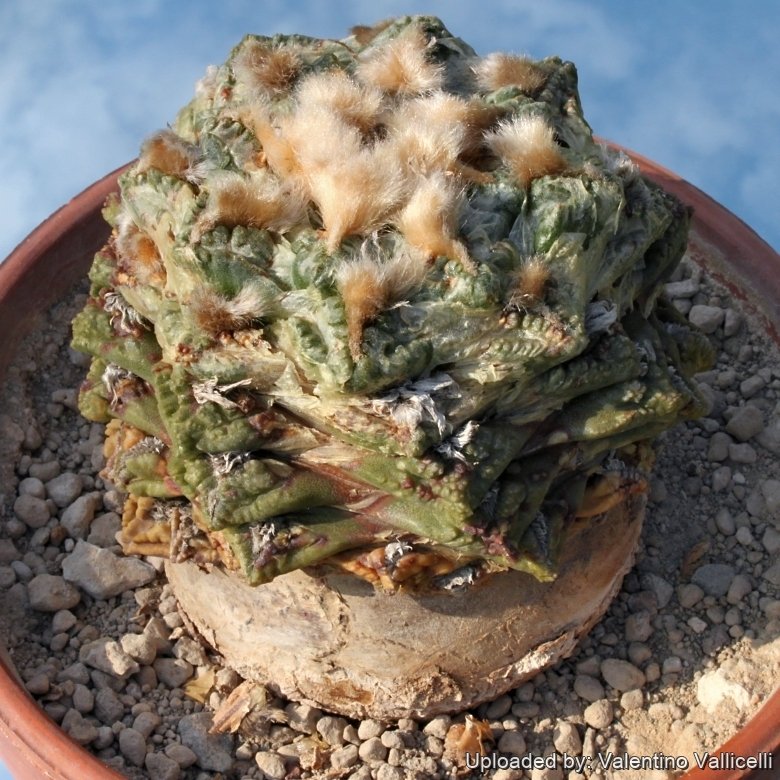
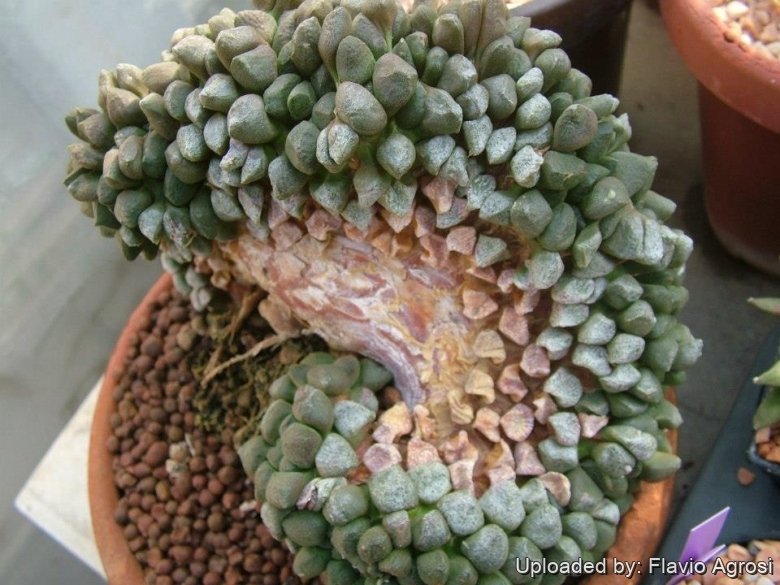
Crested form: The crested Star Rock (Ariocarpus fissuratus var. lloydii f. cristata) is a very rare, slow-growing and highly priced crested cactus forming odd sculptural shapes. Its stems fan out and can get very big making a spectacular specimen. The crested form - despite to its beauty - is still very rare, pricey and sought after by collectors.
Habit: Solitary, slow growing geophyte cactus with tubercles slightly projecting above ground level. The tuberous body is mostly below the soil.
Stem: Grey, or olive-green, fan shaped slowly forming brain-shaped cushion that can reach a considerable size (up to 3-12 cm high and 70 cm in diameter, or more).
Tubercles: The tubercles of var. lloydii are very different from those of the standard Ariocarpus fissuratus and easily recognizable. They are imbricated, ovate, broad at base and usually more rounded at the apex, about 2 to 3 cm wide. They lack edges and lateral longitudinal furrow (or are only weakly fissured). They are only finely rugose with quite coarse, often confluent papillae in the whole surface which form transversal ledges and irregularly warty.
Areoles: Filled with a dense mass of hairs, up to 3 mm wide, sometimes confined to middle of tubercle faces instead of extending to tips.
Flowers: These plants have a woolly crown, from which emerge 3 to 4 cm broad, white to purple (usually pink) 2 times wider than long when fully expanded. Inner perianth-segments oblong-oblanceolate; style and stigma-lobes white.
Blooming time: October, November. Flowers last for 3 to 4 days.
Fruit: Ovoidal, pale green.
Seeds: Black, tuberculate-roughened.
Root: Each plant has a large turnip-like taproot, which lies below the soil surface and serves for water storage.
Origin and Habitat
Ariocarpus fissuratus var. lloydii grows in central Mexico and ranges from southern Coahuila and adjacent Zacatecas to eastern Durango (Nazas, Peñon Blanco).
Cultivation and Propagation
It is not too difficult in a greenhouse, although grows quite slowly. It is usually seen as a grafted plant but can grow on its own roots too.
Soil: Use a mineral well permeable soil with little organic matter (peat, humus).
Exposure: They need a good amount of light shade to full sun this help to keep the plants healthy, although slow growth.
Watering: Water sparingly from March till October (weekly during summertime, if the weather is sunny enough), with a little fertilizer added. Less or no water during cold winter months, or when night temperatures remain below 10° to prevent root loss. It is sensitive to overwatering (rot prone).
Fertilization: Feeding may not be necessary at all if the compost is fresh then, feed in summer only if the plant hasn’t been repotted recently. Do not feed the plants from September onwards as this can cause lush growth which can be fatal during the darker cold months.
Hardiness: Keep perfectly dry in winter at temperatures from 5 to 15 degrees centigrade. (but it is relatively cold resistant and hardy to -5° C, or possibly colder for short periods) In the rest period no high atmospheric humidity!! (Temperature Zone: USDA 9-11)
Crested growth: Unlike ‘monstrose’ varieties of plants, where the variation from normal growth is due to genetic mutation, crested growth can occur on normal plants. Sometimes it’s due to variances in light intensity, or damage, but generally the causes are unknown. A crested plant may have some areas growing normally, and a cresting plant that looks like a brain, may revert to normal growth for no apparent reason. If you have any of the crested part left you need to remove the normal growth and leave the crested part behind this will need to be done regularly.
Propagation: Grafting or cuttings. Plants are usually grafted onto column-shaped cacti but proved to be able to produce their own roots if degrafted. Cuttings will take root in a minimum temperature of 20° C (but better in hot weather). Cuttings of healthy shoots can be taken in the spring and summer. Cut the stem with a sharp, sterile knife, leave the cutting in a warm, dry place for a week or weeks (depending on how thick the cutting is) until a callus forms over the wound. Once the callus forms, the cutting may be inserted in a container filled with firmed cactus potting mix topped with a surface layer of coarse grit. They should be placed in the coarse grit only; this prevents the cut end from becoming too wet and allows the roots to penetrate the rich compost underneath. The cuttings should root in 2 to 6 weeks. Large crested piece must be placed on the soil surface without burying the plant base down in the soil.
Source: Ariocarpus lloydii f. cristata, LLIFLE - Encyclopedia of living forms, CC-BY-SA, retrieved 2026-10-25.
Cultivars and forms (18)
Subspecies (1)
Forms (6)
Cultivars (9)
- Ariocarpus fissuratus cv. Cauliflower × Godzilla
- Ariocarpus fissuratus cv. Godzilla
- Ariocarpus fissuratus cv. Godzilla (Cotton Flock Type)
- Ariocarpus fissuratus cv. Godzilla aurata
- Ariocarpus fissuratus cv. Godzilla variegata
- Ariocarpus fissuratus cv. Green Coral
- Ariocarpus fissuratus cv. Supergodzilla
- Ariocarpus fissuratus subs. lloydii cv. latus
- Ariocarpus fissuratus var. lloydii cv. latus
Gallery