Description
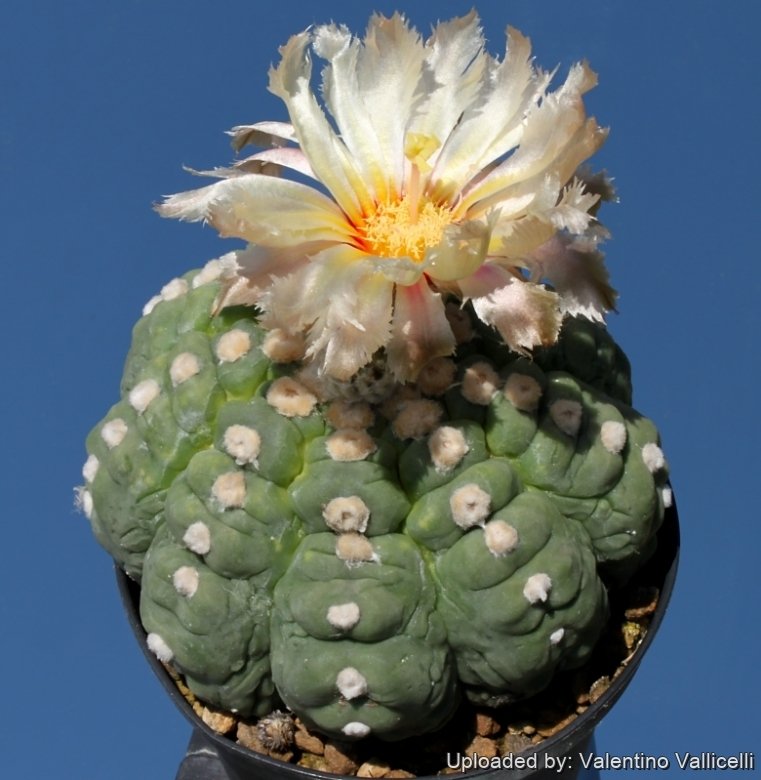
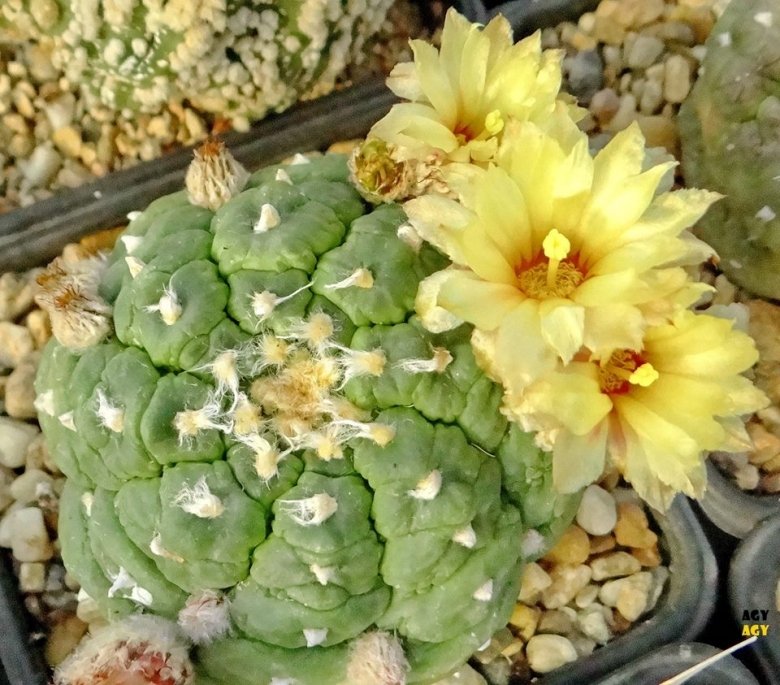
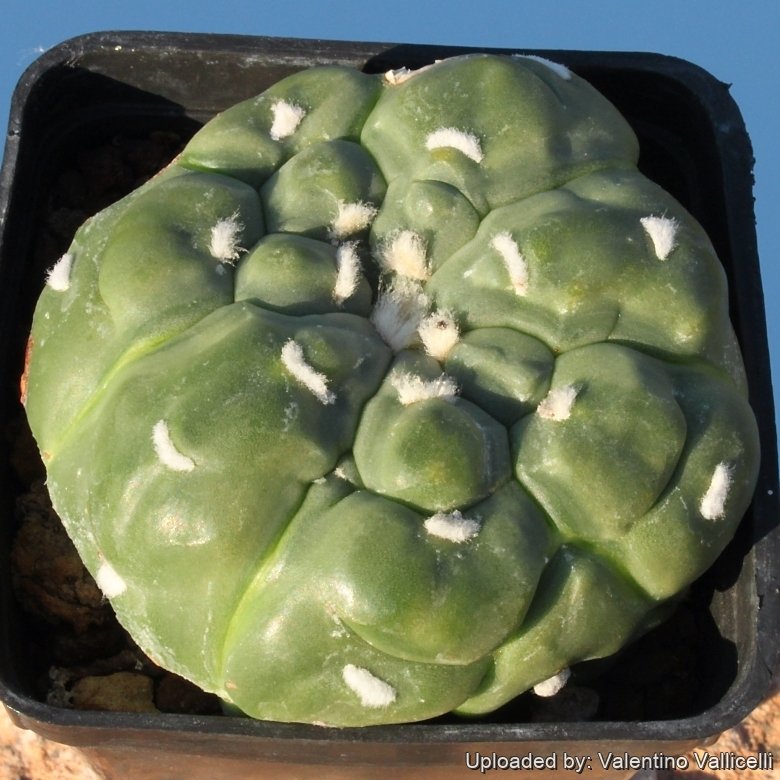
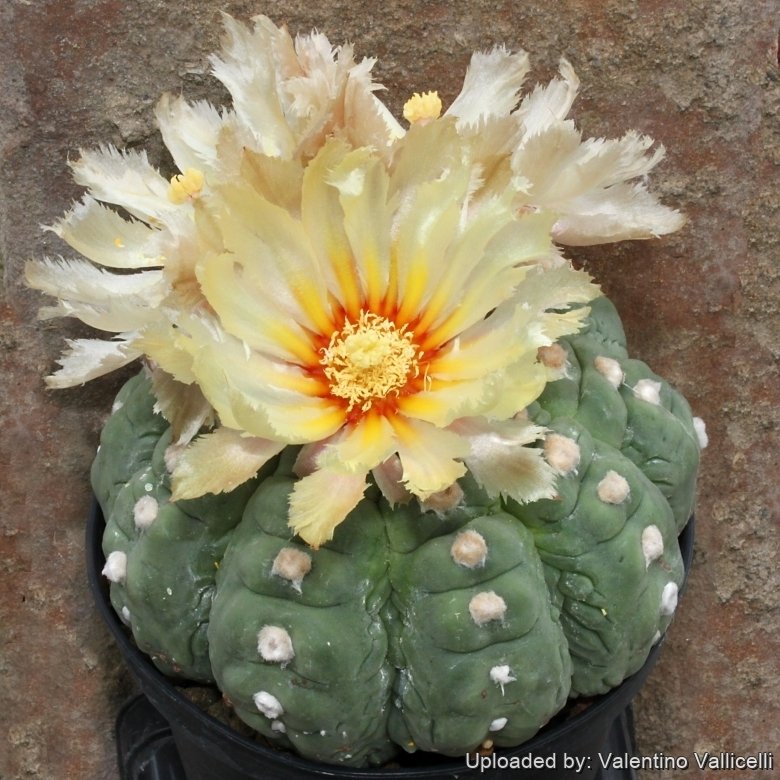
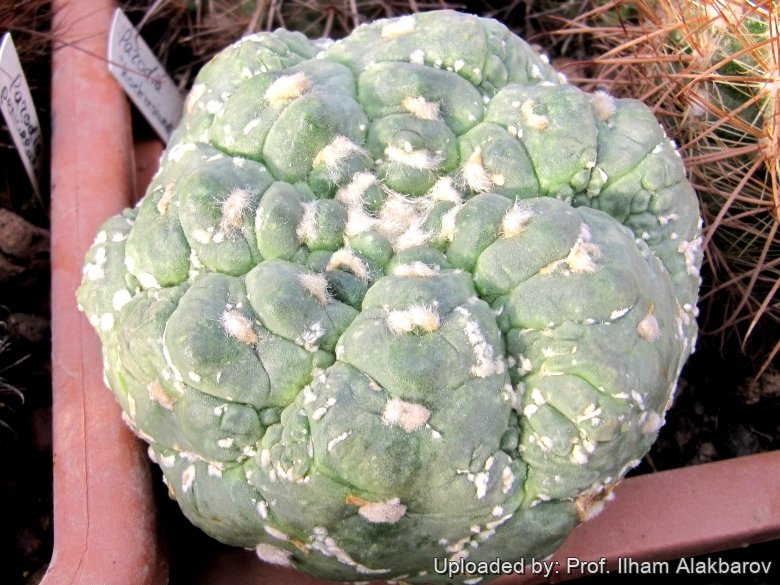
This rare Japaese cultivar has raised tubercles along the ribs edges, in fact its areoles stick out with large notches between them, giving them a bumpy look. The furrows which appear transversely on the ribs cut the continuity of the ribs and the plants appear decorated with a geometrical design which is raised above the surface. When viewed from above these plants resemble a tortoise-shell hence the Japanese word ‘Kitsu-kow’ that means “Turtle shell”, but at a first glace (especially the nude form) resemble some chinned cacti particularly some Gymocalyciums. Usually the young seedlings appear nothing special and looks like normal asterias, and barely shows any trace of saw teeth, but they start to produce the distinguishing indentation and turn into an amazing adult as they get 3 to 7 years old. In general the bigger the “saw teeth” are and the rounder and flatter they are, the better. All species of Astrophytum (excluded Astrophytum caput-medusae) have their particular “kikko” variants.
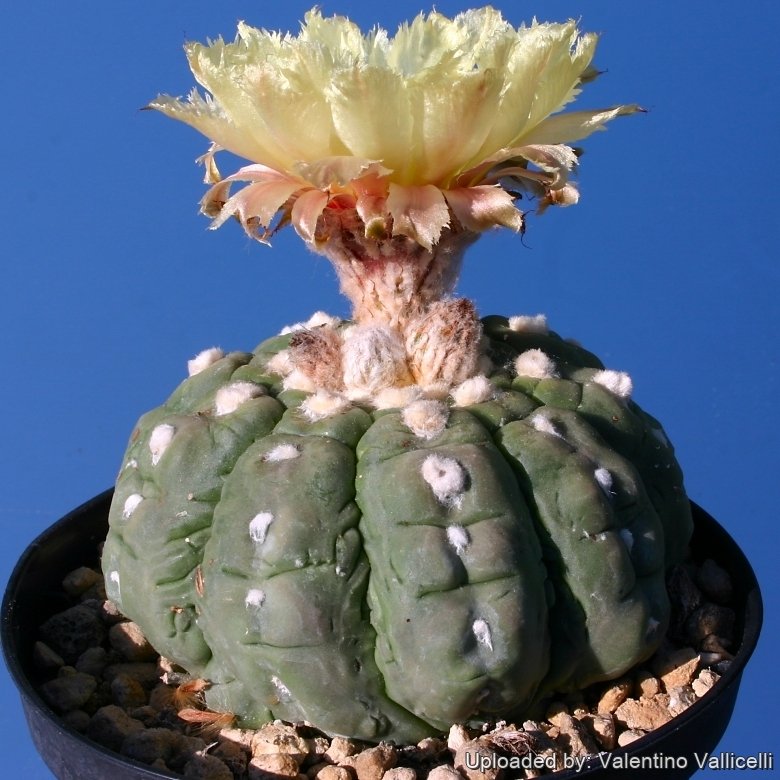
Stem: Spherical flattened usually non-branched or few branched flat, dark green. Diameter 3(8)16 cm. Height 2 to 6 cm.
Areoles: round, cream-colored till white hairy up to 6 (3-12) mm) of diameters. The areoles are normally set in a separation up to 10 mm
Spines: None.
Ribs: Usually 8.
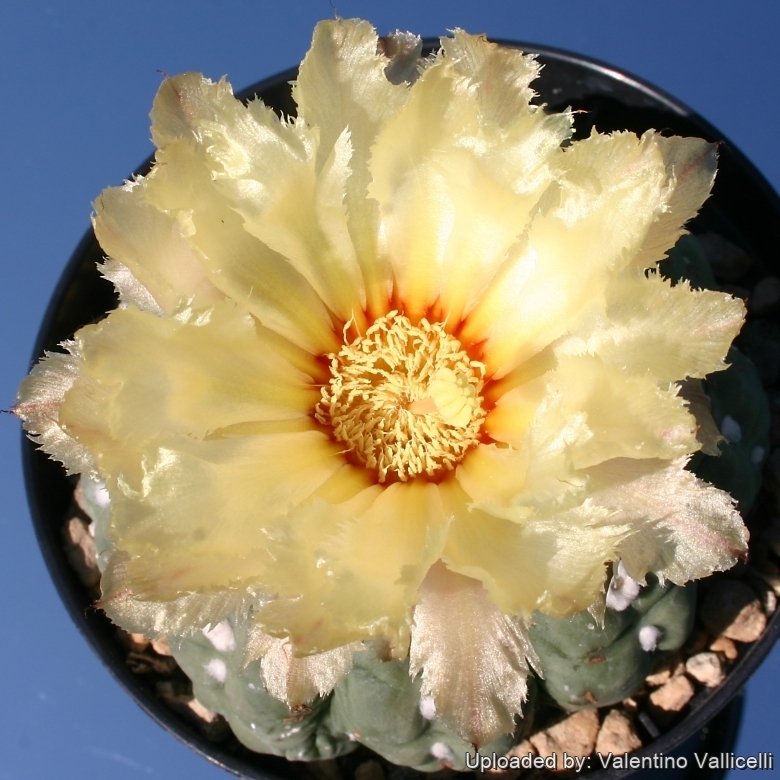
Flowers: Like those of the well known asterias yellow with a red throat.
Blooming season: Spring to summer.
Origin and Habitat
Garden origin (Nursery produced cultivar)
Cultivation and Propagation
It is not too difficult in a greenhouse, although grows quite slowly. The plants need a loose well-drained mineral soil. They need a good amount of light. Watering can be done weekly during summertime, if the weather is sunny enough, with a little fertilizer added. Kept this way, plants will show a healthy, although slow growth. They are frost hardy to -4° C
Propagation: By seeds, remembering that seedlings dislike strong light and dry conditions and need to be repotted frequently. Eventually, as they become mature, they attain a maximum size of 8-10 cm (20) cm. However, old plants become senile and have a tendency to succumb to disease and a weak root system. At this stage, as is well known, they die suddenly. So, after they reach 10 cm in diameter grow them slowly, and adopt a new repotting period, using intervals of every 2 - 3 years. Additionally grow them under drier conditions or with stronger sunlight. But plants are often grafted to accelerate growth as they would generally take at least a five years to reach maturity on their own, but the grafted plants are typical rather tall growing, compared with plants on their own roots that are usually more flat to the ground.
Gallery