Publication: Kakteen-Freunde i. 59.(1932); cf. Gray Herb. Card Cat., Issue 143.
Description
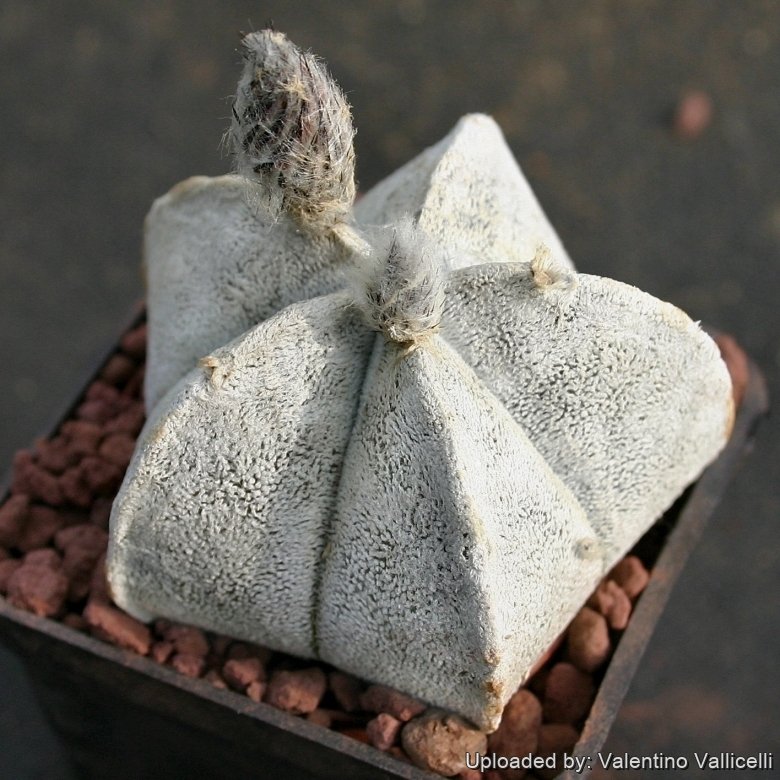
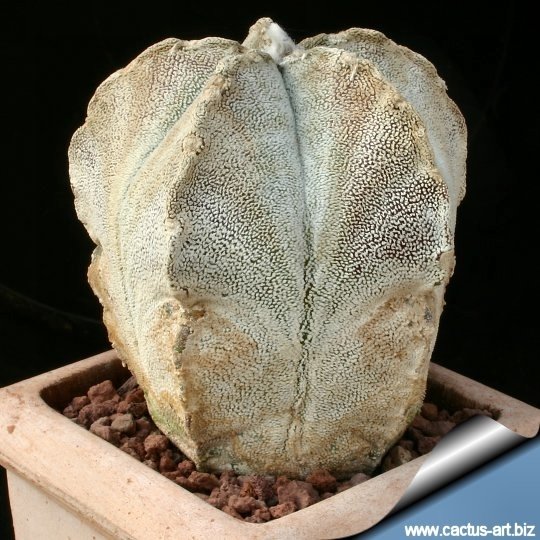
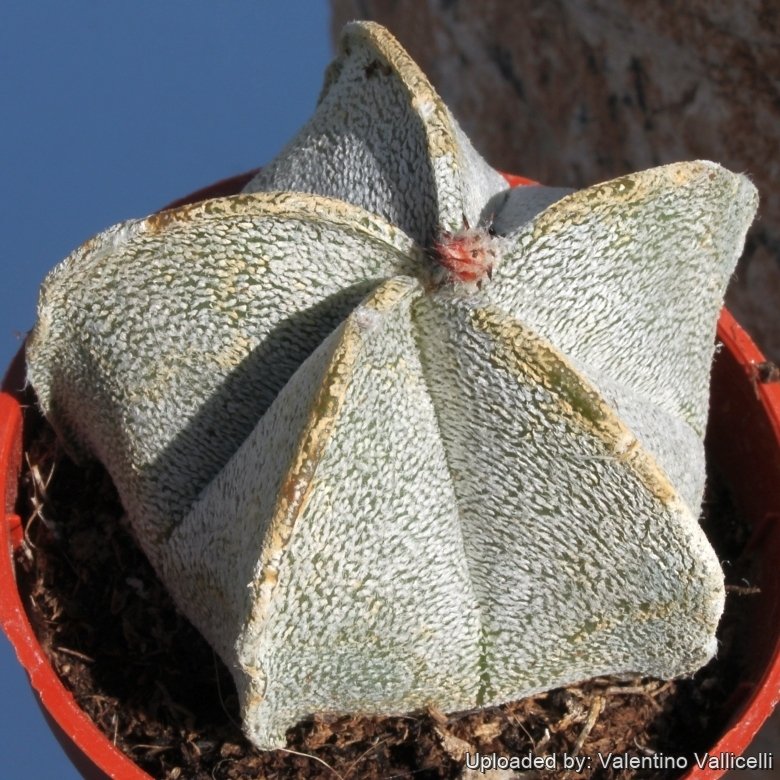
Astrophytum coahuilense with five ribs, has a surprising similarity to Astrophytum myriostigma. However, it is different in all characteristics regarding flower, fruit, seed and embryo which looks like in all details to Astrophytum capricorne. The differences into flower, fruit, seed and embryo and flecks are constant and permit in any case to distinguish A. coahuilense without problems from A. myriostigma.
Nude plants as in the case of A. myriostigma are unknown.
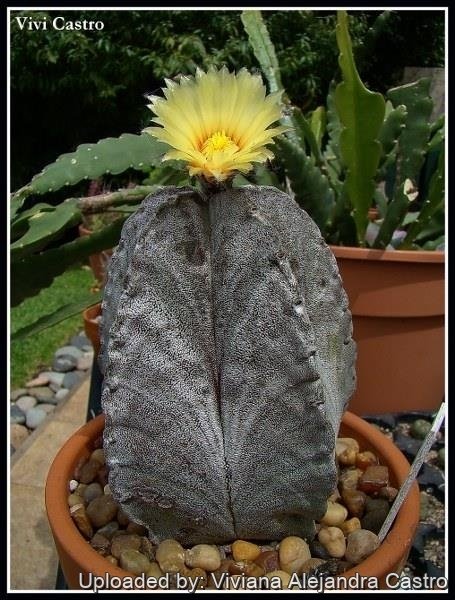
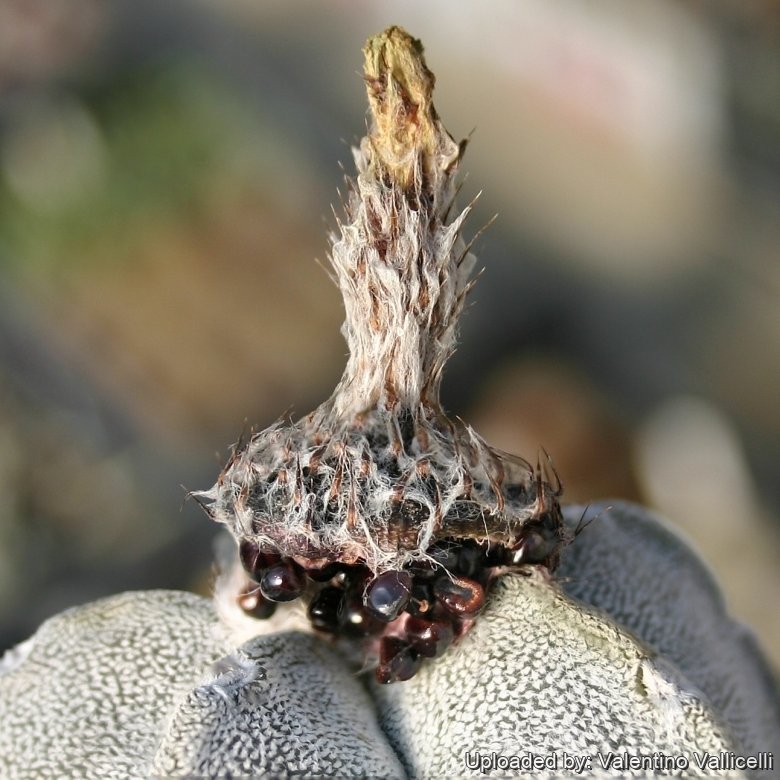
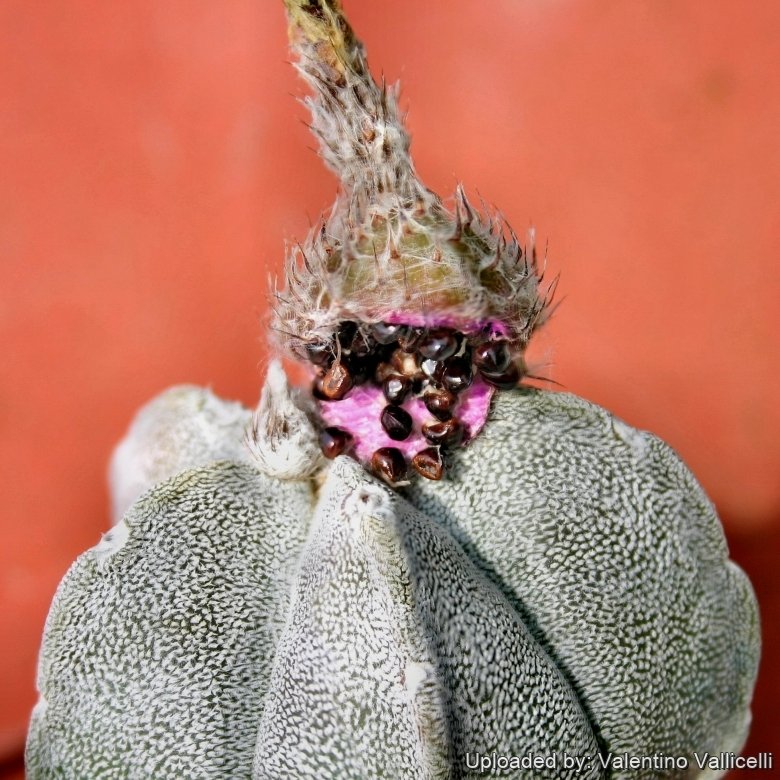
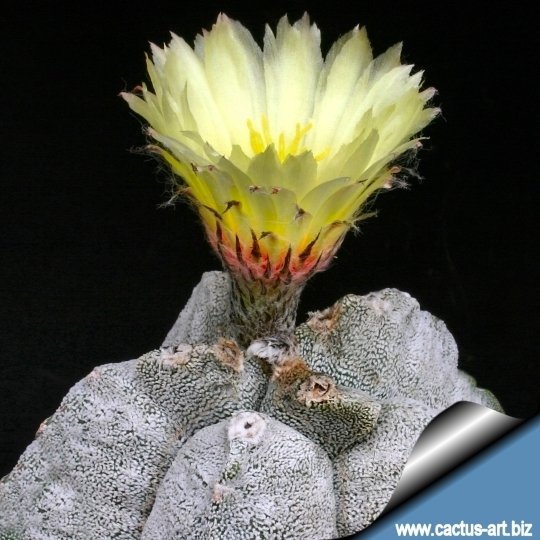
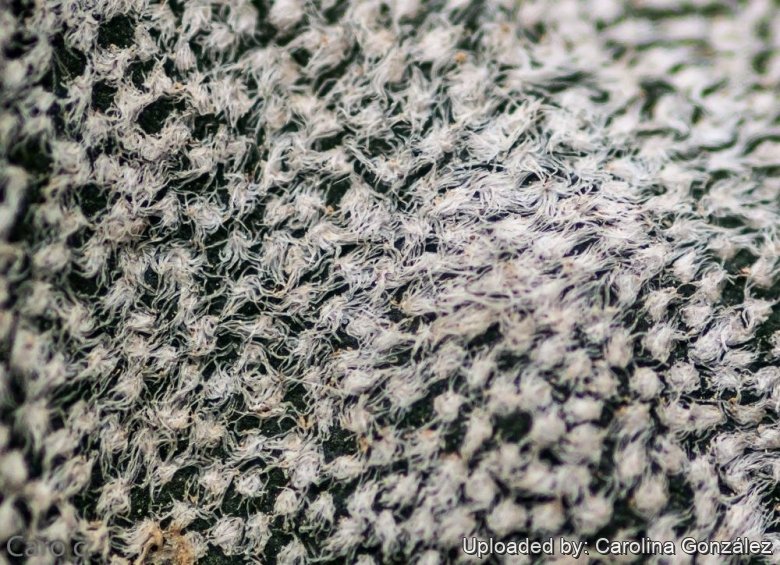
It looks like the bishop’s cap (A. myriostigma), but softer, more grey flecks that cover the plant even more than with the myriostigma. The flowers are yellow with a characteristic red throat, although can appear pure red or very seldom pure yellow. In the fruit which is red till olive-green coloured and basal opening are up to 200 seeds, similar as in the case of Astrophytum capricorne. This plant is more related to the Asterias/capricorne group than the myriostigma.
A. coahuilense and A. myriostigma when cross-pollinated are fruitless: they are (usually) sterile by each other.
Origin and Habitat
Astrophytum coahuilense is narrowly distributed in the south-westernpart of the state of Coahuila and Durante (Ciudad Lerdo, Sierra Baicuco, western Sierra Parras and southern of this line up to the Sierra of El Numero), Mexico. Extent of occurrence less than 6,000 km². It is known from three locations that are severely fragmented.
Altitude range: 1100-1600 metres above sea level.
Habitat: They inhabit preferentially sunny south and east slopes on lime formations, rarely grow in north or west position between white grey rock in a loose to thick vegetation, which mainly consists of a dry bush community (xerophytic shrubland) together other cactus species such as: Ariocarpus lloydii and Thelocactus wagnerianus. The soil, consist mainly of lime gravel and sand with isolated humus feedthroughs. There is continuing decline in the quality of the habitat due to overgrazing. In addition, the number of plants is declining due to illegal collection. Furthermore, it does not occur in any protected area and is listed as Vulnerable.
Cultivation and Propagation
It is not too difficult in a greenhouse, although grows quite slowly. The plants need a loose well-drained mineral soil. They need a good amount of light. Watering can be done weekly during summertime, if the weather is sunny enough, with a little fertilizer added. Kept this way, plants will show a healthy, although slow growth. They are frost hardy to -4° (-10°) C
Propagation: By seeds, remembering that seedlings dislike strong light and dry conditions and need to be repotted frequently. Eventually, as they become mature, they attain a maximum size of 8-10 cm (20) cm. However, old plants become senile and have a tendency to succumb to disease and a weak root system. At this stage, as is well known, they die suddenly. So, after they reach 10 cm in diameter grow them slowly, and adopt a new repotting period, using intervals of every 2 - 3 years. Additionally grow them under drier conditions or with stronger sunlight. But plants are often grafted to accelerate growth as they would generally take at least a five years to reach maturity on their own, but the grafted plants are typical rather tall growing, compared with plants on their own roots that are usually more flat to the ground.
Bibliography
Major references and further lectures
-
Edward Anderson “The Cactus family” Timber Press, Incorporated, 2001
-
James Cullen, Sabina G. Knees, H. Suzanne Cubey “The European Garden Flora Flowering Plants: A Manual for the Identification of Plants Cultivated in Europe, Both Out-of-Doors and Under Glass” Cambridge University Press, 11/Aug/2011
-
David R Hunt; Nigel P Taylor; Graham Charles; International Cactaceae Systematics Group. “The New Cactus Lexicon” dh books, 2006
-
N. L. Britton, J. N. Rose: “The Cactaceae. Descriptions and Illustrations of Plants of the Cactus Family.” Volume III, The Carnegie Institution of Washington, Washington 1922
-
Fitz Maurice, B, Sotomayor, M., Fitz Maurice, W.A., Hernández, H.M. & Smith, M. 2013. Astrophytum coahuilense. The IUCN Red List of Threatened Species. Version 2014.2. <www.iucnredlist.org>. Downloaded on 01 November 2014.
Cultivars and forms (9)
Forms (4)
Gallery