Description
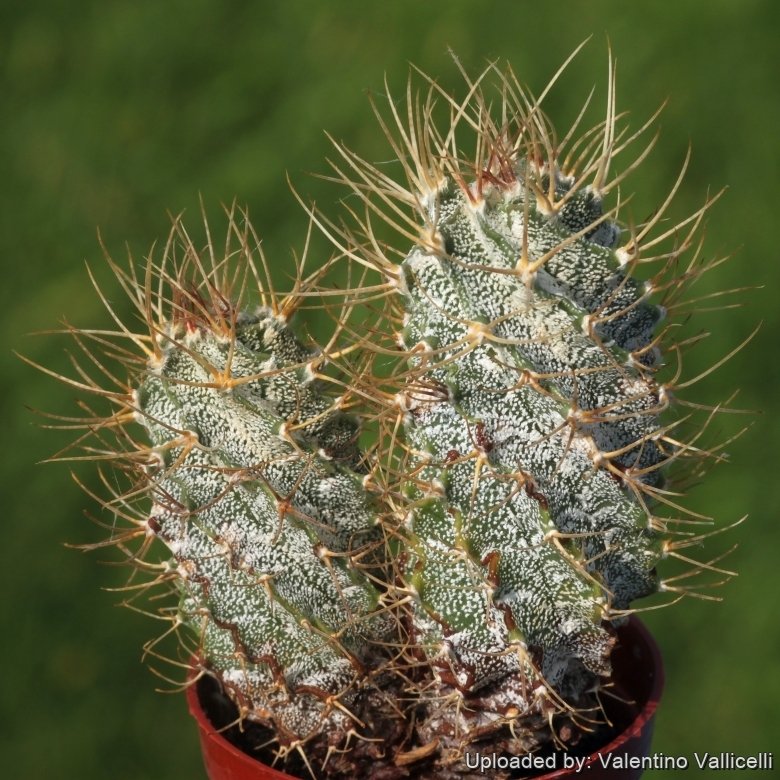
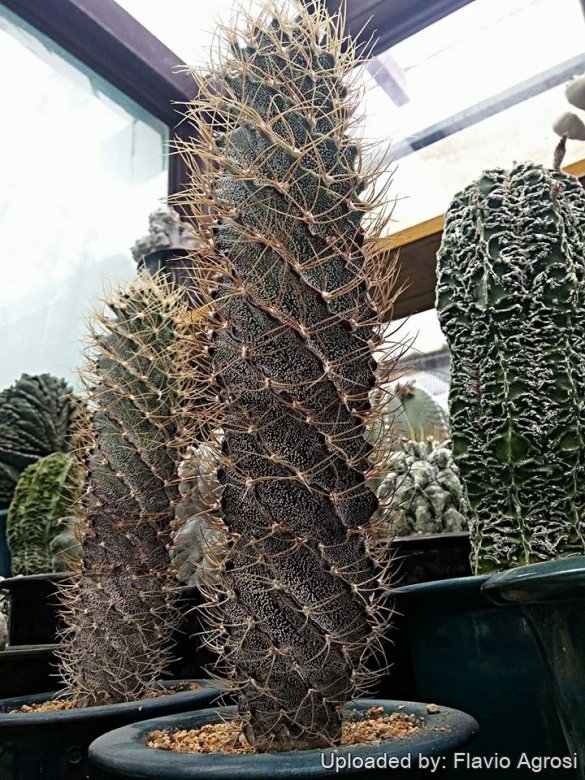
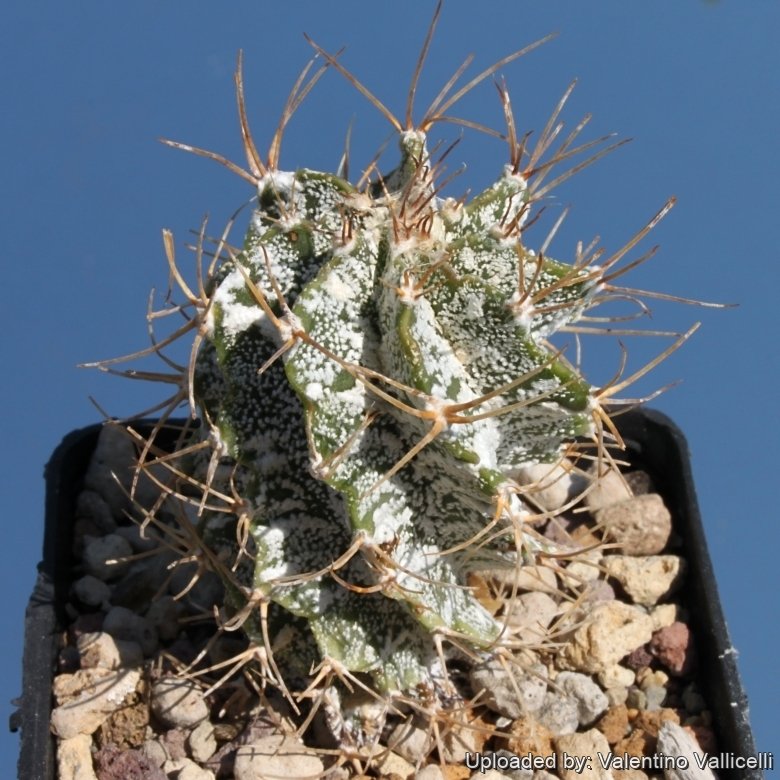
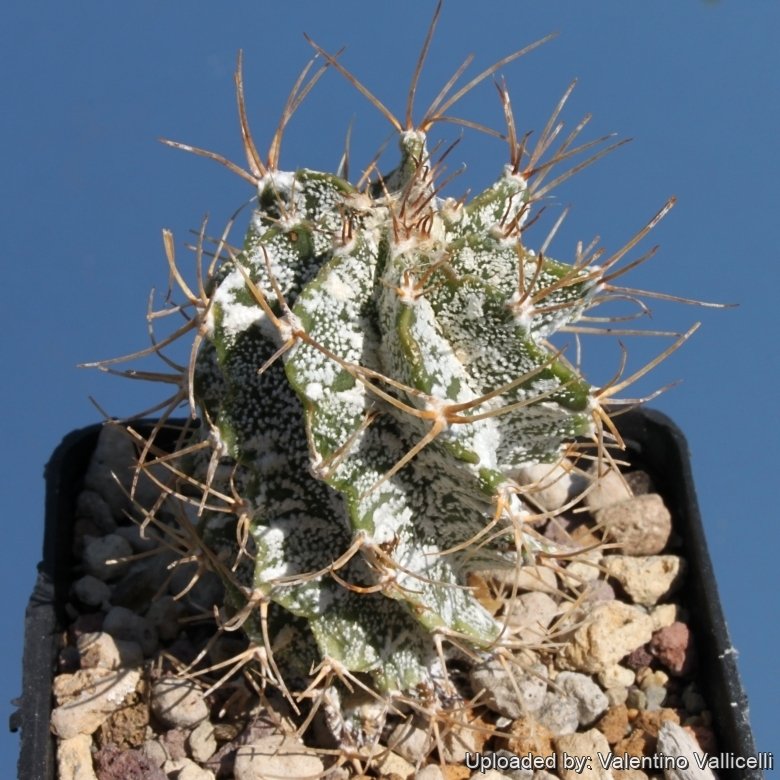
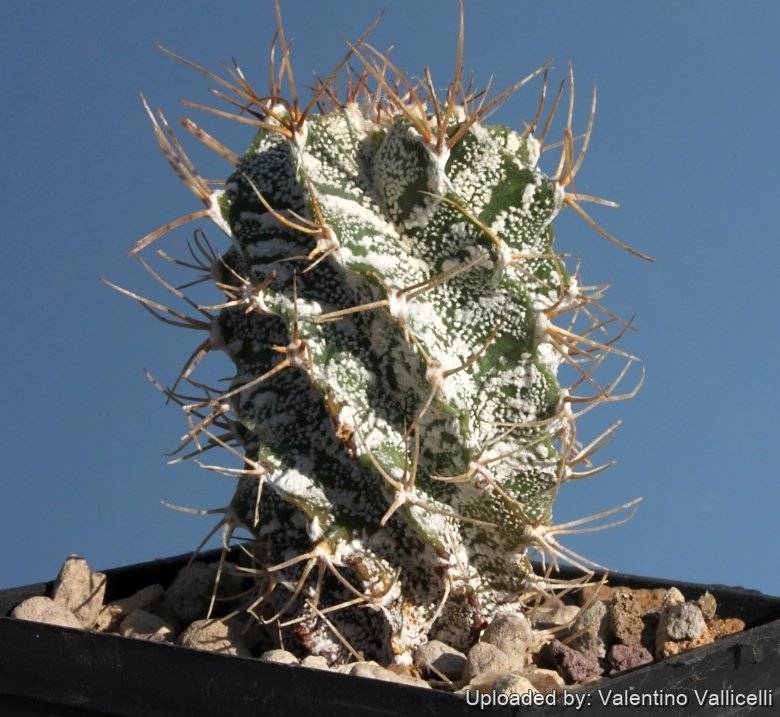
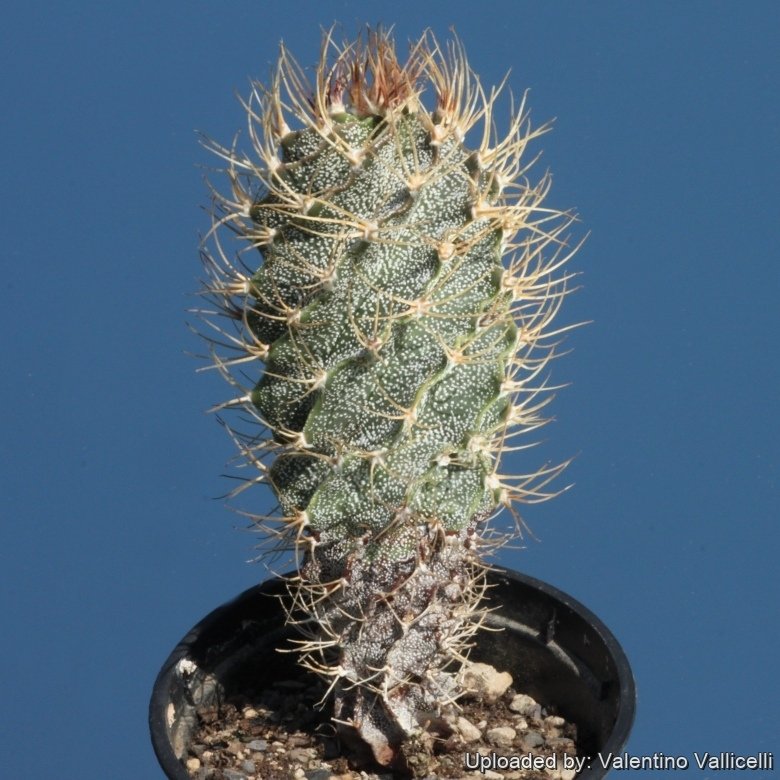
Astrophytum ornatum cv. Spiral is a tiny finger-sized cultivars with very particular spiral ribs.
Stem: Cylindrical, up to 10 cm tall(or more) and 2-3 cm in diameter, greyish-green with white cross bands of woolly scales forming an ornate pattern.
Ribs: Generally 8 spiralling, rather prominent, strongly compressed, more or less sinuate and crenate.
Areoles: 5-8 mm apart, at first white felted, later grabrescent.
Radial spines: 3-5 (usually 4) not very rigid 1,5-2 cm long, subulate, slightly bent upward, amber yellow, later brown and finally grey.
Central spine: No.
Flowers: Not known.
Origin and Habitat
Garden origin (Nursery produced cultivar)
Cultivation and Propagation
It is a popular summer-growing species of relatively easy cultivation.
Growth rate: Slow-growing.
Soil: Grow it in an open standard, sandy-gritty cactus compost and provide a very good drainage.
Exposure: It is suited for sunny-brightly exposure, but can tolerate light shade. However it will do its best with lots of sun and become stressed with inadequate light which could result in poor growth and unnatural shape. It has a good heat tolerance.
Watering: Water regularly (about once a week) during the growing season and keep it completely dry during winter or when night temperatures remain below 10° C. Water it less than average if in bigger pots.
Fertilization: Feed them once during the growing season with a fertilizer specifically formulated for cactus and succulents (high potash fertilizer with a dilute low nitrogen), including all micro nutrients and trace elements diluted to ½ the strength recommended on the label. They thrive in poor soils and need a limited supplies of fertilizer to avoid the plants developing excess vegetation, which is easily attacked by fungal diseases.
Special need: It is suited for airy exposures. Provide very good ventilation. Nearly all problems occur as a result of overwatering and poor ventilation, especially when weather conditions are dull and cool or very humid. ere.
Hardiness: It likes warmth (recommended minimum winter temperature 5° C) But plants kept perfectly dry can easily survive to light frost (it is reported hardy to -12 ° for brief periods).
Pests & diseases: These cacti may be attractive to a variety of insects, but plants in good condition should be nearly pest-free, particularly if they are grown in a mineral potting-mix, with good exposure and ventilation. Nonetheless, there are several pests to watch for:
- Red spiders: Red spiders may be effectively rubbed up by misting the plants from above.
- Mealy bugs: Mealy bugs occasionally develop aerial into the new leaves and flowers with disfiguring results, but the worst types develop underground on the roots and are invisible except by their effects.
- Scales, thrips and aphids: These insects are rarely a problem.
- Rot: Rot is only a minor problem if the plants are watered and “aired” correctly. If they are not, fungicides won’t help all that much.
Propagation: From cuttings in spring (let them dry till the ends callous well). Then replant them in fresh cactus soil that is ever so slightly moist, and keep them that way till they root)or by grafting.
Gallery