Description
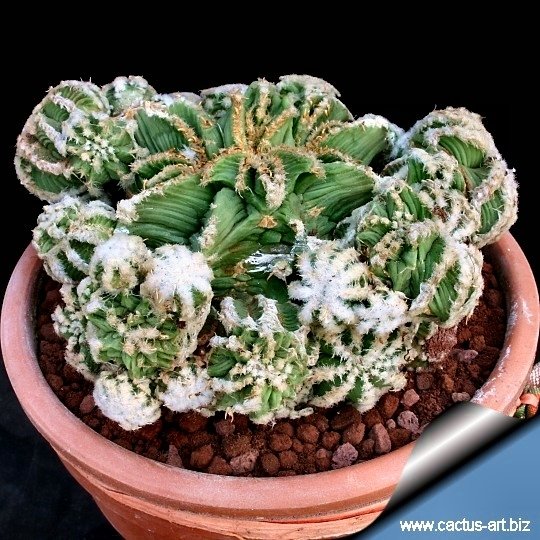
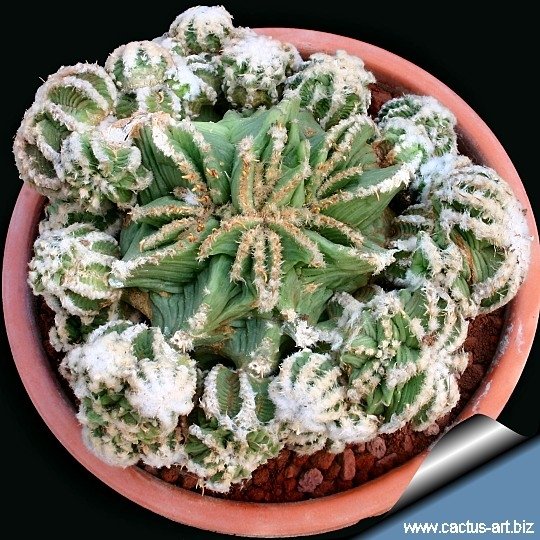
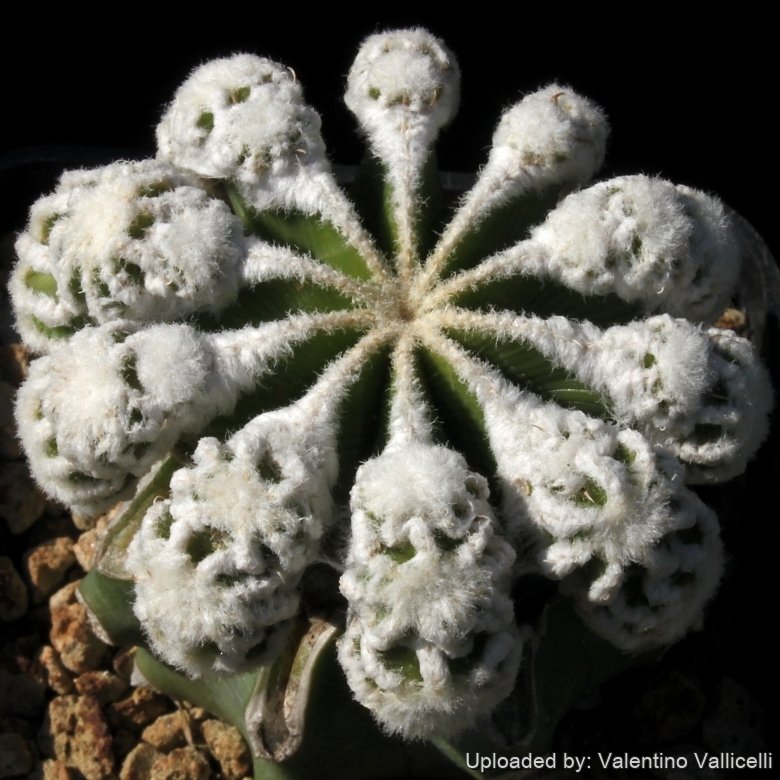
This is a genetically stable mutation with variable +/- monstrous, irregularly shaped, ribs with knobby-looking swellings along the stems. Stems are lightly pruinose and branches just from the base and occasionally at higher levels, the apexes easily. The areoles are white and woolly.
Remarks: This clone is similar - and often confused - with Aztekium hintonii forma prolifera that produces an anomalous proliferation of shoots just from the base and occasionally at higher levels. The “prolifera” form is greener, less wooly and will never produce monstrous or dichotomichous or crested apexes.
Origin and Habitat
Garden origin (Nursery produced cultivar)
Cultivation and Propagation
It is of slow growth, but not as slow as A. ritterii. It usually takes several years for growth to be noticeable. Needs good drainage and regular water in summer. It should be dried out completely for its winter rest when it will withstand temperatures down to to -4°C for short periods. It prefers some shade.
Once a specimen is established on its own roots it is no trouble to keep, and it becomes an easy plant to manage.
The plants are often grafted to enhance growth speed. They grow best in full sun or half shade, which will help to maintain the lustre of the spines and plants compact. They are prone to mealy bug and red spider mite.
Propagation: From cuttings or preferably by grafting. It It branchs enthusiastically, and offsets are readily available. If you remove an offset , remember to let it dry for a week or so, letting the wound heal (cuttings planted too soon easily rot before they can grow roots), but it is difficult to grow this plant on its own roots and also only few cutting will root.