Publication: Monatsschr. Deutsch. Kakteen-Ges. 1: 52. 1929
Description
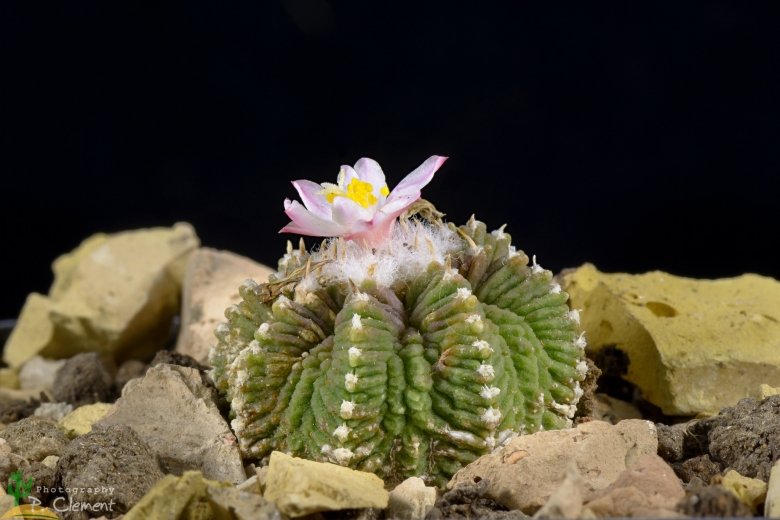
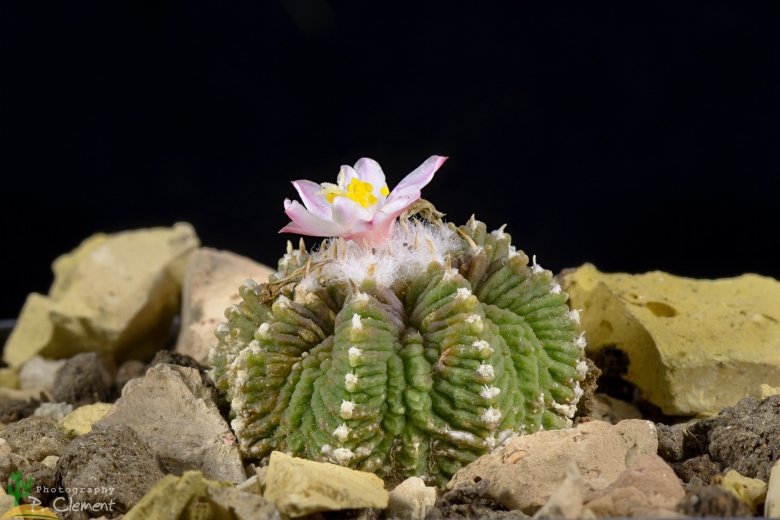
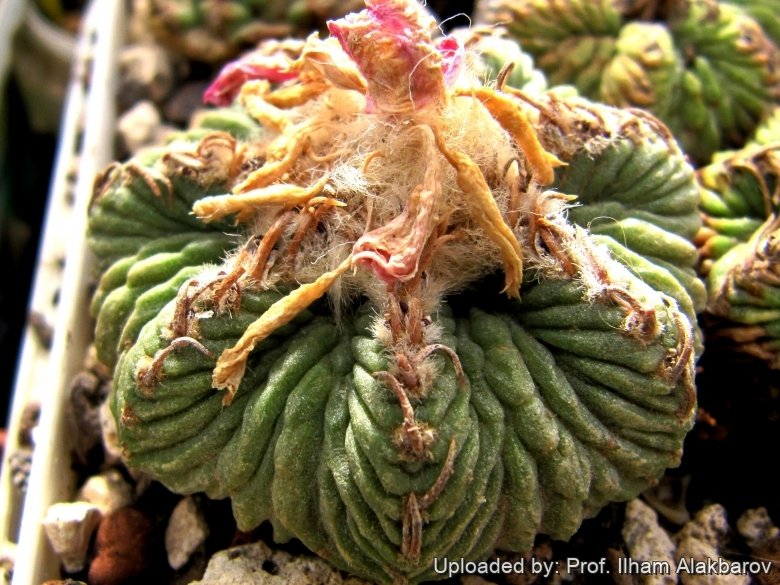
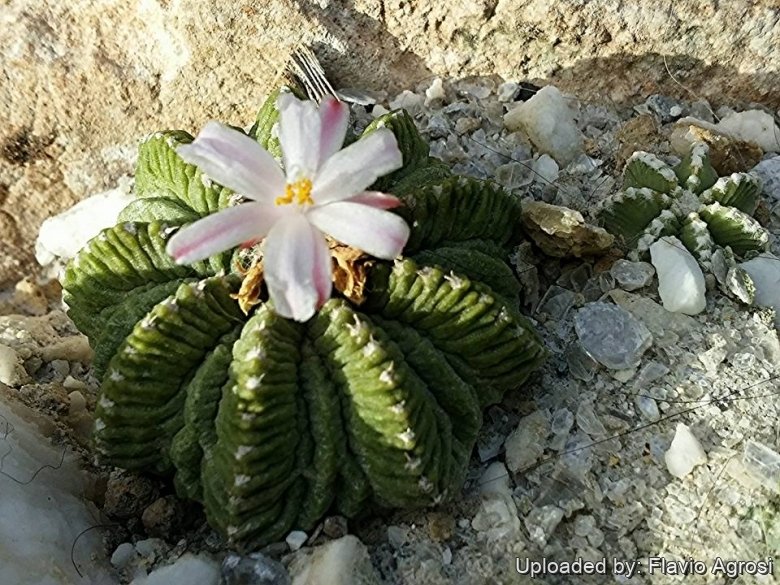
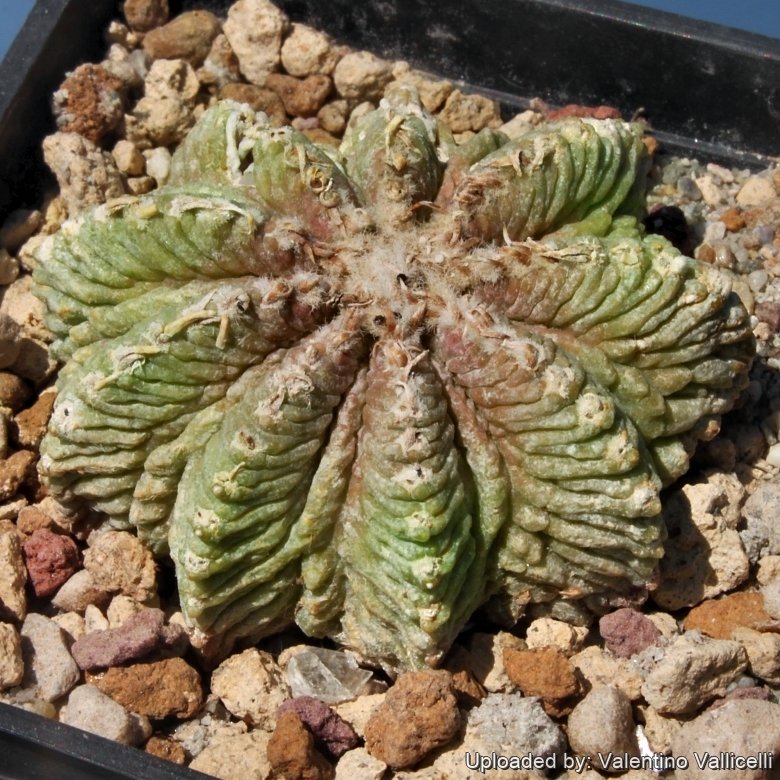
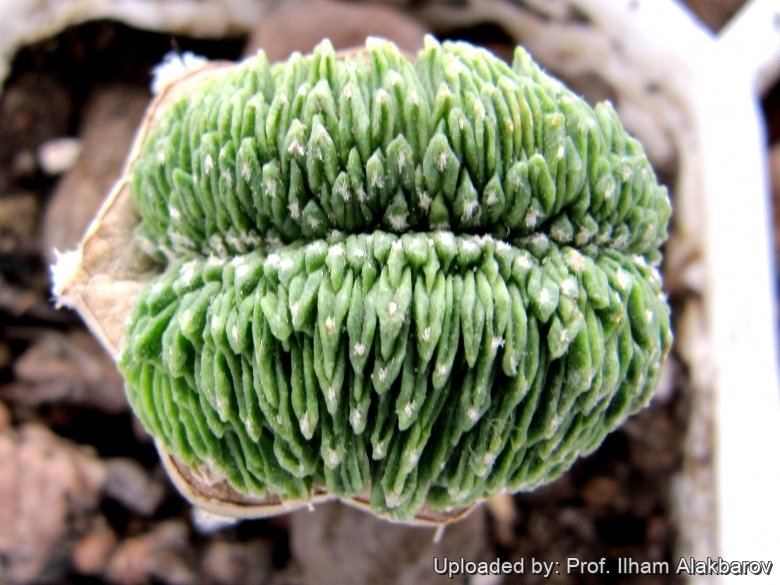
Aztekium ritteri is a tiny globular cactus, seldom exceeding 5 cm in diameter and rather less in height, with 9 to 11 rounded ribs, these are in turn crossed by numerous horizontal furrows. Between these true ribs are small secondary ribs, reaching about halfway up the plant body. The colour of the younger growth is a rather pale yellowish green, merging to grey-green on the lower, older growth. The centre of the cactus contains a lot of white wool. Once the plant body has reached full size it slowly offsets, and small clumps are commonly found. It does not develop a large storage root.
Spines: 1 to 3 small, weak, often missing from the youngest areoles. The older areoles form a more or less continuous line along the centre of the true ribs.
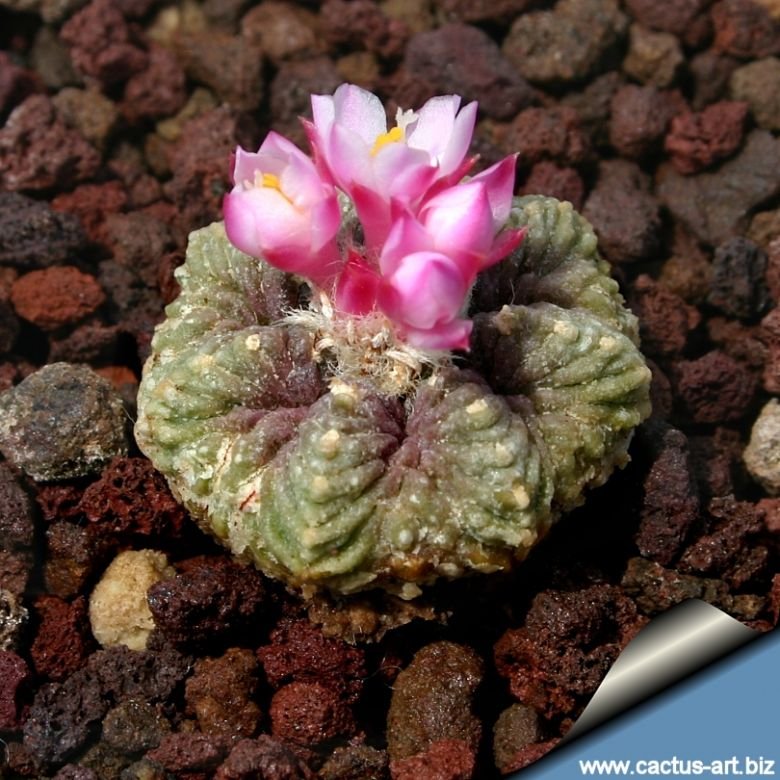
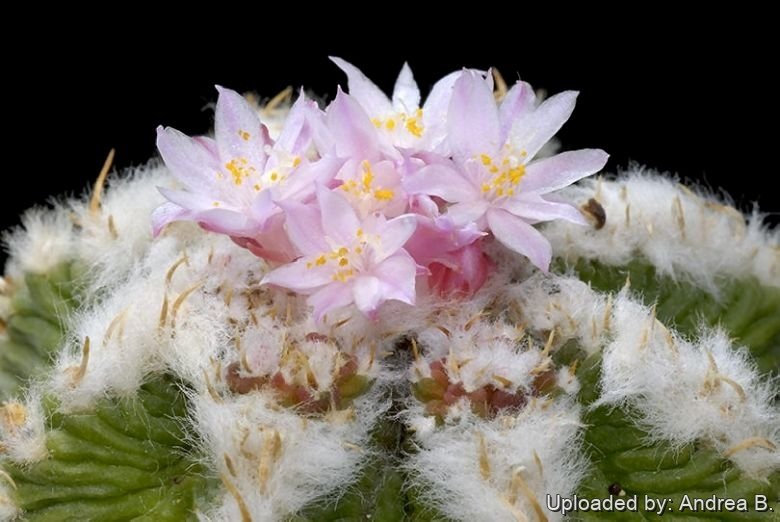
Flowers: Small (less than 10 mm wide) from the plant tip, white to pink, and usually the outer petals have a darker mid-stripe. It flowers freely in cultivation throughout the summer months. They are followed by small pink fruit that open when ripe and let out tiny seeds.
Origin and Habitat
Aztekium ritteri is endemic to the Mexican state of Nuevo León. Early observations indicated that this species was restricted to one or two localities in the Valley of Rayones. More recently, several additional subpopulations have been found and evaluated. Large numbers of plants occur in these several sites, many of which are largely inaccessible.
Altitude range: 800-1060 metres above sea level.
Habitat: It occurs in xerophile shrublands in the semi-desert in vertical cliffs of friable limestone together with Mammillaria winteriae. Elsewhere it has been reported growing on similarly steep gypsum faces. The plant appears to favour north facing slopes rather than those with a sunnier aspect. This species is threatened by illegal collecting, however, some populations of the species are protected by growing on inaccessible cliffs. It is also threatened by natural erosion processes that wash away habitat.
Cultivation and Propagation
Aztekium are by far the most challenging and difficult cactus to grow, they are of extremely slow growth - probably the slowest of the entire cactus family. They usually take several years for growth to be even noticeable. Once a specimen is established on its own roots it is no trouble to keep it ,and becomes an easy plant to manage.
Water requirements: They need good drainage and regular water in summer. They should be dried out completely for their winter rest when they will withstand temperatures down to to -4°C for short periods.
Light requirements: They prefer some shade.
Propagation: It usually multiplies by seeds. The seeds are extremely fine and germinate readily, but the seed germination rate is very low for everyone (less than 5%). The minute seedlings are very sensitive for the first two months. But many of them perish, and taking them to a viable size is very difficult. The seedling are so small that a drop of water moves them like crazy. They are usually grafted to increase growth speed. In any case, grafting produces rather atypical plants which tend to be more obese and to offset much more readily than plants growing on their own roots. The offsets of grafted plants are often produced from areoles high up on the plant body, rather than at ground level. It is also possible to root the offsets from grafted plants, but with little success.
Notes
About taxonomy: The genus Aztekium contains three species of small globular cactus. Discovered in 1929 by F. Ritter, in Rayones, Nuevo León, Mexico, this genus was thought to be monotypic (with Aztekium ritteri) until a second species (Aztekium hintonii) was discovered by George S. Hinton, in Galeana, Nuevo León in 1991. A further species, Aztekium valdesii, was discovered in 2011 by M.A. Alvarado Vázquez in the Sierra Madre Oriental mountains of Nuevo León… …Aztekium Clade (consisting of Aztekium and Geohintonia) represents a relictual, yet highly specialized lineage forming a sister group to the remaining taxa of the tribe Cacteae. It is suggested that Geohintonia may represent an intergeneric hybrid involving Aztekium (probably Aztekium hintonii which is sympatric with Geohintonia ) and possibly Echinocactus horizonthalonius
Bibliography
Major references and further lectures
-
James Cullen, Sabina G. Knees, H. Suzanne Cubey “The European Garden Flora Flowering Plants: A Manual for the Identification of Plants Cultivated in Europe, Both Out-of-Doors and Under Glass” Cambridge University Press, 11/Aug./2011
-
David Hunt, Nigel Taylor “The New Cactus Lexicon” DH Books, 2006
-
Edward F. Anderson “The Cactus Family” Timber Press, 2001
-
Fitz Maurice, B & Fitz Maurice, W.A. 2013. Aztekium ritteri. In: IUCN 2013. “IUCN Red List of Threatened Species.” Version 2013.2. <www.iucnredlist.org>. Downloaded on 20 February 2014.
-
Member of the iNaturalist Network “Genus Aztekium, a member of Cacti (Family Cactaceae)” <http://www.inaturalist.org/taxa/184454-Aztekium\> web 03 January 2016
From llifle page Aztekium ritterii f. cristatum
Description
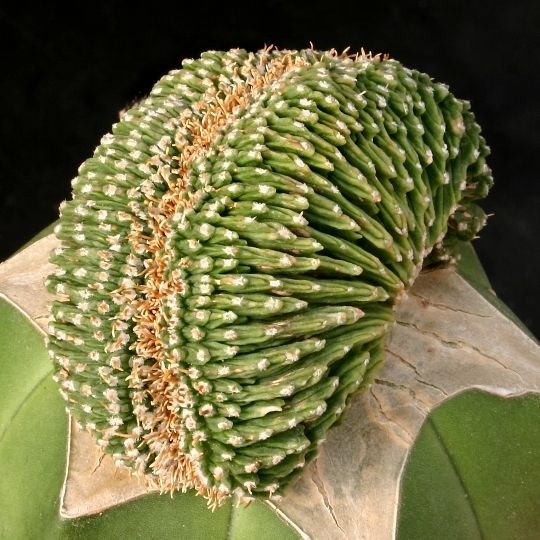
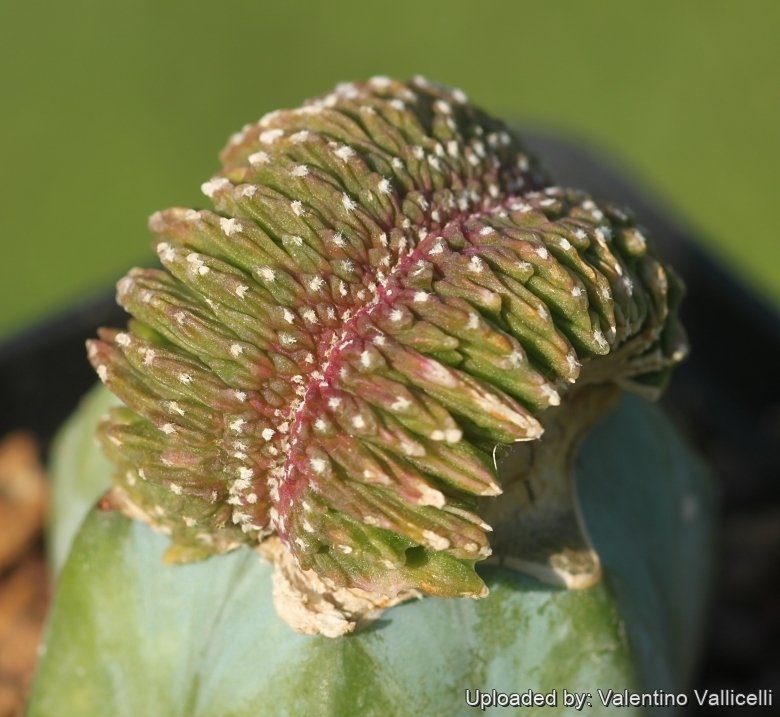
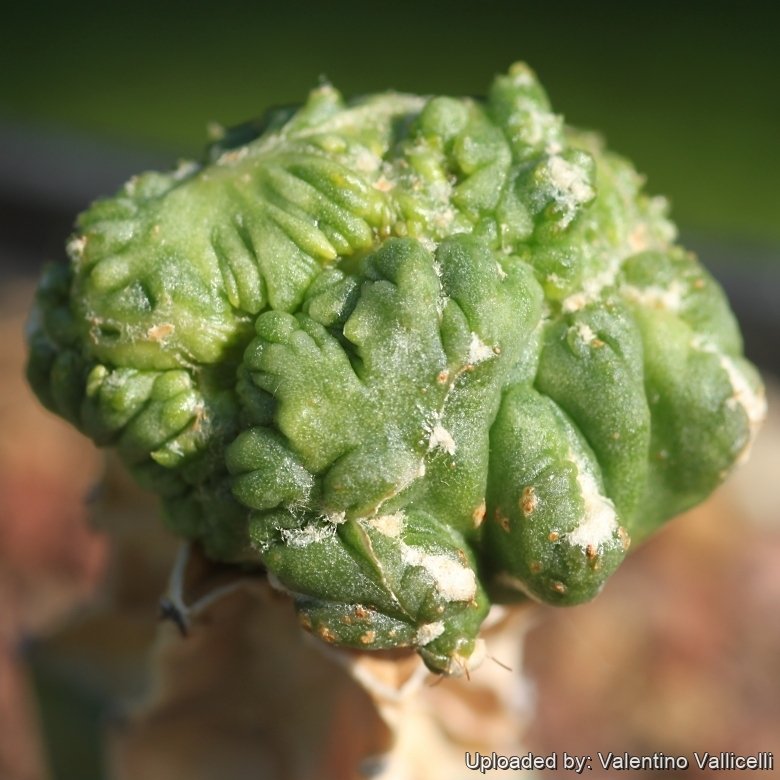
This is the crested form of Aztekium ritterii a very rare and extremely slow growing cactus from Mexico seldom exceeding 5 cm in width with rounded ribs. This is one of the more famous crested cacti sought after by cactus impassioned, but very slow growing and seldom available.
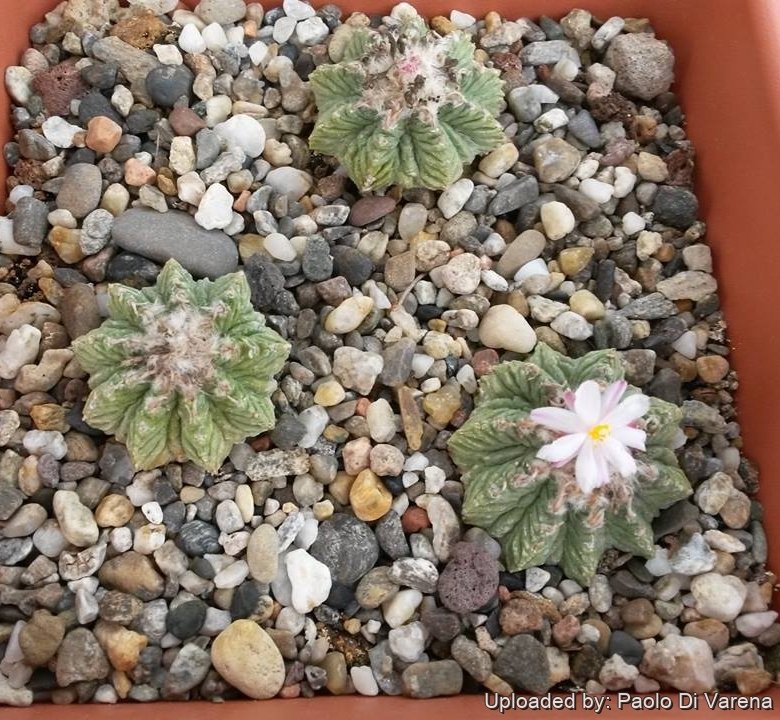
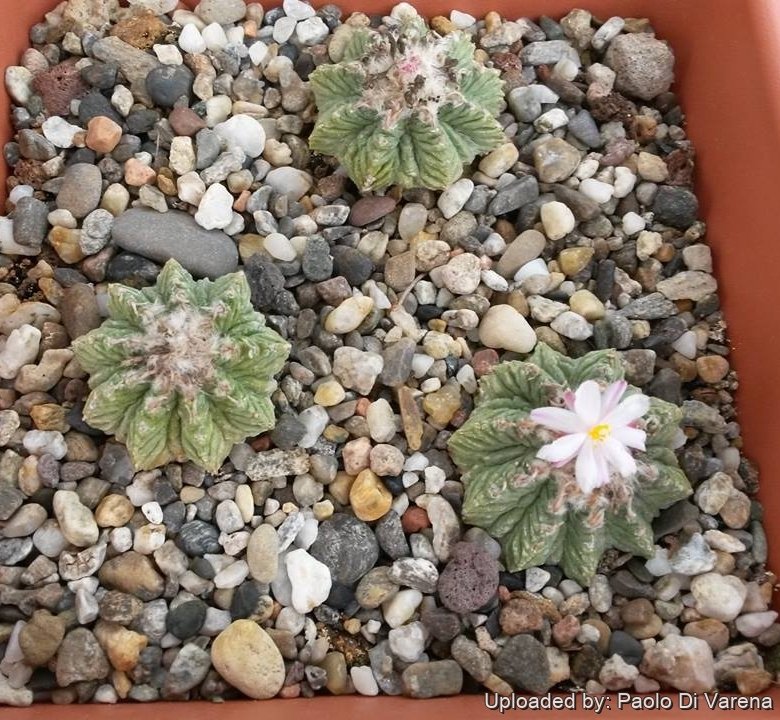
Stem: The stem is crossed by numerous horizontal furrows. Between these true ribs are small secondary ribs, reaching about halfway up the plant body. The colour of the younger growth is a rather pale yellowish green or purplish, merging to grey-green on the lower, older growth. The crested apex of the cactus contains a some white wool.
Spines: 1 to 3 small, weak, often missing from the youngest areoles. The older areoles form a more or less continuous line along the centre of the true ribs.
Origin and Habitat
Garden origin (Nursery produced cultivar)
Cultivation and Propagation
It is of extreme slow growth - probably the slowest of the entire cactus family. It usually takes several years for growth to be noticeable. Prefer some shading.
Reproduction: They are usually grafted, It is also possible to root pieces of crest from grafted plants but with little success.
Bibliography
Major references and further lectures
-
James Cullen, Sabina G. Knees, H. Suzanne Cubey “The European Garden Flora Flowering Plants: A Manual for the Identification of Plants Cultivated in Europe, Both Out-of-Doors and Under Glass” Cambridge University Press, 11/Aug./2011
-
David Hunt, Nigel Taylor “The New Cactus Lexicon” DH Books, 2006
-
Edward F. Anderson “The Cactus Family” Timber Press, 2001
-
Fitz Maurice, B & Fitz Maurice, W.A. 2013. Aztekium ritteri. In: IUCN 2013. “IUCN Red List of Threatened Species.” Version 2013.2. <www.iucnredlist.org>. Downloaded on 20 February 2014.
Source: Aztekium ritterii f. cristatum, LLIFLE - Encyclopedia of living forms, CC-BY-SA, retrieved 2026-10-25.
From llifle page Aztekium ritterii f. montruosa
Description
The typical Aztekium ritterii is a very flat geophyte cactus that seldom exceeding 5 cm in diameter and rather less in height, with 9 to 11 rounded ribs, these are in turn crossed by numerous horizontal furrows. Between these true ribs are small secondary ribs, reaching about halfway up the plant body. The colour of the younger growth is a rather pale yellowish green, merging to grey-green on the lower, older growth. The centre of the cactus contains a lot of white wool.
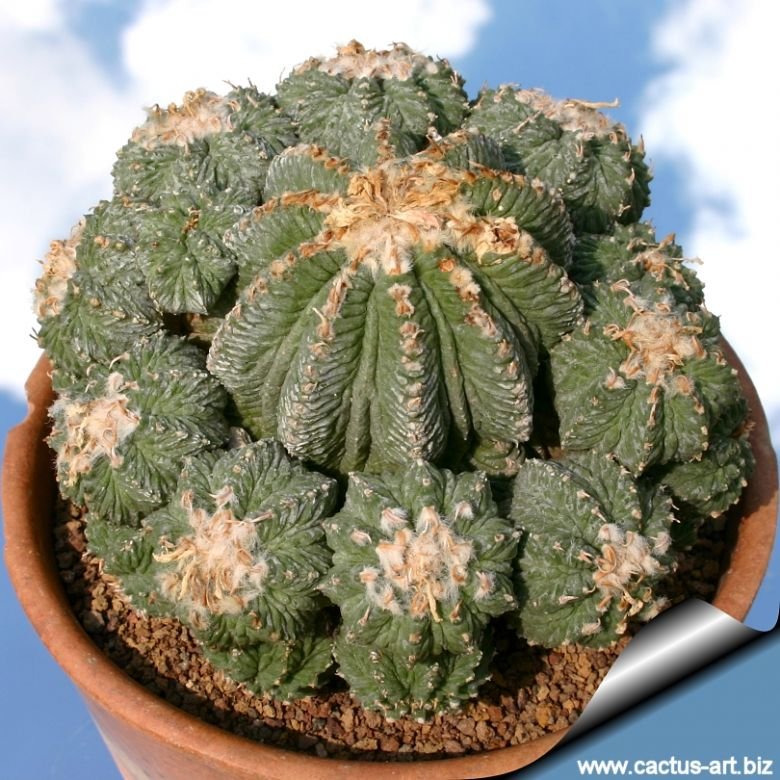
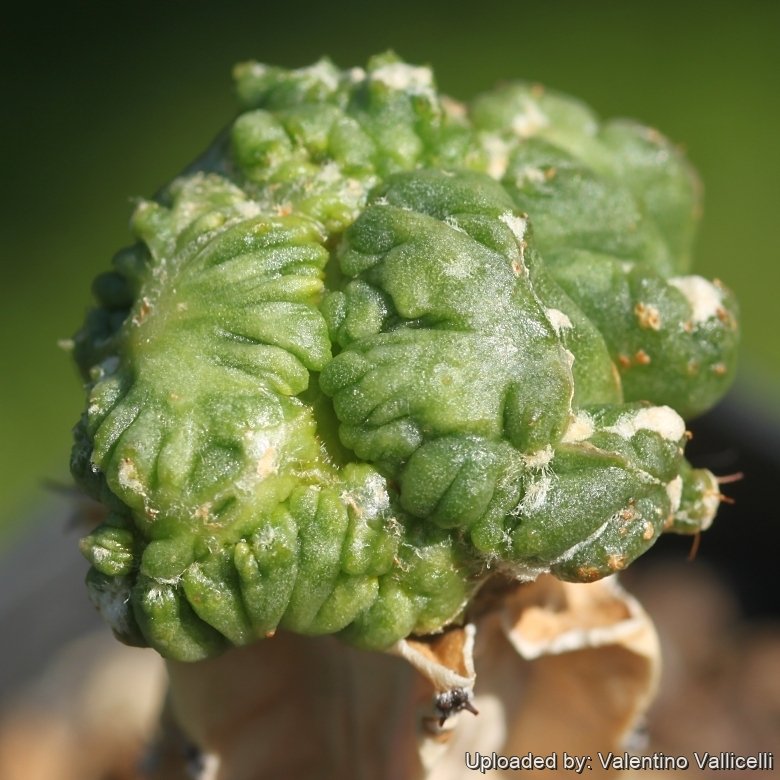
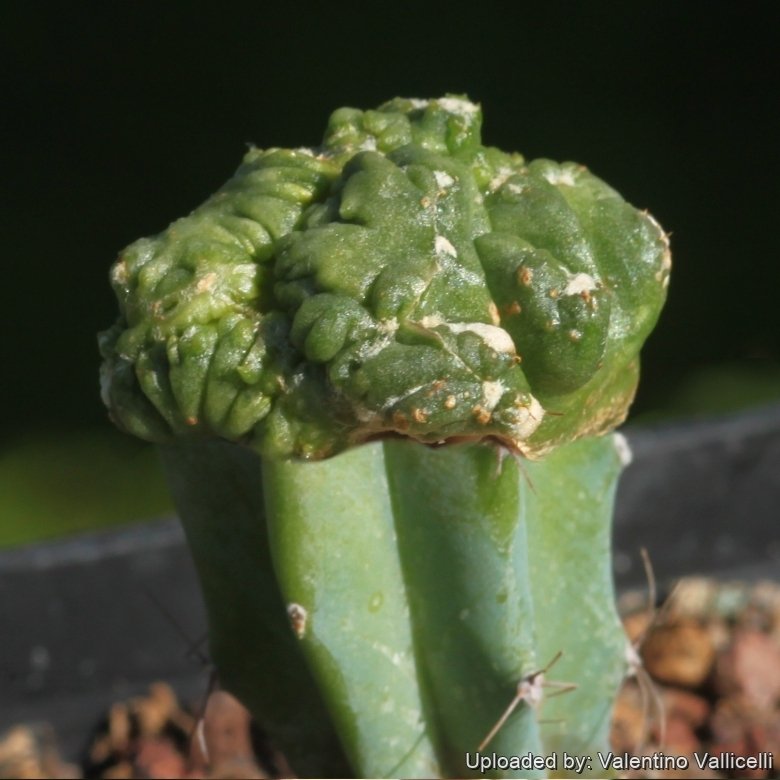
Forma monstruosa: The monstrous form (Aztekium ritterii f. montruosa) is an odd plant that forms bumped shapes,the epidermis is grey-green and contrasts with the white areoles and new pale yellowish green growth, and it is possible to find clones with different degrees of monstrosity or deformity. Maybe we can call it a freak? Despite to its beauty it is still very rare and sought after by collectors, for its unique features.
Habit: It is a highly branching cactus that forms densely packaged clumps.
Origin and Habitat
Garden origin.
Cultivation and Propagation
It’s relatively easy to cultivate plant, but very slow growing. A 10 -30% of natural gypsum could be added to a very well drained soil. Watering should be rather infrequent, but abundant, so that the soil becomes completely soaked. Furthermore it has a swollen juicy root system, and watering it properly is often difficult and rot if over-watered. Keep dry in winter, or when night temperatures remain below 10° C. It is hardy to -4°C for a short period. Assure a good ventilation.
Exposures: Part sun.
Reproduction: Grafting or cuttings.
Source: Aztekium ritterii f. montruosa, LLIFLE - Encyclopedia of living forms, CC-BY-SA, retrieved 2026-10-25.
From llifle page Aztekium ritterii f. senilis
Description
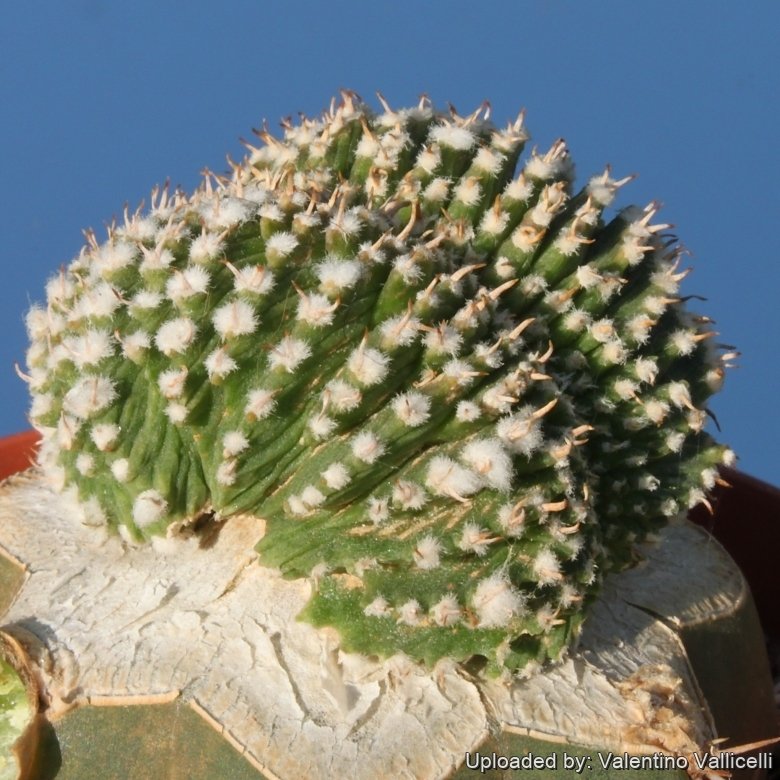
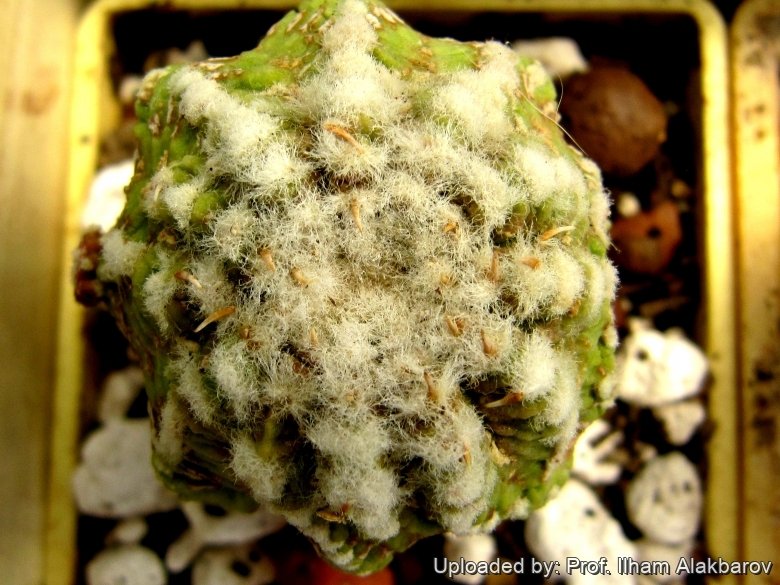
Aztekium ritterii f. senilis is a nomen nudun (an avowed new name unaccompanied by a description or diagnosis) sometime used in the trade to indicate a woollier form of Aztekium ritterii distinguished by its areoles densely covered by tufts of soft tangled greyish-white hair. The true self and the origin of this plant is controversial, some suppose that it may be a mutation or a new variety. However the density of wool in the areoles is greatly influenced by the conditions of culture: plant on their own roots usually have few felty hairs only on the upper areoles, while in grafted specimens the hairs are more numerous. In any case the “senilis form” is very peculiar and seldom seen in specialized collections.
Origin and Habitat
Unknown.
Source: Aztekium ritterii f. senilis, LLIFLE - Encyclopedia of living forms, CC-BY-SA, retrieved 2026-10-25.
Gallery