Publication: Bull. Misc. Inform. Kew 1895: 264 1895. [24 Sep 1892]
Description
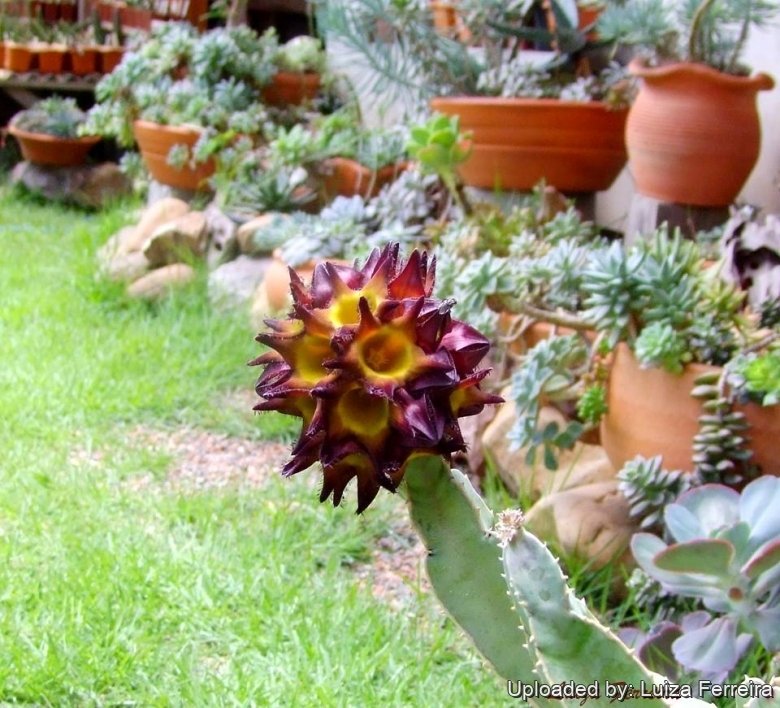
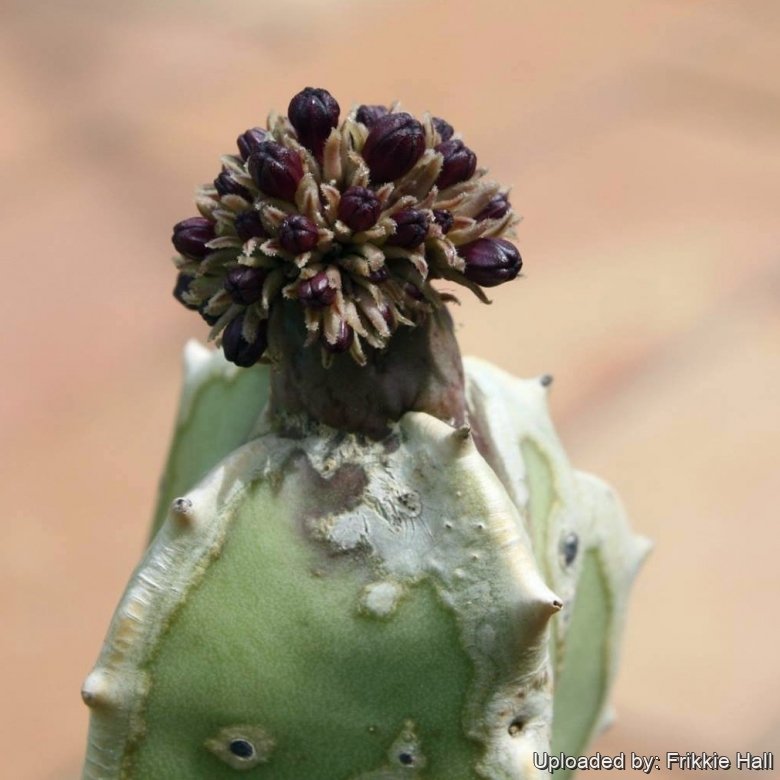
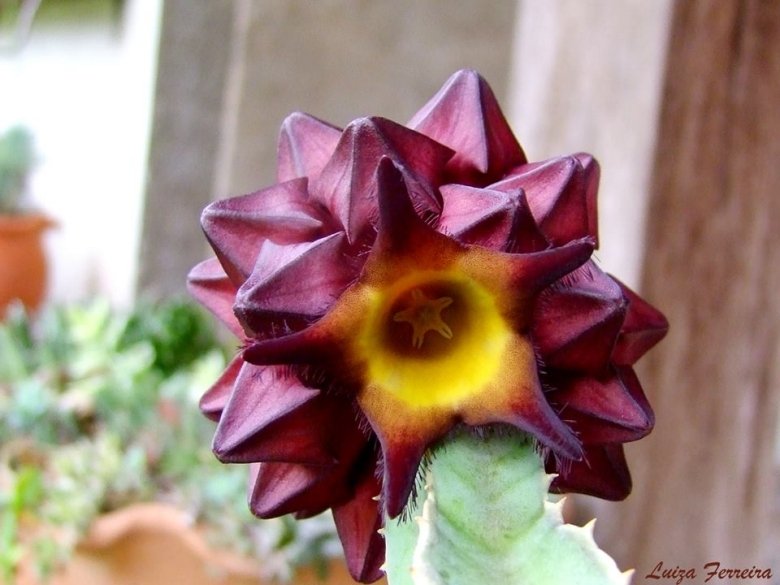
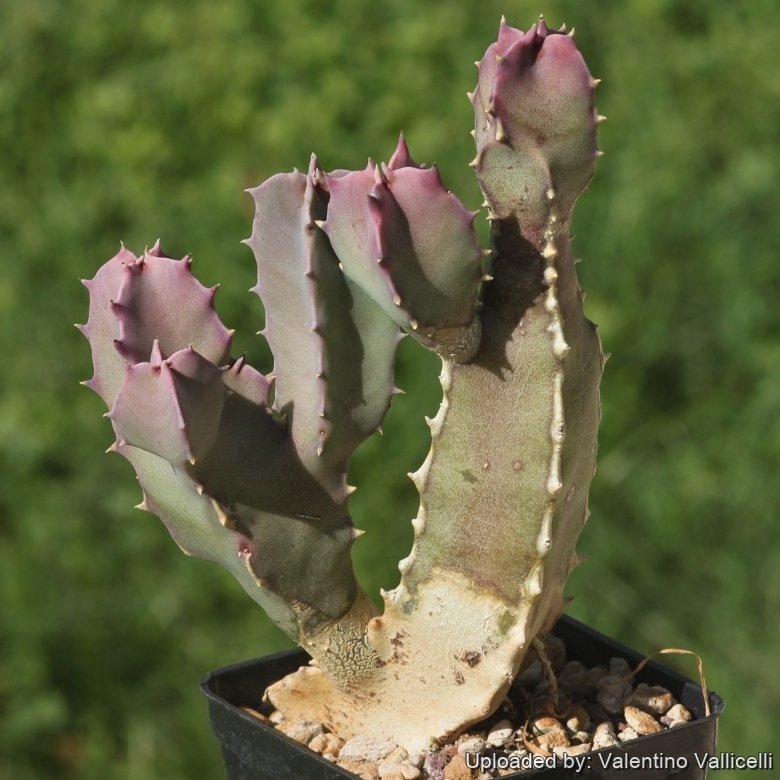
This is one of the big clumping Caralluma that can reach one meter in height. It bears at the apex a many-flowered clusters of brownish-black flowers, similar in form and size to those of Campanula Trachelium.
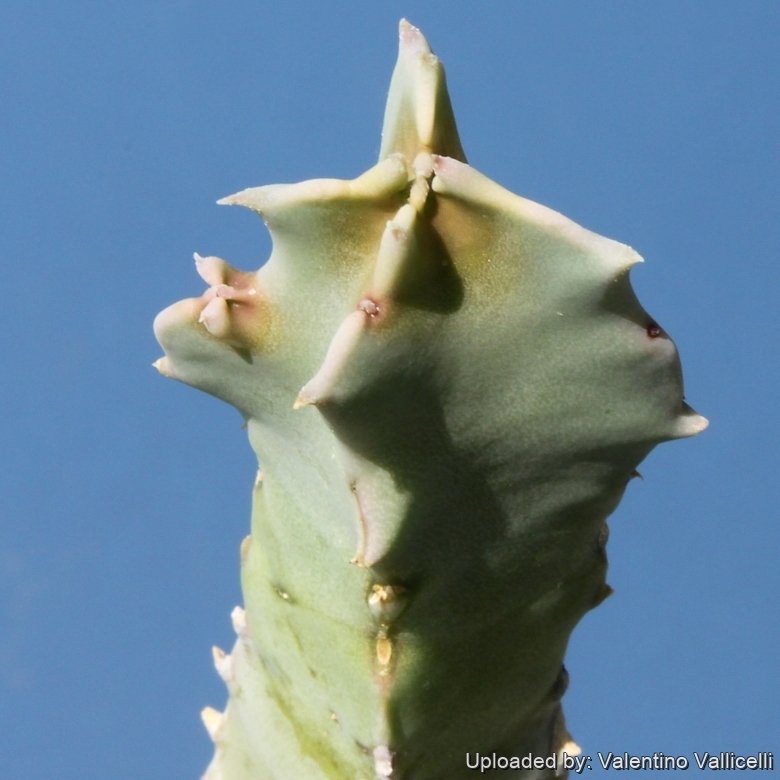
Stem: 30-80 cm tall (but occasionally up to 120 cm tall), 2-3 cm thick, tetragonal, euphorbia-like, rather soft, light-green. The ribs first acute enlarge to form a continuous horny margins to the stems with conical, acute tubercles.
Leaves: Appear at intervals, rudimentary, spreading laterally spine-like.
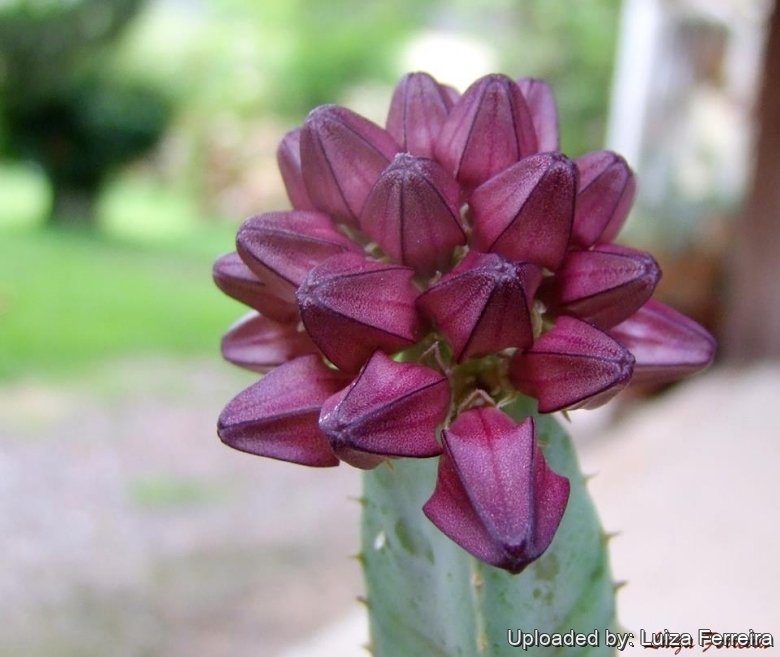
Inflorescence: Perfectly symmetrical, spherical, 30-40-flowered pseudoumbel up to 10 cm in diameter.
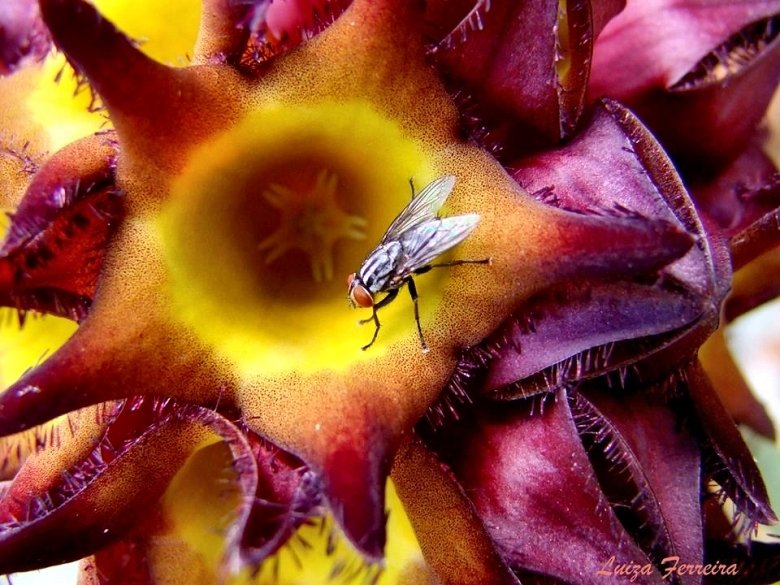
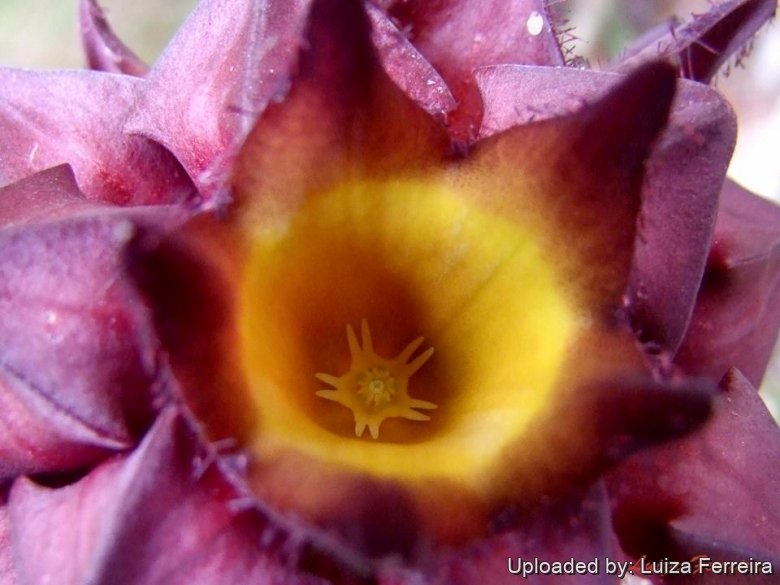
Flowers: With a foetid rotten flesh odour that attract flies, about 4 cm in diameter, cup shaped 5-lobed, the corona tubes are yellow to orange. Corolla lobes are reddish-brown with small yellow dots. Corolla lobe margins are dark maroon or black and ciliate near the apex. Pedicel 4-6 mm long.
Fruit: Follicles, about 12 cm long, glabrous.
Seeds: 9 mm long, 7 mm broad, broadly margined, adorned with a tuft of hairs nearly 30 mm long.
Origin and Habitat
East Africa (Kenya, Tanzania, Uganda) & Horn of Africa (Somalia, Ethiopia, probably also in Djibouti or Eritrea)
Habitat: It is found in tropical on dry rocky savanna or semi-desert sandy lowland habitat.
Cultivation and Propagation
Caralluma speciosa is relatively easy to grow. It needs regular watering, especially during the hottest summer days; provide also some light watering if the green house temperatures in winter are elevated. Either excessive or very scarce watering can induce rot.
Frost Tolerance: Winter temperatures must be kept over 10° C. But it can withstand winter night-time temperatures down to about 5°(or less) Celsius for short period. Freezing temperatures are fatal.
Sun Exposure: Full sun to half sun. It has a great advantage if grown in very strong light, but sheltered from full sun.
Cultural Practices: Provide very good ventilation. It grows quite easily and fast on its own roots. It is not difficult as commonly supposed.
Propagation: Seeds and cuttings.
Notes
Belonging to the adenensis-speciosa group Caralluma speciosa, Caralluma adenensis, Caralluma somalica, Caralluma acutangula (Caralluma retrospiciens) and Caralluma edithae show similar vegetative characters, in fact, when not in flower, it is hardly possible to distinguish the different species.
Gallery