Description
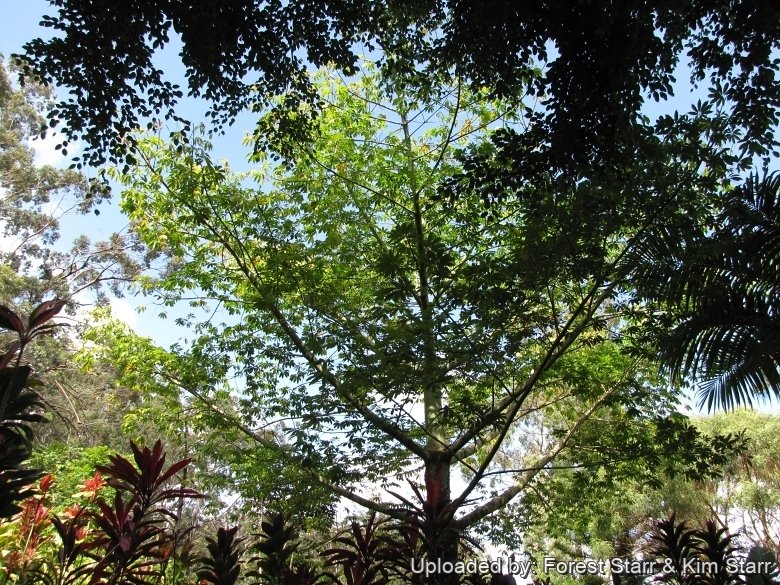
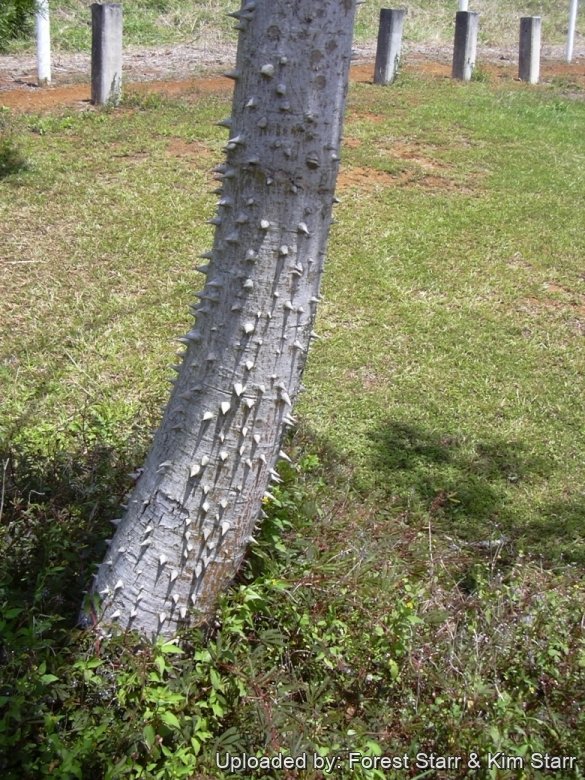
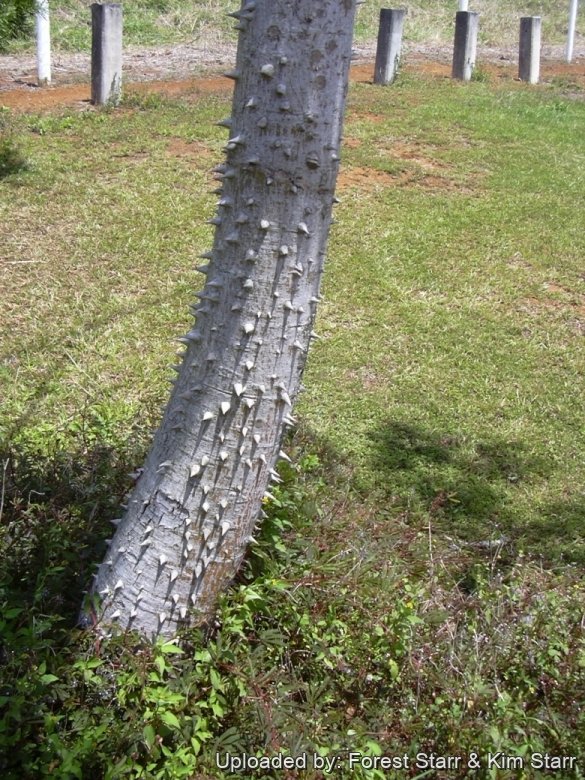
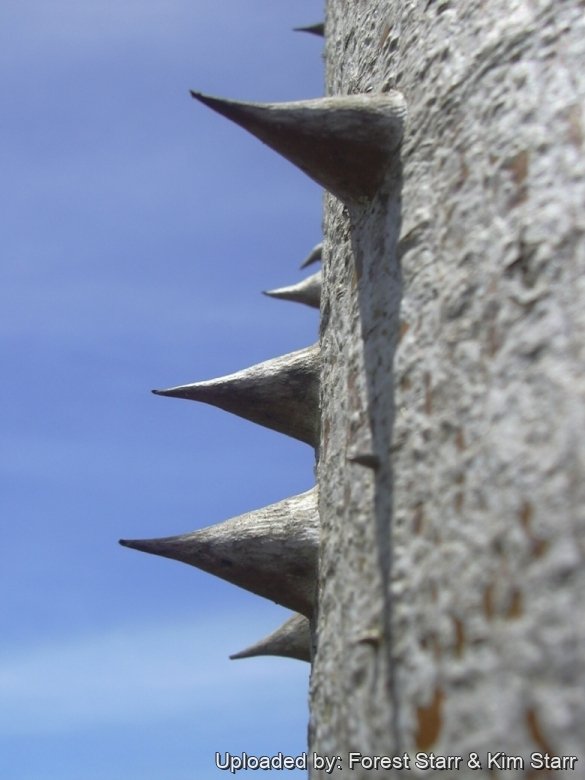
Ceiba pentandra, is a lofty tropical deciduous tree with a very straight buttressed trunk up to 3 m in diameter that usually grows to an average of 18-20 meters, with old trees up to 65-70 meters in very favourable wet tropical weather and is said to be the largest tree of the West African region and occurs throughout. It produces rose-coloured or white flowers followed by a capsule which, when ripe, contains white fibres like cotton. Its trunk bears spikes to deter attacks by animals. Kapok is the most used common name for the tree and may also refer to the cotton-like fluff obtained from its seed pods. The tree is also known as the Java cotton, Java kapok, silk-cotton or ceiba both of this names may also refer to Bombax ceiba. The floss resembles that of the cotton plant, Gossypium, but is silkier. The name kapok is from Malay for the floss and is a universal trade name. The French name fromager originated from French settlers in the Antilles of the Sixteenth century who likened the wood to being as soft as cheese (fromage).
Roots: Spreading quite horizontally, 10 m or longer, in the upper 40-80 cm of the soil.
Stem: Trunk, very straight, bole up to 35 m tall, usually cylindrical, 2-3 m in diameter, usually with large plank-like buttresses up to 3(-8) m high extending 1-2 m from the bole and with more or less horizontal main branches and often bracketed below to the stem. Branches usually in whorls of 3. The trunk and many of the larger branches are often crowded with large conical thorns 1-1.5 cm long, at least when young; bark smooth pale grey; young branches glabrous or pubescent. Crown of emergent trees in the forest spreading and umbrella-shaped with no lateral branches lower along the bole, crown of trees in more open vegetation ovoid with lateral branches along much of the bole
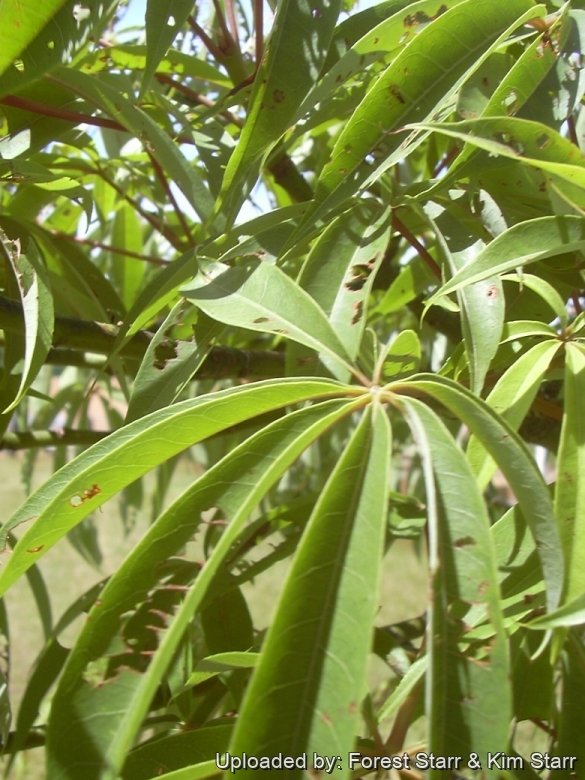
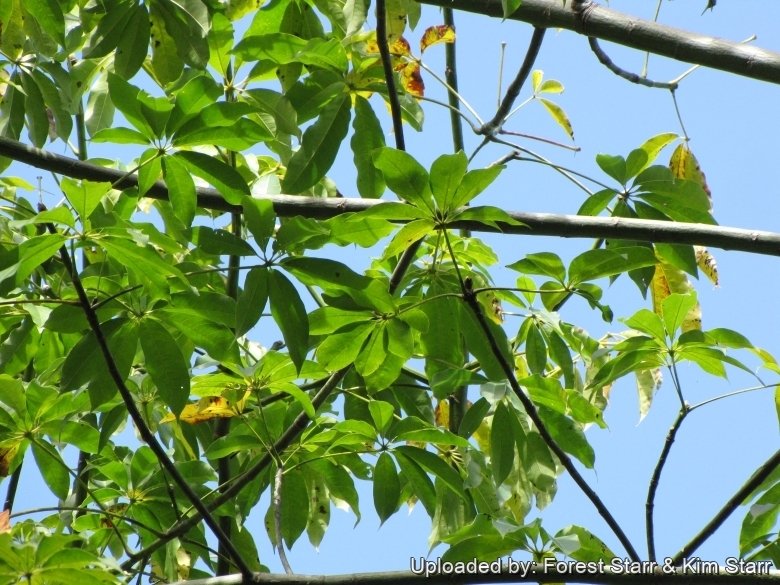
Leaves: Alternate, palmate composed of 5 to 9 leaflets (usually 7, very rarely more than 9). Stipules linear to narrowly tri-angular, up to 1 cm long, caducous, leaving scars. Leaflets narrowly elliptic-obovate, or oblanceolate-elliptic, entire, acuminate at the apex, 7–20 long, 1.8–6.5 cm wide, cuneate at the base, margin undulate or rarely obscurely toothed near the apex, slightly paler below, glabrous on both sides, with 7–10 pairs of nerves slightly raised above, scarcely raised below, looping within the margin. Leflets are articulated to an almost circular disk at the apex of the petiole. Petiole glabrous, 5.5–25 cm long. Petiolules up to 8 mm long.
Inflorescences: 1–3(-15)-flowered in axillary clusters often on leafless branches or present when the whole tree is leafless. Peduncle 2–3 cm long, glabrous.
Flowers; Bisexual, 5-merous, regular, strongly but unpleasantly scented. Pedicel 2-5(-8) cm long. Calyx 9–15 mm long, 11-14 mm wide, campanulate with rounded to nearly acute lobes, glabrous outside, pubescent inside. Petals pink, creamy yellow or white, united at base, oblong-spatulate, (20-)22-35(-46) mm long c. 8 mm wide, oblong-spathulate, rounded at the apex, tomentose outside, glabrous within. Stamens 5-15, united at base in a staminal column, dividing into 5(-6) branches 2.5-5 cm long anthers coiled or reniform. Ovary glabrous or nearly so, 5-celled, style 2.5–3.3(-4) cm long.
Fruits: The fruits is an oblong-ellipsoid capsule, (8-)15-30(-60) cm long and (3-)4-11(-15) cm wide capsule (seed pod). It is somewhat woody, smooth, brown, many-seeded, dehiscing with 5 valves (‘shells’) or indehiscent, valves smooth, the whole filled with a copious whitish or yellowish silky wool that is a mix of lignin and cellulose. The trees produce several hundred pods.
Seeds: Subglobose, c. 4-6 mm across, glabrous, dark brown or black, embedded in copious white or greyish floss.
Seedling: With epigeal germination.
Origin and Habitat
Ceiba pentandra is native to Mexico, Central America and the Caribbean, northern South America, and (as the variety C. pentandra var. guineensis) to tropical west Africa. The commercial tree is most heavily cultivated in the rainforests of Asia, notably in Java , Philippines, Malaysia, Hainan Island in China as well as in South America but also widely cultivated throughout the tropics and a number of varieties and cultivars are recognized.
Altitude range: It usually thrives at elevations below 500 m, but it grows up to altitudes as high as 4000 m.
Habitat: It is found in secondary forest, seldom if ever in virgin forest, and conspicuous in savanna near habitations. It is said to be the largest tree of the West African region and occurs throughout. The tree is to some extent an anthropogene. It does not occur in virgin forest. It is an evanescent, quickly appearing in abandoned land. Its occurrence in forested areas is held to be a sign of disturbance. Nor does it occur in grass savanna which is subjected to annual burning as the tree does not survive fire, but in savanna land the tree is to be found in the proximity of habitations, albeit perhaps abandoned. The sight of a tree on the horizon to a traveller is a welcome direction post. Ceiba pentandra requires abundant rainfall during the vegetative period and a drier period for flowering and fruiting. The flowers are an important source of nectar and pollen for honey bees.
Cultivation and Propagation
Ceiba pentandra, is quite easily grown from seed and is planted in parks and on roadsides as an avenue and shade tree. In built-up areas it will prove to be a troublesome one as the roots effect forceful entry into cracks in buildings, roads, drains, etc., and pass through or under and disturb foundations. It grows best in subtropical climate and heavy rainfalls but fairly drought-resistant too. Grow in good light, don’t over-water. Saplings can be effectively grown in containers for many years before becoming too large and requiring to be planted into the ground. In this manner one can move them out of the cold into a warm position in a glasshouse or indoors behind a sunny window to prevent frost damage. It can be also trained as a bonsai tree.
Exposure: It is a strong light-demander suited for full sun open positions.
Watering: It is drought tolerant, and suited to monsoon climates with dry and wet seasons, but reach its full size of 60 metres only with ample water availability throughout years.
Hardiness The are only suited for tropic and subtropics and provide a minimum winter temperature of 10-13 C as they cannot tolerate frost.
Uses: It is cultivated for its kapok (the hairs of the carpel walls, used in stuffing mattresses etc.) Kapok fibre is light, very buoyant, resilient, resistant to water, but it is very flammable. The process of harvesting and separating the fibre is labour-intensive and manual. It is difficult to spin, but is used as an alternative to down as filling in mattresses, pillows, upholstery, zafus, and stuffed toys such as teddy bears, and for insulation. It was previously much used in life jackets and similar devices until synthetic materials largely replaced the fibre. The seeds produce an oil, used locally in soap and that can be used as fertilizer.
Ethnomedical uses: Ceiba pentandra bark decoction has been used as a diuretic, aphrodisiac, and to treat headache, as well as type II diabetes. It is used as an additive in some versions of the hallucinogenic drink Ayahuasca.
Kapok seed oil: A vegetable oil can be pressed from kapok seeds. The oil has a yellow colour and a pleasant, mild odour and taste, resembling cottonseed oil. Kapok oil has some potential as a biofuel and in paint preparation.
Religion and folklore: The kapok is a sacred symbol in Maya mythology.
Reproduction: Seeds. Sow in trays, pots, etc. in a well-drained seedling mixture containing one-third sand in a propagator or warm place with a minimum of 25°C to a soil depth of 5 cm. The optimum temperature required is 27°C, with 30°C for maximum germination and plant growth. Seeds are best sown in spring and summer . Germination may take from two to six weeks. It grow reasonably quickly when they are young. It also can be started from cuttings.
Bibliography
Major references and further lectures
-
H. Wild “Ceiba pentandra L. Gaertn. [family BOMBACACEAE]” in Flora Zambesiaca, Vol 1, Part 2, page 511, 1961
-
Forest & Kim Starr “Ceiba pentandra (kapok)”. Plants of Hawaii. <http://www.starrenvironmental.com\>. Web. 4 Dec. 2014.
-
Bombax pentandrum L. [family BOMBACACEAE]
-
Philpott, Don “Landmark Puerto Rico”. Hunter Publishing, Inc. 2003
-
M. Thulin “Flora Somalia” Vol 2, 1999 [updated by M. Thulin 2008]
-
Burkill, H.M. “Useful Plants of West Tropical Africa”, Vol 1 1985
-
Dominique Louppe “Plant Resources of Tropical Africa: Timbers” ed.: D. Louppe ; A. A. Oteng-Amoako. General ed.: R. H. M. J. Lemmens. PROTA, 2008
-
Wikipedia contributors. “Ceiba pentandra.” Wikipedia, The Free Encyclopedia. Wikipedia, The Free Encyclopedia, 27 Nov. 2014. Web. 4 Dec. 2014.
Gallery