Publication: Monatsschr. Kakteenk. 9: 102. 1899
Description
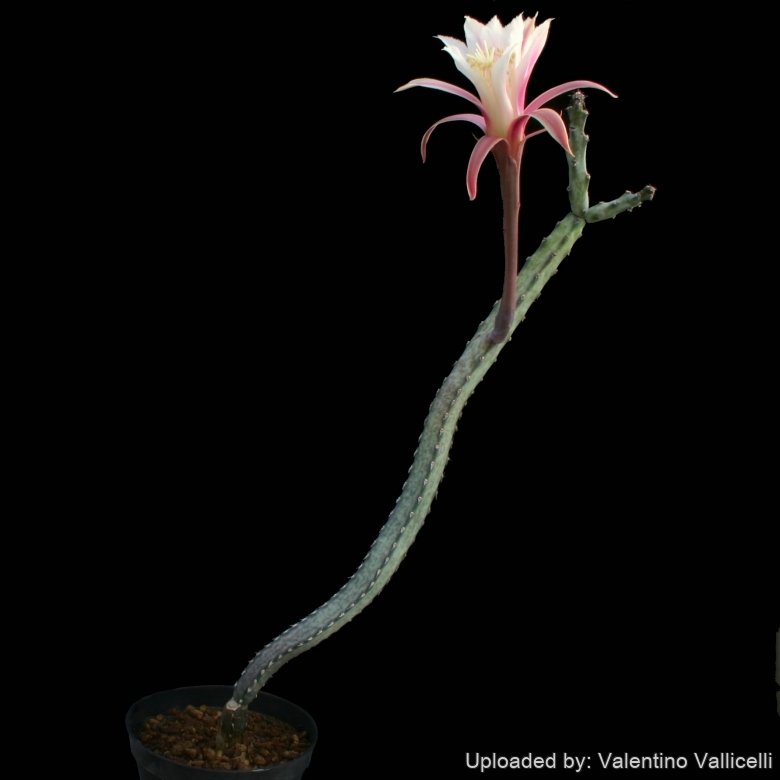
Cereus spegazzinii, more commonly known as Monvillea spegazzinii, is a slender shrubby cactus that has a similar form and habitat to the night-blooming cereus (Peniocereus greggii). It puts forth many basal shoots, soon becoming tillered.
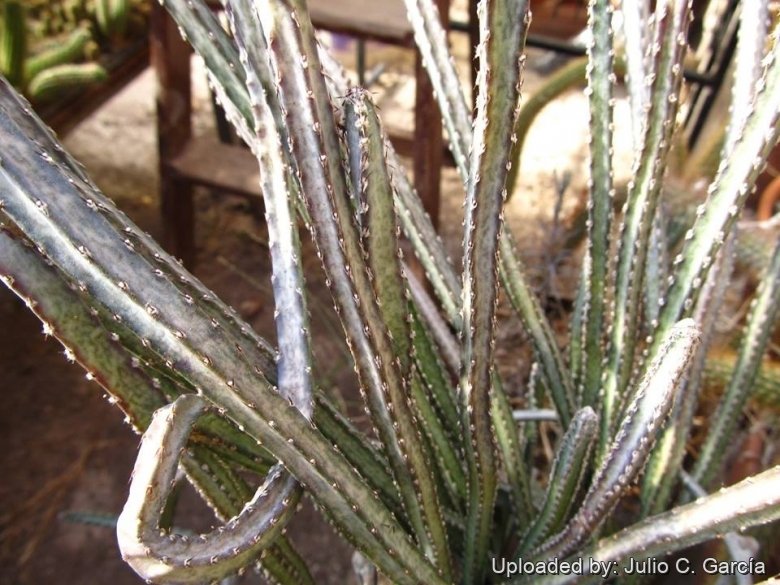
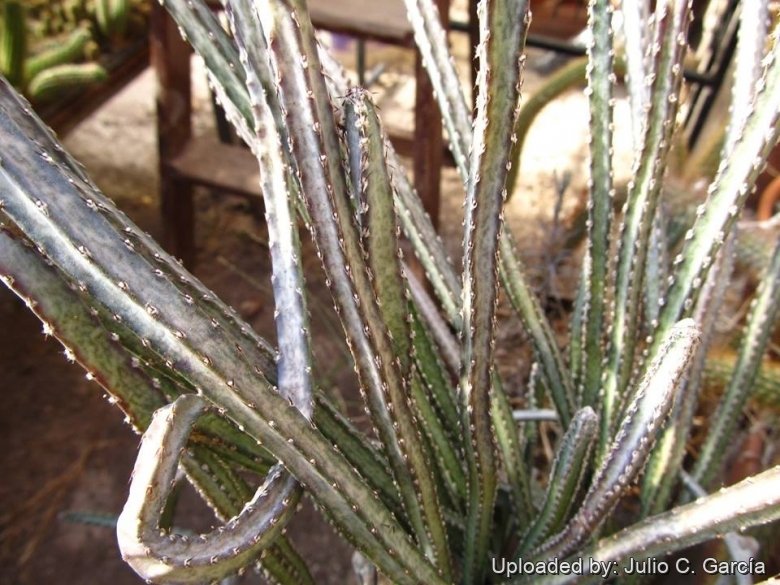
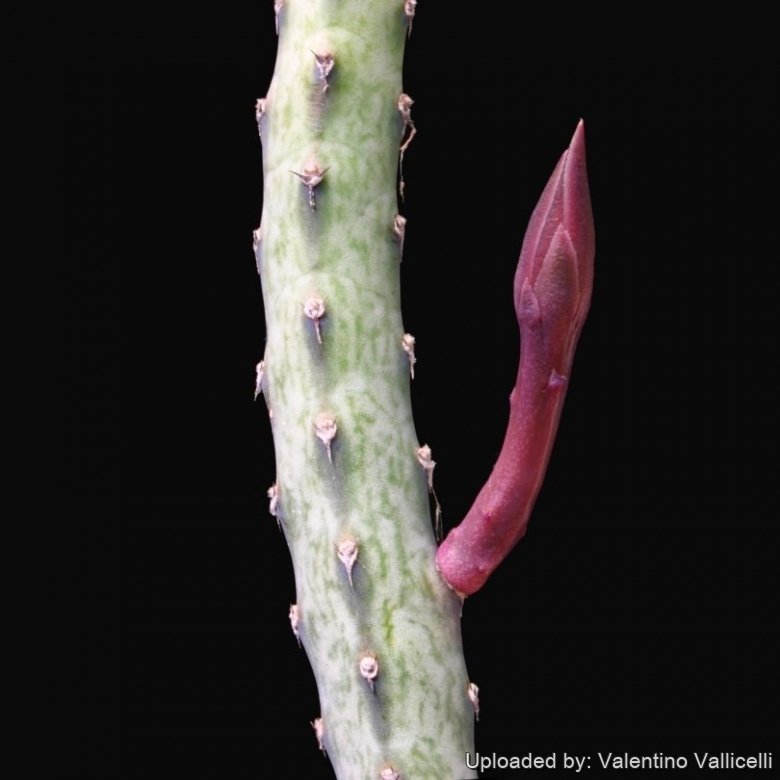
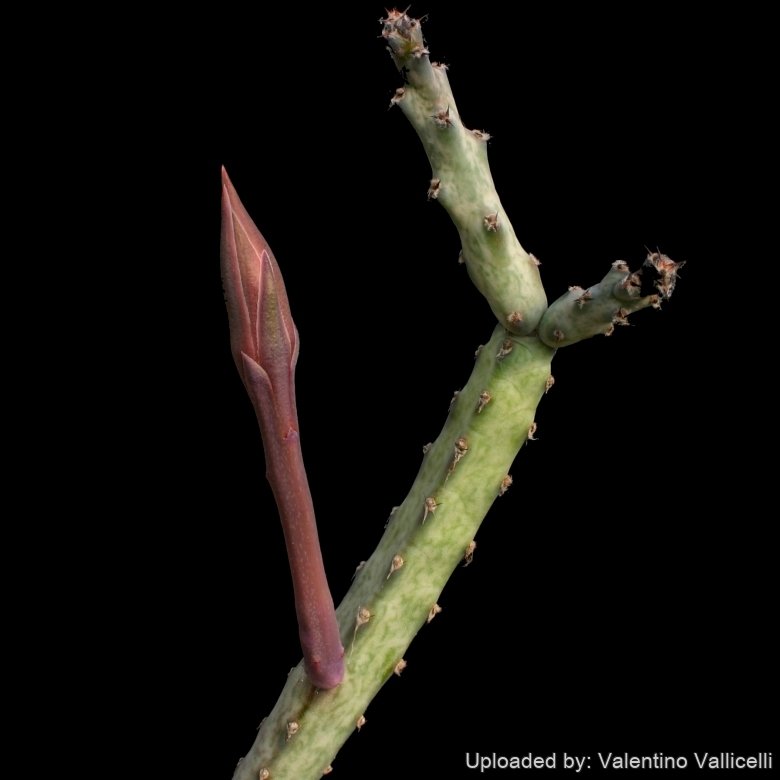
Stems: Branched, bluish mottled in purple and green, erect or semi prostrate , up to 1.8 m long or more, 2 cm inches in diameter;
Roots: Tuberose and succulent, Even adventitious roots of Cereus spegazzinii become succulent.
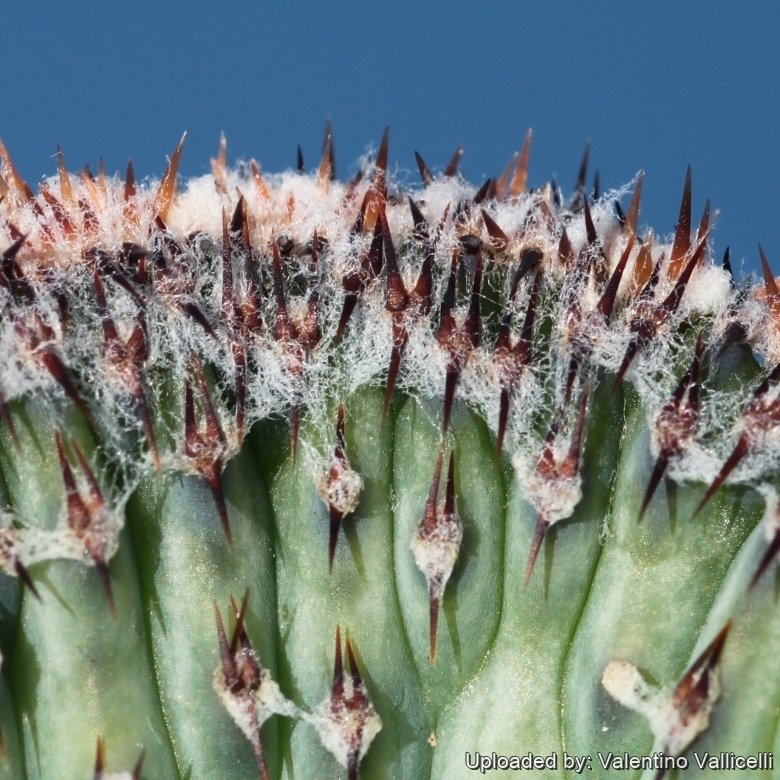
Ribs: Three to five (usually four) raised angular that have deep incisions similar to indentations along the edge. They are about 3 cm long at the base and bear small areoles at the apex of the protuberances.
Central spines: One (or any) up to 1.5 cm long.
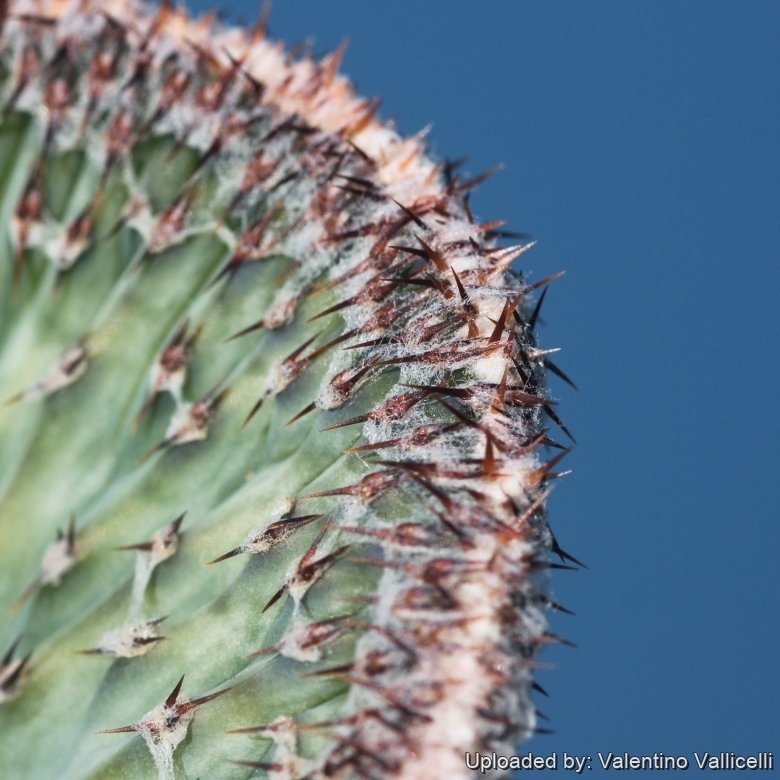
Radial spines: The Young plants usually have three sharp, blackish spines 5 mm long, two pointing upward and one downward. On the older parts there are five radial and one central spine, 1.5 cm. long.
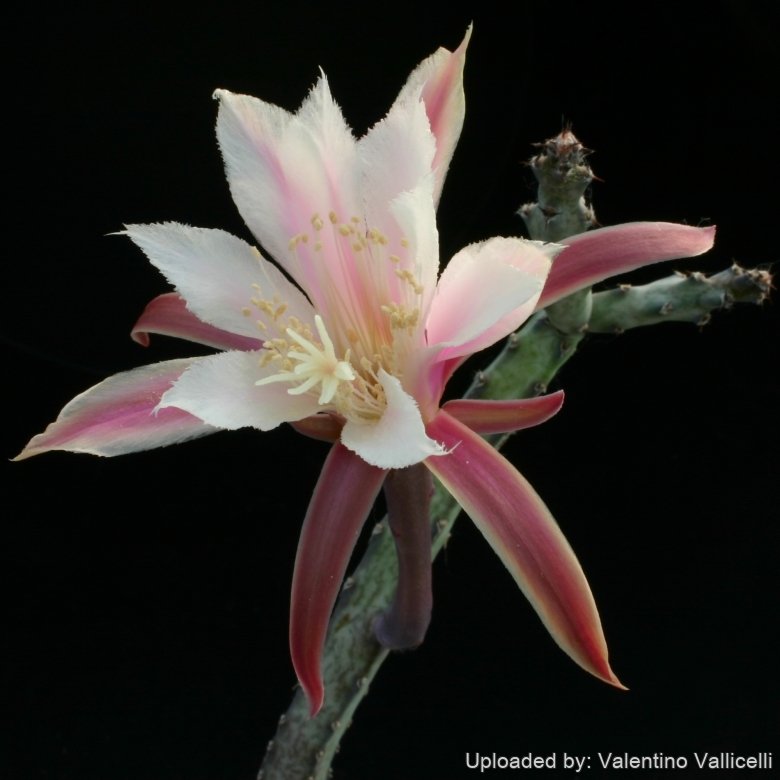
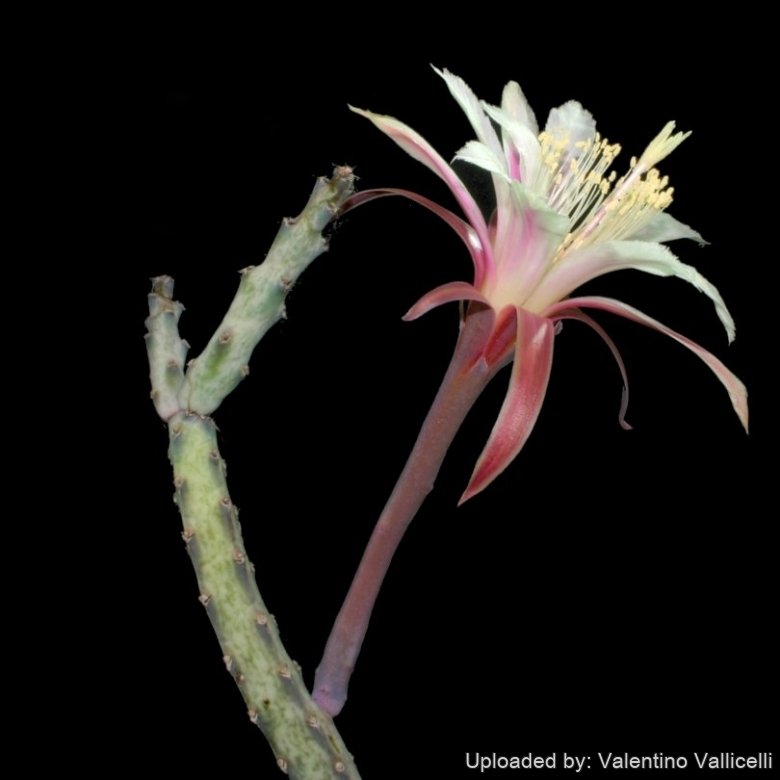
Flowers: 10 to 13 cm in length with a slender tube, reddish outer perianth segments and white inner ones. They arise from near the top on the sides of the stems; buds point upward but curve suddenly downward when the flowers open. They bloom at night.
Fruit: Smooth, red, juicy with persistent perianth remnant that withers slowly and dries attached to the end of the fruit. Flowers.
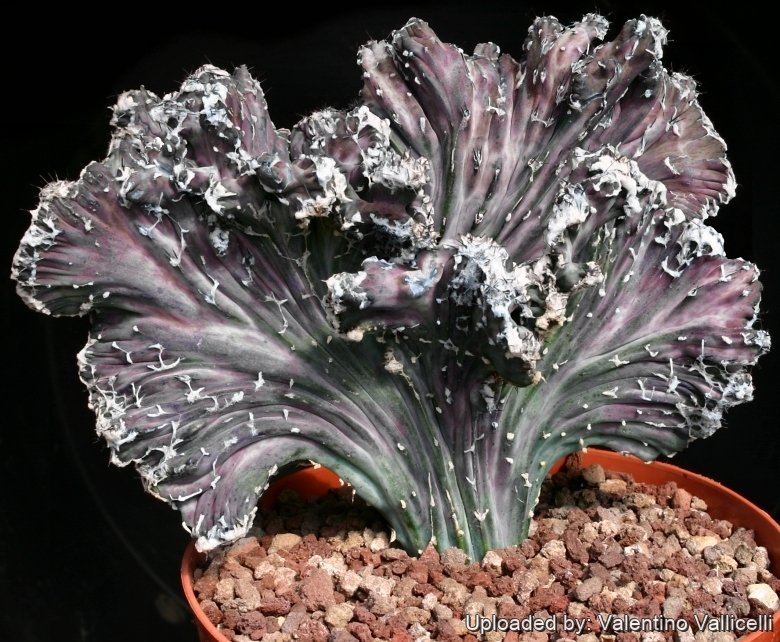
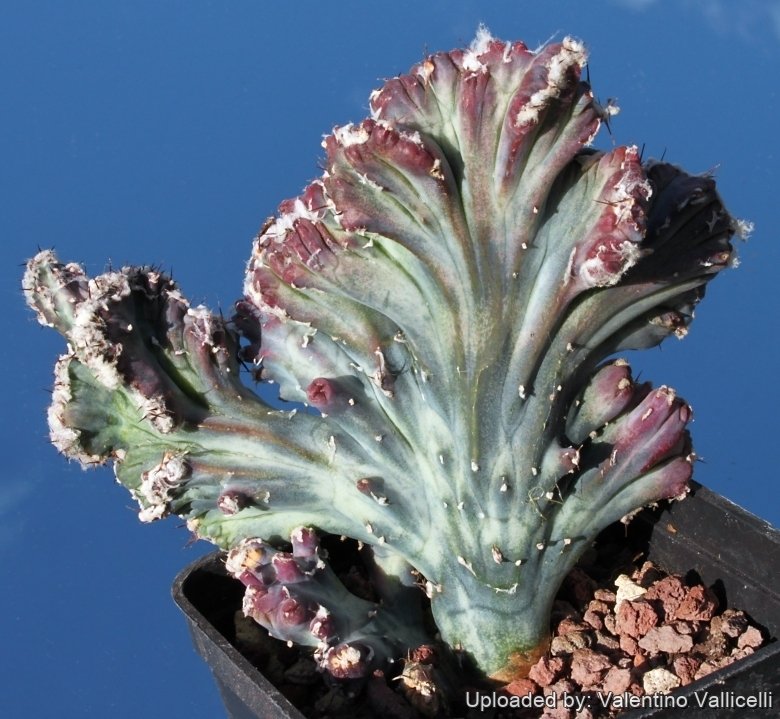
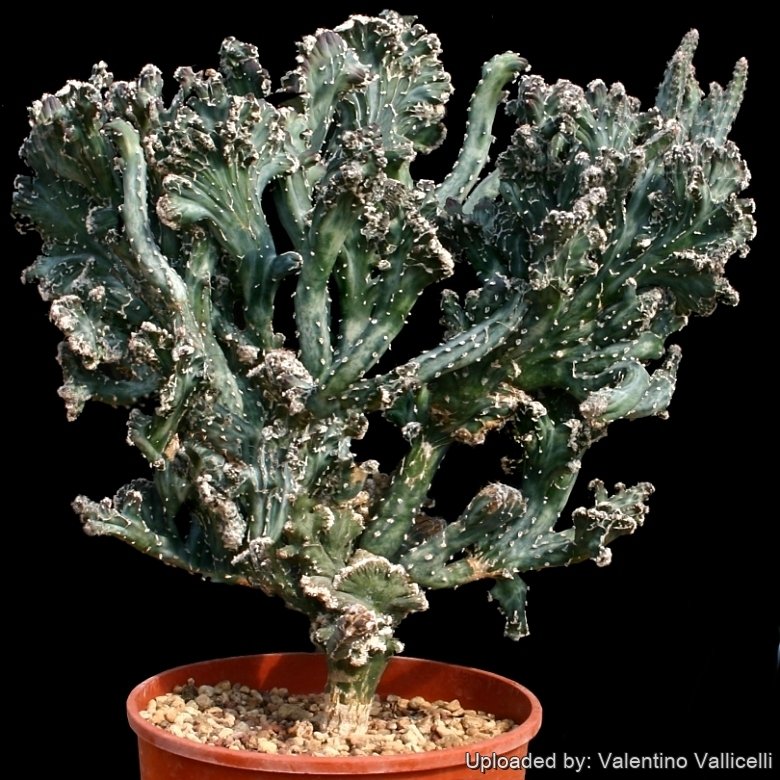
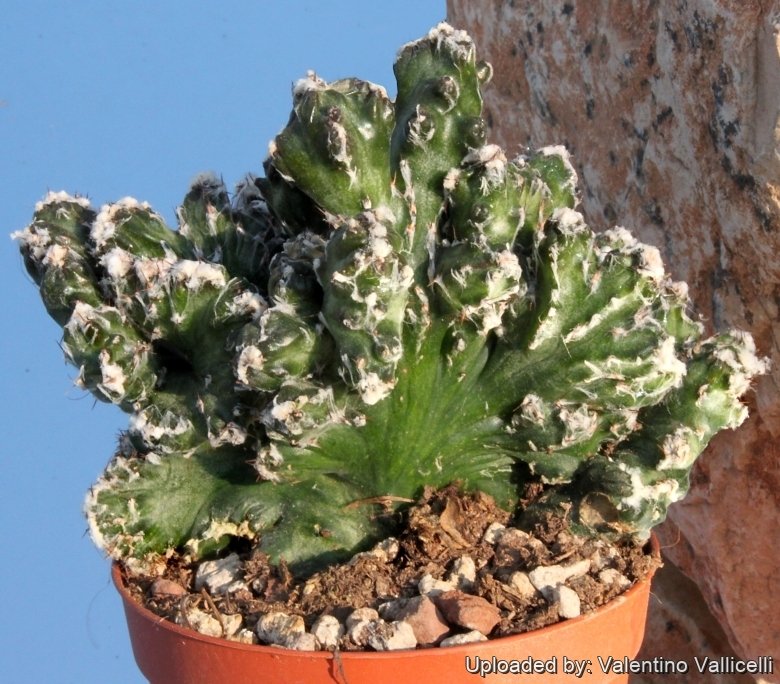
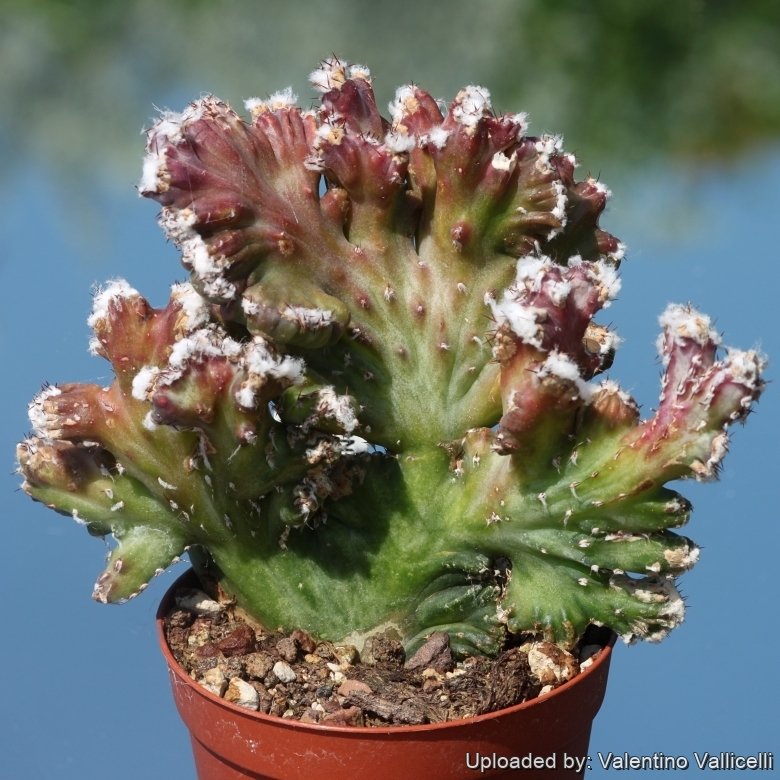
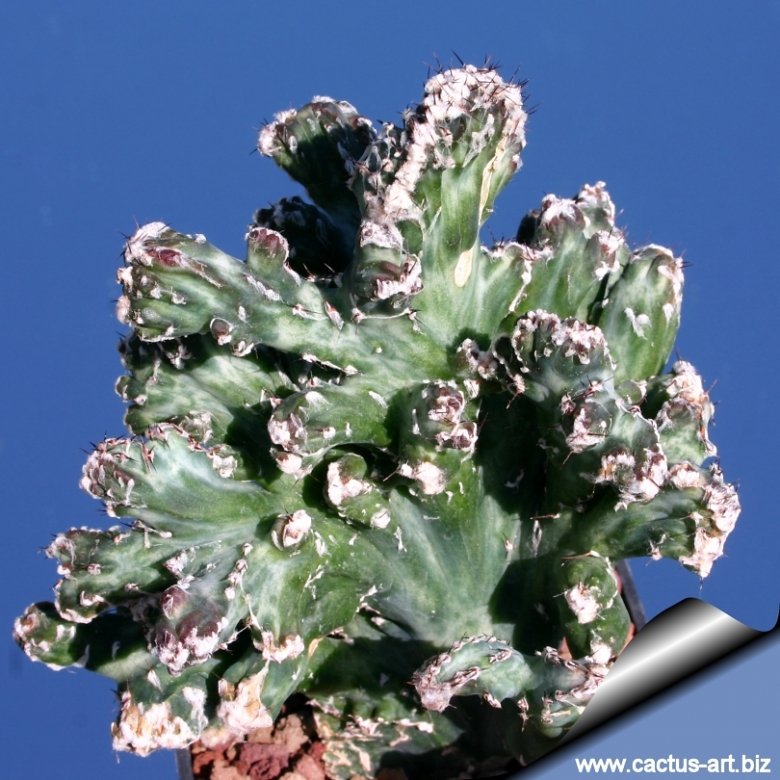
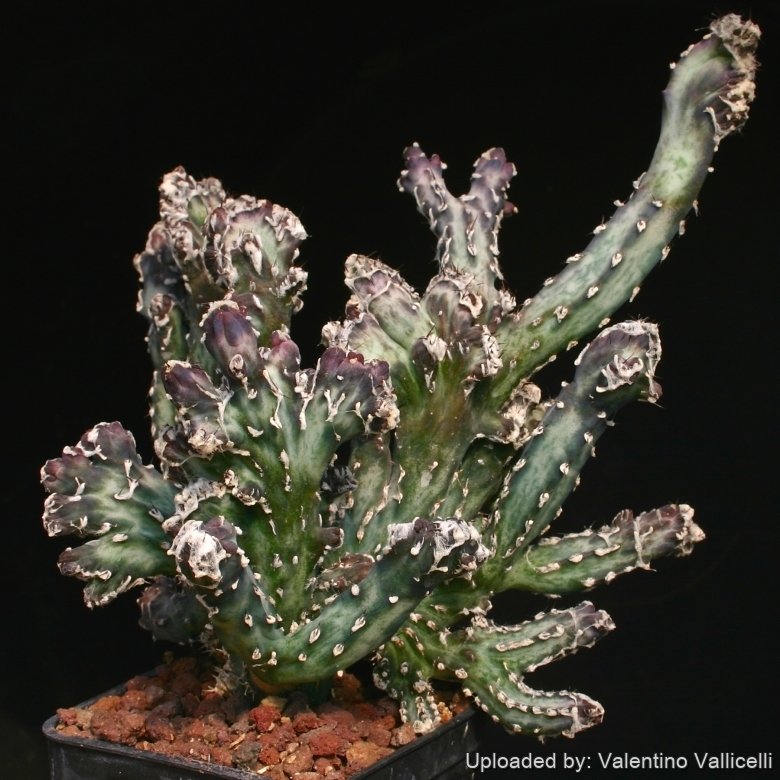
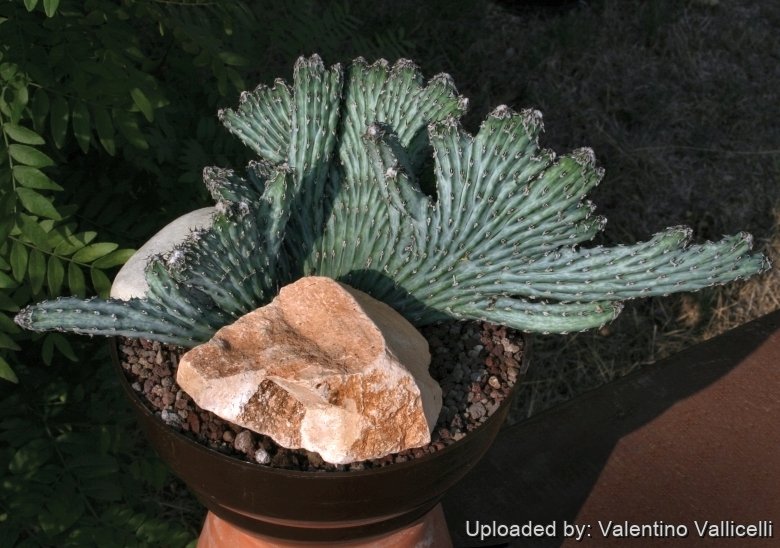
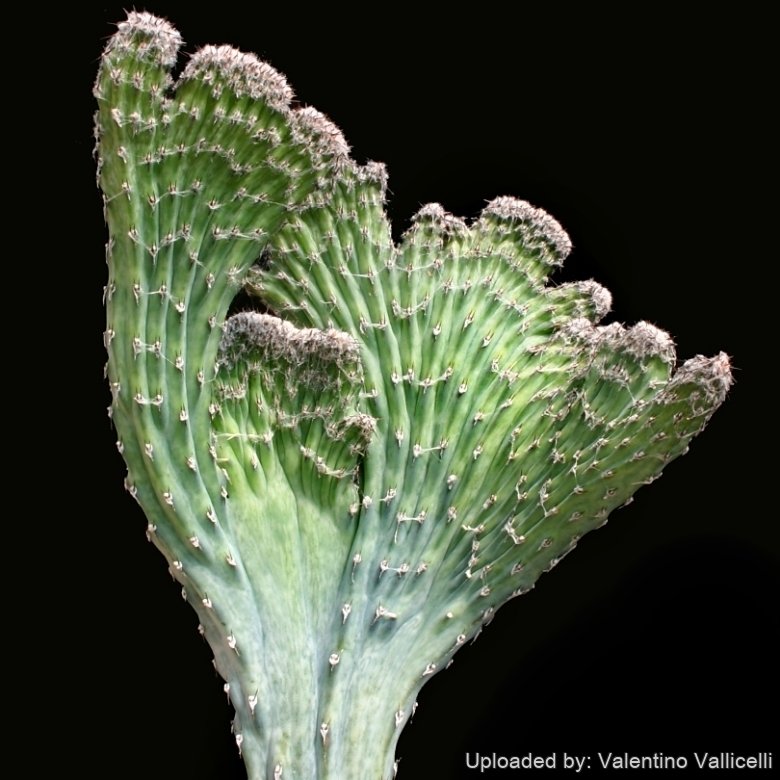
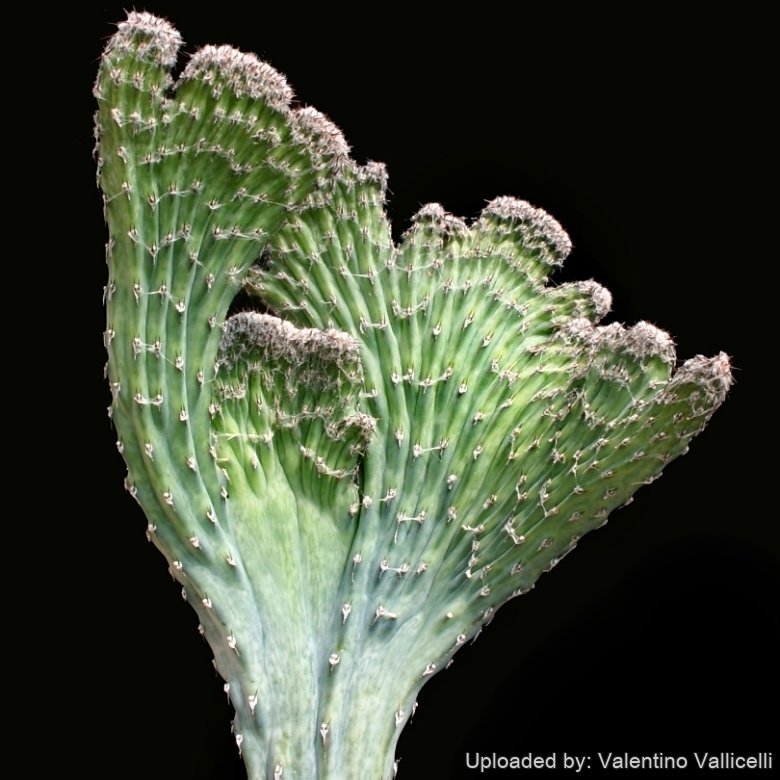
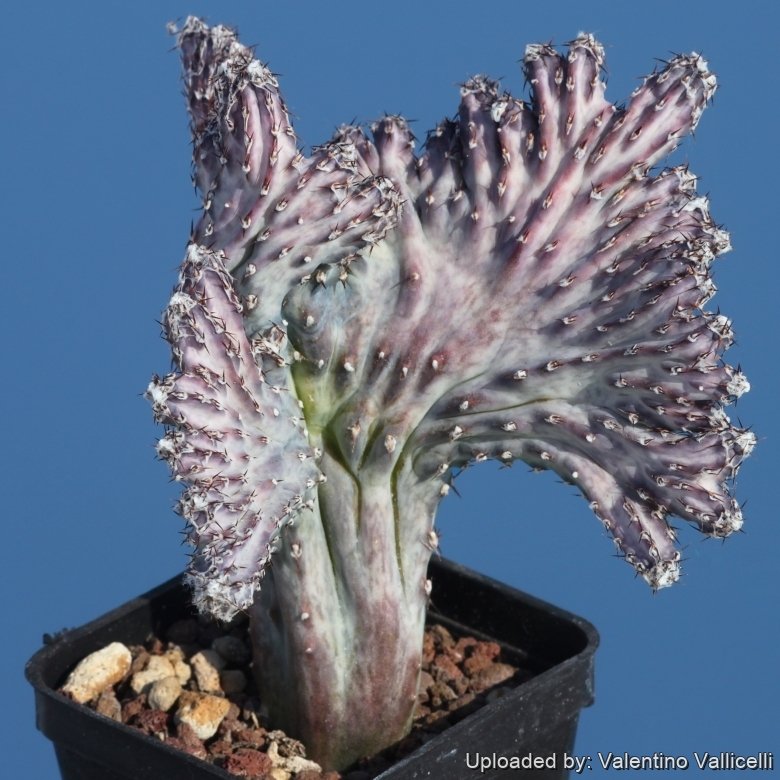
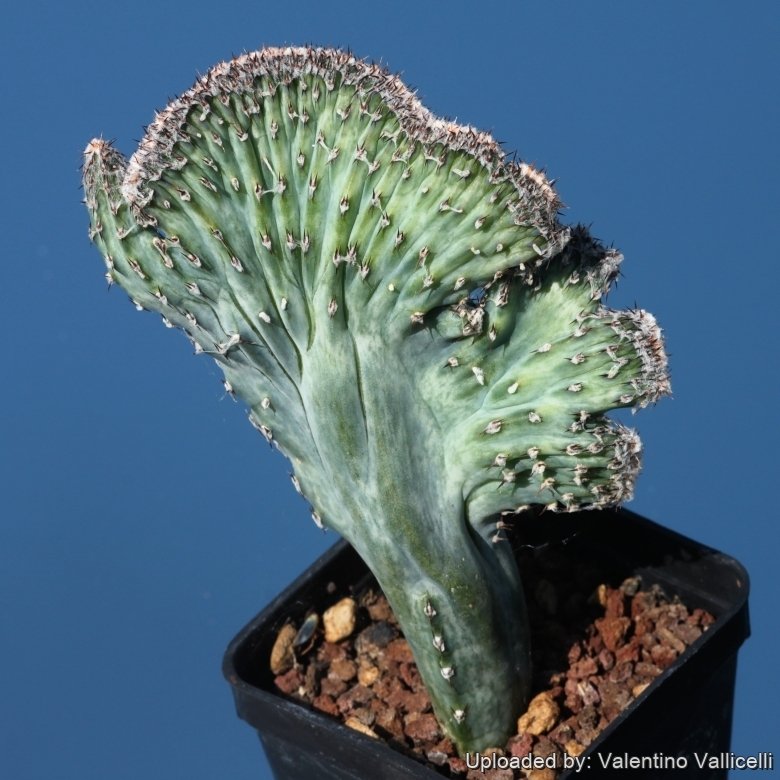
Remarks: These plants frequently produce monstrose crests, and crests occasionally produce normal shoots. The crested variety have spectacular blue marbled stems with pronounced sculpture effects.
Origin and Habitat
Cereus spegazzinii is reported to occur in Argentina, in the provinces of Santa Fe, Santiago del Estero, Salta, Chaco, and Formosa. It also grows in Bolivia, Brazil, and Paraguay.
Altitude range: It can be found at elevations between 10 and 500 metres above sea level.
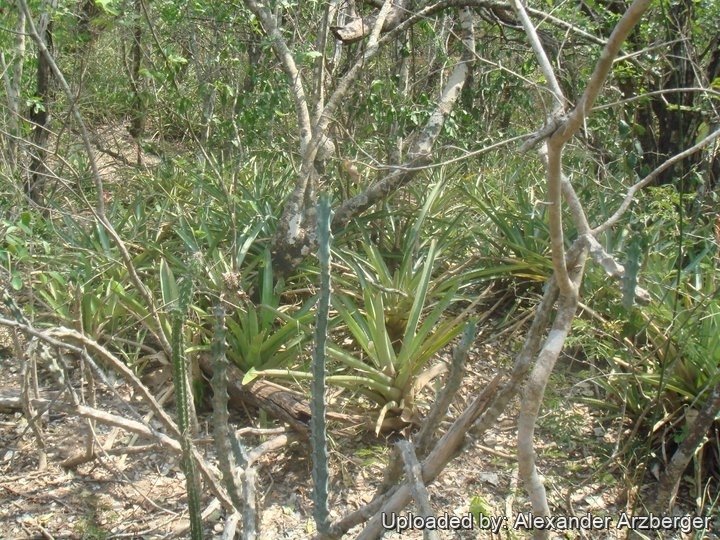
Habitat and Ecology: This cactus grows in the interior and edge of dry forests and is common and abundant throughout its range. It is listed as Least Concern because it is widely distributed, is common and locally abundant, and there are no major threats affecting it. It is also present in many protected areas.
Bibliography
Major references and further lectures.
-
Nathaniel Lord Britton, Joseph Nelson Rose “Cactaceae: Descriptions and Illustrations of Plants of the Cactus Family” vol. 2 The Carnegie Institution of Washington, Washington 1920
-
Edward Anderson “The Cactus family” Timber Press, Incorporated, 2001
-
James Cullen, Sabina G. Knees, H. Suzanne Cubey “The European Garden Flora Flowering Plants: A Manual for the Identification of Plants Cultivated in Europe, Both Out-of-Doors and Under Glass” Cambridge University Press, 11/Aug/2011
-
David R Hunt; Nigel P Taylor; Graham Charles; International Cactaceae Systematics Group. “The New Cactus Lexicon” dh books, 2006
-
Urs Eggli, Leonard E. Newton: “Etymological Dictionary of Succulent Plant Names” Birkhäuser 2004
-
Oakley, L. & Pin, A. 2013. Cereus spegazzinii. The IUCN Red List of Threatened Species 2013: e.T151795A562395. http://dx.doi.org/10.2305/IUCN.UK.2013-1.RLTS.T151795A562395.en. Downloaded on 15 July 2016.
From llifle page Cereus marmoratus
Description
It is a slender shrubby cactus that has a similar form and habitat to the night-blooming cereus (Peniocereus greggii). It puts forth many basal shoots, soon becoming tillered.
Stems: Branched, bluish mottled in purple and green, erect or semi prostrate , up to 1.8 m long or more, 2 cm inches in diameter;
Roots: Tuberose and succulent, Even adventitious roots of Monvillea spegazzinii become succulent.
Ribs: Three to five (usually four) raised angular that have deep incisions similar to indentations along the edge. They are about 3 cm long at the base and bear small areoles at the apex of the protuberances.
Central spines: One (or any) up to1.5 cm long;
Radial spines: The Young plants usually have three sharp, blackish spines 5 mm long, two pointing upward and one downward. On the older parts there are five radial and one central spine, 1.5 cm. long.
Flowers: 10 to 13 cm in length with a slender tube, reddish outer perianth segments and white inner ones. They arise from near the top on the sides of the stems; buds point upward but curve suddenly downward when the flowers open. They bloom at night.
Fruit: Smooth, red, juicy with persistent perianth remnant that withers slowly and dries attached to the end of the fruit. Flowers.
Remarks: These plants frequently produce monstrose crests, and crests occasionally produce normal shoots. The crested variety have spectacular blue marbled stems with pronounced sculpture effects
Cultivation and Propagation
Paraguay and northeastern Argentina. It was discovered near Resistencia, capital of the province of Chaco, Argentina.
Habitat: It has little capacity to swell or shrink during rainy/dry cycles. It occurs in only moderately dry areas, growing among leafy shrubs and small trees.
Source: Cereus marmoratus, LLIFLE - Encyclopedia of living forms, CC-BY-SA, retrieved 2026-10-25.
From llifle page Monvillea vallegrandensis
Origin and Habitat
Vallegrande, Sta Cruz, 2030m, Bolivia
Source: Monvillea vallegrandensis, LLIFLE - Encyclopedia of living forms, CC-BY-SA, retrieved 2026-10-25.
From llifle page Monvillea spegazzinii f. cristata monstruosa
Description
The typical Monvillea spegazzinii is a fast-growing slender shrubby cactus that has bluish stems that creep along the ground to form a shrub. There are two similar but slightly different crested forms that are now widely cultivated for their beautiful stem with pronounced sculpture effects.
Stems: Bluish-green that tinge purplish in full sun up to 25 cm tall and wide.
Roots: Tuberose and succulent, Even adventitious roots of Monvillea spegazzinii become succulent.
Flowers: 10 to 13 cm in length with a slender tube, reddish outer perianth segments and white inner ones. They arise from near the top on the sides of the stems; buds point upward but curve suddenly downward when the flowers open. They bloom at night.
Remarks: These plants produce monstrous crests, and crests occasionally produce normal shoots.
Origin and Habitat
Garden origin (Nursery produced cultivar)
Cultivation and Propagation
Produces best results in loose and very drained soil, rich in leafmold, and if sufficient water is supplied in warm weather a rather considerable growth can be made. It needs semi-shade. The plants will stand but little cold and require a minimum winter temperature of about 10° C. (but can resist for short period to 0° C). Growth is rapid, and supports are needed for the stems. The half‑erect habit of the moderately tall plants makes them desirable for middle foreground position in landscaping, while the comparatively small room needed for potted plants makes it an acceptable group for greenhouse culture.<br />
Crested growth: Unlike ‘monstrose’ varieties of plants, where the variation from normal growth is due to genetic mutation, crested growth can occur on normal plants. Sometimes it’s due to variances in light intensity, or damage, but generally the causes are unknown. A crested plant may have some areas growing normally, and a cresting plant that looks like a brain, may revert to normal growth for no apparent reason. If you have any of the crested part left you need to remove the normal growth and leave the crested part behind this will need to be done regularly.
Propagation: By cuttings.
Source: Monvillea spegazzinii f. cristata monstruosa, LLIFLE - Encyclopedia of living forms, CC-BY-SA, retrieved 2026-10-25.
From llifle page Monvillea spegazzinii f. cristata
Description
The typical Monvillea spegazzinii is a fast-growing slender shrubby cactus that has bluish stems that creep along the ground to form a shrub. There are two similar but slightly different crested forms that are now widely cultivated for their beautiful stem with pronounced sculpture effects.
Stems: Bluish-green up to 25 cm tall and wide.
Roots: Tuberose and succulent, Even adventitious roots of Monvillea spegazzinii become succulent.
Flowers: 10 to 13 cm in length with a slender tube, reddish outer perianth segments and white inner ones. They arise from near the top on the sides of the stems; buds point upward but curve suddenly downward when the flowers open. They bloom at night.
Remarks: These plants produce monstrous crests, and crests occasionally produce normal shoots.
Cultivation and Propagation
This plant produces best results in loose and very drained soil, rich in leafmold, and if sufficient water is supplied in warm weather a rather considerable growth can be made. It needs semi-shade. The plants will stand but little cold and require a minimum winter temperature of about 10° C. (but can resist for short period to 0° C). Growth is rapid, and supports are needed for the stems. The half‑erect habit of the moderately tall plants makes them desirable for middle foreground position in landscaping, while the comparatively small room needed for potted plants makes it an acceptable group for greenhouse culture.
Crested growth: Unlike ‘monstrose’ varieties of plants, where the variation from normal growth is due to genetic mutation, crested growth can occur on normal plants. Sometimes it’s due to variances in light intensity, or damage, but generally the causes are unknown. A crested plant may have some areas growing normally, and a cresting plant that looks like a brain, may revert to normal growth for no apparent reason. If you have any of the crested part left you need to remove the normal growth and leave the crested part behind this will need to be done regularly.
Propagation: By cuttings.
Source: Monvillea spegazzinii f. cristata, LLIFLE - Encyclopedia of living forms, CC-BY-SA, retrieved 2026-10-25.
Cultivars and forms (3)
Gallery