Publication: Cactaceae Syst. Init. 16: 16 (11 Oct. 2003) first published in U.Guzmán et al., Catálogo Cact. Mex.: 33 (May 2003), without basionym reference
Description
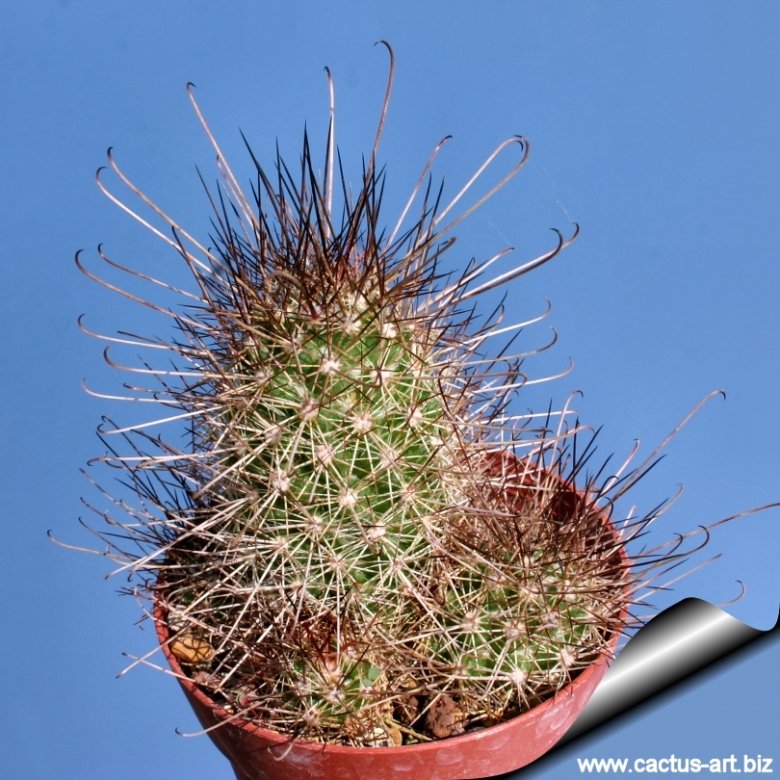
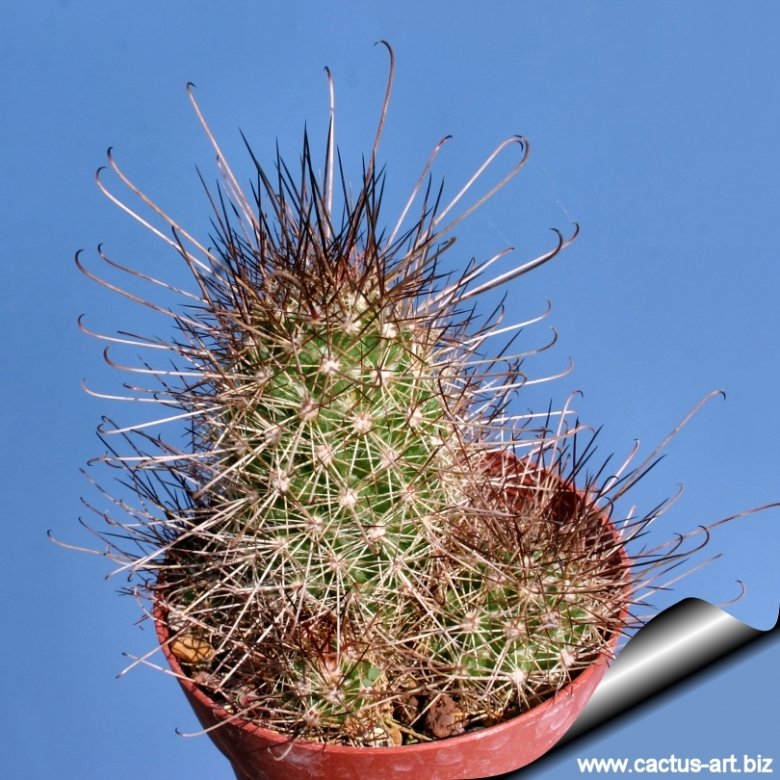
Cochemiea pondii subsp. maritima (syn: Mammillaria maritima) is a clumping cactus, irregularly forming clusters up to 1 m across (or more) with several stems, either ascending or prostrate.
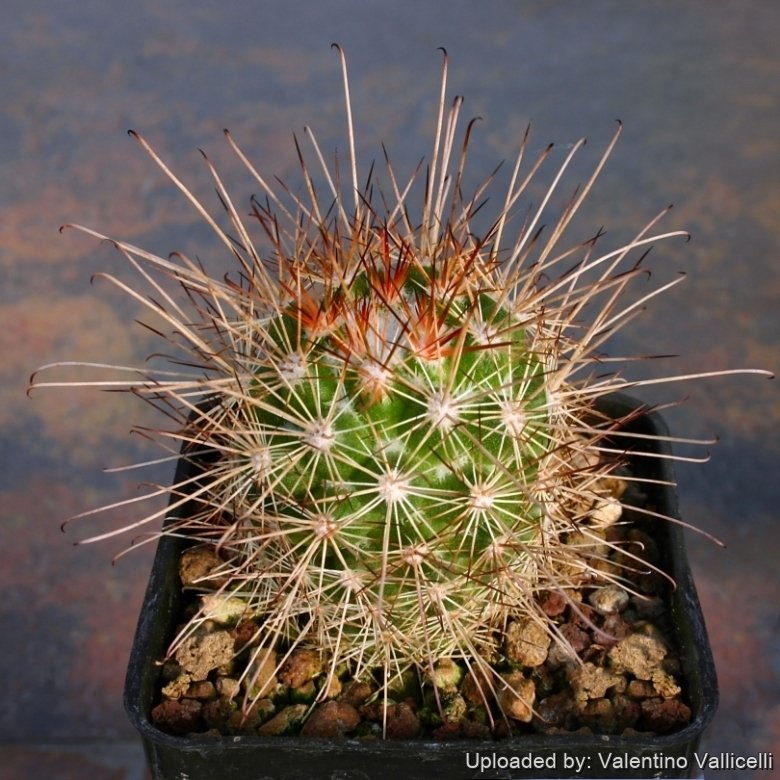
Stems: 20 to 50 cm long, 7 cm in diameter, cylindrical, narrow, eventually clumping near the base of the plant, somewhat jointed, initially erect then procumbent sometimes trailing and densely spiny. Glaucous-green then grey and corky in age but often reddish if grown in full light.
Tubercles: Conical or slightly flattened laterally, woolly when young.
Areoles: At first bearing grey wool then naked.
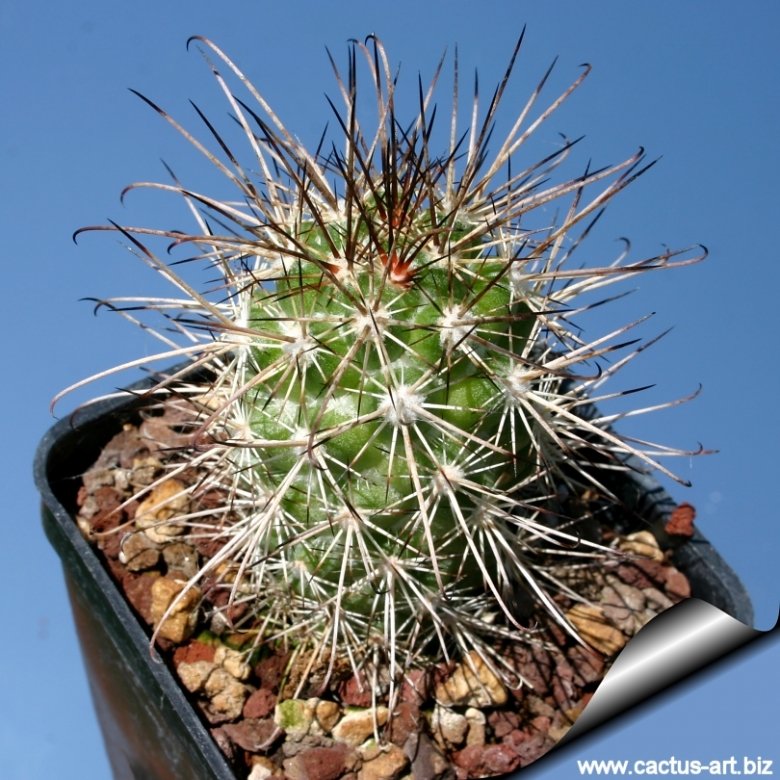
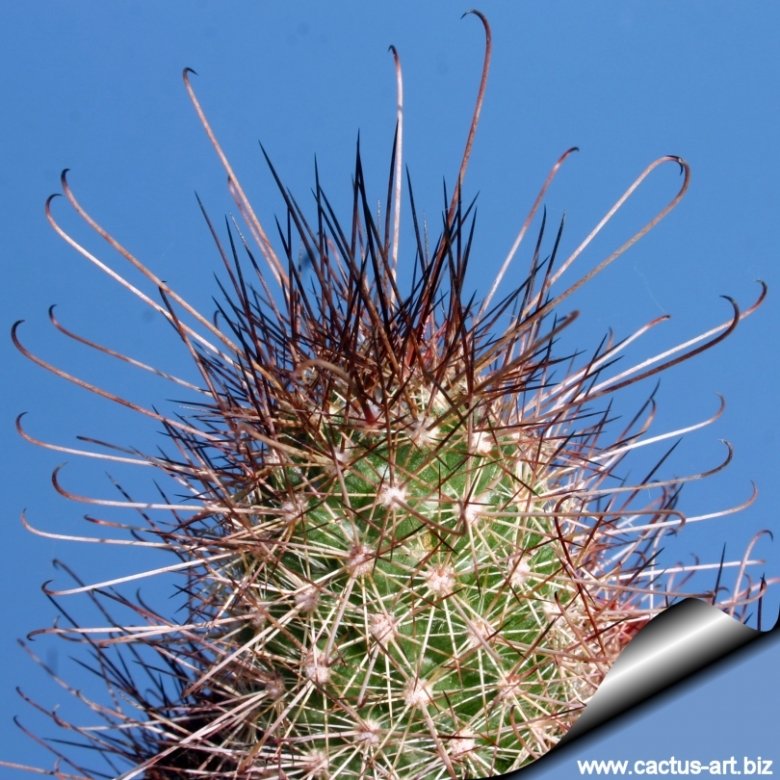
Radial spines: 10 to15, reddish brown, acicular up to 12 mm long.
Central spines: 4 reddish brown the upper three ascending, spreading, 1-2 cm long, straight. The lowermost stronger, longer and hooked 3 – 5 cm long.
Roots: Fibrous or moderately thickened.
Flowers: Produced near the plants tip from axils of tubercles , long, scarlet, 3-4 cm long, 2 cm wide. zygomorphic with a long hypanthium, segment flaring and tips reflexed, style as twice as corolla, stamens exerted half as far as style, filaments and anthers red.
Blooming season: March - April.
Fruits: Red, obovoid or globose.
Seeds: 0,5 mm long, black minutely pitted.
Remarks: Cochemiea pondii has thinner and more numerous hooked spines per areole while Cochemiea pondii subsp. maritima has usually only four of which one hooked central spine per areole.
Origin and Habitat
Mexico: endemic to Pacific coast of the peninsula Baja California (Approx from Punta blanca to punta rosalia, west of Punta prieta)
Habitat: Grows in non calcareous rocks on slopes and rocky marine cliffs.
Cultivation and Propagation
This plant isn’t famous for being easy to cultivate, but in good conditions with excellent ventilation, it grows without difficulty. It is especially sensitive to over-watering. So careful watering and an open mineral potting soil are a must. Avoid the use of peat or other humus sources in the potting mixture.
Don’t add limestone to the potting mix, which must be moderately acidic. Can be sensitive to frost. Requires maximum sun exposure to reach its full potential. and in order to achieve success in flowering.
A winter rest that allows the plant to shrivel will encourage flowering and long term survival. Be careful to encourage slow growth.
Propagation: Seeds or offsets.
Bibliography
Major references and further lectures
-
Pilbeam J., “The Cactus file, Mammillaria” 6: 120, Cirio Pub. Services, 01/Dec/1999
-
James Cullen, Sabina G. Knees, H. Suzanne Cubey “The European Garden Flora Flowering Plants: A Manual for the Identification of Plants Cultivated in Europe, Both Out-of-Doors and Under Glass” Cambridge University Press, 11/Aug/2011
-
David R Hunt; Nigel P Taylor; Graham Charles; International Cactaceae Systematics Group. “The New Cactus Lexicon” dh books, 2006
-
Edward Anderson “The Cactus family” Timber Press, Incorporated, 2001
-
N. L. Britton, J. N. Rose “The Cactaceae. Descriptions and Illustrations of Plants of the Cactus Family.” Volume 4, The Carnegie Institution of Washington, Washington 1923