Publication: Gard. Chron. 1927, Ser. III. lxxxi. 32.
Description
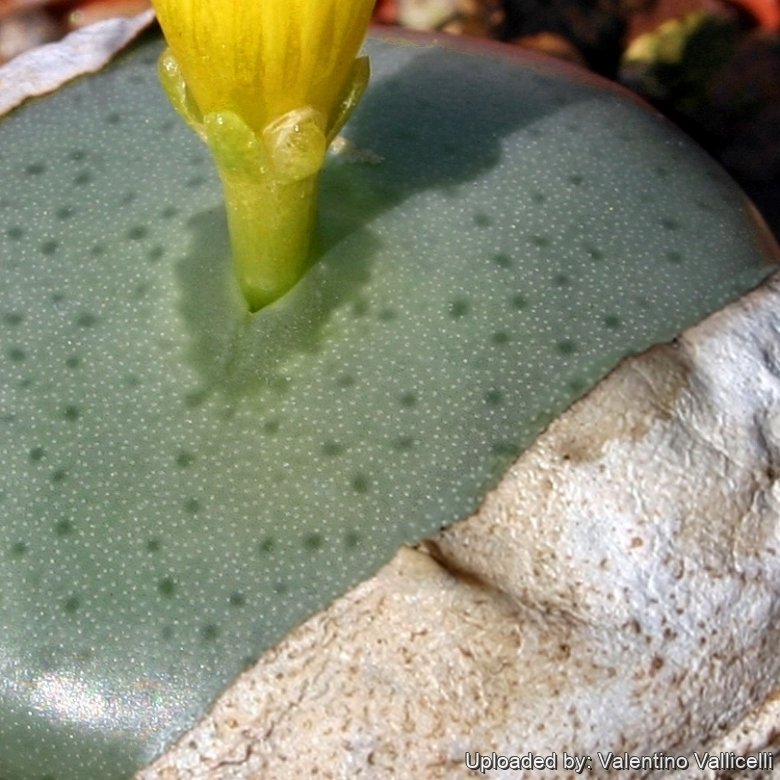
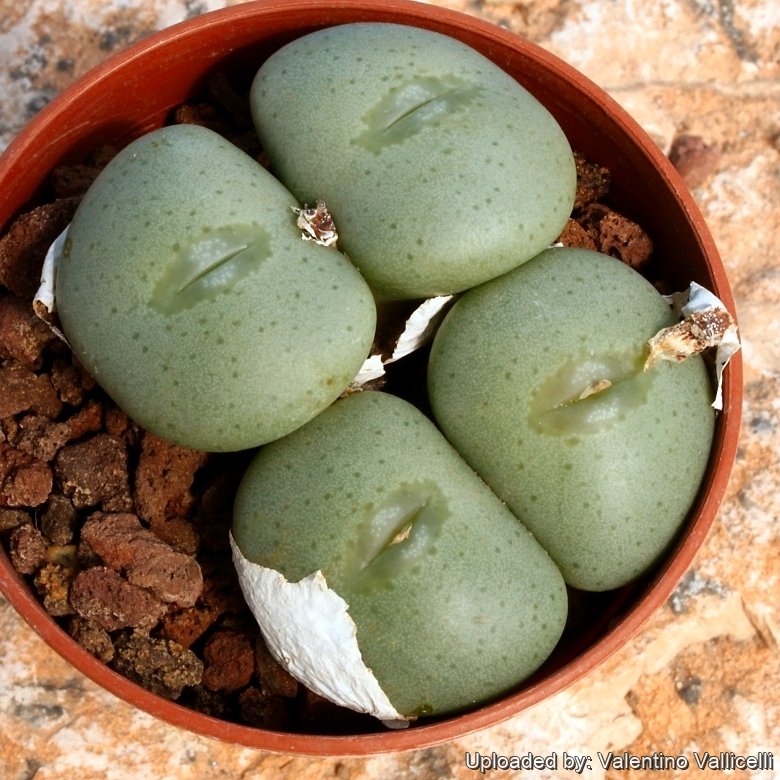
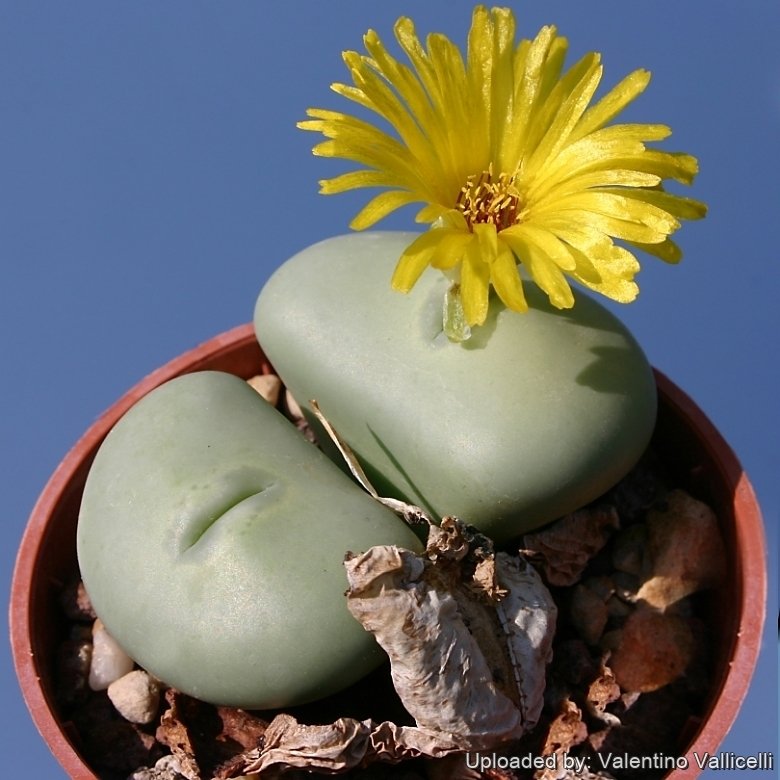
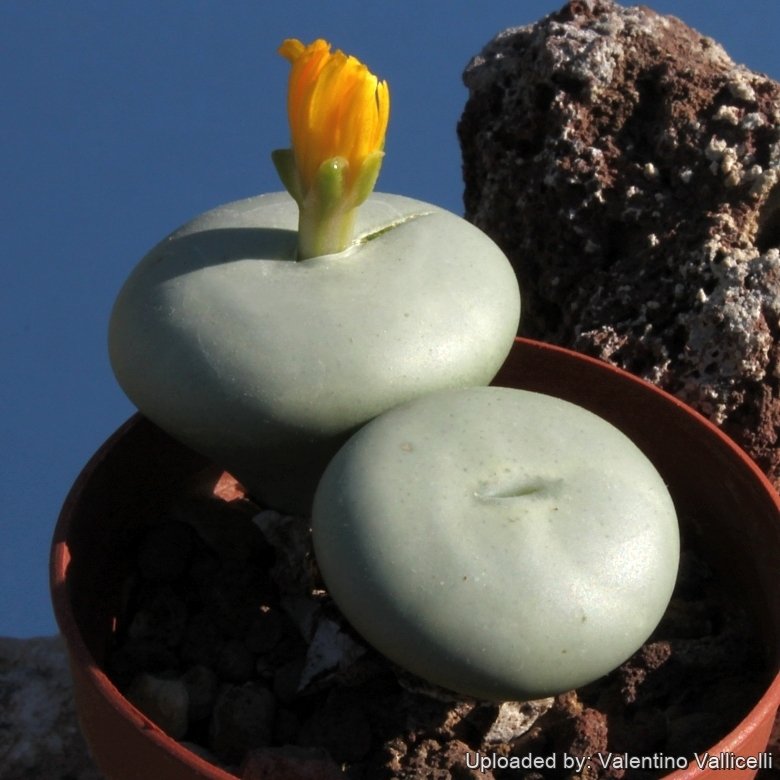
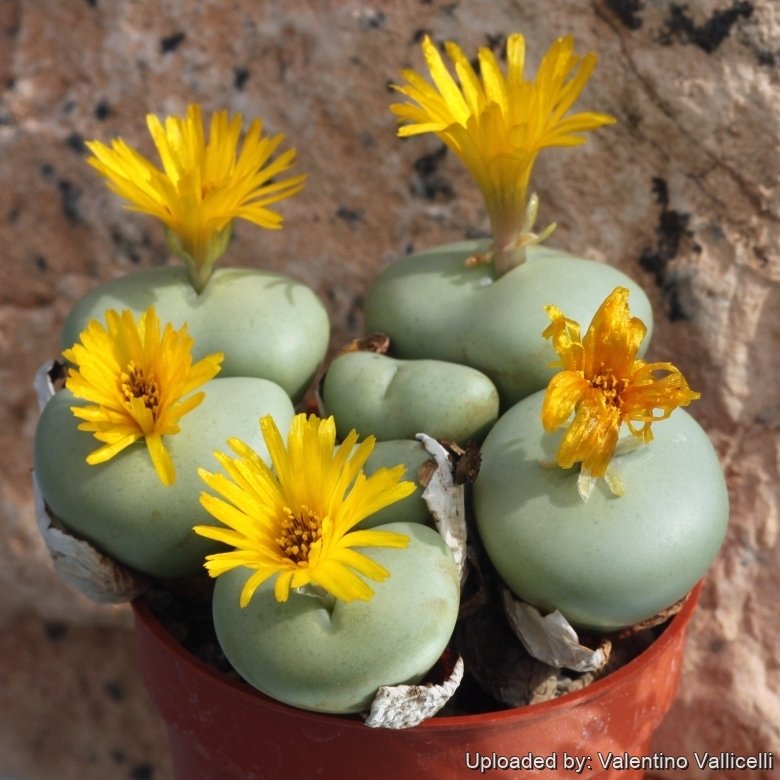
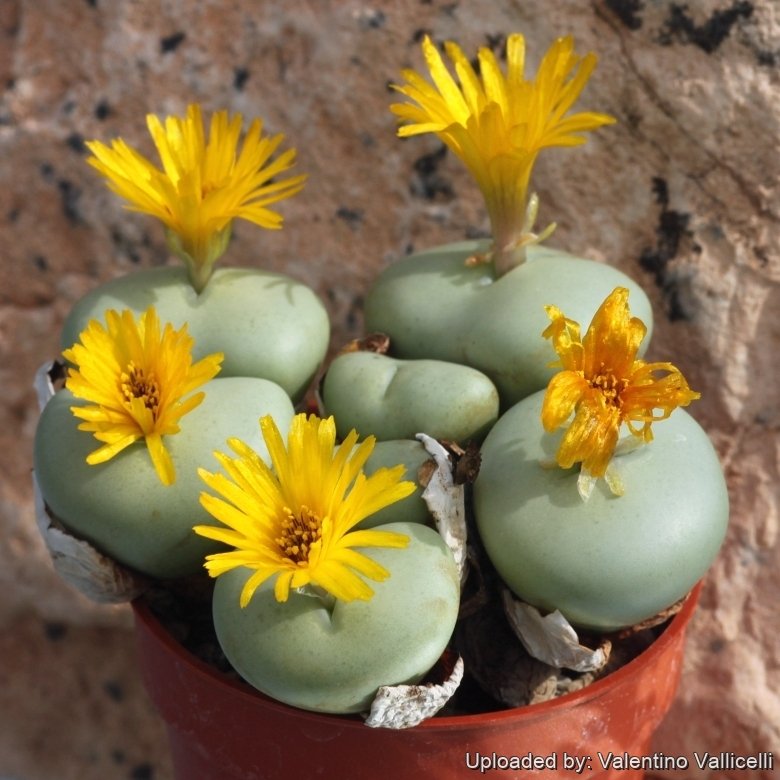
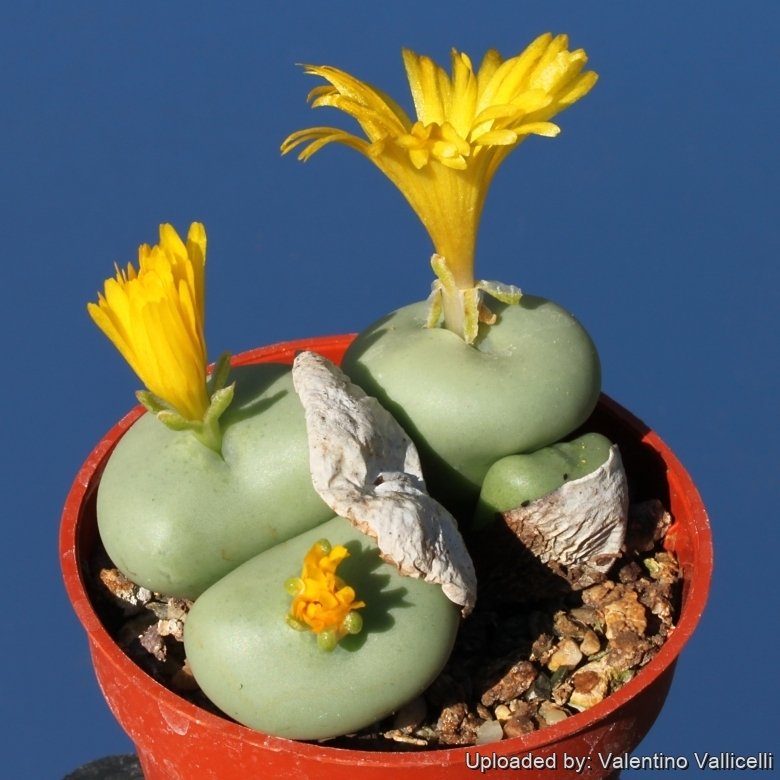
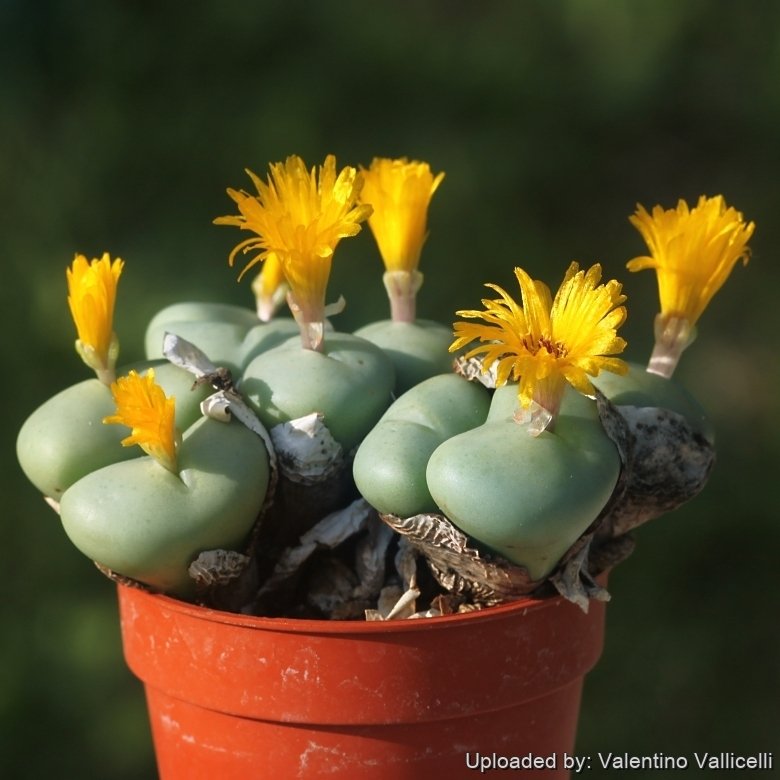
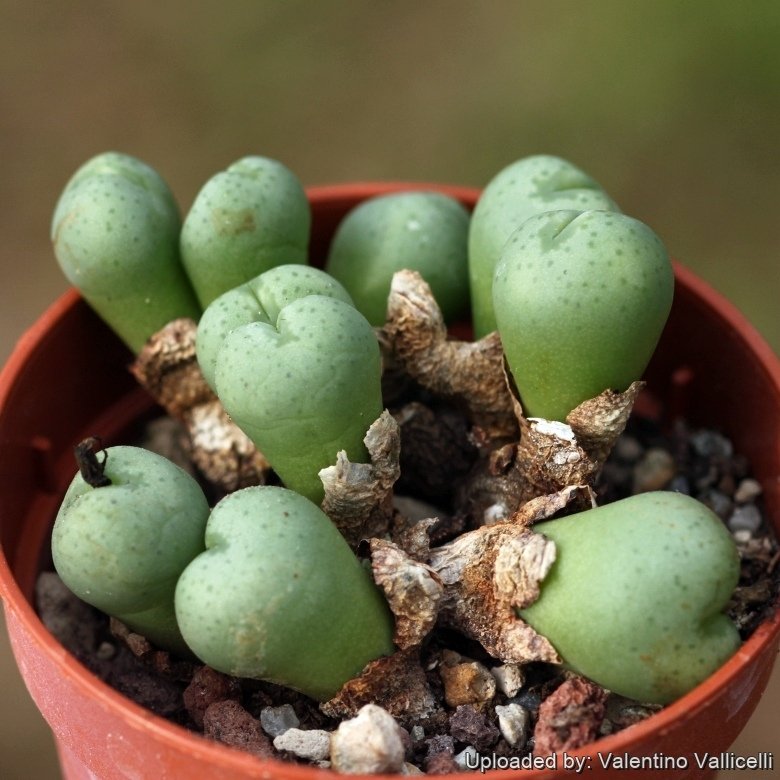
C. flavum is a tiny bluish green succulent plant with golden yellow flowers, these plants are variably caespitose, with single or double bodies, or forming dense mats or cushions. This species is often difficult to distinguish from Conophytum wettsteinii which is indeed a different diploid species with far smoother epidermis and violet blooms.
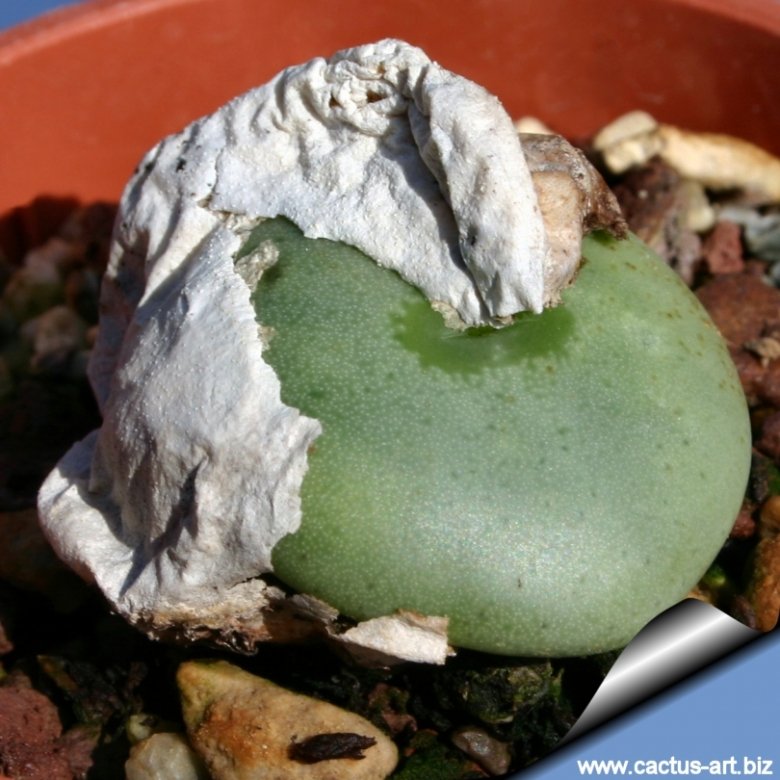
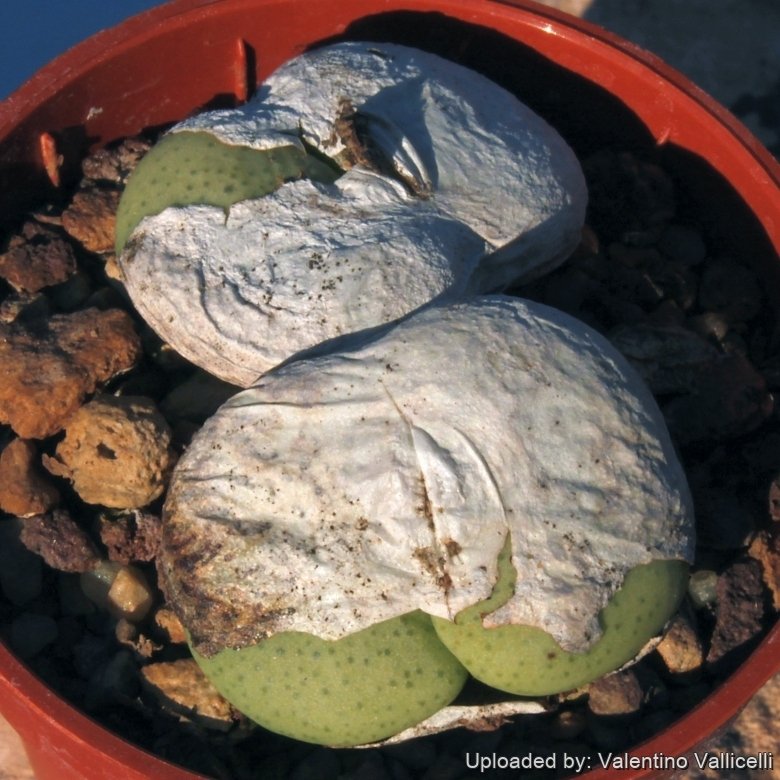
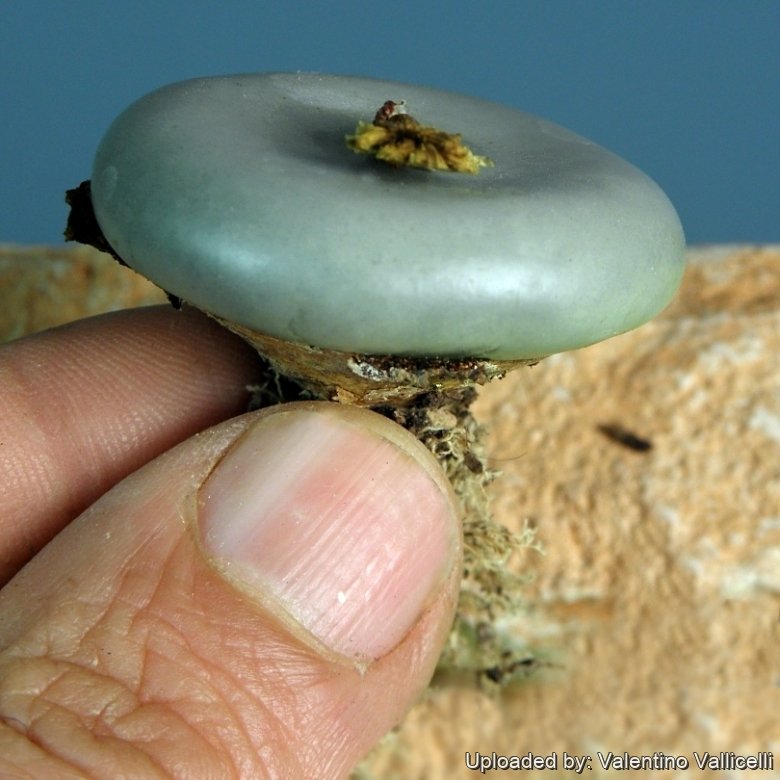
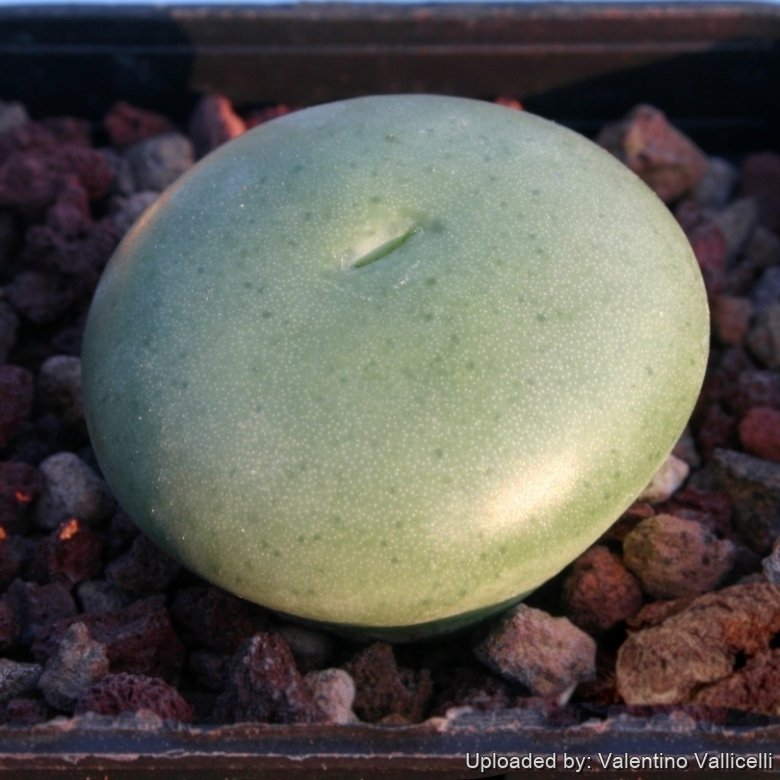
Bodies (paired leaves): Large, flat, obconic, circular or elliptic in outline viewed from above, usually larger than 15 mm and up to 3.5 cm in diameter truncate, slightly depressed or concave at top, surface smooth, glabrous, light grey-green, bluish-green or whitish-green with some (usually not very numerous) or without darker green spots scattered over the top. It has a small growing cleft that doesn’t reach right across the body. In spring the colour of the old leaves fades, and they shrivel to a thin dry sheath that protects next season’s growth during the summer resting phase.
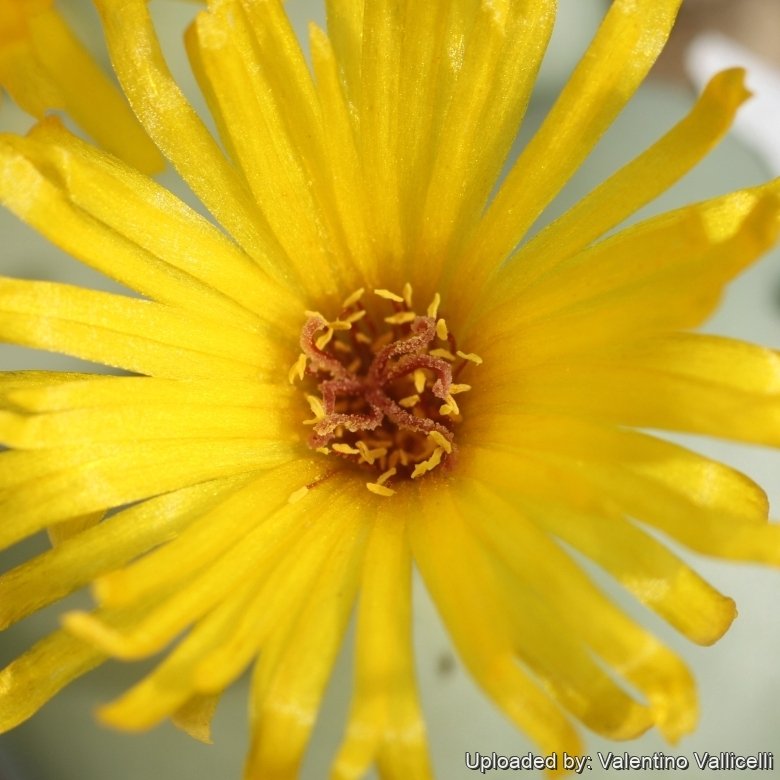
Flowers: Large, 20-25 mm in diameter, daisy-like, yellow pale yellowish and not scented. Petals about 55 in about 2 series, thin, forming an almost star-like, spidery structure. Tube about long as the entire calyx, stamens about as many as the petals, in 2-3 series, all collected together at the mouth of the corolla tube and more or less exserted from it; filaments yellow at the upper part; anthers of the same yellow as the petals. Style 4 mm long nearly as long the stamens, slender, with 4 minute stigmas at the top, yellowish at the upper part, greenish below.
Blooming season: The flowers open in the morning in bright sunshine, closing at the latter part of the afternoon. Blooms mostly August trough November.
Fruits: 4-7 locular. Smooth pale brown.
Origin and Habitat
Little Namaqualand, South Africa
Habitat: Grows on quartz, shale or granite outcrops, often in the crevices of the rock .
Cultivation and Propagation
C. flavum is easy to grow. These plants grow on winter rain and head for summer dormancy. More or less dormant in summer. The plant requires little water; otherwise its epidermis breaks (resulting in unsightly scars). Water throughout the year although minimally in summer, (only when the plant starts shrivelling), but it will generally grow even in summer if given water. Water regularly in winter after the previous year’s leaves have dried up. Requires good drainage. Keep cool and shaded from hot sun in mid-summer; it needs full sun or light shade in the other seasons. Hardy to -2°C. Ensure a very good ventilation. Avoid to repot frequently. This plant may stay in the same pot for many years. Plants grown in larger containers have frequently relatively poor flowers. It might improve when the plants are given their own, small individual pots.
Propagation: It can be reproduced both by cuttings and seeds. Take the cutting from a grown-up mother plant. Each cutting must contain one or more heads, along with a fraction of root.
Bibliography
Major references and further lectures
-
Gibbs Russell, G. E., W. G. Welman, E. Reitief, K. L. Immelman, G. Germishuizen, B. J. Pienaar, M. v. Wyk & A. Nicholas. 1987. “List of species of southern African plants.” in: Mem. Bot. Surv. S. Africa 2(1–2): 1–152(pt. 1), 1–270(pt. 2).
-
James Cullen, Sabina G. Knees, H. Suzanne Cubey “The European Garden Flora Flowering Plants: A Manual for the Identification of Plants Cultivated in Europe, Both Out-of-Doors” Cambridge University Press, 11/Aug./2011
-
Hammer, S. 1993. “The Genus Conophytum - A Conograph.” Succulent Plant Publications, Pretoria.
-
Hammer, S. 2002. “Dumpling and His Wife: New Views of the Genus Conophytum.” East Anglia Engraving Creative Colour Ltd, Norwich, England.
-
Ernst Van Jaarsveld, Ben-Erik Van Wyk, Gideon Smith “Succulents of South Africa: A Guide to the Regional Diversity” Tafelberg Publishers, Limited, 01/lug/2000
-
Heidrun E.K. Hartmann “Illustrated Handbook of Succulent Plants: Aizoaceae A-E” Springer, 2002
-
Werner Rauh “The Wonderful World of Succulents: Cultivation and Description of Selected Succulent Plants Other Than Cacti” Smithsonian Institution Press, 1984
-
Matlamela, P.F. & Kamundi, D.A. 2006. Conophytum flavum N.E.Br. subsp. flavum. National Assessment: “Red List of South African Plants” version 2013.1. Accessed on 2014/02/04
From llifle page Conophytum ornatum
Description
Is a tiny bluish green succulent plant with golden yellow flowers, these plants are variably caespitose, with single or double bodies, or forming dense mats or cushions.
Body (paired leaves): Large, flat, up to 2,5 cm in diameter truncate or concave at top, light grey-green, bluish-green or whitish-green with many green spots, with a small growing cleft that doesn’t reach right across the body. The colour of the old leaves fades, and they shrivel to a thin dry sheath that protects next season’s growth.
Flowers: Large, daisy-like, yellow. The thin petals form an almost star-like, spidery structure, they are very showy.
Blooming season: The flowers open in the morning in bright sunshine, closing at the latter part of the afternoon. Blooms mostly August trough November.
Origin and Habitat
Little Namaqualand, South Africa
Habitat: Grows almost hidden in the soil on quartzite ridges in cracks, often mixed with Crassula elegans.
Cultivation and Propagation
C. ornatum is easy to grow. These plants grow on winter rain and head for summer dormancy. More or less dormant in summer. The plant requires little water; otherwise its epidermis breaks (resulting in unsightly scars). Water throughout the year although minimally in summer, (only when the plant starts shrivelling), but it will generally grow even in summer if given water. Water regularly in winter after the previous year’s leaves have dried up. Requires good drainage. Keep cool and shaded from hot sun in mid-summer; it needs full sun or light shade in the other seasons. Hardy to -2°C. Ensure a very good ventilation. Avoid to repot frequently. This plant may stay in the same pot for many years. Plants grown in larger containers have frequently relatively poor flowers. It might improve when the plants are given their own, small individual pots.
Propagation: It can be reproduced both by cuttings and seeds. Take the cutting from a grown-up mother plant. Each cutting must contain one or more heads, along with a fraction of root.
Source: Conophytum ornatum, LLIFLE - Encyclopedia of living forms, CC-BY-SA, retrieved 2026-10-25.
From llifle page Conophytum tetracarpum
Description
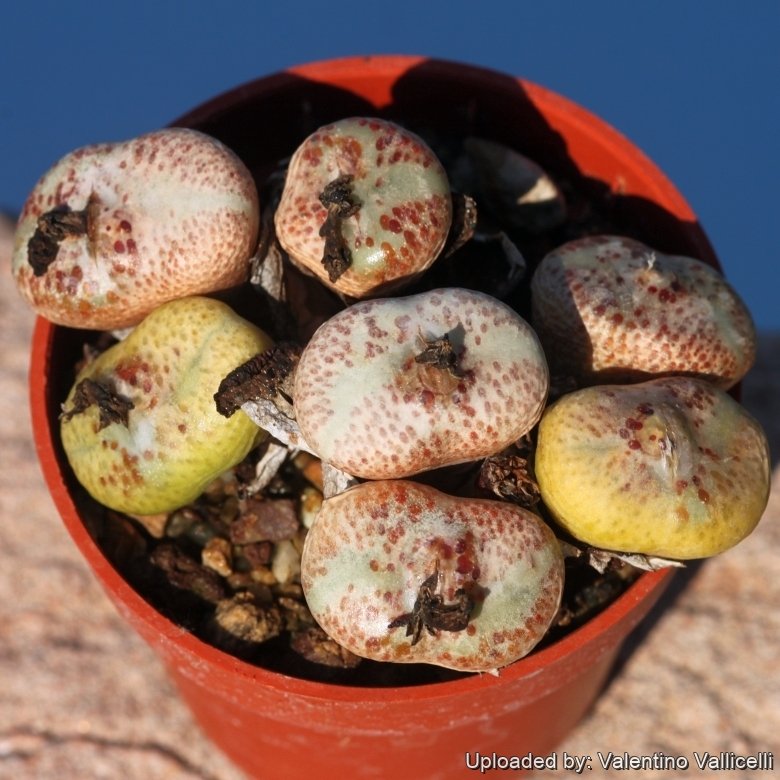
Conophytum tetracarpum named for its mostly 4-locular capsules (from the Greek words tetra meaning “four” and Karpos “fruit”) is a local form of Conophytum flavum and occurs only a mile further north. It is distinguished by small convex bodies, pale-skinned with bold spots, and the two plants are not readily distinguishable, if not for the geographical provenance.
Habit: It is a tiny variably caespitose succulent, with single or double bodies, or forming dense mats or cushions.
Bodies (paired leaves): Large, flat, obconic, circular or elliptic in outline viewed from above, usually larger than 15 mm and up to 3.5 cm in diameter truncate, slightly depressed or concave at top, surface smooth, glabrous, light grey-green, bluish-green or whitish-green with some darker green spots scattered over the top. It has a small growing cleft that doesn’t reach right across the body. In spring the colour of the old leaves fades, and they shrivel to a thin dry sheath that protects next season’s growth during the summer resting phase.
Flowers: Large, 20-25 mm in diameter, daisy-like, yellow pale yellowish and not scented.
Blooming season: The flowers open in the morning in bright sunshine, closing at the latter part of the afternoon. Blooms mostly August trough November.
Fruits (capsules): Mostly 4-locular. Smooth pale brown.
Note: Conophytum flavum is a variable species comprising many morphological and geographical variant that was early classified as different independent species. Nowadays all this plant are considered part of a multiform species, where each form is linked to others by populations of plants with intermediate characteristics.
Origin and Habitat
North of side of Kinderle, south of Springbok (‘Richtersveld’), Province of Little Namaqualand, Northern Cape, South Africa.
Habitat: Conophytum tetracarpum are winter grower succulents that grow in the form of rounded stones and hide themselves among the rocks on quartz hill.
Cultivation and Propagation
Conophytum tetracarpum = Conophytum flavum is easy to grow. These plants grow on winter rain and head for summer dormancy. More or less dormant in summer. The plant requires little water; otherwise its epidermis breaks (resulting in unsightly scars). Water throughout the year although minimally in summer, (only when the plant starts shrivelling), but it will generally grow even in summer if given water. Water regularly in winter after the previous year’s leaves have dried up. Requires good drainage. Keep cool and shaded from hot sun in mid-summer; it needs full sun or light shade in the other seasons. Hardy to -2°C. Ensure a very good ventilation. Avoid to repot frequently. This plant may stay in the same pot for many years. Plants grown in larger containers have frequently relatively poor flowers. It might improve when the plants are given their own, small individual pots.
Propagation: It can be reproduced both by cuttings and seeds. Take the cutting from a grown-up mother plant. Each cutting must contain one or more heads, along with a fraction of root.
Bibliography
Major references and further lectures
-
Gibbs Russell, G. E., W. G. Welman, E. Reitief, K. L. Immelman, G. Germishuizen, B. J. Pienaar, M. v. Wyk & A. Nicholas. 1987. “List of species of southern African plants.” in: Mem. Bot. Surv. S. Africa 2(1–2): 1–152(pt. 1), 1–270(pt. 2).
-
James Cullen, Sabina G. Knees, H. Suzanne Cubey “The European Garden Flora Flowering Plants: A Manual for the Identification of Plants Cultivated in Europe, Both Out-of-Doors” Cambridge University Press, 11/Aug./2011
-
Hammer, S. 1993. “The Genus Conophytum - A Conograph.” Succulent Plant Publications, Pretoria.
-
Hammer, S. 2002. “Dumpling and His Wife: New Views of the Genus Conophytum.” East Anglia Engraving Creative Colour Ltd, Norwich, England.
-
Ernst Van Jaarsveld, Ben-Erik Van Wyk, Gideon Smith “Succulents of South Africa: A Guide to the Regional Diversity” Tafelberg Publishers, Limited, 01/lug/2000
-
Heidrun E.K. Hartmann “Illustrated Handbook of Succulent Plants: Aizoaceae A-E” Springer, 2002
-
Werner Rauh “The Wonderful World of Succulents: Cultivation and Description of Selected Succulent Plants Other Than Cacti” Smithsonian Institution Press, 1984
-
Matlamela, P.F. & Kamundi, D.A. 2006. Conophytum flavum N.E.Br. subsp. flavum. National Assessment: “Red List of South African Plants” version 2013.1. Accessed on 2014/02/04
-
African Succulent Plant Society “The Bulletin of the African Succulent Plant Society”, Volumes 7-8 African Succulent Plant Society., 1972
Source: Conophytum tetracarpum, LLIFLE - Encyclopedia of living forms, CC-BY-SA, retrieved 2026-10-25.
Cultivars and forms (1)
Subspecies (1)
Gallery