Publication: Gen. Conophytum 245 1993
Description
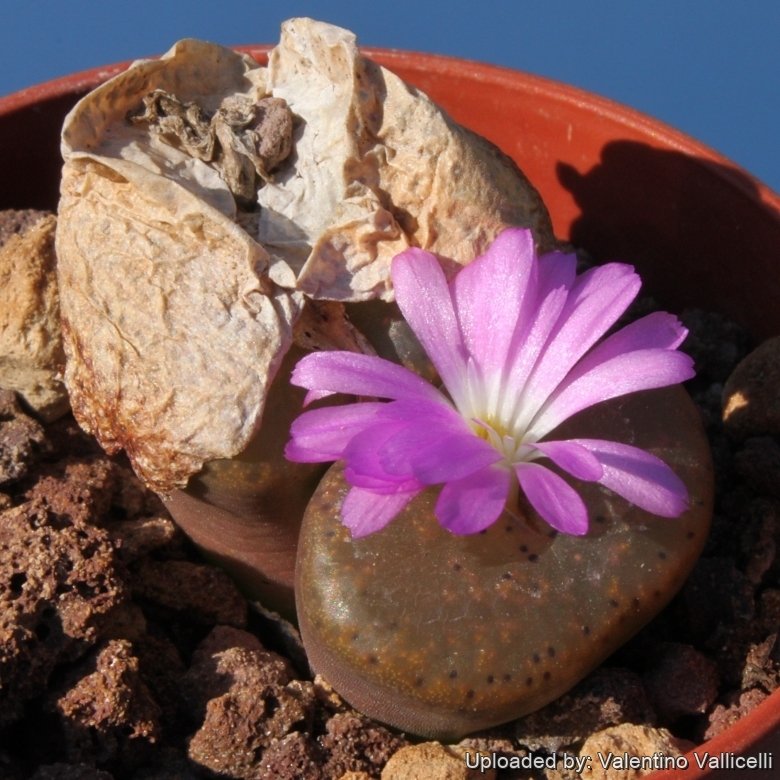
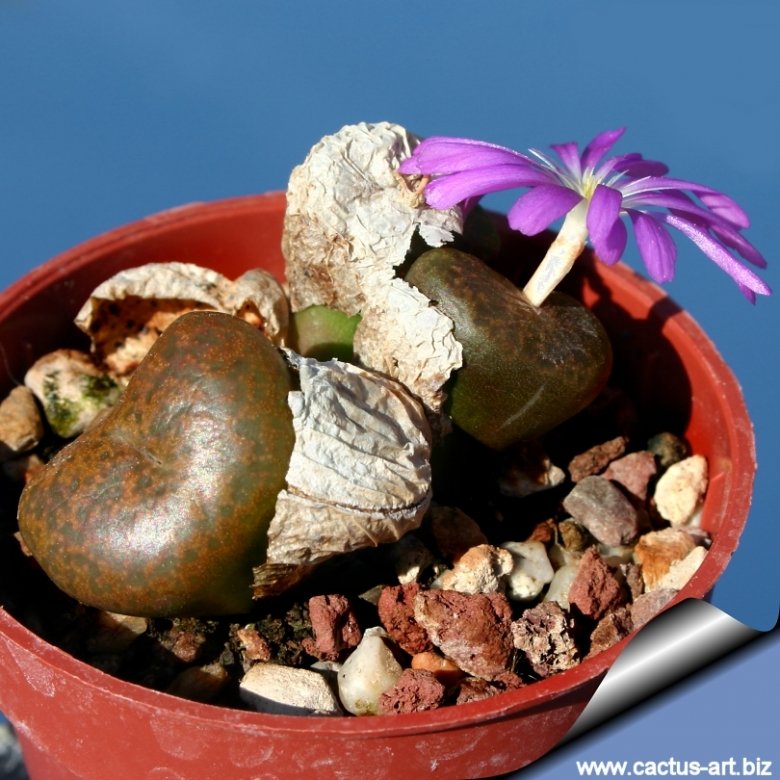
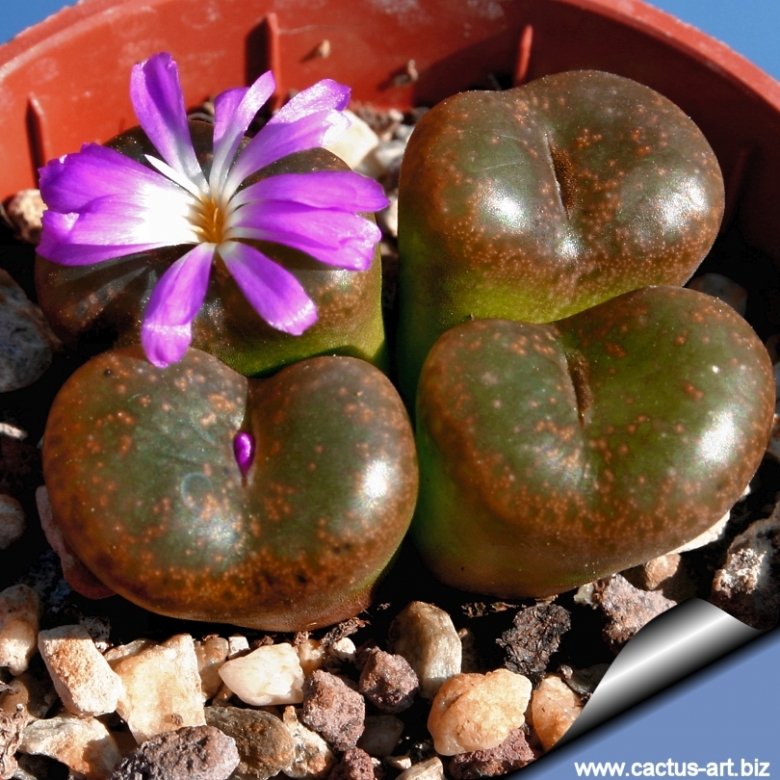
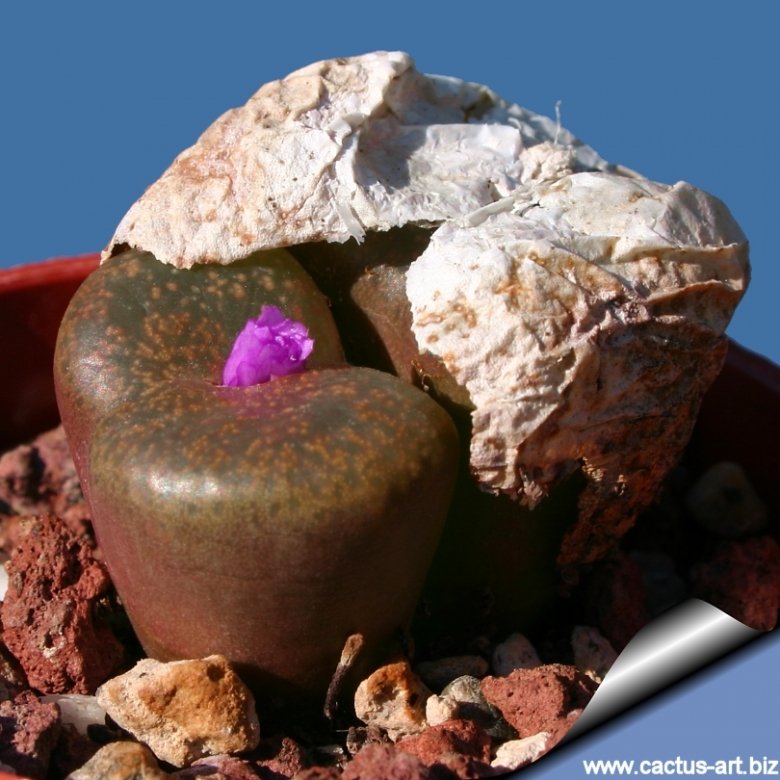
Succulent rusty-red bodies similar to dwarf Lithops with exquisite markings, these plants are variably caespitose, with single or double bodies, or forming small mats or cushions.
Bodies (paired leaves): 10-30 mm in diameter and up to 12 mm tall. Circular with truncate apex, rusty brown, chocolate brown, ochre or yellowish-green, eventually with pale lines with a small growing cleft that doesn’t reach right across the body. Border often paler, window large.
Flowers: Bright pink-violet a with a white centre. The thin petals form an almost star-like, spidery structure, they are very showy.
Blooming season: Autumn.
Origin and Habitat
South Africa.
Type locality: Kouberg.
Habitat: Grows on brown quartz.
Cultivation and Propagation
C. koubergense is relatively easy to grow. These plants grow on winter rain and head for summer dormancy. More or less dormant in summer. The plant requires little water; otherwise its epidermis breaks (resulting in unsightly scars). Water throughout the year although minimally in summer, (only when the plant starts shrivelling), but it will generally grow even in summer if given water. Water regularly in winter after the previous year’s leaves have dried up. Requires good drainage. Keep cool and shaded from hot sun in mid-summer; it needs full sun or light shade in the other seasons. Hardy to -2°C. Ensure a very good ventilation. Avoid to repot frequently. This plant may stay in the same pot for many years. Plants grown in larger containers have frequently relatively poor flowers. It might improve when the plants are given their own, small individual pots.
Propagation: It can be reproduced both by cuttings and seeds. Take the cutting from a grown-up mother plant. Each cutting must contain one or more heads, along with a fraction of root.
Gallery