Publication: Gard. Chron. 3, 87: 516 1930
Description
It is a soil-embedded, subterranean species with windowed leaves that usually has only one body or rarely forms small group with few heads.
Stem: Stemless(internodes invisible).
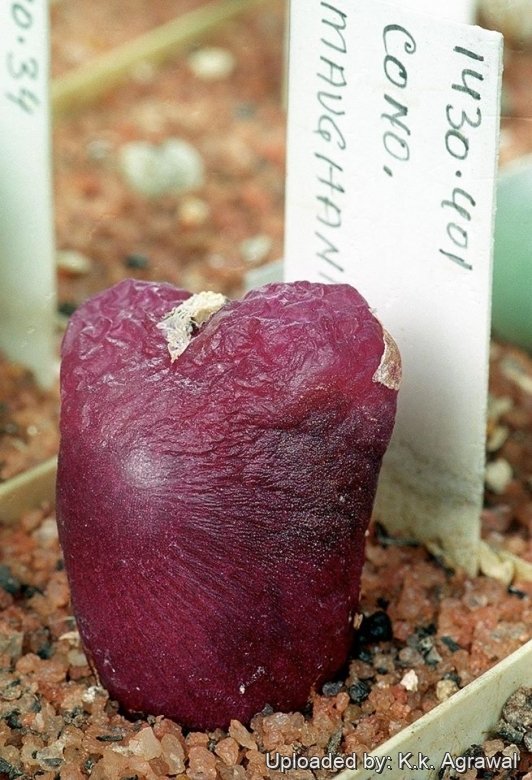
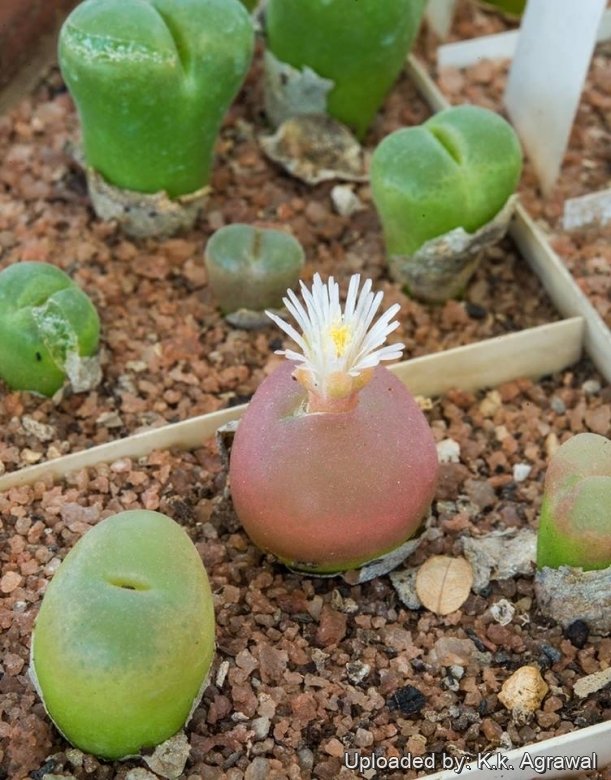
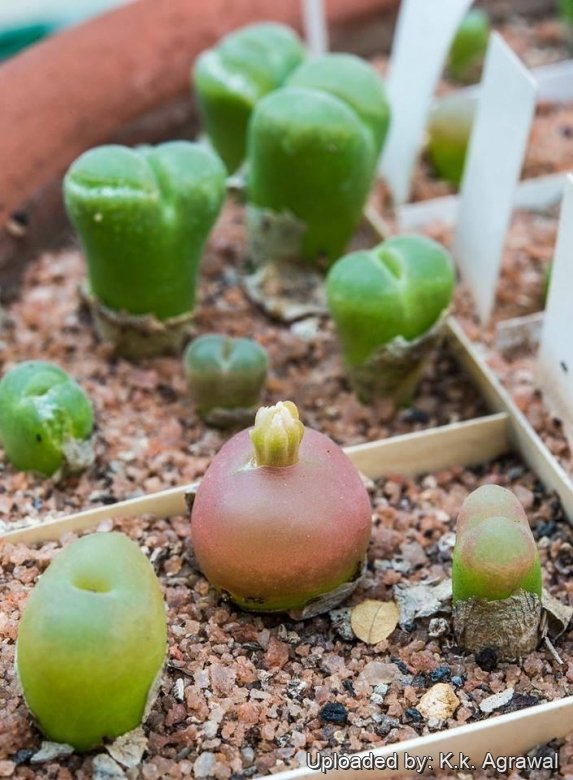
Body (paired leaves): Very fat, soft, jelly-like about 20 mm wide and 10-15 mm tall, broader than tall, compressed cylindrical, seen from the side oblong or squarely shaped of a yellowish-green to pale orange colour with very pale, yellowish-green windows turning purple-red in the summer. In the spring, the skin begins to thin and loses colour, until finally, when the hot, dry days of summer arrive they go dormant they seemingly retreat into a dry, papery cocoon spun from their own skins. In Africa, these shield allow them to endure harsh summer conditions until the autumn growing season when they bloom again. The leaves are almost completely fused along their centre. Each leaf pair (together referred to as a body) is “bilobbed”, each stem has only one pair of leaves at a time. A plant may have one to several leaf pairs.
Flowers: Nocturnal, strongly-scented, pink to white broad-petalled.
Fruit: The fruit is a capsule.
Origin and Habitat
Northern cape, south africa. Altitude 950 - 1200 m.
Cultivation and Propagation
They are relatively difficult to grow. These plants grow on winter rain and head for summer dormancy. The growing season in northern hemisphere is from September to March. During this period they present their red flowers and can be lightly watered about once a week or (better) misted every day and will become plump. In Africa, the mist from morning fog provides moisture. Otherwise their epidermis breaks (resulting in unsightly scars). Water minimally in summer, (only occasional misting). Start watering again in autum after the previous year’s leaves have dried up. Require good drainage. They enjoy full sun or half-shade and in summer they need to be kept in a cool area. Hardy to -2°C. Ensure a very good ventilation. Avoid to repot frequently. They may stay in the same pot for many years. Plants grown in larger containers have frequently relatively poor flowers. They might improve when the plants are given their own, small individual pots.
Propagation: They can be reproduced by seeds.