Publication: Gartenwelt 33: 68 1929
Description
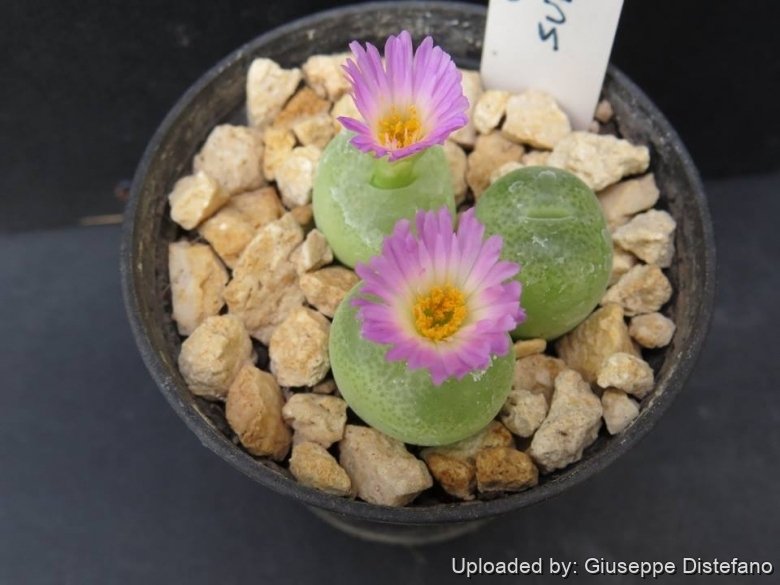
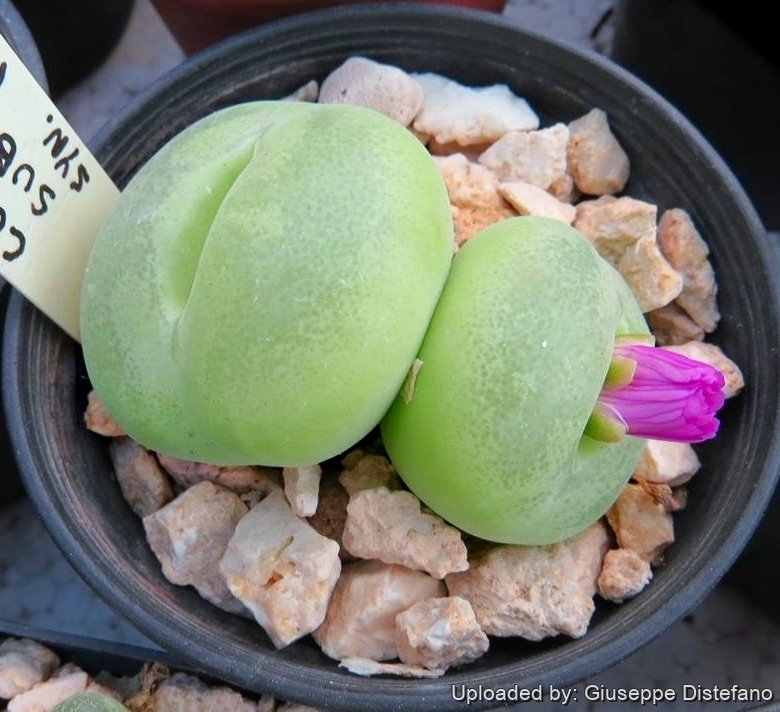
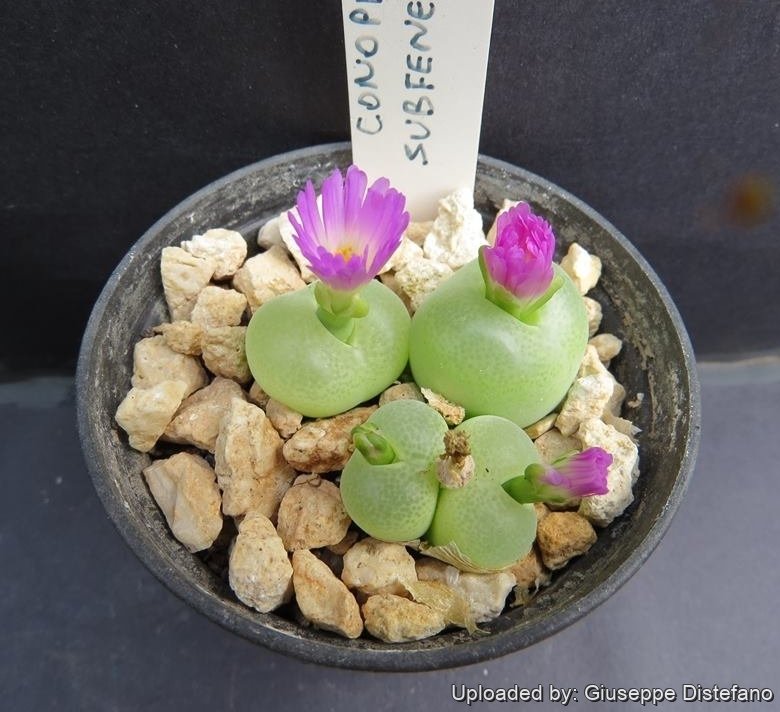
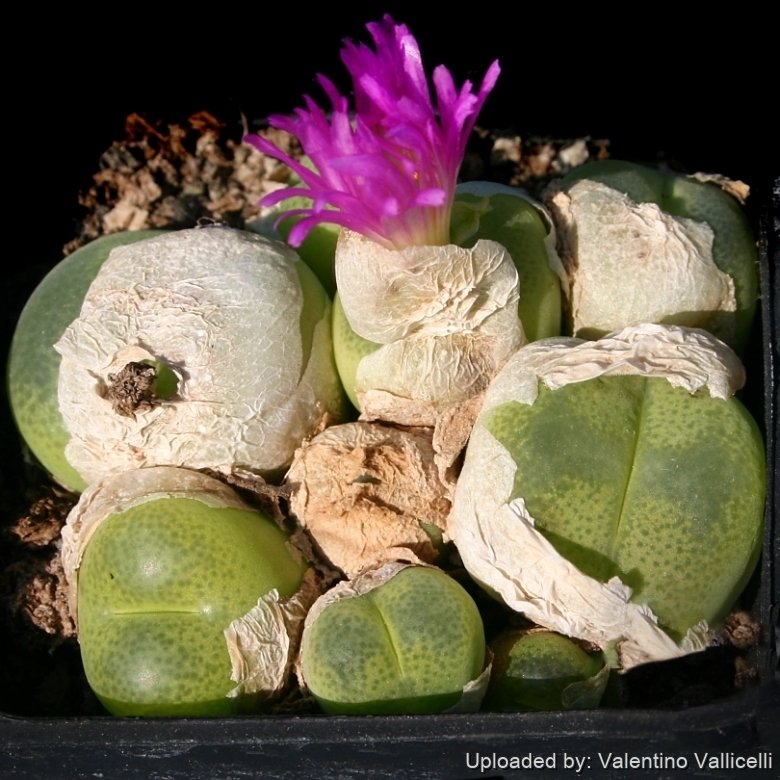
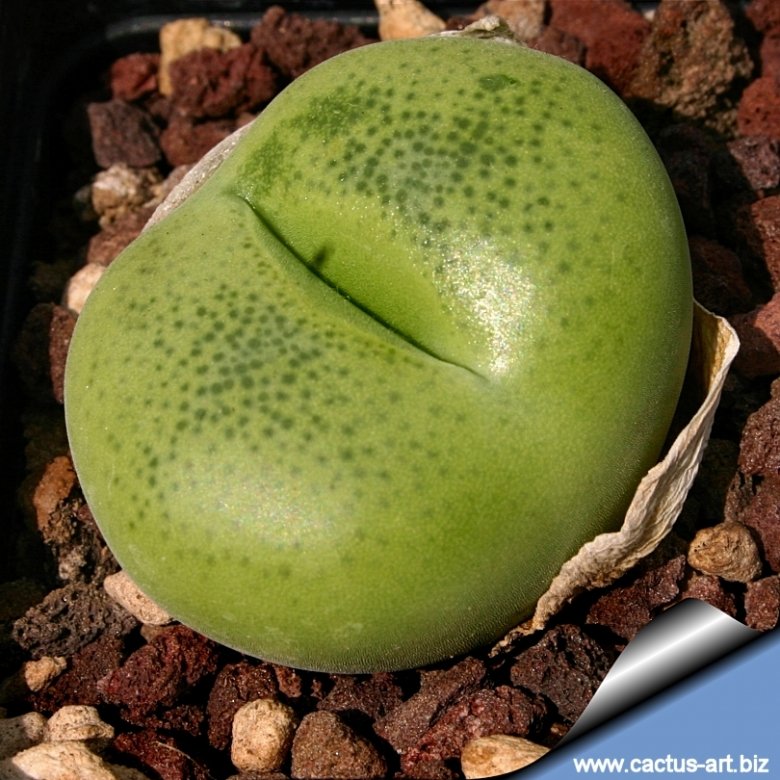
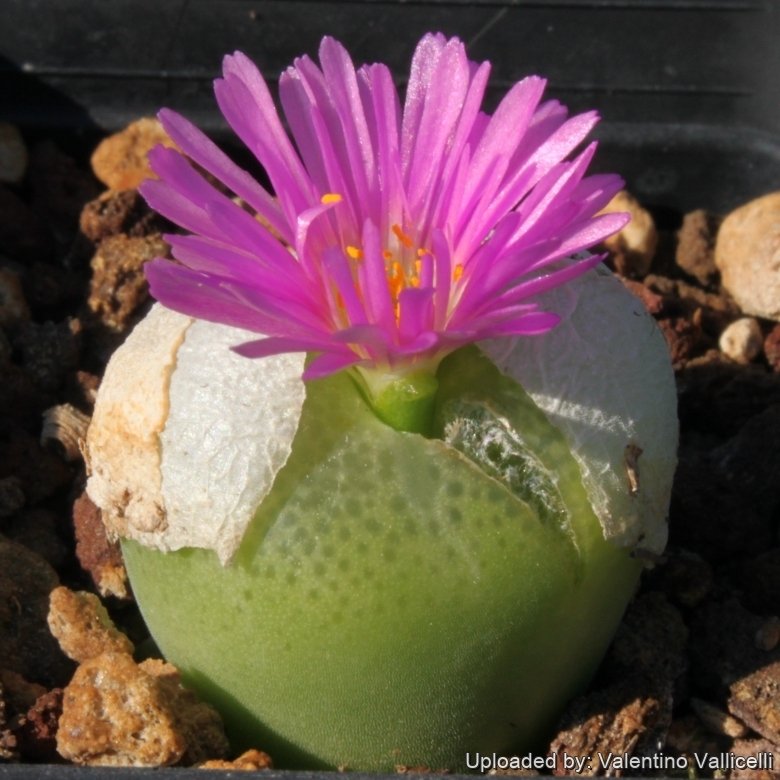
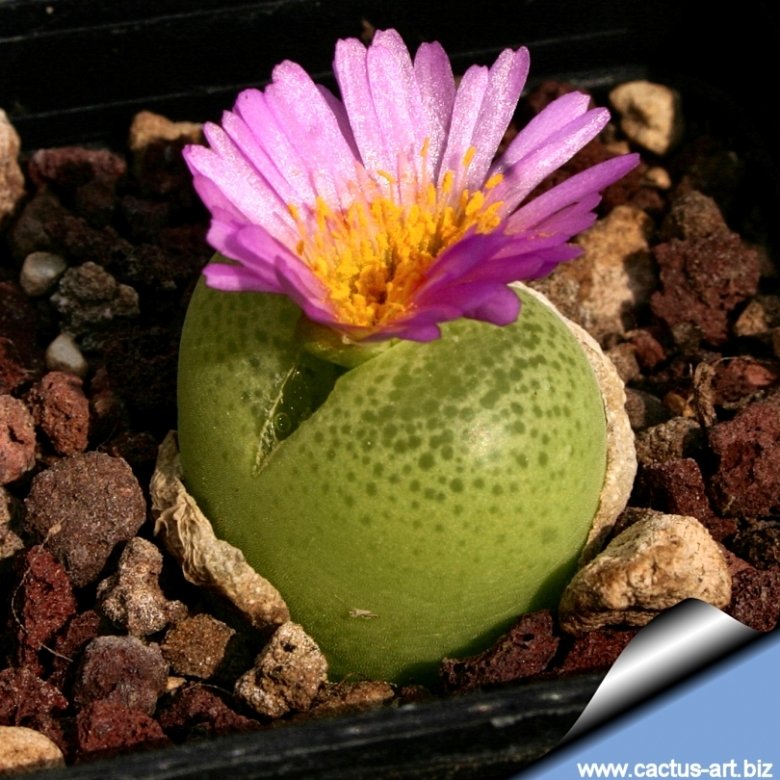
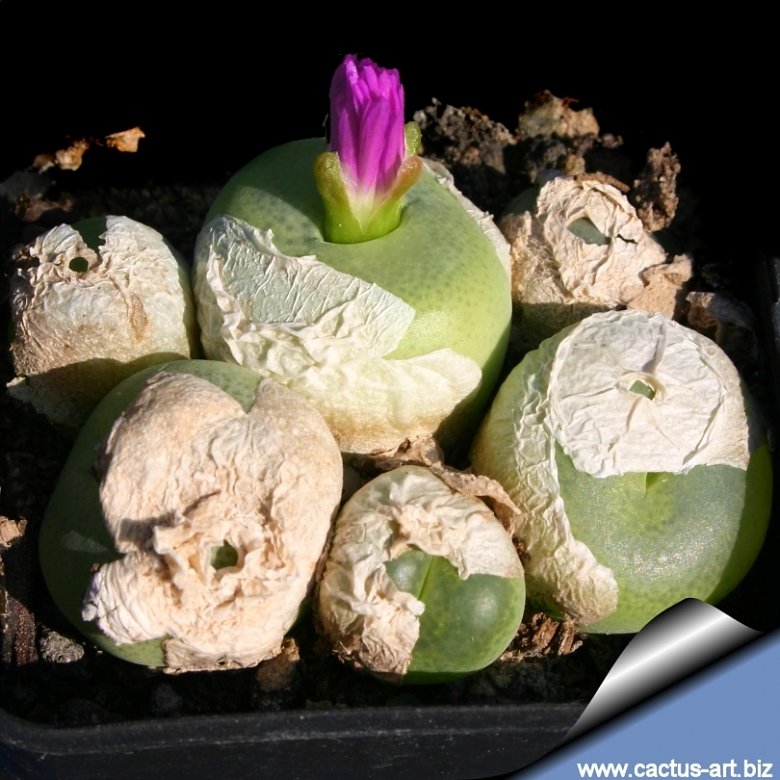
Conophytum subfenestratum are commonly solitary in the wild but will build small clusters in cultivation, with the general appearance of a lithops. The green to olive-brown plant body grows sunken into the ground, with only the flat top exposed. It produces pretty pink flowers with yellow centre.
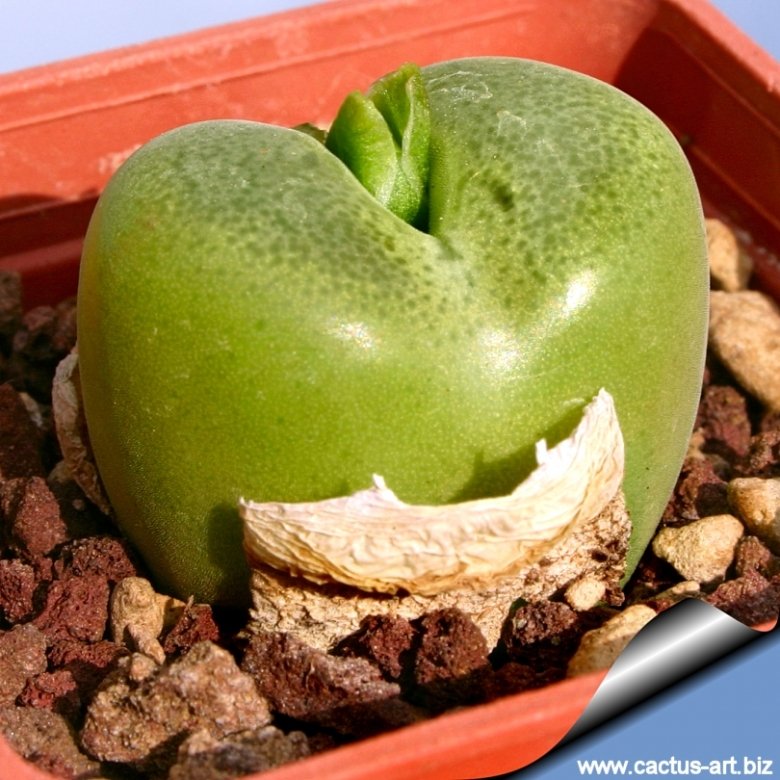
Body (leaves): Bodies soft, up to 2.5 cm in diameter and tall somewhat globose or nearly flat-topped, pale green, translucent, with many green spots, with a growing cleft that doesn’t reach right across the body.
Flowers: Usually scented, large, daisy-like, purplish red, pink or, rarely, white, they are very showy.
Blooming season: Blooms mostly late summer to autumn (Aug-Nov. In Europe)
Origin and Habitat
Plants are found from the Knersvlakte to Kliprand (north of the town Vanrhynsdorp) in Namaqualand, Western Cape , South Africa.
Habitat and ecology: Conophytum subfenestratum occurs over much of the Knersvlakte but is very cryptic because the bodies are buried in quartz pebbles. It is more obvious in the autumn when flowers appear. Many conophytum species are in serious decline but somehow this one is thriving and many young seedlings can be found.
Cultivation and Propagation
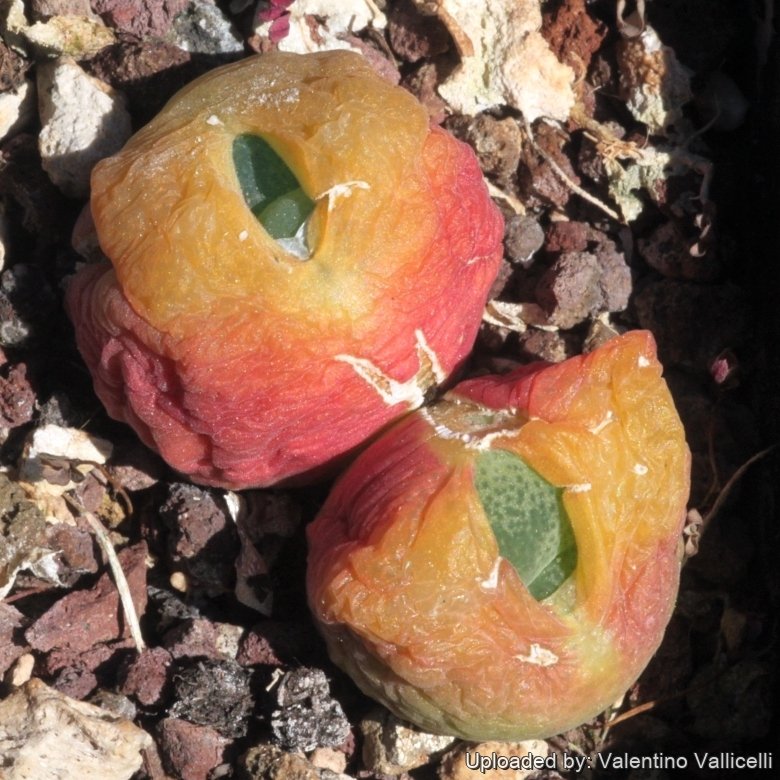
Conophytum subfenestratum is easy to grow. These plants grow on winter rain and head for summer dormancy. More or less dormant in summer. The plant requires little water; otherwise its epidermis breaks (resulting in unsightly scars). Water throughout the year although minimally in summer, (only when the plant starts shrivelling), but it will generally grow even in summer if given water. Water regularly in winter after the previous year’s leaves have dried up. Requires good drainage. Keep cool and shaded from hot sun in mid-summer; it needs full sun or light shade in the other seasons. Hardy to -2°C. Ensure a very good ventilation. Avoid to repot frequently. This plant may stay in the same pot for many years. Plants grown in larger containers have frequently relatively poor flowers. It might improve when the plants are given their own, small individual pots.
Propagation: It can be reproduced both by cuttings and seeds. Take the cutting from a grown-up mother plant. Each cutting must contain one or more heads, along with a fraction of root.
Bibliography
Major references and further lectures
-
Hermann Jacobsen “Lexicon of Succulent Plants” Littlehampton Book Services Ltd. 1974
-
Nicholas Edward Brown, A. Tischer, M. C. Karsten “Mesembryanthema; Descriptions: With Chapters on Cultivation and General Ecology” L. Reeve, 1931
-
Gordon D. Rowley “The illustrated encyclopedia of succulents” Crown Publishers, 01/Aug/1978
-
James Cullen, Sabina G. Knees, H. Suzanne Cubey “The European Garden Flora Flowering Plants: A Manual for the Identification of Plants Cultivated in Europe, Both Out-of-Doors” Cambridge University Press, 11/Aug./2011
-
Hammer, S. 1993. “The Genus Conophytum - A Conograph.” Succulent Plant Publications, Pretoria.
-
Hammer, S. 2002. “Dumpling and His Wife: New Views of the Genus Conophytum.” East Anglia Engraving Creative Colour Ltd, Norwich, England.
-
Ernst Van Jaarsveld, Ben-Erik Van Wyk, Gideon Smith “Succulents of South Africa: A Guide to the Regional Diversity” Tafelberg Publishers, Limited, 01/lug/2000
-
Heidrun E.K. Hartmann “Illustrated Handbook of Succulent Plants: Aizoaceae A-E” Springer, 2002
-
Werner Rauh “The Wonderful World of Succulents: Cultivation and Description of Selected Succulent Plants Other Than Cacti” Smithsonian Institution Press, 1984
From llifle page Conophytum pillansii
Description
C. pillansii is one of the larger species, it stays single or (usually) clusters to form large cushion (Groundcover)
Body (leaves): Bodies soft, up to 2.5 cm in diameter and tall somewhat globose or nearly flat-topped, pale green, translucent, with many green spots, with a growing cleft that doesn’t reach right across the body.
Flowers: Usually scented, large, daisy-like, purplish red, pink or, rarely, white, they are very showy.
Blooming season: Blooms mostly Aug-Nov.
Origin and Habitat
Knersvlakte - Namaqualand.
Cultivation and Propagation
C. pillansii is easy to grow. These plants grow on winter rain and head for summer dormancy. More or less dormant in summer. The plant requires little water; otherwise its epidermis breaks (resulting in unsightly scars). Water throughout the year although minimally in summer, (only when the plant starts shrivelling), but it will generally grow even in summer if given water. Water regularly in winter after the previous year’s leaves have dried up. Requires good drainage. Keep cool and shaded from hot sun in mid-summer; it needs full sun or light shade in the other seasons. Hardy to -2°C. Ensure a very good ventilation. Avoid to repot frequently. This plant may stay in the same pot for many years. Plants grown in larger containers have frequently relatively poor flowers. It might improve when the plants are given their own, small individual pots.
Propagation: It can be reproduced both by cuttings and seeds. Take the cutting from a grown-up mother plant. Each cutting must contain one or more heads, along with a fraction of root.
Notes
Plants of the genus Conophytum are also known as ‘living pebbles’. During the rest period (the summer months in Europe) a new body forms inside the old, gradually taking all the substances from it until all that remains is the skin, which dries and protects the young plant from the heat of the sun and excess evaporation of water. The resting Conophytum protected by this dry cover resembles a pebble and hence the name ‘living pebble’. The growth period of most species is from August to March. The temperature should be about 10 to 12°C.
Source: Conophytum pillansii, LLIFLE - Encyclopedia of living forms, CC-BY-SA, retrieved 2026-10-25.
Gallery