Publication: Cactaceae (Britton & Rose) 3: 86. 1922 [12 Oct 1922]
Description
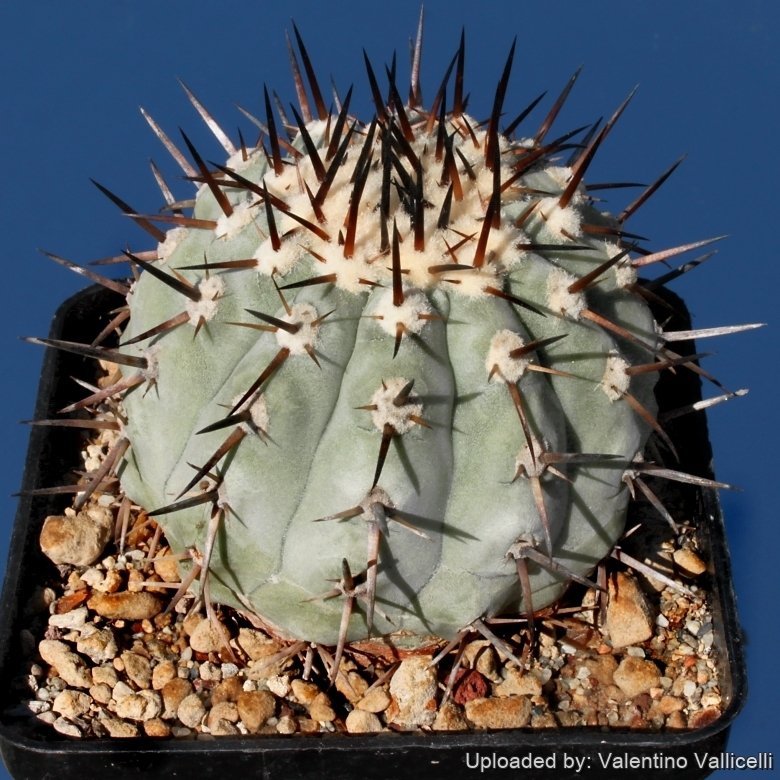
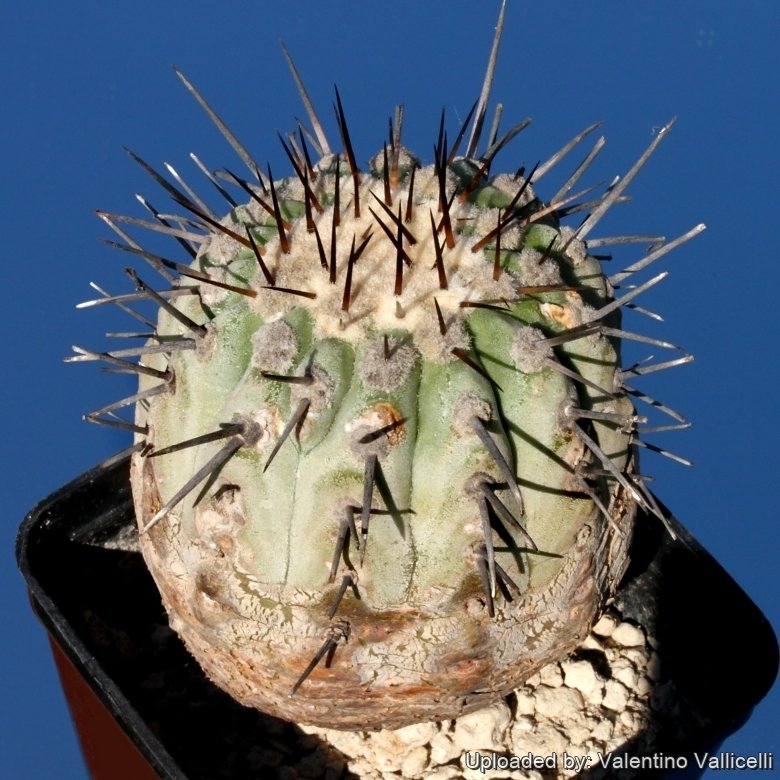
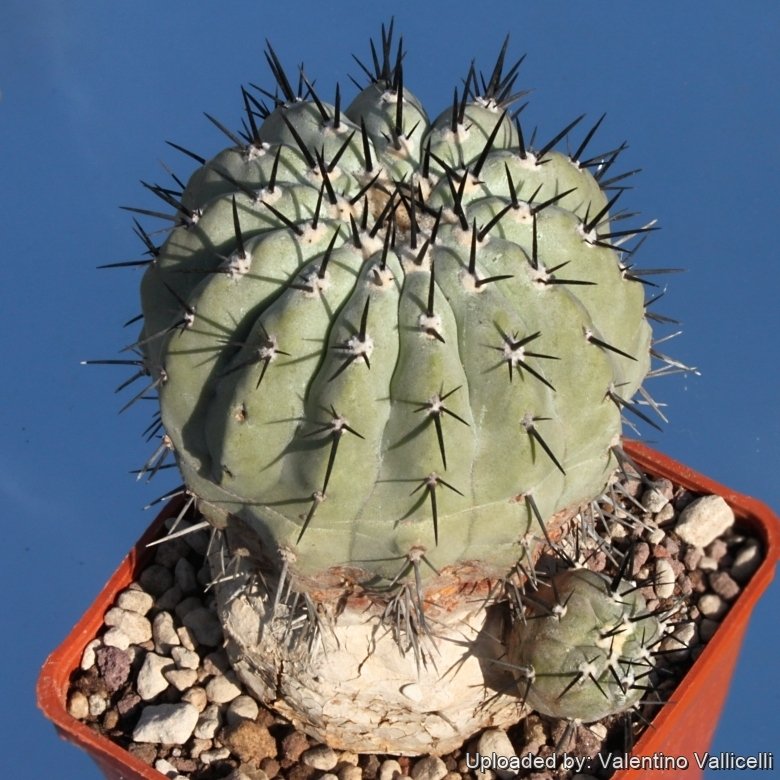
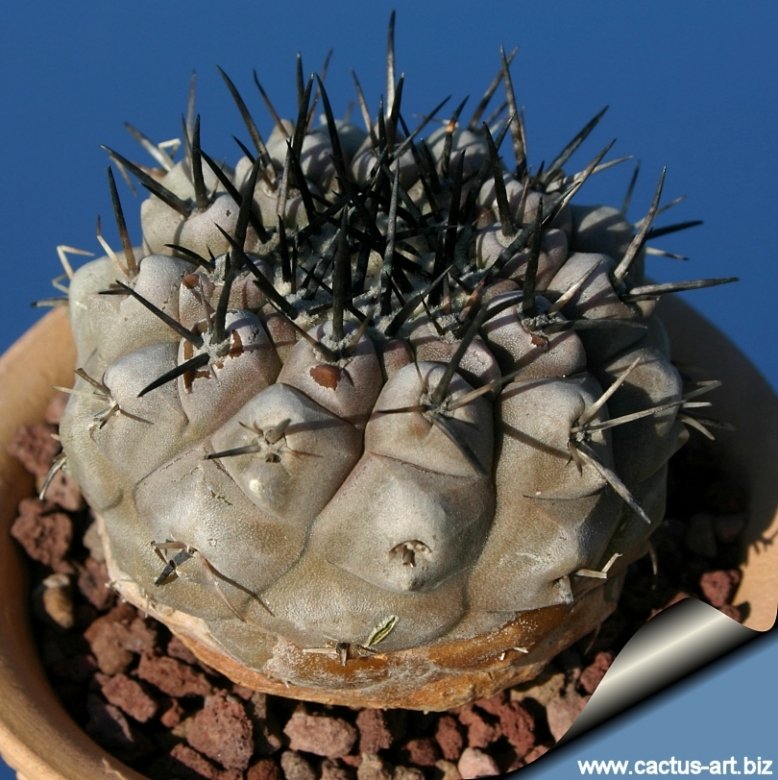
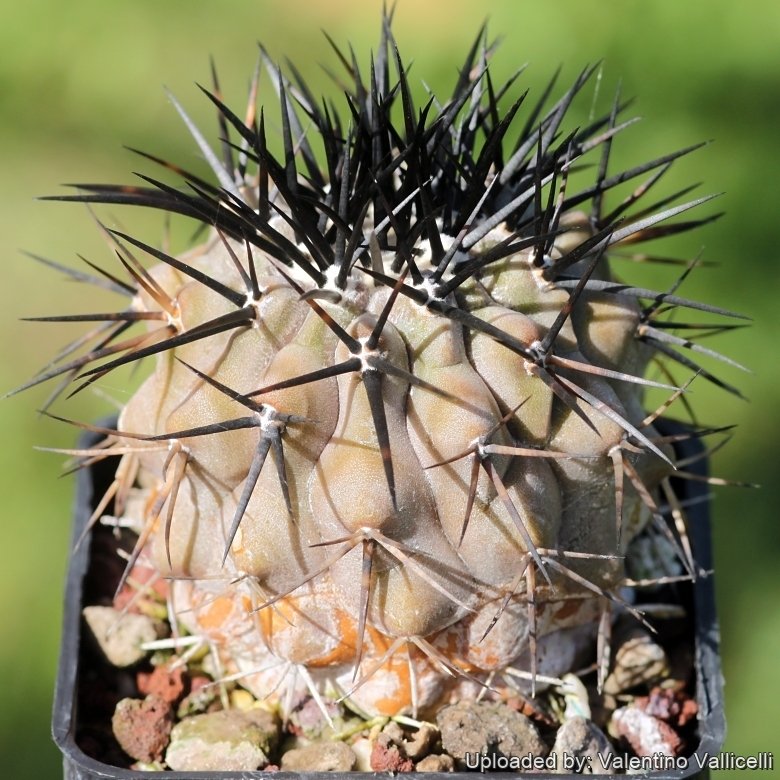
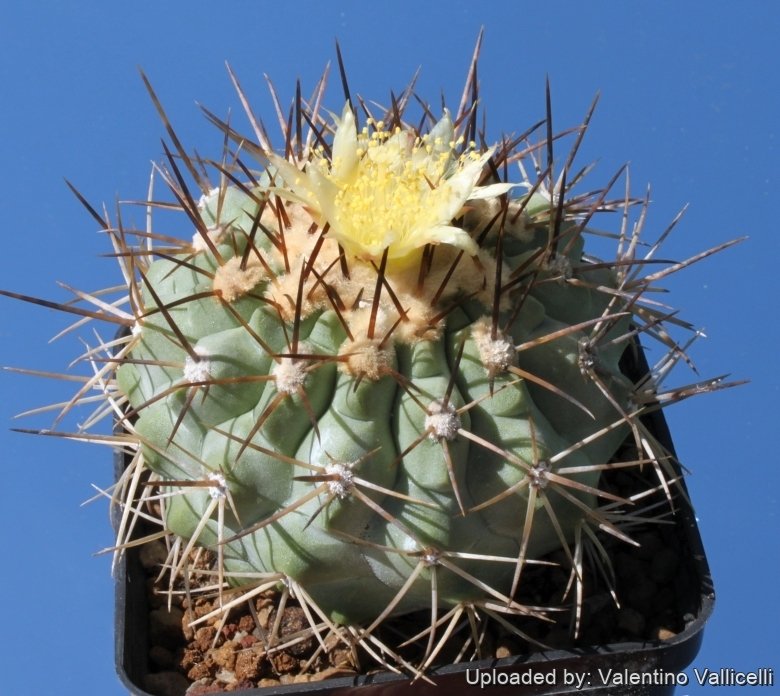
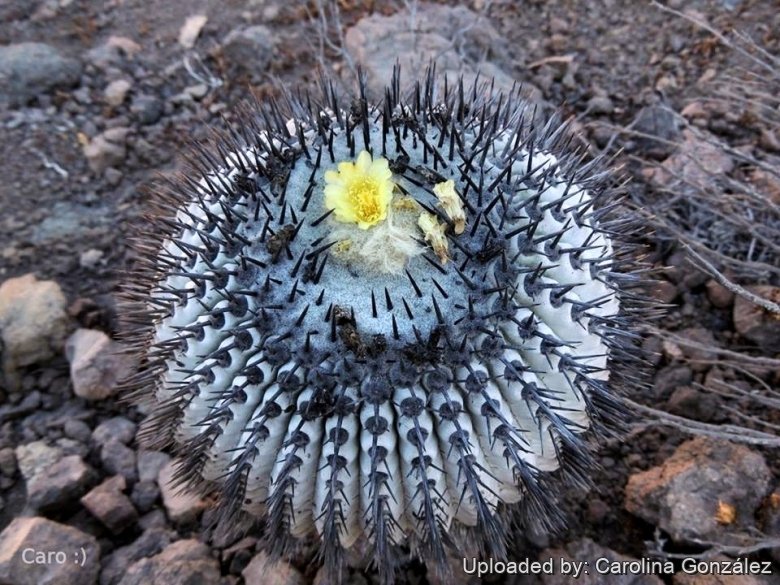
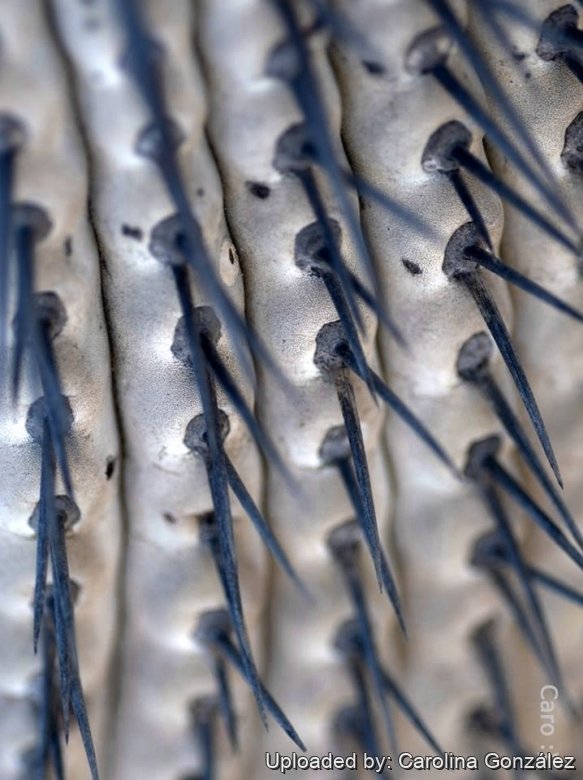
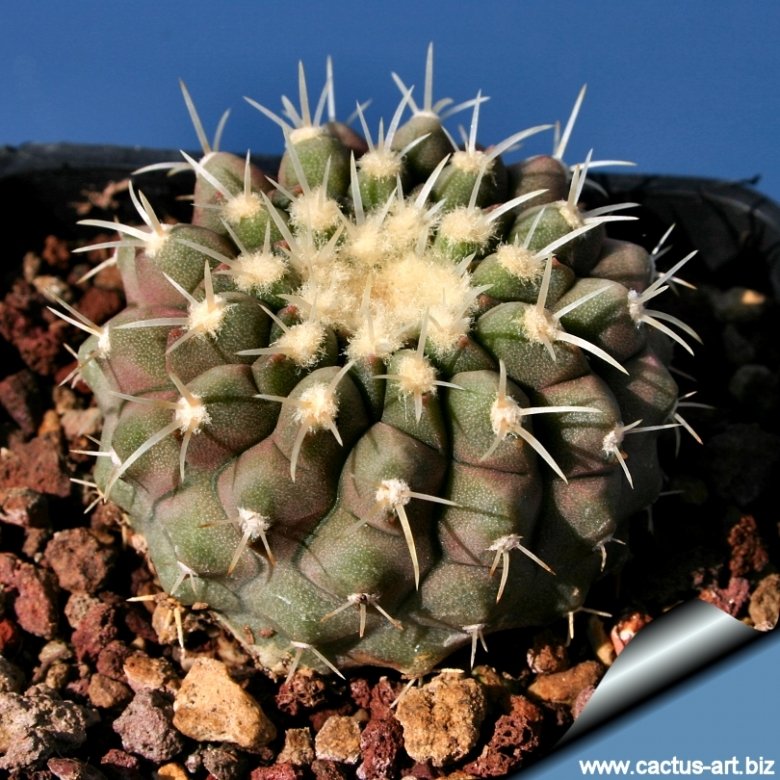
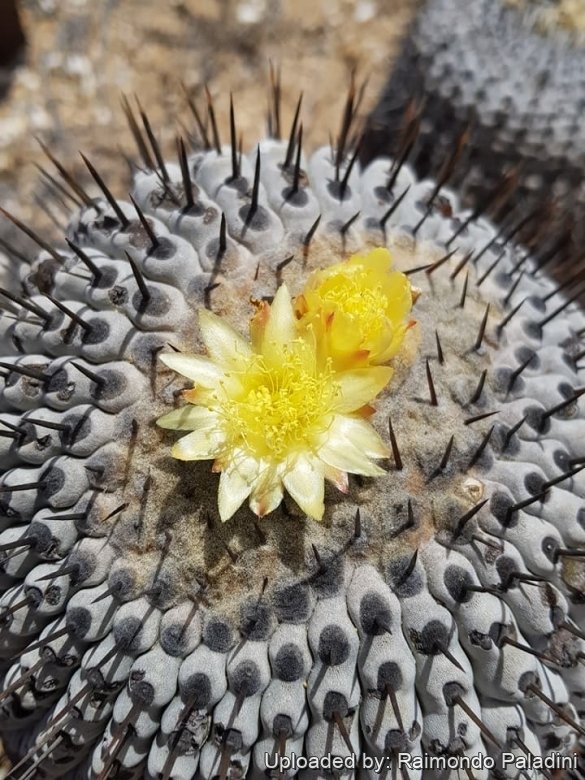
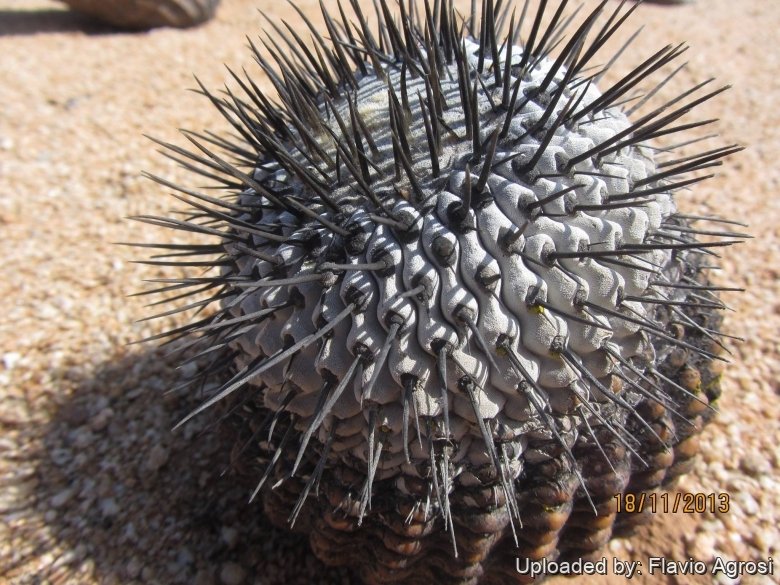
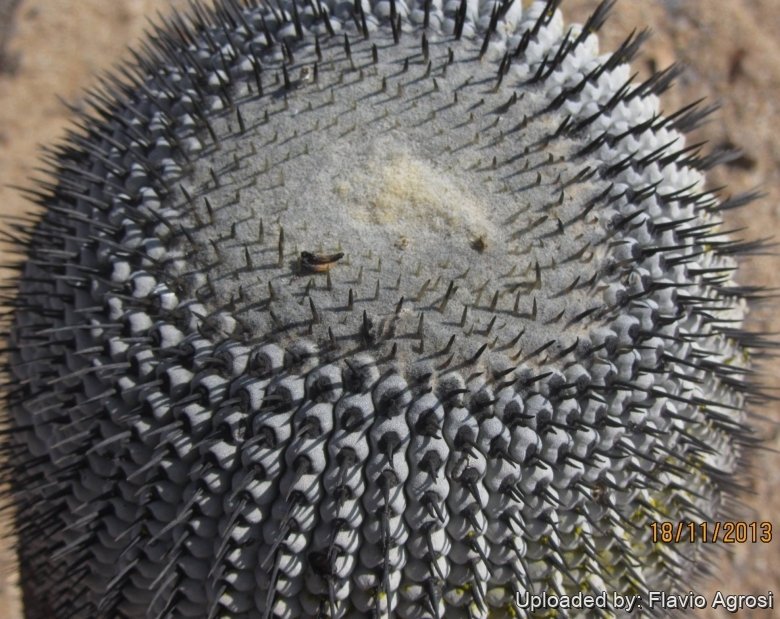
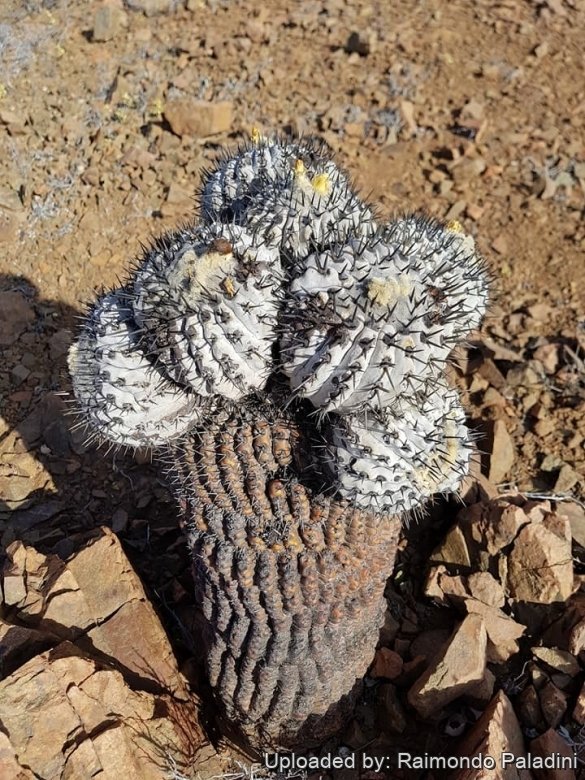
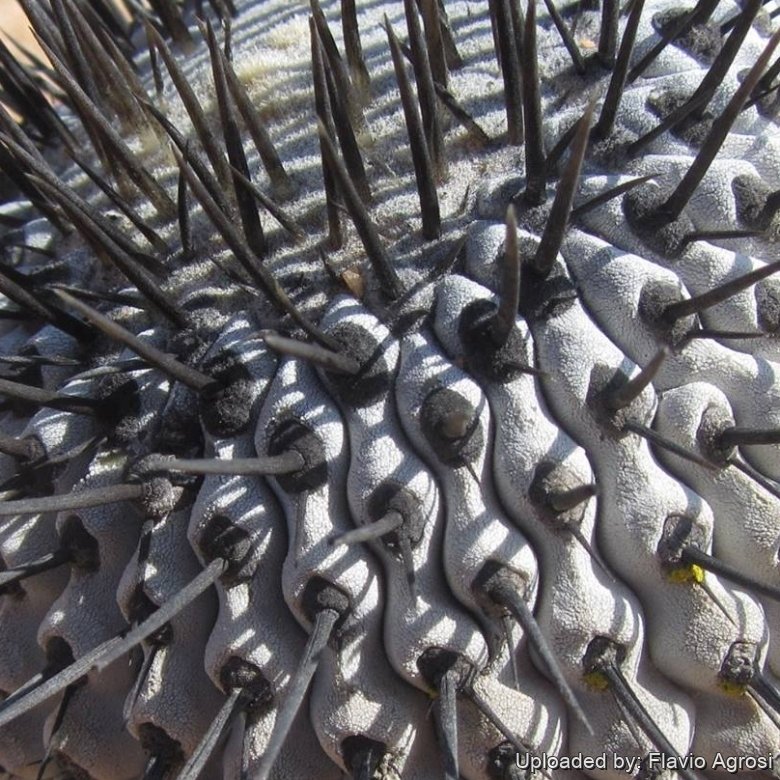
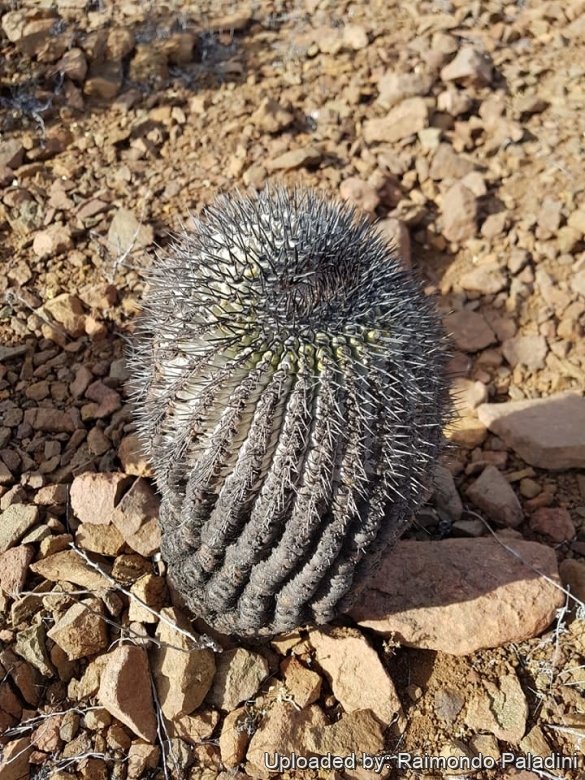
Copiapoa cinerea is one of the most admired species of cacti with chalky/white stems covered with wool at the apex, which contrasts well with the sparse, jet-black spines. It is a solitary, or slowly offsetting, globular to columnar cactus. It is an extremely variable species with many forms, sometimes with long spines or others spineless like Ritter’s “tenebrosas”.
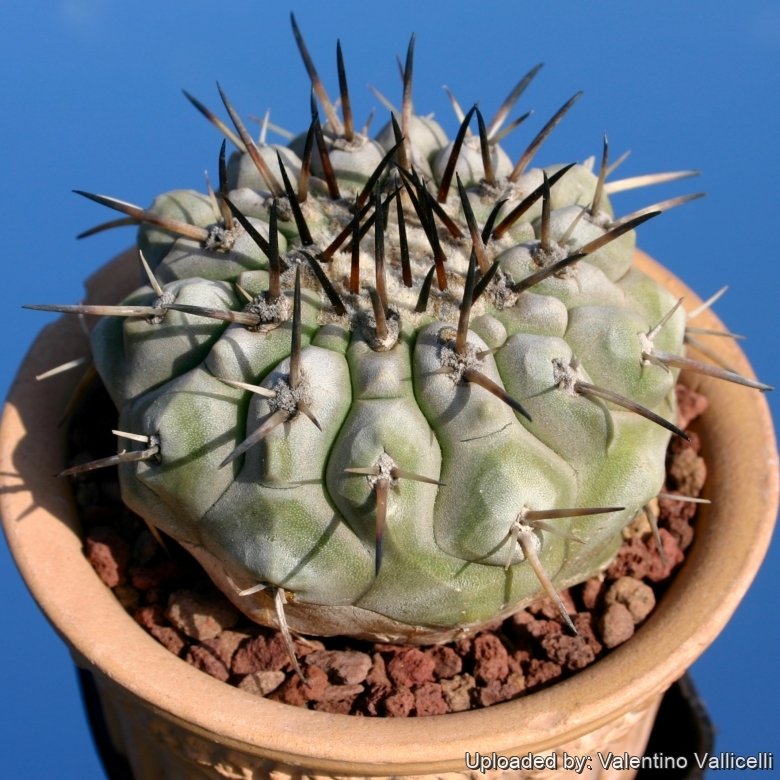
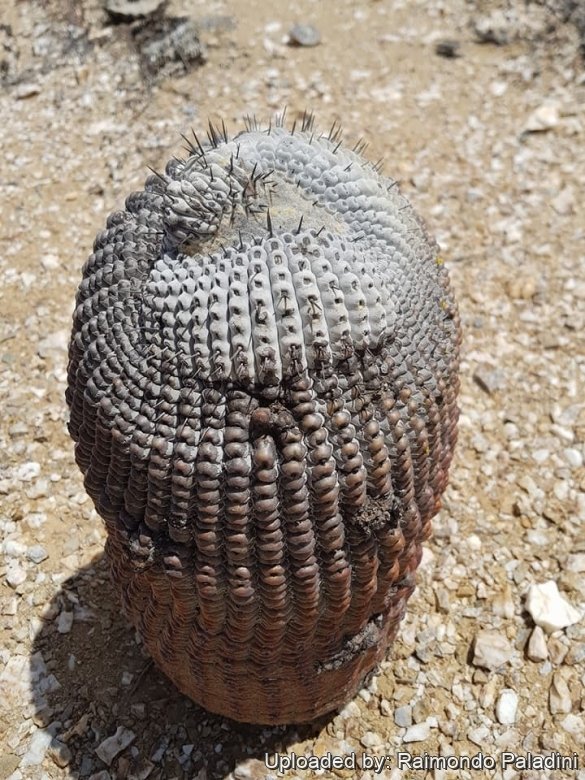
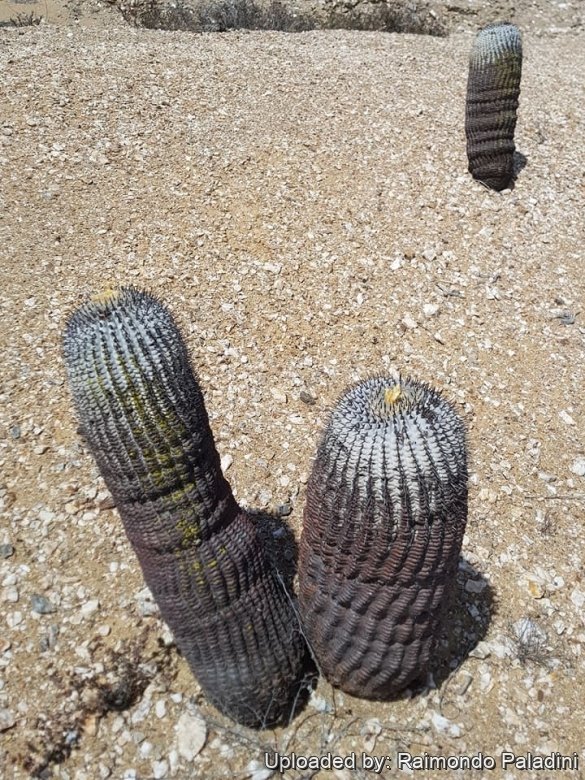
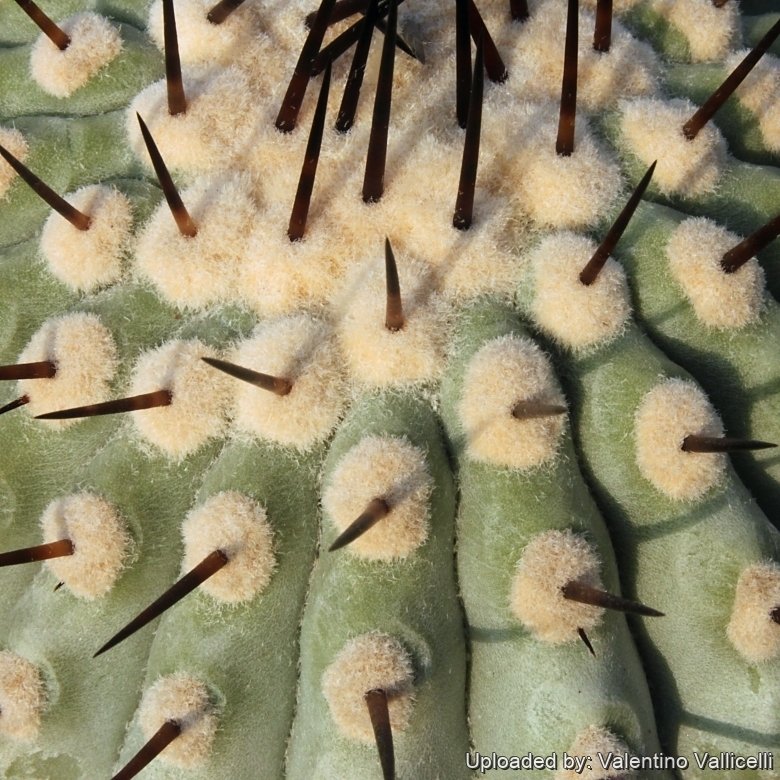
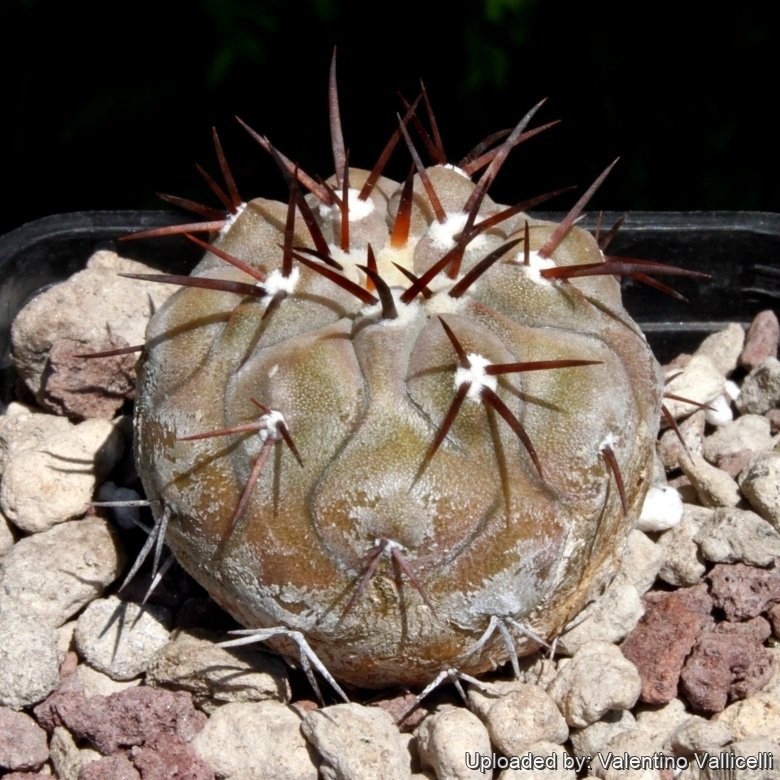
Stems: Up to 1,2 m tall, 10-20 cm in diameter. The white coloration is a waxy coating presumably to prevent dessication in it’s extremely dry environment. In cultivation the white waxy bloom is often not produced, revealing a brownish epidermis.
Ribs: 12-30 broad, obtuse.
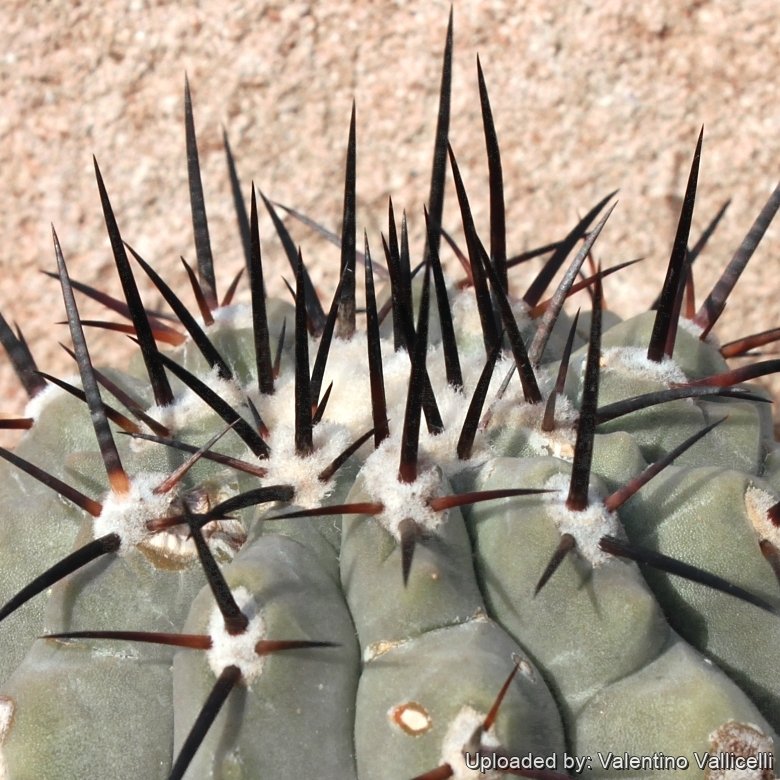
Central spines: 1 or 2 up to long, terete, black.
Radial spines: 0 to 7
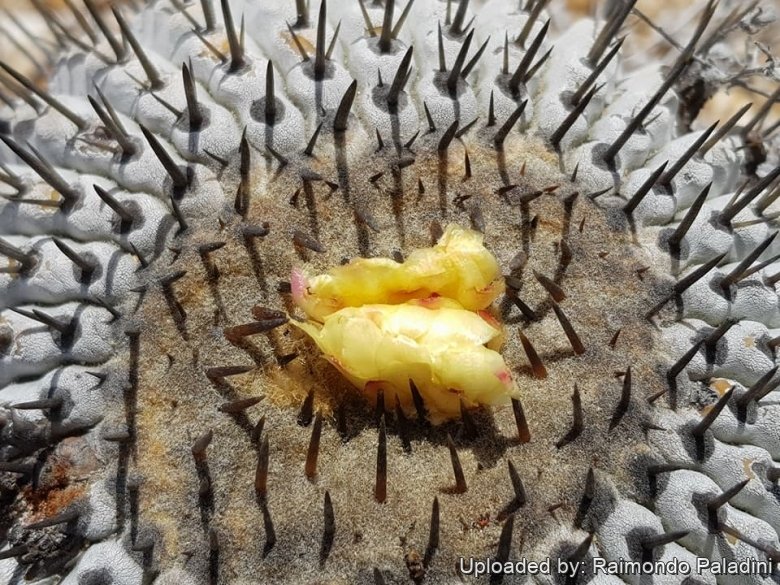
Flowers: Yellow funnelform, 1,5 to 2,5 cm in diameter, occasionally with a pink or reddish tint. The Ovary is naked.
Blooming season: Summer, it needs a lot of sunlight to bloom, so it’s pretty rare to have blossoms when in cultivation in greenhouses. It is not unusual for copiapoa to take 6-10 years before it starts blooming, but once it does, it should every year.
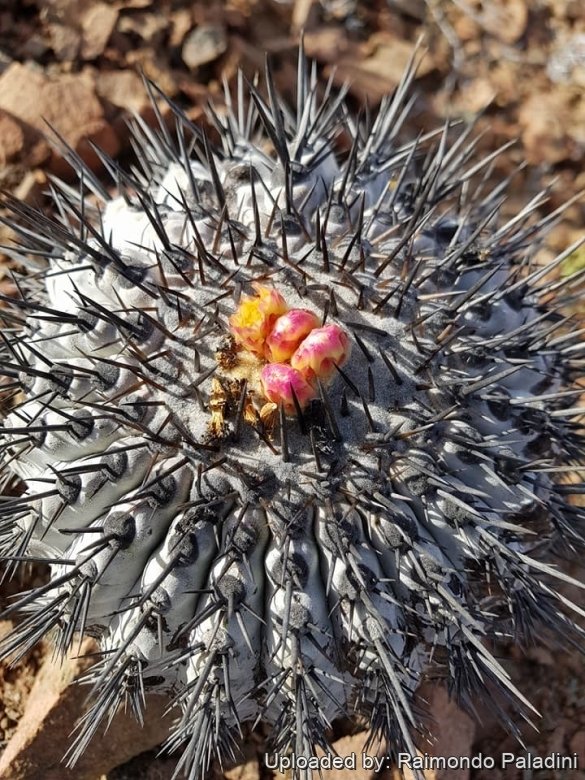
Fruit: 1,5 to 2 cm long.
Seeds: Black and shining.
Origin and Habitat
Antofagasta, Chañaral regions of northern Chile.
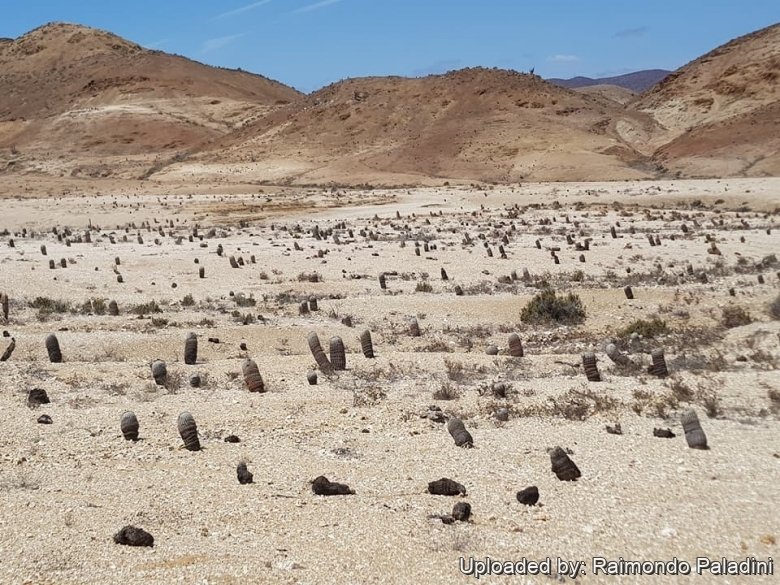
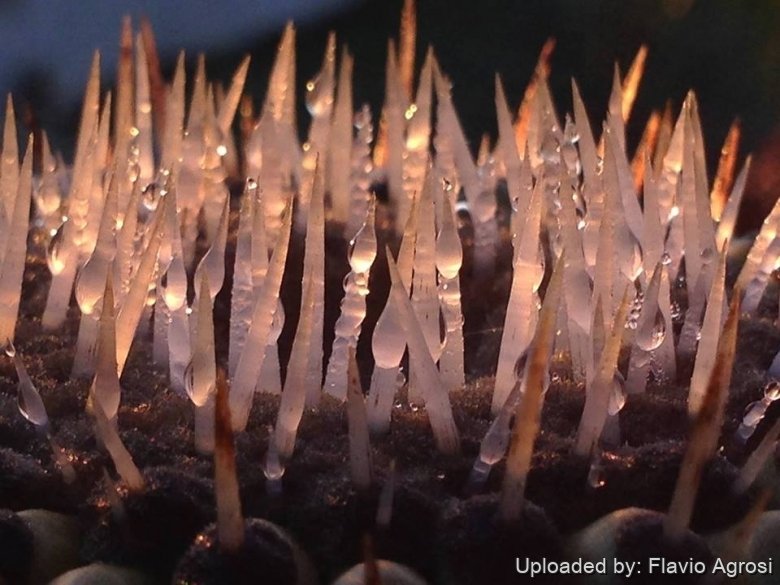
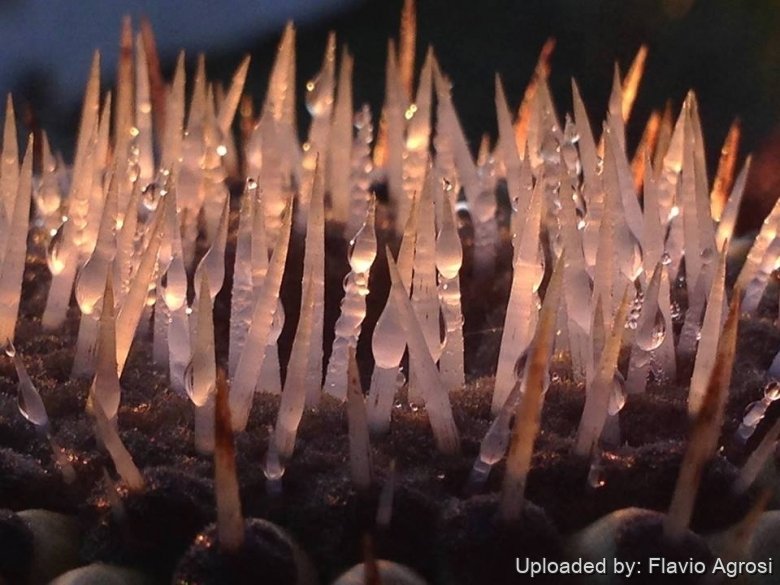
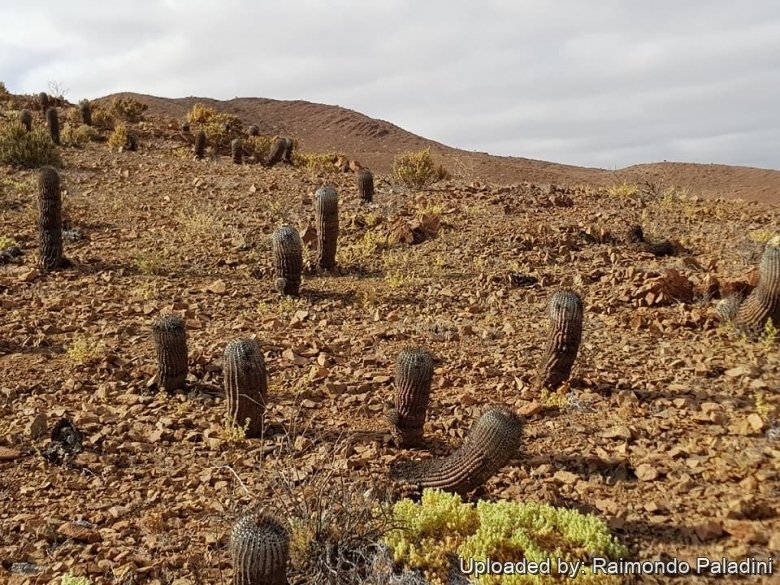
Habitat: Coastal areas of South America, where it grows in areas where very little else grows. It’s a very drought tolerant species. Despite the lack of rain where it lives, the extreme aridity is attenuated by the frequent, often dense, coastal fogs. The fog tends to concentrate in the form of a cloud band at an estimated height of 500 to 850 m. It shows a recurrent pattern; usually it is overcast in the early mornings, the clouds dissipating during the late morning and returning during the late afternoons. Even though the temperatures are moderate in the summer as well, the light on sunny days is so bright and burning that most Copiapoas are covered by a white waxy surface which protects the plants from the sun and reduces the evaporation. The wax gives the plants a characteristic, whitewashed look. The waxy coating is only created if the plants are exposed to ultraviolet rays and will only be created sporadically under glass in a greenhouse.
Cultivation and Propagation
This cactus is kept for the beauty of its form. It is a summer grower species slow but easy to cultivate that like many cacti of the Peruvian deserts, present some problems in cultivation. It is in fact somewhat rot prone if kept in a non ventilated place.
Growth rate: It is a relatively rapidly growing and easily flowering species that will make clumps given the best conditions.
Soils: It likes very porous standard cactus mix soil, but can become too elongated if compost is too rich.
Repotting: Use pot with good drainage.
Watering: Water regularly from Spring to Autumn, but do not overwater and let the soil mix dry between waterings (Rot prone), keep dry in winter.
Fertilization: Feed with a high potassium fertilizer in summer.
Hardiness:Keep warm and dry in winter (10°C) to avoid rot. Not highly tolerant of a great deal of frost. (Frost tolerance 0°C)
Exposition: Requires full sun or light shade and careful watering to keep plant compact with strong coloured spines. Tends to bronze in strong light, which encourages flowering and heavy spine production. It must be protected from excessive heat and sun in summer.
Uses: It is an excellent plant for container growing. It always looks good and stays small. It look fine in a cold greenhouse and frame or outdoor in a rockery.
Pests & diseases: It may be attractive to a variety of insects, but plants in good condition should be nearly pest-free, particularly if they are grown in a mineral potting-mix, with good exposure and ventilation. Nonetheless, there are several pests to watch for:
- Red spiders: Red spiders may be effectively rubbed up by watering the infested plants from above.
- Mealy bugs: Mealy bugs occasionally develop aerial into the new growth among the wool with disfiguring results, but the worst types develop underground on the roots and are invisible except by their effects.
- Scales: Scales are rarely a problem.
It is wise to treat your whole collection with a systemic insecticide twice a year in spring and autumn.
- Rot: Rot is only a minor problem with cacti if the plants are watered and “aired” correctly. If they are not, fungicides won’t help all that much.
Propagation: Seeds (or offsets if available) or by grafting onto a strong grafting stock like Selenicereus sp. Such grafted seedlings can be successfully cultivated for years. Grafting is often used to speed growth rate and to create a back-up to plants in collection. Seeds germinate in 7-14 days at 21-27° C in spring, remove gradually the glass cover as soon the plants will be well rooted (ca 1-2 weeks) and keep ventilated, no full sun for young plants!
Notes
This is a very variable species, as is demonstrated by the number of varieties and their synonyms. The several classifications and reclassifications provide evidence of the confusion that rules regarding the names used in this highly variable species. It seems that many of botanists and hobbyists who have studied Copiapoa in habitat have formed their own concepts of what names should be applied to which plants. It is relatively easy to attribute some key features that dominate in certain populations, but it is equally possible to look more closely at plants in these populations, to find individuals that ‘break the rules’ and would easily fit another population’s dominant characteristics.
Bibliography
Major references and further lectures
-
Edward Anderson “The Cactus family” Timber Press, Incorporated, 2001
-
James Cullen, Sabina G. Knees, H. Suzanne Cubey “The European Garden Flora Flowering Plants: A Manual for the Identification of Plants Cultivated in Europe, Both Out-of-Doors and Under Glass” Cambridge University Press, 11/Aug/2011
-
David R Hunt; Nigel P Taylor; Graham Charles; International Cactaceae Systematics Group. “The New Cactus Lexicon” dh books, 2006
-
N. L. Britton, J. N. Rose “The Cactaceae. Descriptions and Illustrations of Plants of the Cactus Family.” Volume 4, The Carnegie Institution of Washington, Washington 1923
-
Urs Eggli, Leonard E. Newton “Etymological Dictionary of Succulent Plant Names” Birkhäuser 2004.
-
F.Ritter “Kakteen Südamerika” 3: 1072 1980.
-
Graham Charles “Copiapoa” Cirio Pub. Services, 1999
-
Adriana Hoffmann “Cactáceas en la Flora Silvestre de Chile” 1st edition, 1989
From llifle page Copiapoa columna-alba
Description
Usually solitary, forms white columns. All the plant in habitats lean markedly northward toward the sun following the direction of predominant wind, leading to the illusion that the entire landscape is tilted, This behaviour has been explained as a tactic by which the cactus minimizes the surface area exposed to the direct rays of sun. Thus the sun hits the woolly bent-over top of the cactus at an 90° angle, with the long trunk receiving only indirect sun. This species is more decorative than Copiapoa cinerea and one of the showiest of all cacti.
Note: This appears to be a very variable species.
Stem: Variable 50-75 cm tall, 10-20 cm in diameter, epidermis covered with a thick stratum of ashy-white pruine (it is often more white than the Copiapoa cinerea). Apex flattened with abundant yellow-orange or grey wool and without spines.
Ribs: 27-47, depressed, obtuse and tuberculated, approx 1 cm wide, 5-7 mm tall. Inter-ribs suture wavy.
Areoles: Small (diameter 2-3 mm), oblong, with yellow-orange wool (later becoming grey) recessed within the lower part of tubercle, 4-8 mm apart.
Central spines: 1-3 sub-erected, strong, up to1-2 cm long, black, brown or amber-yellow (never grey). Often the young plants are completely spineless.
Radial spines: 4-5 thin and arching, 5-8 mm long. Normally not present in adult specimen.
Roots: Not napiform.
Flowers: Apical, funnel form, small (2-3 cm long), yellow, scentless. Tube 7-15 mm long, pale-yellow with few thin, red tipped scales. Nectar chamber up to 4 wide, 2 mm deep and open. Lower filaments 15-18 mm long inserted at the base of the nectar chamber, upper filaments up to 10 mm long on the wall of the tube. Filaments and anthers pale yellow. Style up to 2 cm long not surpassing the stamens, stigma lobes 10, golden-yellow. 7 - 14 tepals, 10-12 mm long, 3-5 mm broad rounded, pale yellow, not tinged in red.
Fruit: Deeply concealed within the apical wool, 7-10 mm in diameter, round or egg-shaped, pale green reddening toward the apex, almost naked with only few (3-4 mm long) scales. Almost completely dry at maturity, deihscence capsular (less pulpy than in Copiapoa cinerea).
Seeds: Shining-black. 1,2 mm long, 0,6 mm large, 0,5 mm thick. Covered with very fine flattened tubercles, hilum oval white.
Origin and Habitat
II Region Antofagasta, Chile, It occurs in large numbers at numerous locations from the Pan de Azucar in the south to just south of Taltal in the north, making impressive stands, resembling a marching army.
Habitat: Coastal areas from sea level up to 500 m in altitude. The plants obtain water mainly from condensation (Coastal fog/camanchaca) as rain is very rare. The plants grows in areas nearly devoid of other vegetation and exposed, but receive protection from direct sun through coastal fog (camanchaca). They have found a niche in the quebradas that run towards the Pacific Ocean, but always stopping short from the beach localities that are reserved by Copiapoa longistaminea and Copiapoa taltalensis. At the same time, it is obvious that there are many similarities with Copiapoa cinerea.
Cultivation and Propagation
This extremely slow growing cactus is kept for the beauty of its form. It must be protected from excessive heat and sun in summer, and seems to do best in cultivation with a bit of shade. It requires light but regular waterings in summer, but let the soil mix dry between waterings, Prone to rot if over-watered. Needs good drainage. Keep warm and dry in winter (10°C) to avoid rot. Not highly tolerant of a great deal of frost. (Frost tolerance 0°C)
Propagation: Seeds (or offsets if available), Grafting is often used to speed growth rate and to create a back-up to plants in collection.
Source: Copiapoa columna-alba, LLIFLE - Encyclopedia of living forms, CC-BY-SA, retrieved 2026-10-25.
From llifle page Copiapoa melanohystrix
Description
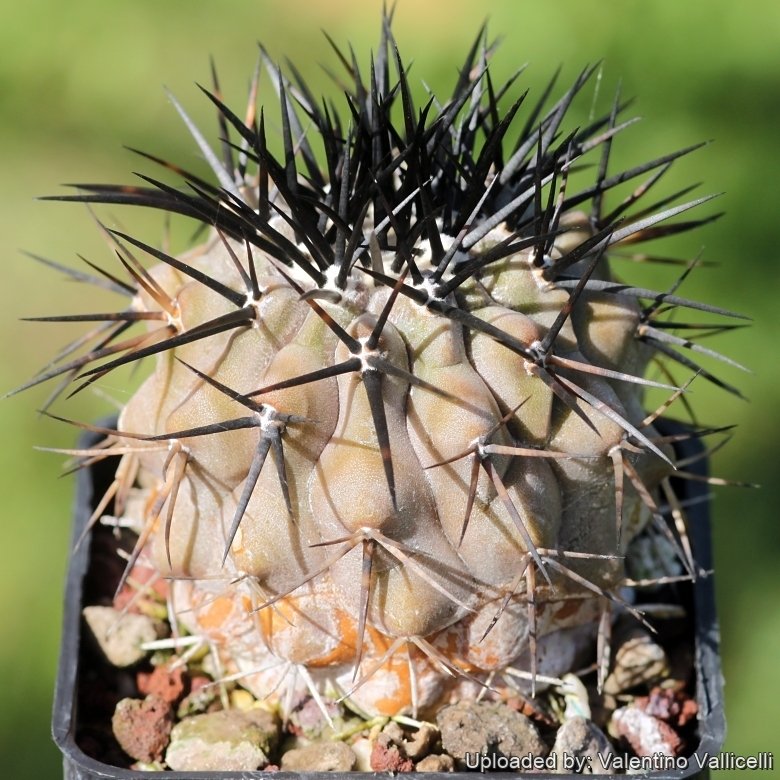
Copiapoa melanohystrix is one of the many forms of the very variable Copiapoa cinerea/Copiapoa columna-alba complex. It is still unclear whether this variable complex is one or several species. There is so much variation that most authors choose to lump them together. Copiapoa melanohystrix should be distinguished by its more long and stout black spines and blackish felted areoles that give the plant a very intriguing dark overall. It can be referred to a form or clonotype within the variability of Copiapoa columna-alba. This form is more decorative than the standard Copiapoa cinerea and one of the showiest of all cacti.
Habit: Usually solitary, forms white columns with dark contrasting spination.
Stem: Variable 50-75 cm tall, 10-20 cm in diameter, epidermis covered with a thick stratum of ashy-white pruine. Apex flattened with abundant dark-grey wool and without spines.
Ribs: 27-47, depressed, obtuse and tuberculated, approx 1 cm wide, 5-7 mm tall. Inter-ribs suture wavy.
Areoles: Small (diameter 2-3 mm), oblong, with yellow-orange wool (later becoming grey) recessed within the lower part of tubercle, 4-8 mm apart.
Central spines: 1-3 sub-erected, strong, more than 2 cm long, black.
Radial spines: 4-5 thin and arching, 5-8 mm long. Normally not present in adult specimen.
Roots: Not napiform.
Flowers: Diurnal closing at night, protracting the period of opening many days and arising on the crown, often several at a time, funnel form, small (2-3 cm long), yellow, scentless.
Fruit: Deeply concealed within the apical wool, round or egg-shaped, pale green reddening toward the apex, almost naked with only few (3-4 mm long) scales. Almost completely dry at maturity.
Seeds: Shining-black.
Origin and Habitat
Esmeralda and adjacent areas.
Altitude: 300-600 metres above sea level.
Habitat: It grows in areas where very little else grows. It’s a very drought tolerant species. Despite the lack of rain where it lives, the extreme aridity is attenuated by the frequent, often dense, coastal fogs. The fog tends to shows a recurrent pattern; usually it is overcast in the early mornings, the clouds dissipating during the late morning and returning during the late afternoons. Even though the temperatures are moderate in the summer as well, the light on sunny days is so bright and burning that most Copiapoas are covered by a white waxy surface which protects the plants from the sun and reduces the evaporation. The wax gives the plants a characteristic, whitewashed look. The waxy coating is only created if the plants are exposed to ultraviolet rays and will only be created sporadically under glass in a greenhouse.
Cultivation and Propagation
Considering that Copiapoa melanohystrix comes from a habitat with an extremely arid climate, they are remarkably tolerant of pot culture. These plants have taproots and are susceptible to overwatering. They requires also an appropriate air circulation. Copiapoas are summer grower species easy to cultivate.
Growth rate: This is a slow growing cactus kept for the beauty of its form that will make clumps given the best conditions.
Soils: It likes very coarse mineral cactus mix soil, but can become too elongated if compost is too rich.
Repotting: Use pot with good drainage.
Watering: It requires light but regular waterings in summer, but let the soil mix dry between waterings, but do not overwater (Rot prone), it must be strictly kept dry throughout the winter quiescent period since it is very sensitive to any moisture excesses keep dry in winter.
Fertilization: Feed with a high potassium fertilizer in summer.
Hardiness: Not highly tolerant of a great deal of frost. They need to be kept in a cool place during winter rest and are resistant to light frost if kept on the dry side prior to, and during, cold weather ( they are hardy to -2 C ° C short periods). However some warmth throughout the year will increase the grower’s success (minimum 5° to 10°C during rest season).
Exposition: Requires full sun or light shade and careful watering to keep plant compact with strong coloured spines. Tends to bronze in strong light, which encourages flowering and heavy spine production. Light shadow my be useful in the hottest summer days.
Uses: It is an excellent plant for container growing. It always looks good and stays small. It look fine in a cold greenhouse and frame or outdoor in a rockery.
Pests & diseases: It may be attractive to a variety of insects, but plants in good condition should be nearly pest-free, particularly if they are grown in a mineral potting-mix, with good exposure and ventilation. Nonetheless, there are several pests to watch for:
- Red spiders: Red spiders may be effectively rubbed up by watering the infested plants from above.
- Mealy bugs: Mealy bugs occasionally develop aerial into the new growth among the wool with disfiguring results, but the worst types develop underground on the roots and are invisible except by their effects.
- Scales: Scales are rarely a problem. It is wise to treat your whole collection with a systemic insecticide twice a year in spring and autumn.
- Rot: Rot is only a minor problem with cacti if the plants are watered and “aired†correctly. If they are not, fungicides won’t help all that much. To prevent rottenness it is also advisable to surround its root neck by very rough sand or grit, this help a fast water drainage.
Propagation: Seeds (or offsets if available), Grafting is often used to speed growth rate and to create a back-up to plants in collection. Seeds germinate in 7-14 days at 21-27° C in spring, remove gradually the glass cover as soon the plants will be well rooted (ca 1-2 weeks) and keep ventilated, no full sun for young plants!
Bibliography
Major references and further lectures
-
Edward Anderson “The Cactus family†Timber Press, Incorporated, 2001
-
James Cullen, Sabina G. Knees, H. Suzanne Cubey “The European Garden Flora Flowering Plants: A Manual for the Identification of Plants Cultivated in Europe, Both Out-of-Doors and Under Glass” Cambridge University Press, 11/Aug/2011
-
David R Hunt; Nigel P Taylor; Graham Charles; International Cactaceae Systematics Group. “The New Cactus Lexicon” dh books, 2006
-
N. L. Britton, J. N. Rose “The Cactaceae. Descriptions and Illustrations of Plants of the Cactus Family.†Volume 4, The Carnegie Institution of Washington, Washington 1923
-
Urs Eggli, Leonard E. Newton “Etymological Dictionary of Succulent Plant Names†Birkhäuser 2004.
-
F.Ritter “Kakteen Südamerika†3: 1072 1980.
-
Graham Charles “Copiapoa†Cirio Pub. Services, 1999
-
Adriana Hoffmann “Cactáceas en la Flora Silvestre de Chile†1st edition, 1989
Source: Copiapoa melanohystrix, LLIFLE - Encyclopedia of living forms, CC-BY-SA, retrieved 2026-10-25.
Cultivars and forms (7)
Subspecies (1)
Varieties (3)
Other names (1)
Gallery