Description
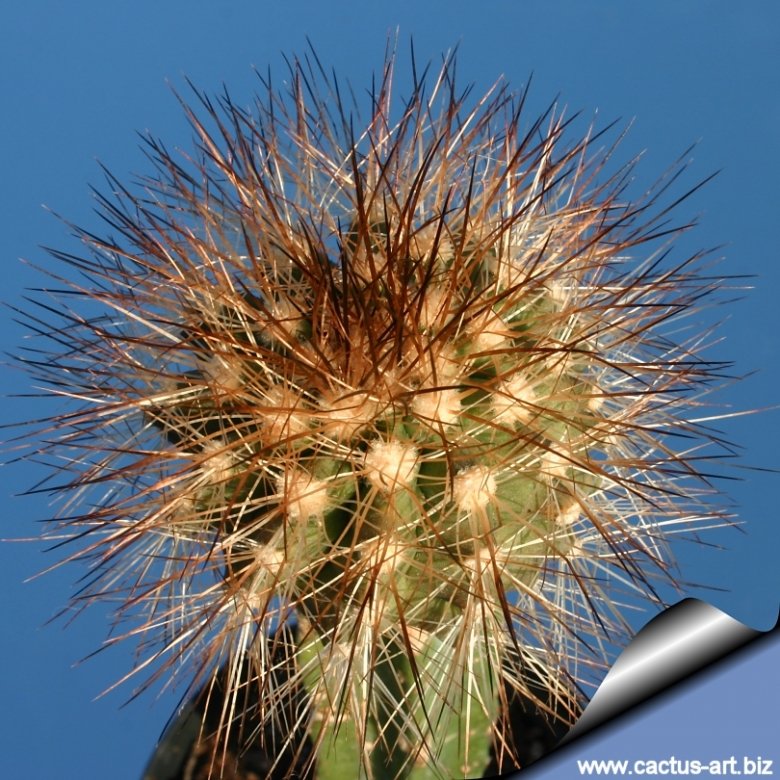
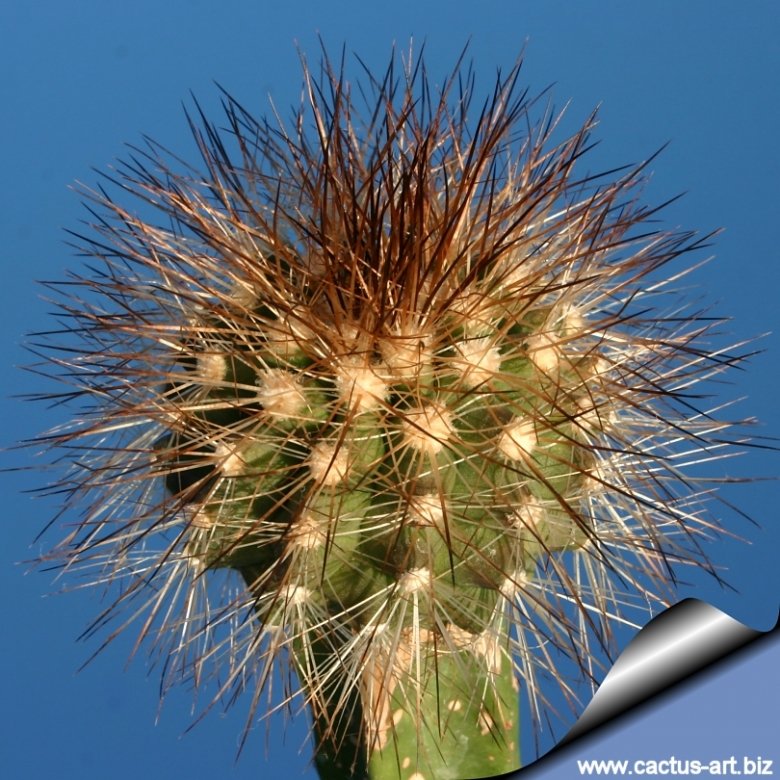
Solitary or forming large clumps up to 1 m wide densely covered by spines, it one of the more beautiful and popular copiapoa, it is really the most extreme of a very variable population. It is a member of the Copiapoa cinerea complex.
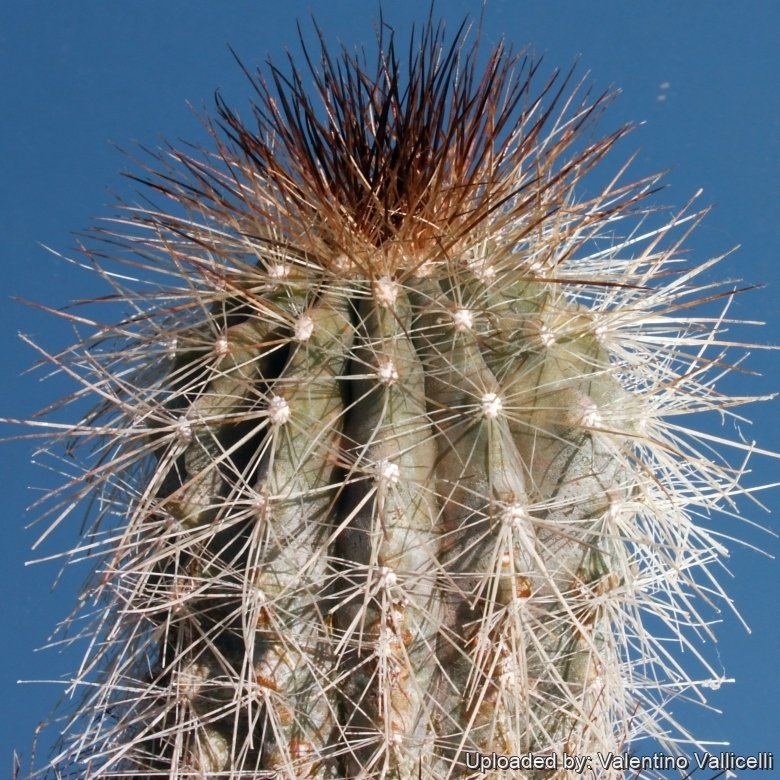
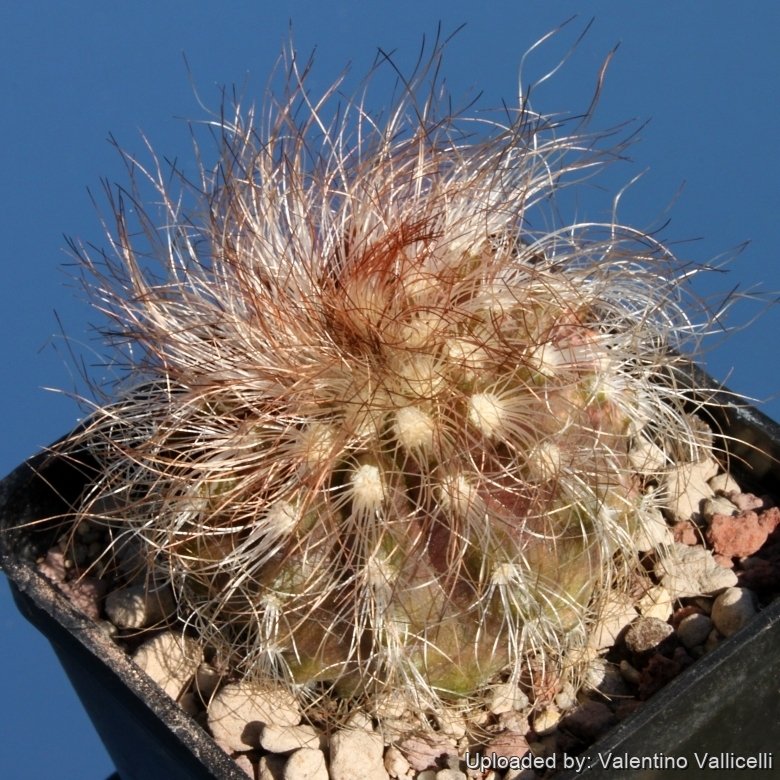
Stems: Globose to cylindrical usually grey to green in hue, up to 12 cm wide with a woolly crown.
Ribs: 13 to 24 ribs, straight.
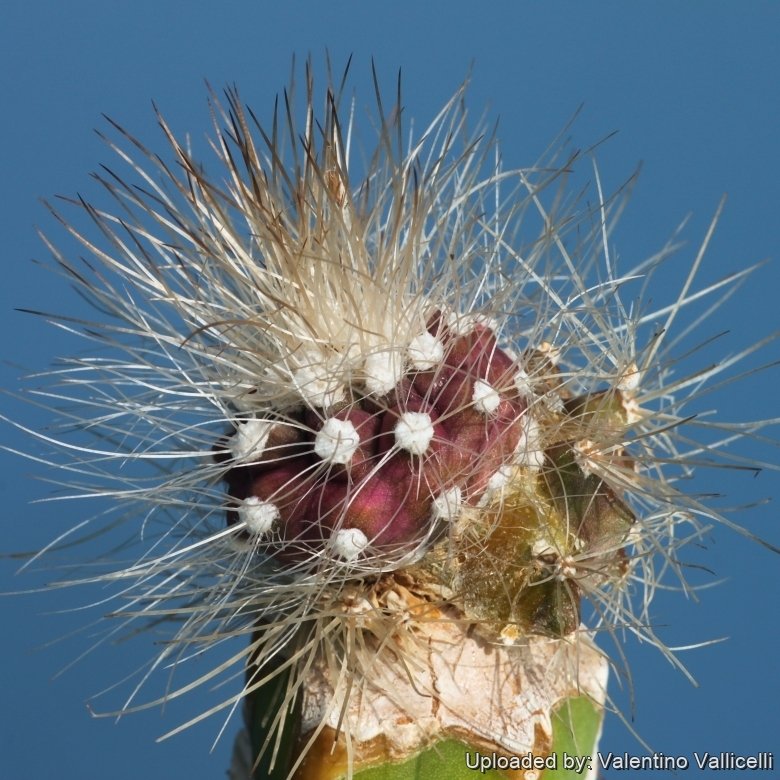
Areoles: Large, roundish, with grey wool.
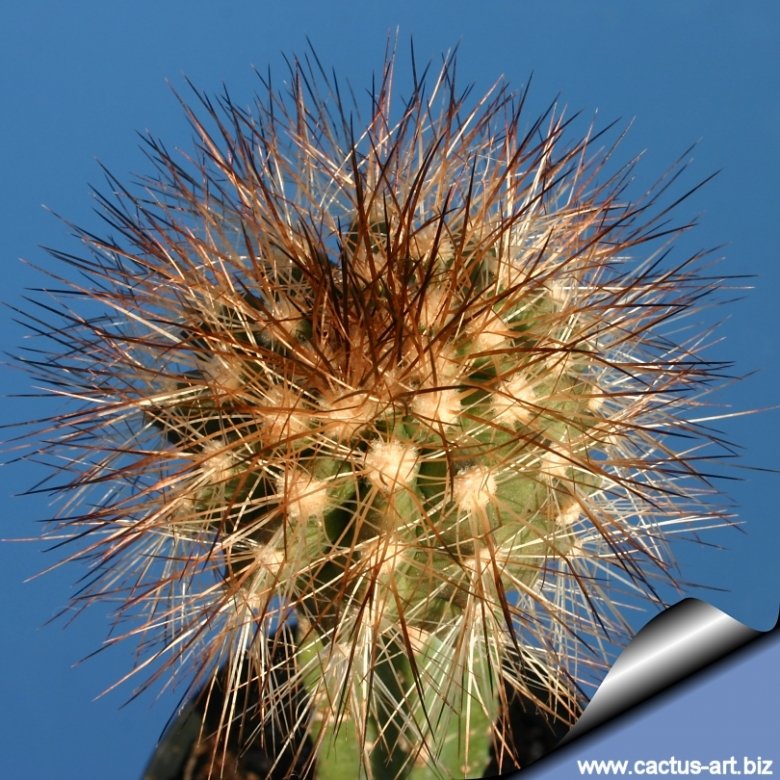
Spines: Variable, densely distributed, needle-like, long, very thin, straight or curved, flexible usually white or greysh (or sometime brownish in the so called forma ‘brunispina’)
Central spines: 14 to 20 up to 2,5 cm long (or more).
Radial spines: 10 to 12 greyish approx 2 cm long.
Flowers: Clear yellow, 3.5 cm long.
Fruits: White or rose, up to 1 cm long.
Remarks: Pretty, white-spined forms need to be large before flowering; darker-spined plants grow faster.
Origin and Habitat
Endemic to a very small area in Chile, II Region Atacama desert, Antofagasta, north of Taltal, coastal mountains, 500 - 2000 m. Typical area is San Ramon Valley.
Habitat: This species strives fully exposed to the sun in extremely dry areas with very rare rainfall, on hills and canyons on plains and on slopes facing north. They often grows mingled with clumps of Copiapoa cinerea forma haseltoniana and columnar Eulychnia. The dry season lasts 8 - 12 months and in some years it is possible to have no rainfall at all. Rainfall less than 100 mm/year. The plants obtain water mainly from condensation of coastal fog (camanchaca). By the middle of the morning however, the fog cover dissipate and sun breaking through the gaps warming the ground.
Cultivation and Propagation
This slow growing cactus is kept for the beauty of its form and spines. It must be protected from excessive heat and sun in summer, and seems to do best in cultivation with a bit of shade. It requires light but regular waterings in summer, but let the soil mix dry between waterings, Prone to rot if over-watered. Needs good drainage. Keep warm and dry in winter (10°C) to avoid rot. Not highly tolerant of a great deal of frost. (Frost tolerance 0°C)Propagation: Seeds (or offsets if available), Grafting is often used to speed growth rate and to create a back-up to plants in collection.
Notes
Some authors consider that Ritter’s Copiapoa krainziana v. brunispina is part of a variable hybrid swarm between Copiapoa cinerea and Copiapoa krainziana.
Bibliography
Major references and further lectures
-
Saldivia, P., Guerrero, P., Faundez, L. & Walter, H.E. 2013. Copiapoa krainziana. In: IUCN 2013. IUCN Red List of Threatened Species. Version 2013.2. <www.iucnredlist.org>. Downloaded on 16 February 2014.
-
Edward Anderson “The Cactus family” Timber Press, Incorporated, 2001
-
James Cullen, Sabina G. Knees, H. Suzanne Cubey “The European Garden Flora Flowering Plants: A Manual for the Identification of Plants Cultivated in Europe, Both Out-of-Doors and Under Glass” Cambridge University Press, 11/Aug/2011
-
David R Hunt; Nigel P Taylor; Graham Charles; International Cactaceae Systematics Group. “The New Cactus Lexicon” dh books, 2006
-
A. Hoffmann, H. Walter “Cactáceas en la flora Silvestre de Chile” Ediciones Fundacion Claudio Gay, Santiago, Chile. Second Edition. 2004
-
G. Charles “Copiapoa. The Cactus file Handbook 4” Cirio Publ. 1998
-
R. Schulz and A. Kapitany “Copiapoa in their environment” Schulz Publishing, Teesdale, Australia. 1996
Gallery