Publication: Kaktus-ABC [Backeb. & Knuth] 280. 1936 [12 Feb 1936]
Description
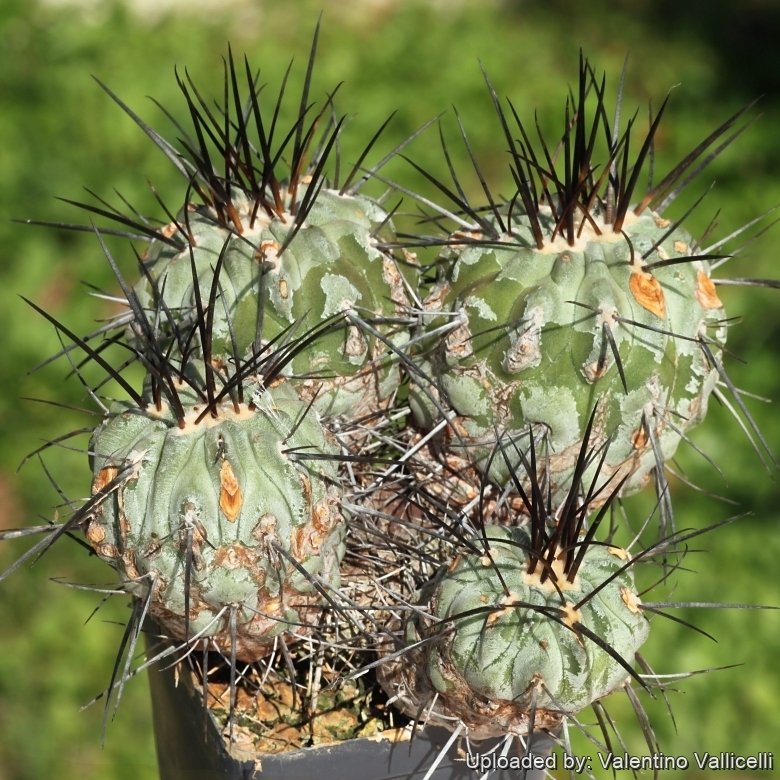
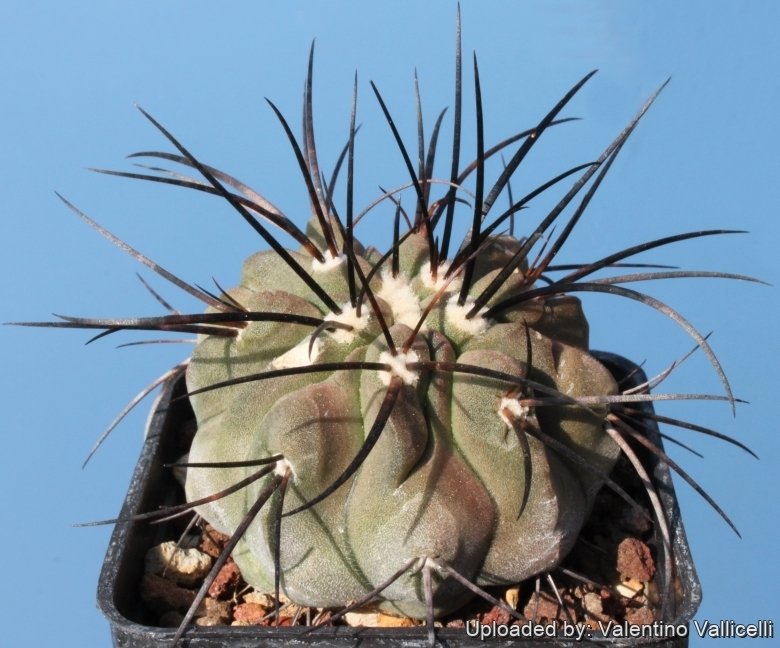
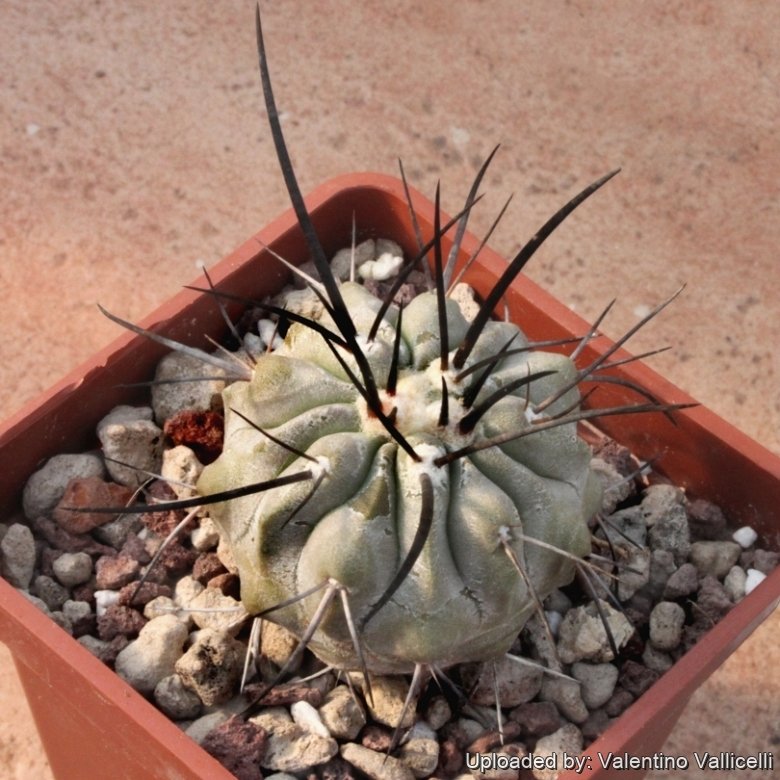
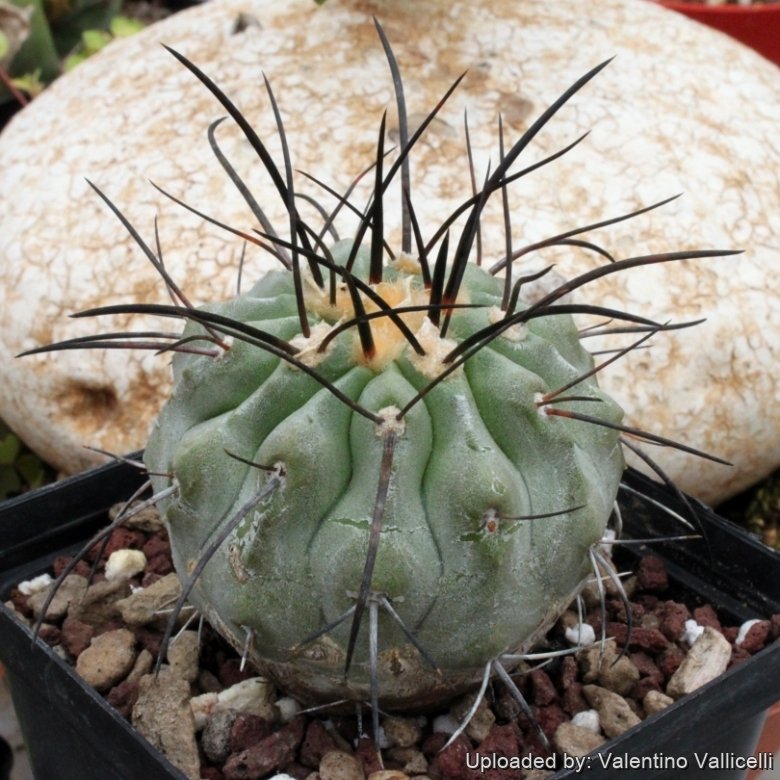
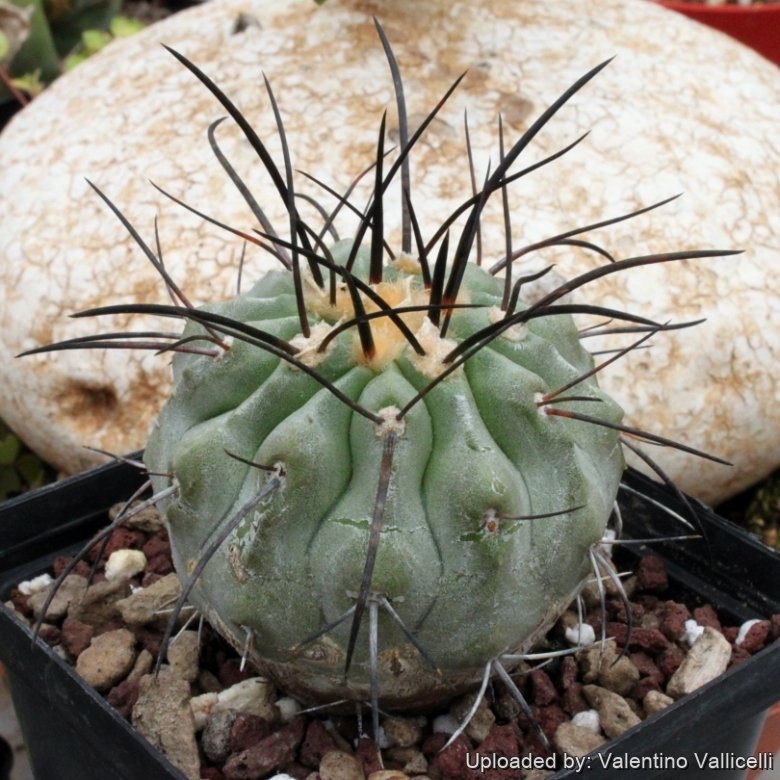
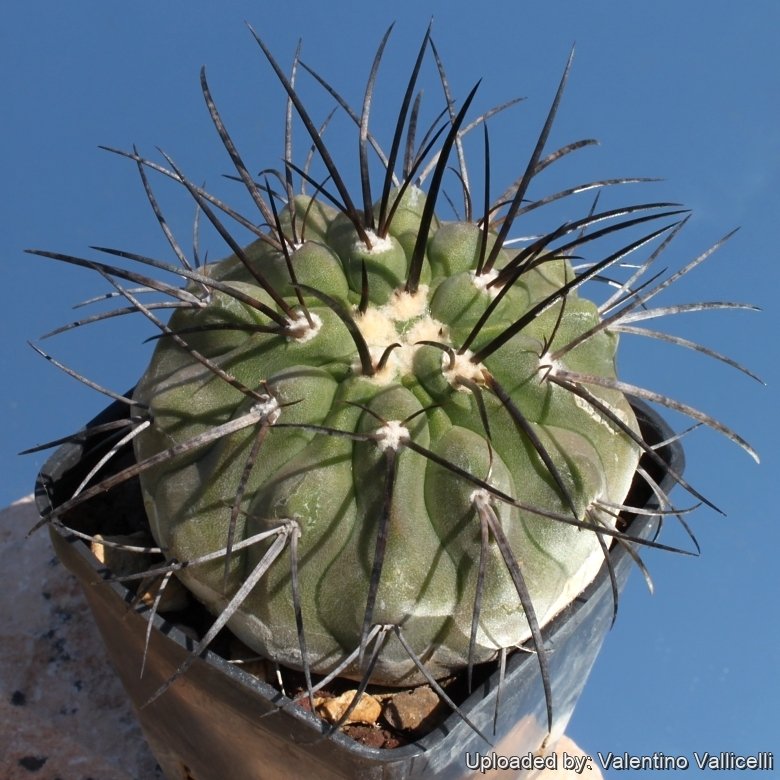
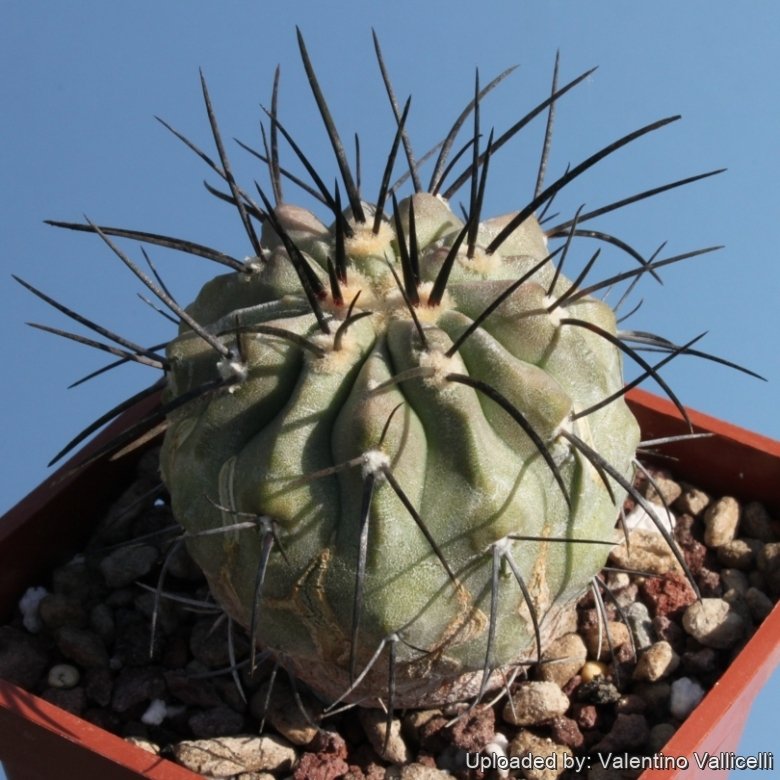
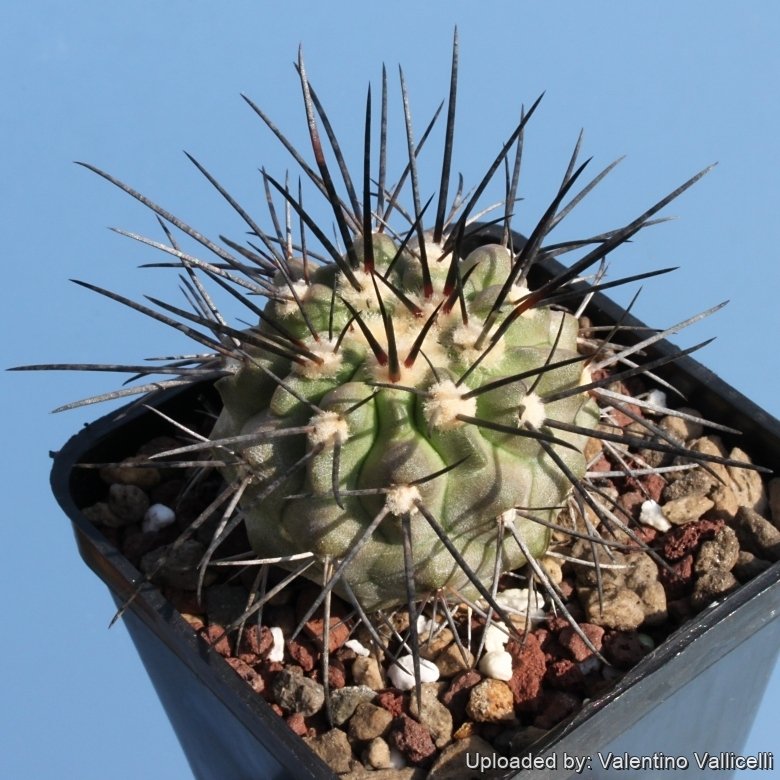
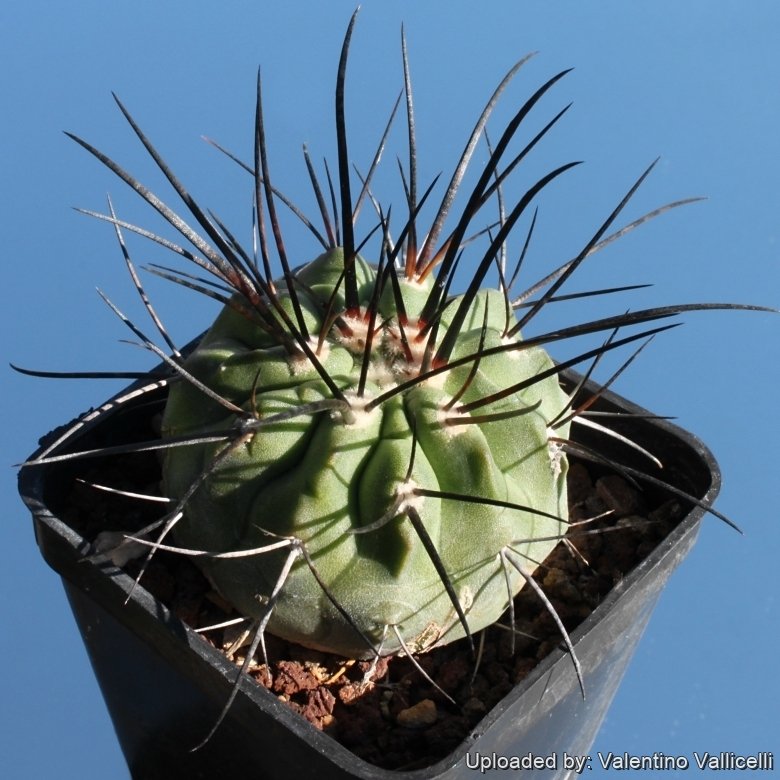
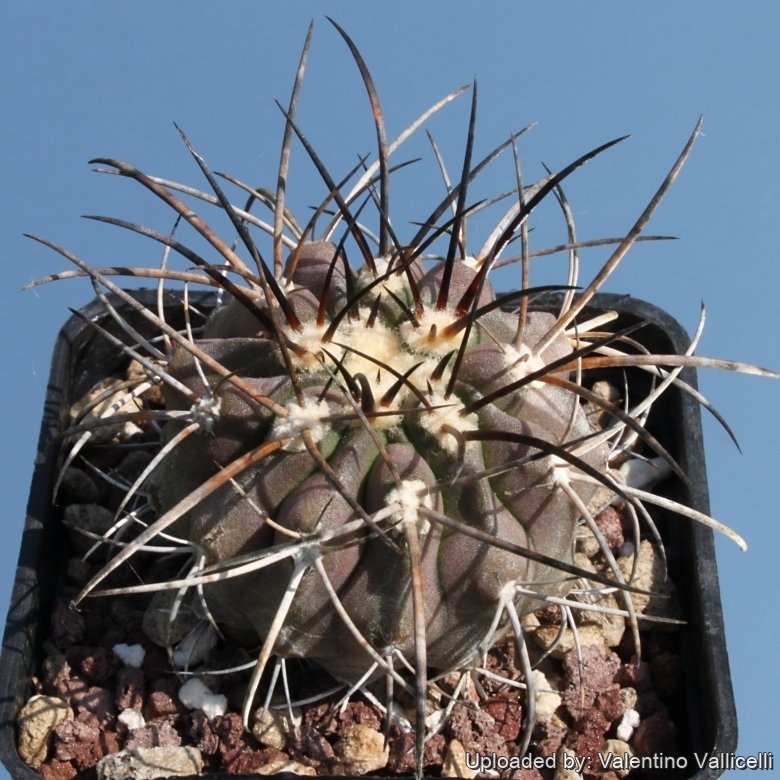
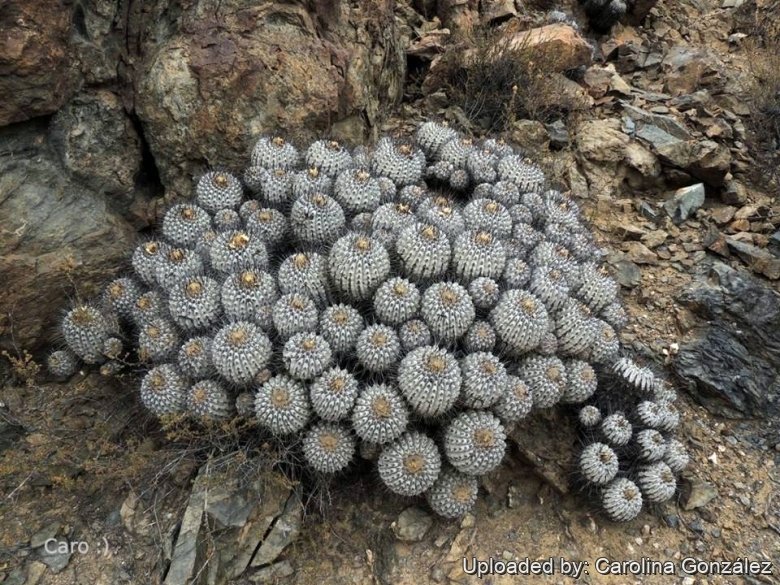
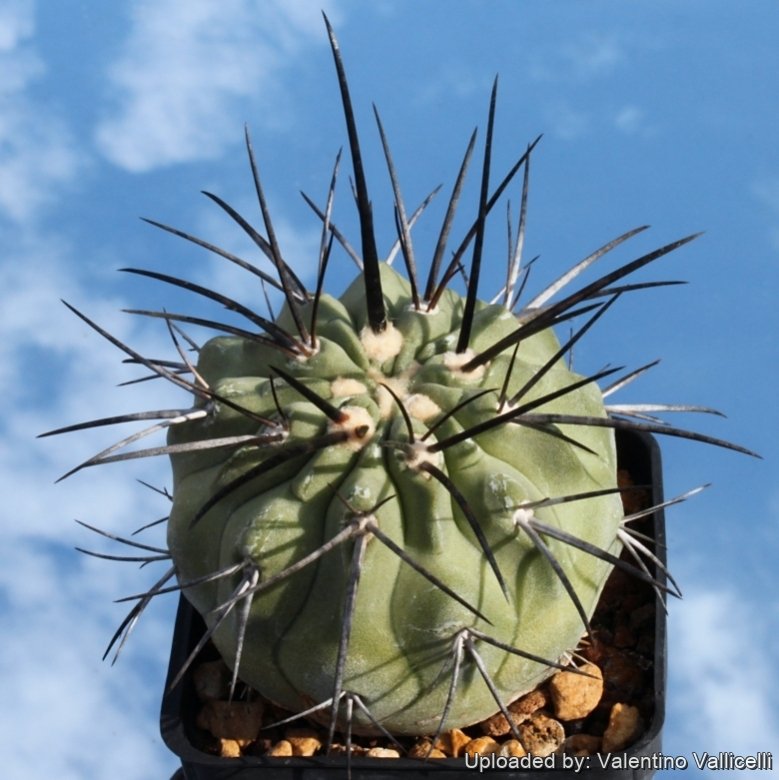
Copiapoa malletiana (syn: Copiapoa dealbata and Copiapoa carrizalensis) is a controversial taxon firstly published by Lemaire in 1845, but some authors choose to ignore this name as being inadequately typified (nomen nudum). It is a cespitose, globular cactus, similar to Copiapoa cinerea but usually with longer and thinner black spines.
Habit: Plants strongly branched basally, forming imposing mounds up to 1 m tall and more than 2 m wide.
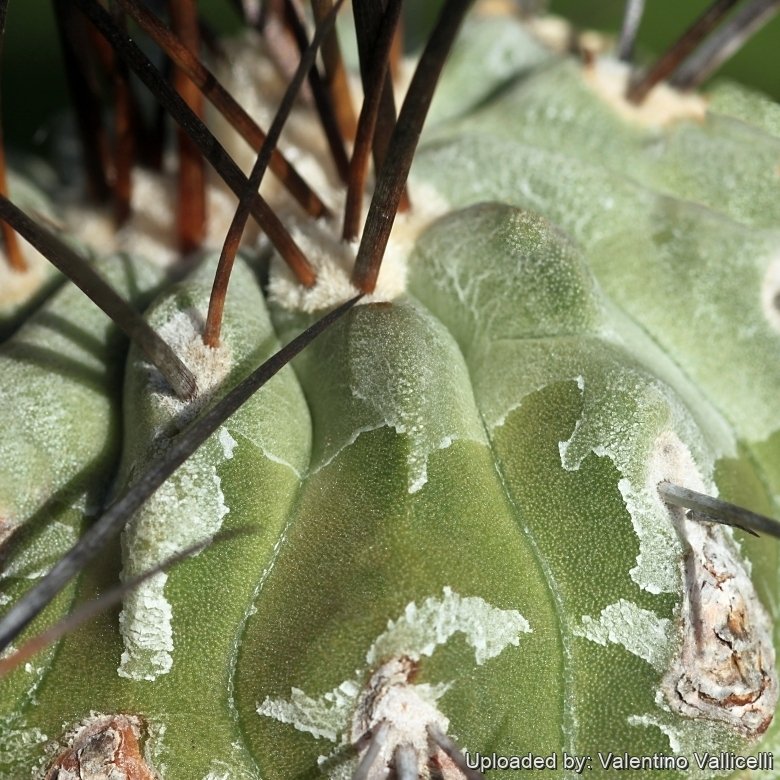
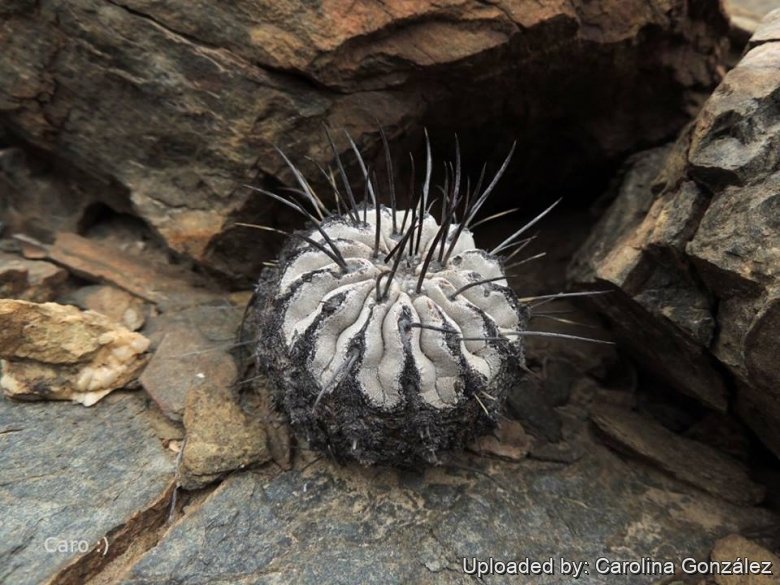
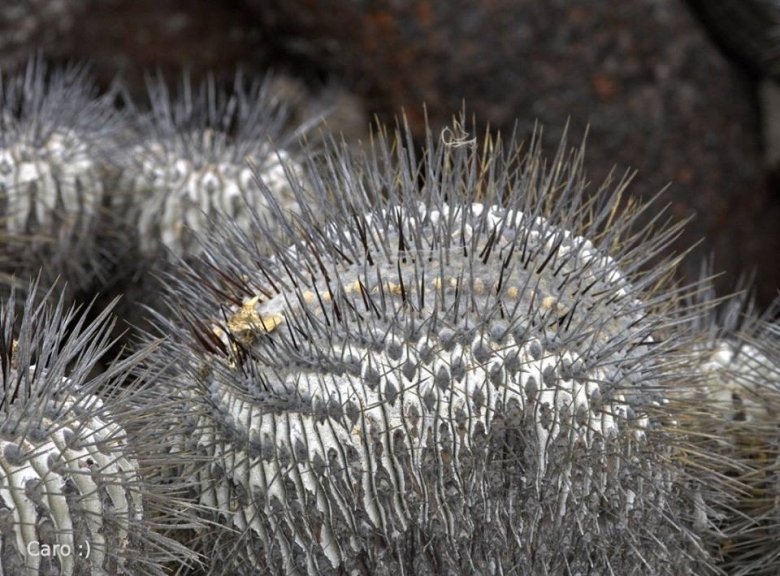
Stems: Individual head, globose to short cylindrical, 6 to 16 cm in diameter, apex wool-covered. Epidermis grey, covered greyish-white waxy film, but not so white like in Copiapoa cinerea.
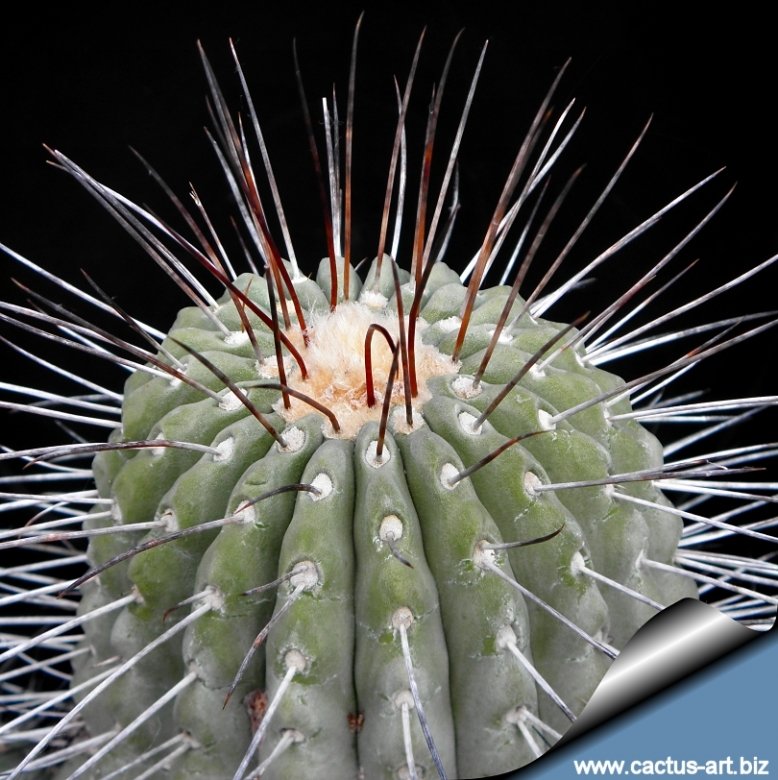
Ribs: (15-)21-33 more higher and acute than in Copiapoa cinerea, slightly tuberculate and narrow between the areoles.
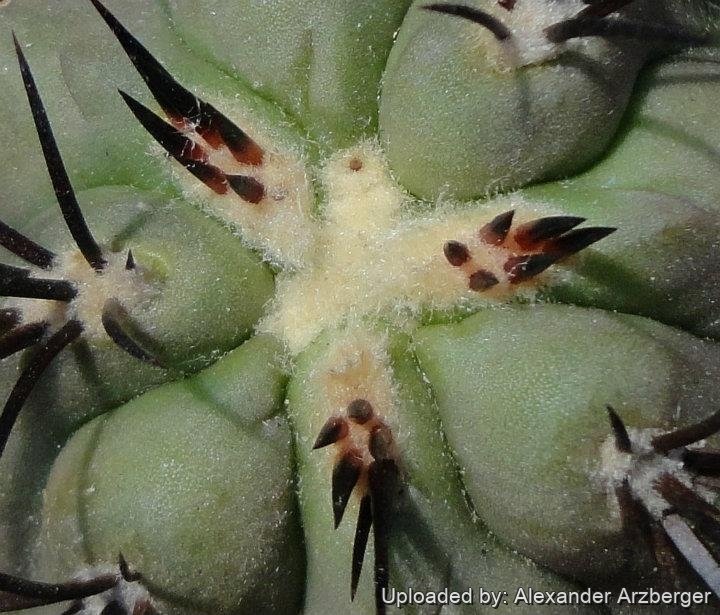
Areoles: Large oval, 5-9 mm in diameter, widely separated (1-2,5 cm apart) and covered with yellowish-grey felt.
Spines: 1-8 (rarely 0), stout, straight, stiff, needle-like, black to light brown, becoming greyish white as they ages.
Radial spines: 1-7, up to 1 cm long,
Central spines: 1, sometimes absent, stouter 2 to 5 cm long.
Flowers: Apical pale yellow, scentless, 2,8-3,5 cm long.
Blooming season: Summer. It is not unusual for copiapoa to take 6-10 years before it starts blooming, but once it does, it should every year.
Fruits: Reddish green rounded, with few scales.
Seeds: Black.
Origin and Habitat
Along the Chilean coast, both north and south of Carrizal Bajo, Atacama, Chile.
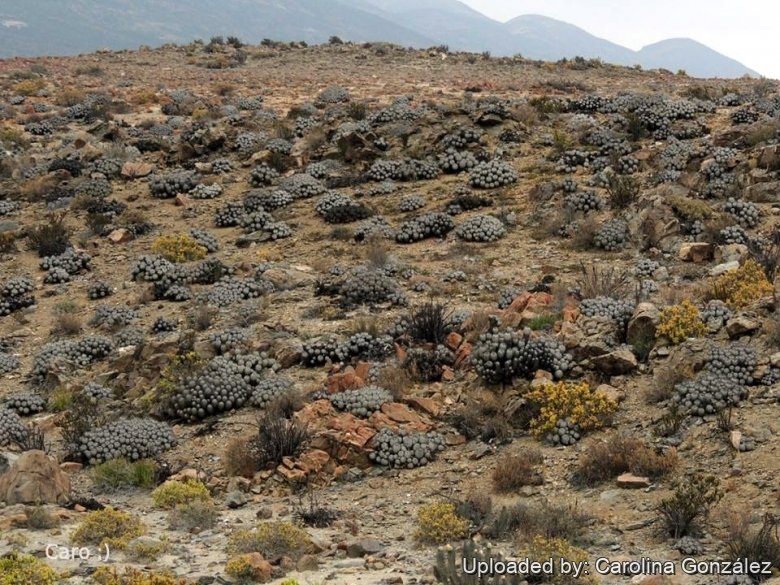
Habitat: It grows in a very dry area on sandy alluvial soils. Despite the lack of rain where it lives, the extreme aridity is attenuated by the frequent, often dense, coastal fogs. It shows a recurrent pattern; usually it is overcast in the early mornings, the clouds dissipating during the late morning and returning during the late afternoons. At times this region is dominated by geophytes, which can cover expanses of the desert spectacularly.
Cultivation and Propagation
This cactus is kept for the beauty of its form. It is a summer grower species slow, but easy to cultivate, that like many cacti of the Peruvian deserts, present some problems in cultivation. It is in fact somewhat rot prone if kept in a non ventilated place.
Growth rate: It is a relatively rapidly growing and easily flowering species that will make clumps given the best conditions.
Soils: It likes very porous standard cactus mix soil, but can become too elongated if compost is too rich.
Repotting: Use pot with good drainage.
Watering: Water regularly from Spring to Autumn, but do not overwater and let the soil mix dry between waterings (Rot prone), keep dry in winter.
Fertilization: Feed with a high potassium fertilizer in summer.
Hardiness:Keep warm and dry in winter (10°C) to avoid rot. Not highly tolerant of a great deal of frost. (Frost tolerance 0°C)
Exposition: Requires full sun or light shade and careful watering to keep plant compact with strong coloured spines. Tends to bronze in strong light, which encourages flowering and heavy spine production. It must be protected from excessive heat and sun in summer.
Uses: It is an excellent plant for container growing. It always looks good and stays small. It look fine in a cold greenhouse and frame or outdoor in a rockery.
Pests & diseases: It may be attractive to a variety of insects, but plants in good condition should be nearly pest-free, particularly if they are grown in a mineral potting-mix, with good exposure and ventilation. Nonetheless, there are several pests to watch for:
- Red spiders: Red spiders may be effectively rubbed up by watering the infested plants from above.
- Mealy bugs: Mealy bugs occasionally develop aerial into the new growth among the wool with disfiguring results, but the worst types develop underground on the roots and are invisible except by their effects.
- Scales: Scales are rarely a problem.
It is wise to treat your whole collection with a systemic insecticide twice a year in spring and autumn.
- Rot: Rot is only a minor problem with cacti if the plants are watered and “aired” correctly. If they are not, fungicides won’t help all that much.
Propagation: Seeds (or offsets if available) or by grafting onto a strong grafting stock like Selenicereus sp. Such grafted seedlings can be successfully cultivated for years. Grafting is often used to speed growth rate and to create a back-up to plants in collection. Seeds germinate in 7-14 days at 21-27° C in spring, remove gradually the glass cover as soon the plants will be well rooted (ca 1-2 weeks) and keep ventilated, no full sun for young plants!
Bibliography
Major references and further lectures
-
A. Gomez Sanchez “Enciclopedia ilustrada de los cactus y otras suculentas” Mundi-Prensa Libros, 2006
-
Cactus & Succulent Journal of Great Britain 43: 59 1981
-
Riha & Subik. “The illustrated encyclopedia of cacti and other succulents” (edited by G. & K.A. Beckett) 1981
-
James Cullen, Sabina G. Knees, H. Suzanne Cubey “The European Garden Flora Flowering Plants: A Manual for the Identification of Plants Cultivated in Europe, Both Out-of-Doors and Under Glass” Cambridge University Press, 11/ago/2011
-
Clive Innes “Complete Handbook of Cacti and Succulents” Van Nostrand Reinhold Company, 01/Dec/1981
-
Stephen D. Davis, Vernon Hilton Heywood, Alan Charles Hamilton, International Union for Conservation of Nature and Natural Resources “Centres of Plant Diversity: The Americas” World Wide Fund for Nature (WWF) and ICUN - World Conservation Union, 1994
-
Edward Anderson “The Cactus family” Timber Press, Incorporated, 2001
-
David R Hunt; Nigel P Taylor; Graham Charles; International Cactaceae Systematics Group. “The New Cactus Lexicon” dh books, 2006
-
N. L. Britton, J. N. Rose “The Cactaceae. Descriptions and Illustrations of Plants of the Cactus Family.” Volume 4, The Carnegie Institution of Washington, Washington 1923
From llifle page Copiapoa carrizalensis
Description
Copiapoa carrizalensis forms huge mounds in habitat more than 1,80 m across composed of hundreds of individual, closely packed heads. The stem is divided into shallow ribs with dense needle-like spines. Aeroles are wooly but most of the wool is concentrated on top of the cactus where it is much thicker. It similar to Copiapoa cinerea but usually with longer spines and greener body.
Stems: Individual head, globose to short cylindrical, 6 to 16 cm in diameter, apex wool-covered. Epidermis white-dusted, covered greyish-white waxy film, but not so white like in Copiapoa cinerea.
Ribs: (15-)21-33 more higher and acute than in Copiapoa cinerea, slightly tuberculate and narrow between the areoles.
Areoles: Large oval, 5-9 mm in diameter, widely separated (1-2,5 cm apart) and covered with yellowish-grey or whitish-grey felt.
Spines: up to 8, stout, straight, stiff, needle-like, black to light brown, becoming greyish white as they ages. The very similar Copiapoa dealbata has mostly 1 single spine per areloa.
Radial spines: 1-7, up to 1 cm long,
Central spines: 1, sometimes absent, stouter 2 to 5 cm long.
Flowers: Apical, pale yellow, scentless, 2,8-3,5 cm long and in diameter. Outer perianth segments with brown-reddish mid stripes.
Blooming: Summer. It is not unusual for copiapoa to take 6-10 years before it starts blooming, but once it does, it should every year.
Fruits: Yellowish white to reddish green, rounded, with few scales.
Seeds: Black, bumpy.
Origin and Habitat
Along the Chilean coast, both north and south of Quebrada Carrizal Bajo (28°08’S), Atacama, Chile.
Altitude: 200–500 metres above sea level.
Habitat: It grows near the coast, in a very dry area on sandy alluvial and rocky soils on the sea side hills. Despite the lack of rain where it lives, the extreme aridity is attenuated by the frequent, often dense, coastal fogs. It shows a recurrent pattern; usually it is overcast in the early mornings, the clouds dissipating during the late morning and returning during the late afternoons. The coastal formations in this region have vegetation corresponding to the Desierto Costero Huasco (Huasco coastal desert). Due to occasional precipitation, this vegetation has more permanence and continuity than the vegetation occurring farther north. The endemics include Copiapoa echinoides, Copiapoa malletiana, Eriosyce napina, Neoporteria carrizalensis and Neoporteria villosa var. laniceps. At times this region is dominated by geophytes, which can cover expanses of the desert spectacularly.
Source: Copiapoa carrizalensis, LLIFLE - Encyclopedia of living forms, CC-BY-SA, retrieved 2026-10-25.
From llifle page Copiapoa carrizalensis var. gigantea
Description
Copiapoa dealbata f. gigantea is a larger stemmed form of Copiapoa dealbata usually with longer spines, singly from the areoles.
Habit: It is a cespitose, globular cactus, similar to Copiapoa cinerea strongly branched basally, forming imposing mounds more than 2 m wide.
Stems: Individual head, globose to short cylindrical, 6 to 16 cm in diameter, apex wool-covered. Epidermis white-dusted, covered greyish-white waxy film, but not so white like in Copiapoa cinerea.
Ribs: (15-)21-33 more higher and acute than in Copiapoa cinerea, slightly tuberculate and narrow between the areoles.
Areoles: Large oval, 5-9 mm in diameter, widely separated (1-2,5 cm apart) and covered with yellowish-grey or whitish-grey felt.
Spines: Copiapoa dealbata has mostly 1 single spine, 2–5 cm long (sometimes 1–3 smaller) straight, stiff, needle-like, black to light brown, becoming greyish white with time. Younger specimens usually have more numerous spines (up to 7) per areloa.
Flowers: Apical, pale yellow, scentless, 2,8-3,5 cm long and in diameter. Outer perianth segments with brown-reddish mid stripes.
Blooming: Summer. It is not unusual for copiapoa to take 6-10 years before it starts blooming, but once it does, it should every year.
Fruits: Yellowish white to reddish green, rounded, with few scales.
Seeds: Black, bumpy.
Origin and Habitat
South of Totoral (on coast), Copiapo. Antofagasta II. Chile
Source: Copiapoa carrizalensis var. gigantea, LLIFLE - Encyclopedia of living forms, CC-BY-SA, retrieved 2026-10-25.
From llifle page Copiapoa cinerea subs. dealbata
Description
Copiapoa dealbata is a cespitose, greyish-white globular cactus, similar to Copiapoa cinerea but usually with longer spines. Typically Copiapoa dealbata has only one single spine from the areoles. The form with more spine per arela (up to 7) is known as Copiapoa carrizalensens but the two forms grows side by side and plants with few or more spines grows together in the same population.
Habit: Plants strongly branched basally, forming imposing mounds up to 1 m tall and more than 2 m wide.
Stems: Individual head, globose to short cylindrical, 6 to 16 cm in diameter, apex wool-covered. Epidermis white-dusted, covered greyish-white waxy film, but not so white like in Copiapoa cinerea.
Ribs: (15-)21-33 more higher and acute than in Copiapoa cinerea, slightly tuberculate and narrow between the areoles.
Areoles: Large oval, 5-9 mm in diameter, widely separated (1-2,5 cm apart) and covered with yellowish-grey or whitish-grey felt.
Spines: Copiapoa dealbata has mostly 1 single spine, 2–5 cm long (sometimes 1–3 smaller) straight, stiff, needle-like, black to light brown, becoming greyish white with time. Younger specimens usually have more numerous spines per areloa.
Flowers: Apical, pale yellow, scentless, 2,8-3,5 cm long and in diameter. Outer perianth segments with brown-reddish mid stripes.
Blooming: Summer. It is not unusual for copiapoa to take 6-10 years before it starts blooming, but once it does, it should every year.
Fruits: Yellowish white to reddish green, rounded, with few scales.
Seeds: Black, bumpy.
Origin and Habitat
Copiapoa dealbata occurs along the Chilean coast, both north and south of Carrizal Bajo, and at a point ca halfway towards Totoral, Atacama, Chile. It has a restricted range (extent of occurrence 500 km2), however the species is abundant, there is no continuing decline of the populations.
Altitude: (0–)20-500(-700) metres above sea level.
Habitat: The species is locally abundant forming groups of several individuals near the coast, in coastal hills (lomas costeras) in a very dry area on sandy alluvial and rocky soils, and desert shrubland on sandy soil. Despite the lack of rain where it lives, the extreme aridity is attenuated by the frequent, often dense, coastal fogs. It shows a recurrent pattern; usually it is overcast in the early mornings, the clouds dissipating during the late morning and returning during the late afternoons. At times this region is dominated by geophytes, which can cover expanses of the desert spectacularly. The species is sporadically collected for ornamental use, only a small portion of the plant is taken and this is not lethal. The major threats are off-road vehicles and road construction.
Cultivation and Propagation
This cactus is kept for the beauty of its form. It is a summer grower species slow but easy to cultivate that like many cacti of the Peruvian deserts, present some problems in cultivation. It is in fact somewhat rot prone if kept in a non ventilated place.
Growth rate: It is a relatively rapidly growing and easily flowering species that will make clumps given the best conditions.
Soils: It likes very porous standard cactus mix soil, but can become too elongated if compost is too rich.
Repotting: Use pot with good drainage.
Watering: Water regularly from Spring to Autumn, but do not overwater and let the soil mix dry between waterings (Rot prone), keep dry in winter.
Fertilization: Feed with a high potassium fertilizer in summer.
Hardiness:Keep warm and dry in winter (10°C) to avoid rot. Not highly tolerant of a great deal of frost. (Frost tolerance 0°C)
Exposition: Requires full sun or light shade and careful watering to keep plant compact with strong coloured spines. Tends to bronze in strong light, which encourages flowering and heavy spine production. It must be protected from excessive heat and sun in summer.
Uses: It is an excellent plant for container growing. It always looks good and stays small. It look fine in a cold greenhouse and frame or outdoor in a rockery.
Pests & diseases: It may be attractive to a variety of insects, but plants in good condition should be nearly pest-free, particularly if they are grown in a mineral potting-mix, with good exposure and ventilation. Nonetheless, there are several pests to watch for:
- Red spiders: Red spiders may be effectively rubbed up by watering the infested plants from above.
- Mealy bugs: Mealy bugs occasionally develop aerial into the new growth among the wool with disfiguring results, but the worst types develop underground on the roots and are invisible except by their effects.
- Scales: Scales are rarely a problem.
It is wise to treat your whole collection with a systemic insecticide twice a year in spring and autumn.
- Rot: Rot is only a minor problem with cacti if the plants are watered and “aired” correctly. If they are not, fungicides won’t help all that much.
Propagation: Seeds (or offsets if available) or by grafting onto a strong grafting stock like Selenicereus sp. Such grafted seedlings can be successfully cultivated for years. Grafting is often used to speed growth rate and to create a back-up to plants in collection. Seeds germinate in 7-14 days at 21-27° C in spring, remove gradually the glass cover as soon the plants will be well rooted (ca 1-2 weeks) and keep ventilated, no full sun for young plants!
Bibliography
Major references and further lectures
-
A. Gomez Sanchez “Enciclopedia ilustrada de los cactus y otras suculentas” Mundi-Prensa Libros, 2006
-
Cactus & Succulent Journal of Great Britain 43: 59 1981
-
Riha & Subik. “The illustrated encyclopedia of cacti and other succulents” (edited by G. & K.A. Beckett) 1981
-
James Cullen, Sabina G. Knees, H. Suzanne Cubey “The European Garden Flora Flowering Plants: A Manual for the Identification of Plants Cultivated in Europe, Both Out-of-Doors and Under Glass” Cambridge University Press, 11/ago/2011
-
Clive Innes “Complete Handbook of Cacti and Succulents” Van Nostrand Reinhold Company, 01/Dec/1981
-
Stephen D. Davis, Vernon Hilton Heywood, Alan Charles Hamilton, International Union for Conservation of Nature and Natural Resources “Centres of Plant Diversity: The Americas” World Wide Fund for Nature (WWF) and ICUN - World Conservation Union, 1994
-
Edward Anderson “The Cactus family” Timber Press, Incorporated, 2001
-
David R Hunt; Nigel P Taylor; Graham Charles; International Cactaceae Systematics Group. “The New Cactus Lexicon” dh books, 2006
-
N. L. Britton, J. N. Rose “The Cactaceae. Descriptions and Illustrations of Plants of the Cactus Family.” Volume 4, The Carnegie Institution of Washington, Washington 1923
-
Faundez, L., Walter, H.E. & Saldivia, P. 2013. Copiapoa dealbata. The IUCN Red List of Threatened Species 2013: e.T152929A696219. http://dx.doi.org/10.2305/IUCN.UK.2013-1.RLTS.T152929A696219.en. Downloaded on 18 February 2016.
Source: Copiapoa cinerea subs. dealbata, LLIFLE - Encyclopedia of living forms, CC-BY-SA, retrieved 2026-10-25.
From llifle page Copiapoa dealbata f. cristata
Description
The typical Copiapoa dealbata is a cespitose, greyish-white globular cactus typically with only one single spine from the areoles. The form with more spine per arela (up to 7) is known as Copiapoa carrizalensens but the two forms grows side by side and plants with few or more spines grows together in the same population.
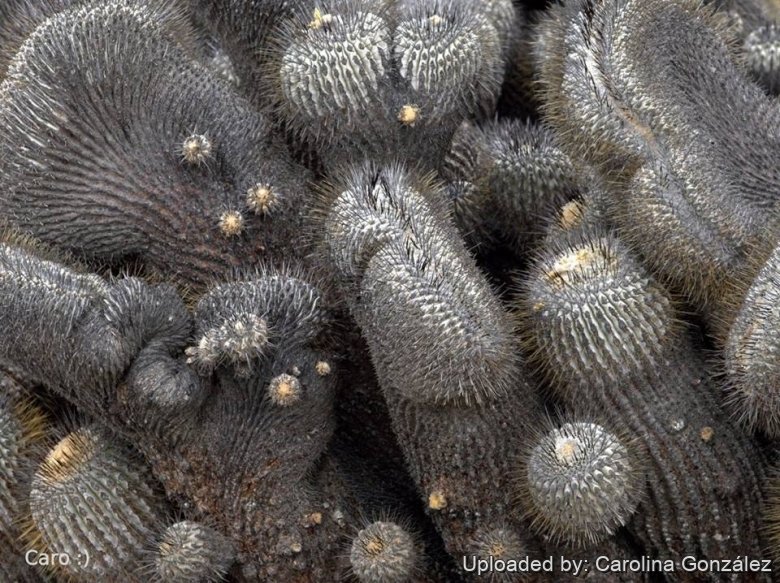
Crested form: The crested forms are cultivated for their beautiful stem with dense bristly spine and pronounced sculpture effects. These plants produce crests, and crests occasionally produce normal shoots. Flowers are produced both on the the apex of normal and crested specimens. The plants are often grafted on stronger species, called the stock, that can be any number of different columnar cactus.
Origin and Habitat
A very few crested specimens of C. dealbata occurs among normal plants along the Chilean coast, both north and south of Carrizal Bajo, and at a point ca halfway towards Totoral, Atacama, Chile. It has a restricted range (extent of occurrence 500 km2), however the species is abundant, there is no continuing decline of the populations.
Altitude: (0–)20-500(-700) metres above sea level.
Habitat: C. dealbata is locally abundant forming groups of several individuals near the coast, in coastal hills (lomas costeras) in a very dry area on sandy alluvial and rocky soils, and desert shrubland on sandy soil. Despite the lack of rain where it lives, the extreme aridity is attenuated by the frequent, often dense, coastal fogs. It shows a recurrent pattern; usually it is overcast in the early mornings, the clouds dissipating during the late morning and returning during the late afternoons. At times this region is dominated by geophytes, which can cover expanses of the desert spectacularly. The species is sporadically collected for ornamental use, only a small portion of the plant is taken and this is not lethal. The major threats are off-road vehicles and road construction.
Cultivation and Propagation
Copiapoa dealbata f. cristata will tolerate sun and heat, but not extended periods of frost. The crested form is more frost sensitive and should not be kept at less than -5°C. Grow them in rich, porous, sandy soil, and let their soil dry out between waterings. If potted, repot in the spring, if their roots become cramped. Generally, they should be repotted every other year in order to provide fresh soil. However, this doesn’t necessarily mean they’ll need larger containers. Fill about a quarter of the pot with broken crocks, gravel, etc. to promote good drainage. After repotting, do not water for a week or more. The crested plants enjoy a warm sunny environment and for more speedy growth a light position on a higher shelf with light feeding and rainwater given to the bottom of the plant will ensure success, especially with rooted detached branches, which do well in these conditions.
Propagation: Grafting. It can also be increased by cuttings, which will take root in a minimum temperature of 20° C. Cuttings of healthy shoots can be taken in the spring and summer. Cut the stem with a sharp, sterile knife, leave the cutting in a warm, dry place for a week or weeks (depending on how thick the cutting is) until a callus forms over the wound. Once the callus forms, the cutting may be inserted in a container filled with firmed cactus potting mix topped with a surface layer of coarse grit. They should be placed in the coarse grit only; this prevents the cut end from becoming too wet and allows the roots to penetrate the rich compost underneath. The cuttings should root in 2 to 6 weeks.
Source: Copiapoa dealbata f. cristata, LLIFLE - Encyclopedia of living forms, CC-BY-SA, retrieved 2026-10-25.
Gallery