Publication: Revista Chilena Hist. Nat. 33: 614. 1929
Description
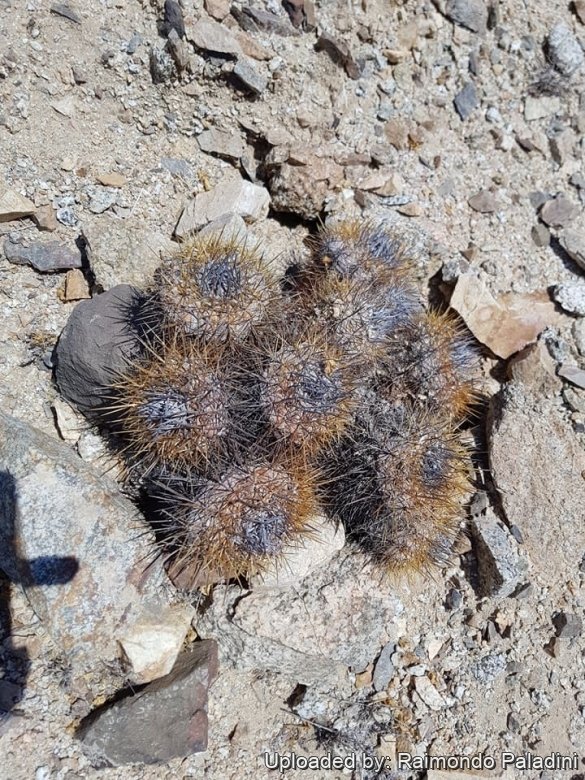
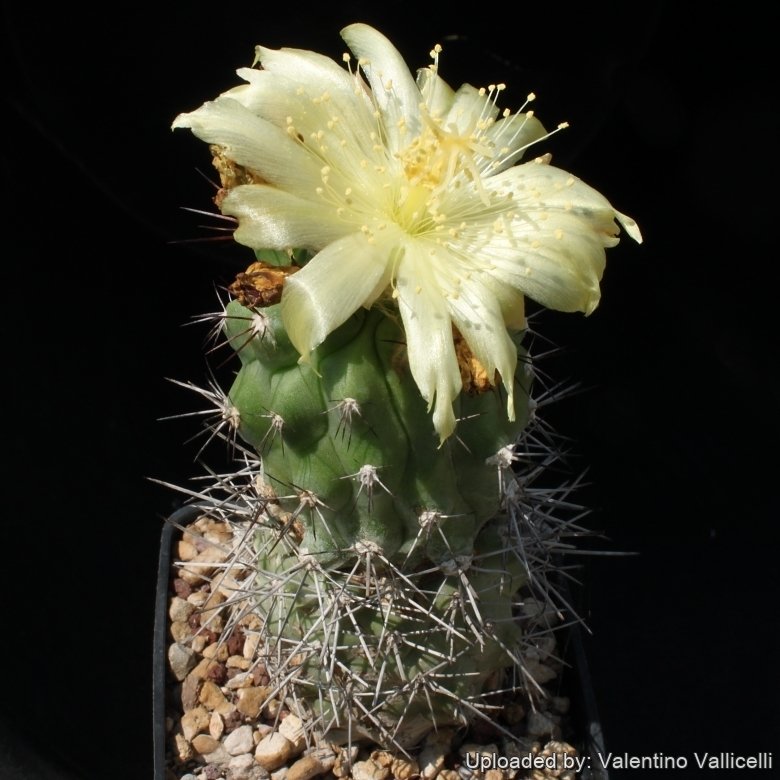
Copiapoa taltalensis is a perennial geophytic succuculent with rounded stems arising from a large tuberose root.
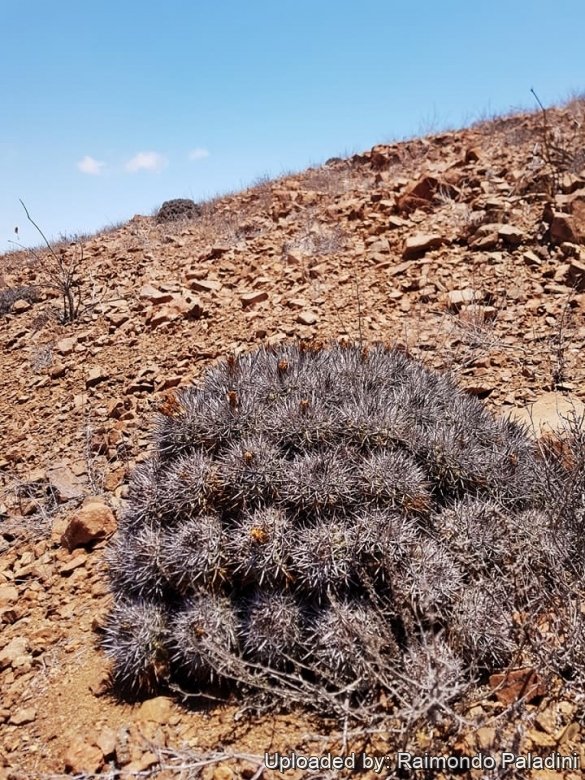
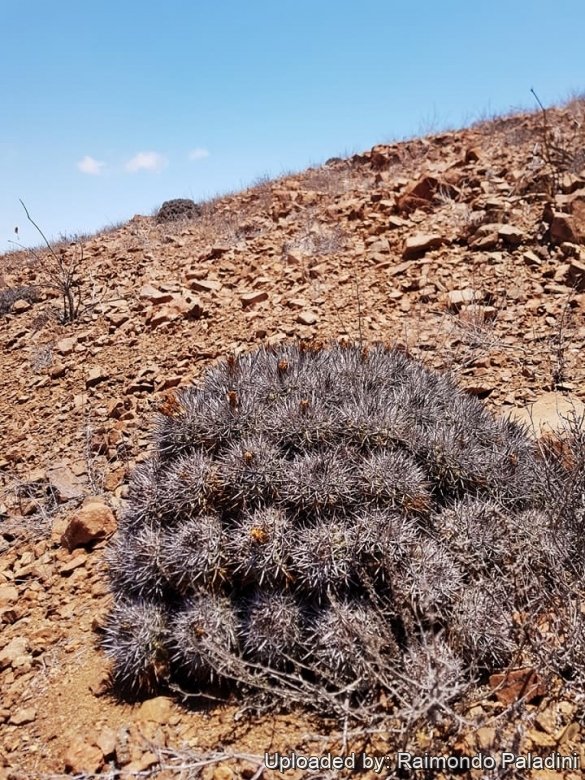
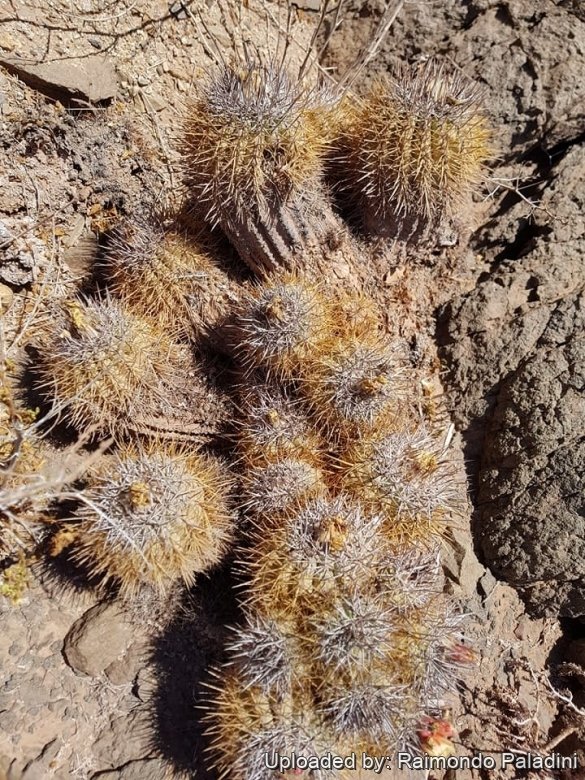
Habit: It is solitary, or sprouting very sparingly from the base to form large clump up to 50 cm tall.
Roots: Tuberous.
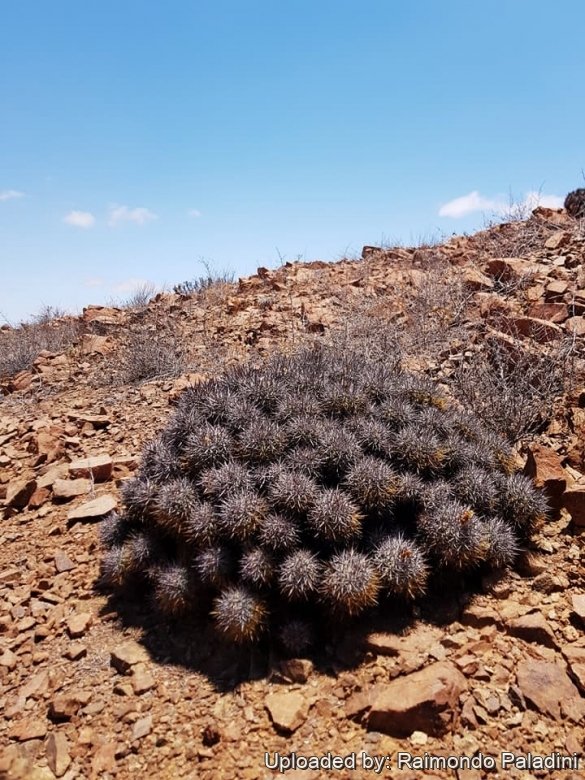
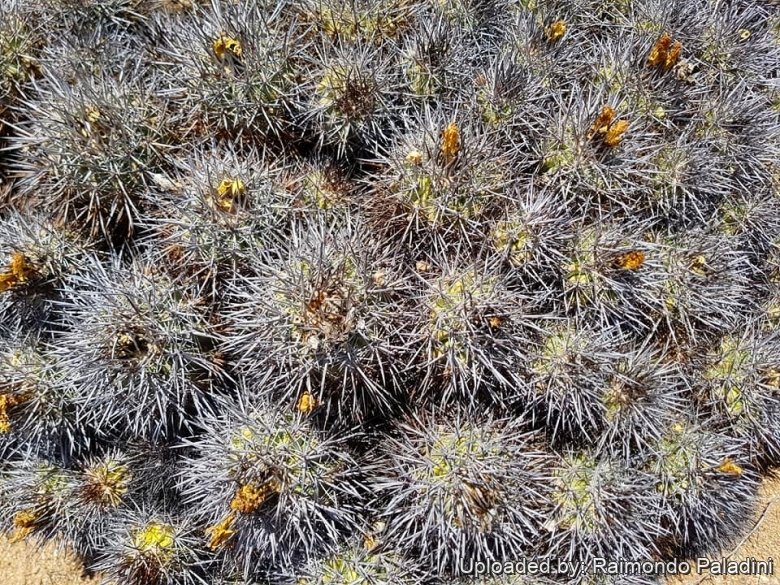
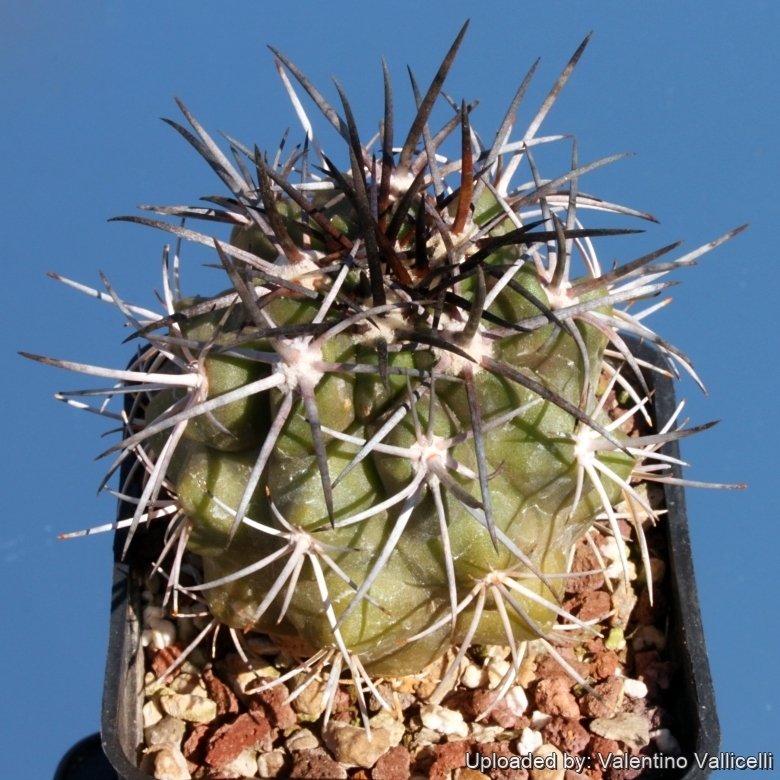
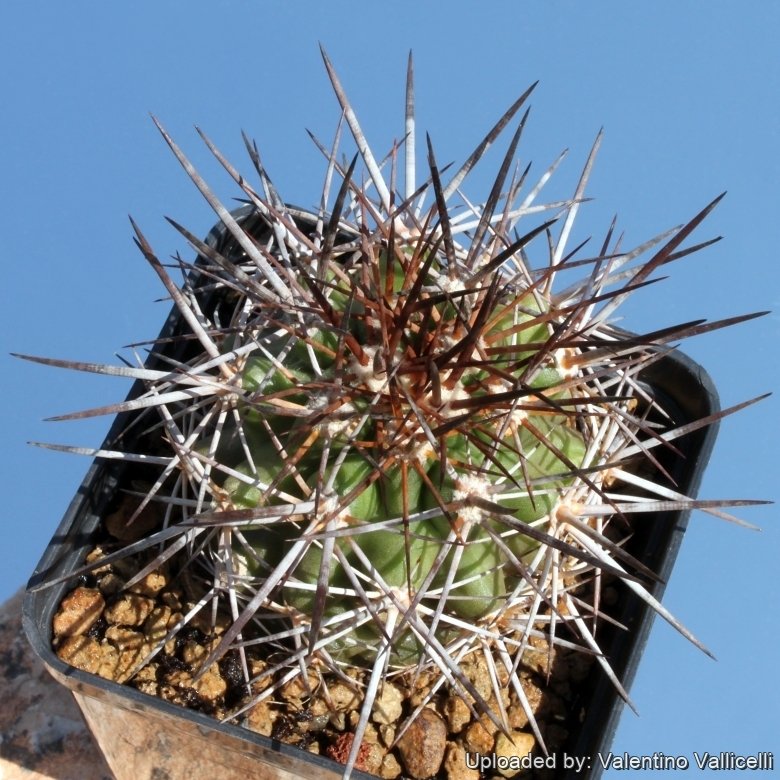
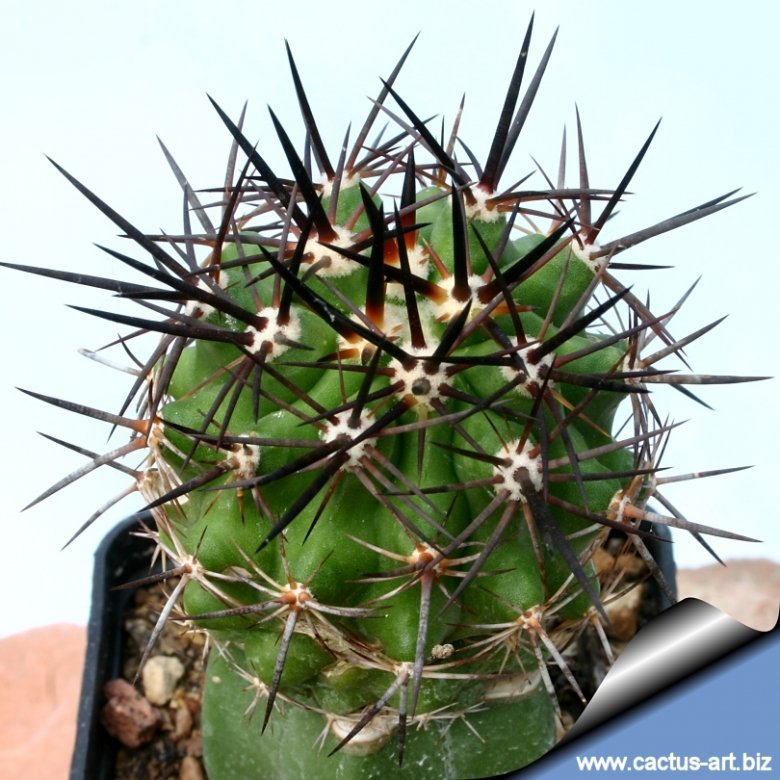
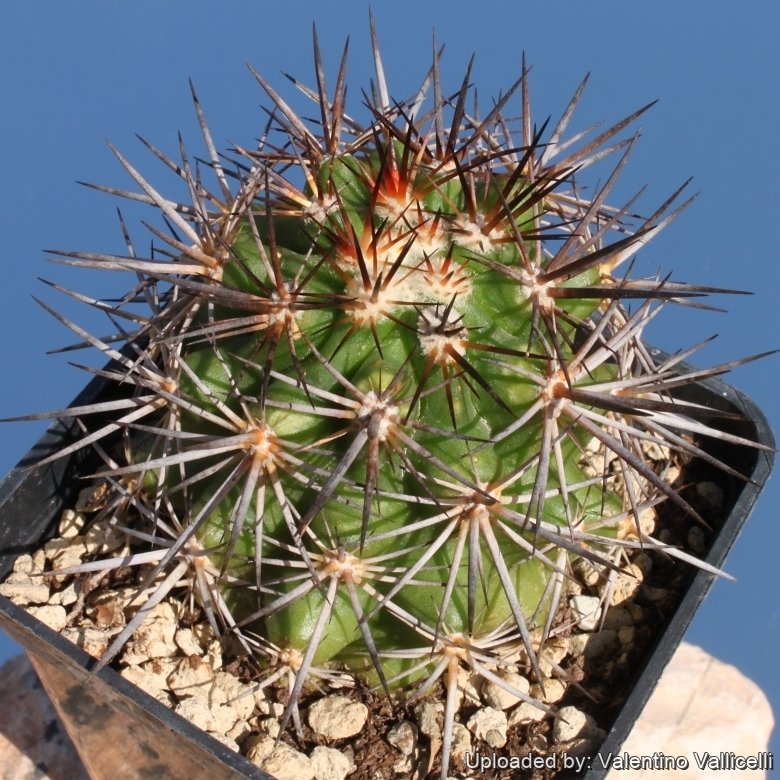
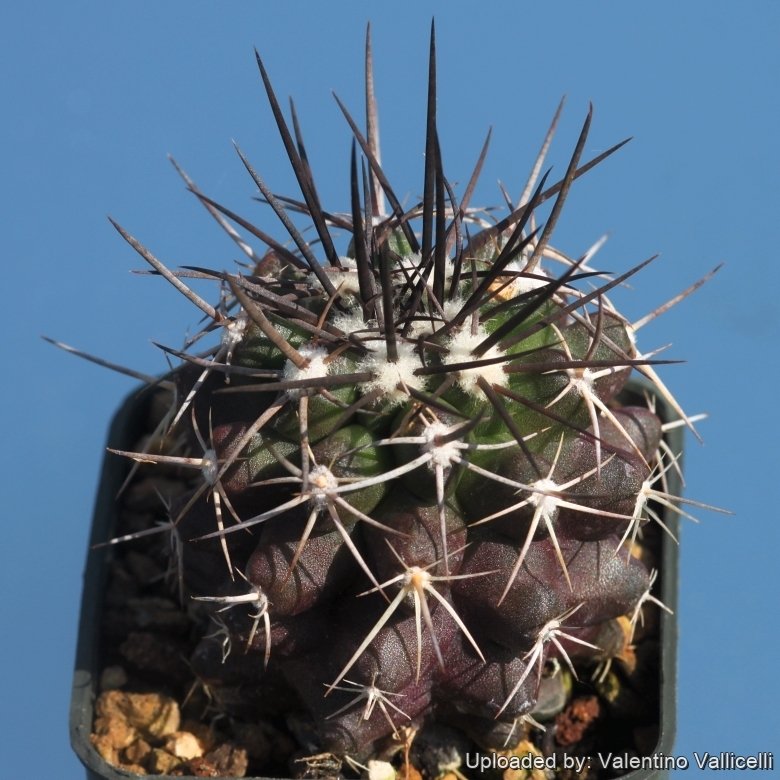
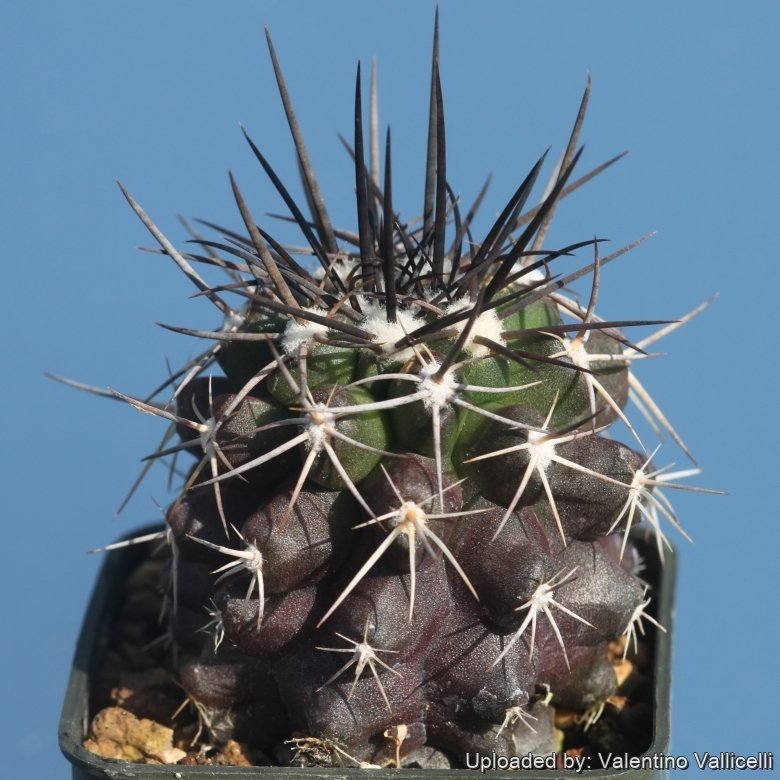
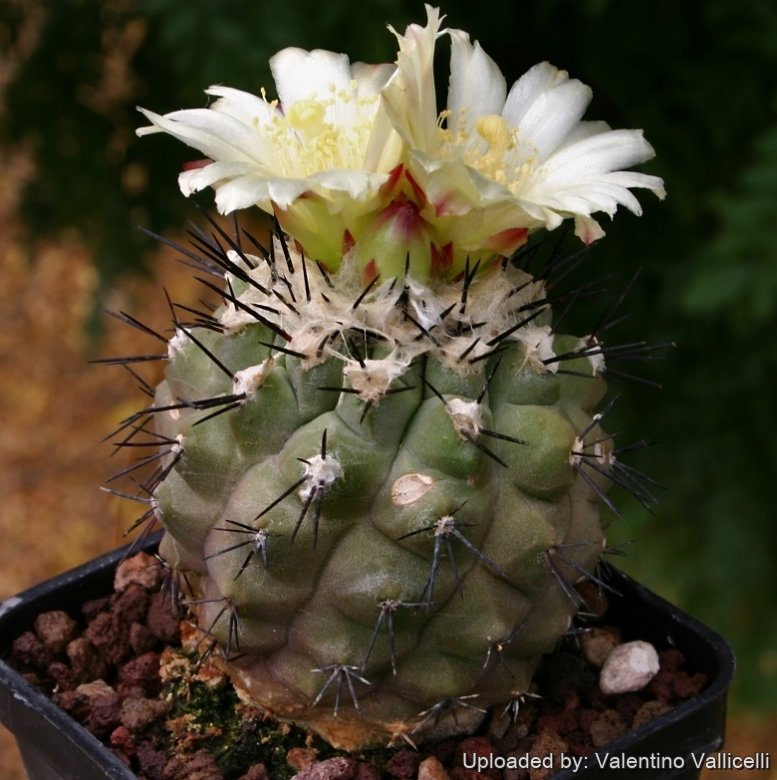
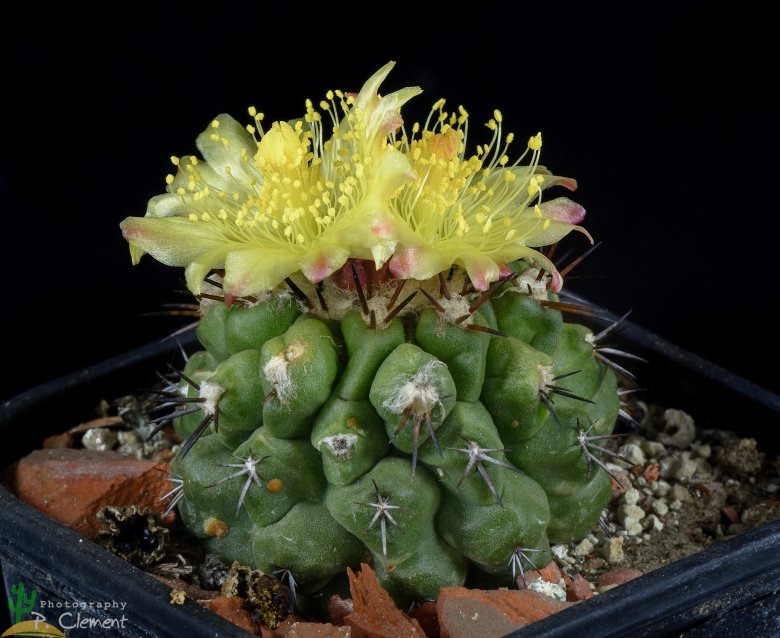
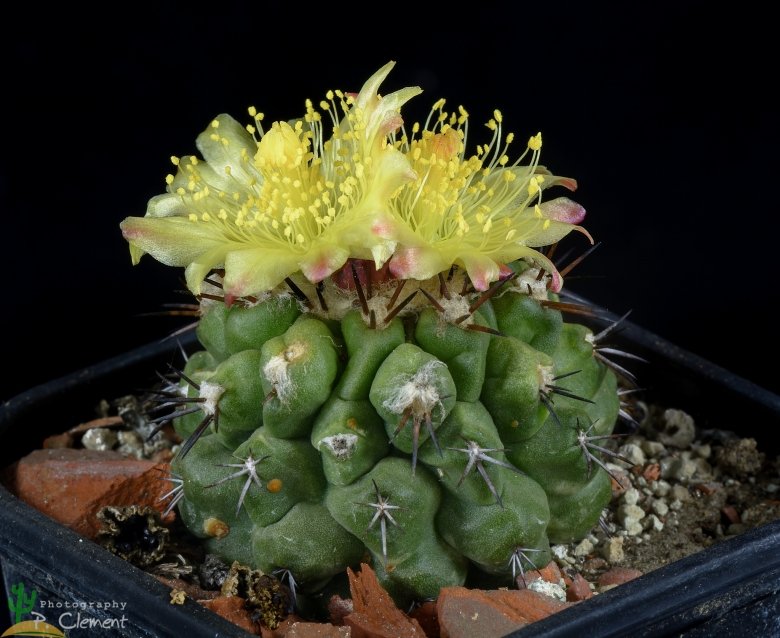
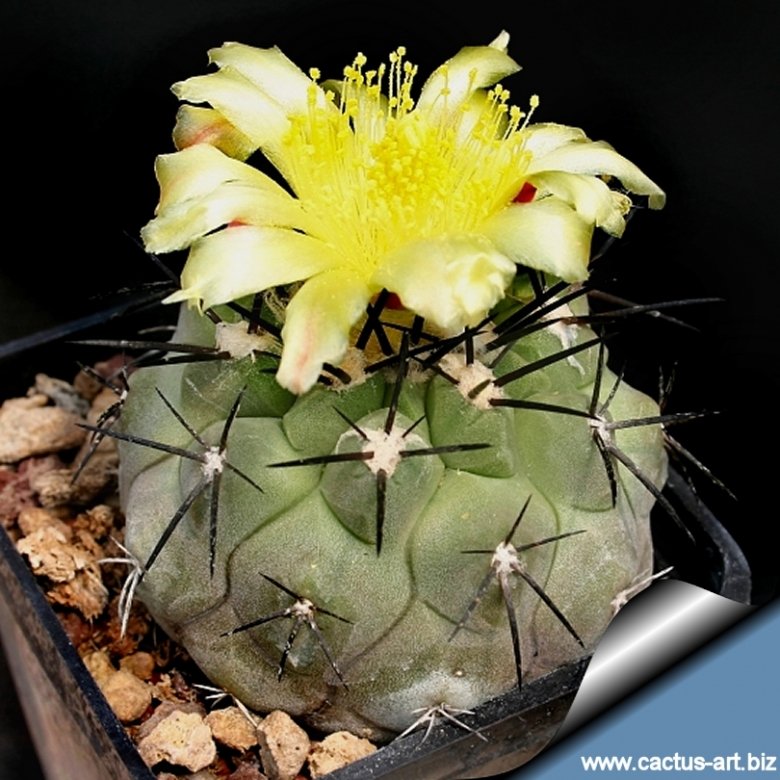
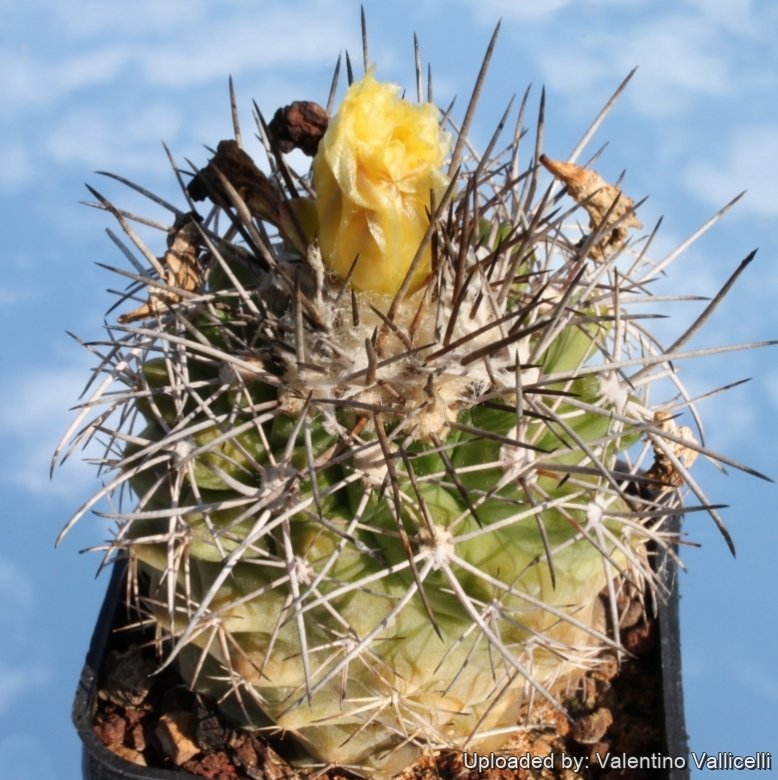
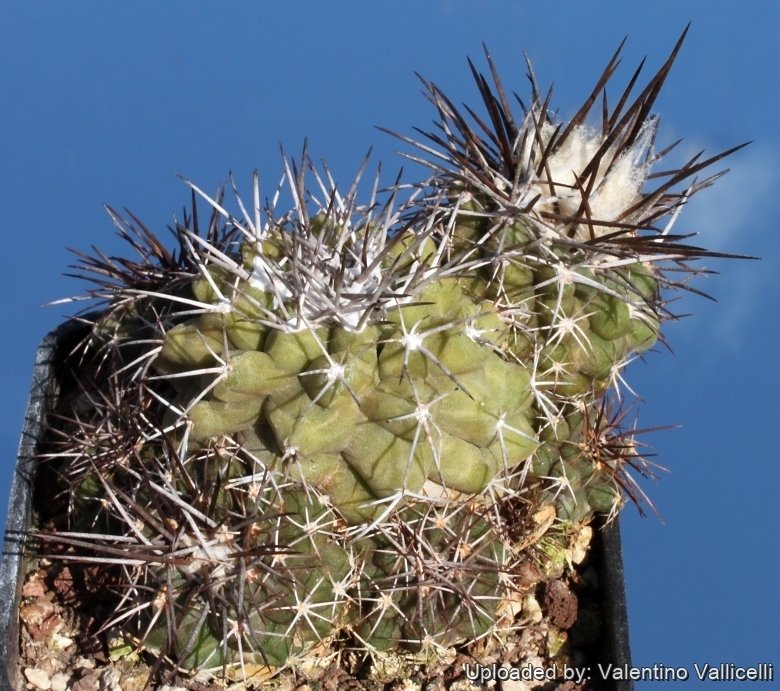
Stem: Globose to short cylindrical, 5 to 15 cm or more tall, and 5 to 10 cm in diameter, pale green or olive green eventually lightly tinged with brown in the sun, globular flattened in the young plant, later columnar, crowned by a dense mass of silky brownish wool, particularly at flowering time.
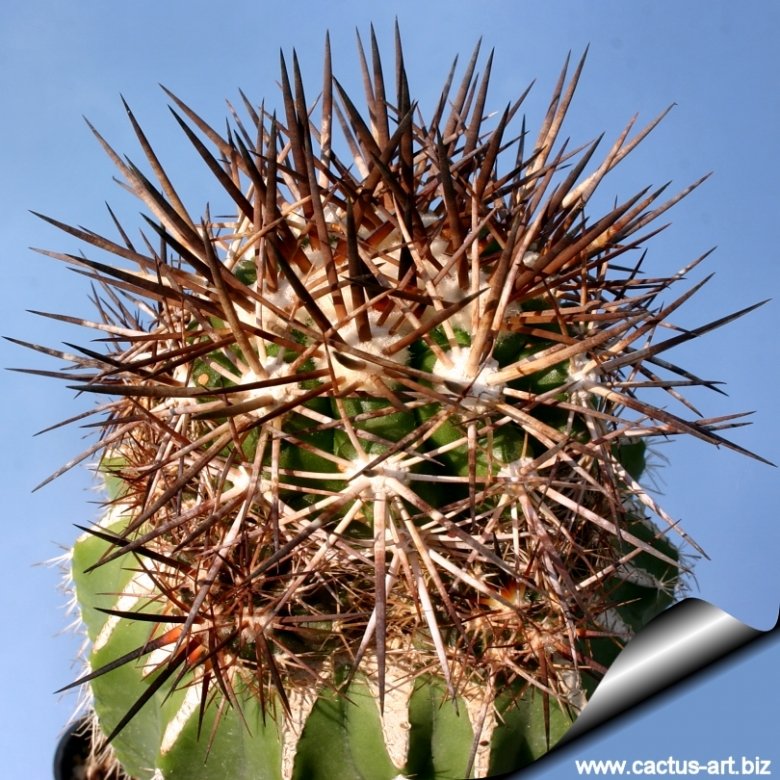
Ribs: 10 to 17 prominent, not wavy, divided into large tubercles about 7 mm high.
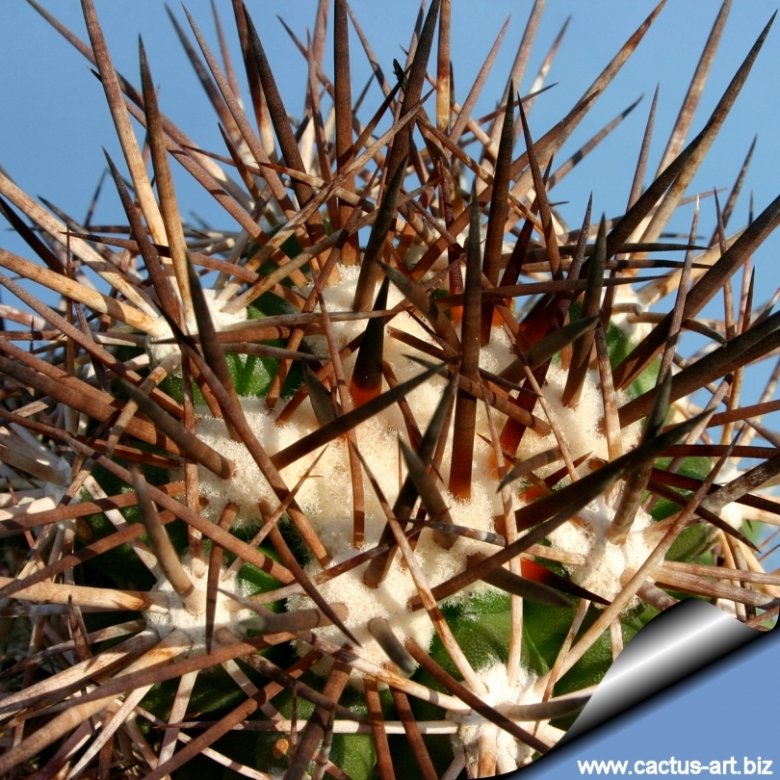
Areoles: Round covered with white or brown felt up to 1 cm apart.
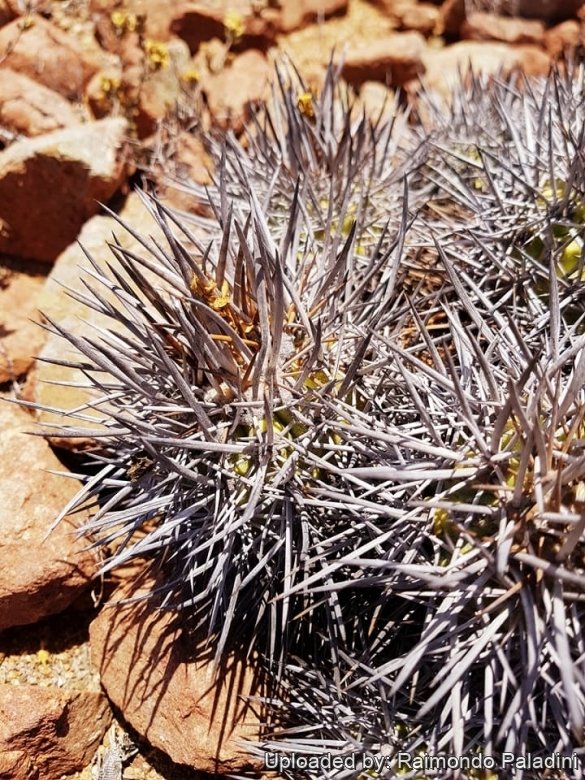
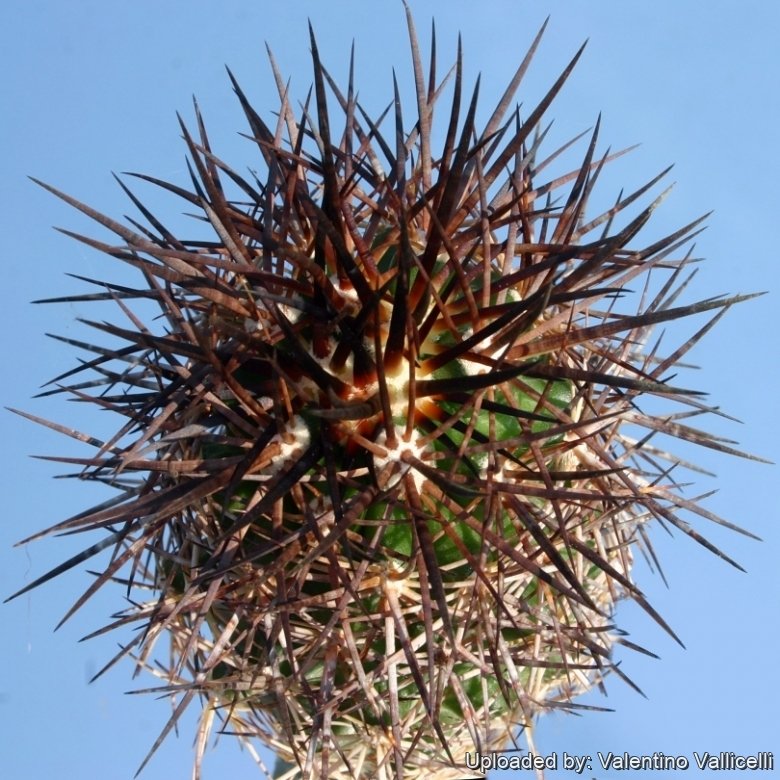
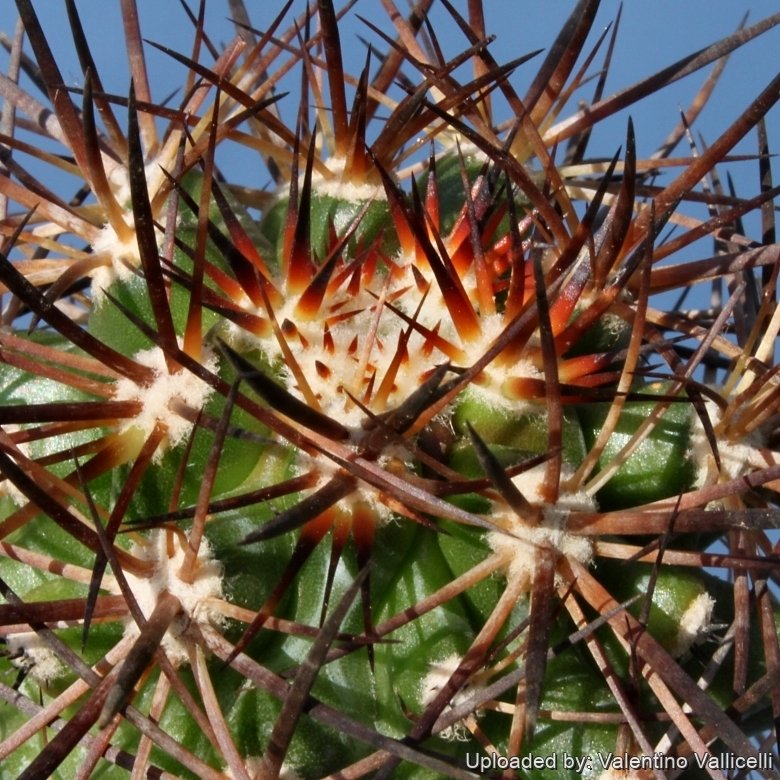
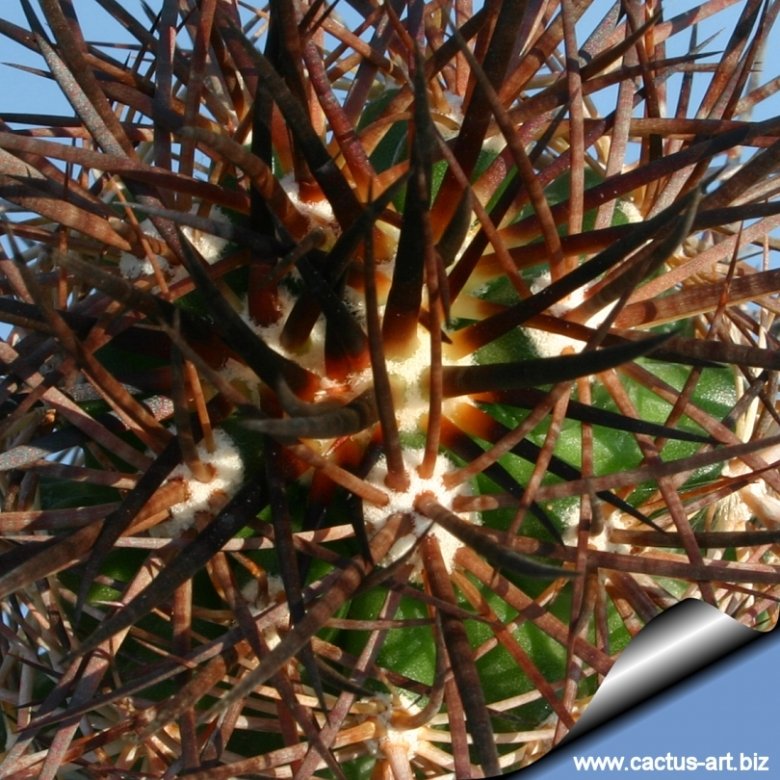
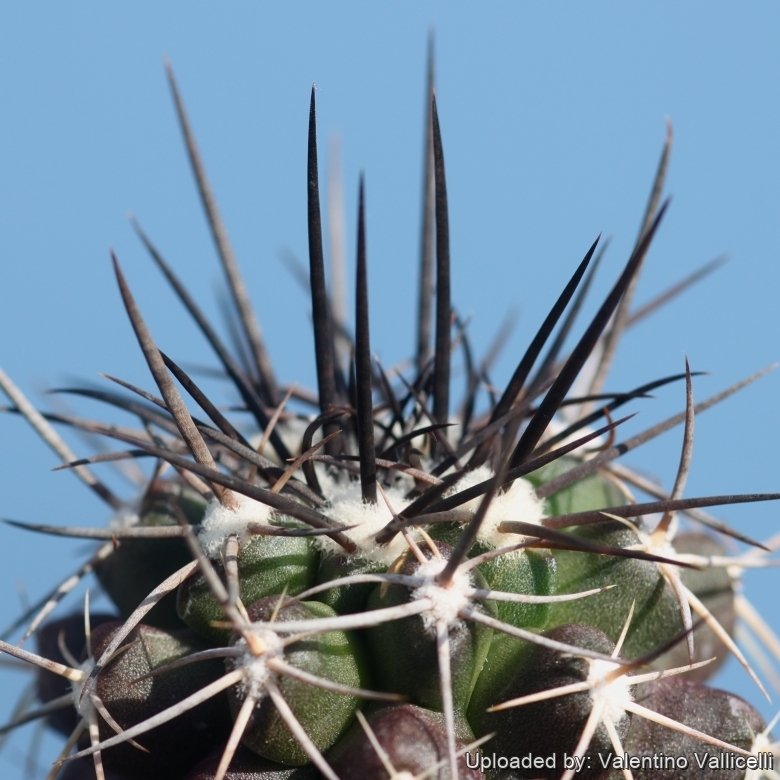
Spines: Straight or slightly curved, white to yellow to brown to black (later grey).
Radial spines: 7-12 about 2 cm long.
Central spines: 1 to 6 stronger and more than 2 cm long as well.
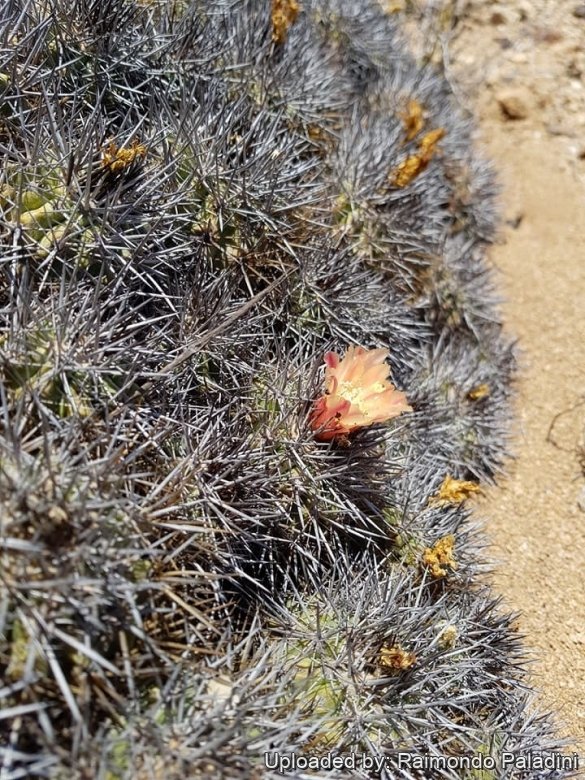
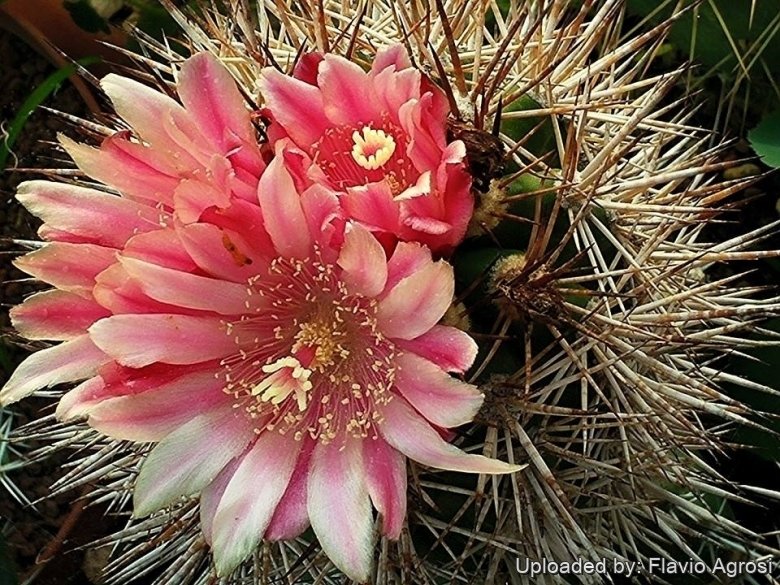
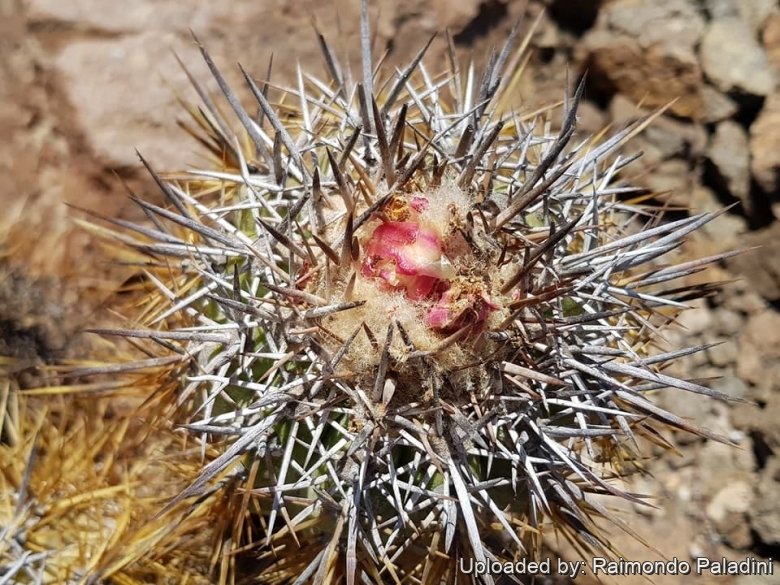
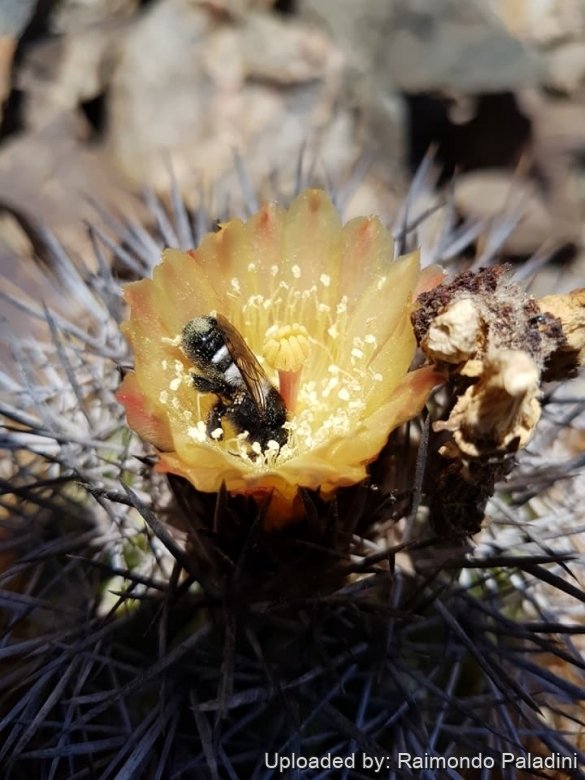
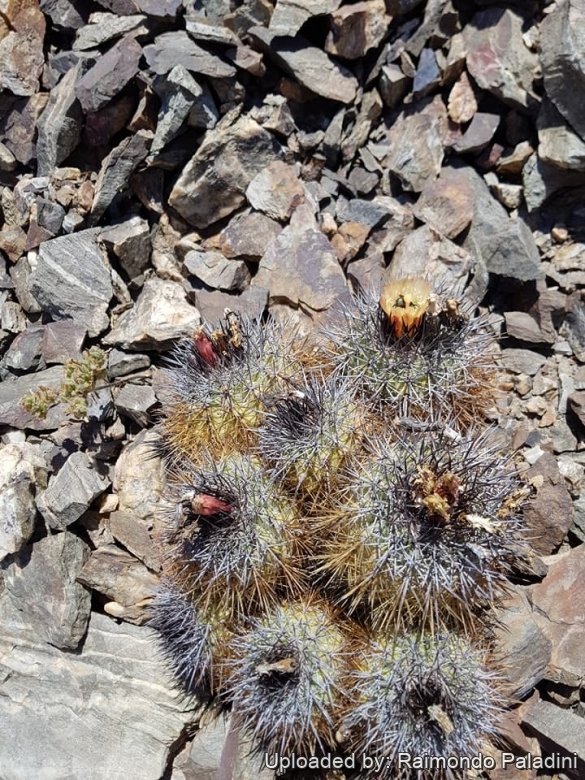
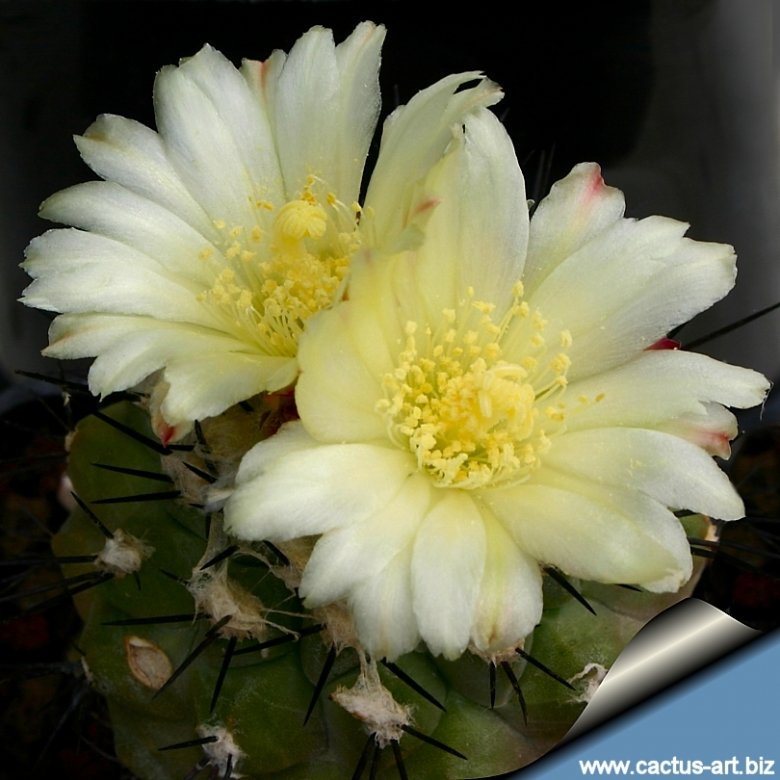
Flowers: Diurnal closing at night, protracting the period of opening many days and arising on the crown, often several at a time, nearly hidden in the dense wool. They are glossy, pale yellow or reddish, with broad limb, 3,5-4,2 cm long and up to 5,5 cm in diameter, and with a faint scent. The filaments, anthers and style are yellow, the 7 to 12 lobed stigma darker. The ovary measures about 1 cm across.
Blooming season: Flowers throughout the whole summer.
Fruits: Globose to ovoid scaly.
Seeds: Small, black glossy.
Origin and Habitat
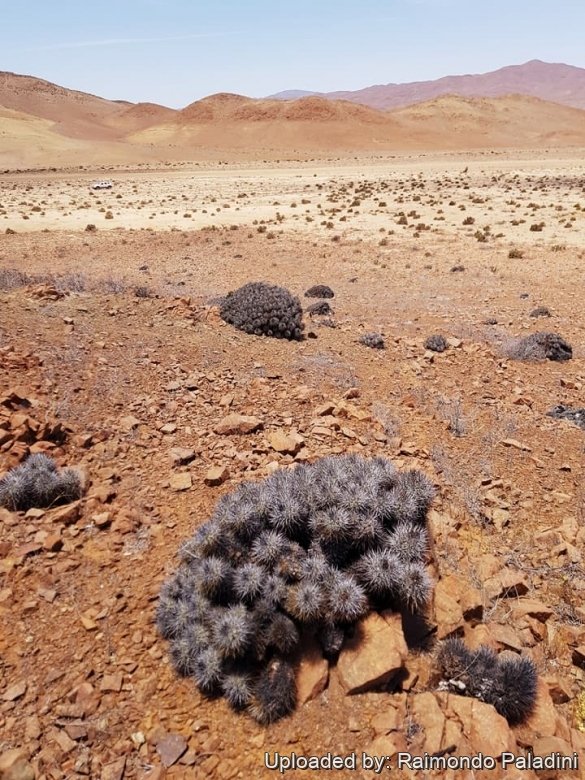
Taltal to Esneralda, and the region east of Cifuncho; Quebrada San Ramón (25° 23´S- 70° 26´W) (Taltal), Antofagasta, Chile. Valle de Cachina near Placilla Esmeralda; East of Esmeralda (25° 51´S- 70° 33´W) (Copiapoa taltalensis ssp. taltalensis)
Altitude: 0-500(-800) metres above sea level.
Habitat: Copiapoa taltalensis grows in open areas in the coastal desert of Taltal, mostly on rocky slopes but extending to the edge of the desert in sandy soils, with protection from direct sun through coastal fog (camanchaca). They obtain water mainly from condensation of the fog, they only manage to survive in those conditions. The succulent vegetation found in this area is particularly interesting and comprises endemic species such as Eriosyce odieri subsp. malleolata, Eriosyce occulta, Copiapoa cinerea, Copiapoa columna-alba and Copiapoa krainziana.
Cultivation and Propagation
Considering that Copiapoa taltalensis comes from a habitat with an extremely arid climate, they are remarkably tolerant of pot culture. These plants have taproots and are susceptible to overwatering. They requires also an appropriate air circulation. Copiapoas are summer grower species easy to cultivate.
Growth rate: This is a slow growing cactus kept for the beauty of its form that will make clumps given the best conditions.
Soils: It likes very coarse mineral cactus mix soil, but can become too elongated if compost is too rich.
Repotting: Use pot with good drainage.
Watering: It requires light but regular waterings in summer, but let the soil mix dry between waterings, but do not overwater (Rot prone), it must be strictly kept dry throughout the winter quiescent period since it is very sensitive to any moisture excesses keep dry in winter.
Fertilization: Feed with a high potassium fertilizer in summer.
Hardiness: Not highly tolerant of a great deal of frost. They need to be kept in a cool place during winter rest and are resistant to light frost if kept on the dry side prior to, and during, cold weather ( they are hardy to -2 C ° C short periods). However some warmth throughout the year will increase the grower’s success (minimum 5° to 10°C during rest season).
Exposition: Requires full sun or light shade and careful watering to keep plant compact with strong coloured spines. Tends to bronze in strong light, which encourages flowering and heavy spine production. Light shadow my be useful in the hottest summer days.
Uses: It is an excellent plant for container growing. It always looks good and stays small. It look fine in a cold greenhouse and frame or outdoor in a rockery.
Pests & diseases: It may be attractive to a variety of insects, but plants in good condition should be nearly pest-free, particularly if they are grown in a mineral potting-mix, with good exposure and ventilation. Nonetheless, there are several pests to watch for:
- Red spiders: Red spiders may be effectively rubbed up by watering the infested plants from above.
- Mealy bugs: Mealy bugs occasionally develop aerial into the new growth among the wool with disfiguring results, but the worst types develop underground on the roots and are invisible except by their effects.
- Scales: Scales are rarely a problem. It is wise to treat your whole collection with a systemic insecticide twice a year in spring and autumn.
- Rot: Rot is only a minor problem with cacti if the plants are watered and “aired” correctly. If they are not, fungicides won’t help all that much. To prevent rottenness it is also advisable to surround its root neck by very rough sand or grit, this help a fast water drainage.
Propagation: Seeds (or offsets if available), Grafting is often used to speed growth rate and to create a back-up to plants in collection. Seeds germinate in 7-14 days at 21-27° C in spring, remove gradually the glass cover as soon the plants will be well rooted (ca 1-2 weeks) and keep ventilated, no full sun for young plants!
Bibliography
Major references and further lectures
-
John Borg “Cacti: a gardener’s handbook for their identification and cultivation” Blandford P., 1970
-
Schulz R., (2006) “Copiapoa 2006” Schulz Publishing.
-
Edward Anderson “The Cactus family” Timber Press, Incorporated, 2001
-
Friedrich Ritter - Kakteen in Südamerika (Ergebnisse meiner 20jährigen Feldforschungen) 1980
-
David R Hunt; Nigel P Taylor; Graham Charles; International Cactaceae Systematics Group. “The New Cactus Lexicon” dh books, 2006
-
F.Ritter “Kakteen Südamerika” 3: 1072 1980.
-
Graham Charles “Copiapoa” Cirio Pub. Services, 1999
-
N. L. Britton, J. N. Rose “The Cactaceae. Descriptions and Illustrations of Plants of the Cactus Family.” Volume 4, The Carnegie Institution of Washington, Washington 1923
-
James Cullen, Sabina G. Knees, H. Suzanne Cubey “The European Garden Flora Flowering Plants: A Manual for the Identification of Plants Cultivated in Europe, Both Out-of-Doors and Under Glass” Cambridge University Press, 11/Aug/2011
From llifle page Copiapoa desertorum
Description
Copiapoa desertorum is a form or subspecies of the very variable Copiapoa taltalensis which form a complex of related taxon. It is still unclear whether this variable complex is one or several species. There is so much variation that most authors choose to lump them together. Copiapoa desertorum is an hardy desert type that distinguishes for the darker coloured spines and for the rarely seen red flowers. This flower colour is rare among Copiapoa which tend to be uniformly yellow.
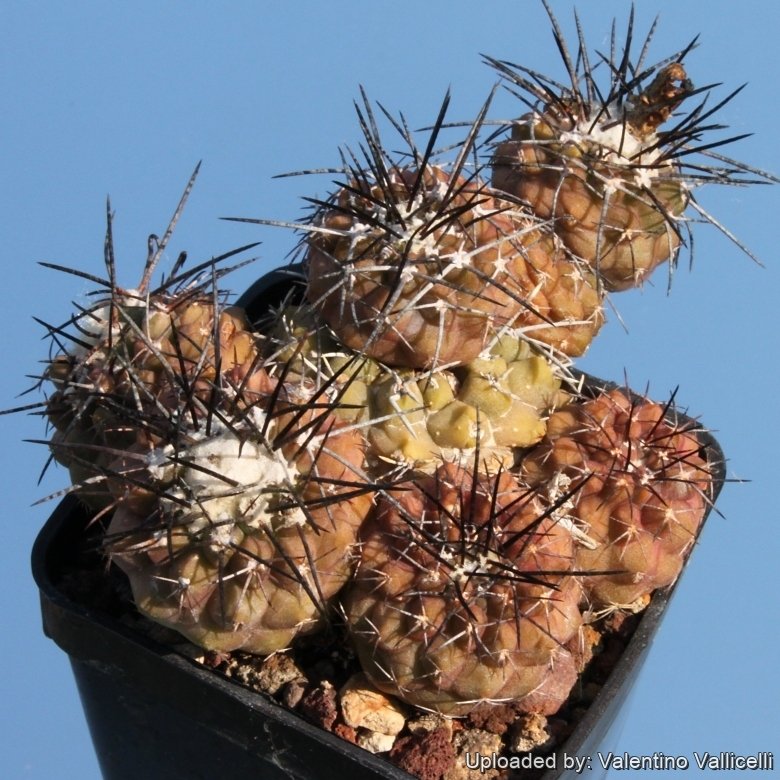
Habit: It branches very sparingly from the base to form large clusters up to 70 cm tall and 50 cm across.
Roots: Tuberous, long, with a slightly narrowed neck.
Stem: Globose to somewhat elongated, 6 to 10 cm in diameter, pale green or olive green crowned by a dense mass of silky grey or creamy white wool, particularly at flowering time.
Ribs: 10 to 17 prominent, not wavy, obtuse up to 15 mm. wide.
Areoles: Round to oval, covered with white or greyish-brown felt or wool up to 1 cm apart.
Spines: Straight brown/tan or blackish (later grey) more or less uniform.
Radial spines: 7-12 about 1,5-4 cm long.
Central spines: 2 to 6 stronger 2-5 cm long.
Flowers: Diurnal closing at night, protracting the period of opening many days and arising on the crown, often several at a time, nearly hidden in the dense wool. Glossy, pale yellow, some with red/pink tones or red, 3,5-4,2 cm long and up to 5,5 cm in diameter, and with a faint scent.
Blooming season: Flowers throughout the whole summer.
Fruits: Red, globose to ovoid about 14 mm in diameter and scaly.
Seeds: Small, 4 x 0.9 mm glossy black.
Origin and Habitat
It is found along the coast near Cifuncho both inland and in its surroundings. Antofagasta Region. Chile.
Altitude: 20-420 metres above sea level.
Cultivation and Propagation
Considering that Copiapoa desertorum comes from a habitat with an extremely arid climate, they are remarkably tolerant of pot culture. These plants have taproots and are susceptible to overwatering. They requires also an appropriate air circulation. Copiapoas are summer grower species easy to cultivate.
Growth rate: This is a slow growing cactus kept for the beauty of its form that will make clumps given the best conditions.
Soils: It likes very coarse mineral cactus mix soil, but can become too elongated if compost is too rich.
Repotting: Use pot with good drainage.
Watering: It requires light but regular waterings in summer, but let the soil mix dry between waterings, but do not overwater (Rot prone), it must be strictly kept dry throughout the winter quiescent period since it is very sensitive to any moisture excesses keep dry in winter.
Fertilization: Feed with a high potassium fertilizer in summer.
Hardiness: Not highly tolerant of a great deal of frost. They need to be kept in a cool place during winter rest and are resistant to light frost if kept on the dry side prior to, and during, cold weather ( they are hardy to -2 C ° C short periods). However some warmth throughout the year will increase the grower’s success (minimum 5° to 10°C during rest season).
Exposition: Requires full sun or light shade and careful watering to keep plant compact with strong coloured spines. Tends to bronze in strong light, which encourages flowering and heavy spine production. Light shadow my be useful in the hottest summer days.
Uses: It is an excellent plant for container growing. It always looks good and stays small. It look fine in a cold greenhouse and frame or outdoor in a rockery.
Pests & diseases: It may be attractive to a variety of insects, but plants in good condition should be nearly pest-free, particularly if they are grown in a mineral potting-mix, with good exposure and ventilation. Nonetheless, there are several pests to watch for:
- Red spiders: Red spiders may be effectively rubbed up by watering the infested plants from above.
- Mealy bugs: Mealy bugs occasionally develop aerial into the new growth among the wool with disfiguring results, but the worst types develop underground on the roots and are invisible except by their effects.
- Scales: Scales are rarely a problem. It is wise to treat your whole collection with a systemic insecticide twice a year in spring and autumn.
- Rot: Rot is only a minor problem with cacti if the plants are watered and “aired” correctly. If they are not, fungicides won’t help all that much. To prevent rottenness it is also advisable to surround its root neck by very rough sand or grit, this help a fast water drainage.
Propagation: Seeds (or offsets if available), Grafting is often used to speed growth rate and to create a back-up to plants in collection. Seeds germinate in 7-14 days at 21-27° C in spring, remove gradually the glass cover as soon the plants will be well rooted (ca 1-2 weeks) and keep ventilated, no full sun for young plants!
Bibliography
Major references and further lectures
-
Adriana Hoffmann “Cactáceas en la Flora Silvestre de Chile” 1st edition, 1989
-
Schulz R., (2006). “Copiapoa 2006” Schulz Publishing.
-
Edward Anderson “The Cactus family” Timber Press, Incorporated, 2001
-
David R Hunt; Nigel P Taylor; Graham Charles; International Cactaceae Systematics Group. “The New Cactus Lexicon” dh books, 2006
-
F.Ritter “Kakteen Südamerika” 3: 1072 1980.
-
Graham Charles “Copiapoa” Cirio Pub. Services, 1999
Source: Copiapoa desertorum, LLIFLE - Encyclopedia of living forms, CC-BY-SA, retrieved 2026-10-25.
From llifle page Copiapoa desertorum var. rubriflora
Description
Copiapoa desertorum var. rubriflora (Copiapoa rubriflora) is a local variant of the very variable Copiapoa taltalensis which form a complex of related taxon. It is still unclear whether this variable complex is one or several species. There is so much variation that most authors choose to lump them together. Copiapoa desertorum var. rubriflora distinguishes for the straighter dark coloured spines and for the rarely seen red flowers. This flower colour is rare among Copiapoa which tend to be uniformly yellow. They have been given an assortment of names involving desertorum, rupestris and rubriflora. Copiapoa rubriflora is an hardy desert type same to Copiapoa rupestis but usually with red flowers rather than yellow (but the two colour forms cohabit in the same area and are not distinguishable if not in flower). Taylor (1981) suggests that Copiapoa rubriflora could be a variety of Copiapoa rupestis. To be considered here would be Copiapoa hornilloensis and Copiapoa desertorum.
Habit: Clustering and very spiny plant that forms loose clumps up to 40 cm tall, 90 cm wide.
Stem: Firm, globose to short cylindrical green to 40 cm high, 5-11 cm across with apex densely covered by spines.
Roots: Enlarged turnip-like, more or less elonged not restricted at the neck.
Ribs: 13-15 stright, 10-12 mm high, somewhat flattened with raised tubercles;
Areoles: Round, pale brown 7-10 mm across.
Spines: Subulate, mostly stright, thick, dark brown to black becoming grey.
Radial spines: 6-8(-12), 1-2 cm long.
Central spines: 1-3, 2-4 cm long.
Flowers: Scented, more or less uniformly red or saffron/yellow with reddish mid-strip and red tepals, 2,5 cm long with short acuminate petals, ca. 13 mm long, 5-7 mm wide. Stamens approx 15 mm long, pale saffron. Style 17-19 mm long, stigma with about 8 lobes;
Fruits: Green to red-green, 15 mm long, 7 mm wide with 6-12 reddish scales.
Blooming season: Spring and summer.
Seeds: 1 mm long, 0,7 mm wide with white, oval hilum. The back of the seed is keeled.
Origin and Habitat
Coastal Chile, Prov. Antofagasta, Dept. Taltal, near Cifuncho
Habitat: Rocky and very arid coastline. The long tuberous root of this Copiapoa is buried deeply in these soils which are very poor in organic matter. In the area where this plants grows there is very little rain but frequent coastal fog, which provides a significant part of their water needs.
Cultivation and Propagation
Seeds (or offsets if available), Grafting is often used to speed growth rate and to create a back-up to plants in collection.
Cultivation: This extremely slow growing cactus is kept for the beauty of its form and for its red flowers. It must be protected from excessive heat and sun in summer. It requires light but regular waterings in summer, but let the soil mix dry between waterings, Prone to rot if over-watered. Needs good drainage. Keep warm and dry in winter (10°C) to avoid rot. Not highly tolerant of a great deal of frost. (Frost tolerance 0°C)
Source: Copiapoa desertorum var. rubriflora, LLIFLE - Encyclopedia of living forms, CC-BY-SA, retrieved 2026-10-25.
From llifle page Copiapoa desertorum var. rupestris
Description
Copiapoa desertorum var. rupestris (Copiapoa rupestris) is a local variant of the very variable Copiapoa taltalensis which form a complex of related taxon. It is still unclear whether this variable complex is one or several species. There is so much variation that most authors choose to lump them together. Copiapoa desertorum var. rupestris distinguishes for the straighter dark coloured spines and yellow or red flowers. They have been given an assortment of names involving desertorum, rupestris and rubriflora. Copiapoa rupestris is an hardy desert type same to Copiapoa rubriflora but usually with yellow flowers rather than red (but the two colour forms cohabit in the same area and are not distinguishable if not in flower).
Origin and Habitat
Chile, Región de Antofagasta, between Cifuncho and Taltal.
Habitat: It grows along the rocky and very arid coastline in granite terraces and rolling hills. The long tuberous root of this Copiapoa is buried deeply in these soils which are very poor in organic matter. In the area where these plants grow there is very little rain but frequent coastal fog, which provides a significant part of their water needs. The species is restricted to less than 5 locations. It reproduces only by seed, which are dispersed mainly by Ants.
Cultivation and Propagation
The location has to be warm and bright, and it has to be in direct sun. Otherwise the bodies tend to elongate in cultivation, but they should be protected from excessive heat and sun in summer. In the spring and late summer, water moderately. Between these times there are dry rest periods. In the winter keep the plant absolutely dry. The roots need a lot of room, so make sure that the pot is large enough. Use regular cacti soil with very good drainage.
Reproduction: Seeds (offsets rarely), Grafting is often used to speed growth rate and to create a back-up to plants in collection.
Source: Copiapoa desertorum var. rupestris, LLIFLE - Encyclopedia of living forms, CC-BY-SA, retrieved 2026-10-25.
From llifle page Copiapoa hypogaea var. montana
Description
Copiapoa montana is a controversial taxon that has undergone classification changes, Anderson chosen to lump it with Copiapoa taltalensis, while other authors suggest that it is intermediate between Copiapoa cinerascens and Copiapoa hypogea and consider it a good species rather than a local form of Copiapoa taltalensis.
Habit: It is a geophytic cactus arising from a large tuberose root. It is at first solitary but can slowly branch from the base to form moderately large clump.
Roots: Large tap-root connected to the stem base through a slender neck.
Stem: Globular flattened in the young plant, later columnar, 4-20 cm tall, 4-10 cm across, pale green or olive green eventually lightly tinged with brown in the sun.
Ribs: 10 to 17 prominent, divided into large tubercles about 7 mm high.
Areoles: Round 3-10 mm in diameter, 5-15 mm apart and covered with white or brown felt.
Spines: Straight or slightly curved, brownish-black to black (later grey).
Radial spines: 4 to 9 straight or slightly curved, stoutly needle-like, 5-20 mm long.
Central spines: 0 to 3 stronger, straight, and about 2 cm long as well.
Flowers: The flowers arise on the crown, often several at a time, nearly hidden in the dense wool. They are glossy, pale yellow, with broad limb, 5.5 cm in diameter, and with a faint scent. The filaments, anthers and style are yellow, the 7 to 12 lobed stigma darker. The ovary measures about 1 cm across. It is one of the first species to flower, even 2 to 3 year old seedlings may bloom.
Blooming season: Flowers throughout the whole summer.
Fruit: 1-1.3cm in diameter, reddish.
Seeds: Small, black glossy 1,2-2 x 0,9-1,2 mm.
Origin and Habitat
North of Taltal to San Ramon and adjacent areas, 02 Antofagasta, North Chile.<br />
Altitude: 200-600 metres above sea level.
Cultivation and Propagation
This cactus can be easily cultivated on its own roots or grafted on stock with adequate fresh air and water. Need full sun but should be protected from excessive heat and sun in summer, Require good drainage to avoid root rot. In winter it requires a light and dry environment and a temperature of 10°C. Avoid any frost (Frost tolerance 0°C)
Propagation: Seeds, which has good powers of germination, or from shoots which are grafted.
Notes
Copiapoa montana is used as grafting stock for other copiapoas.
Bibliography
Major references and further lectures
-
Adriana Hoffmann “Cactáceas en la Flora Silvestre de Chile” 1st edition, 1989
-
Schulz R., (2006). “Copiapoa 2006” Schulz Publishing.
-
Edward Anderson “The Cactus family” Timber Press, Incorporated, 2001
-
David R Hunt; Nigel P Taylor; Graham Charles; International Cactaceae Systematics Group. “The New Cactus Lexicon” dh books, 2006
-
F.Ritter “Kakteen Südamerika” 3: 1072 1980.
-
Graham Charles “Copiapoa” Cirio Pub. Services, 1999
-
Hans Hecht “BLV-Handbuch der Kakteen” BLV-Verlagsgesellschaft, 1982
Source: Copiapoa hypogaea var. montana, LLIFLE - Encyclopedia of living forms, CC-BY-SA, retrieved 2026-10-25.
Cultivars and forms (2)
Subspecies (1)
Forms (1)
Gallery