Publication: Cactaceae (Britton & Rose) 4: 36, fig. 33. 1923 (et: Orcutt Circular to Cactus Fanciers p.i. 1922).
Description
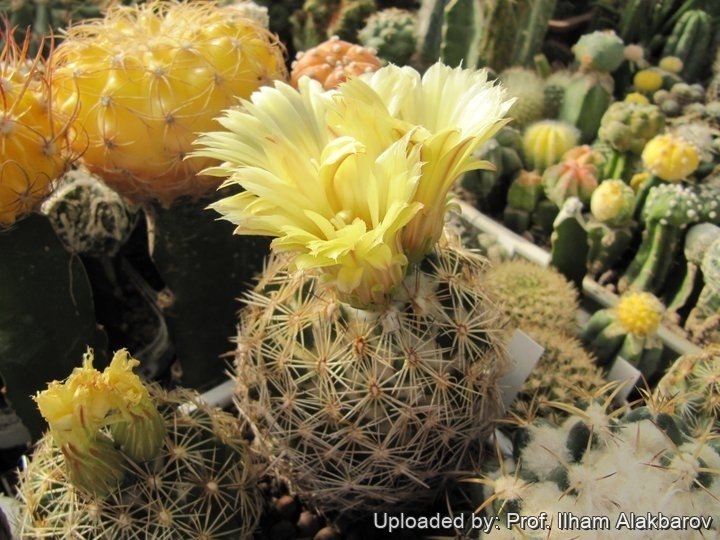
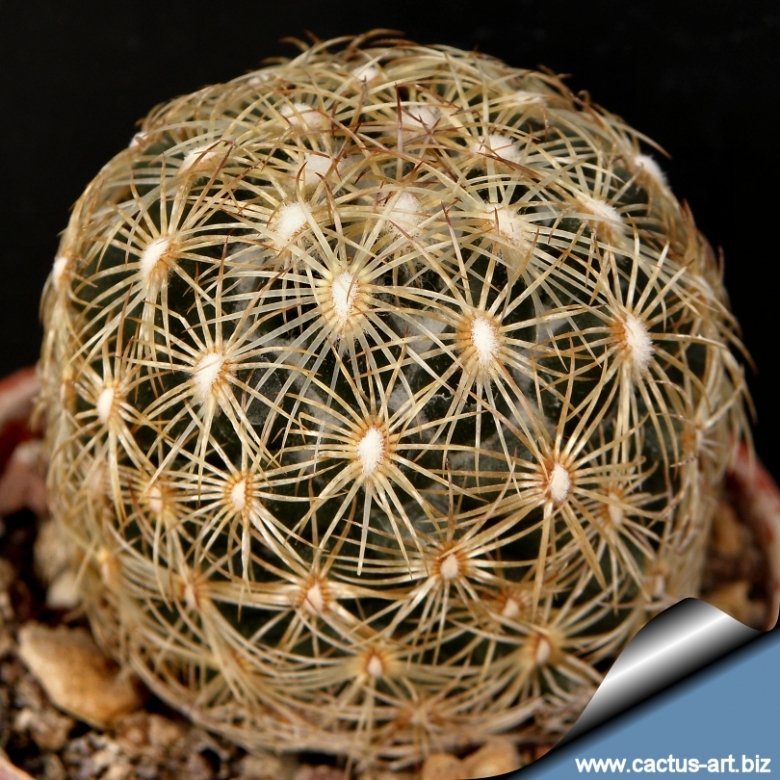
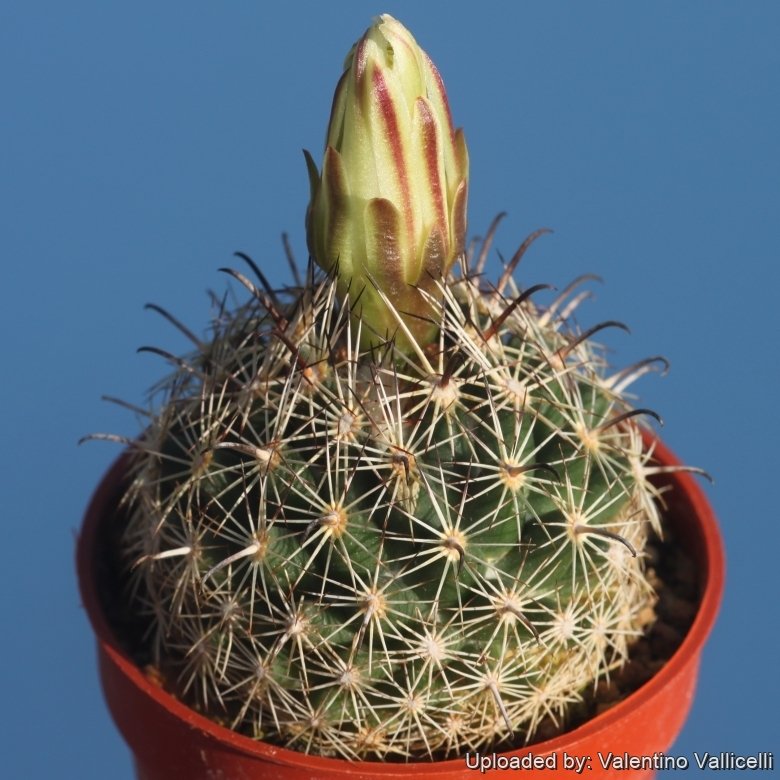
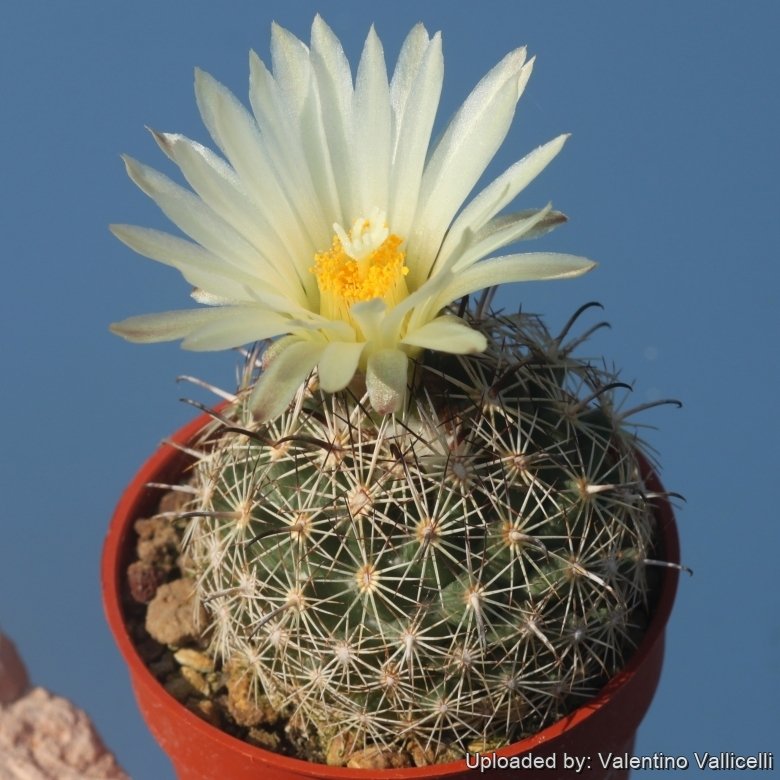
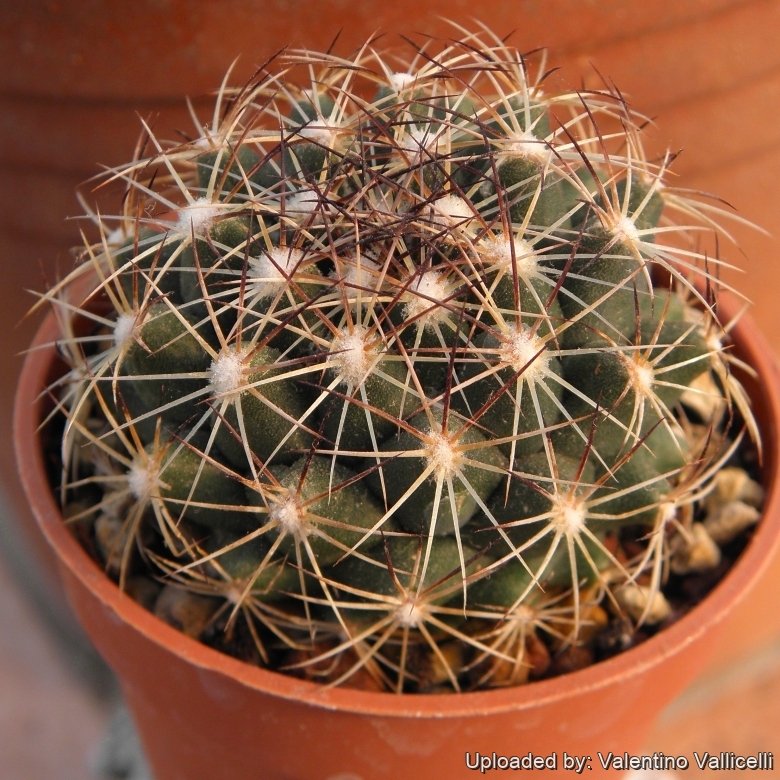
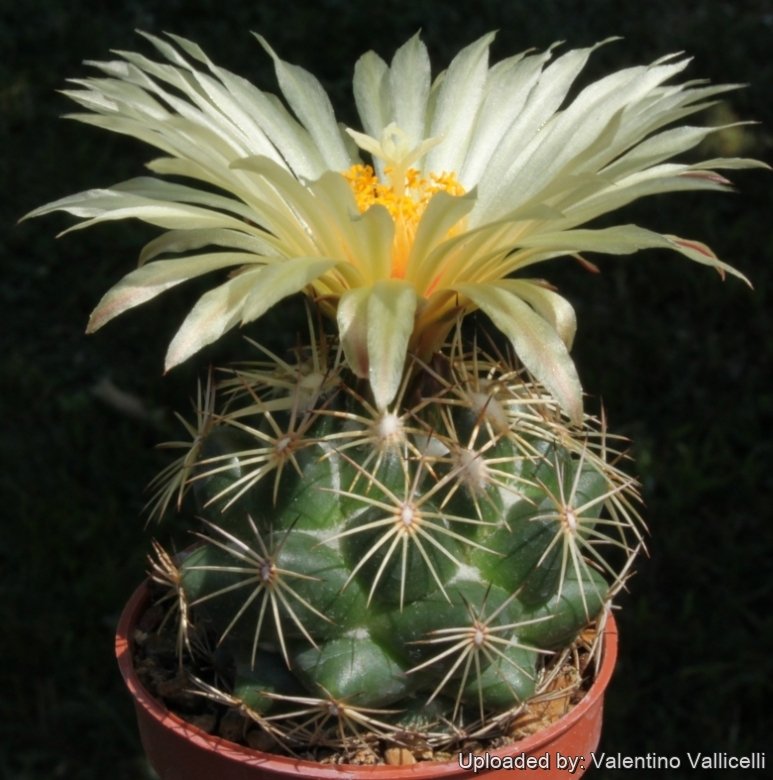
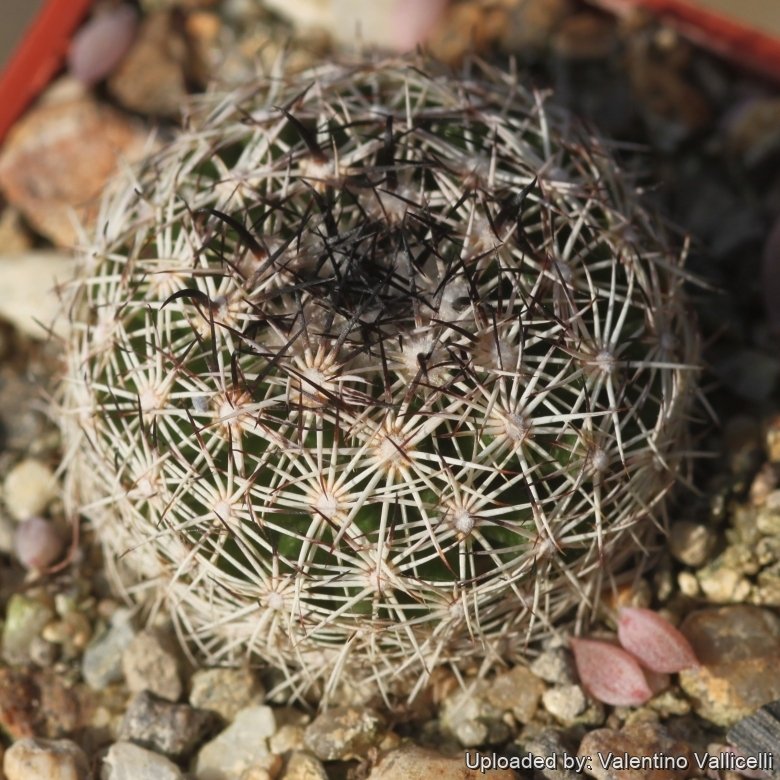
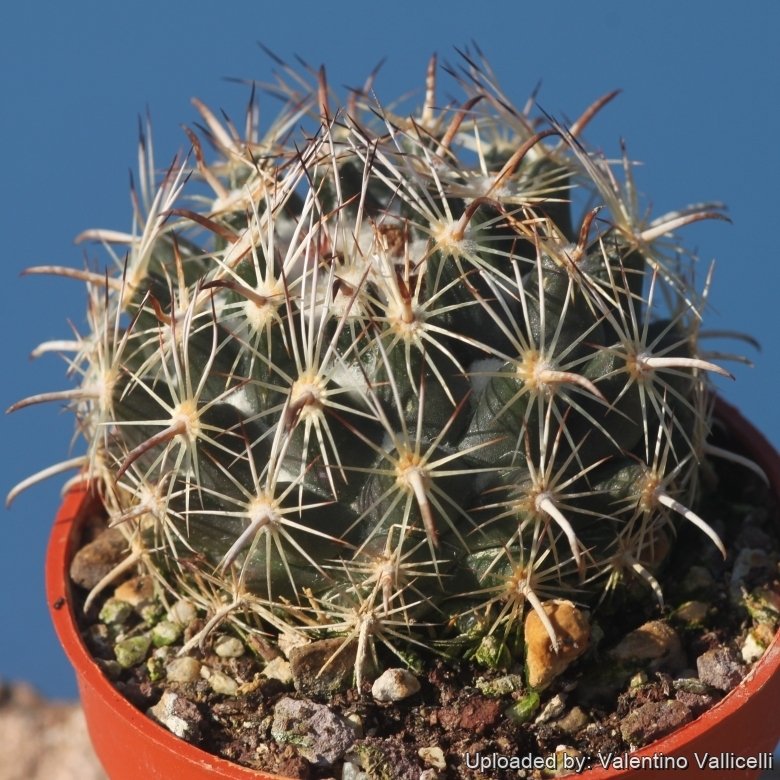
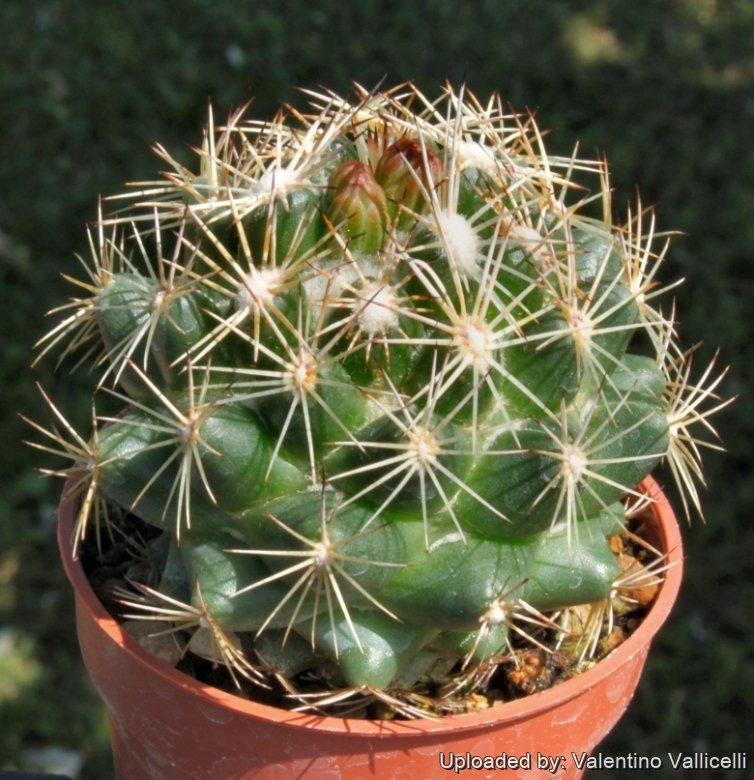
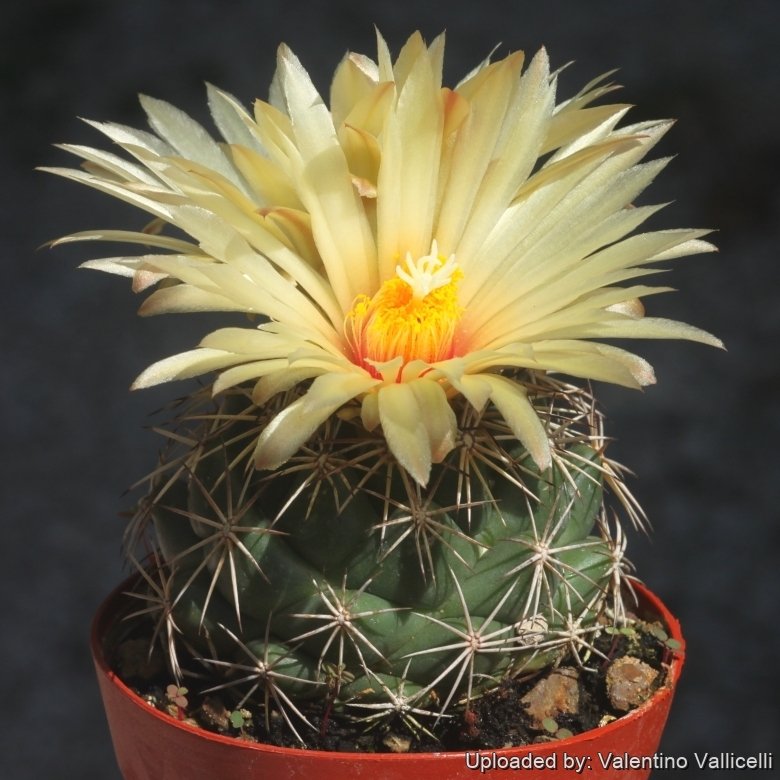
Coryphantha compacta is a small, usually solitary species widespread over a wide territory in northwestern Mexico and therefore, very variable. It often shows only radial spines, but occasionally central appears.
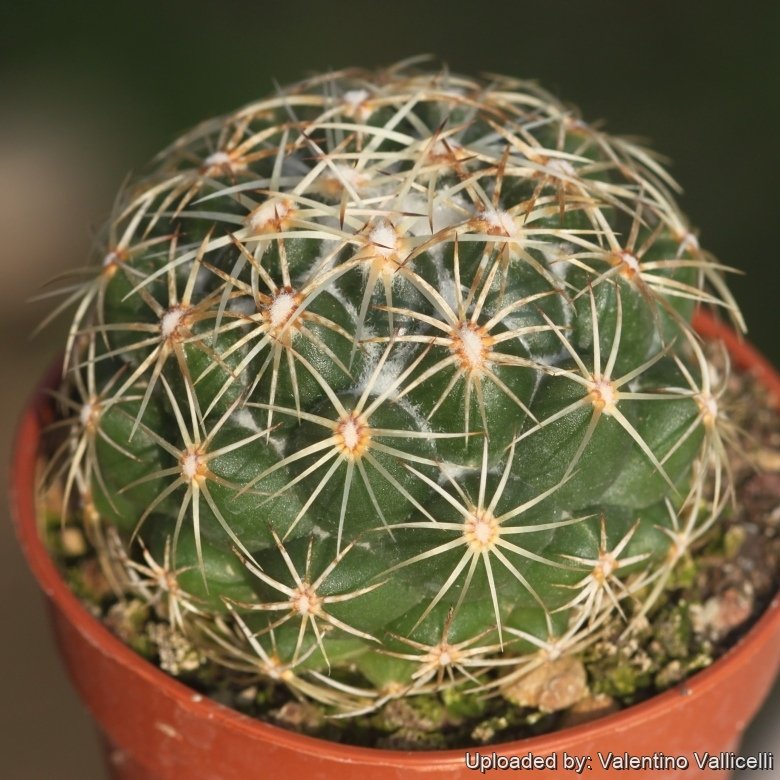
Stems: Globose somewhat depressed, pale grey-green to deep green, (2-)4-5(-6) cm high, (5-)6-8(-9) cm broad.
Tubercles: Crowded, imbricate, in about 13 rows, 8-17 mm long and sulcate above.
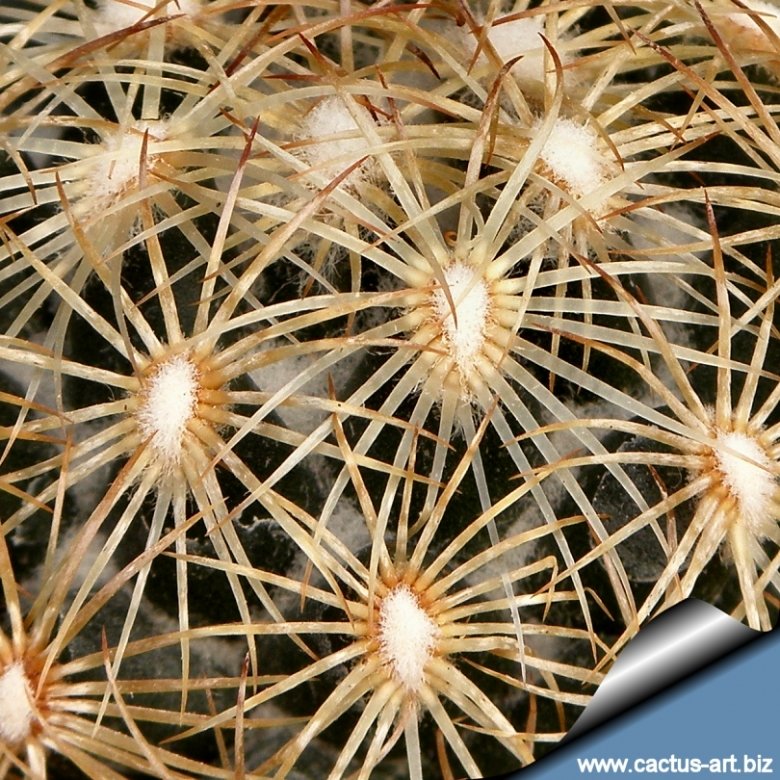
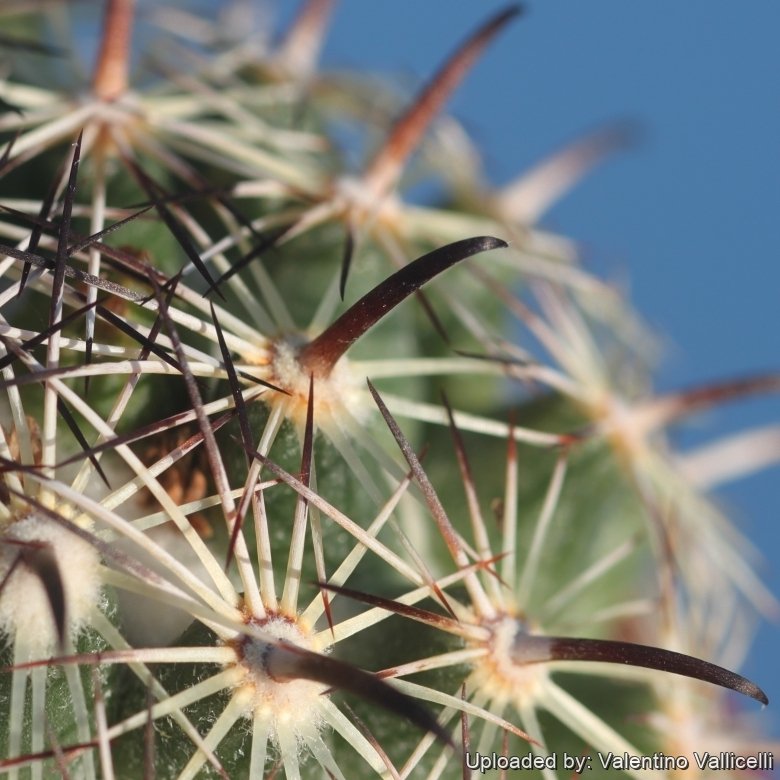
Central spine: Usually this species has no central spines, but occasionally it produces central spines, either on single areoles of a plant only, but also on all areoles. The central spines are stout, sharp, hooked, bent downward like cat claws, yellowish and usually dark brown tipped, reddish-brown when young and 8-20 mm long. The frequency of occurrence of the single, strong and curved to hooked central spine varies very much. from one population to another. With the exception of the absence or existence of centrals, all the other characteristics are absolutely identical, namely size and form of tubercles, number, size and arrangement of radial spines, flowers, fruits and seeds. Furthermore this species is one of those Coryphantha which pass a purely radial-spined long youth stage in which they are already floriferous. Some of the plants after several years develop the central spines, giving the plant its sea urchin appearance.
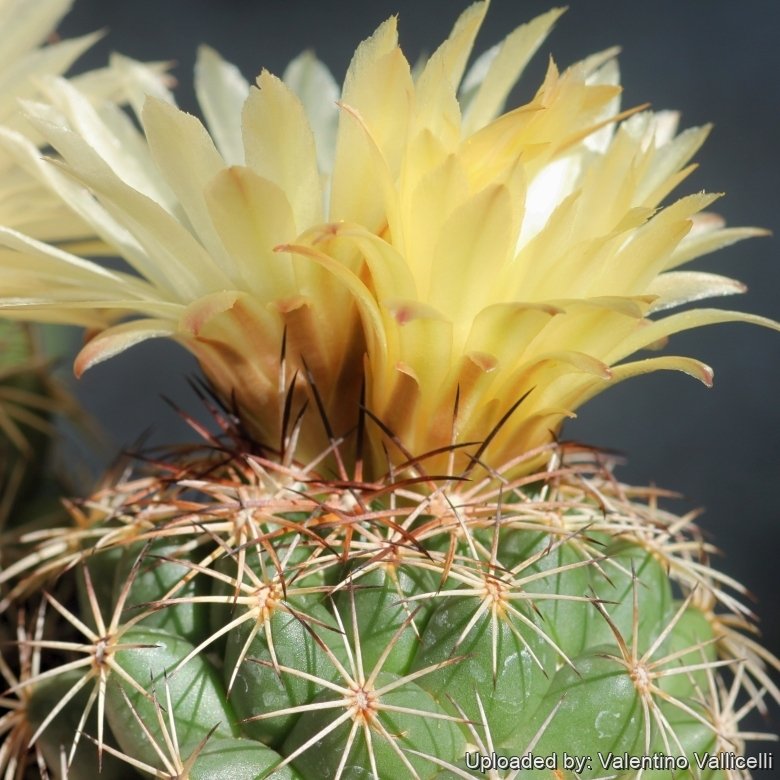
Radial spines: 11-16, rigid, appressed, flattened against the stem surface and interwoven, white to yellow, 10-20 mm long.
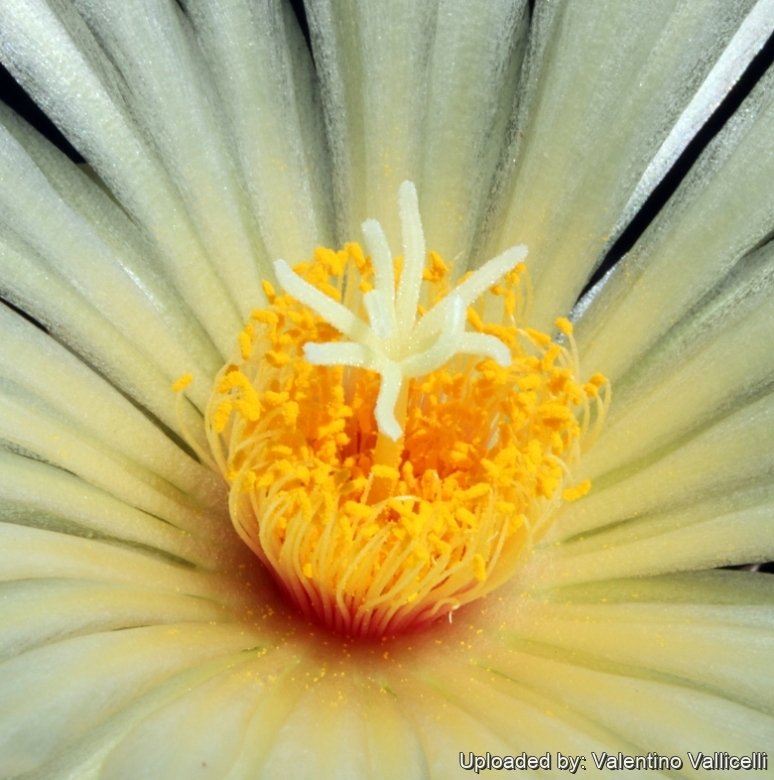
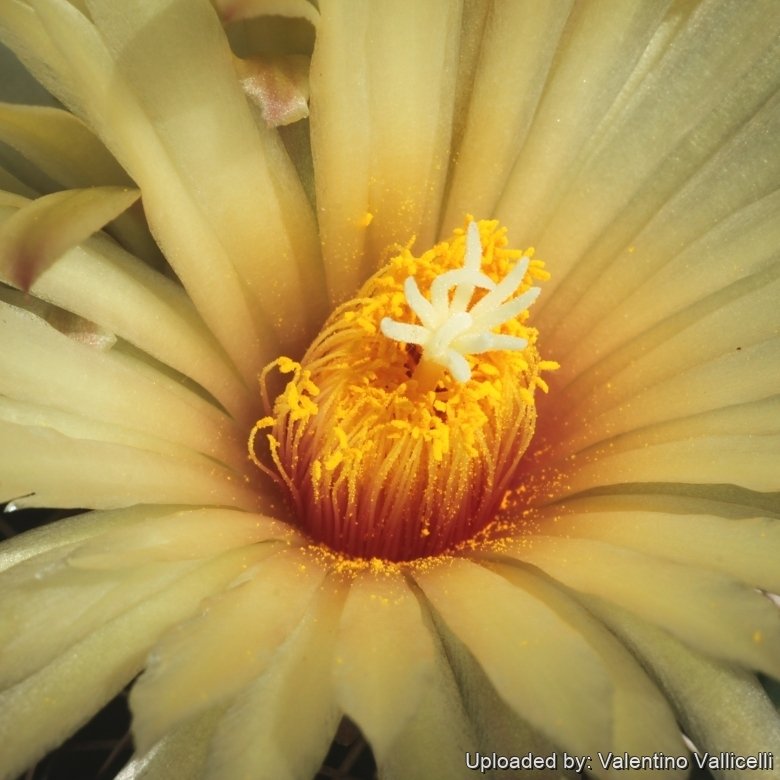
Flowers: Yellow, to 2 cm long and in diameter.
Fruits: Oval.
Seeds: Smooth and yellow.
Origin and Habitat
Coryphantha compacta is a fairly widespread and very abundant species found in northwestern Mexico, where it occurs on the eastern slopes of the Sierra Madre Occidental (Chihuahua, Tamaulipas, and Durango).
Altitude: 1400-2400 metres above sea level.
Habitat: It appears to be very abundant in a variety of habitat comprising grasslands in sandy plains, volcanic soils in dry hills and pine forests in mountains. In the same area it is possible to find several cactus and succulent species like: Mammillaria wrightii v. wilcoxii, Mammillaria gummifera, Erythrina americana and Nolina texana. Land use change for agriculture may be a threat in places, but this is not having a significant impact at present.
Cultivation and Propagation
In culture it is without problems, and regularly shows its large yellow flowers. It does best in slight shade, but does well in full sun too. It is sensitive to overwatering (rot prone), and needs a very porous soil with good drainage. It flowers quite early, but needs about 8-12 years to reach the typical, definite outlook. It tolerates fairly low temperatures as long as it is kept dry (hardy to -12° C for short periods of time).
Propagation:: Propagation is by seed.
Traditional uses: Used by Tarahuma shamans as a kind of peyote.
Bibliography
Major references and further lectures
-
Edward Anderson “The Cactus family” Timber Press, Incorporated, 2001
-
James Cullen, Sabina G. Knees, H. Suzanne Cubey “The European Garden Flora Flowering Plants: A Manual for the Identification of Plants Cultivated in Europe, Both Out-of-Doors and Under Glass” Cambridge University Press, 11/Aug/2011
-
David R Hunt; Nigel P Taylor; Graham Charles; International Cactaceae Systematics Group. “The New Cactus Lexicon” dh books, 2006Jackie M. Poole, William R. Carr, Dana M. Price, Jason R. Singhurst “Rare plants of Texas: a field guide” Texas A&M University Press, 30/Dec/2007
-
Nathaniel Lord Britton, Joseph Nelson Rose “Cactaceae: Descriptions and Illustrations of Plants of the Cactus Family” Courier Dover Publications, 1963
-
Dicht, R.F., Lüthy, A.D. & Goettsch, B.K. 2013. Coryphantha compacta. In: IUCN 2013. “IUCN Red List of Threatened Species.” Version 2013.2. <www.iucnredlist.org>. Downloaded on 16 January 2014.
From llifle page Coryphantha palmeri
Description
Coryphantha palmeri is a small solitary globose cactus with usually one stout hooked central spines, it is one of the many geographical forms of the extremely variable Coryphantha compacta. With the exception of the absence or existence of centrals, all the other characteristics are absolutely identical with Coryphantha compacta, namely size and form of tubercles, number, size and arrangement of radial spines, flowers, fruits and seeds. Furthermore this species is one of those Coryphanthas which pass a purely radial-spined long youth stage in which they are already floriferous. Most of the plants after several years develop the central spines, giving the plant its sea urchin appearance.
Stem: Globular small, somewhat depressed, pale grey-green to deep green, 4-5 cm high, 6-8 cm broad, but occasionally up to 10 cm tall and clustered especially in cultivation.
Tubercles: Closely set in about 13 rows but not very regularly arranged, pale green, not very flaccid.
Radial spines: 11 to 14, rather stout, horizontally radiating nearly at right angles to central one, yellowish with tips often blackish.
Central spines: One single, strong and hooked (but often wanting ).
Flowers: Small, pale yellow to nearly white flowers of only 3 cm diameter.
Origin and Habitat
Durango, Mexico.
Habitat: Grows on stony ridges on lime rich soils.
Cultivation and Propagation
In culture it is without problems, and regularly shows its large yellow flowers. It does best in slight shade, but does well in full sun too. It is sensitive to overwatering (rot prone), and needs a very porous soil with good drainage. It flowers quite early, but needs about 8-12 years to reach the typical, definite outlook. It tolerates fairly low temperatures as long as it is kept dry (hardy to -12° C for short periods of time).
Propagation: Propagation is by seed.
Traditional uses: Used by Tarahuma shamans as a kind of peyote. It is reported to have hallucinogenic properties.
Bibliography
Major references and further lectures
-
Edward Anderson “The Cactus family” Timber Press, Incorporated, 2001
-
James Cullen, Sabina G. Knees, H. Suzanne Cubey “The European Garden Flora Flowering Plants: A Manual for the Identification of Plants Cultivated in Europe, Both Out-of-Doors and Under Glass” Cambridge University Press, 11/Aug/2011
-
David R Hunt; Nigel P Taylor; Graham Charles; International Cactaceae Systematics Group. “The New Cactus Lexicon” dh books, 2006Jackie M. Poole, William R. Carr, Dana M. Price, Jason R. Singhurst “Rare plants of Texas: a field guide” Texas A&M University Press, 30/Dec/2007
-
Nathaniel Lord Britton, Joseph Nelson Rose “Cactaceae: Descriptions and Illustrations of Plants of the Cactus Family” Courier Dover Publications, 1963
Source: Coryphantha palmeri, LLIFLE - Encyclopedia of living forms, CC-BY-SA, retrieved 2026-10-25.
From llifle page Coryphantha palmeri var. pectinata
Description
Coryphantha palmeri var. pectinata is one of the many geographical forms of the extremely variable Coryphantha compacta. It distinguishs from Coryphantha palmeri for the absence of central spines and larger flowers, all the other characteristics are absolutely identical, namely size and form of tubercles, number, size and arrangement of radial spines, flowers, fruits and seeds.
Stem: Globular small, somewhat depressed, pale grey-green to deep green, 4-5 cm high, 6-8 cm broad, but occasionally up to 10 cm tall and clustered especially in cultivation.
Tubercles: Closely set in about 13 rows but not very regularly arranged, pale green, not very flaccid.
Radial spines: 11 to 14, rather stout, horizontally radiating nearly at right angles to central one, yellowish with tips often blackish.
Central spines: None, but occasionally after several years develop the central spines, giving the plant its sea urchin appearance.
Flowers: Pale yellow to nearly white flowers up to 5 cm diameter.
Cultivation and Propagation
In culture it is without problems, and regularly shows its large yellow flowers. It does best in slight shade, but does well in full sun too. It is sensitive to overwatering (rot prone), and needs a very porous soil with good drainage. It flowers quite early, but needs about 8-12 years to reach the typical, definite outlook. It tolerates fairly low temperatures as long as it is kept dry (hardy to -12° C for short periods of time).
Propagation: Propagation is by seed.
Source: Coryphantha palmeri var. pectinata, LLIFLE - Encyclopedia of living forms, CC-BY-SA, retrieved 2026-10-25.
Gallery