Publication: Cactaceae (Backeberg) 4: 42, fig. 31b. 1923 [et: Orcutt in: Circular to Cactus Fanciers p.i. (1922) ]
Description
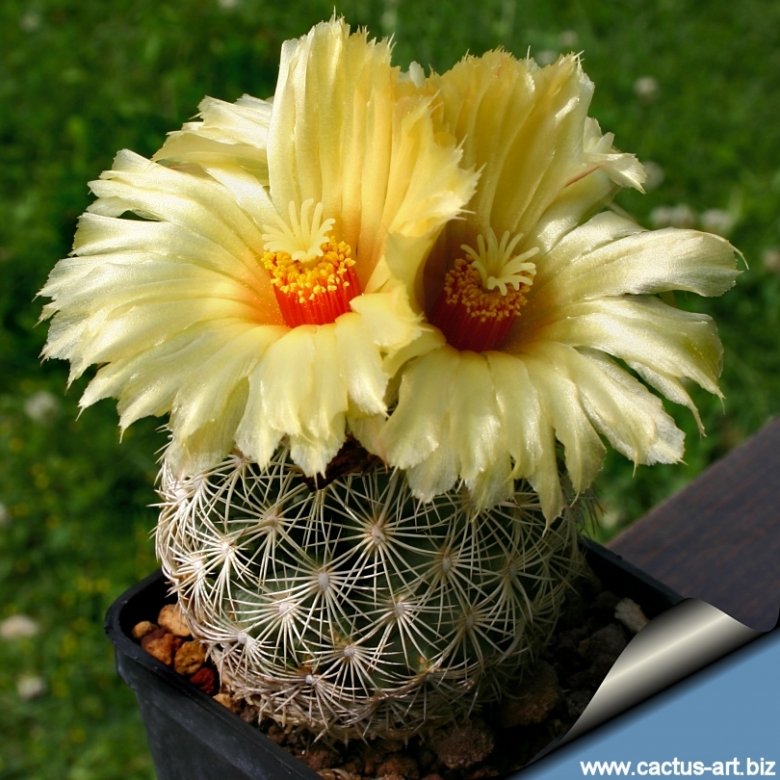
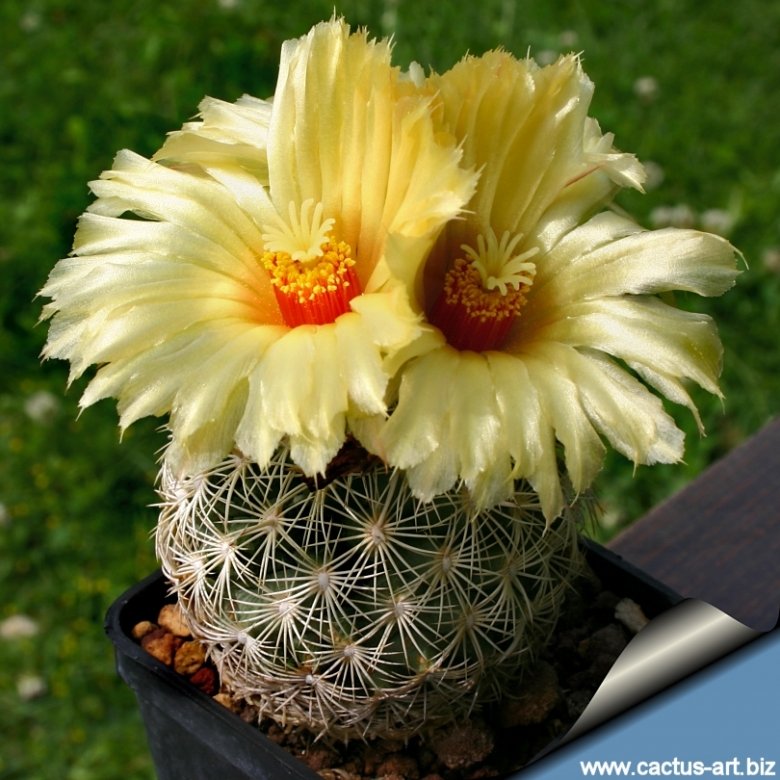
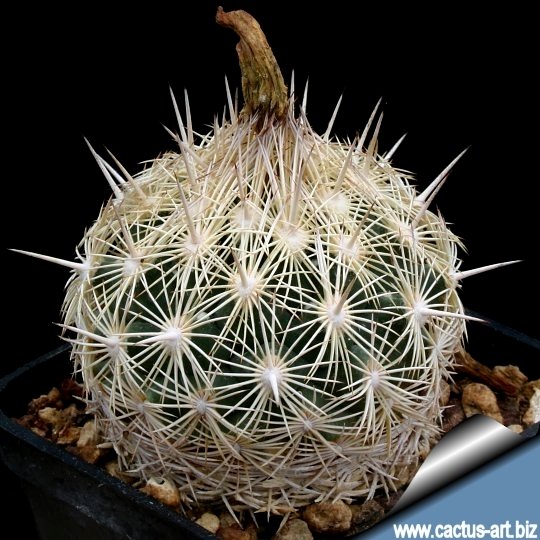
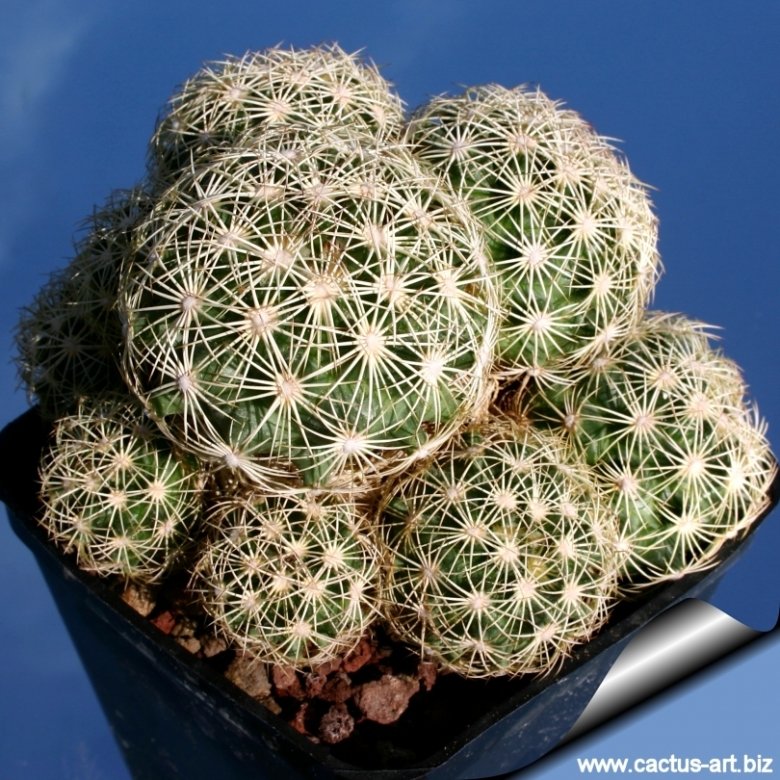
Mostly solitary globular cactus (or branched with age, forming large clumps up to 80 cm in diameter, at low elevation in Brewster County, Texas),
Stems: 5 cm in diameter.
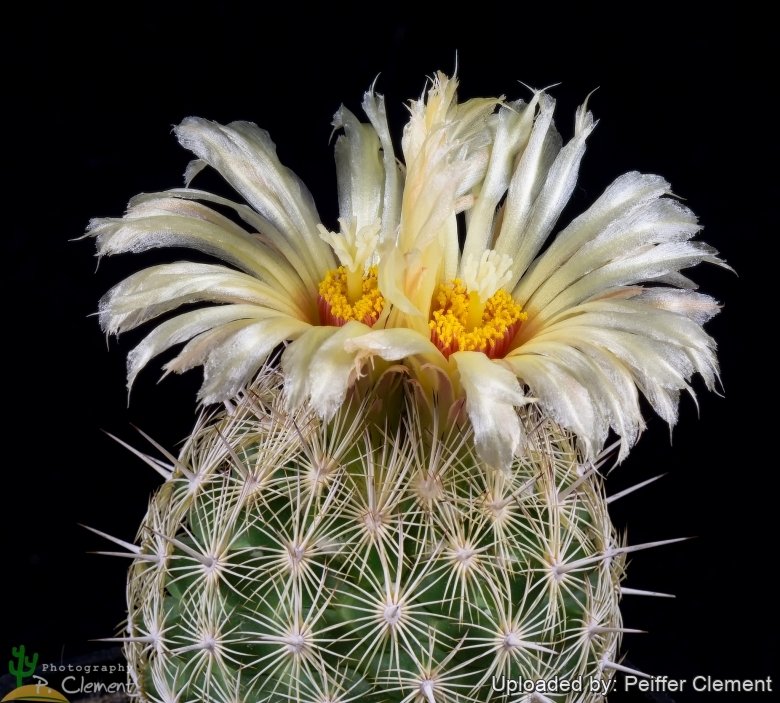
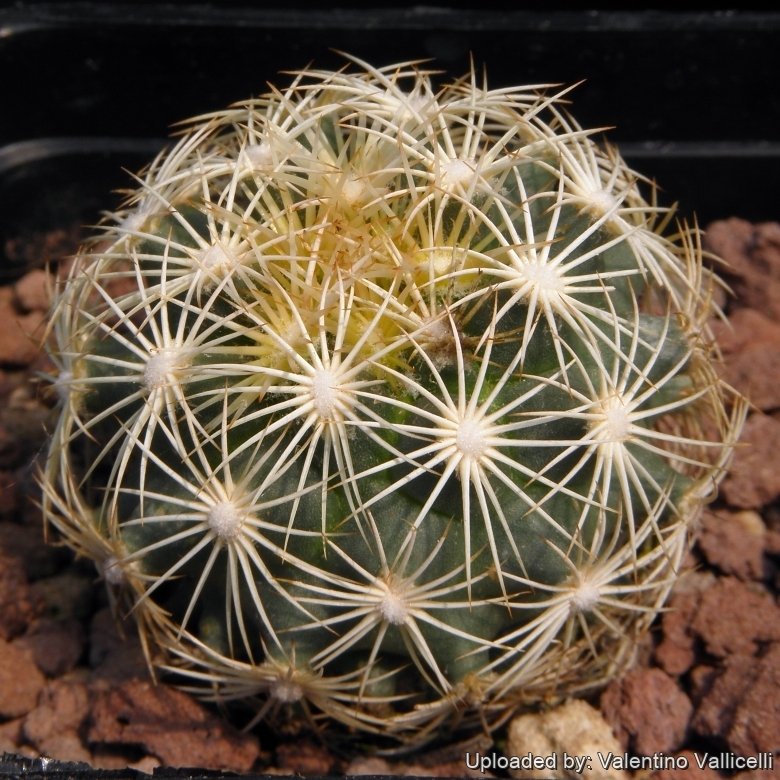
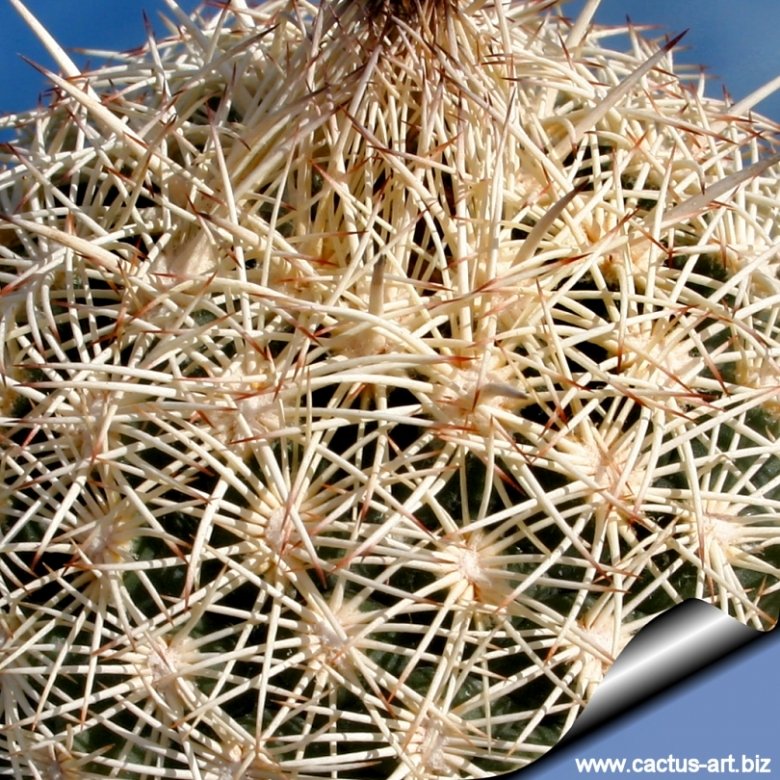
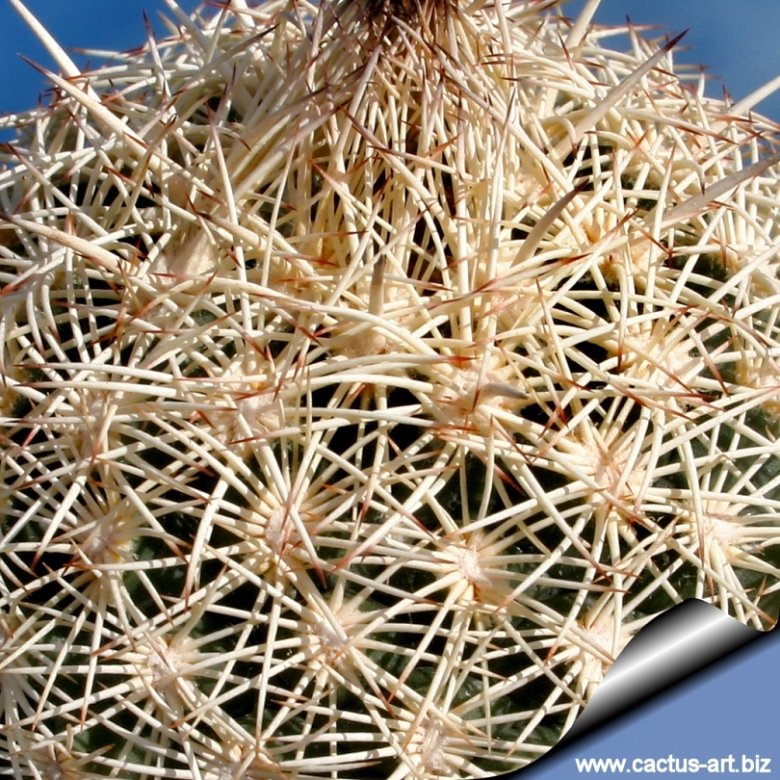
Spines: Largely obscuring the stem. 3 (0-4) central spines, 2.5 cm long; 16 to 30 radial spines, 1 to 1.8 cm long.
Roots: Diffuse or short taproots.
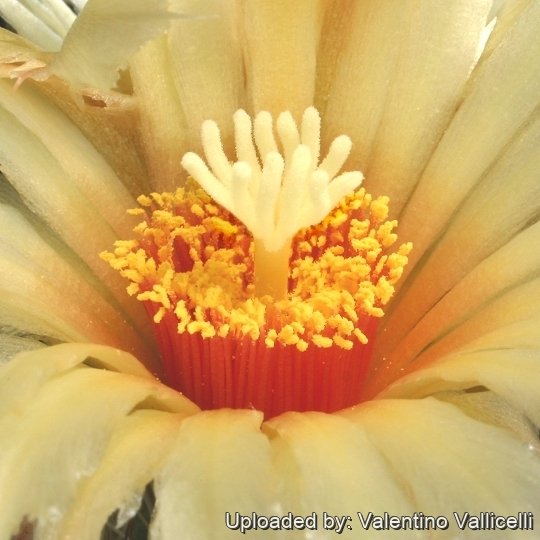
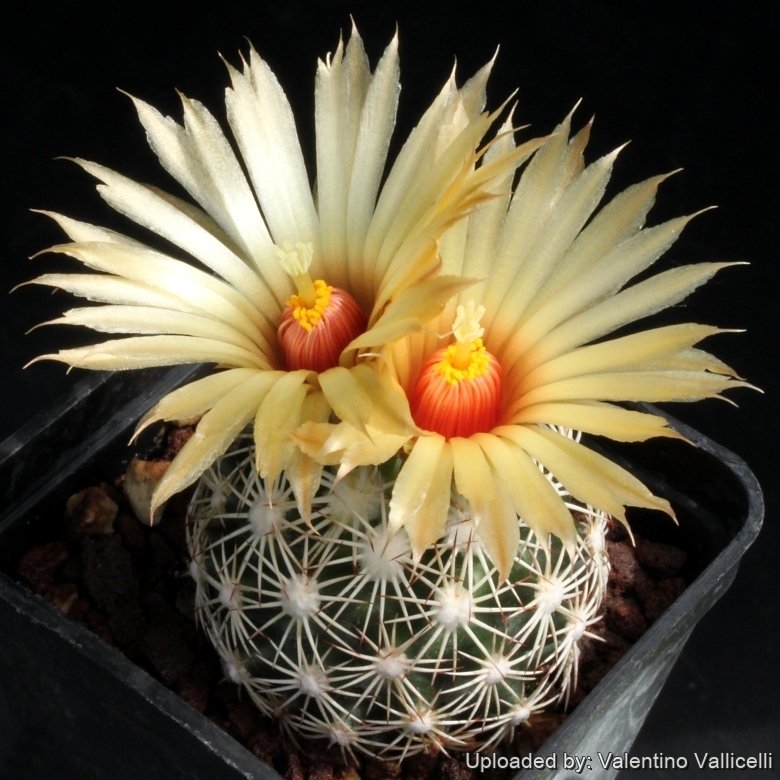
Flowers: Nearly apical, 5 cm wide, bright yellow, sometimes proximally reddish.
Fruits: Green, ovoid, slimy; floral remnant strongly persistent, fruiting 2-4 months after flowering.
Origin and Habitat
USA (western Texas), Mexico (Coahuila, Chihuahua)
Habitat: Degraded grasslands, desert scrub, on and near limestone or igneous hills and benches, 300-1500 m
Cultivation and Propagation
In cultivation it is quite sensitive to over-watering (rot prone), and needs good drainage. Keep drier in winter. Like other species from the USA. it blooms quite early, but needs about 8-10 years to reach the typical, definite outlook. It needs full sun; and is hardy to -16° C or less for short periods of time
Notes
This species is one of those Coryphanthas which pass a purely radial-spined youth stage in which they are already floriferous. The name Coryphantha pectinata (Engelmann) Britton & Rose was used for plants lacking central spines, but after several years the typical 3-4 central spines appear, giving the plant its sea urchin appearance.
Gallery