Publication: Monatsschr. Deutsch. Kakteen-Ges. 2: 169, fig. 1930
Description
It is a small clustering cactus which clusters at an early age.
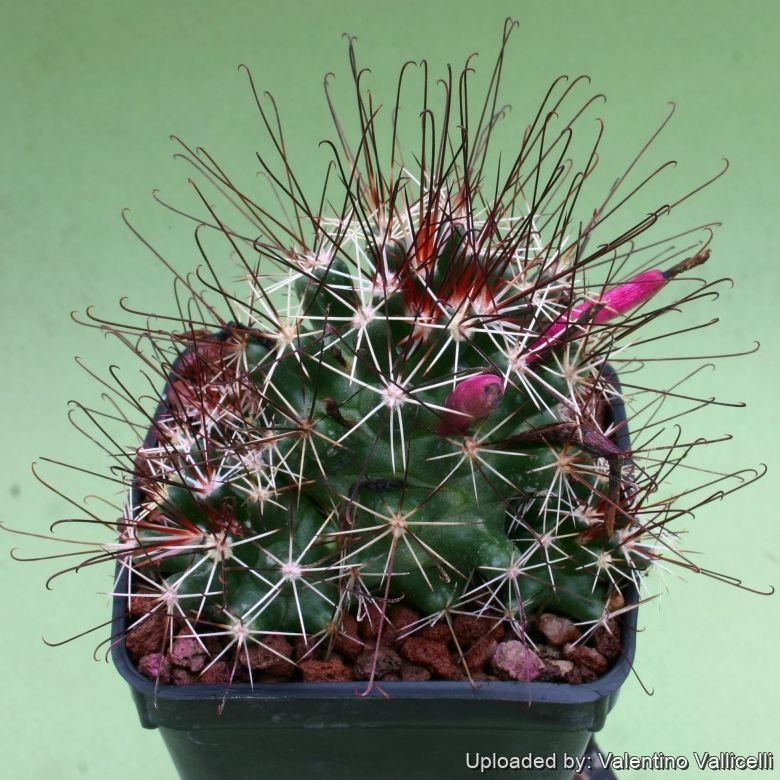
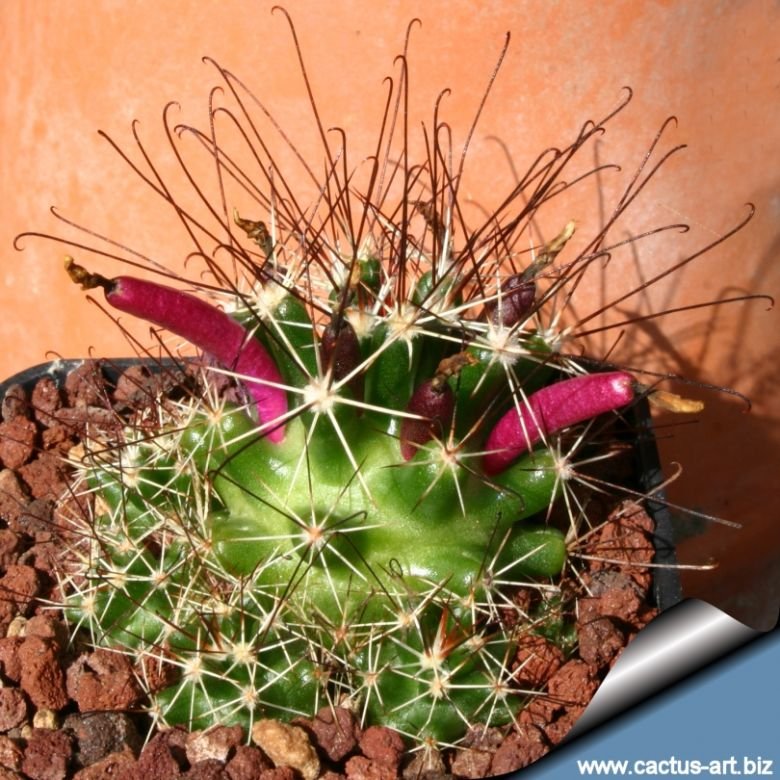
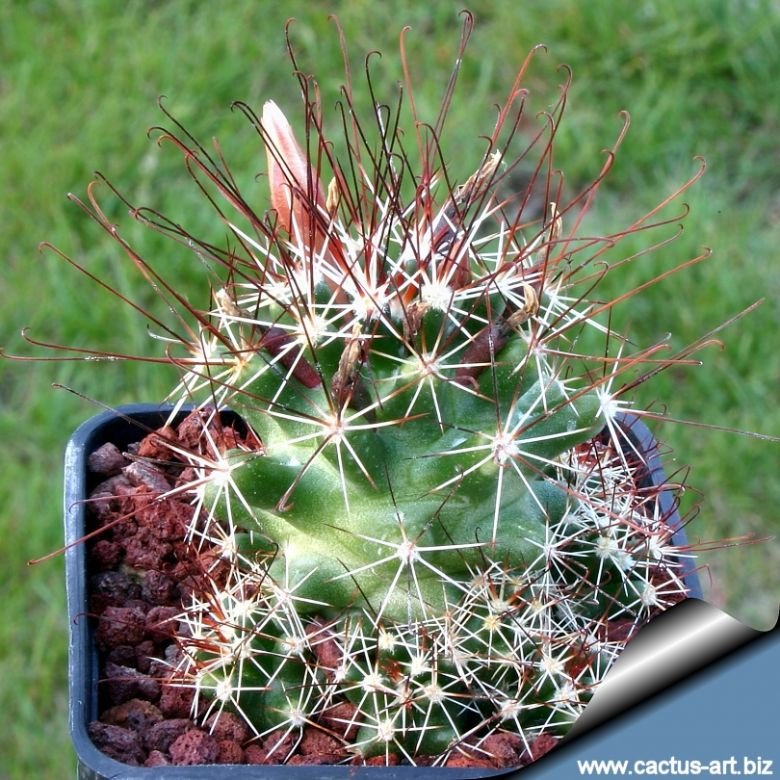
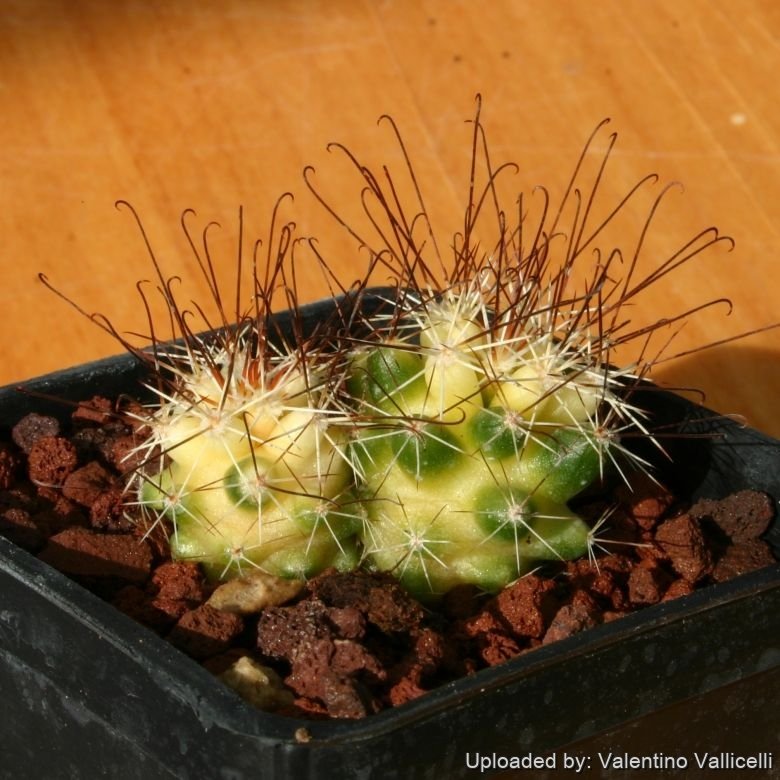
Stem: Globose or elonged up to 4 cm tall, up to 3 cm in diameter.
Tubercles: Cylindrical, soft 1 cm long with hairy axils. There is a shallow groove on the upper part.
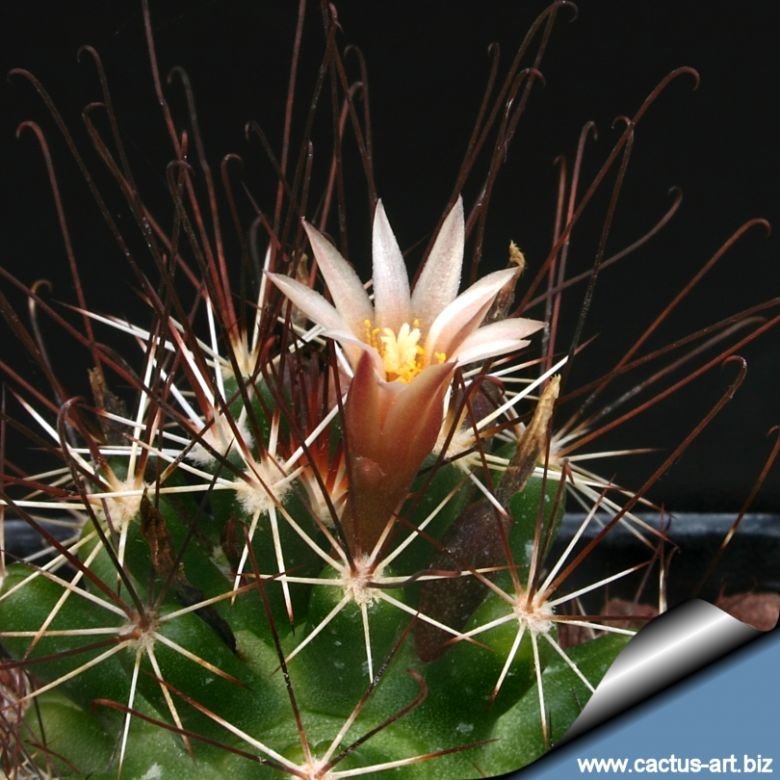
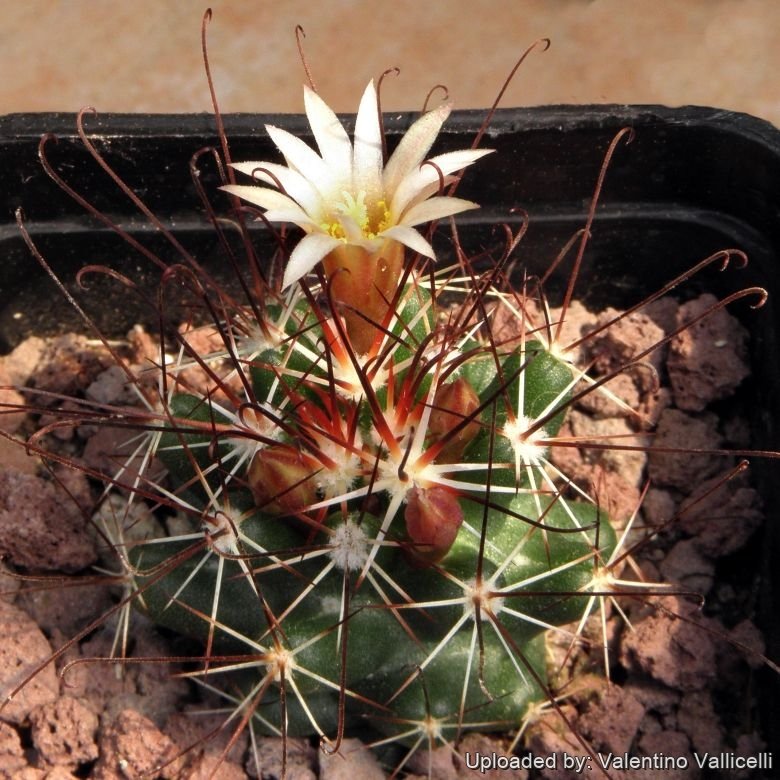
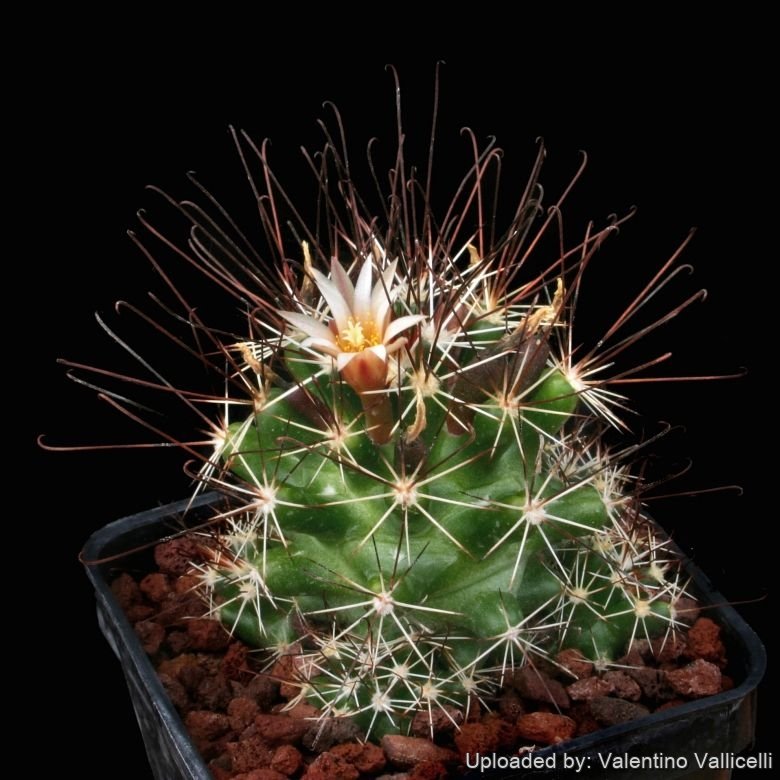
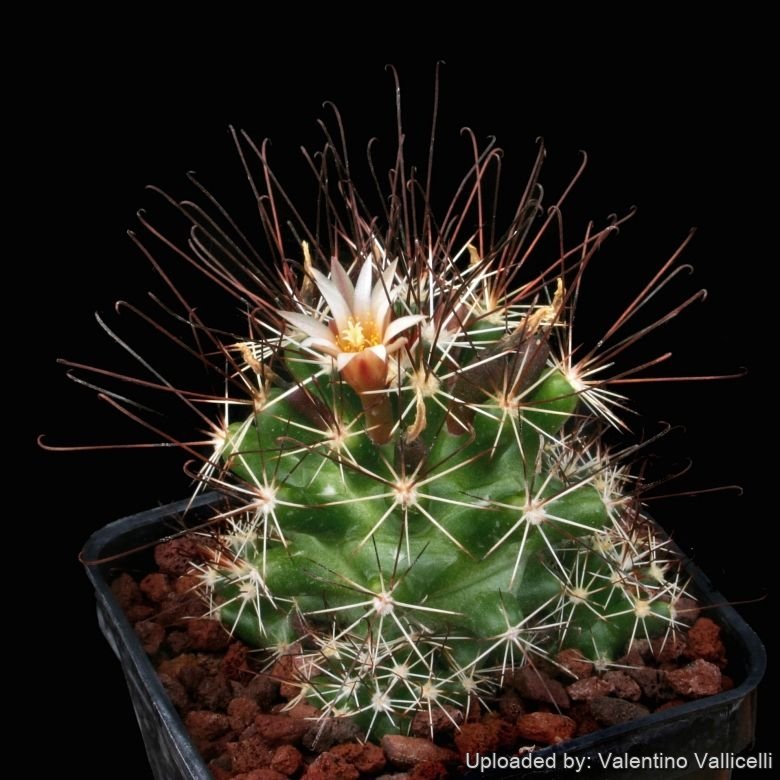
Central spines: 3 or 4 all hooked black, dark-reddish to yellow, up to 2.5 cm long,
Radial spines: 7 to 9 short white, or yellow, with brownish tips
Flowers: Diurnal, small 1.2 cm in diameter, 1.5 cm long, yellowish pink. in appreciable numbers at an early age.
Origin and Habitat
Mexico (Tamaulipas, San Luis Potosi)
Cultivation and Propagation
In culture it is without problems and regularly shows its flowers. Water sparingly, it is sensitive to overwatering (rot prone) needs good drainage, Keep drier in winter. Flowers quite early. Need full sun; hardy to -5° C or less for short periods of time. Keep drier in winter
Notes
“Cumarinia” is a monotypic genus. Cumarinia odorata was described as Coryphantha odorata by Bödeker in 1930, transferred into the genus Neobessaya by Werdermann and thence to the new genusCumarinia by Knuth which, in turn, was reduced to a sub-genus of Neolloydia by Backeberg in 1942.
The name Cumarinia has persisted, probably because it is far from being a typica Neolloydia species. Additionally it does not fit into the Neolloydia mould on account of its hooked central spines, it has also many differences from the Coryphantha so, it is a good genus according to The New Cactus Lexicon (2006) nowadays.
Bibliography
Major references and further lectures
-
Nathaniel Lord Britton, Joseph Nelson Rose “Cactaceae: Descriptions and Illustrations of Plants of the Cactus Family” Courier Dover Publications, 1963
-
Edward Anderson “The Cactus family” Timber Press, Incorporated, 2001
-
James Cullen, Sabina G. Knees, H. Suzanne Cubey “The European Garden Flora Flowering Plants: A Manual for the Identification of Plants Cultivated in Europe, Both Out-of-Doors and Under Glass” Cambridge University Press, 11/Aug/2011
-
David R Hunt; Nigel P Taylor; Graham Charles; International Cactaceae Systematics Group. “The New Cactus Lexicon” dh books, 2006
Cultivars and forms (1)
Forms (1)
Gallery