Publication: Monatsschr. Deutsch. Kakteen-Ges. 1: 155. 1929
Description
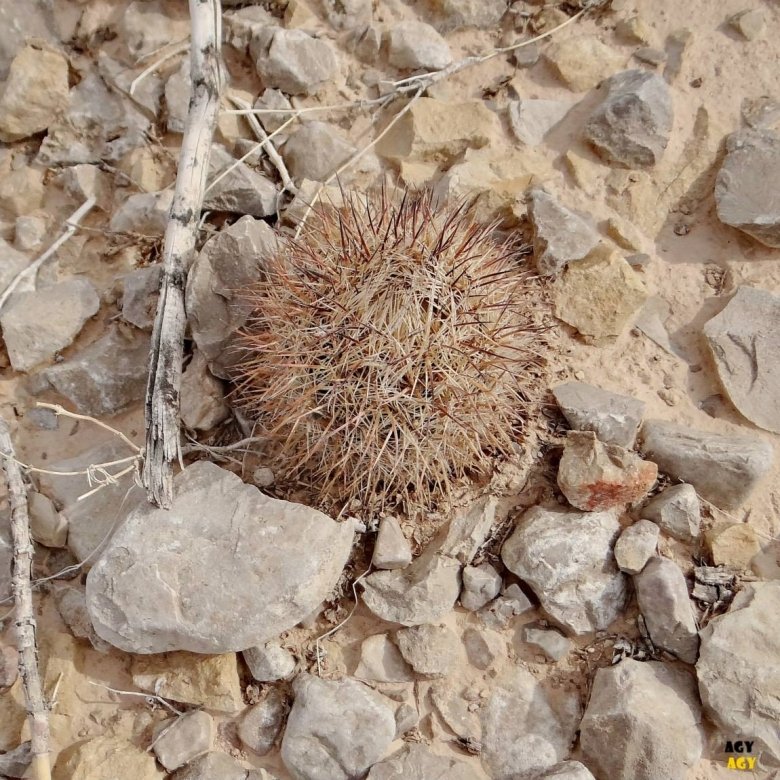
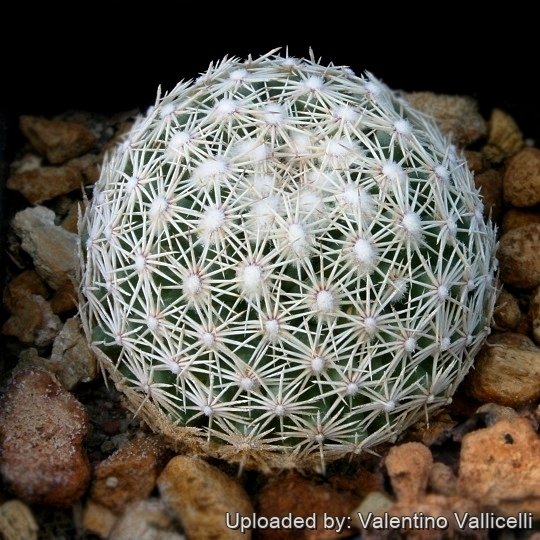
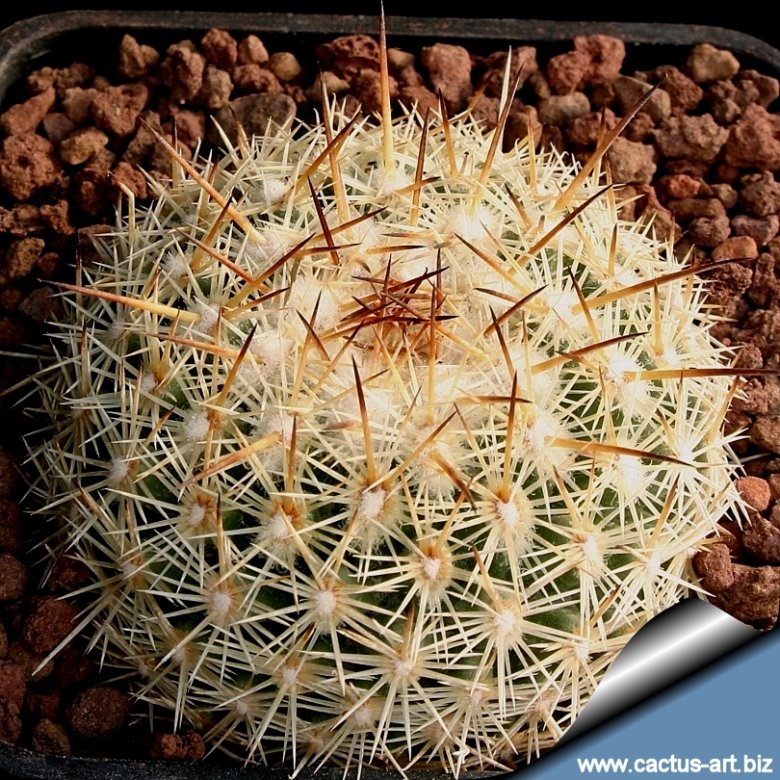
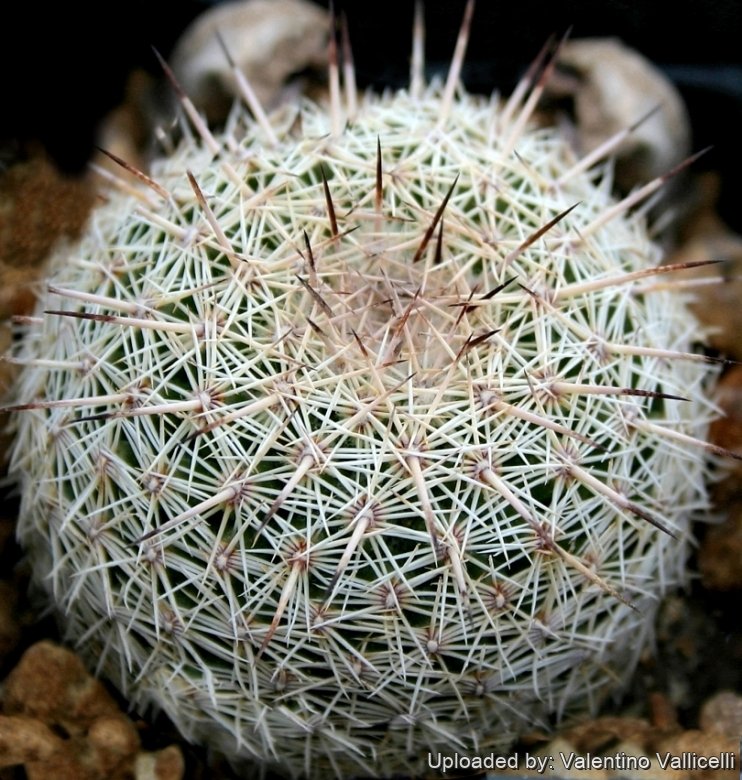
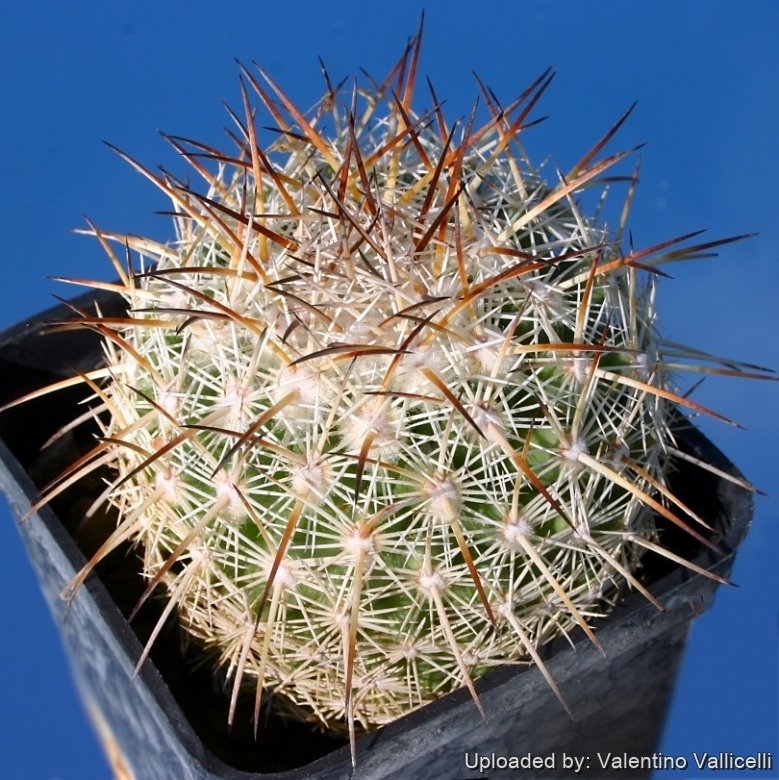
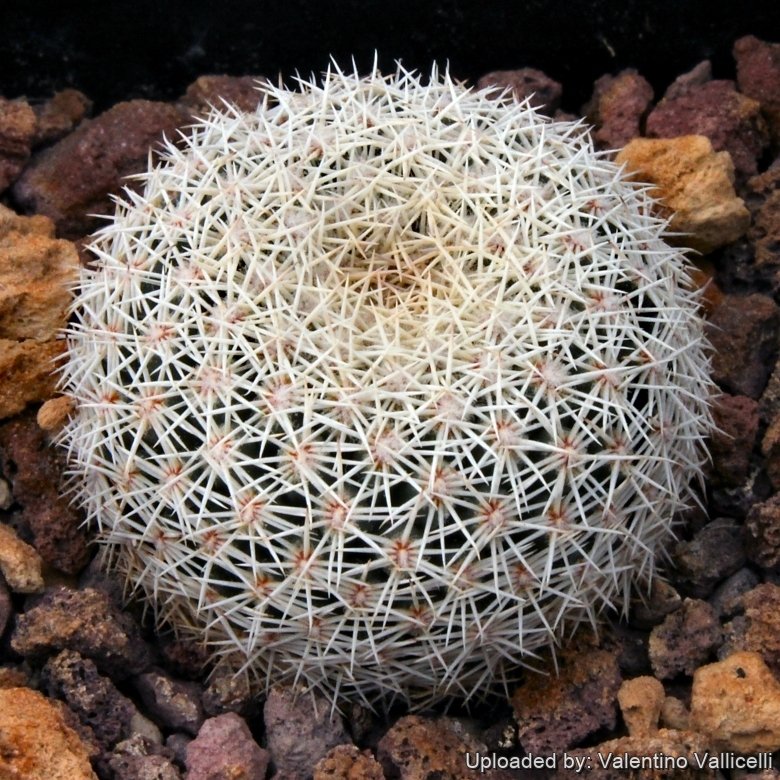
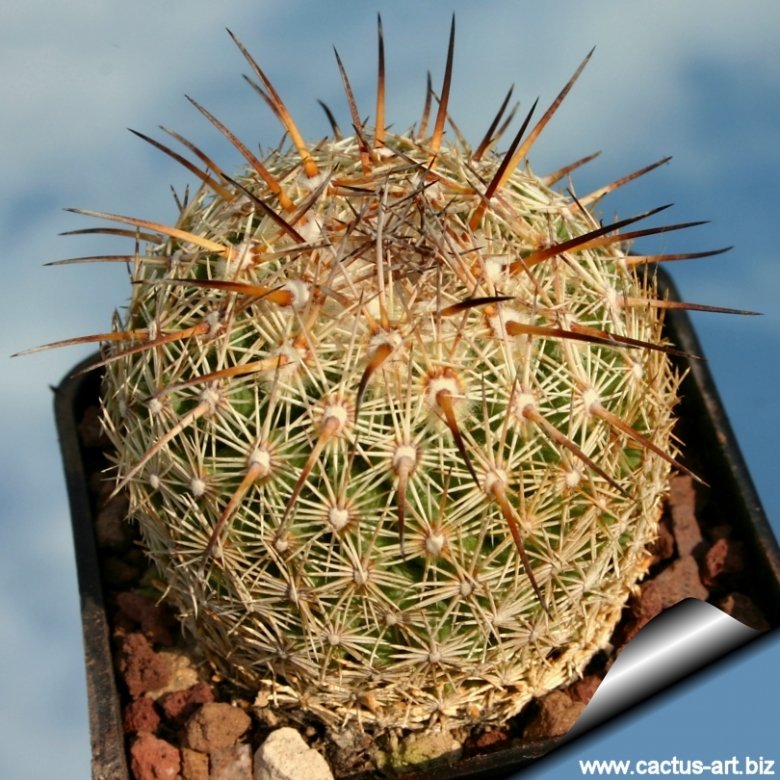
Coryphantha werdermannii is a dwarf cactus with juvenile globose body which became ovoidal as it age. The outstanding feature of this species is an abrupt and contrasting change from the juvenile aspect with dense, flattened, white spines and a smooth appearance to the adult with additional, dark, protruding spines and a ‘fierce’ appearance.
Derivation of specific name: This member of the Cactaceae family was given this name by Prof. Dr. Erich Werdermann (1892–1959), German botanist in Berlin, specialist on cacti and former director of the Botanischer Garten und Museum Berlin.
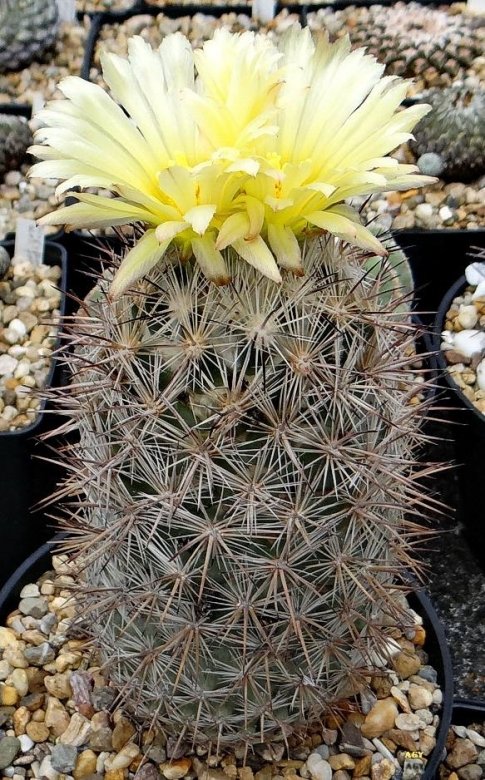
Stem: Usually single, flattened at first, then more egg-shaped, 7-9 (-30) cm tall, and about 6-7(-8) cm in width. Epidermis pale grey-green. Woolly at the apex. Old plants tend to be column-shaped with occasionally offsets growing from the sides.
Roots: Very fine fibrous that extend just a few millimetres below the ground surface, probably they also serve the absorption of dew in this region poor of precipitations.
Tubercles: Conical to cylindrical, ascending, firm, to 15 mm long, axils naked.
Areoles: Elliptical with white wool.
Central spines: 2-4 (only in mature specimens), rigid, stiffly pointed, strongly projecting, one of them strongly curved, sometimes straight, whitish, clear brown, tan or black, 13-24 mm long.
Radial spines: (15-)21-25(-30) (depending on plant’s age), whitish, greyish-white to tan 6-19 mm long, more or less pectinate, thin.
Flowers: Quite large, often glossy pale yellow at first becoming pink with a red throat, to 5 cm long, 5-7 cm in diameter on mature specimen.
Fruits: Green, to 10 mm long.
Origin and Habitat
Coahuila, San Luis Potosí, Puebla, Mexico.
Altitude range: 750-1000 metres above sea level.
Habitat and ecology: Coryphantha werdermannii grows in low limestsone hills of the Sierra de la Paila, together with Echinocereus conglomeratus, Epithelantha micromeris, and Neobuxbaumia macrocephala. The natural population is abundant and healthy. This species is of limited interest to collectors; illegal trade is not now reported.
Cultivation and Propagation
Somewhat sensitive to overwatering (rot prone) and very slow-growing. Because of it’s small size makes a great potted plant specimen, usually reserved to experienced collectors,
Grow in a mineral cactus compost, requires good drainage. Water in moderation, keep drier in winter. Full sun to partial shade but is tolerant and prefers light shade during the hot Summer months.. Provide very good ventilation.
Frost Tolerance: Hardy to - 5°C if kept dry.
Propagation: Seeds as usually shoots are not available.
Bibliography
Major references and further lectures
-
Edward Anderson “The Cactus family” Timber Press, Incorporated, 2001
-
James Cullen, Sabina G. Knees, H. Suzanne Cubey “The European Garden Flora Flowering Plants: A Manual for the Identification of Plants Cultivated in Europe, Both Out-of-Doors and Under Glass” Cambridge University Press, 11/Aug/2011
-
David R Hunt; Nigel P Taylor; Graham Charles; International Cactaceae Systematics Group. “The New Cactus Lexicon” dh books, 2006
-
John A. Burton, Sabina G. Knees, Mike Read, Royal Botanic Gardens, Kew, Great Britain. Dept. of the Environment “CITES guide to plants in trade” Dept. of the Environment, 1994
-
Urs Eggli, Leonard E. Newton “Etymological Dictionary of Succulent Plant Names
-
Copertina anteriore” Springer Science & Business Media, 29 June 2013
-
“CITES and Cacti – An introduction to cacti covered by the Convention on International Trade in Endangered Species”. Retrieved 21 March 2016 from: <http://www.kew.org/sites/default/files/CITESCactiPack.pdf.pdf\>
From llifle page Coryphantha densispina
Description
Coryphantha densispina Werdermann in Fedde, Rep. 30:57, 1932 has been allocated to Coryphantha werdermannii by several authors. Hence, the described tubercle form and size correspond to Coryphantha. The name-giving density of spination is reminiscent of Coryphantha werdermannii, but is also well-known in Coryphantha difficilis from locations at higher sealevels.
Bibliography
Major references and further lectures
1)Reto Dicht, Adrian Lüthy “Coryphantha: Cacti of Mexico and Southern USA” Springer Science & Business Media, 14 March 2006.
Source: Coryphantha densispina, LLIFLE - Encyclopedia of living forms, CC-BY-SA, retrieved 2026-10-25.
Gallery