Publication: Cactaceae (Britton & Rose) 3: 79. 1922 [12 Oct 1922]
Description
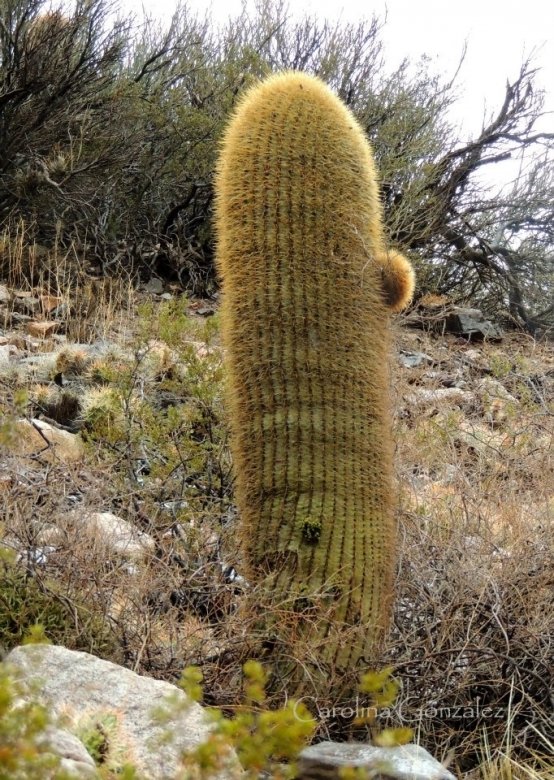
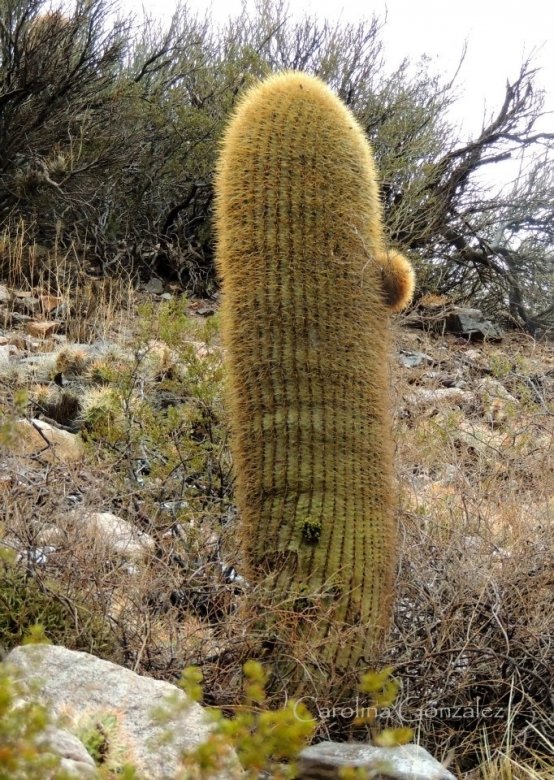
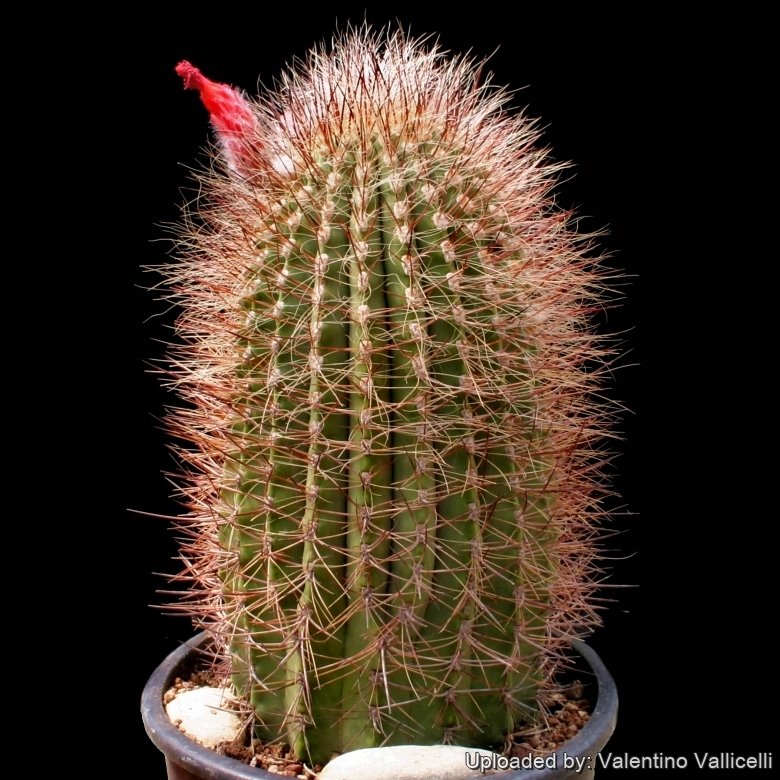
Denmoza rhodacantha is a large slowly growing columnar cactus. It stay globulous during a long period before becoming shortly column-shaped, 0.5 to 1.5(-2) cm high.
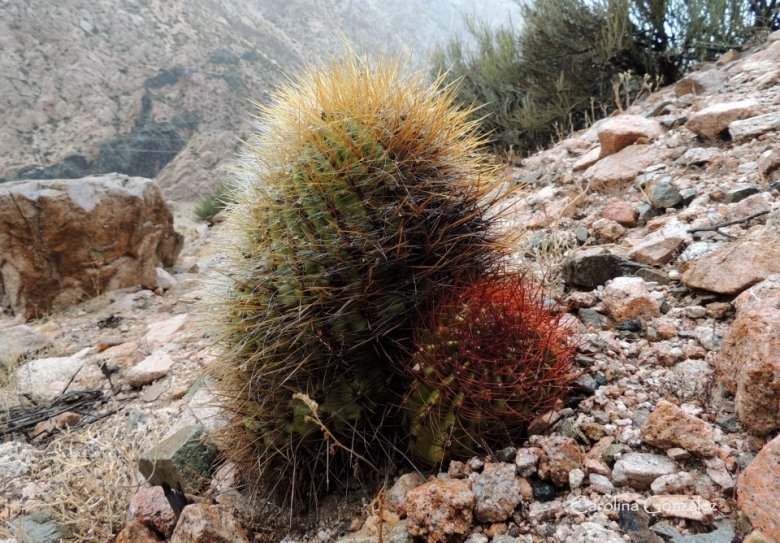
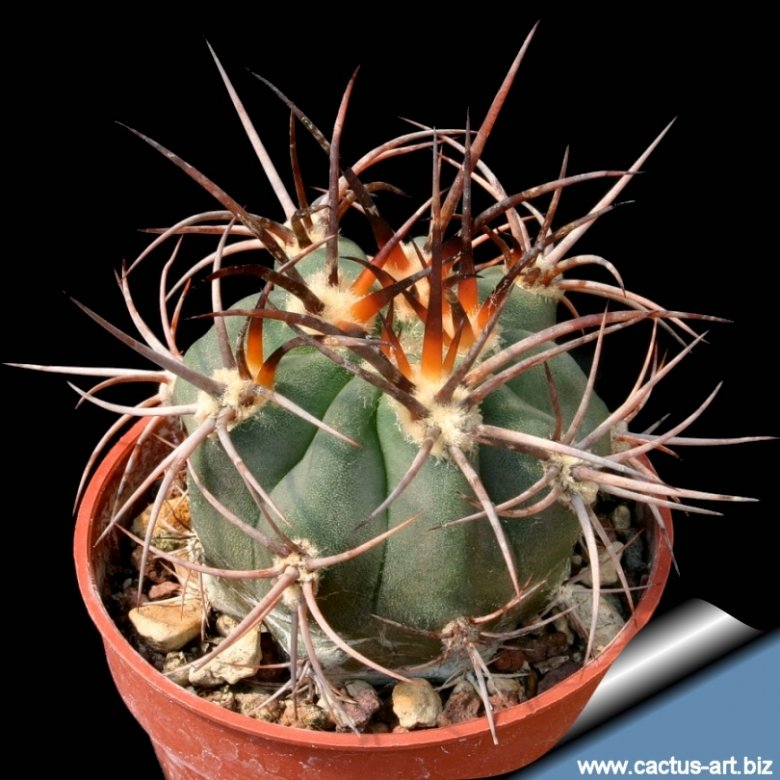
Stem: The plant’s diameter ranges from 15 to 30 cm, the stem colour varies from pale green to dark green
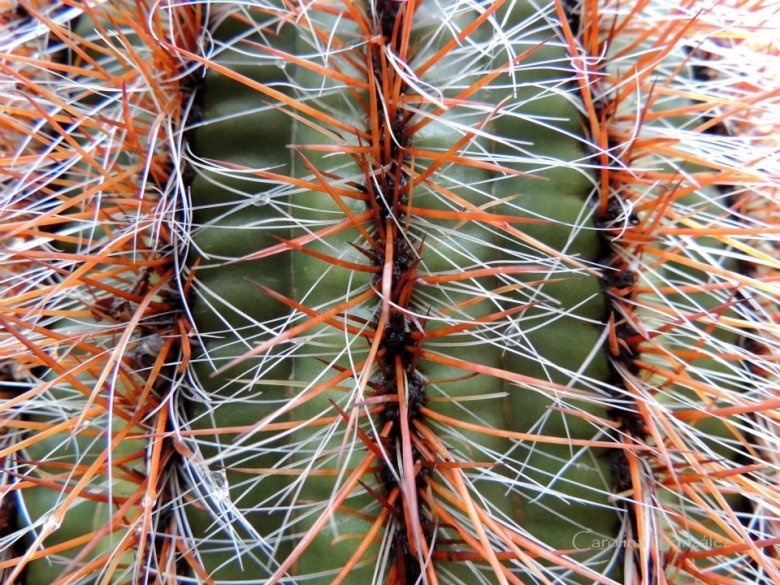
Ribs: 15 to 30, parallel straight, slightly undulate, broad basally up to 1 cm tall.
Areoles: Well spaced at first, later confluent. Flower producing areoles often bears many long bristles and up to 7 cm long spines.
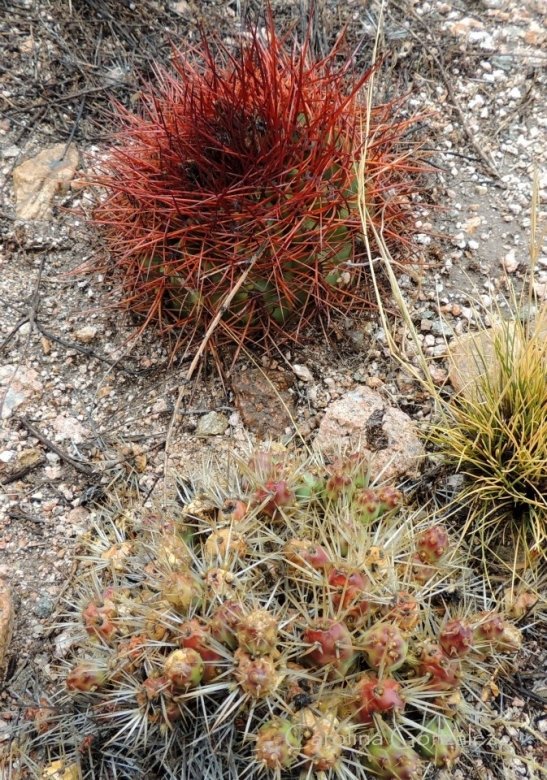
Radial spines: 8 to 10, brownish-red becoming grey, awl shaped and slightly curved, very different in young and old plants. There is also a form (“flavispina”) with orange-yellow spines.
Central spines: 1 (But often absent) stouter up to 3 cm long.
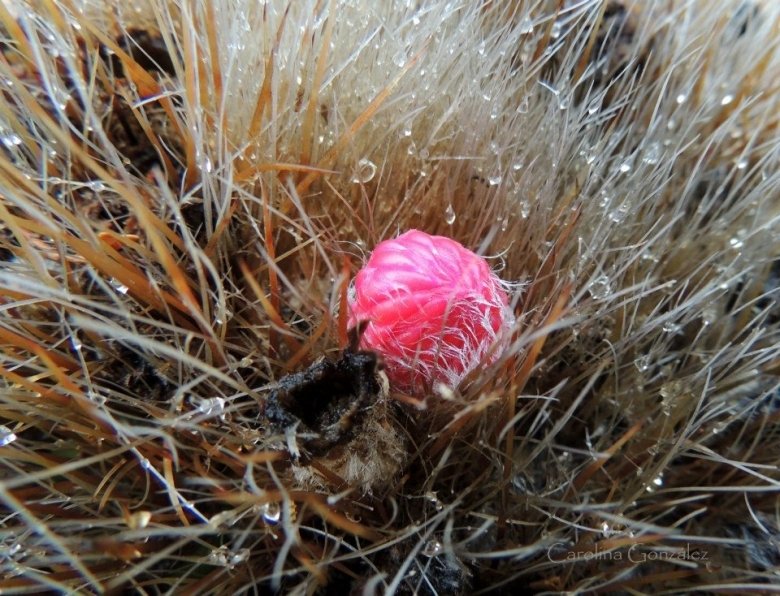
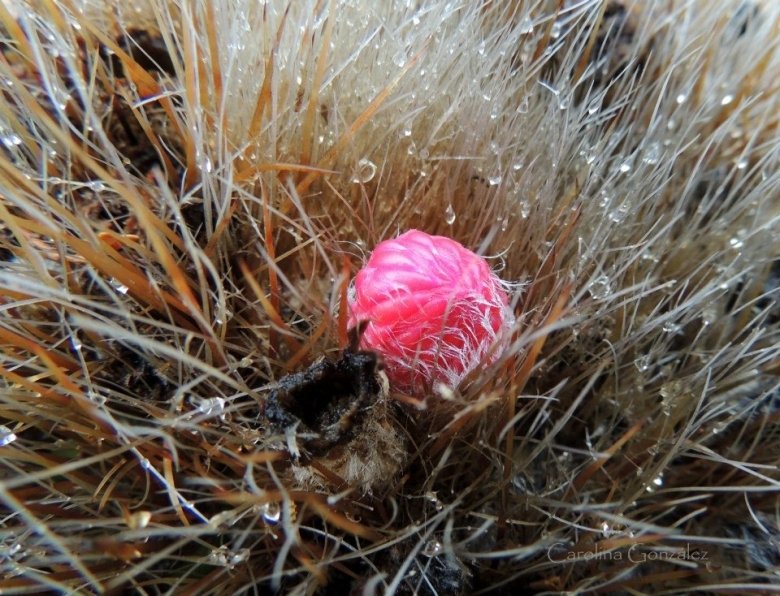
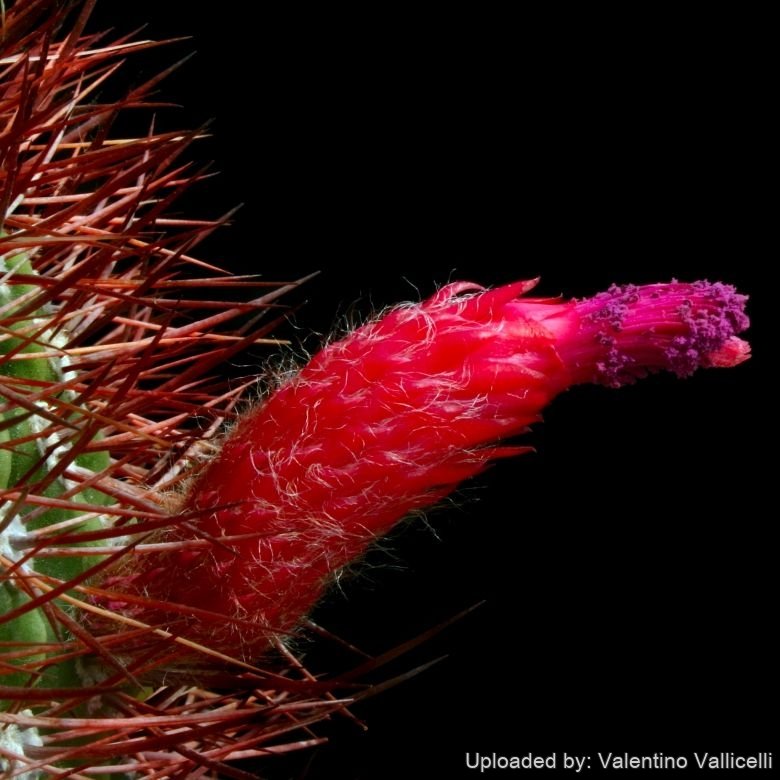
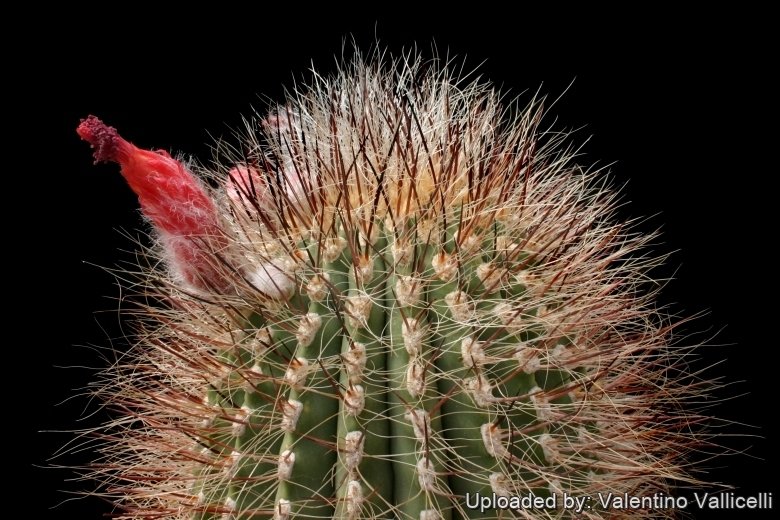
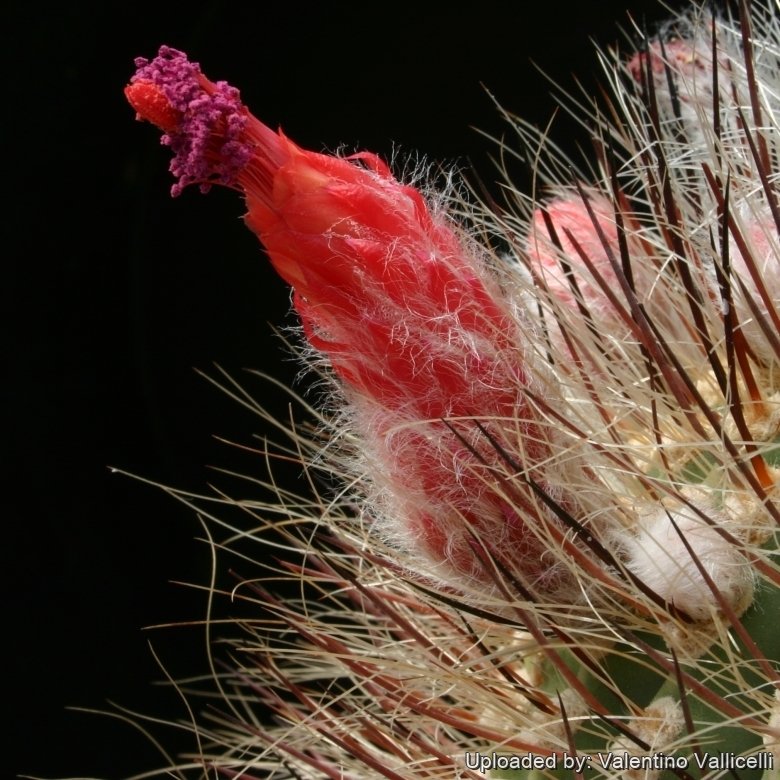
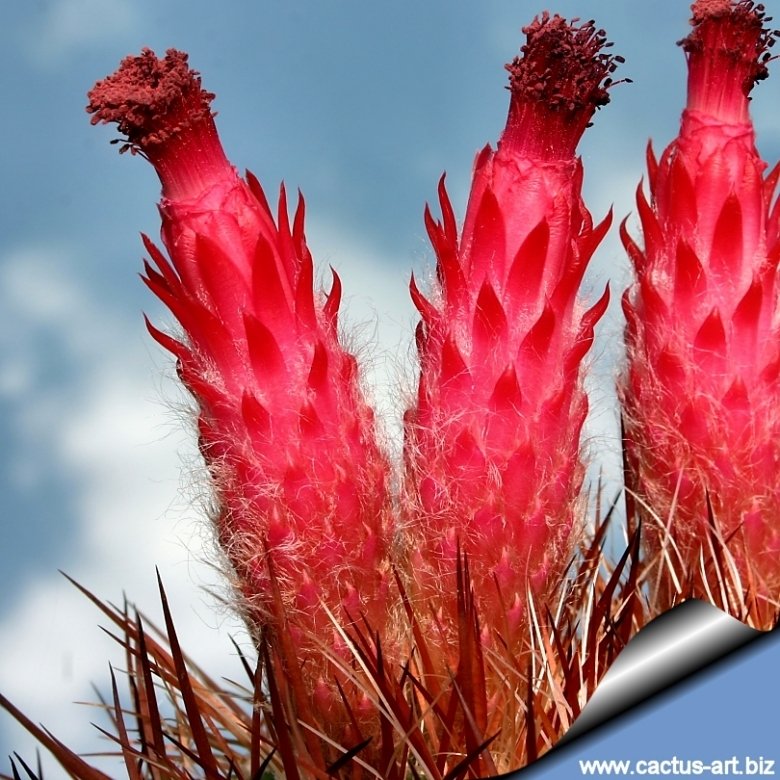
Flowers: They need to reach a reasonable size in cultivation before producing their flowers. First flowers appear near the top of the stem, however, on plants of very unequal age and size, some time on relatively young plants but also on 30-40 years old specimens! Flowers are zygomorphous (bilaterally symmetrical), of a maximum length of 7.5 cm, reddish to bright scarlet in colour and have white hair on the tube. Floral tube usually curved and slightly dilated above the pericarpel, which bears small appressed scales. The flower open sufficiently widely so that the stigma and red stamen filaments are visible from outside. Anther exerted at least 10 mm beyond the tube.
Fruits: Globose, dry at maturity, dehiscent with tuft of short hair-like spines.
Origin and Habitat
Denmoza rhodacantha is widespread throughout the mountains of Argentina, where it occurs in Mendoza, San Juan, La Rioja, Tucumán, Catamarca and Salta.
Altitude range: This species at elevations between 800 and 2800 metres of elevation above sea level.
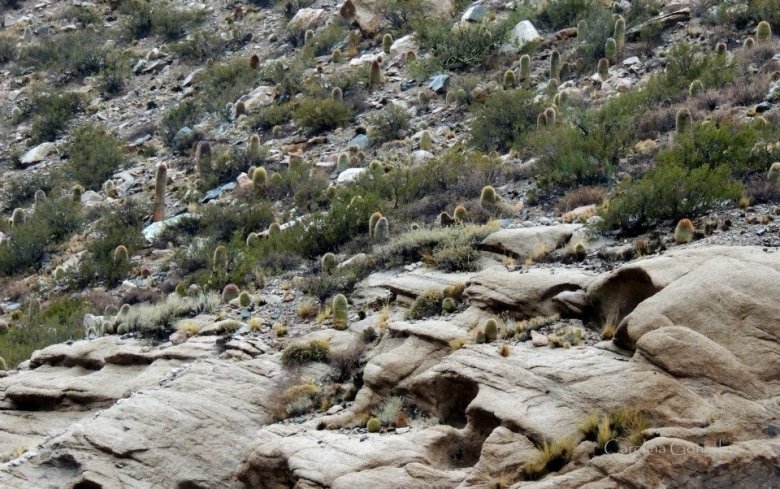
Habitat: Eastern slopes and foothills on monte habitat, in gravel soils, together with Cereus aethiops, Echinopsis leucantha, Opuntia sulphurea, Maihueniopsis glomerata, Eriosyce strausiana and TrichoSN’>7680’ alt=‘6944’>Cereus candicans#SN#7679’>Tricho[[Cereus candicansSN’ style=‘border:none;’>. Denmoza rhodacantha has a wide range, is locally abundant, is present in several protected areas, and is not utilised. The major threats to this species are mining activities and fires.
Cultivation and Propagation
Denmoza rhodacantha is a very slow growing cactus but requires no special condition in cultivation, need full sun. It is old hardy as low as -8°C (or less). It needs a fertile, well drained soil mix. Water the plants well and allow them to dry before watering again. During the growing season fertilize them monthly with a balanced fertilizer
Sun Exposure: Outside full sun, but during hot summers the cactus are subject to sun burning, so grow them in light shade. Inside they need bright light, and some direct sun. During winter months, put them in a cool luminous place and encourage them to enter winter dormancy by withholding water and fertiliser over the winter, as they will etiolate, or become thin, due to lower levels of light. They are susceptible to fungal diseases if over-watered, but are not nearly as sensitive as many other cacti, especially in warm weather. They tend characteristically towards black rotted spots unless watering is moderate and only in hot weather. If kept damp through cold periods, they will invariably suffer.
Propagation: Seeds.
Notes
The genus Denmoza comprises only one species allied to Cleistocactus, but it has also been referred to Echinopsis, Cereus, Echinocactus and Pilocereus.
The plants described as PiloSN’>8001’ alt=‘8003’>Cereus erythrocephalus#SN#8003’>Pilo[[Cereus erythrocephalusSN’ style=‘border:none;’> and later transferred to Denmoza has sometimes, for instance by Backeberg, been considered as another species of the genus. D. rhodacantha changes considerably in the habit with age. The description of Denmoza rhodacantha refers to young plants having strong spines in areoles. Old plants of the same species with multiple number of spines and sometimes with thin, 6 cm long bristly spines correspond to the description of Denmoza erythrosepala.
Bibliography
Major references and further lectures
-
N. L. Britton, J. N. Rose: “The Cactaceae. Descriptions and Illustrations of Plants of the Cactus Family.” Vol I, The Carnegie Institution of Washington, Washington 1919
-
Edward Anderson “The Cactus family” Timber Press, Incorporated, 2001
-
James Cullen, Sabina G. Knees, H. Suzanne Cubey “The European Garden Flora Flowering Plants: A Manual for the Identification of Plants Cultivated in Europe, Both Out-of-Doors and Under Glass” Cambridge University Press, 11/Aug/2011
-
David R Hunt; Nigel P Taylor; Graham Charles; International Cactaceae Systematics Group. “The New Cactus Lexicon” dh books, 2006
-
Méndez, E. & Ortega-Baes, P. 2013. Denmoza rhodacantha. The IUCN Red List of Threatened Species. Version 2014.3. <www.iucnredlist.org>. Downloaded on 12 April 2015.
From llifle page Cereus erythrocephalus
Description
Demnozas grow slowly and stay globulous during a long period before becoming shortly column-shaped, 0.5 to 1.5 cm high. The plant’s diameter ranges from 15 to 30 cm, the stem colour varies from pale green to dark green, with 15 to 30 ribs. They need to reach a reasonable size in cultivation before producing their flowers. First flowers appear, however, on plants of very unequal age and size, some time on relatively young plants but also on 30-40 years old specimens! Flowers are zygomorphous, of a maximum length of 7.5 cm, reddish in colour and have white hair on the tube. The flower open sufficiently widely so that the stigma and stamen are visible from outside.
Origin and Habitat
Denmoza erythrocephala (= Denmoza rhodacantha) is widespread throughout the mountains of Argentina, where it occurs in Mendoza, San Juan, La Rioja, Tucumán, Catamarca and Salta.
Altitude range: This species at elevations between 800 and 2800 metres of elevation above sea level.
Habitat: Eastern slopes and foothills on monte habitat, in gravel soils , together with Cereus aethiops, Echinopsis leucantha, Opuntia sulphurea, Maihueniopsis glomerata, Eriosyce strausiana and TrichoSN’>7680’ alt=‘6944’>Cereus candicans#SN#7679’>Tricho[[Cereus candicansSN’ style=‘border:none;’>. Denmoza rhodacantha has a wide range, is locally abundant, is present in several protected areas, and is not utilised. The major threats to this species are mining activities and fires.
Cultivation and Propagation
D. rhodacantha/erythrocephala is a summer grower species that offers no cultivation difficulties, though very slow growing. Water regularly in summer (but do not overwater ) needs good drainage and very porous soil, keep rather dry in winter. Feed with a high potassium fertilizer in summer. It is quite frost resistant if kept dry (hardy to -7° C). Need a bright exposure, full sun or half shade in summer.
Propagation: Direct sow after last frost as usually fail to produce offsets.
Notes
The genus Denmoza comprises only one species. The plants described as Pilocereus erythrocephalus and later transferred to Denmoza has sometimes, for instance by Backeberg, been considered as another species of the genus. Denmoza rhodacantha changes considerably in the habit with age. The description of Denmoza rhodacantha refers to young plants having strong spines in areoles. Old plants of the same species with multiple number of spines and sometimes with thin, 6 cm long bristly spines correspond to the description of Denmoza erythrosepala.
Source: Cereus erythrocephalus, LLIFLE - Encyclopedia of living forms, CC-BY-SA, retrieved 2026-10-25.
Cultivars and forms (4)
Varieties (1)
Forms (1)
Gallery