Publication: Kakteen (H. Krainz) 53: CVIf 1973
Description
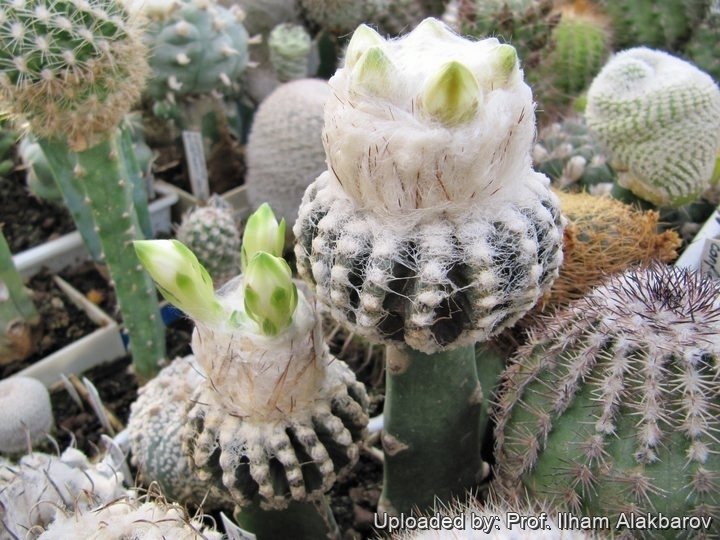
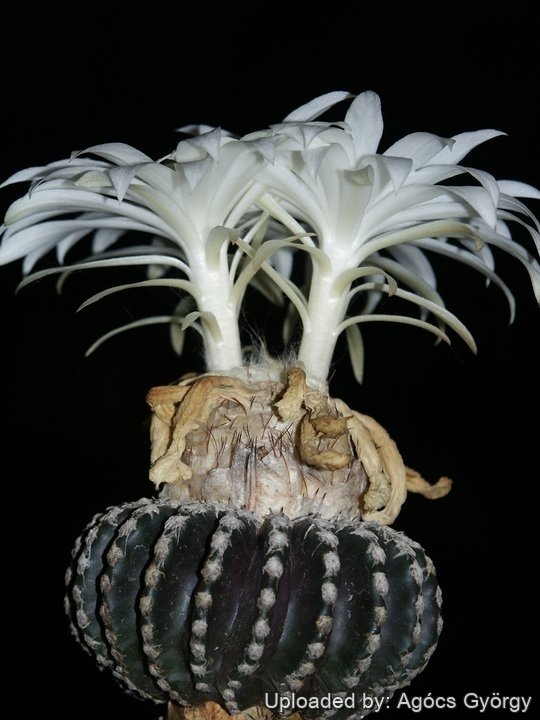
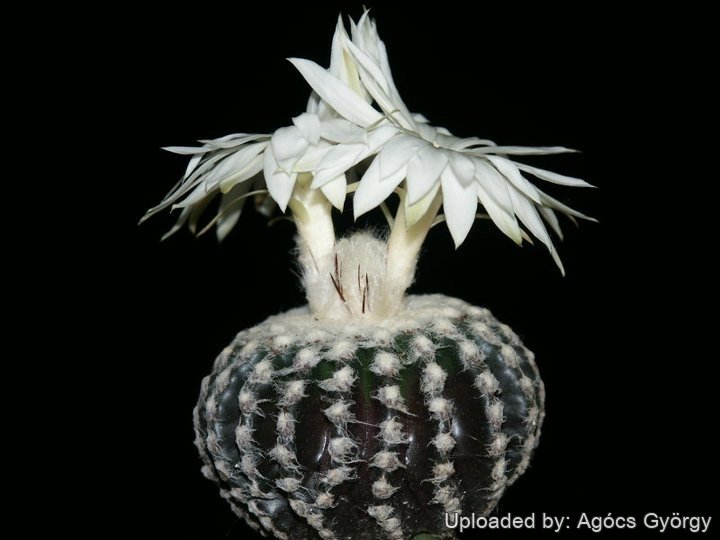
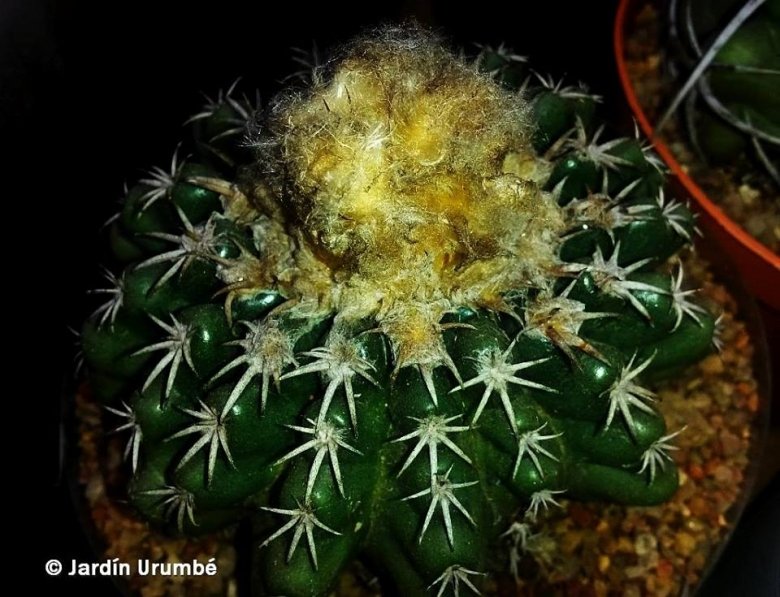
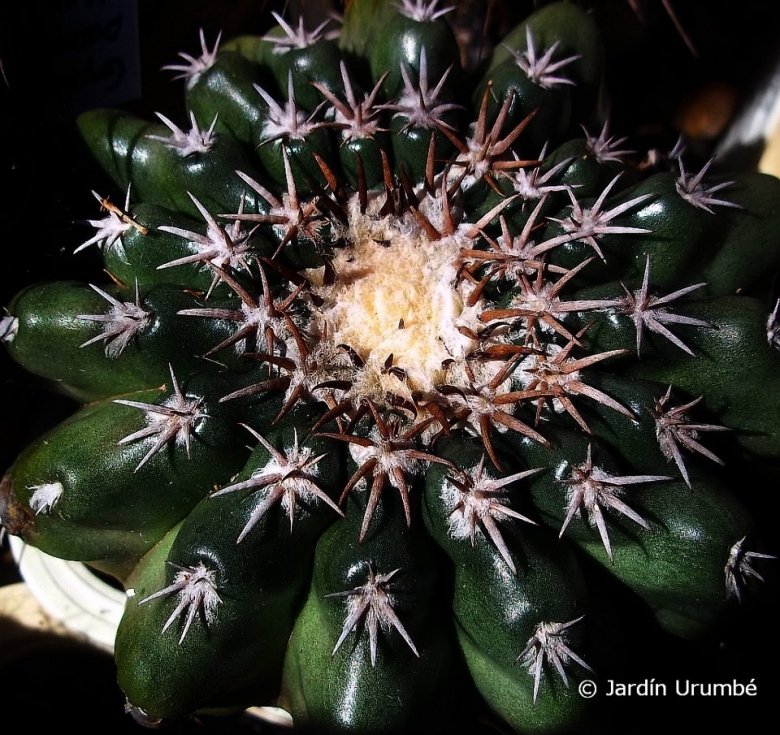
It is a small solitary cactus with a radially segmented body showing the typical habitus of this flat, globular genus. The cephalium, which stays just as flat, is covered by the flowers that come out of it. These cacti are not easy to cultivate, but when grown to maturity, however, they possess an exotic look shared by no other cacti, and they’ll generally attract a lot of attention. D. horstii is really distinctive and obviously deserving of specific rank.
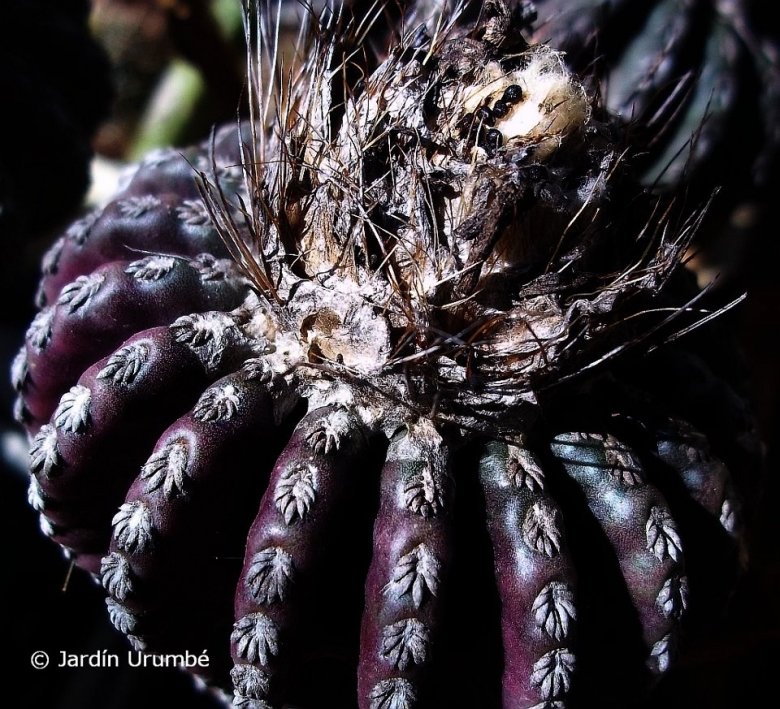
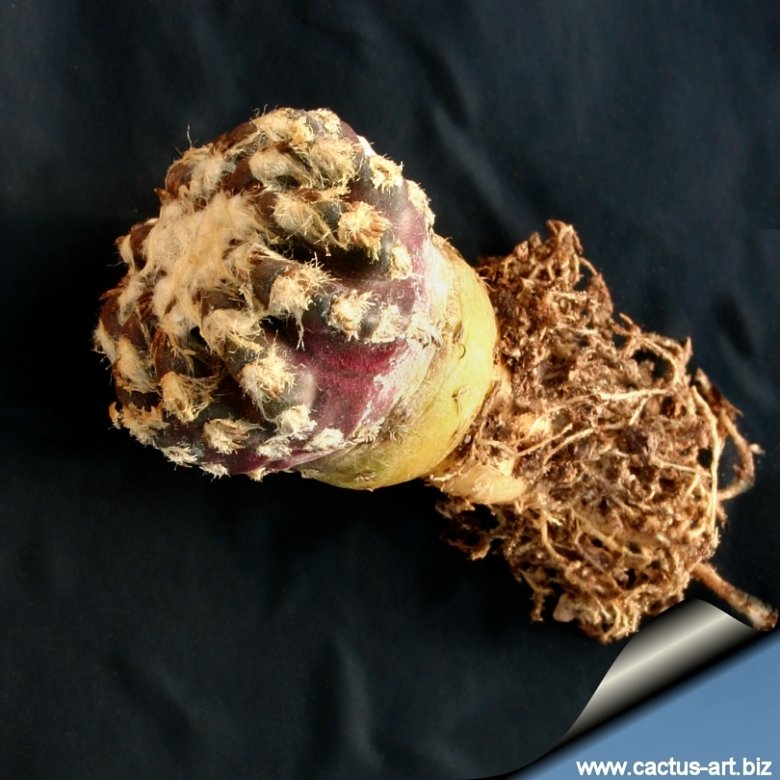
Stem: About 5-6 cm in diameter (up to 8 in culture) The plant with cephalium only grows to be 2-3(-5) cm tall; The colour of the epidermis is at first green and later dark red/brown to almost black.
Ribs: 12 to 22 prominent, narrow, straight, of even width not thikened at the areoles and not tuberculate, with 12 to 14 areoles per rib on plants with cephalium.
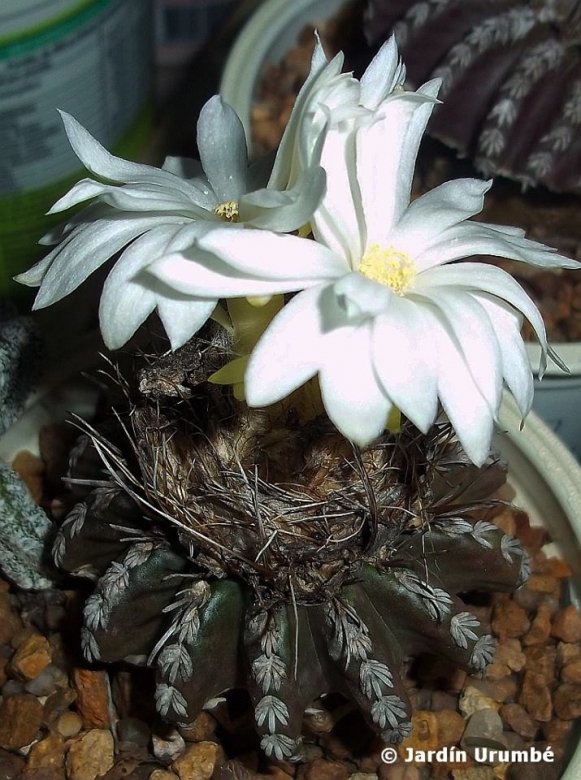
Radial spines: 8 to 10 inconspicuous, light coloured recurved backwards in a comb like arrangement, 2-4(-7) mm long.
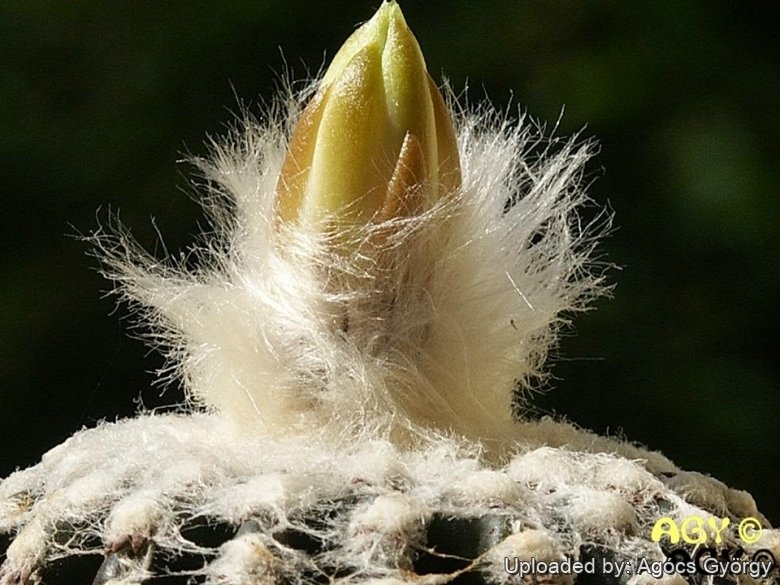
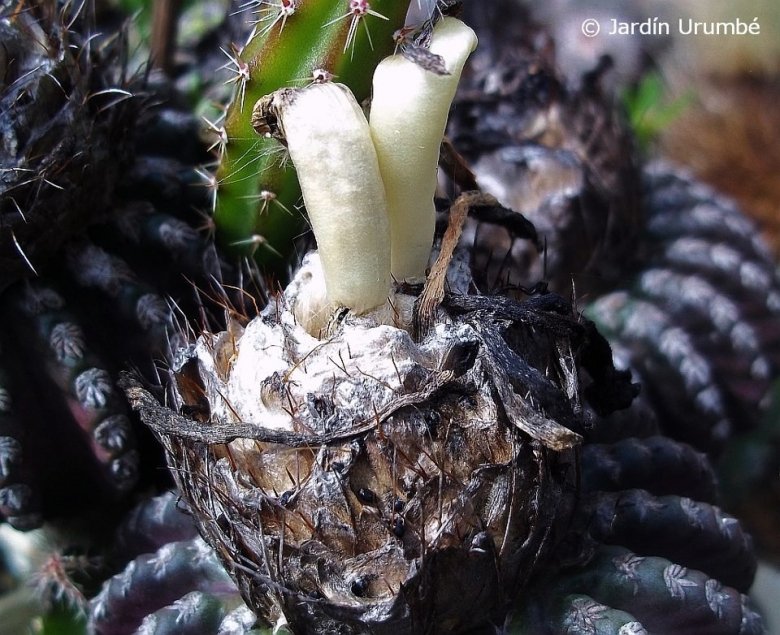
Flowers: The deliciously fragrant nocturnal blooms are 7.5 cm long, 6 cm inches in diameter. They come in profusion in summer, out of a cephalium covered by whitish to light brown wool and bristles. Fruit is white.
Remarks: Discocactus horstii takes up fog-water through its thorns and also it has a peculiar epidermal surface that may be capable of permitting water to enter the stem.
Origin and Habitat
North-west of Grao Mogol in the Serra do Barão in northern Minas Gerais, Brazil (extent of occurrence is less than 100km2 and its area of occupancy is around 6km2, and it is known from three locations).
Altitude: It grows at altitudes between 800 and 1200 metres above sea level.
Habitat and Ecology: This southeastern campo rupestre (Grão Mogol) element grows in quartz gravel and sand beneath shrubs in campo rupestre. It declined substantially in the past due to collection for the international horticulture trade as well as quartz extraction, but populations are stable at the moment, as the entire population is under strict protection and included in the Parque Nacional de Grão Mogol.
Cultivation and Propagation
It is rather difficult to grow and frost tender, should be kept at above 15° C if grown on its own roots (8°C if grafted) need full sun or afternoon shade. Young seedlings are generally grafted because they are slow growing and very rot prone when kept on their own roots and though they can’t endure long stretches of total dryness, too much water will rot them, as their weak root systems tend to be inefficient at sucking up water from wet soil. They generally resent being repotted and can take a long time to establish.
Propagation: Seed or grafting.
Bibliography
Major references and further lectures
-
Edward Anderson “The Cactus family” Timber Press, Incorporated, 2001
-
James Cullen, Sabina G. Knees, H. Suzanne Cubey “The European Garden Flora Flowering Plants: A Manual for the Identification of Plants Cultivated in Europe, Both Out-of-Doors and Under Glass” Cambridge University Press, 11/Aug/2011
-
David R Hunt; Nigel P Taylor; Graham Charles; International Cactaceae Systematics Group. “The New Cactus Lexicon” dh books, 2006
-
Machado, M., Braun, P., Taylor, N.P. & Zappi, D. 2013. Discocactus horstii. In: IUCN 2013. “IUCN Red List of Threatened Species.” Version 2013.2. <www.iucnredlist.org>. Downloaded on 16 February 2014.
From llifle page Discocactus woutersianus
Description
Discocactus woutersianus is a rare species distinguished from Discocactus horstii by its fewer and broader ribs and slightly heavier spines. It’s still not clear whether this plant is a natural hybrid with Discocactus insignis. D. insignis occurs in the same habitat.
Stems: About 9 cm broad and up to 6 cm tall (without cephalium), grey-green.
Ribs: About 15.
Areoles: Round, about 15 per ribs on plants with cephalium.
Radial spines: 7, straight, white to grey, 2 to 5 mm long.
Cephalium: Cream.
Origin and Habitat
Serra do Barrao, near Grao Mogol in Minas Gerais, Brazil.
Altitude range: 1000 metres above sea level.
Bibliography
Major references and further lectures
-
Günter Königs “Discocactus woutersianus AB1006” http://www.discocactus.nl/Engels/speciesE/woutersianusE.htm
-
Sukkulenta 1980 page 198-203
-
Sukkulenta 1981 page 14-15
-
Sukkulenta 1981 page 36-39
Source: Discocactus woutersianus, LLIFLE - Encyclopedia of living forms, CC-BY-SA, retrieved 2026-10-25.
Cultivars and forms (2)
Gallery