Description
Plants of this genus are relatively easy to cross-pollinate and hybridize. Some species hybridize easily while some not. One much sought after result is to cross Discocactus horstii and Discocactus christallophylus in order to produce a plant that would have the intensely coloured epidermis and pronounced rib structure with short pines of the former and the intense floral fragrance of the latter. This is a strong plant that form a white cephalium at maturity, and that - with good treatment - should flower on and off throughout the year. This hybrid produces flowers in great profusion.
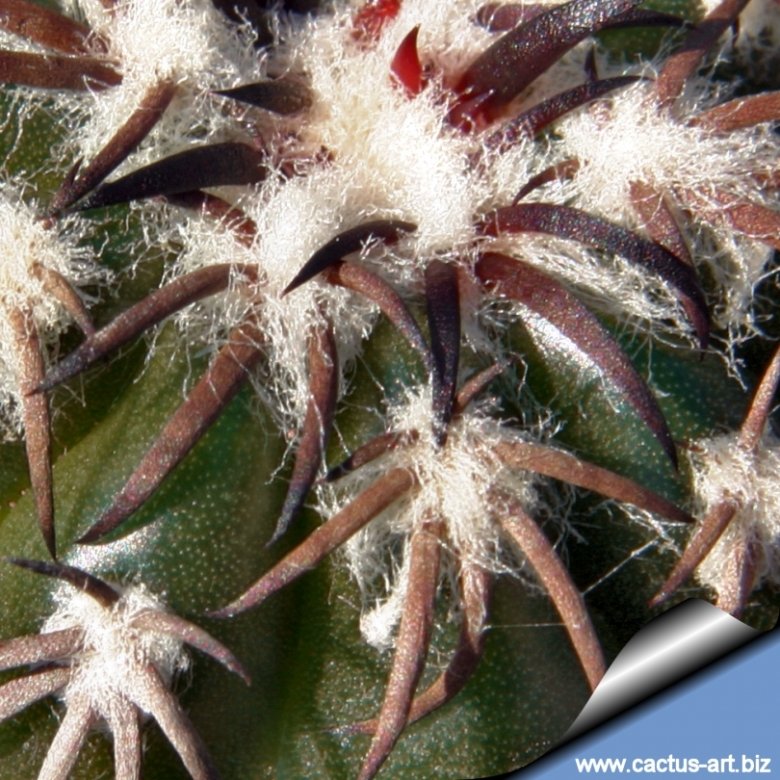
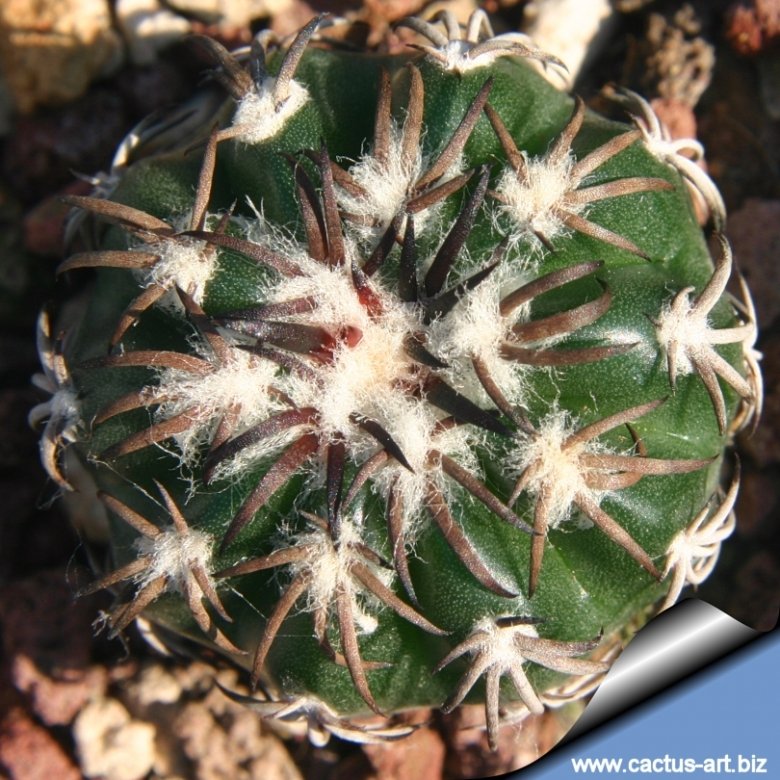
Stem: Solitary, flattened globose or shaped like a cake up to 6 cm tall, 10 cm in diameter. The epidermis is tannish-green to dark brownish-green.
Flowers: Nocturnal, very fragrant up to 7-8 cm long, 6 cm in diameter.
Blooming season: Flowers come in profusion in summer, out of the cephalium.
Spines: 5-7 (or more) light coloured (brown to reddish when very young) recurved backwards in a comb like arrangement, 4-10 mm long.
Origin and Habitat
Garden origin (Nursery produced cultivar)
Cultivation and Propagation
Collectors consider this cactus genus from South America to be rarities as they are not the easiest plant to keep happy. it is rather difficult to grow and frost tender, should be kept at above 15° C if grown on its own roots (8°C if grafted) need full sun or afternoon shade. Young seedlings are generally grafted because they are slow growing and very rot prone when kept on their own roots and though they can’t endure long stretches of total dryness, too much water will rot them, as their weak root systems tend to be inefficient at sucking up water from wet soil. They generally resent being repotted and can take a long time to establish.
Propagation: Seed. Young seedlings are often grafted on a low stock to keep the plant in a good shape.