Publication: Bull. Herb. Boissier iv. App. II. 120.
Description
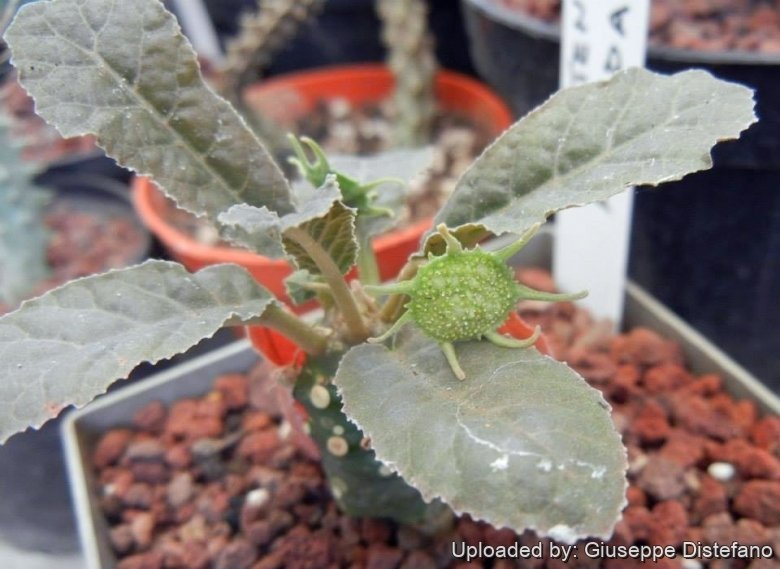
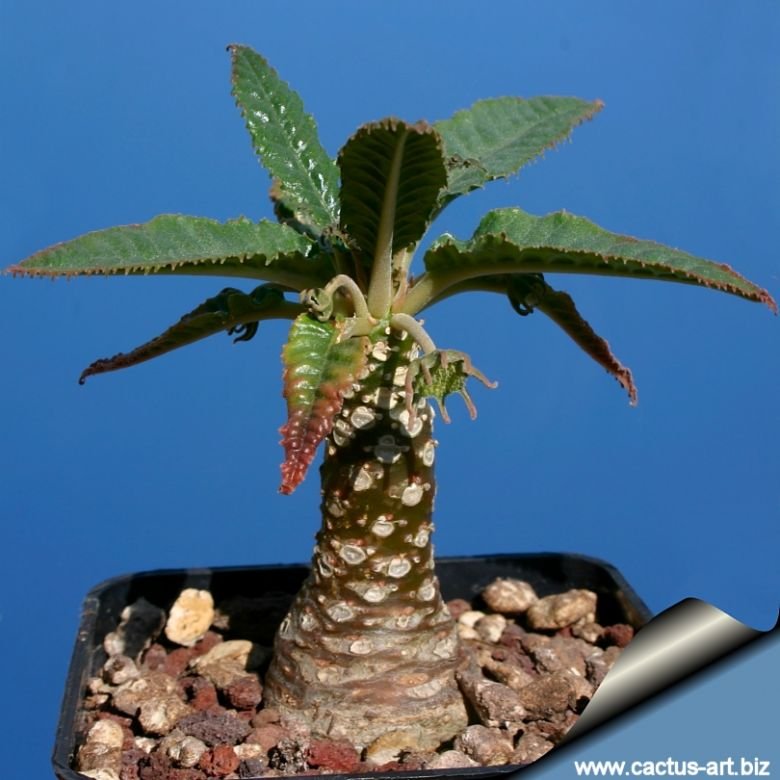
Dorstenia foetida is a sub-shrub, stem succulent which may be branched or not. This is a very variable species especially in shape and size of leaves, length of petioles and stipules. Since the various forms are connected by intermediates it is impossible to recognize infraspecific taxa. Usually perennial D. foetida under tropical conditions may grow as an annual or bi-annual.
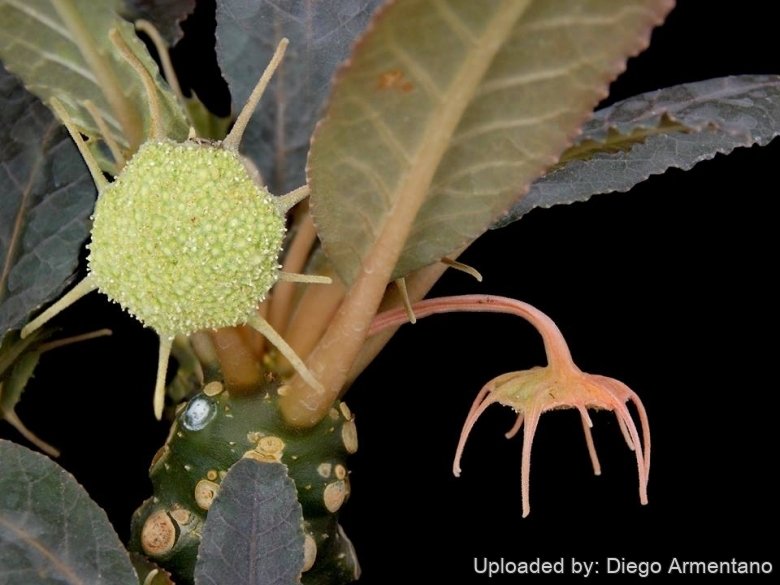
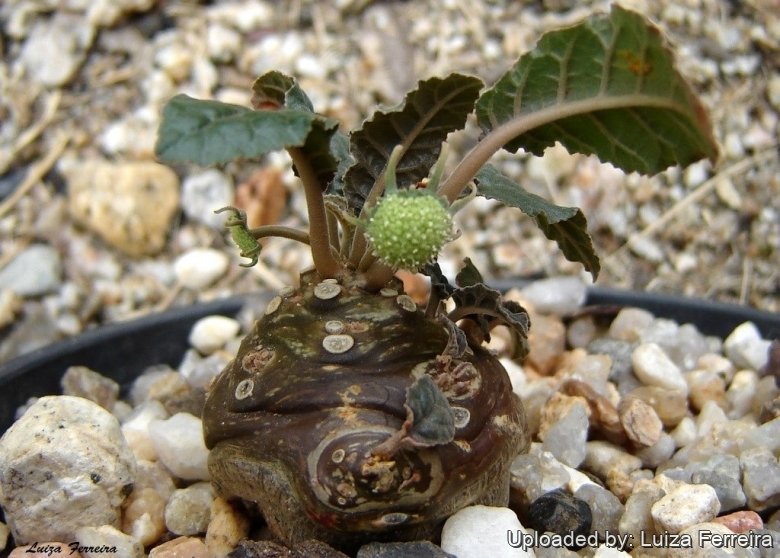
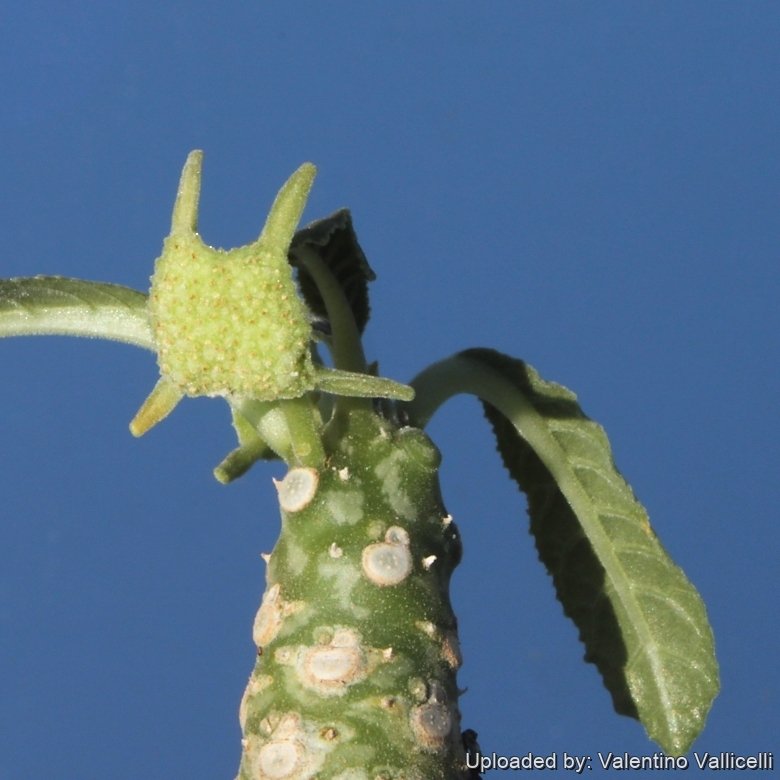
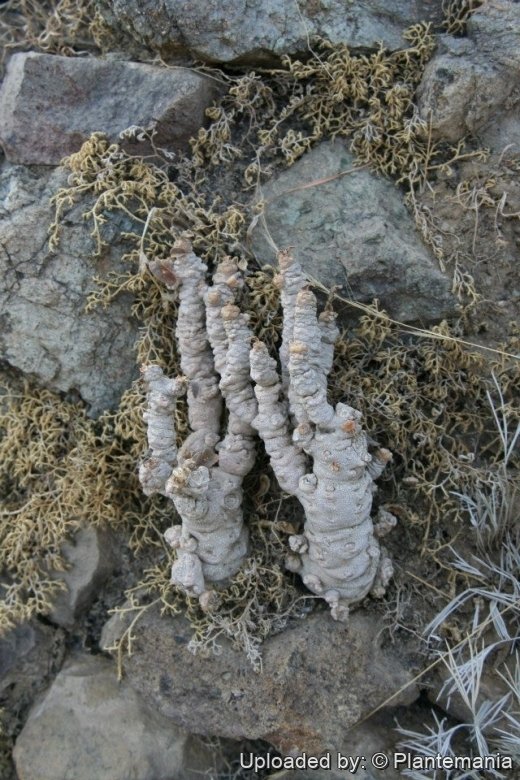
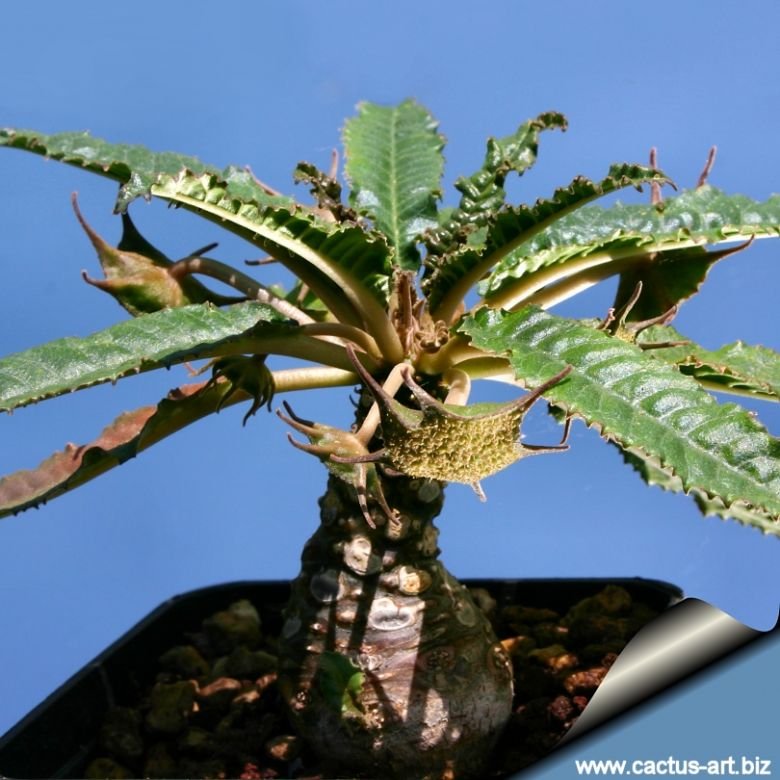
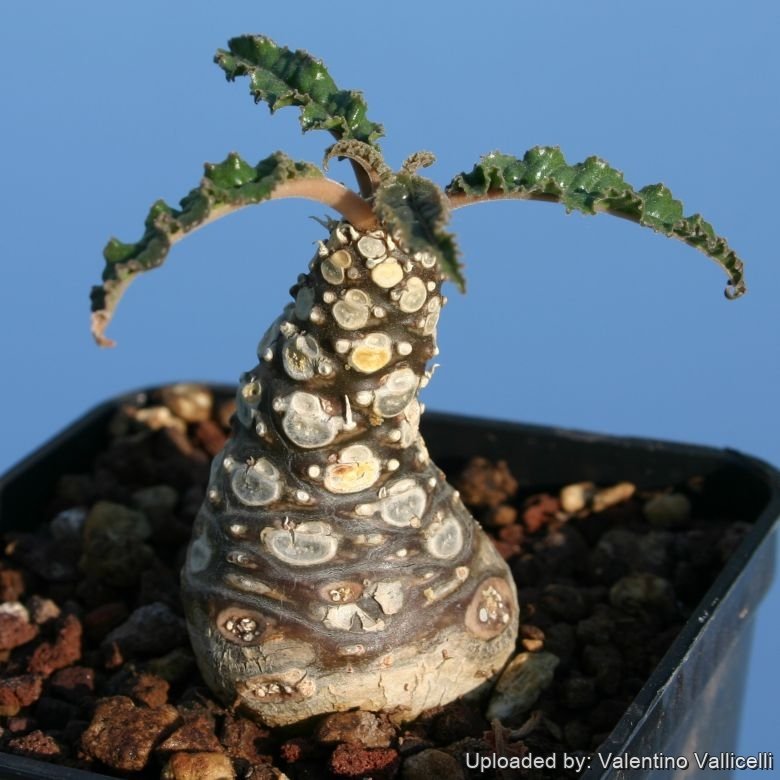
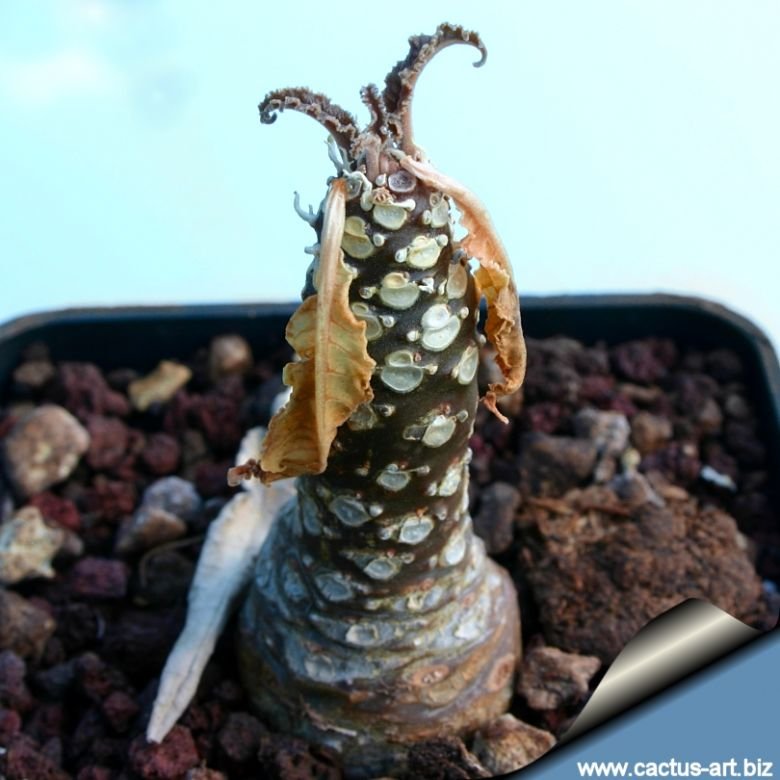
Stem (caudex): It has a thick, dark green- to mahogany-colored conical trunk, that will grow to 15 centimeters in diameter and 30-40 centimeters in height, older parts often with peeling bark. The stem bears conspicuous and prominent round scars of petioles, inflorescences and stipules in a spiral pattern.
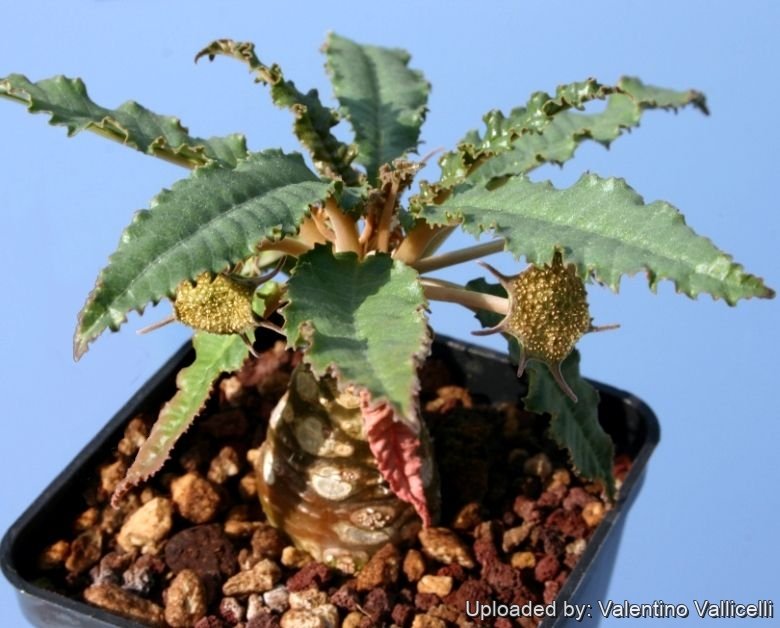
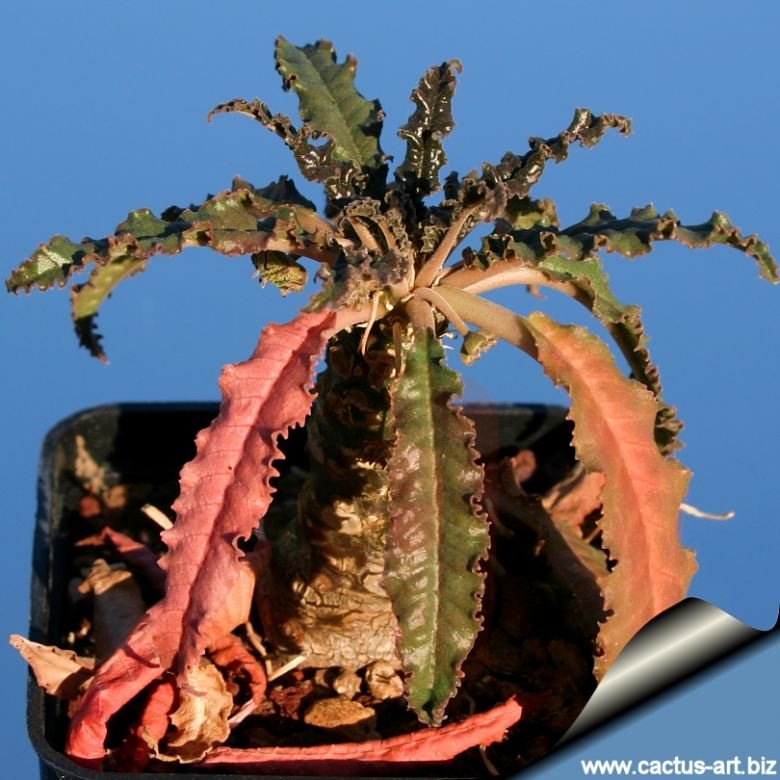
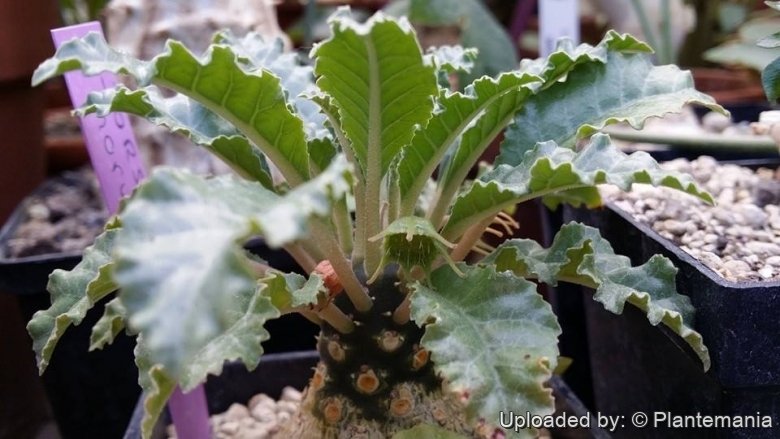
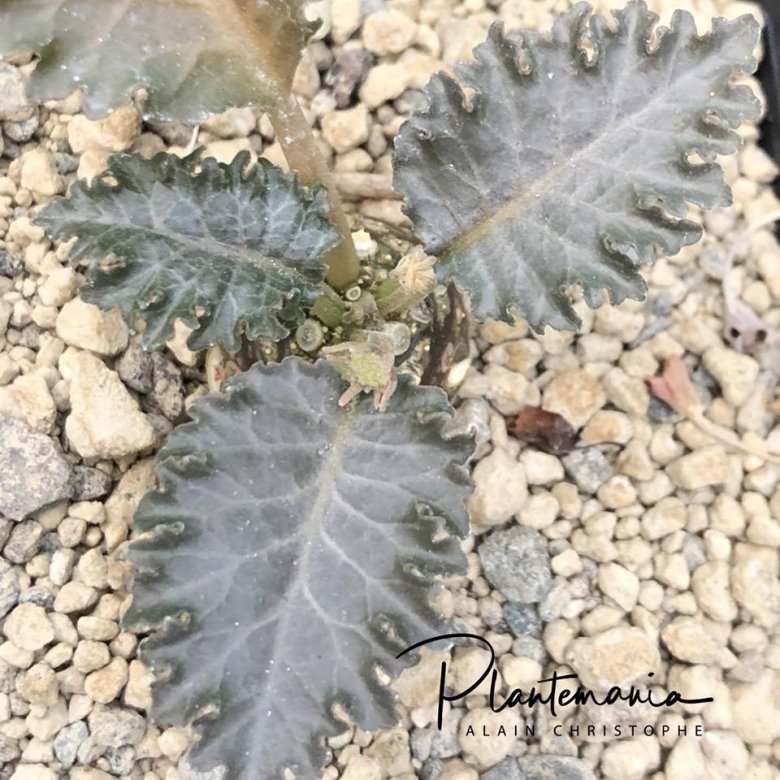
Leaves: Evergreen or caducous, at stems’ tips, light green to grayish-green narrowly lanceolate to broadly elliptical (sometime nearly orbicular or linear), 1-15 cm long, 0,5-4,5 cm wide, tip acute to shortly acuminate, or obtuse to rounded. Base attenuate to cuneate or rounded. Margin rather ‘crinkly,’ ondulate and crenate to subentire or dentate. Lateral veins 3-15 pairs, Petiole 0,1-6 cm long, and relatively broad. It has subpersistent to caducous leaf stipules, about 0,5 to 10 mm long.
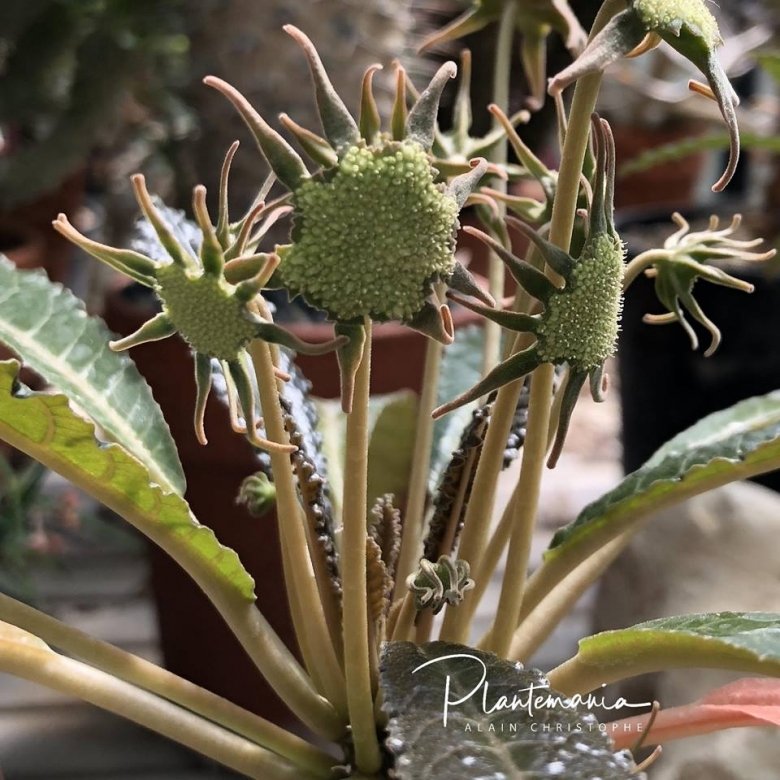
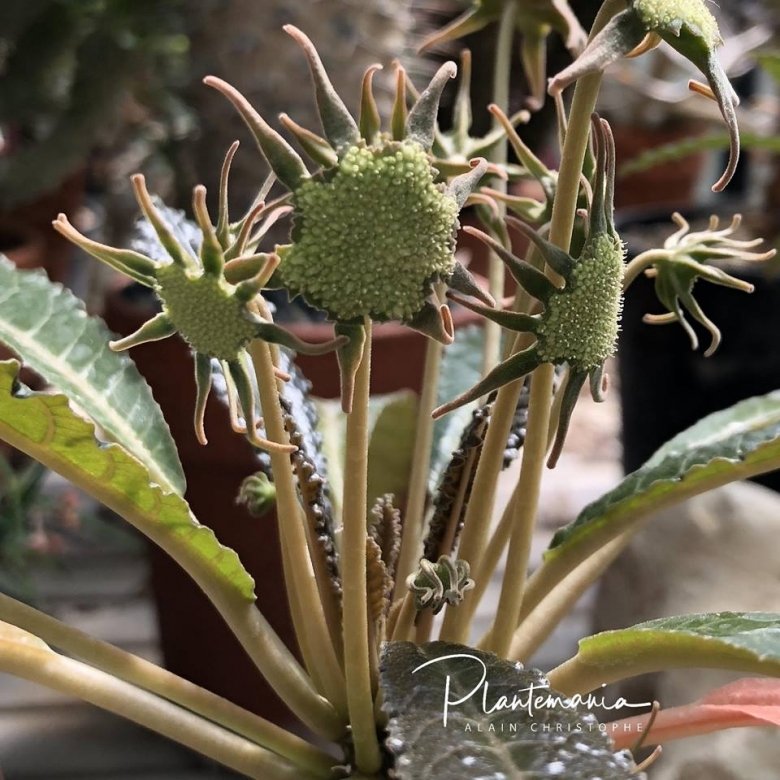
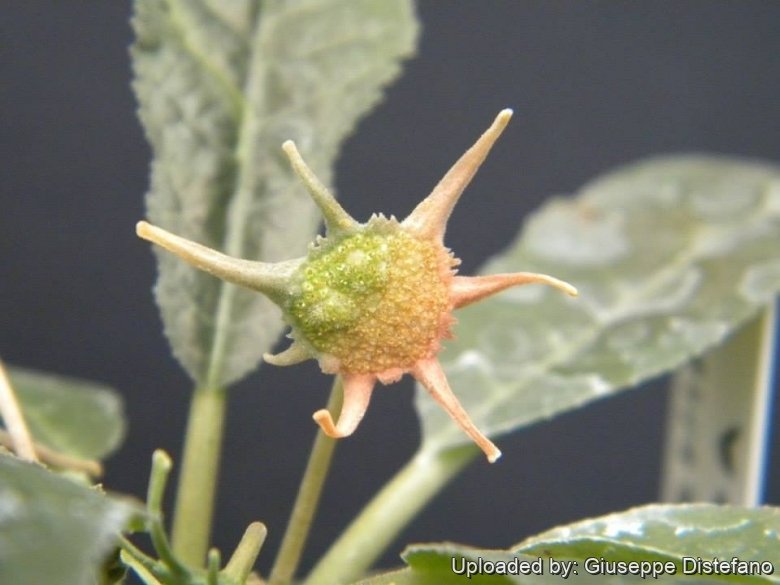
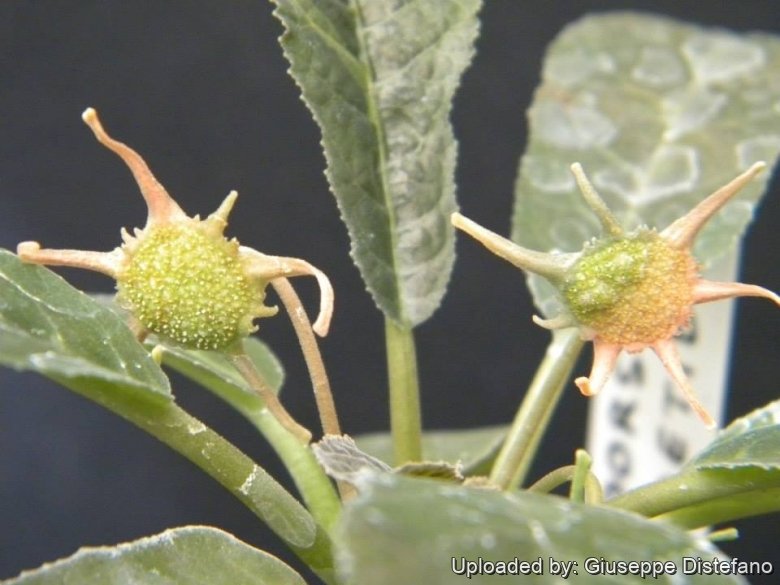
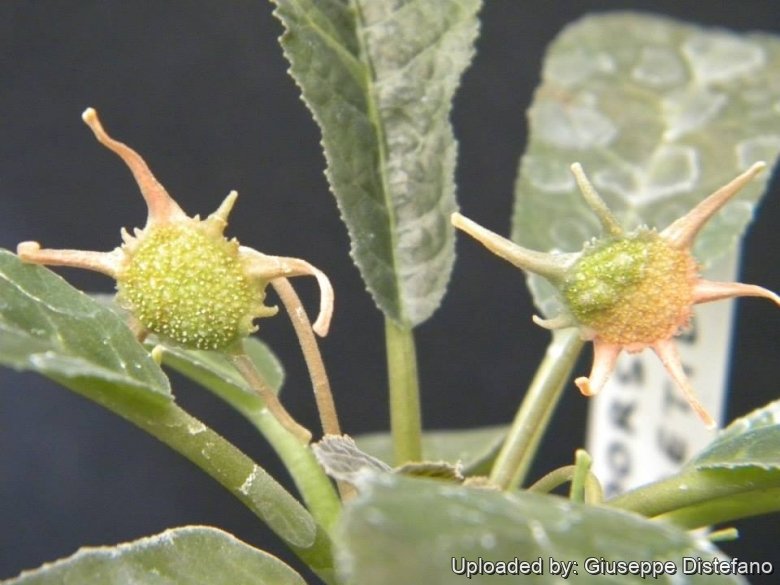
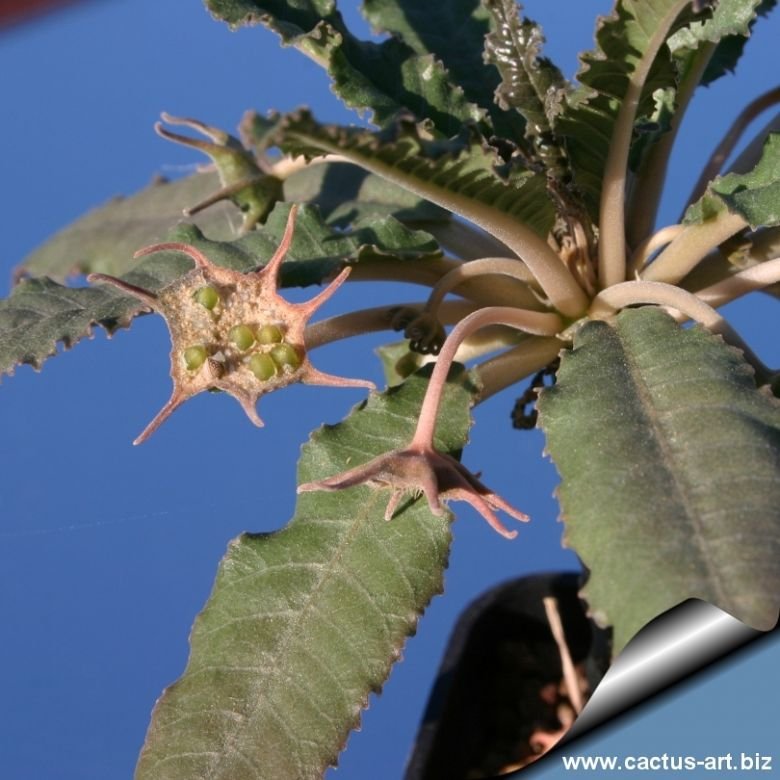
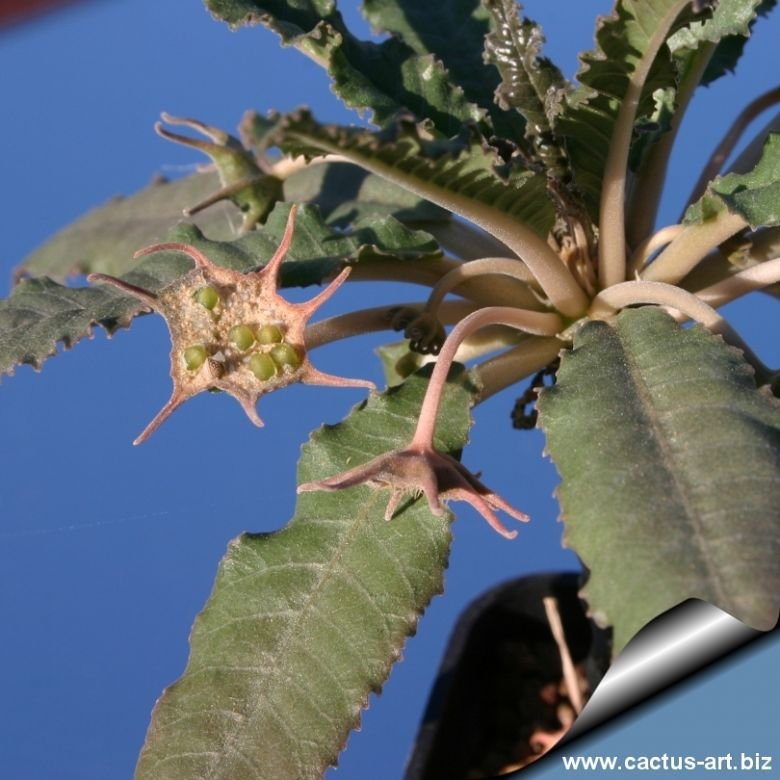
Flowers: It produces grayish or green (or orange/pinkish), solitary, pedicellate, flower-like structures that are actually fruiting bodies called hypanthodiums. This inflorescence is a weird, horned, tentacle-like disc-shaped structure that has given these plants the common name “Shield Flower.” The “Shield” actually consists of a multitude of miniscule flowers. 0, 5-2 cm wide.
Fruits: The seed pods open explosively when ripe and send the seed flying a considerable distance (up to 2 meters) - similar to some Euphorbias.
If you intend to keep the seeds, care must be taken to catch them with a piece of fabric or by other means.
Origin and Habitat
It is native of a vast area, comprising Ethiopia, Somalia, Kenya, Tanzania, Saudi Arabia, Yemen and Oman.
Habitat: Grows in decidous and succulent bushland, open places, and on rock outcrops, altitude 100-2100 m.
Cultivation and Propagation
Dorstenia foetida needs bright light or partial to full shade, with warm temperatures and a well-drained soil mix that must not remain soggy for too long. During the growing season, the plants appreciate a fair amount of water but allow the soil to dry slightly between watering, making sure that they never dry out completely. They have to be kept in a rather high air humidity. They are fertilized once during the growing season with a balanced fertilizer diluted to ½ the strength recommended on the label. During the winter months they tend to go at least partially dormant and will exhibit some leaf loss. During this period, they should be given very little water.
Propagation: Dorstenia foetida are usually propagated by seed. Seed germinate readily at 21° C. They can also be propagated by cuttings.
Uses: Though in Oman the tubers of Dorstenia foetida are cooked and eaten. We do not suggest plants for consumption!
Bibliography
Major references and further lectures
-
Urs Eggli “Illustrated Handbook of Succulent Plants: Dicotyledons” Springer Science & Business Media, 2002
-
Royal Botanic Gardens, Kew “Flora of Tropical East Africa - Moraceae (1989)” Volume 117. CRC Press, 01/Jun/1989
-
Mats Thulin “Flora of Somalia: Angiospermaev (Tiliaceae - Apiaceae)” Royal Botanic Gardens, Kew, 1999
-
“The New Plantsman” Royal Horticultural Society, 1998
-
Sean Hogan “Flora: A Gardener’s Encyclopedia” Volume 1 Timber Press, 2003
-
Werner Rauh “The Wonderful World of Succulents: Cultivation and Description of Selected Succulent Plants Other Than Cacti” Smithsonian Institution Press, 1984
-
Anthony G. Miller, Miranda Morris, Susanna Stuart-Smith “Plants of Dhofar: The Southern Region of Oman : Traditional, Economic and Medicinal Uses” Office of the Advisor for Conservation of the Environment, Diwan of Royal Court, 1988
-
Anthony G. Miller, Thomas A. Cope, J. A. Nyberg “Flora of the Arabian Peninsula and Socotra” Volume 1 Edinburgh University Press, 1996
-
James Cullen, Sabina G. Knees, H. Suzanne Cubey “The European Garden Flora Flowering Plants: A Manual for the Identification of Plants Cultivated in Europe, Both Out-of-Doors and Under Glass” Cambridge University Press, 11/Aug/2011
From llifle page Dorstenia sp.
Description
It is a perennial sub-shrub, stem succulent which may be branched or not. This is a very variable species especially in shape and size of leaves, and length of petioles and stipules.
Since the various forms are connected by intermediates it is impossible to recognize infraspecific taxa.
Stem (caudex): It has a thick, dark green- to mahogany-colored conical trunk, that will grow to 15 centimeters in diameter and 30-40 centimeters in height, older parts often with peeling bark. The stem bears conspicuous and prominent round scars of petioles, inflorescences and stipules in a spiral pattern,
Leaves: Evergreen or caducous, at stems’ tips, light green to grayish-green narrowly lanceolate to broadly elliptical (sometime nearly orbicular or linear), 1-15 cm long, 0,5-4,5 cm wide, tip acute to shortly acuminate, or obtuse to rounded.
Base attenuate to cuneate or rounded. Margin rather ‘crinkly,’ ondulate and crenate to subentire or dentate. Lateral veins 3-15 pairs, Petiole 0,1-6 cm long, and relatively broad.
It has subpersistent to caducous leaf stipules, about 0,5 to 10 mm long.
Flowers: It produces grayish or green (or orange/pinkish), solitary, pedicellate, flower-like structures that are actually fruiting bodies called hypanthodiums. This inflorescence is a weird, horned, tentacle-like disc-shaped structure that has given these plants the common name “Shield Flower.” The “Shield” actually consists of a multitude of miniscule flowers. 0, 5-2 cm wide.
Fruits: The seed pods open explosively when ripe and send the seed flying a considerable distance (up to 2 meters) - similar to some Euphorbias.
If you intend to keep the seeds, care must be taken to catch them with a piece of fabric or by other means.
Cultivation and Propagation
Beloved by collectors, Dorstenia foetida is an excellent pot plant and it should make an interesting addition to a collection.
Growth rate: It grows well, though very slowly, but it possible to increase the speed of growth to some extent by providing adequate amount of water, warmth, and fertilizer during the active growing season, but it’s susceptible to rotting if too wet.
Exposure: It needs light shade, but the caudex should be in the shade, while the leaves prefer some sun. Avoid direct blasting sun in summer. Bright light if grown indoors.
Soil: It needs a very porous potting medium (add pumice, vulcanite, and perlite). It does better in a rather acidic soil.
Waterings: During the growing season, the plants appreciate a fair amount of water but allow the soil to dry slightly between watering, making sure that they never dry out completely, but keep dry during the winter after the leaves have died back. It rot easily and do NOT like a lot of water when it has no leaves. They have to be kept in a rather high air humidity.
Fertilizer: They are fertilized once during the growing season with a balanced fertilizer diluted to ½ the strength recommended on the label.
Frost tolerance: Due to its African origin keep warm in winter, the minimum safe average temperature is 15°C, although it can go lower for short periods. It can be grown outdoors in frost-free climates, need anyway to kept above 10°C and dry in winter. It is very prone to rot in cool, wet conditions. USDA Zone 12, but does very well in containers.
Maintenance: Repot every two years. It like pots with generous drain holes.
Propagation: Dorstenias are usually propagated by seed. Seed germinate readily at 21° C. They can also be propagated by cuttings.
Warning: As with all Adenias, all parts of this plant are very toxic, and they should be handled with caution, particularly when pruning.
Uses: Though in Oman the tubers of Dorstenia foetida are cooked and eaten. We do not suggest plants for consumption!
Source: Dorstenia sp., LLIFLE - Encyclopedia of living forms, CC-BY-SA, retrieved 2026-10-25.
From llifle page Dorstenia horwoodii
Description
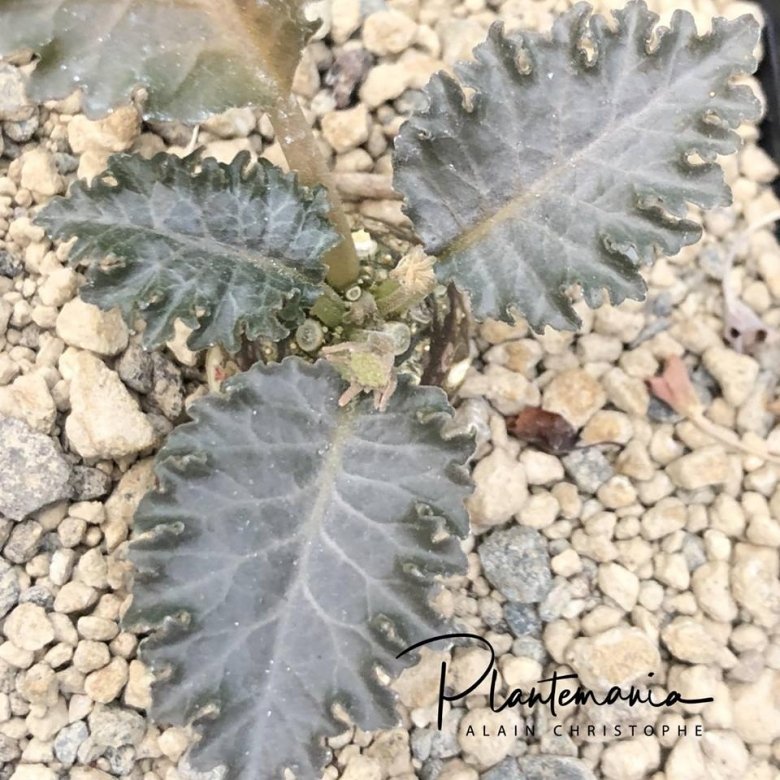
Dorstenia horwoodii is small succulent growing generally included within (as a synonym of) Dorstenia foetida, suggesting that there is not really a fundamental difference between the two. In habitat it grows to about 5 cm tall (more in cultivation). It produces a new flush of silvery green, remarkably nice, decorative crisped and crenulate leaves in spring turning to autumnal golden before they shed. The inflorescences are held on long straight erect spreading peduncles (flower stalks) twice as long as leaves. These are greenish, flat, disk-like in longitudinal section with a row of star-like appendages on the margin of the receptacle. The receptacle bears both the ovaries of the female flowers, and the anthers of the male flowers. Unlike D. foetida that often grows as an annual or bi-annual D. horwoodii remains strongly perennial.
Derivation of specific name: This species was collect by Frank (Francis) Horwood in Somalia and hence the species name. Two other species have been dedicated to him Pseudolithos horwoodii P.R.O. Bally & Lavranos 1974 and Sansevieria francisii Chahin. 1995.
Origin and Habitat
Somalia (Northeast Tropical Africa, Africa)
Type locality: Nugaal Province, east of the village of Eyl, on the limestone plateau overlooking the Indian Ocean, 100–150 metres above sea level.
Habitat and ecology: Dorstenia horwoodii grows nested in rock cracks and very small holes on top of huge boulders, on the limestone plateau.
Cultivation and Propagation
Dorstenia horwoodii needs bright light or partial to full shade, with warm temperatures and a well-drained soil mix that must not remain soggy for too long. During the growing season, the plants appreciate a fair amount of water but allow the soil to dry slightly between watering, making sure that they never dry out completely. They have to be kept in a rather high air humidity. They are fertilized once during the growing season with a balanced fertilizer diluted to ½ the strength recommended on the label. During the winter months they tend to go at least partially dormant and will exhibit some leaf loss. During this period, they should be given very little water.
Propagation: Dorstenias are usually propagated by seed. Seed germinate readily at 21° C. They can also be propagated by cuttings.
Notes
This species was collect by Frank Horwood in Somalia and hence the species name.
Bibliography
Major references and further lectures
-
Dorstenia horwoodii in: blogspot, Plants for life, thursday. March 12 2009 <http://tulear.blogspot.it/2009/03/dorstenia-horwoodii.html\>
-
Alain Rzepecky “Dorstenia horwoodii Rzepecky sp. nov. from Nudum to Novum, a Fortyish Year Hiatus” Cactus and Succulent Journal 88(2):66-74. 2016
Source: Dorstenia horwoodii, LLIFLE - Encyclopedia of living forms, CC-BY-SA, retrieved 2026-10-25.
Gallery