Publication: Notes Mesembryanthemum [H.M.L. Bolus] 3: 184. 1939 [20 Jul 1939]
Origin and Habitat
Little Namaq
From llifle page Dracophilus proximus
Description
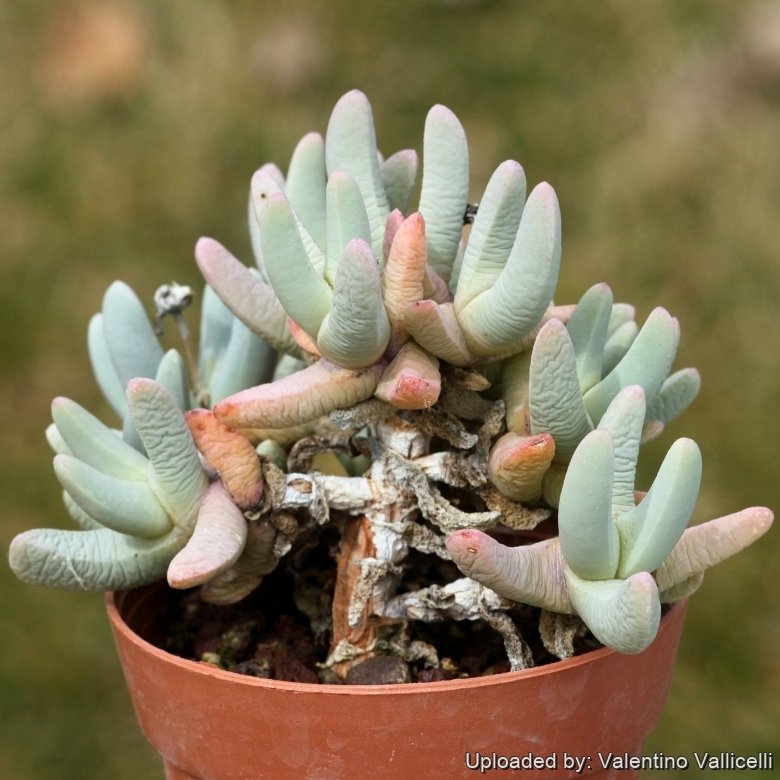
It is a compact, spreading or horizontal clump-forming, low succulent, up to 15 cm tall, but usually less than 8 cm in height.
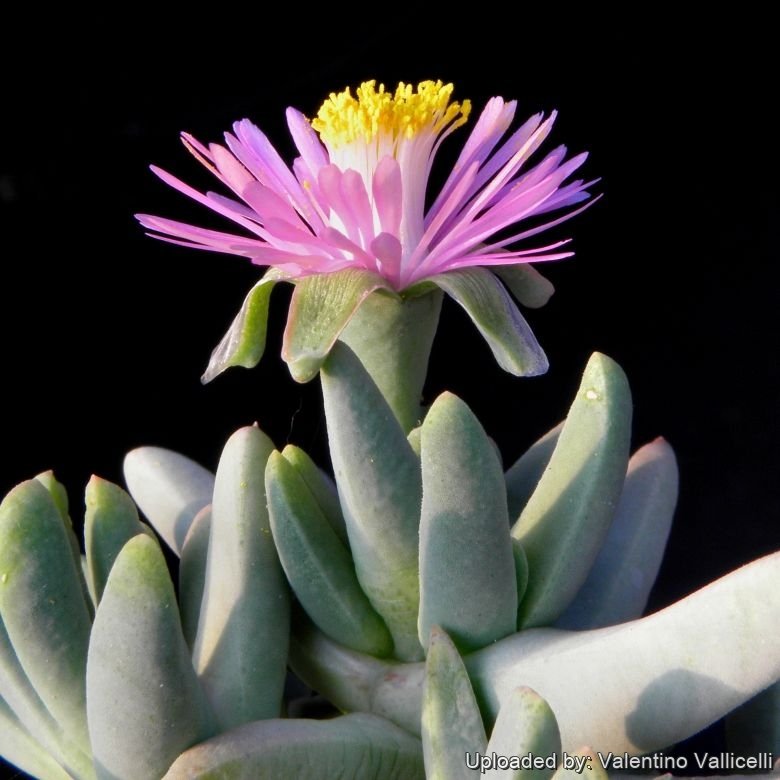
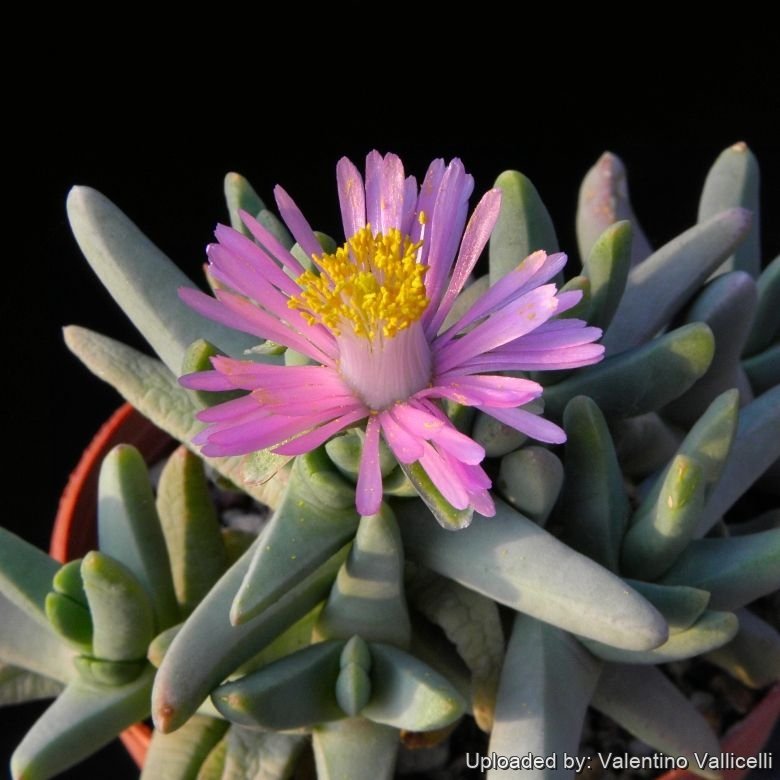
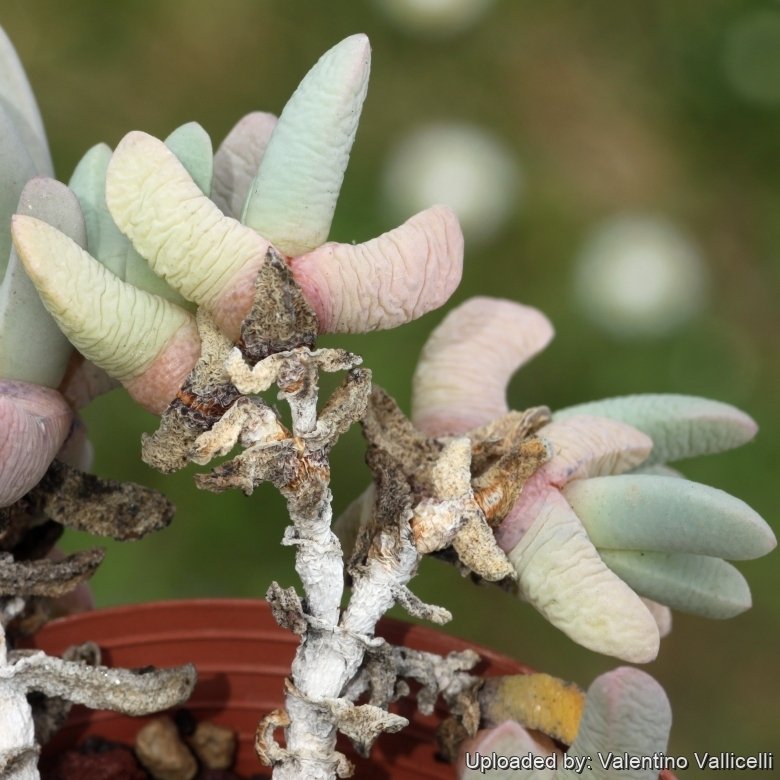
Leaves: Fat white to bluish paired and three-angled.
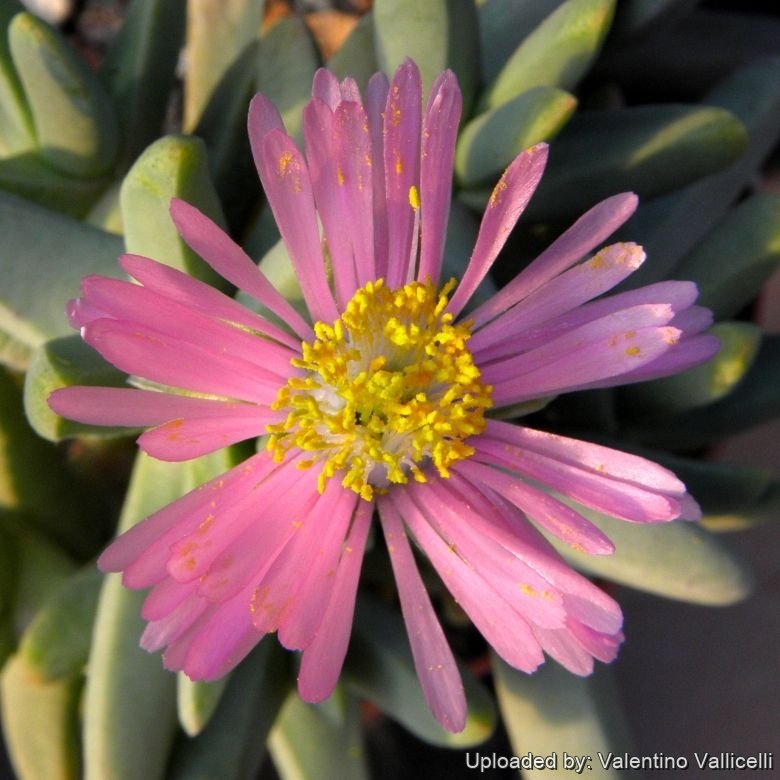
Flowers: Showy highly decorative
Blooming season: Flowers open from dusk until dawn in winter.
Origin and Habitat
Little Namaqualand
Habitat: It depends in nature for most of its misture on sea mists.
Cultivation and Propagation
Dracophilus proximus is a “winter” grower which are most active from late winter until later spring and heading for summer dormancy, but in favourable growing conditions it keeps going over the summer too and doesn’t need particular care. It is relatively easy to grow.
Soil: Requires good drainage as it it is prone to root rot. It can grows outdoor in sunny, dry, rock crevices (protection against winter wet is required) It can also be cultivated in alpine house, in poor, drained soil.
Fertilization: Feed it once during the growing season with a fertilizer specifically formulated for cactus succulents (poor in nitrogen), including all micro nutrients and trace elements diluted to ½ the strength recommended on the label. It thrives in poor soils and need a limited supplies of fertilizer to avoid the plants developing excess vegetation, which is easily attacked by fungal diseases.
Watering: Water minimally in summer, only when the plant starts shrivelling, water more abundantly when they are growing in the autumn and spring, but let the soil dry between soaking. Requires little water otherwise its epidermis breaks (resulting in unsightly scars). If grown in a container, bottom watering by immersing the container is recommended. It must have very dry atmosphere.
Light: It needs a bright sunny or light shade exposure in winter, but keep cool and shaded in summer.
Hardiness: It prefer a very bright situation and require a minimum temperature 5°C (But will take a light frost and is hardy down to -7° C for short periods if it is in dry soil). USDA zones 9A – 11.
Uses: Container, rock garden.
Pests and diseases: It is vulnerable to mealybugs and rarely scale.
Propagation: Seed in spring or (or rarely) cuttings. To make a cutting twist off a rosette with at least a part of stem and permit it to dry out a couple of days, lay it on the soil and insert the stem end partially into the soil. Try to keep the cutting somewhat upright so that the roots are able to grow downward. It is relatively difficult to root Dracophilus from cuttings and generally pointless as well, so quick are they from seed.
Bibliography
Major refereces
-
Antje Burke “Wild flowers of the southern Namib” Namibia Scientific Society, 2003
-
The National Cactus and Succulent Journal. - National Cactus and Succulent Society, Vol 27-30 page 21, 1972.
Source: Dracophilus proximus, LLIFLE - Encyclopedia of living forms, CC-BY-SA, retrieved 2026-10-25.
Gallery