Publication: Contr. U.S. Natl. Herb. 13: 46 1910
Description
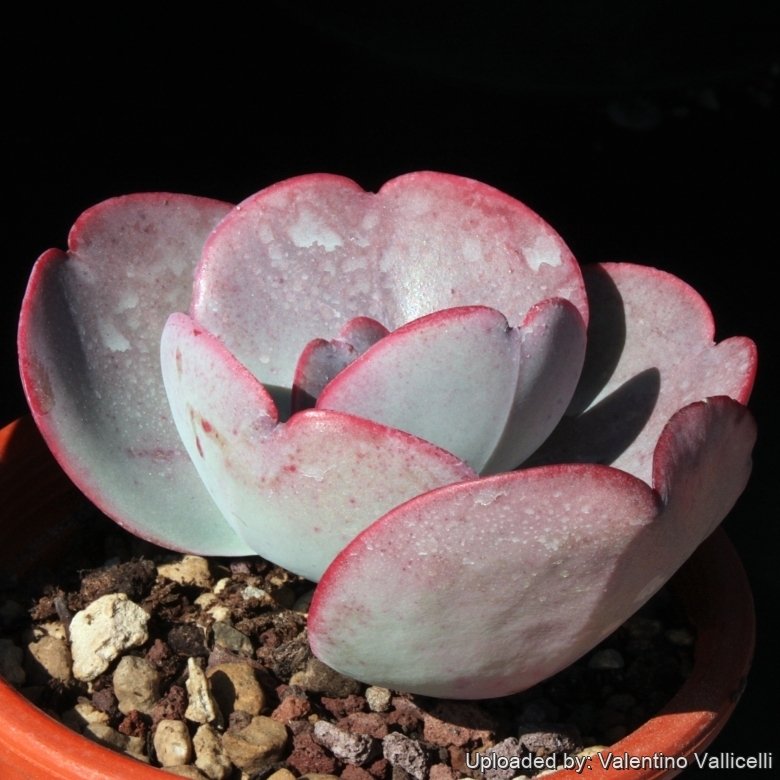
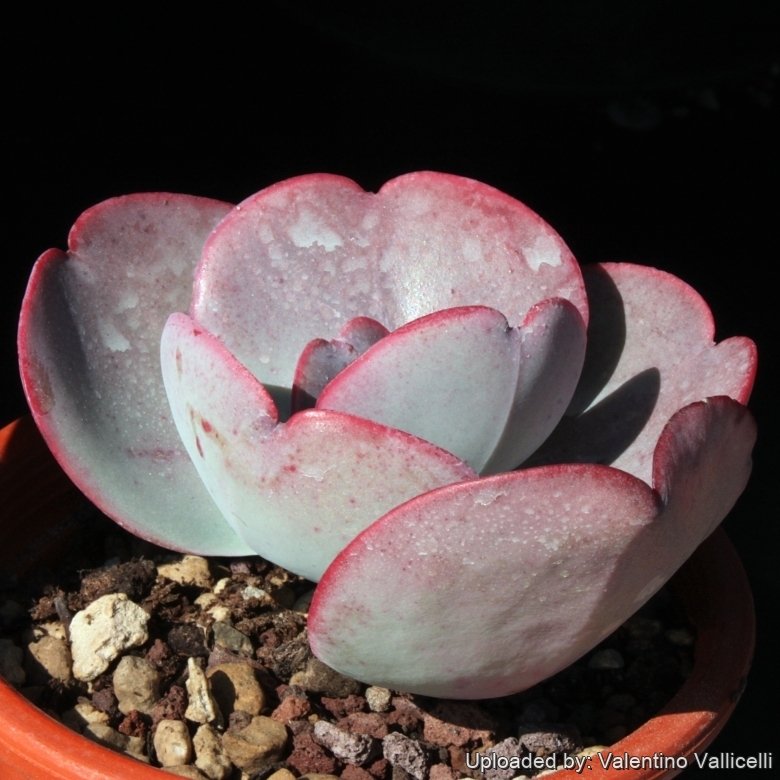
This is on of the largest rosette forming member of this genus, as the specific epithetic would seem to agree. It makes an impressive pot subject or, in areas where it can be planted out, a landscaping focal point.
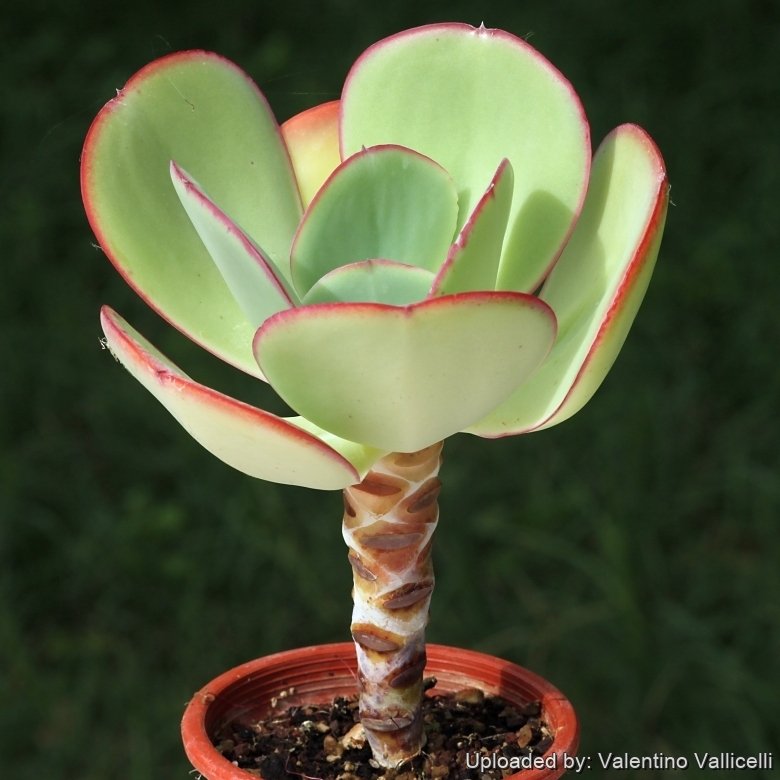
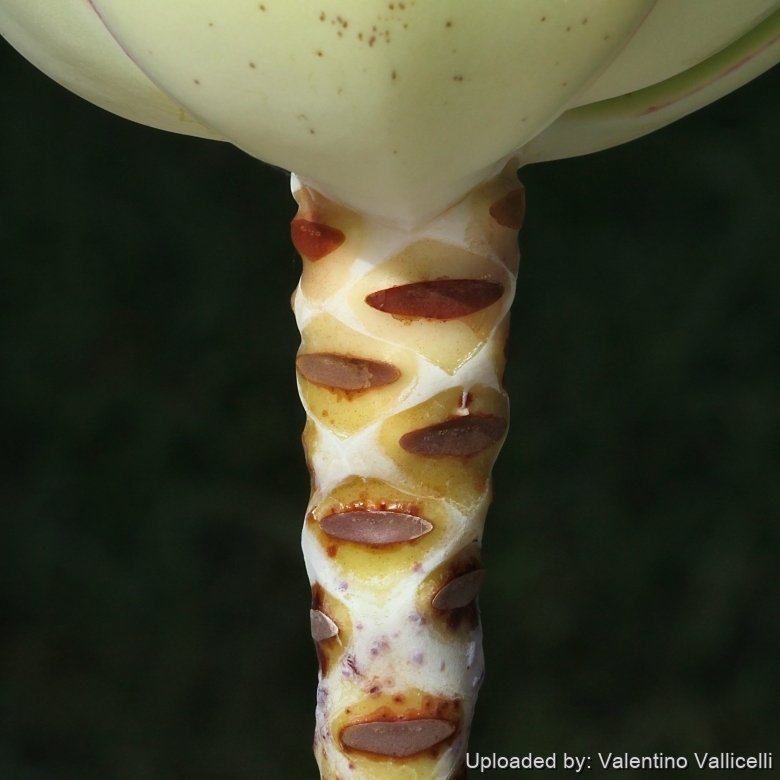
Stem: Short and stocky, 20-30 cm long usually unbranched.
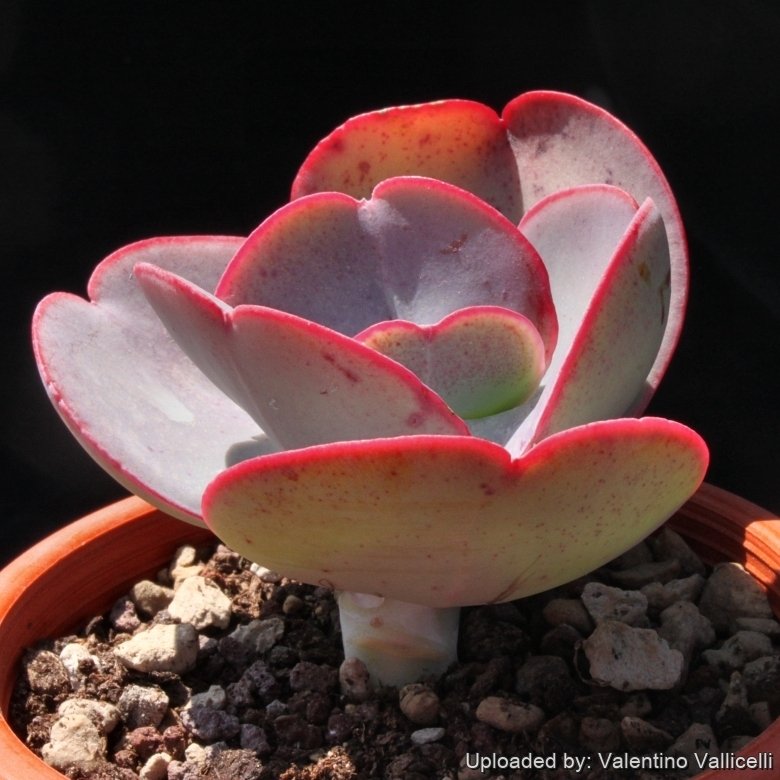
Rosette: 15 - 30 cm in diameter.
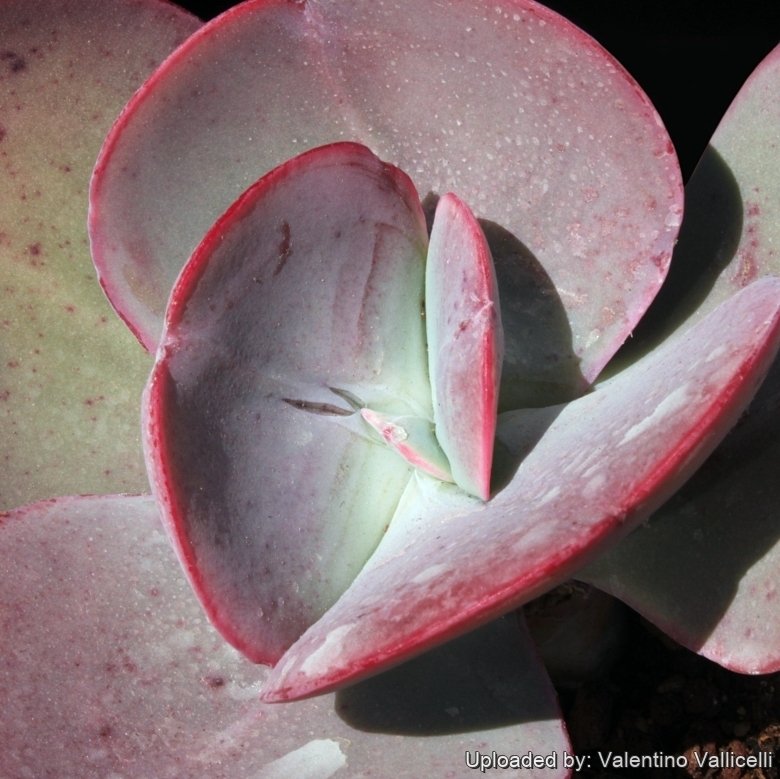
Leaves: 15-22(-25) cm long, x 8-12(-15) cm broad, widely obovate-spatulate (broad at the widest point), obanceolate, obtuse, apiculate, that twist and turn with fleshiness that really resembles a porcine auditory organ, tapering at base into a thick fleshy petiole, green to gray-green, waxy with shining purplish red margins. Older leaves flush purple to pink.
Inflorescence: Usually unbranched, erect, cymose-paniculate 1-2 m tall, with about 7 cincinni, each with 7-16 flowers.
Pedicel: 2-8 mm.
Flower: Nodding rose-red, sepals spreading to recurved, very unequal, to 15 mm long; Calixl pentagonal, 12-17 x 9-11 mm in diameter, rose-red, faintly glaucous.
Blooming season: Late autumn through early winter.
Remarks: This species has been widely hybridized and selected for increased crenulation of the leaf-margins. Cultivars comprises: ‘Alta May’. ‘Arlie Wright‘, ‘Chantilly’, ‘Cameo’, ‘Dick Wright’, and ‘Paul Bunyan’
Origin and Habitat
Mexico (Puebla, Oaxaca).
Habitat: Grows on dry walls and limestone ridges.
Cultivation and Propagation
Plant in full sun to light shade in a well drained soil and irrigate occasionally to regularly.
Propagation: Plantlets can be raised from the flowering stalk, cut the whole stalks and laid it in horizontal down into a flat with succulent mix, small babies will be produced at each leaf axil.
Gallery