Publication: Cact. Succ. J. (Los Angeles) 52: 176, figs. 1980
Description
It is a larger but slow growing Echeveria, that forms very neat rosettes. It remain often solitary or rarely offsets with age.
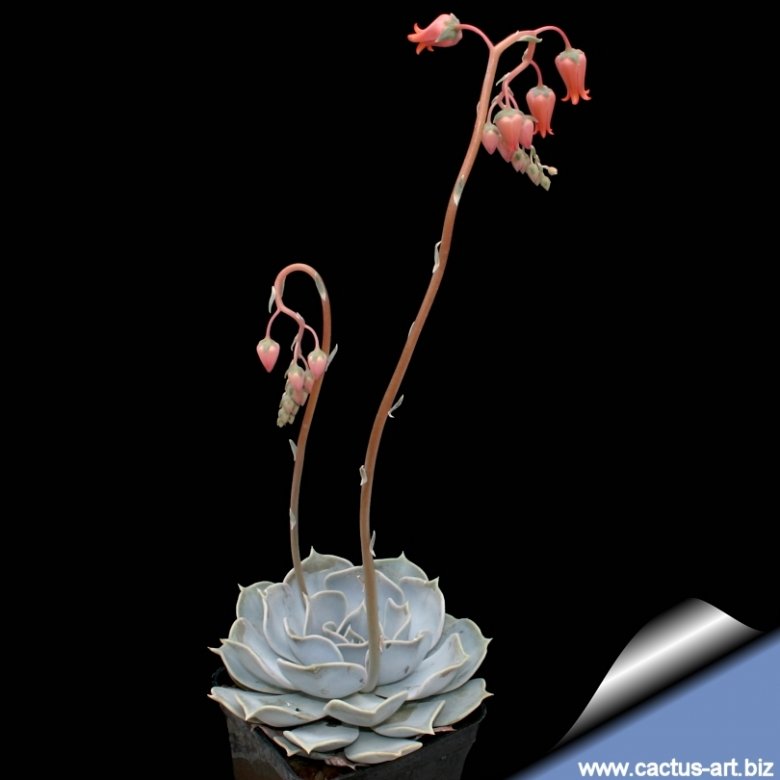
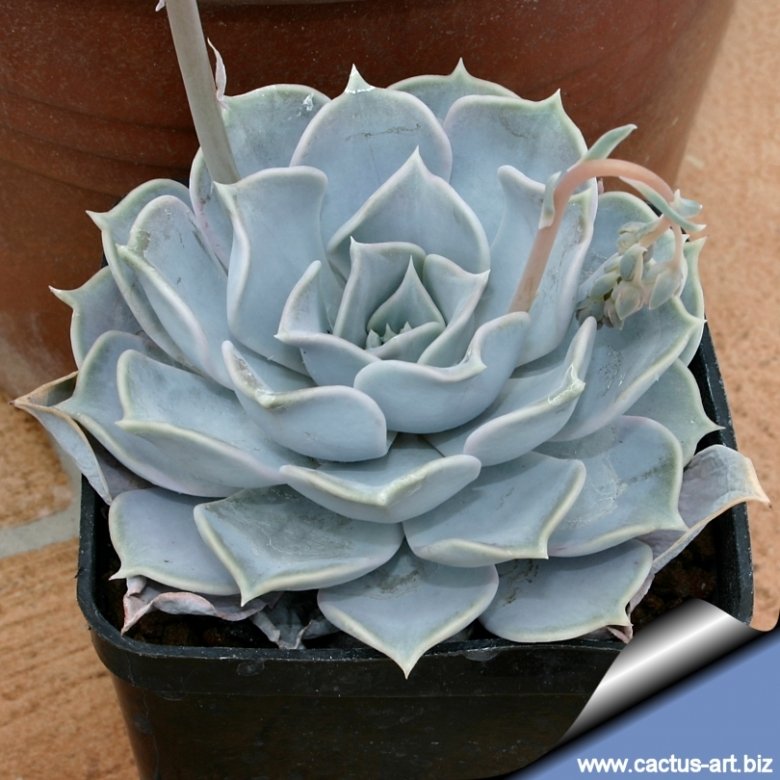
Rosettes: Flat, sculpted with a somewhat “rosebud” shape about 12-20 cm across.
Leaves: Plump, symmetrically arranged, up-curved, spoon shaped, with a fine point. Thy are silvery-grey, almost white, pearlescent with a particularly blue hue and take a delicate blush of lilac or purple in full sun. The colour is due to a powdery waxy coating. Rosette gives the impression of alabaster wax suffused with violet.
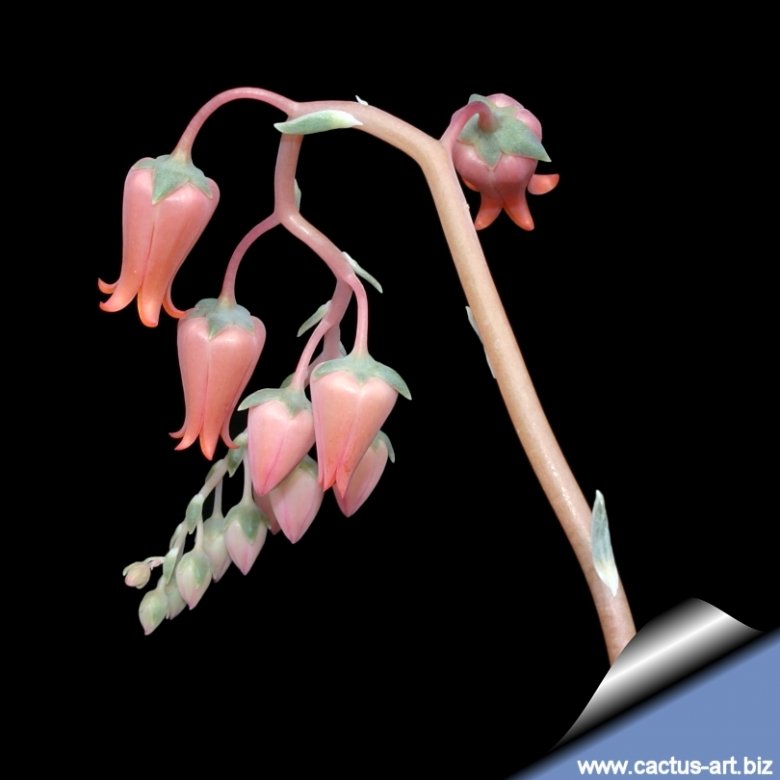
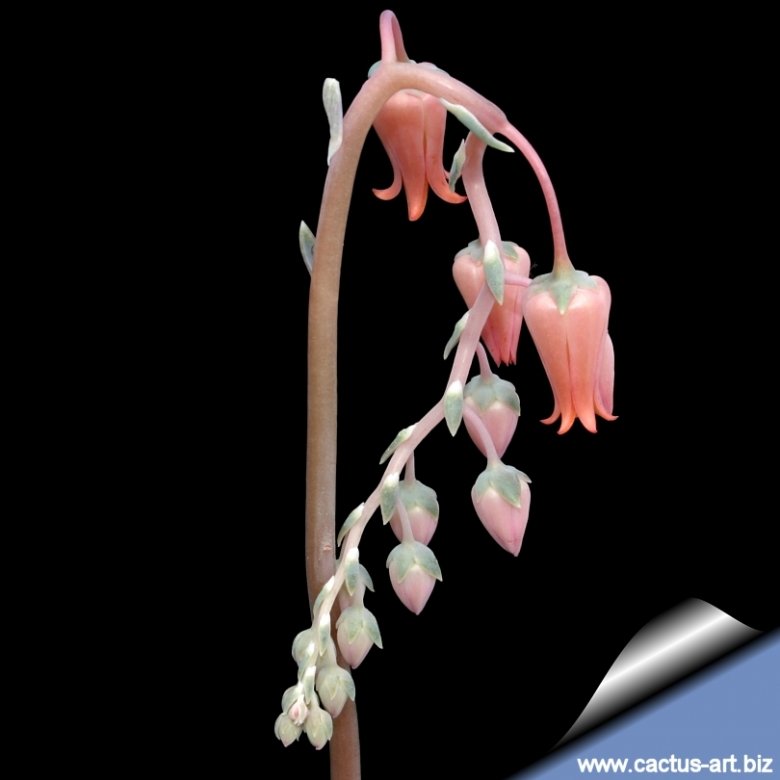
Flowers: Blooms are very showy, and emerge on reddish, arching, but relatively low (15 cm) stems, compared to many other Echeverias. The flowers are pale pink to pale orange or coral red.
Blooming season: Later winter/early spring.
Origin and Habitat
Nuevo Leon, Mexico.
Habitat: Grow on rocky outcroppings at higher altitudes
Cultivation and Propagation
It can tolerate sun to shade but - generally speaking - the more light a plant gets the better it will display its colours and shape. However, when moving plants from lower light conditions into full sun, be wary of sun scorch, most easily avoided by ensuring plants are well-watered before moving them on a cloudy day. They can tolerate extended dry periods and survive drought without the need for watering, but they will grow stronger if they receive adequate moisture during their growing season, ut never allowing the plant to remain waterlogged (root rot sensitive). Use a very porous soil, which will allow quick drainage. Slow release fertilisers with a low to moderate nitrogen content are adequate for the spring and summer growing seasons, and additional fertiliser applications would not required until spring. Good air movement is important for minimising pest and disease risks, and avoiding excessive humidity in cool winter conditions is important to successfully growing Echeveria in the nursery environment. It can tolerate light frosts, but it is best overwintered at 5-10 °C.
With the cooler autumn temperatures tending to make their foliage colours become more intense than those of the active summer growing season.
Aphids like this plant (and all flowering Echeverias).
Propagation: It is usually propagated by removal of offset and by division of large clumps. Let the cut ends dry for overnight or up to a week before potting up. Some growers recommend planting immediately into dry growing media, watering only after roots form.
Uses: This is a striking species in the landscape, being nearly white.