Publication: Cactaceae [Itô] 503, without type. 1981 (Locality not stated) same as: forma “albispina”
Description
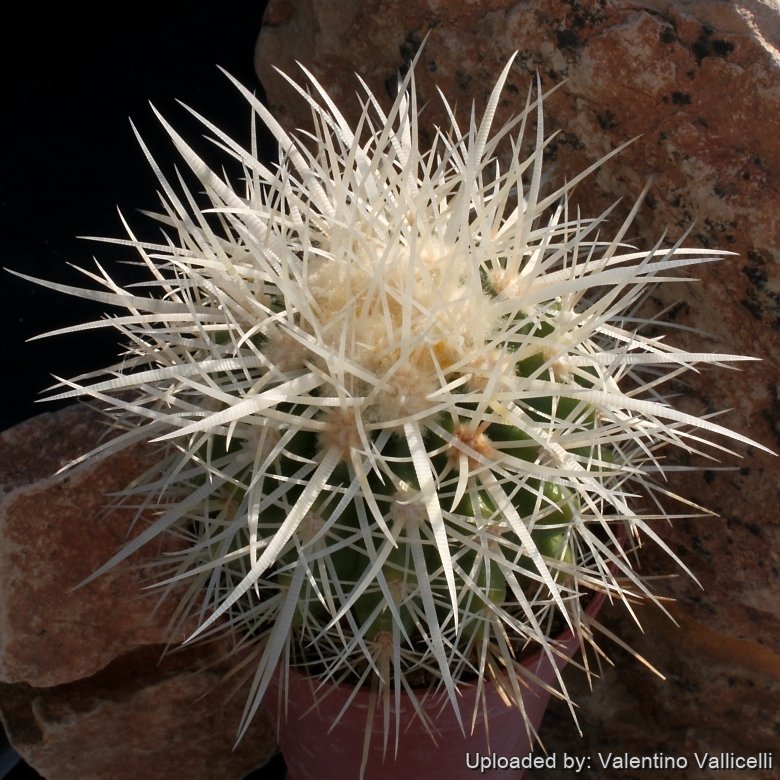
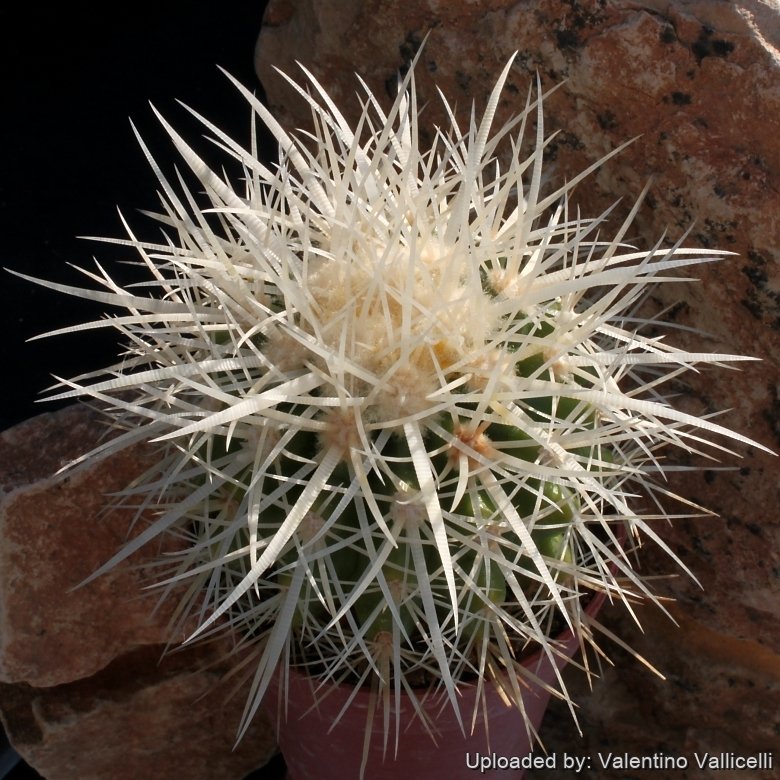
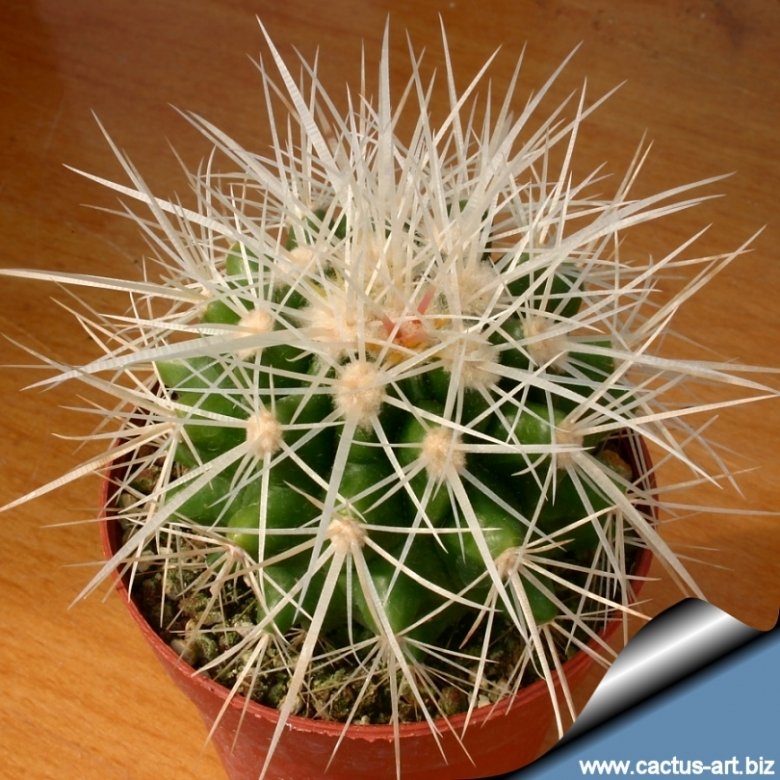
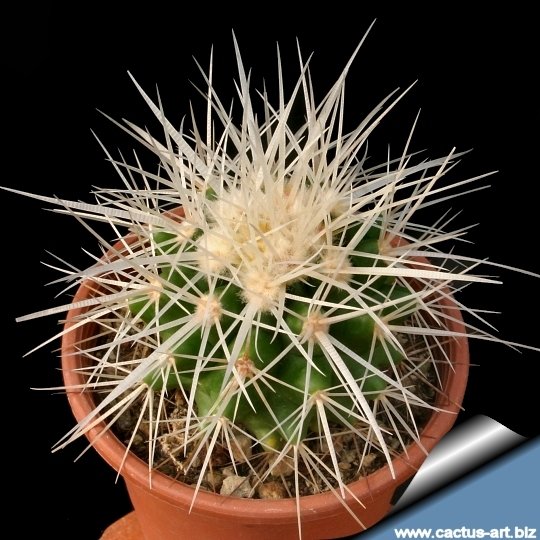
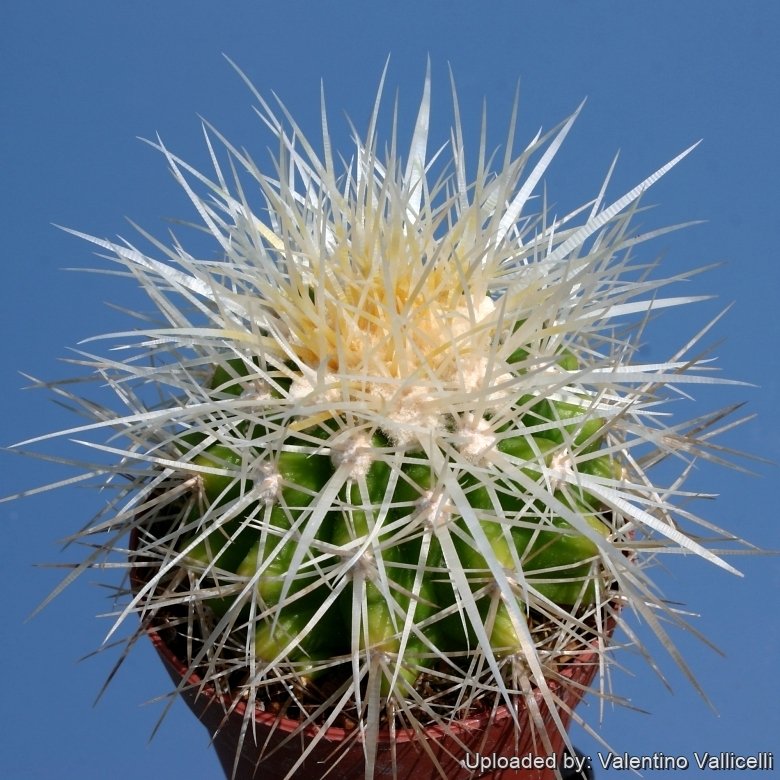
Echinocactus grusonii var. albispinus looks just like a regular “golden barrel cactus” but the spines are all white instead of yellow.
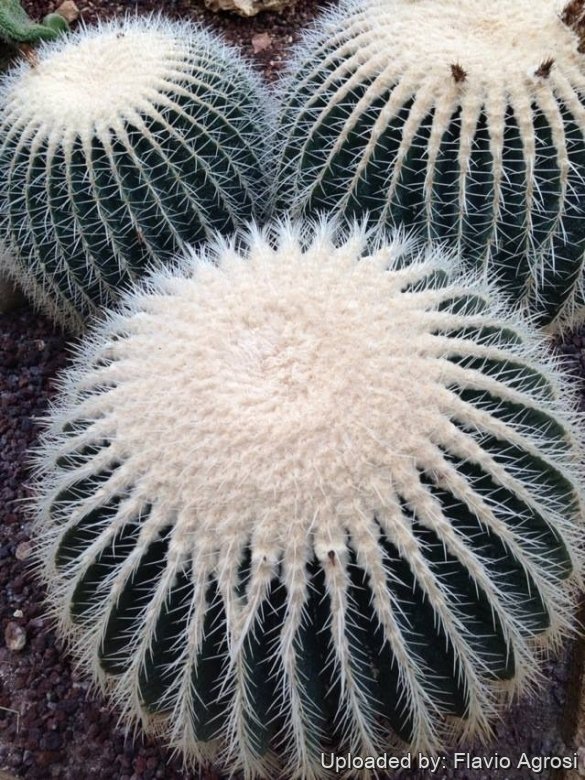
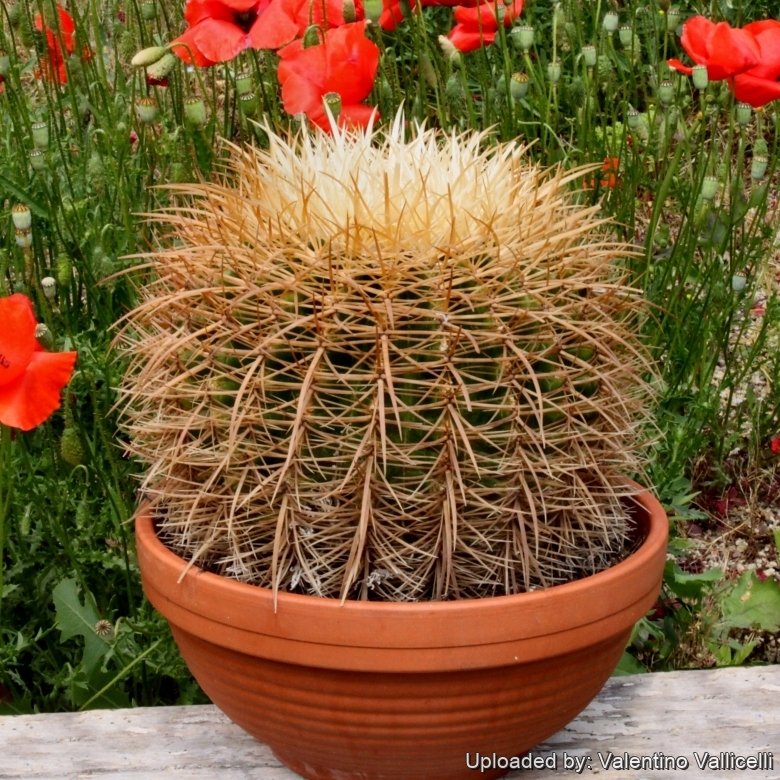
Habit: Echinocactus grusonii is a solitary globe-shaped cactus that became elongated (barrel-shaped) in maturity, up to 90 cm (180 cm) in height and spread. It sometime offset with advanced age and a few multiples occur even at small sizes.
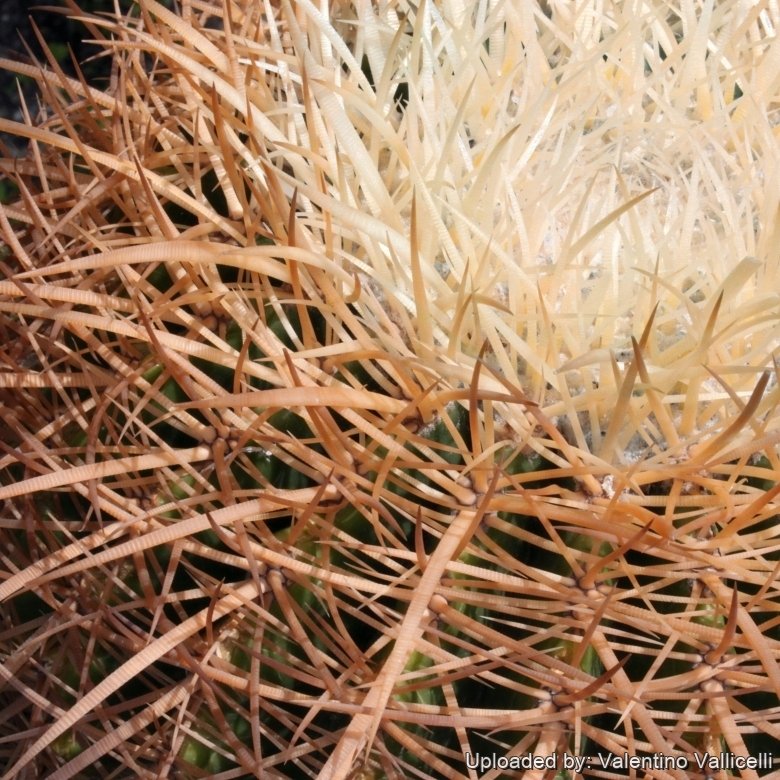
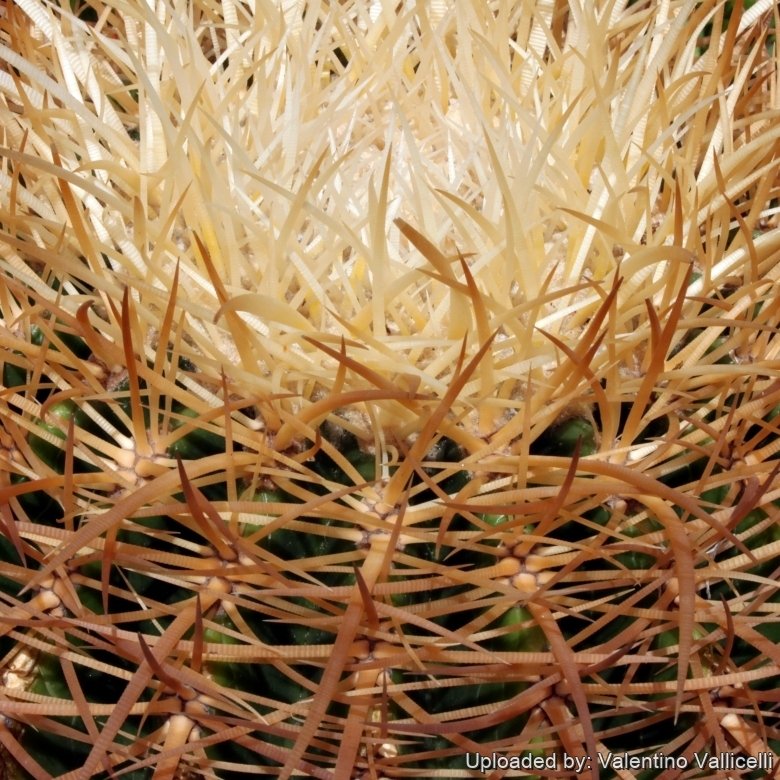
Stem: Pale green and heavily ribbed with numerous areoles sprouting radial, yellow spines (bright white in the var. albispinus).
Flowers: Flower are diurnal, vivid yellow (4-5 cm wide) and form a circular ring at the top of the plant, but are not very visible being small in relation with the size of the barrel, and lost into the creamy coloured wool at the plant apex.
Blooming season: Flowers are produced from end of spring to summer only on larger mature specimens receiving enough full sun.
Remarks: The juvenile Echinocactus look quite different from the mature specimens. In fact as the other Echinocactus and Ferocactus seedlings, the rib structure is not yet apparent, and they have pronounced tubercles making them look superficially like Mammillarias.
Origin and Habitat
Garden origin (Nursery produced cultivar)
Cultivation and Propagation
The cultivation of it would be similar to the golden variety. Frost tender but resistant to very dry conditions, Cold hardiness increases with improved drainage, so keep plants as dry as possible in winter. They grow best in well-drained soil and a position in full sun, which will help to maintain the lustre of the spines and longevity of the flowers. Provide the plant with extremely well-drained soils, as the plant are subject to crown and soft rot if it remains too moist. Besides, it performs wonderfully in containers, Container media should be coarse as well. Young plants are prone to mealy bug and red spider mite.
Propagation: Propagate from cuttings or (usually) seed. Echinocactus grusonii will produce hundreds of fruits each season. Several months after the flower dies off and the pods are ripen it is possible to collect them from under the dried flower. The pods will come off with a slight twist, leaving the wool on the cactus. Use a knife to slice down one side of the pod to expose the seed and scrape them out. The seeds are mahogany or reddish amber and tiny. Then place the seeds in some water to soak overnight. Fill germination trays with a well blended mixture of 60% peat moss 40% vermiculite and one to one part of coarse sand or pumice. Use a horse syringe to suck the small seeds and some of the water into the syringe. With the syringe, distribute the seeds evenly in the germination tray, shaking the syringe so the seeds don’t settle at the bottom and all come out at once. Some growers also recommend to cold-stratify seeds in a refrigerator for a year prior to sow them. But can also be used dry seeds too. Place then the trays in filtered sun, cover with a glass sheet and keep the soil moist until the seeds germinate in approximately 2 to 6 weeks. They will look like small spheres, red in colour not green. Then gradually remove the glass cover. When the small cacti start to sprout tiny spines, use a pair of tweezers to transfer them from the propagation trays into 5 cm pots filled with the same soil mix used in the germination trays. Allow the small cacti to grow for about one/two year and then move the cacti to 10 cm pots and allow them to grow further.
Gallery