Description
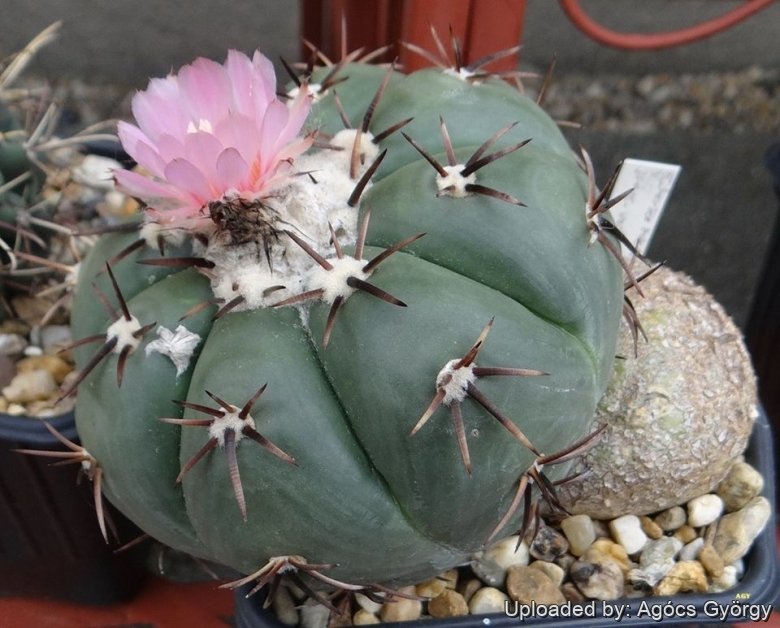
It is a small barrel cactus that normally grows unbranched.
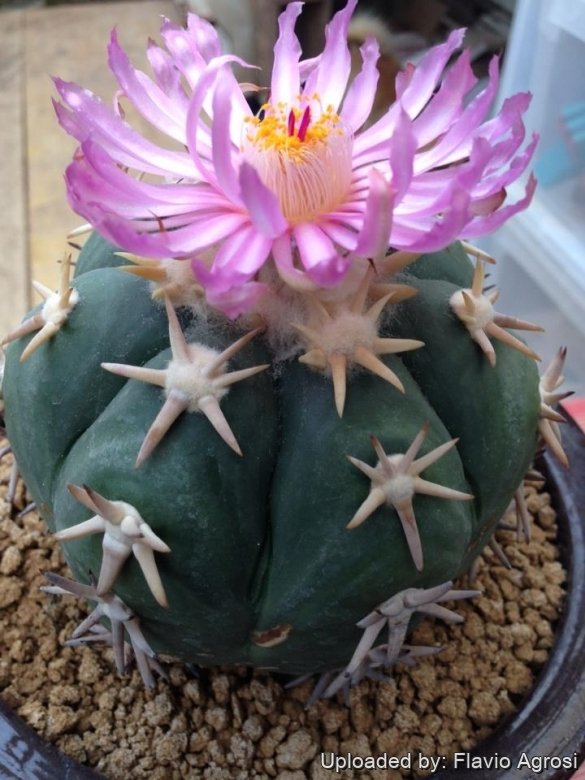
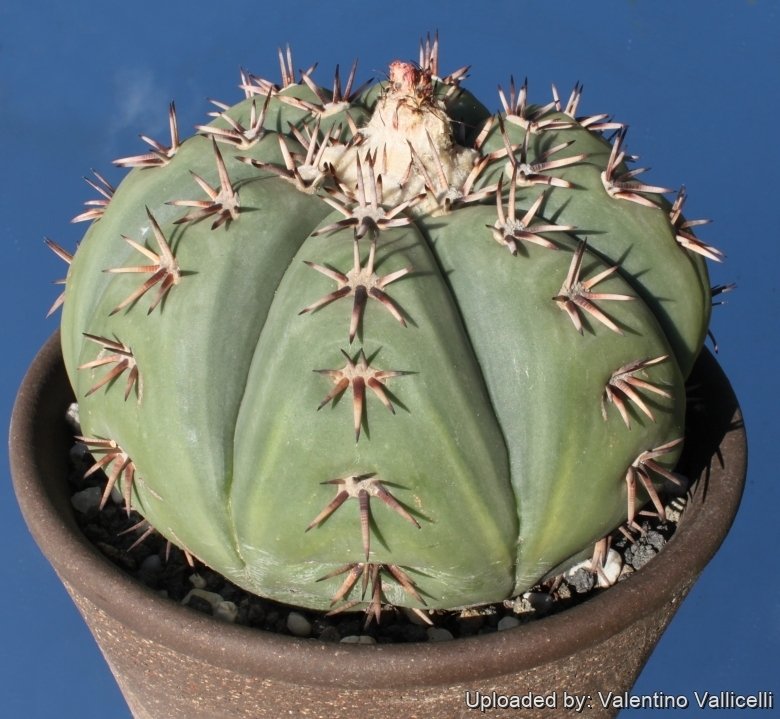
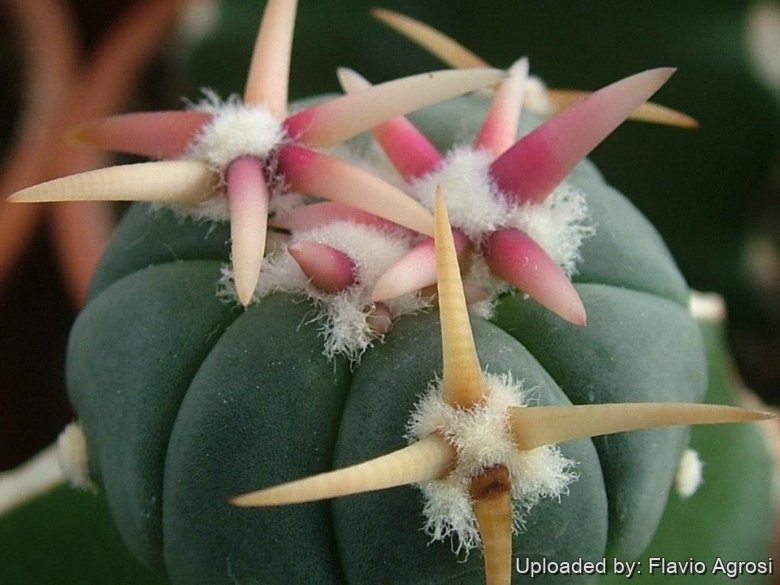
Stems: Pale, grey-green to bright glaucous grey-blue, flat-topped or hemispheric, spherical with age or stoutly short cylindrical, stem slowly growing up to 30 cm tall, 15-20 cm in diameter or more. The apical meristem is protected by whitish-yellow wool, which shades developing flower buds and fruits.
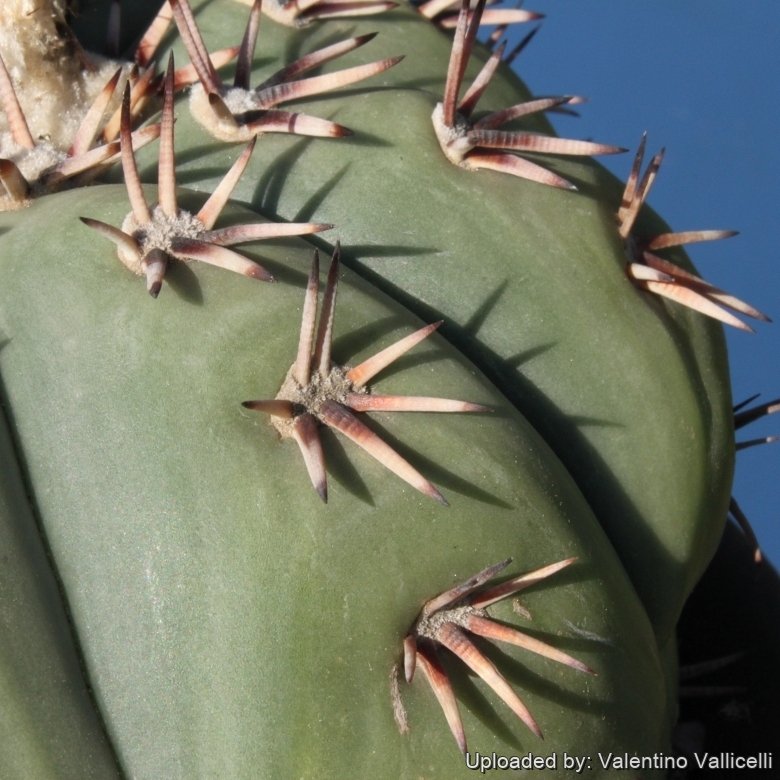
Ribs: Up to 13 ribs (mostly 8), vertical to helically curving around stem, rib crests broadly rounded, uninterrupted or slightly constricted between areoles.
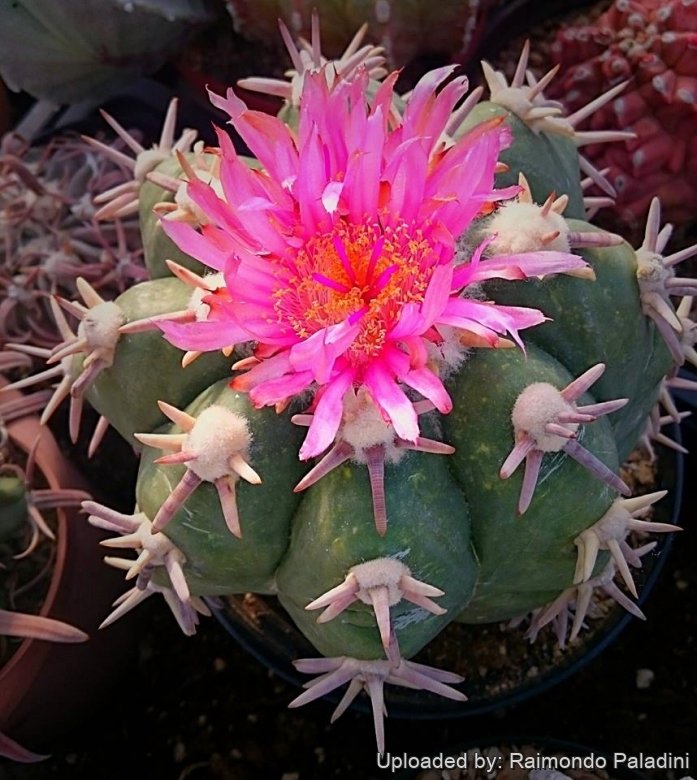
Areoles: Round, full of white wool when young.
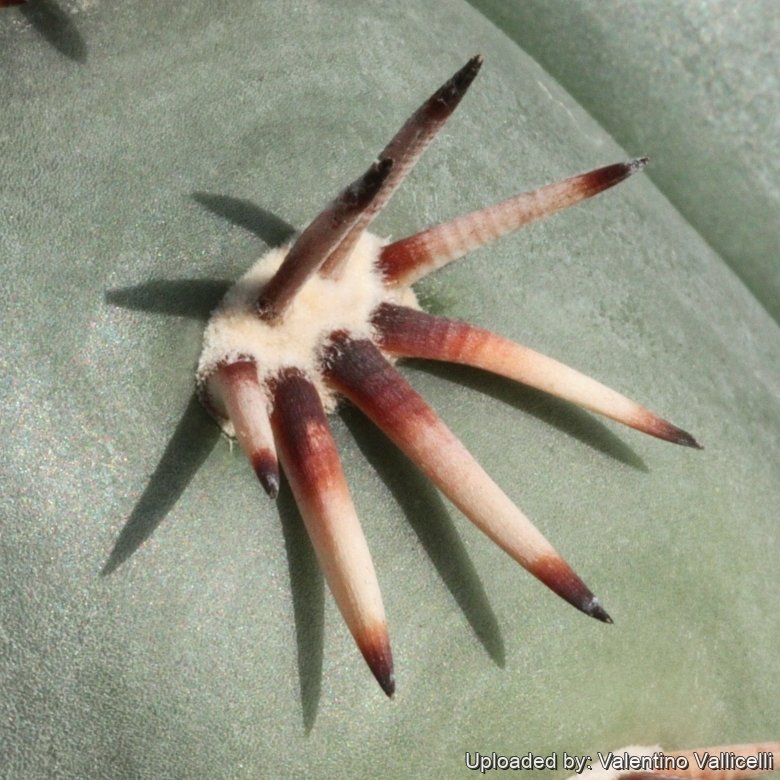
Spines: 5 to 10 (more frequently 8) per areole, loosely projecting, grey, tan, or brown, annulate-ridged, subulate, ± flattened, glabrous, short and not hiding stem surface
Radial spines: 5(-8) per areole, similar to central spines;
Central spines:: 1(-3) per areole, 0.5-12 mm, longest spine usually descending.
Flowers:: Pinkish-red , 5 to 7 (9) cm in diameter; stigma lobes pinkish to olive.
Blooming season:: From the end of March to late May (occasionally on September).
Fruit:: Red or pink, oblong, fleshy or semi dry and ephemeral, containing black seeds,
Origin and Habitat
Garden origin (Japan ?)
Cultivation and Propagation
This species is not the easiest to cultivate, requiring the maximum amount of sun and care with watering, as it can easily rot. Keep this plant dry in winter at a minimum temperature of 0°C (but it is hardy as low as -10° C). It prefers a very draining mineral compost, and does better with some limestone in the soil mixture. The plant tolerates extremely bright situations, but enjoy some shade during the hottest part of the day in summer.
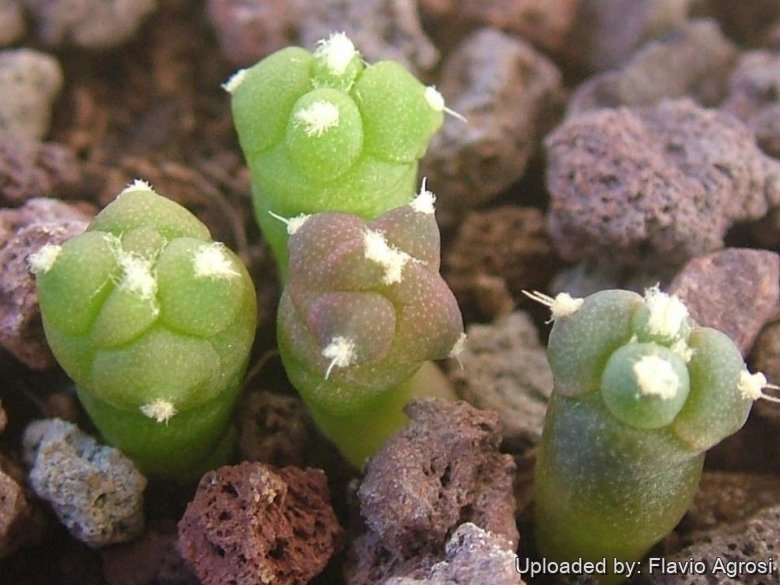
Propagation: Seeds (it usually doesn’t produce offsets), grafting. Seed Collecting: Permit fruits to ripen: Fruit must be significantly overripe before harvesting seed. Clean and dry seeds
Gallery