Publication: Cacti Ariz. ed. 3. 23. 1969
Description
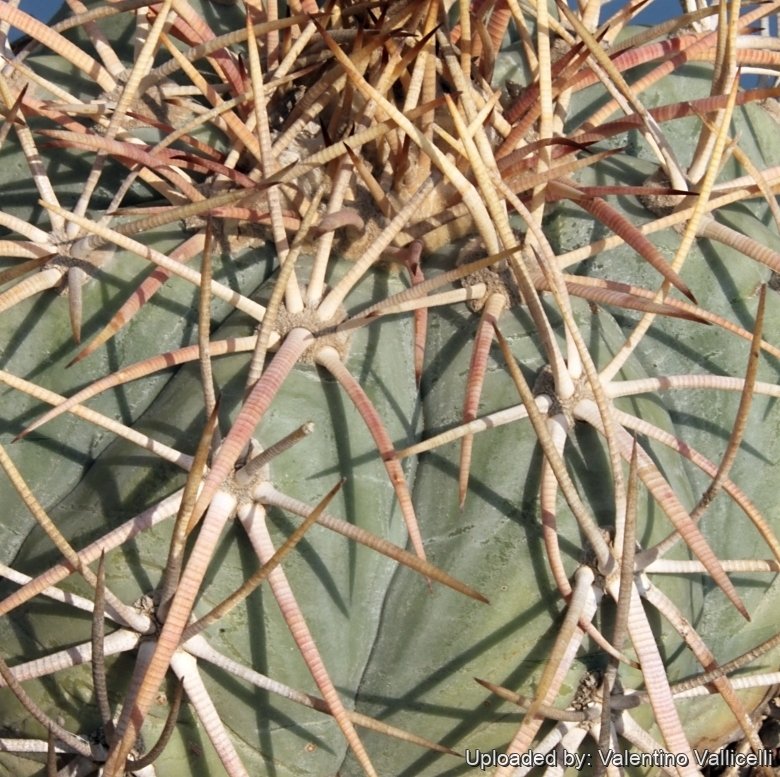
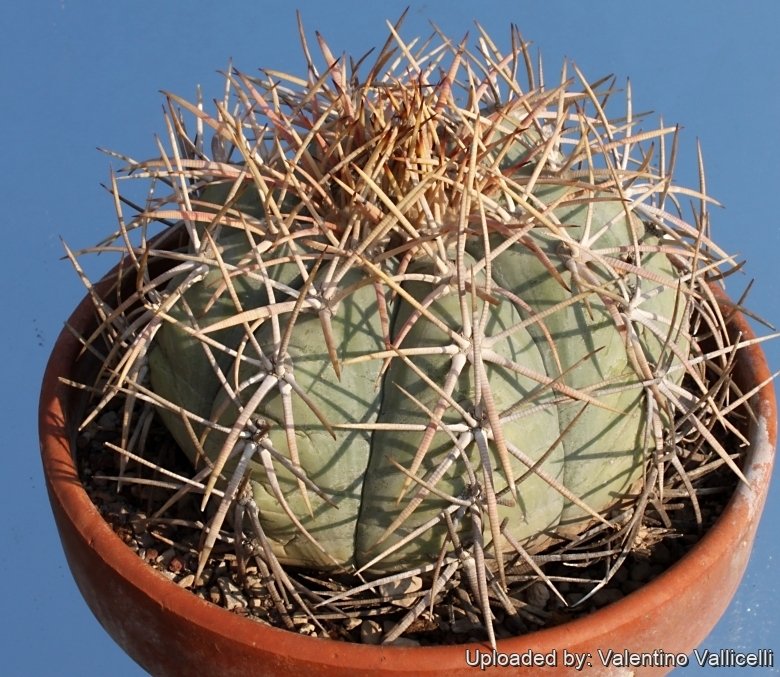
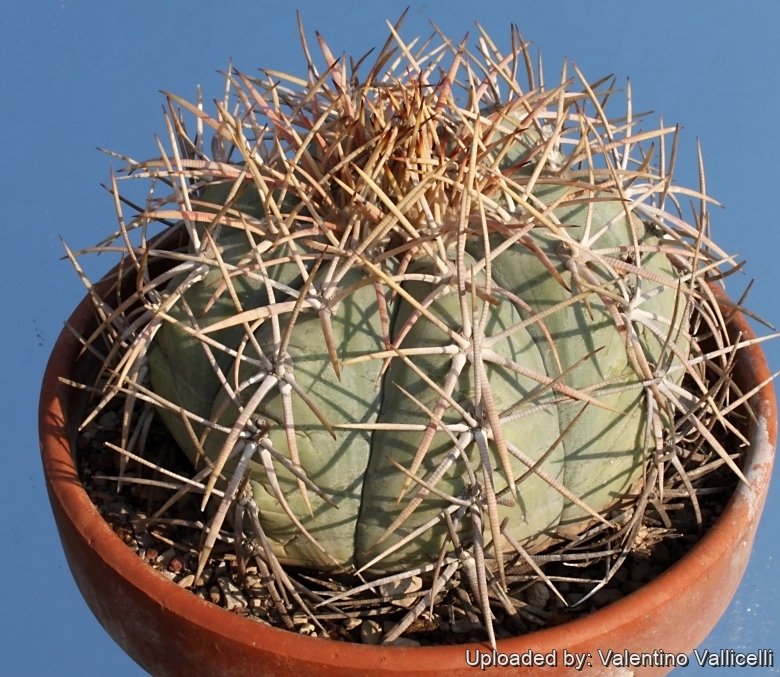
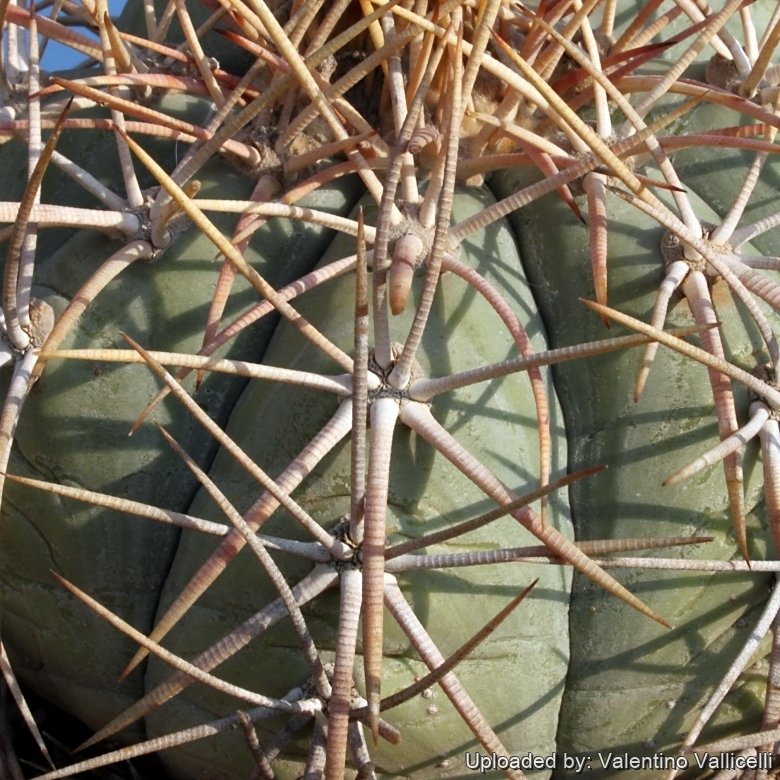
The Nichol’s turk’s head cactus (Echinocactus horizonthalonius subs. nicholii), is a small barrel cactus normally unbranched. The blue-green stem bears spines on vertical, spiraling ridges.
Stem: Eight- ribbed, pale grey-green to bright blue-green, reaching a maximum height of 50 cm and a diameter of 20 cm. The plant always grows as a single stem, but because seedlings often grow around its base, it may appear to have multiple stems.
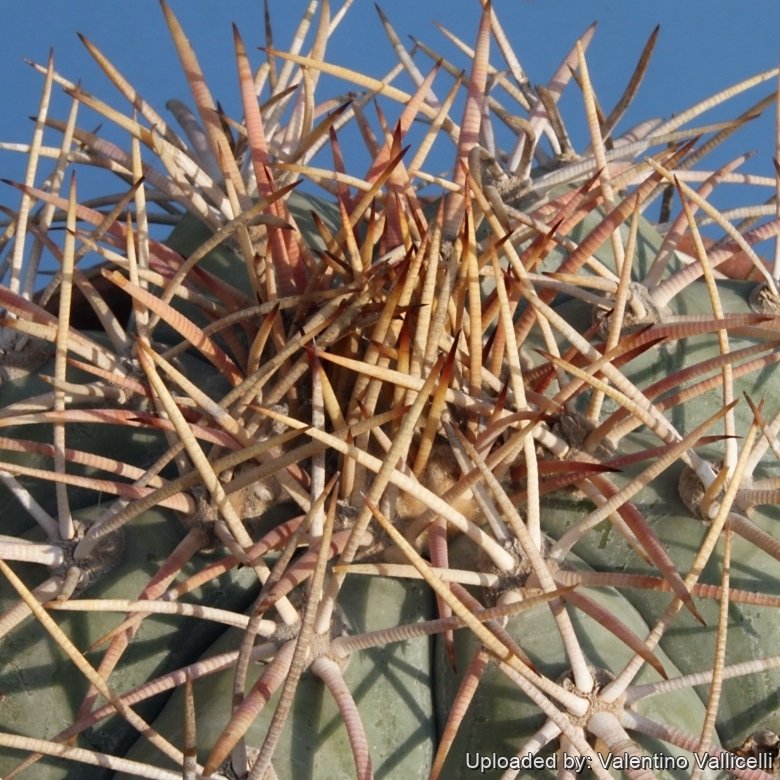
Areoles: Each spine cluster (areole) contains three central and five radial spines.
Flowers. Bright pink or purplish.
Blooming season: April to mid-May often with repeated blooming throughout the heat of the summer and into September.
Fruits: Covered with white, woolly hairs.
Origin and Habitat
Echinocactus horizonthalonius var. nicholii is restricted to just a few limestone mountain ranges in Sierra del Viejo in northeastern Sonora (Mexico) and in two areas in south-central Arizona (USA), the Waterman Mountains and the Vekol Mountains in southwestern Pinal County. The total population is estimated at 10,000 individuals.
Habitat and ecology: Grows in isolated localities in the calcic rocks often on north-facing slopes where ocotillos (Fouqueria splendens), saguaros (Carnegiea gigantea) and other succulents occours. Their major threat is mining activity. However, this habitat is also threatened by off-road vehicles which are not restricted to established roads. Although cactus collectors do not appear to be a serious problem for Nichol’s turk’s head cacti at this time, seed collection by commercial cactus nurseries may impact the species.
Bibliography
Major references and further lectures
-
“San Xavier Development Project, Construction and Operation: Environmental Impact Statement” 1989
-
Scott Calhoun “The Gardener’s Guide to Cactus: The 100 Best Paddles, Barrels, Columns, and Globes” Timber Press, 31 January 2012
-
John R. Matthews “The Official World Wildlife Fund guide to endangered species of North America” Beacham, 1992
-
N. L. Britton, J. N. Rose “The Cactaceae. Descriptions and Illustrations of Plants of the Cactus Family.” Volume 4, The Carnegie Institution of Washington, Washington 1923
-
Curt Backeberg “Die Cactaceae: Handbuch der Kakteenkunde” Gustav Fischer Verlag, Stuttgart New York 1982–1985
-
Goettsch, B.K., Gómez-Hinostrosa, C., Heil, K., Terry, M. & Corral-Díaz, R. 2013. Echinocactus horizonthalonius. The IUCN Red List of Threatened Species. Version 2015.1. <www.iucnredlist.org>. Downloaded on 12 June 2015.
-
James Cullen, Sabina G. Knees, H. Suzanne Cubey “The European Garden Flora Flowering Plants: A Manual for the Identification of Plants Cultivated in Europe, Both Out-of-Doors and Under Glass” Cambridge University Press, 11/Aug/2011
-
Edward Anderson “The Cactus family” Timber Press, Incorporated, 2001
-
David R Hunt; Nigel P Taylor; Graham Charles; International Cactaceae Systematics Group. “The New Cactus Lexicon” dh books, 2006
Gallery