Publication: Mem. Tour N. Mexico [Wislizenus] 104. 1848
Description
Usually solitary.
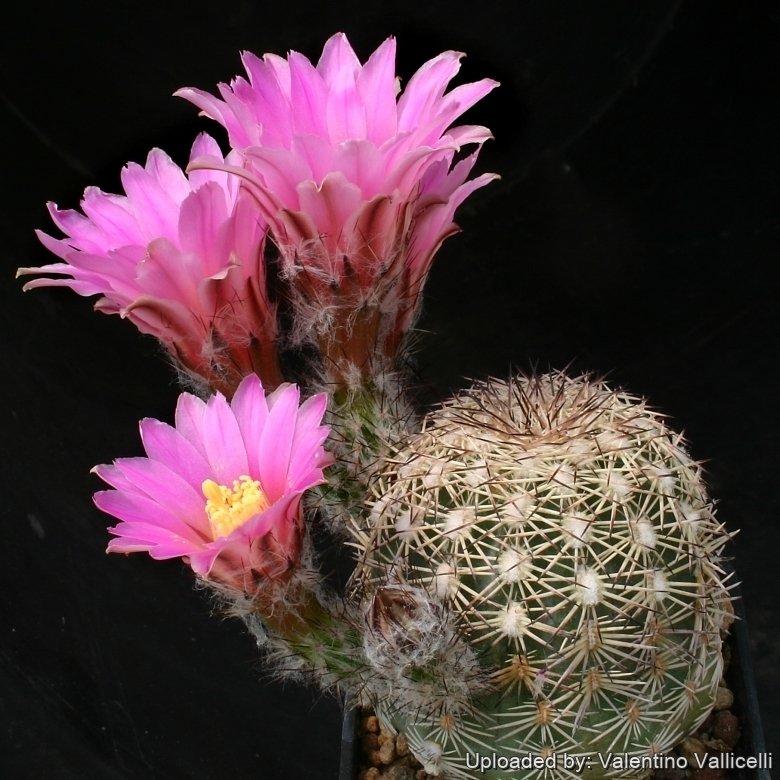
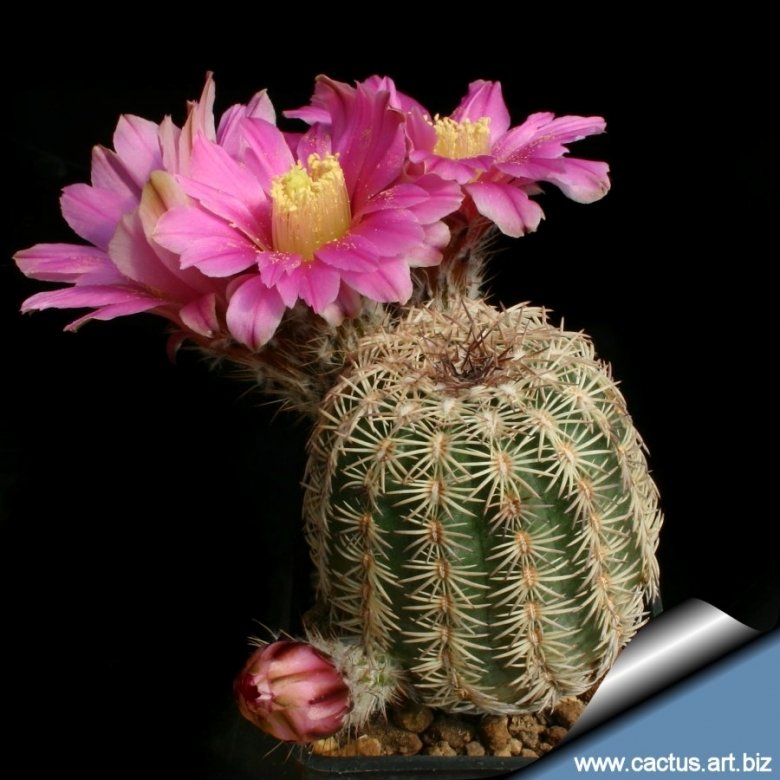
Stem: Green, short, cylindrical, up to 20 cm tall 4(12) cm in diameter.
Ribs: 11 to16, 5-12 mm long
Root: Fibrous.
Areoles: Ellipsoidal, length 3–4mm, width 2 mm, close set, distance 4-7 mm, at first woolly, then naked.
Radial spines: 5-18, pectinated 16-23 mm long. Cream with darker tips add-pressed.
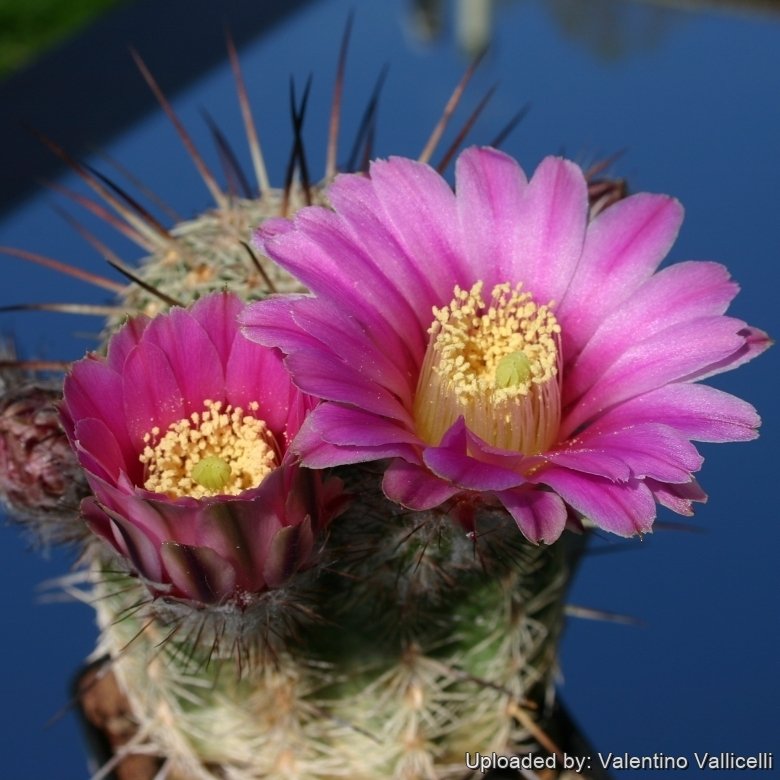
Central spines: 0 - 1, up to 35 mm long, brown-black, stiff and straight.
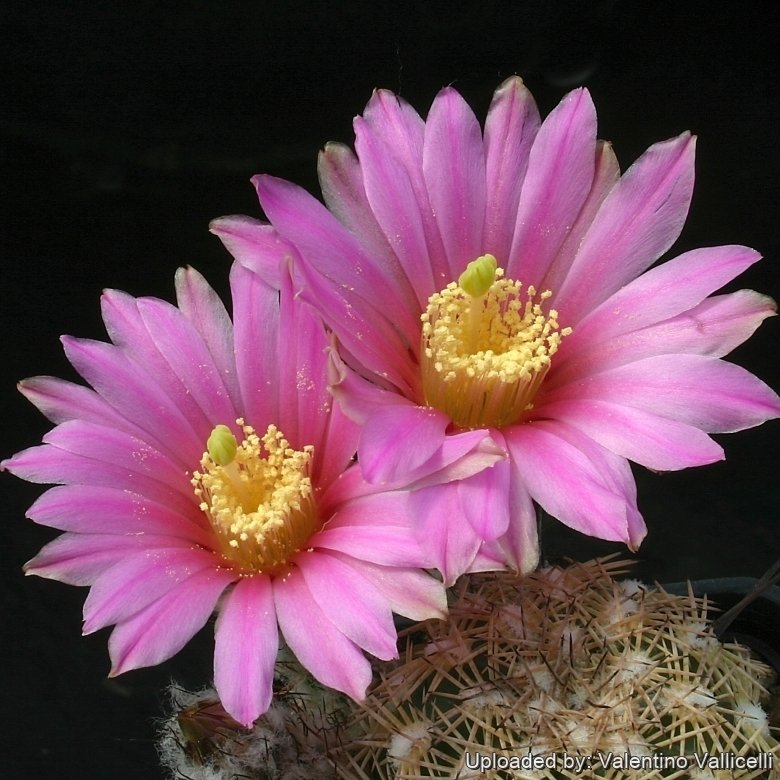
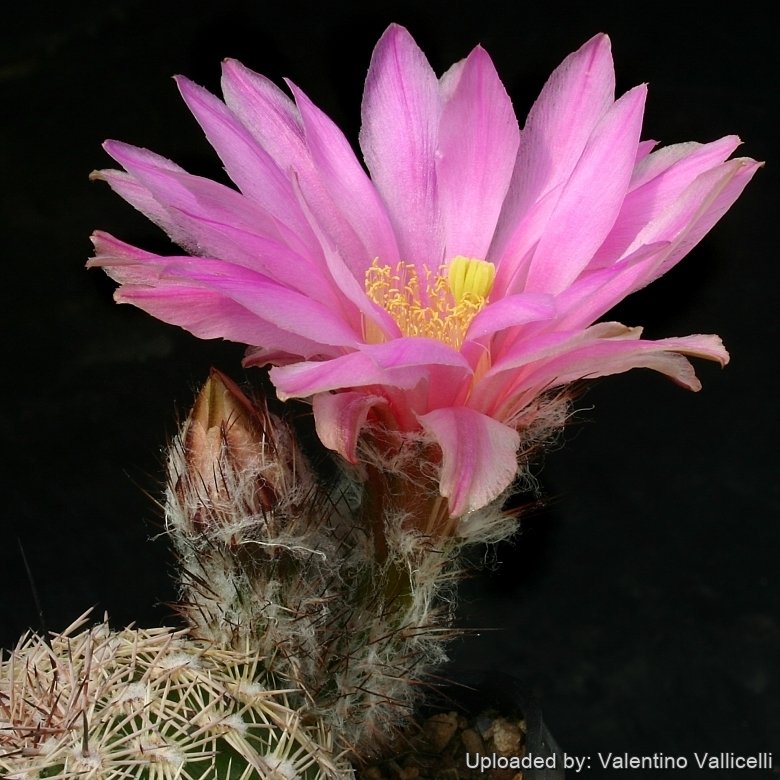
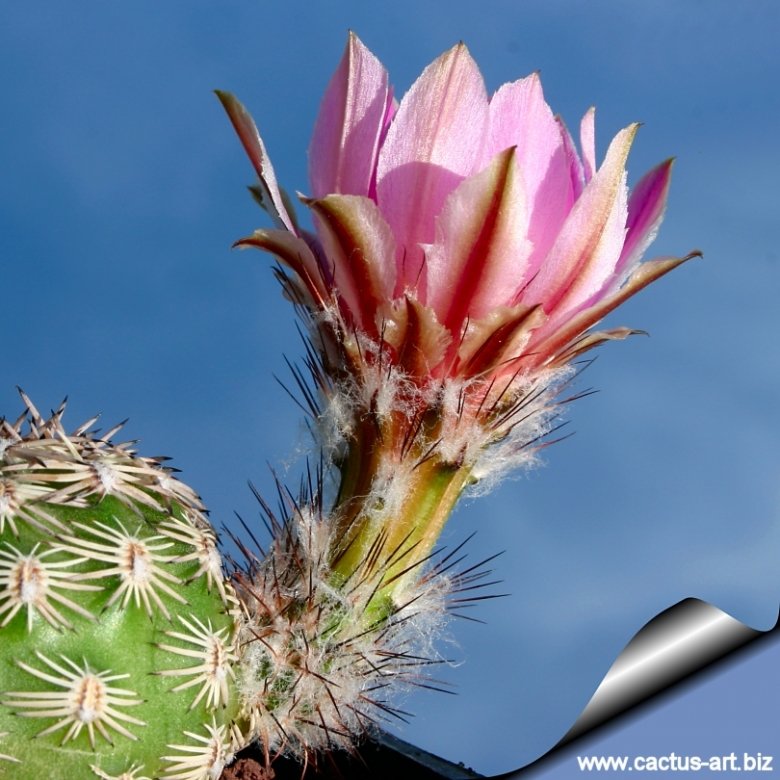
Flowers: Magenta-pink, throat a lighter shade, 45-60 mm long, 40-55 mm wide. Tube length 20-40 mm, filament 15-25 mm long, stylus 25-40 mm, yellow, stigma lobes 5-6 yellowish-green.
Fruit: Ovoidal, brownish-green, length15, diameter 10. They dry and break at maturity and ripe in 2 months.
Seed: 1-1,5 mm black.
Remarks: Adult plants, either without central spines, or with 1 central spine can be found. But with the exception of the absence or existence of centrals, all the other characteristics are absolutely identical, namely size and form of ribs, number, size and arrangement of radial spines, flowers, fruits and seeds. Furthermore this species is one of those Echinocereus which pass a purely radial-spined long youth stage, in which they are already floriferous. Most of the plants after several years develop central spines, giving the plant its sea urchin appearance.
Origin and Habitat
Mexico, Chihuahua: Cusihuiriachic, Sahuirachic and north of city of Chihuahua
Habitat: Desert grassland, on loamy soils, on stony hills, altitude 1800-2400m
Cultivation and Propagation
In culture Echinocereus adustus is without problems, easy to grow, very attractive and regularly shows its beautiful flowers, if provided with an adequate winter rest period.
Moisture: It is sensitive to over-watering (rot prone), and needs good drainage. In the winter keep it cool, and absolutely dry conditions.In summer keep it well watered when it’s hot.
Exposure: Needs full sun. To achieve the best spine density give these plants lots of sun.
Hardiness: Very cold resistant above -12° C or less for short periods of time. In the summer they need an airy location in bright sun; In mild climate they grow well when planted freely outside in well-drained soil.
Propagation: Seeds (usually), it also can be grown from cuttings, as it can branch from the base.
Bibliography
Major references and further lectures
-
Edward Anderson “The Cactus family” Timber Press, Incorporated, 2001
-
James Cullen, Sabina G. Knees, H. Suzanne Cubey “The European Garden Flora Flowering Plants: A Manual for the Identification of Plants Cultivated in Europe, Both Out-of-Doors and Under Glass” Cambridge University Press, 11/Aug/2011
-
David R Hunt; Nigel P Taylor; Graham Charles; International Cactaceae Systematics Group. “The New Cactus Lexicon” dh books, 2006
-
Jackie M. Poole, William R. Carr, Dana M. Price, Jason R. Singhurst “Rare plants of Texas: a field guide” Texas A&M University Press, 30/Dec/2007
Cultivars and forms (3)
Varieties (1)
Gallery