Publication: Echinocereus Monogr. (preprint) [4] (1998)
Description
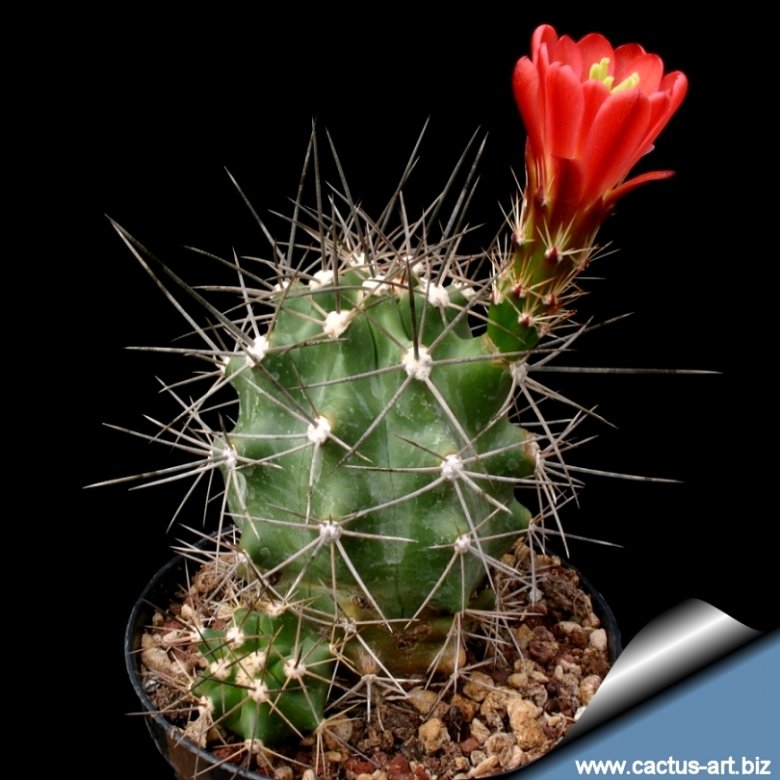
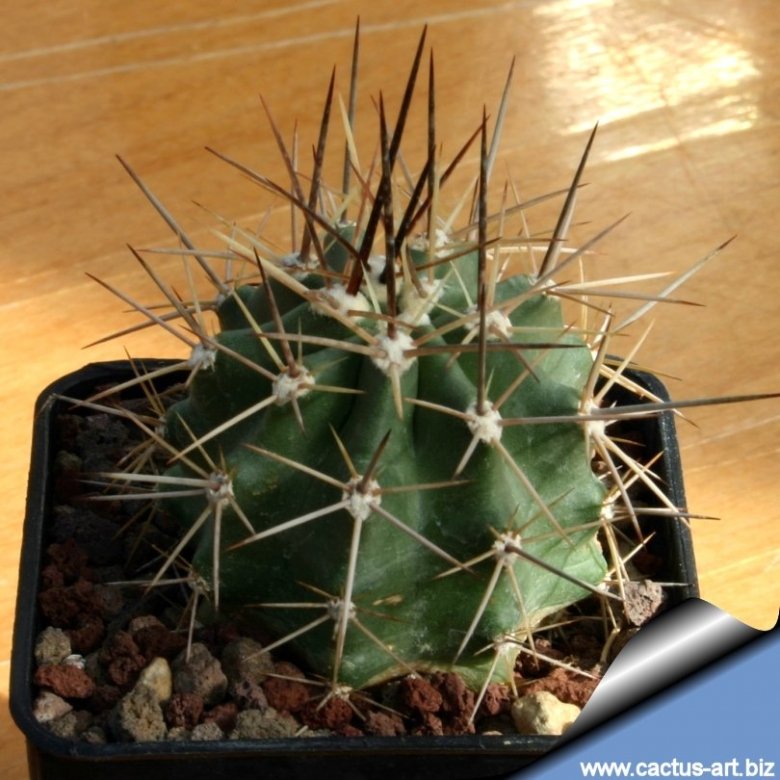
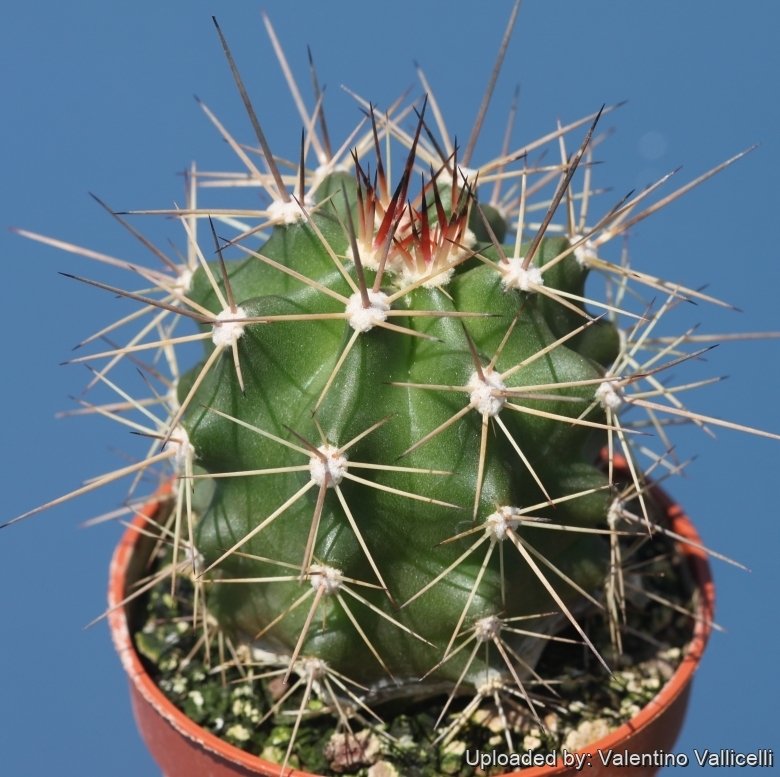
Usually clumping, Echinocereus coccineus subs. paucispinus (Echinocereus paucispinus) often forms large colonies of many as 50 thick, stems on each plant at maturity.
Stems: Semi-erect, pale green, up to 40 cm tall, 6 cm in diameter.
Ribs: 5 to 8 warty with narrow furrows.
Areoles: Whitish, 1-2 cm apart.
Central spine: 0 or 1 dark, up to 3.5 cm long;
Radial spines: 3 to 6 straight or not, 1.5-2 cm long yellowish and turning grey after some years.
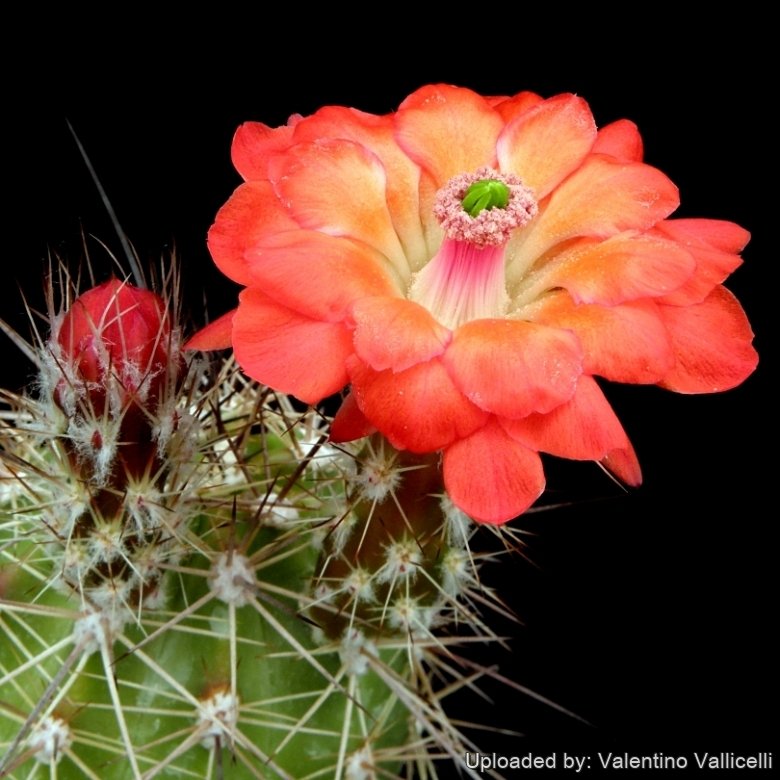
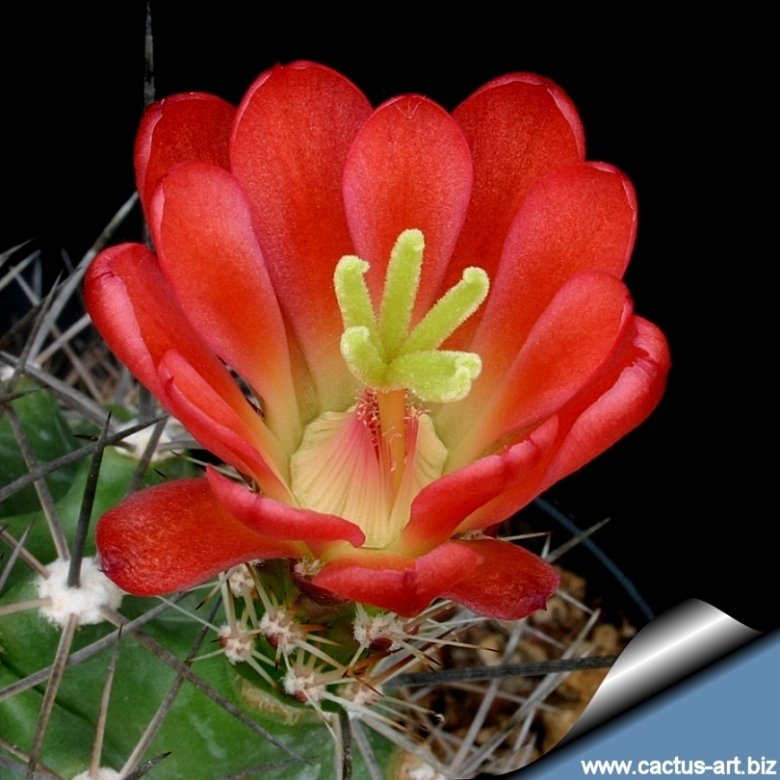
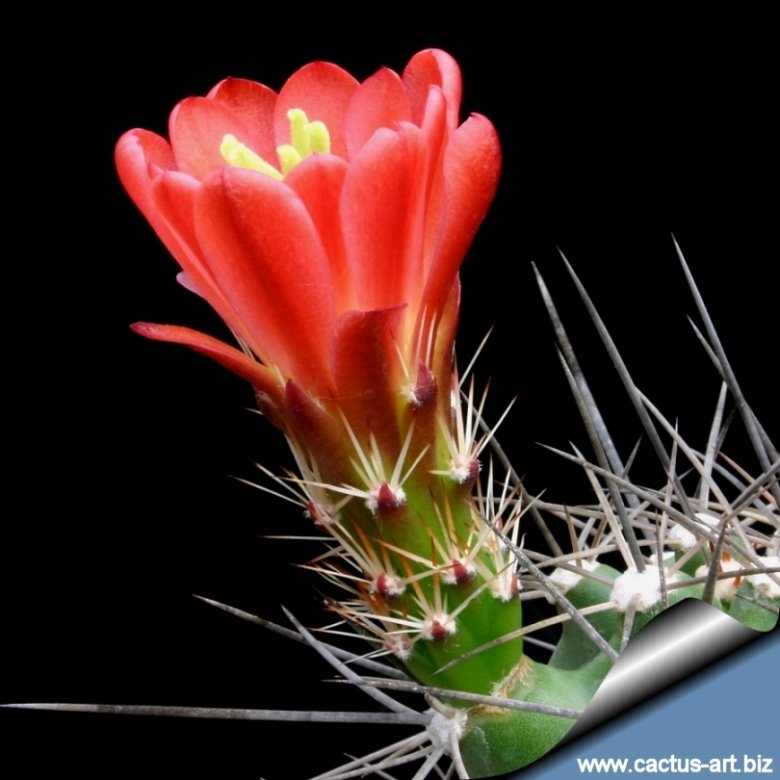
Flowers: Funnel shaped, hummingbird-attracting, scarlet with a clear throat, length and width averaged 60 mm and 30 mm, respectively, the petal tips are rounded, stigma with 7 or 8 lobes. Peak flowering comes from late April to June on mature clumps.
Remarks: Female and male flowers: Echinocereus coccineus subs. paucispinus is a cactus with both hermaphroditic (bisexual) and dioecious (male and female) forms of flowers in different plant. Male flower shows pollen-filled anthers surrounding the base of the stigma lobes. While functional female flower from different plants show reduced filaments and empty anther sacs held below the stigma lobes. The flowers appear specialized to hummingbirds but are also pollinated by bees they are huge and highly rewarding, and daily nectar production averaged 30 mg sugar/flower. This set of traits represents a syndrome rare among hummingbird flowers in which the flower fits the head rather than just the bill, and birds are well rewarded for a risky or inconvenient visit.
Origin and Habitat
Southwestern USA (Arizona, Colorado, New Mexico, western Texas), Mexico (Sonora, Coahuila, Chihuahua)
Habitat: It is found growing on rocky outcroppings, often in the partial-shade of oak and pine-oak woodlands and mixed conifer forest.
Cultivation and Propagation
Echinocereus coccineus subsp. paucispinus is fairly easy to grow. It makes great potted specimens.
Soil: Use a mineral well permeable soil with little organic matter (peat, humus). It grows in limestone areas of Texas (Big Bend area) and adjacent areas of Mexico, so will probably benefit from extra calcium in its soil.
Growth rate: It grows well, though slowly, but it possible to increase the speed of growth to some extent by providing adequate amount of water, warmth, and a liquid fertilizer diluted half strength during the active growing season, but it’s susceptible to rotting if too wet. Most plants will offset readily, and clumps can be produced in a few years.
Soil: It needs a very porous, slightly acidic potting medium (add pumice, vulcanite, and perlite). Outdoors it does well on poor, rocky soils.
Exposure: It likes a sunny position also blasting sun in summer. If grown indoor provide 4 to 6 hours, or more, direct morning or afternoon sun.
Watering: It is sensitive to overwatering (rot prone) needs a very good drainage to avoid rotting, but requires more moisture than true desert cacti to grow and produce flowers.
Hardiness: It its natural environment it is very cold resistant from -10° to -25° C (depending on clones) or less for short periods of time. It can be grown outdoors in Mediterranean warm-temperate climates, But for safe cultivations needs anyway to kept above 5 °C and dry in winter. But it can tolerate temperatures down to -5° C (or even less) for very short periods if very dry and ventilated. During winter month, put them in a cool luminous place and encourage them to enter winter dormancy by withholding water and fertiliser over the winter as they will etiolate, or become thin, due to lower levels of light.
Maintenance: Repot every two years. Needs lots and lots of space to grow, use large shallow container or bowl filled with very porous compost. It like pots with generous drain holes.
Pest & diseases: They are susceptible to fungal diseases if overwatered, but are not nearly as sensitive as many other cacti, especially in warm weather. If kept damp through cold periods, they will invariably suffer.
Garden uses: It is a fine plant for a rock garden or container, contrasts well with agaves, yuccas, and low-growing flowering plants.
Grafting stock: The taller fast-growing forms of Echinocereus coccineus and of Echinocereus triglochidiatus are highly recommended stocks for grafting cold hardy type cactus species. These can be used as cold hardy type stocks for almost all types of cactus, while still retaining the original natural grown look to the scion.
Edible uses: The fruit can be consumed fresh or preserved.
Propagation: Cutting as it branches freely from the base; Also can be grown from seeds. The seeds may be germinated and grown in containers. Their main requirements consist of high humidity levels, free-draining soil mix, and enough water, light, and nutrition.
Notes
Echinocereus coccineus v. paucispinus is a tetraploid form that was formerly considered (for its superficial resemblance) a synonym of Echinocereus triglochidiatus, but may be distinguished by its relatively terete and more consistently straight spines and now is considered a distinct species.
Bibliography
Major references and further lectures
-
David Hunt, Nigel Taylor “The New Cactus Lexicon” DH Books, 2006
-
Edward F. Anderson “The Cactus Family” Timber Press, 2001
-
Terry, M., Heil, K., Gómez-Hinostrosa, C. & Corral-Díaz, R. 2013. Echinocereus coccineus. The IUCN Red List of Threatened Species. Version 2014.3. <www.iucnredlist.org>. Downloaded on 29 April 2015.
-
Stuart Max Walters “The European Garden Flora: Dicotyledons (Part I)” Cambridge University Press, 1989
Gallery