Publication: Cacti Ariz. ed. 3: 21 1969.
Description
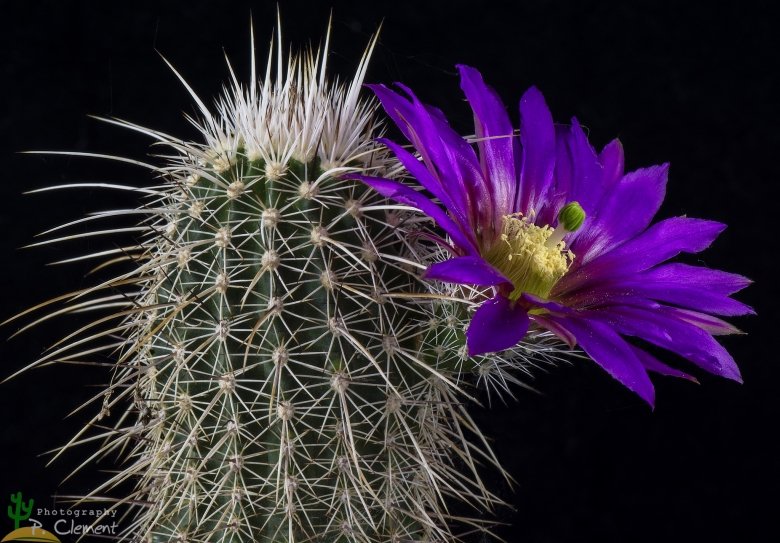
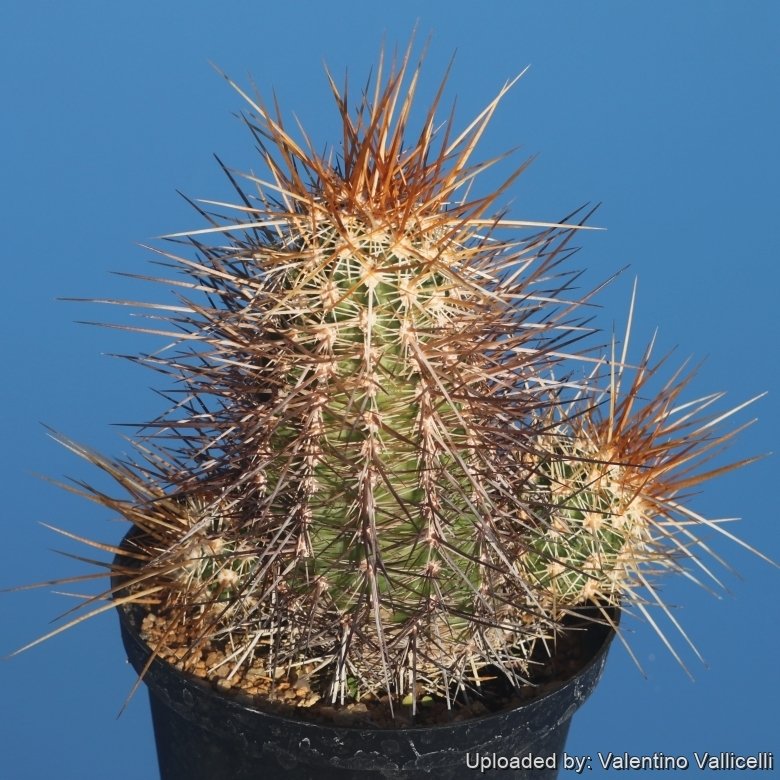
It is a clumping spiny plant with few-branches which are not crowded against one another.
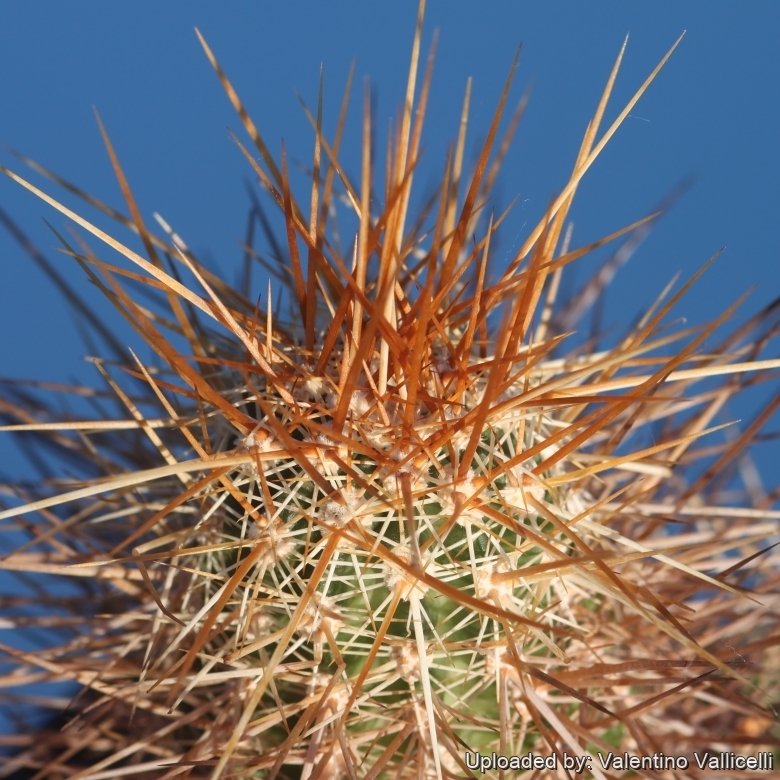
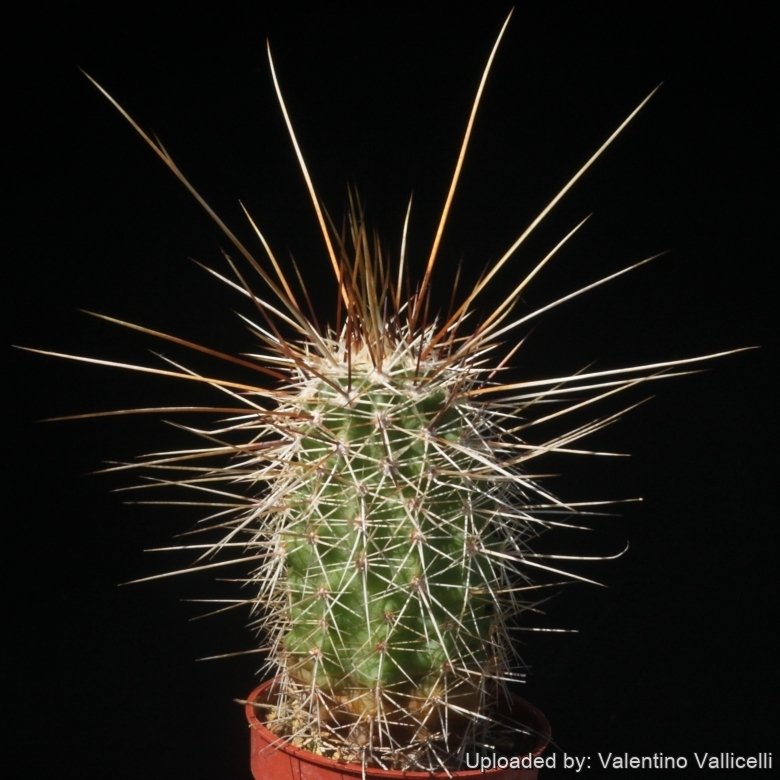
It produces long straw-coloured spines not obliterating the stem surface.
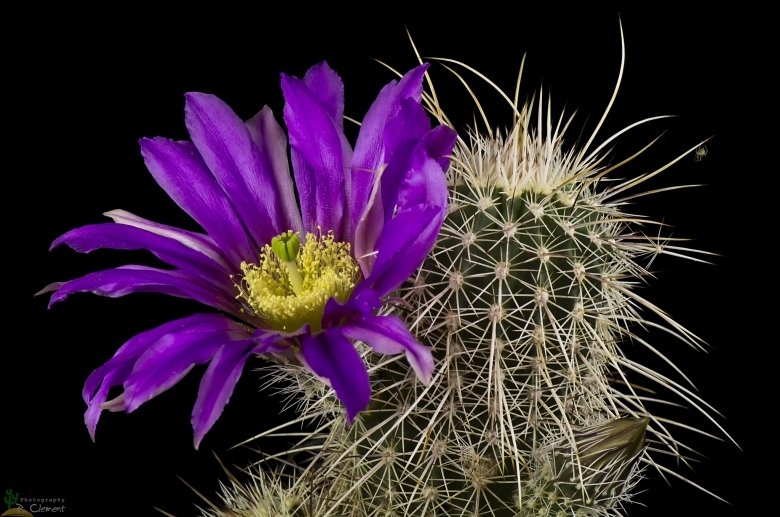
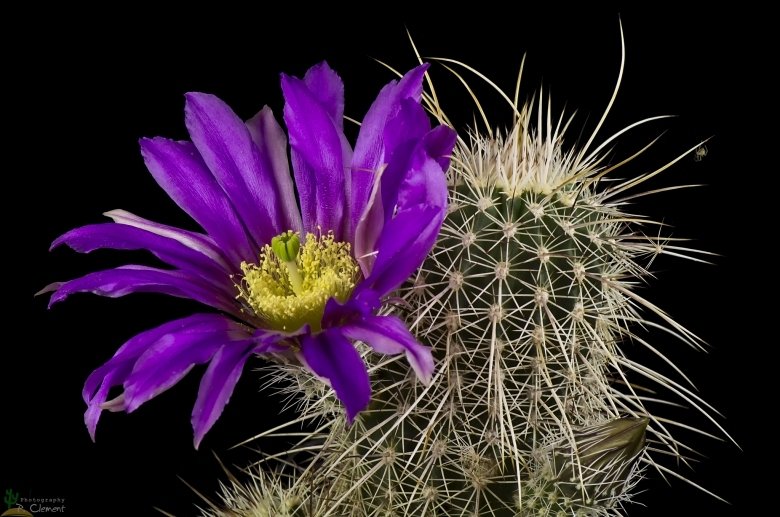
Stems: 1 to 10 per clump, ovoid to elongated-cylindrical, (3-)10-12(-25) cm tall, 4-7,5 cm. in diameter, rather firm, ribs 9-22 but usually 14-18, not markedly tuberculate at the areoles.
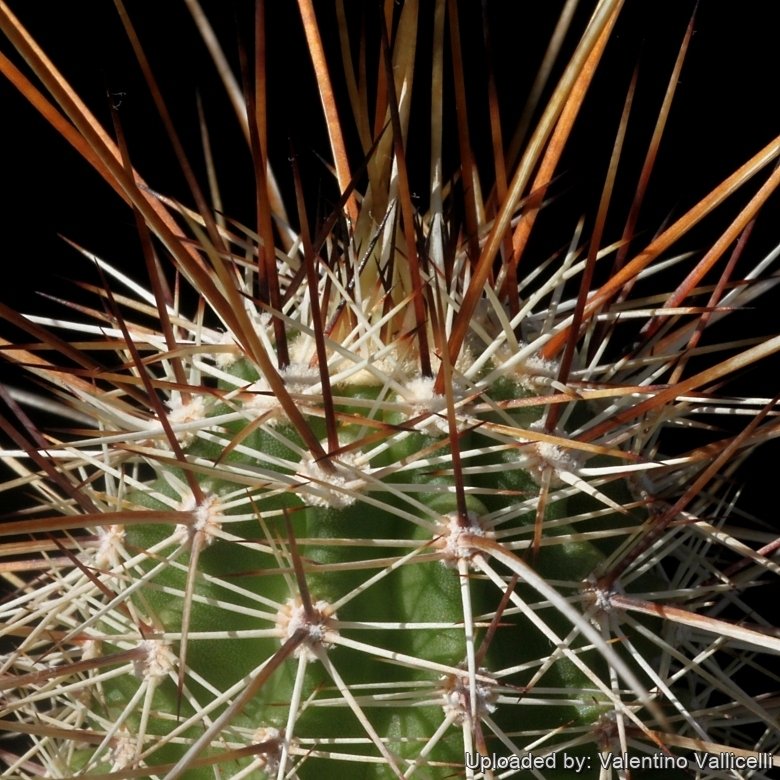
Central spines: Not very rigid, one erect or deflexed pointing downward, yellow or straw-colored with a dark to light brown tip usually 2,5-7 cm long (but occasionally to 12 or more cm long) accompanied, in at least some areoles, by 1 or 2 accessory centrals.
Radial spines: 10-14(-17) acicular, whitish or greysh 1,2-2 cm long.
Flowers: Funnel-shaped, borne on the upper half of the stems, 5-6,5(-8) cm long and 5-6.5 cm in diameter, dull-pink, magenta to reddish-purple.
Blooming season: Flowers are produced in spring and remain open for two or three days.
Fruit: Spherical, spiny, fleshy, at first green or tanning-green turning red at maturity.
Origin and Habitat
Sonoran desert, Central Arizona, United States.
Habitat: It grows in semi-desert areas often sheltered under bushes along with other spiny succulent.
Cultivation and Propagation
It grows rather slowly and is sensitive to over-watering (rot prone). It needs very good drainage to avoid rotting, but requires more moisture than true desert cacti, to grow and produce flowers. Keep drier and cool in winter. It needs full sun. It can withstand temperatures down to -10° (or less, depending on clones) for short periods of time. It is a fine plant for a rock garden or container, and contrasts well with agaves, yuccas, and low-growing flowering plants. It will show its flowers only provided with an adequate winter rest period.
Propagation: Seeds, can also be grown from cuttings, as it branches from the base.
Gallery