Publication: Cactaceae Consensus Init. 3: 9. 1997
Description
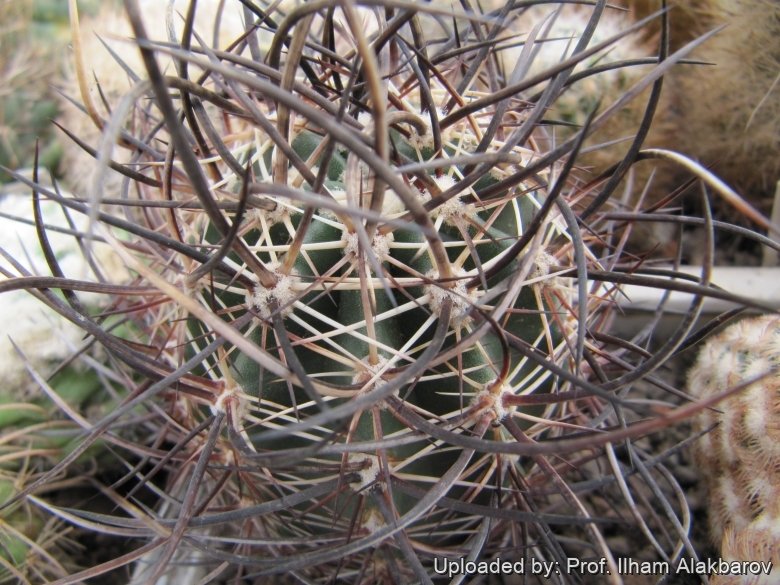
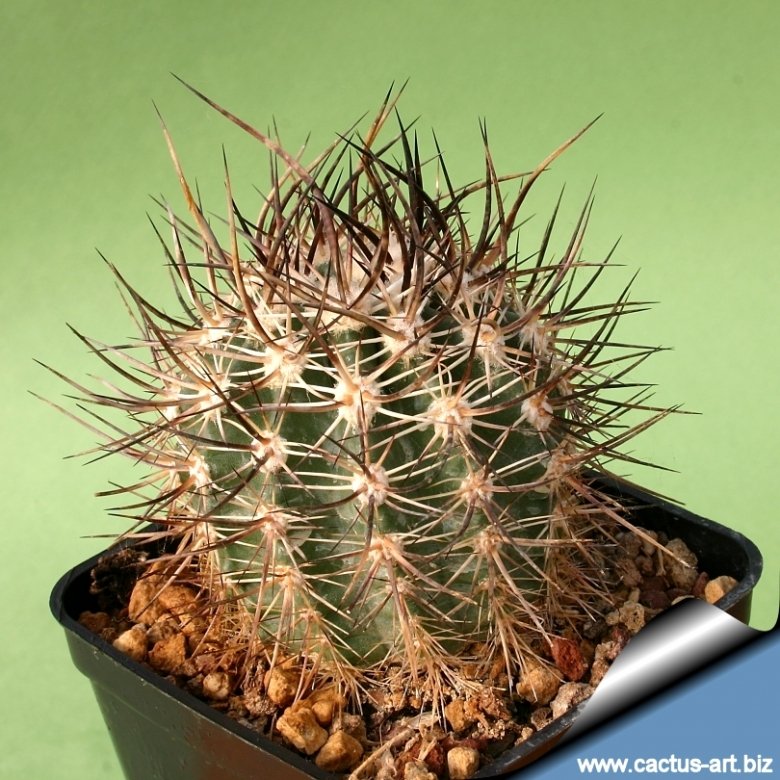
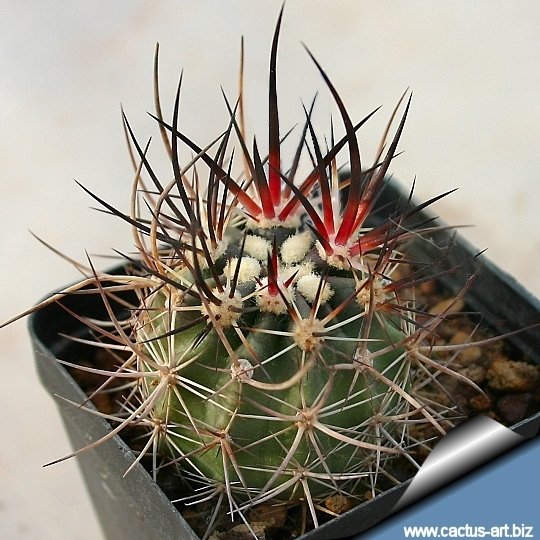
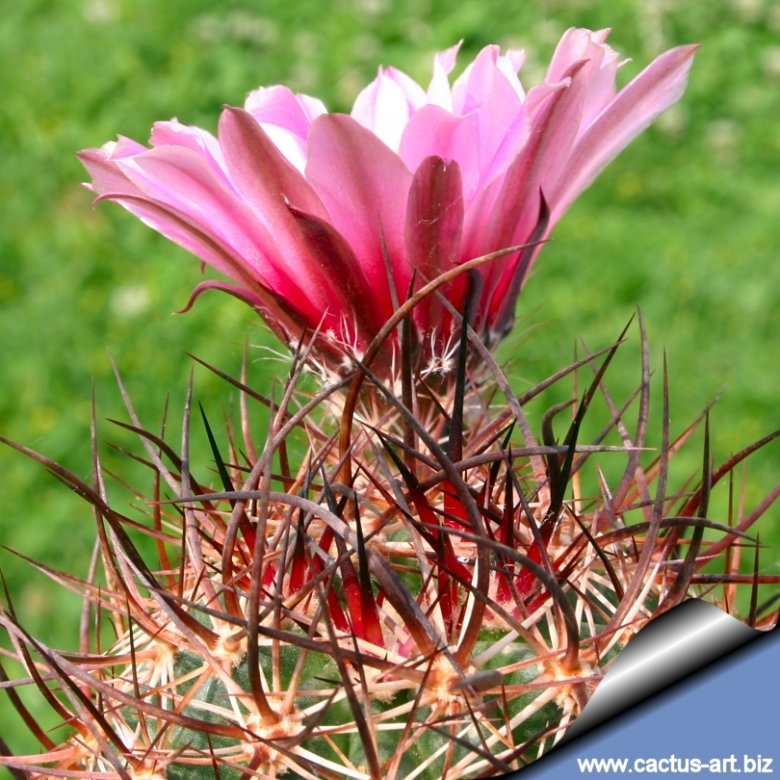
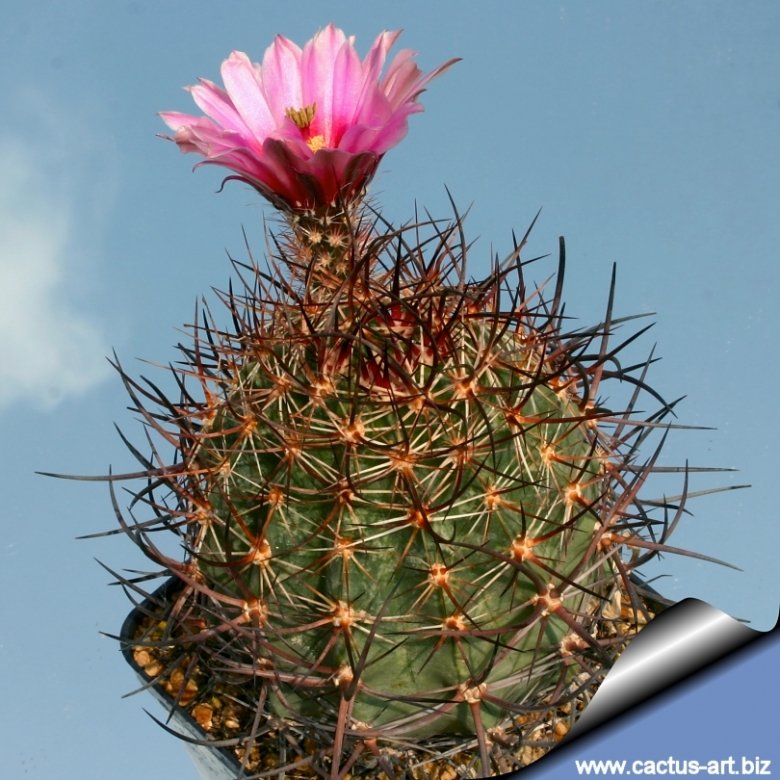
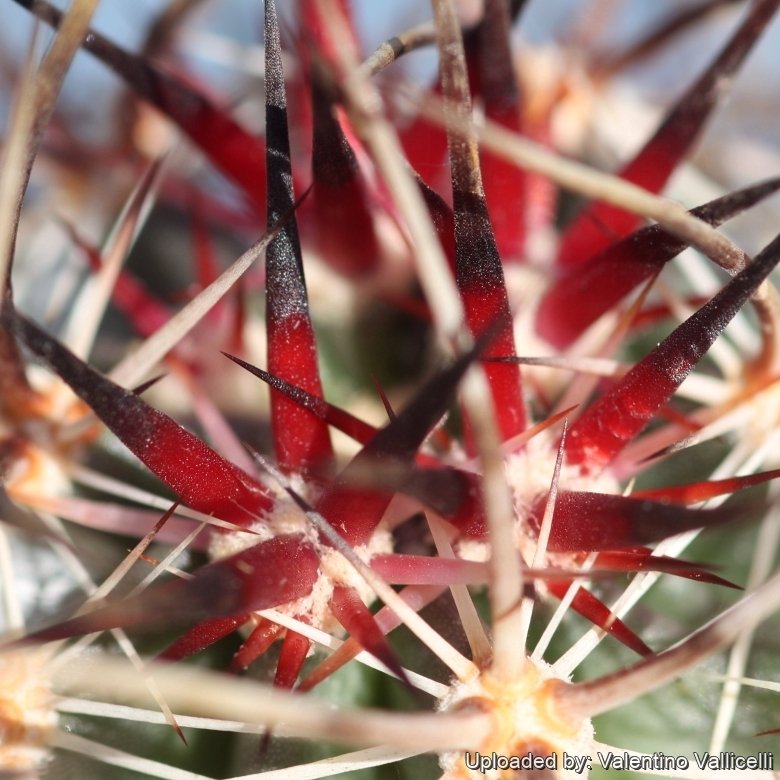
Echinocereus lindsayi is an heavily spined cactus with usually a solitary stem, but sometime it branches forming clumps with several stems. The spines are very robust and long almost obscuring the stem.
Stem: Up to 13 cm tall and 10 cm in diameter. Spherical to cylindrical, grey-green to green.
Central spines: Usually 4 (but sometime up to 7) strong, round in cross section, 1,5 to 10 cm long usually curved, bright red when young later dark grey to brown.
Radial spines: 8 to 14 shorter, spreading, whitish 0,8 to 4,5 cm long.
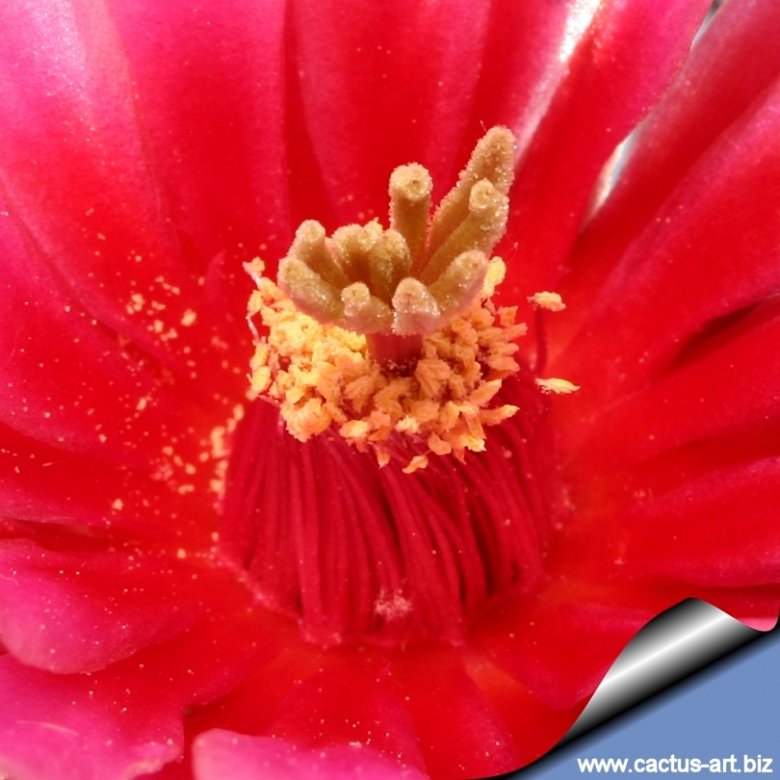
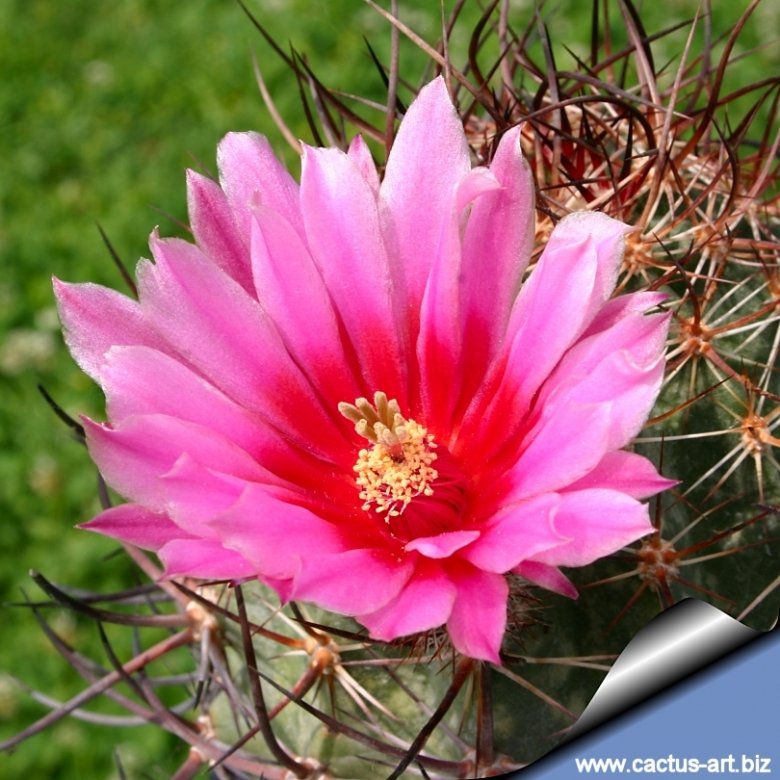
Flowers: 6-10 cm long, 4-9,5 cm broad, arising laterally near the apex, funnel-shaped, pink, bright purple to dark magenta with an orange to deep-red contrasting throat. Sigma green.
Blooming season: May.
Origin and Habitat
Echinocereus ferreirianus comes from Eastern part of central Baja California and adjacent islands in the Gulf of California (Mexico, Northern America. Its two subspecies differ in range. subsp. ferreirianus is located in the eastern region of central Baja California and adjacent islands of Baja California while subsp. lindsayi is restricted to a region south of Cataviña in central Baja
Habitat and Ecology: Echinocereus ferreirianus grows on rocky mountains, low hills, slopes, and cliffs. It has been reported from shrub desert in pumice slopes, lava fields and in stony-loamy granite. The only threat is illegal collecting, in specific of the subspecies subsp. lindsayi.
Cultivation and Propagation
This plant from Baja California needs warmer winter temperatures, and can resist only occasional light frost, above -2C. It is sensitive to overwatering (rot prone) and needs good drainage. Fertilize with half-strength liquid fertilizer in summer. Keep absolutely dry in winter. Needs full sun;
Propagation: Seeds or cutting (if available)
Bibliography
Major references and further lectures
-
Edward Anderson “The Cactus family” Timber Press, Incorporated, 2001
-
Nathaniel Lord Britton, Joseph Nelson Rose “Cactaceae: Descriptions and Illustrations of Plants of the Cactus Family” vol. 4 The Carnegie Institution of Washington, Washington 1923
-
James Cullen, Sabina G. Knees, H. Suzanne Cubey “The European Garden Flora Flowering Plants: A Manual for the Identification of Plants Cultivated in Europe, Both Out-of-Doors and Under Glass” Cambridge University Press, 11/Aug/2011
-
David R Hunt; Nigel P Taylor; Graham Charles; International Cactaceae Systematics Group. “The New Cactus Lexicon” dh books, 2006
-
León de la Luz, J.L., Gómez-Hinostrosa, C. & Hernández, H.M. 2013. Echinocereus ferreirianus. In: IUCN 2013. “IUCN Red List of Threatened Species”. Version 2013.2. <www.iucnredlist.org>. Downloaded on 30 March 2014.
From llifle page Echinocereus lindsayi f. monstruosus
Description
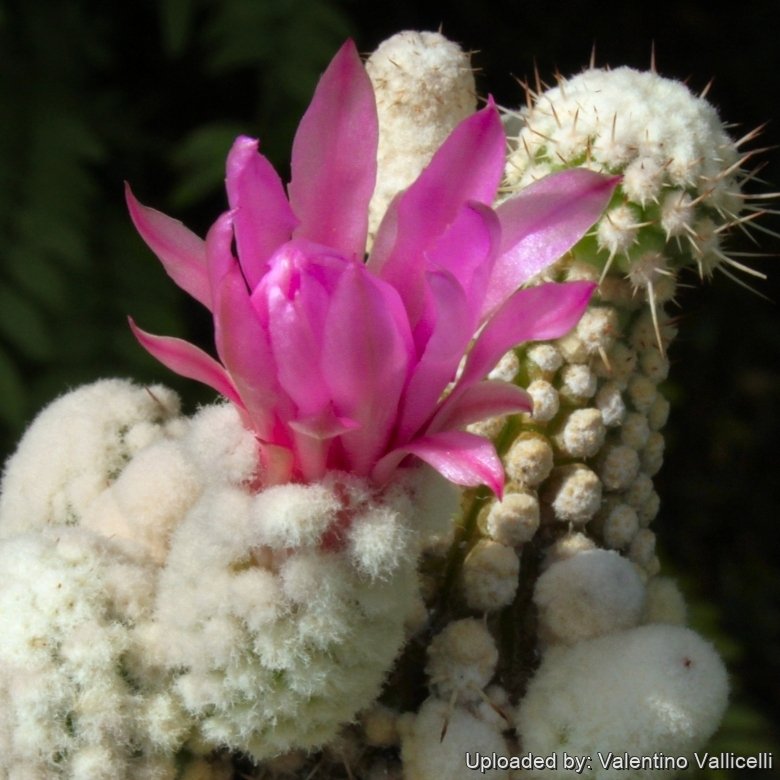
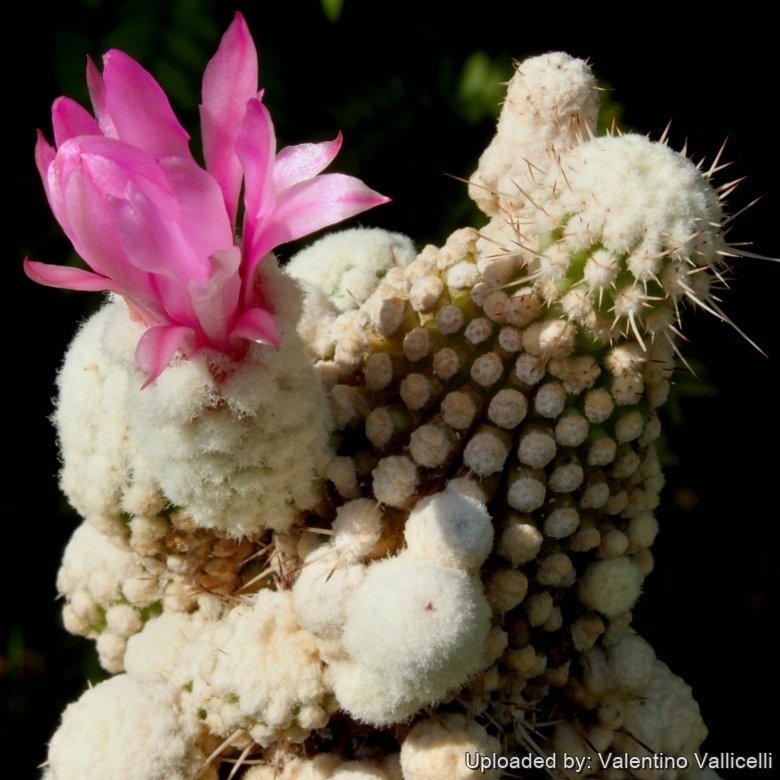
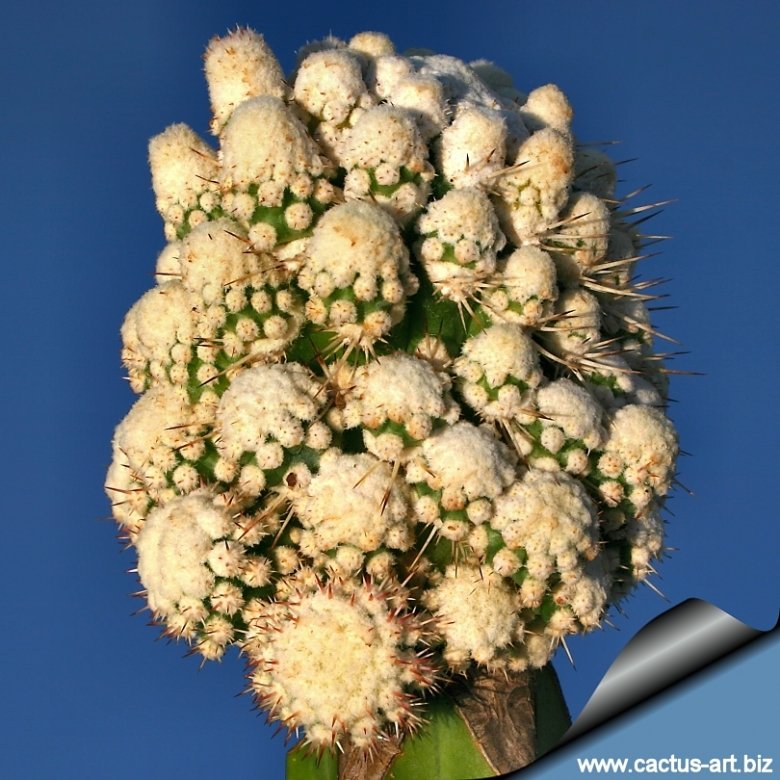
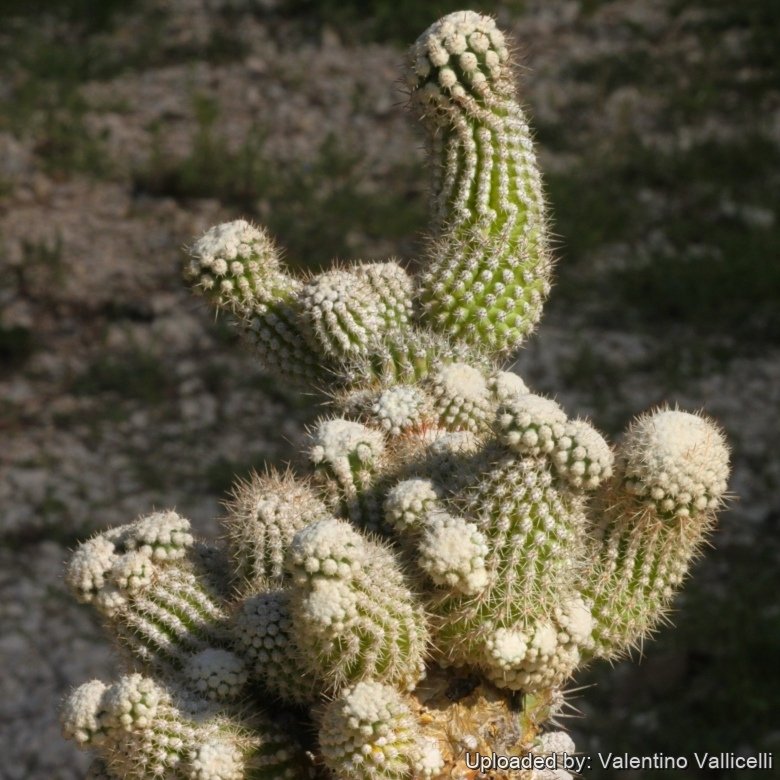
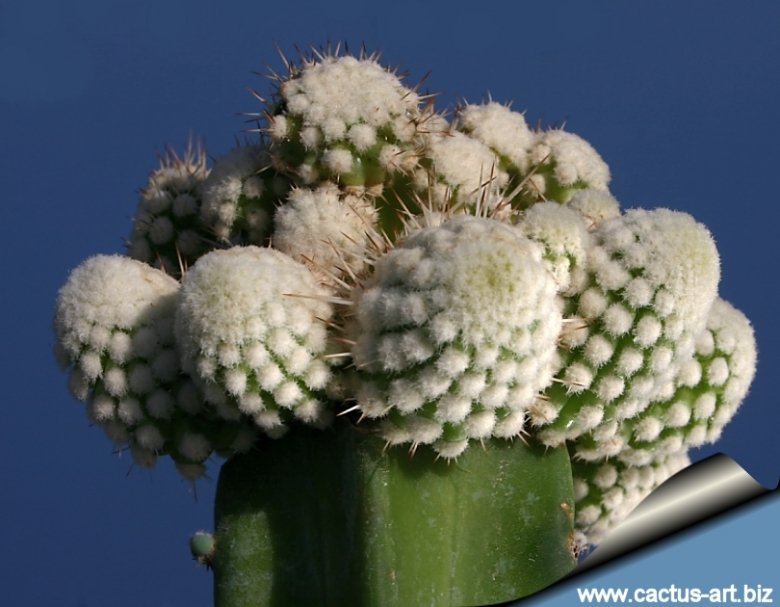
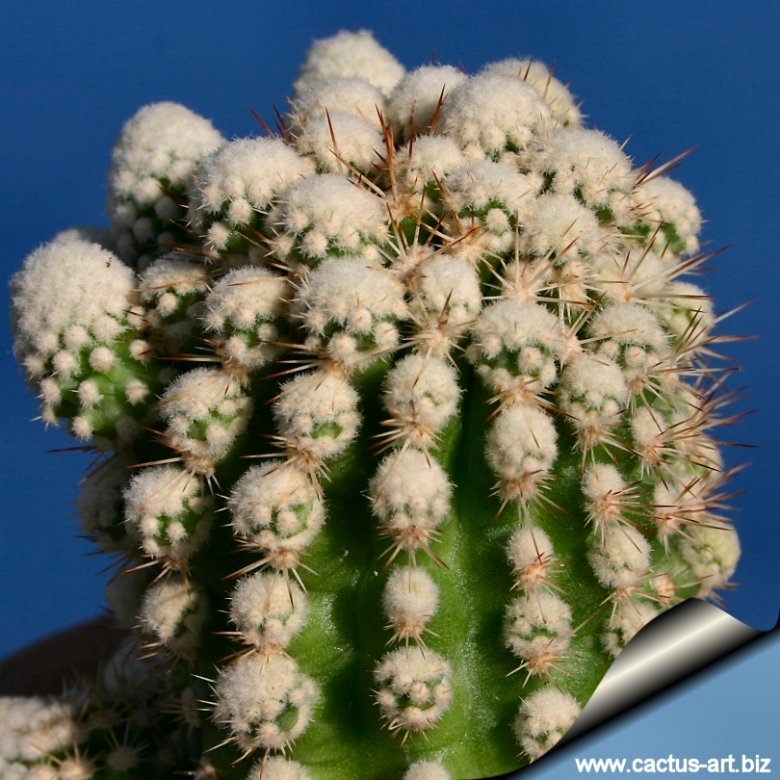
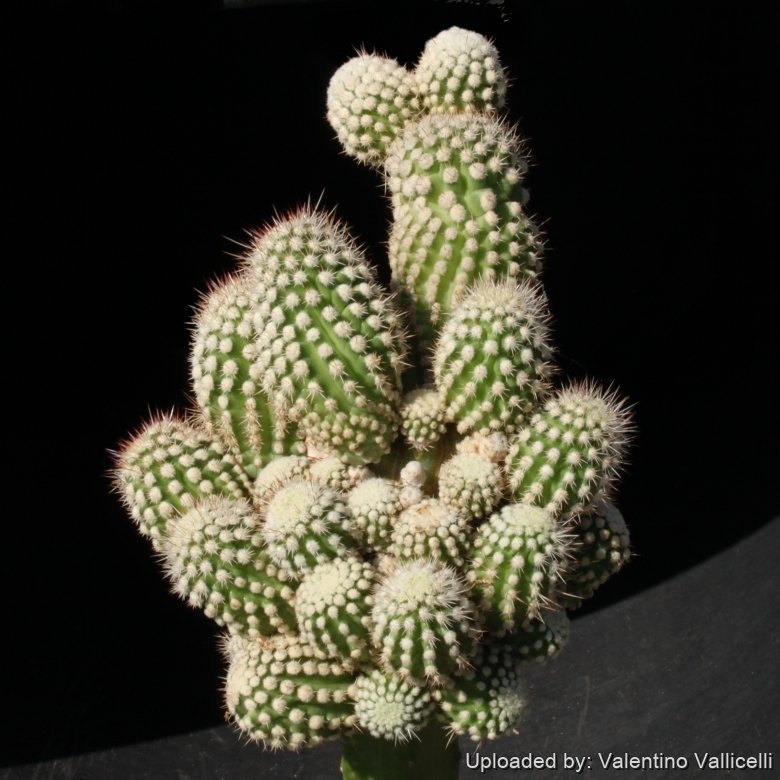
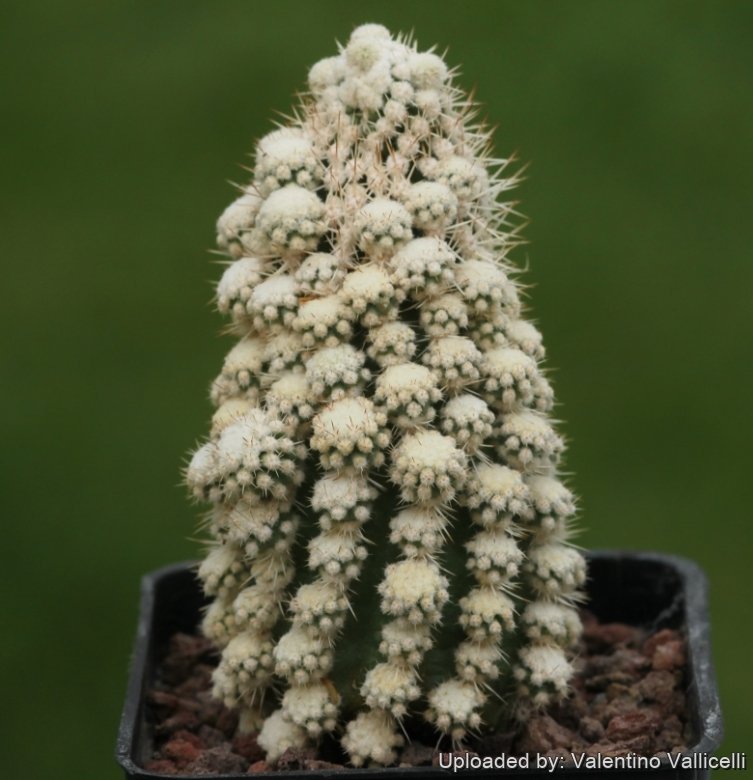
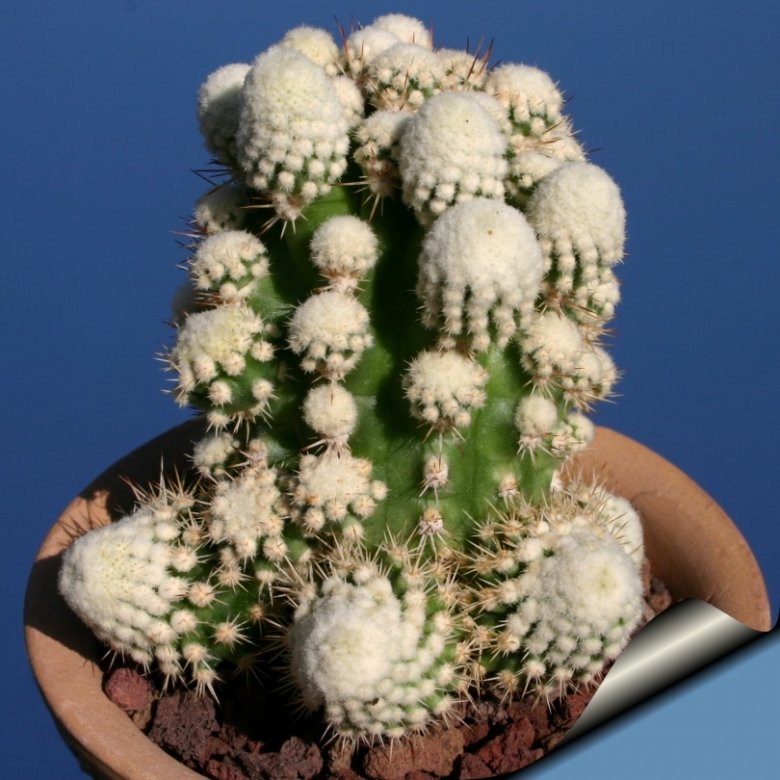
Echinocereus ferreirianus subs. lindsayi f. monstruosus is a free offsetting small form of Echinocereus ferreirianus subs. Lindsayi that forms large, proliferating stems, with white woolly areoles and short bristle-like spines. The rib structure is not yet apparent, and it has short tubercles making it looks superficially like Mammillarias. With age it will form large crowded clumps.
Habit: It shows an abnormal uncoordinated form of vegetative growth, with a multitude of condensed lateral proliferation, each areole gives origin to a new stem only a 1-2 centimeters across, and the plant looks more like a strange furry animal or a marine creature than a cactus.
Flowers: Very showy but seldom seen in cultivation, pink, often failing to open widely, with pericarpel and floral tube densely covered by white woolly areoles.
Origin and Habitat
Garden origin (Nursery produced cultivar). The wild species occurs from the mexican state of Baja California Norte.(Northern America)
Cultivation and Propagation
Frost tender but cold hardiness increases with improved drainage, so keep plants as dry as possible in winter. Provide the plant with extremely well-drained soils, as plants are subject to crown and soft rot if they remain too moist. They grow best in full sun or half shade, which will help to maintain the lustre of the spines and plants compact. They are prone to mealy bug and red spider mite.
Frost Tolerance: Light frost protection required for safe cultivation, but can tolerate sporadic light frost.
Diseases and pests: Watch for infestations of mealybug, scale insects and spider mite.
Propagation: From cuttings (but it is very difficult to grow this plant on its own roots) or preferably by grafting.
Bibliography
Major references and further lectures
-
Edward Anderson “The Cactus family” Timber Press, Incorporated, 2001
-
Nathaniel Lord Britton, Joseph Nelson Rose “Cactaceae: Descriptions and Illustrations of Plants of the Cactus Family” vol. 4 The Carnegie Institution of Washington, Washington 1923
-
James Cullen, Sabina G. Knees, H. Suzanne Cubey “The European Garden Flora Flowering Plants: A Manual for the Identification of Plants Cultivated in Europe, Both Out-of-Doors and Under Glass” Cambridge University Press, 11/Aug/2011
-
David R Hunt; Nigel P Taylor; Graham Charles; International Cactaceae Systematics Group. “The New Cactus Lexicon” dh books, 2006
Source: Echinocereus lindsayi f. monstruosus, LLIFLE - Encyclopedia of living forms, CC-BY-SA, retrieved 2026-10-25.
Gallery