Publication: Handb. Cacteenk. (ed. 2 - Rümpler) 822. 1886
Description
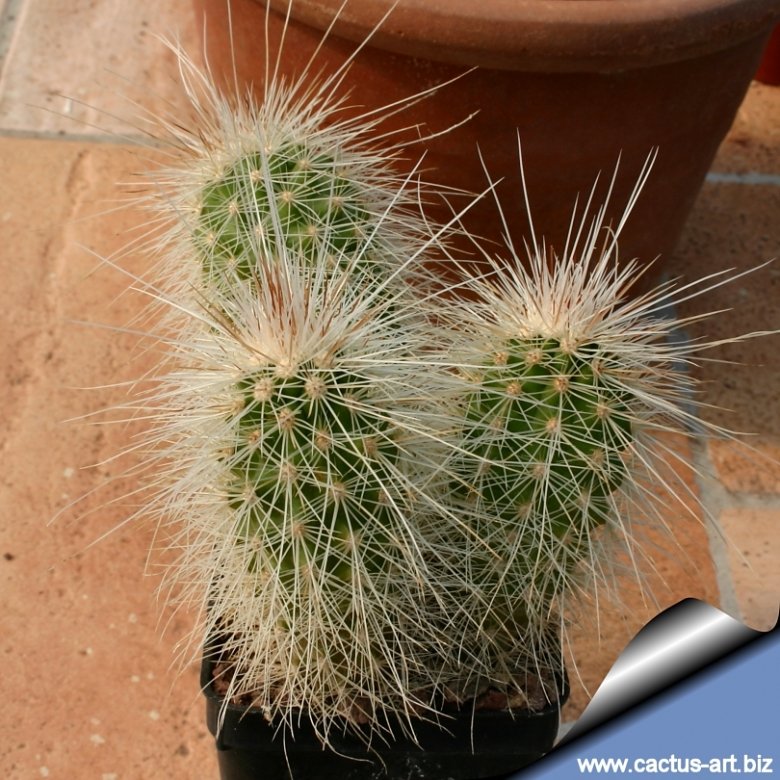
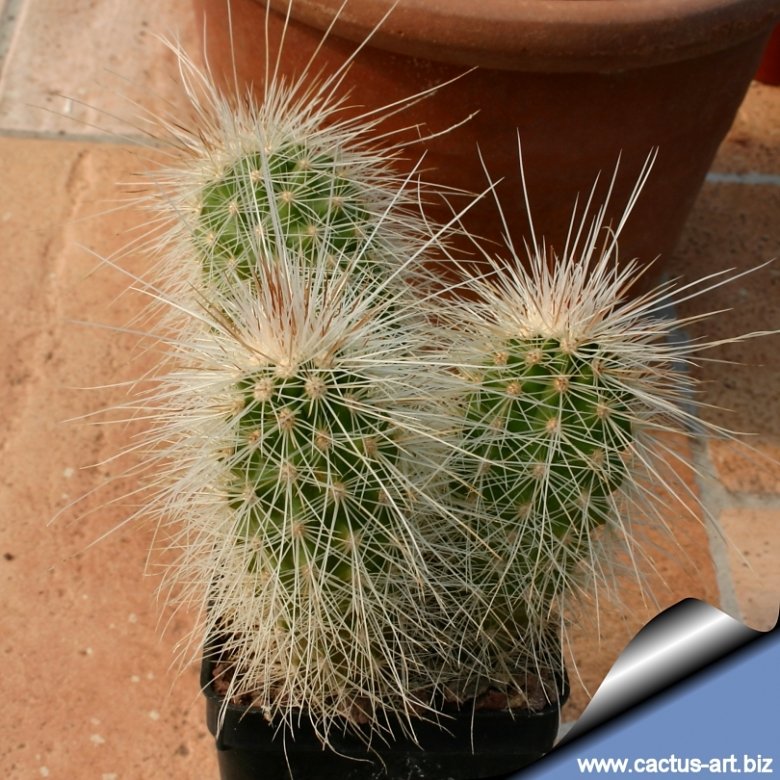
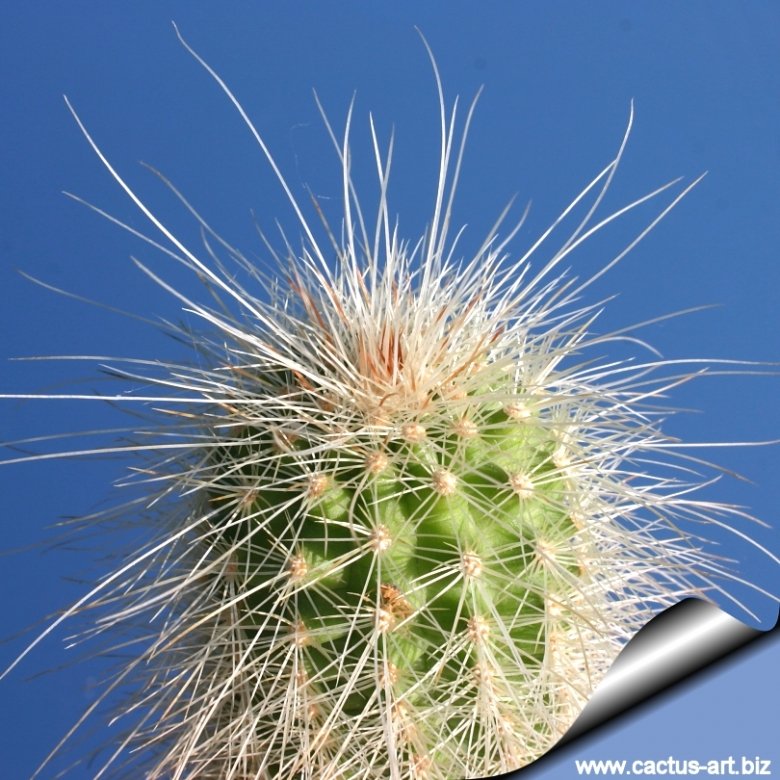
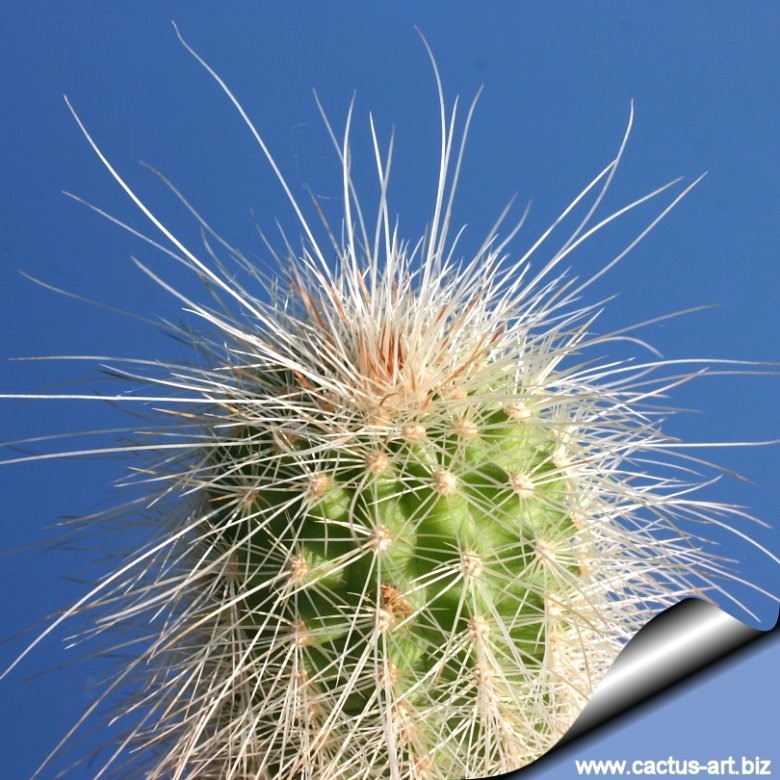
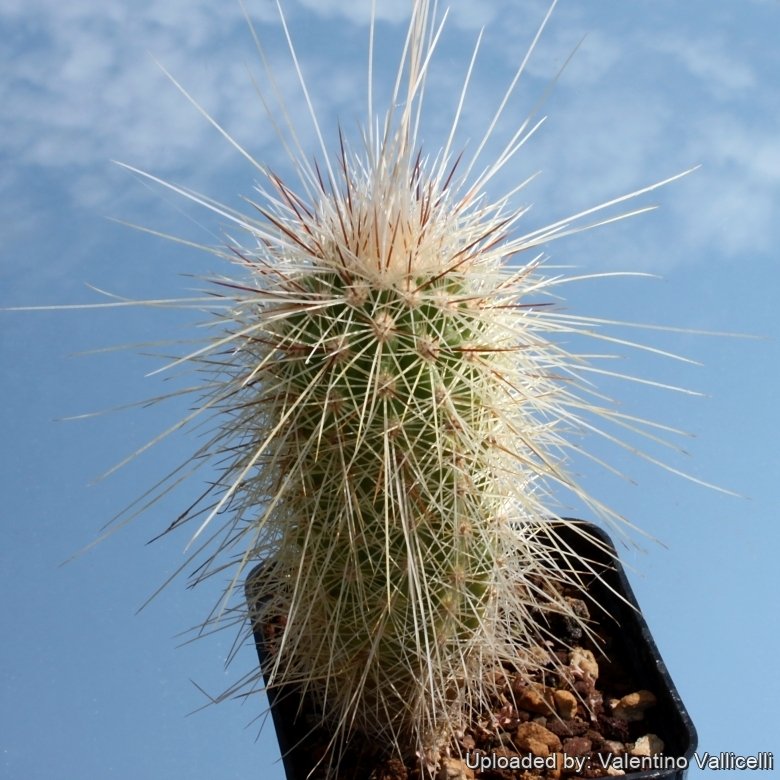
It is a robust and very attractive plant with bristle like
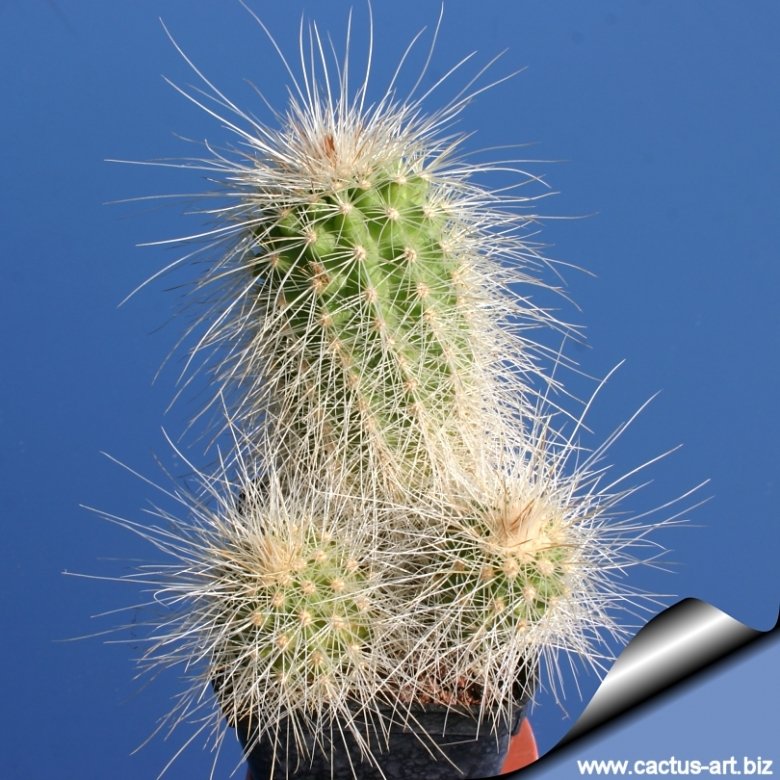
white spines, which stay simple or (usually) branches from the base and forms a nice group of several stems up to 1 m wide.
Root: Fibrous.
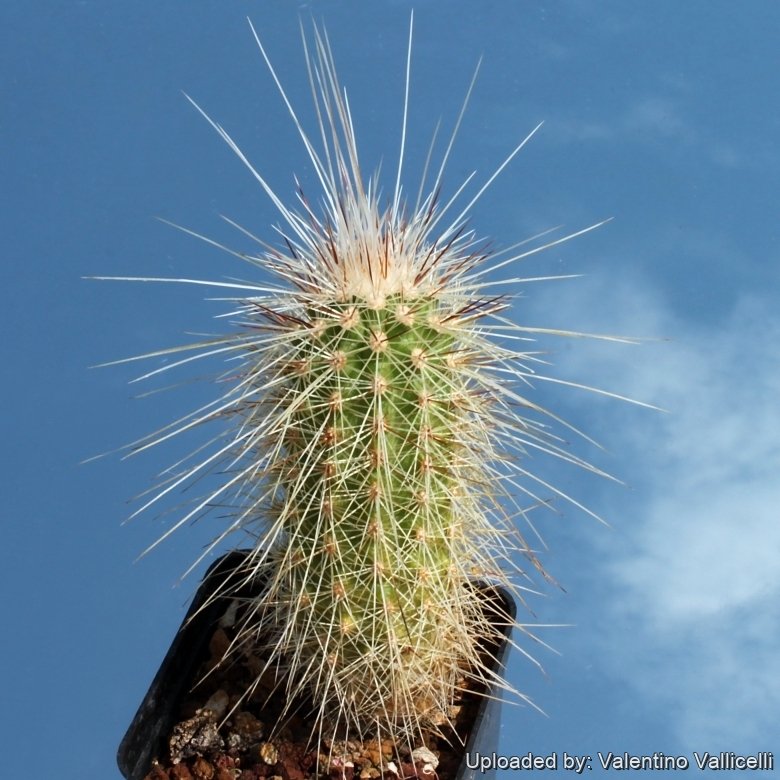
Stems: Cylindric, more or less erect,15-50 cm long and 5-8 cm in diameter almost completely covered with white bristle like spines.
Ribs: (10-)11 to 14(-17), low, somewhat tuberculate.
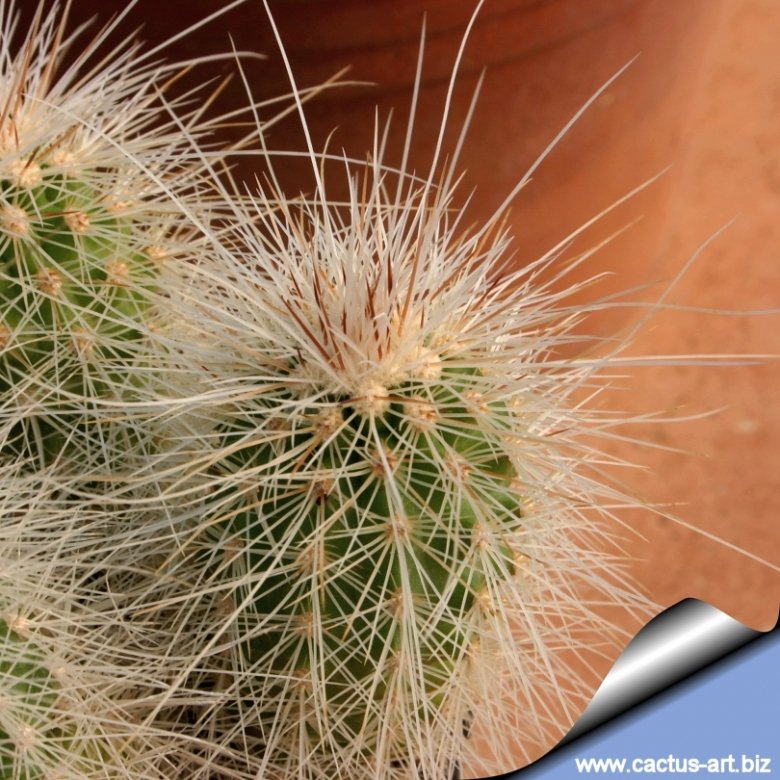
Areoles: Circular, yellowish.
Central spines: 5 to 9, slender, elongated, bristly to hairlike, white to brownish, straight to curved, directed downward and very unequal 1-10 cm long,
Radial spines: 18 to 20, 1.5 cm long, white, spreading, the lower 10 to 20 mm long, much longer than the upper.
Flowers: Funnel form, rather small up to 7 cm long and in diameter (but usually less than 5 cm wide) pinkish-purple or purple, not borne near the stem tips, often nearly basal.
Remarks: Echinocereus longisetus are superficially somewhat similar to the Echinocereus viridiflorus complex, but they are much larger and have magenta flowers.
Origin and Habitat
Mexico (Coahuila, Nuevo Leon)
Cultivation and Propagation
It is relatively easy to grow and very attractive. It rots easily and is sensitive to overwatering (rot prone), so perfect soil drainage is a must. In the summer they need an airy location in bright sun; well watered when it’s hot. To achieve the best spine density give these plants lots of sun. In the winter light, cool, and absolutely dry conditions. Very cold resistant above approx -9 C or less for short periods of time.
In mild climate they grow well when planted freely outside in well-drained soil.
Propagation: Seeds, Cuttings.
Cultivars and forms (3)
Subspecies (1)
Gallery